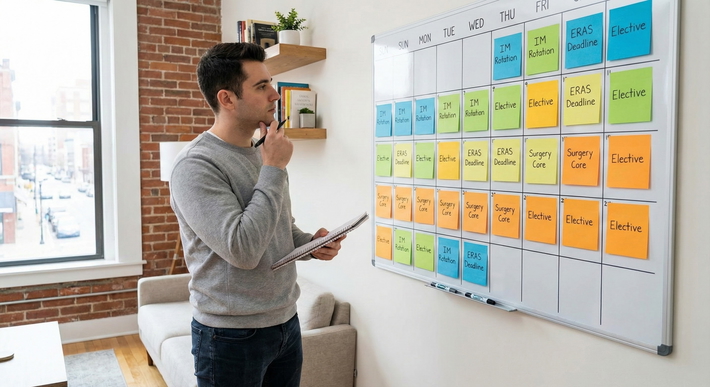
Understanding the Role of Away Rotations for US Citizen IMGs in EM-IM
For a US citizen IMG targeting Emergency Medicine–Internal Medicine (EM IM combined) residency, away rotations are one of the most powerful tools you have to overcome the “distance” created by training abroad. You’re not just asking programs to consider your scores and CV—you’re asking them to see you work side by side with their own residents and faculty.
Because EM-IM positions are few and highly competitive, a thoughtful away rotation strategy is far more important than simply asking “how many away rotations” you should do. You need to decide where to rotate, which department(s) to prioritize, and how to convert a one-month rotation into interview offers and strong letters of recommendation.
This article is written specifically for the US citizen IMG / American studying abroad aiming for EM-IM, though much applies to any combined Emergency Medicine Internal Medicine pathway. We’ll walk through:
- The purpose and value of away rotations as an IMG
- How to select programs and structure your rotation portfolio
- Logistics: VSLO/VSAS, timing, and dealing with being abroad
- How to excel on EM and IM services as a visiting student
- How to target EM-IM and use away experiences to strengthen your application
Along the way, you’ll see concrete, practical advice tailored to your situation as a US citizen IMG.
Why Away Rotations Matter So Much for US Citizen IMGs in EM-IM
For US MD and DO students, away rotations are helpful. For a US citizen IMG targeting EM-IM, they’re often critical.
1. Overcoming the “IMG Unknown”
Program directors at EM-IM sites may not know your school’s reputation or curriculum. An away rotation lets you:
- Show that you can function like a US senior medical student
- Demonstrate comfort in a US academic emergency department and inpatient ward
- Prove your clinical reasoning, communication, and professionalism under direct observation
Especially for American studying abroad students who have done most clinical work outside the US, this is key evidence that you can seamlessly transition into US residency.
2. Gaining Specialty-Specific Letters (EM and IM)
EM-IM programs want to see that you can thrive in both:
- Emergency Medicine: You’ll usually need at least one, often two, strong EM Standardized Letters of Evaluation (SLOEs) or equivalent structured letters.
- Internal Medicine: You’ll want at least one high-quality IM letter, ideally from a US academic setting.
Away rotations are where you can secure these critical letters—often from departments and faculty who are known to EM and EM-IM program leadership nationally.
3. Showing Commitment to Combined Training
EM-IM residencies are niche. Many applicants say they’re interested in combined training, but few can clearly articulate why. As a visiting student, you can:
- Seek out EM-IM residents or faculty
- Ask informed questions about combined training, schedules, and career paths
- Express a clear, consistent interest in EM-IM rather than sounding undecided between EM and IM
Your behavior and conversations during away rotations can make your combined-interest credible, not just a line on your personal statement.
4. Creating “Known Quantity” Status
When programs rank applicants, they often prefer someone they’ve seen in person over a “paper-strong” stranger. A successful away rotation can change you from:
“US citizen IMG we’ve never met”
to
“Student who did a great job on our EM (or IM) service – residents loved working with them.”
That shift alone can overcome biases about IMGs and give you a significant advantage in EM-IM match decisions.

Building Your Away Rotation Portfolio: How Many, Where, and Which Specialty First
As a US citizen IMG, you often have less flexibility in scheduling core clerkships and more hurdles for US rotations, so your away strategy must be deliberate.
How Many Away Rotations Should a US Citizen IMG Do?
Program needs and finances differ, but typical guidance:
- Goal range: 2–4 away rotations in the US, if feasible
- Absolute minimum: At least 1 EM away + 1 IM or EM/IM-focused away
- Aggressive plan for EM-IM target:
- 2 Emergency Medicine rotations (ideally each yielding a SLOE or equivalent)
- 1 Internal Medicine rotation at an academic US site
- Optional: A 4th rotation if you need another letter or want more US exposure
Keep in mind:
- Quality > quantity: 2 stellar away rotations with strong letters beat 4 average ones.
- Protect against burnout: Doing too many back-to-back EM shifts as a visiting student can hurt performance—plan rest days between rotations if possible.
Choosing Between EM and IM Rotations
For an EM IM combined pathway, you need both, but the emphasis usually leans slightly toward EM because:
- EM SLOEs are uniquely structured and heavily weighted in EM and EM-IM selections
- EM rotations let programs see you manage undifferentiated patients—critical for EM-IM
A balanced plan might look like:
- Rotation 1 (early): EM at a site with EM-IM or strong EM presence
- Rotation 2: Another EM (different site) or an IM rotation at an academic center
- Rotation 3 (if possible): IM or EM at an EM-IM institution or one that frequently graduates residents into hospitalist/critical care/academic tracks
Prioritizing Programs: Where Should You Rotate?
Focus on 3 categories:
1. Programs with EM-IM Combined Residencies
These are high-yield sites for a US citizen IMG in EM-IM. Benefits:
- Residents and faculty understand the combined pathway
- You can directly demonstrate fit for dual training
- Letters from these programs carry specific weight when other EM-IM programs review your file
Try to arrange at least one rotation (EM or IM) at an EM-IM institution, if logistics allow.
2. Strong EM Departments with Influence in EM-IM
Many EM-IM program directors and faculty are active in national EM organizations. Rotating at a high-volume academic EM site can:
- Provide a well-recognized EM SLOE
- Connect you to faculty who know or collaborate with EM-IM program leadership
- Demonstrate you can handle Level I trauma center pace and complexity
Look for:
- ACGME-accredited EM residency
- Strong trauma, critical care exposure
- Documented history of teaching and SLOE generation for visiting students
3. Academic IM Programs with EM-IM Connections
While EM may get slightly more emphasis, a solid IM rotation is invaluable. Aim for:
- A US academic IM department with robust inpatient services
- Opportunities for ICU or step-down care exposure if possible
- Faculty who are active in academic medicine, quality improvement, or hospital leadership
If you can find an IM department that shares faculty or rotations with an EM-IM program, that’s ideal.
Geographic and Visa Considerations for US Citizen IMGs
As a US citizen IMG, you avoid the common visa limitations that non-US IMGs face—but geography still matters. Consider:
- Regions you’d realistically like to train in (Northeast vs Midwest vs South vs West Coast)
- Climate and cost of living for a month-long rotation
- Proximity to extended family or support systems (rotations are stressful)
Rotating in the same region where you plan to apply can signal commitment to that area and help with networking at nearby institutions.
Application Logistics: VSLO, Timelines, and Practical Steps from Abroad
Most visiting student opportunities run through VSLO (Visiting Student Learning Opportunities), formerly VSAS, though some programs use their own systems. As an American studying abroad, the logistics can get complicated—plan early and be methodical.
Step 1: Confirm Your School’s VSLO Participation
- Ask your Dean’s office or international coordinator whether your school participates in VSLO.
- If not, identify EM and IM programs that accept non-VSLO applicants via their own visiting student applications.
Have documents ready:
- Official transcript (with clinical grades)
- Proof of liability insurance (often through your school)
- Immunization records, TB test, influenza/COVID documentation
- Background check and drug screen (if required)
Step 2: Ideal Timing for EM and IM Away Rotations
For EM-IM, timing is critical:
- Best months for away rotations: Typically June–October of the application year
- For EM letters used in ERAS: Aim to complete at least one EM rotation by August so the SLOE can be uploaded before or shortly after ERAS opens.
- For IM letters: A strong IM letter from June–September is usually acceptable; IM letters tend to be slightly more flexible on timing than EM SLOEs.
Specific strategy:
- Rotation 1 (June/July): EM—get your first SLOE
- Rotation 2 (July/August): IM or another EM rotation—obtain a second EM SLOE or strong IM letter
- Rotation 3 (September/October): If possible, rotate at an EM-IM site to show direct interest. Even if the letter comes later, the rotation itself still matters for interview selection.
Step 3: When and How to Apply
- Many institutions open VSLO applications February–April for the coming academic year.
- As a US citizen IMG, spots can be more competitive for you—submit as early as allowed.
- Prioritize your top EM and EM-IM sites first; apply broadly enough to account for rejections or capacity limits.
Application tips:
- Tailor your personal statement paragraph for each rotation to emphasize your concrete interest in EM-IM and that specific institution.
- Highlight any US clinical experience you’ve completed already, especially in acute care or inpatient settings.
- Make clear you are a US citizen (to avoid assumptions about visa complexity).
Step 4: Handling Scheduling from Abroad
Being in a different time zone and system can create friction. Mitigate it by:
- Using a US phone number (e.g., Google Voice) for programs to contact you
- Checking email at least twice daily during the application and scheduling phase
- Confirming housing and transportation well in advance; near large teaching hospitals, short-term housing fills quickly
Keep a spreadsheet with:
- Program names, departments (EM or IM), and if they have EM-IM
- Application dates, required documents, and deadlines
- Response status and rotation dates
- Notes on housing options and contacts

How to Excel on EM and IM Away Rotations as a US Citizen IMG
Away rotations are high-stakes auditions. You’re being compared not just to other IMGs, but to US MD/DO students from well-known schools. You must show you’re at least at their level.
1. Day One: Set Expectations and Signal Professionalism
On the first day:
- Introduce yourself clearly: “Hi, I’m [Name], a visiting fourth-year student. I’m a US citizen attending [School] in [Country], and I’m very interested in Emergency Medicine-Internal Medicine training.”
- Ask your senior or attending:
- “What’s your preferred way for me to present patients?”
- “How many patients should I try to carry or see at a time?”
- “Are there specific skills or goals you’d like me to focus on this month?”
This shows humility, insight, and maturity—traits that often offset concerns about less-known school backgrounds.
2. For Emergency Medicine Rotations: Behaviors That Earn Strong SLOEs
To impress on an EM rotation:
- Be early, stay slightly late. Show up prepared before sign-out; be willing to see one last patient near the end of shift.
- Take ownership. Follow your patients from triage/initial evaluation through disposition. If they go to CT, go with them when feasible.
- Practice efficient presentations. EM loves concise, structured presentations: chief complaint, focused HPI, pertinent review of systems, focused exam, differential, and immediate plan.
- Embrace procedures (with safety). Ask for chances to perform IVs, sutures, I&Ds, ABGs, splints—while being honest about your level of experience.
- Show teamwork. Treat nurses, techs, and clerks kindly and respectfully. EM communities are tight; negative feedback from non-physician staff can hurt you.
SLOEs often rate students on initiative, clinical judgment, work ethic, and fit for EM. As a US citizen IMG, you want your SLOE narrative to read like:
“Functioned at or above the level of our US senior medical students, highly recommended.”
3. For Internal Medicine Rotations: Demonstrate Depth and Reliability
In IM, your away rotation should show:
- Solid knowledge base. Read nightly about your patients: disease mechanisms, guidelines, and hospital protocols.
- Clear, organized presentations. Start with overnight events, vitals/trends, focused exam, labs/imaging, then a problem-based assessment and plan.
- Ownership of follow-up. Be the person who always knows the latest results, pending studies, and discharge barriers for your patients.
- Compassion and communication. Take time to explain plans to patients and families; document patient education and shared decision-making.
IM letters emphasize reliability, thoroughness, and long-term patient management skills—essential for EM-IM combined practice, where you’ll bridge acute and chronic care.
4. As an IMG: Pay Extra Attention to Communication Nuances
Coming from a different system or culture, you might unconsciously:
- Use terms or abbreviations uncommon in the US
- Approach hierarchy or autonomy differently
- Have a different style of addressing patients or staff
To adapt:
- Listen carefully to how residents and attendings communicate with patients and staff; mirror their style.
- Ask for gentle feedback: “If I use any phrases or approaches that feel off in this system, I’d appreciate you letting me know.”
- When uncertain about protocols (sepsis bundles, DVT prophylaxis, discharge planning pathways), ask and clarify rather than assuming.
5. Ask Smart Questions about EM-IM During the Rotation
Without monopolizing people’s time, take opportunities to:
Ask EM-IM residents (if present):
- “What drew you to EM-IM instead of EM or IM alone?”
- “How does your schedule switch between EM and IM blocks?”
- “What are your co-fellows planning to do after graduation—critical care, hospitalist, ED leadership, etc.?”
Ask EM and IM attendings:
- “How do you see the added value of EM-IM graduates in your system?”
- “Are there particular traits you look for in EM-IM applicants?”
These conversations serve two purposes:
- You learn whether EM-IM is truly the right fit for you.
- Faculty see that your interest is thoughtful and informed, making them more likely to advocate for you.
Turning Away Rotations into a Strong EM-IM Application
You’ve completed your away rotations—now you need to convert those experiences into interview invitations and, ultimately, a match.
Securing and Using Letters of Recommendation
For EM-IM, aim for:
- 2 EM SLOEs or structured EM letters (at least one from a US academic EM program)
- 1 strong IM letter, ideally from a US academic IM setting
- Optional: 1 additional letter (from EM, IM, research mentor, or other US-based faculty familiar with you clinically)
When you ask for letters:
Do it in person near the end of the rotation:
- “Dr. [Name], I’ve really appreciated working with you. I’m planning to apply mainly to EM-IM combined programs and some EM programs. Would you feel comfortable writing a strong letter in support of my application?”
Provide:
- Your CV
- A brief personal statement or paragraph on why EM-IM
- A list of programs you’re targeting (especially if they know people there)
For EM-IM applications, you can:
- Use your EM SLOEs for both EM-only and EM-IM programs
- Select which IM letter(s) to send to IM or combined programs based on strength and relevance
Tailoring Your Personal Statement and Program Signals
Use your away experiences to add depth:
- Mention specific cases or clinical lessons from EM and IM that highlight why combined training fits your goals.
- Reference your experience working alongside EM-IM residents or faculty if you had that exposure.
- Emphasize your identity as a US citizen IMG / American studying abroad who has successfully integrated into US hospital systems through visiting student rotations.
If programs accept signals (preference indications) or have supplemental questions, you can:
- Prioritize EM-IM programs where you rotated or have regional connections
- Mention rotation experiences in those regions to signal geographic commitment
Explaining Your IMG Background and Rotations in Interviews
In EM-IM interviews, you’ll likely be asked about:
- Why you chose to study medicine abroad as an American
- How your international education has shaped you
- Your US clinical experience and away rotations
Be prepared to frame your story positively:
- Emphasize adaptability, resilience, exposure to diverse health systems, and cultural competence.
- Connect your US away rotations to evidence that you can excel in US training and meet ACGME expectations.
- Highlight specific feedback you received on rotations (e.g., “I was told I functioned at the level of a US sub-intern and was strong in patient communication.”)
Balancing EM-IM, EM-only, and IM-only Applications
Given the limited number of EM-IM spots nationwide, even strong applicants must have a parallel plan. A typical strategy:
- Apply to all EM-IM combined programs that fit your geography and preferences.
- Apply to a broader list of EM-only programs where your EM SLOEs will be competitive.
- Consider adding some categorical IM applications if your IM letters and academic record are strongest there or if you would realistically be happy in IM.
Your away rotation strategy supports this:
- EM rotations → EM-IM + EM-only
- IM rotation → EM-IM + IM-only
- EM-IM rotation (if available) → especially powerful for EM-IM programs and can still help with EM and IM applications
FAQs: Away Rotations for US Citizen IMG in EM-IM
1. As a US citizen IMG, how many away rotations should I do for EM-IM?
If resources allow, plan for 2–4 US away rotations, with at least:
- 1 Emergency Medicine rotation producing an EM SLOE
- 1 Internal Medicine or additional EM rotation providing a strong IM or second EM letter
More than 4 is rarely necessary and may risk burnout. Focus on quality of performance and letters rather than sheer number.
2. Should I prioritize EM or IM away rotations if I’m aiming for EM-IM?
Prioritize Emergency Medicine slightly, because:
- EM SLOEs are uniquely standardized and heavily weighted
- EM-IM programs are housed within EM departments at many institutions
However, you must also have at least one strong IM letter. A good balance is:
- 2 EM rotations (if possible)
- 1 IM rotation at an academic US hospital
3. Do I need an away rotation at an actual EM-IM program to match EM-IM?
It’s not strictly required, but it can be very helpful. Rotating at an EM-IM institution offers:
- Direct exposure to combined residents and faculty
- A chance to demonstrate clear fit and commitment
- Letters that specifically speak to your suitability for dual training
If you can’t secure an EM-IM rotation, make sure you:
- Obtain strong EM and IM letters from US academic centers
- Use your personal statement and interviews to articulate your EM-IM interest clearly
- Seek mentorship from EM or IM faculty familiar with combined training, even if not at an EM-IM site
4. How late can I complete an away rotation and still have it help my EM-IM application?
For letters to be ready for ERAS review:
- Try to finish at least one EM rotation by August so the SLOE can be uploaded early.
- IM rotations completed by September usually still allow letters to be available for program review.
Rotations done in September–October may still help:
- Programs may still add interview invites later in the season
- Even if the letter arrives late, strong word-of-mouth or a good reputation from the rotation can influence ranking decisions
A carefully planned away rotation strategy is one of the most powerful tools you have as a US citizen IMG pursuing Emergency Medicine–Internal Medicine combined training. By choosing rotations wisely, excelling on service, and leveraging your experiences into compelling letters and narratives, you can bridge the gap between international training and a successful EM-IM match.