
Why Away Rotations Matter So Much for Caribbean IMGs in Cardiothoracic Surgery
For a Caribbean medical school student aiming for cardiothoracic surgery residency, away rotations (also called visiting student rotations or “audition rotations”) are not optional extras—they are strategic tools that can dramatically influence your residency match outcome.
Because cardiothoracic surgery is rarefied and competitive and many US programs may be less familiar with your Caribbean medical school, away rotations become your chance to:
- Demonstrate that you can perform at the same level as US MD/DO students
- Show technical aptitude, work ethic, and professionalism in person
- Earn strong, credible letters of recommendation from US cardiothoracic surgeons
- Prove you can function in a US academic hospital environment
- Turn a “cold” application into a “known” applicant to key programs
For Caribbean IMGs, the Caribbean medical school residency pathway often hinges on how intentionally you use away rotations to build relationships and trust with US faculty. This is especially true for highly specialized fields like cardiothoracic surgery residency, where programs are small, faculty know each other, and each letter or personal recommendation carries significant weight.
This guide breaks down a practical, step-by-step away rotation strategy tailored to a Caribbean IMG targeting cardiothoracic surgery, from deciding how many away rotations to do, to which ones, when, and how to maximize every single week in the OR.
Understanding the Landscape: Cardiothoracic Surgery, IMGs, and Away Rotations
The Unique Challenge of Cardiothoracic Surgery for Caribbean IMGs
Cardiothoracic surgery residency pathways in the US currently include:
- Integrated 6-year (I-6) cardiothoracic surgery residency (match directly from medical school)
- Traditional 2–3 year CT fellowship after general surgery residency
For Caribbean graduates, matching directly into an integrated cardiothoracic surgery residency is exceptionally competitive. Many ultimately pursue:
- General surgery residency, then
- Cardiothoracic surgery fellowship
Your away rotation strategy should support both possibilities:
- Demonstrate your interest and exposure in heart surgery training
- Still keep you competitive for categorical general surgery positions
Why Programs Use Away Rotations as a Filter
From the program’s perspective, away or visiting student rotations are:
- A 4-week interview to assess your fit
- A way to see your true clinical skills, not just test scores
- A chance to evaluate:
- Work ethic and reliability
- Ability to function on a team
- OR behavior, sterility, technical potential
- Communication and professionalism with staff and patients
- For Caribbean IMGs, a way to validate your transcript and letters
When reviewing applications, faculty remember students they worked with directly. Even if you don’t match into that particular cardiothoracic team, a strong rotation can still produce:
- A powerful letter from a known CT surgeon
- Informal networking (phone calls/emails to PDs) to support your application
- Experience and stories that strengthen your personal statement and interviews
Planning Your Away Rotations: When, Where, and How Many

Ideal Timing for Away Rotations
Timing is critical because letters and impressions must translate into residency interviews for that same Match cycle.
If you’re applying to residency in September of 4th year:
- Aim for core surgical rotations (3rd year) first: surgery, internal medicine, ICU
- Plan away rotations during late 3rd year / early 4th year, typically:
- May–August before applications open
- Some students do an additional rotation Sept–Oct, but letters may arrive too late to influence early interview decisions
For Caribbean medical school calendars (which may not align perfectly with US schools):
- Ensure your core clerkships are completed and documented before applying for away rotations
- Confirm your VSLO/VSAS eligibility dates with your school early—ideally 8–10 months before you want to rotate
How Many Away Rotations Should You Do?
There is no single “correct” number, but for a Caribbean IMG serious about cardiothoracic surgery:
Target range: 2–3 away rotations total
Balanced between:
- 1 cardiothoracic surgery-focused rotation
- 1–2 general surgery or surgical subspecialty rotations at strong academic centers
Factors affecting “how many away rotations” you should realistically attempt:
Financial constraints
- Each away rotation (travel, housing, fees) can cost thousands of dollars
- Doing 4–5 may be financially (and physically) draining without additional return
Application goals
- If you’re applying to general surgery with long-term CT goals, 1 dedicated CT rotation + 1–2 strong general surgery rotations is usually sufficient
- If you’re a truly exceptional candidate aiming for an integrated CT spot, you might consider:
- 1 CT rotation at a dream program
- 1 CT or advanced cardiac rotation at another institution
- 1 high-caliber general surgery rotation
Risk of “overexposure”
- Too many rotations at programs where you are not a strong fit can hurt more than help
- It’s better to rotate at fewer, carefully chosen programs and perform at a very high level than to spread yourself too thin
Choosing the Right Programs for Visiting Student Rotations
Your visiting student rotations should reflect a deliberate strategy:
Prioritize academic centers with:
- A cardiothoracic surgery fellowship or I-6 residency
- High annual cardiac and thoracic case volume
- A history of training or matching IMGs (review resident bios on websites)
Look for programs that:
- Explicitly accept international/Caribbean students (via VSLO or direct application)
- Have structured medical student experiences on CT service (ask for sample schedules)
- Are in geographic regions where you’d be happy to train long-term
Balance dream, target, and realistic rotations:
- Dream programs: Top-tier CT centers—hard to match, but valuable exposure and letters
- Target programs: Solid academic general surgery programs with CT exposure and IMG presence
- Realistic programs: Institutions with known Caribbean medical school residency pathways and documented history of interviewing Caribbean IMGs
Don’t ignore strong general surgery rotations
Even if your heart is set on heart surgery training, your first US residency step is often general surgery. Away rotations on general surgery at a CT-heavy hospital can:- Place you in proximity to CT surgeons
- Let you scrub into cardiac cases when possible
- Still earn you letters that speak to your surgical potential
How to Build a Competitive Profile Before You Apply for Away Rotations
Make Your Application “Rotation-Worthy”
US programs have limited visiting student slots. To secure a rotation, especially from a Caribbean medical school, you should present as a serious, prepared, and safe trainee.
Strengthen key areas before applying:
Exams and Academics
- Strong USMLE Step 1 and (if available) Step 2 CK scores
- Solid performance in core clerkships, especially surgery, internal medicine, and ICU
- Clear documentation from your school that you are in good standing and insured
Early CT Exposure and Commitment
- Join your school’s surgery or cardiothoracic interest group
- Arrange observerships or shadowing with CT surgeons (even in your home country)
- Start CT-related research early (chart reviews, outcomes research, case reports)
Professional Documents
- Draft a focused CV that highlights:
- Surgical exposure, OR experience, and procedures
- Research or presentations related to cardiothoracic or cardiovascular medicine
- Prepare a mature personal statement for away rotation applications:
- Emphasize your motivation for surgery and CT
- Clarify your IMG status and your commitment to training in the US
- Draft a focused CV that highlights:
Faculty Advocacy From Your Caribbean School
- Build relationships with your local or visiting CT and general surgeons
- Ask whether they would be willing to:
- Write a support letter for your away rotation application
- Introduce you (email) to colleagues in US programs
Maximizing Each Away Rotation: Day-to-Day Strategy on Service
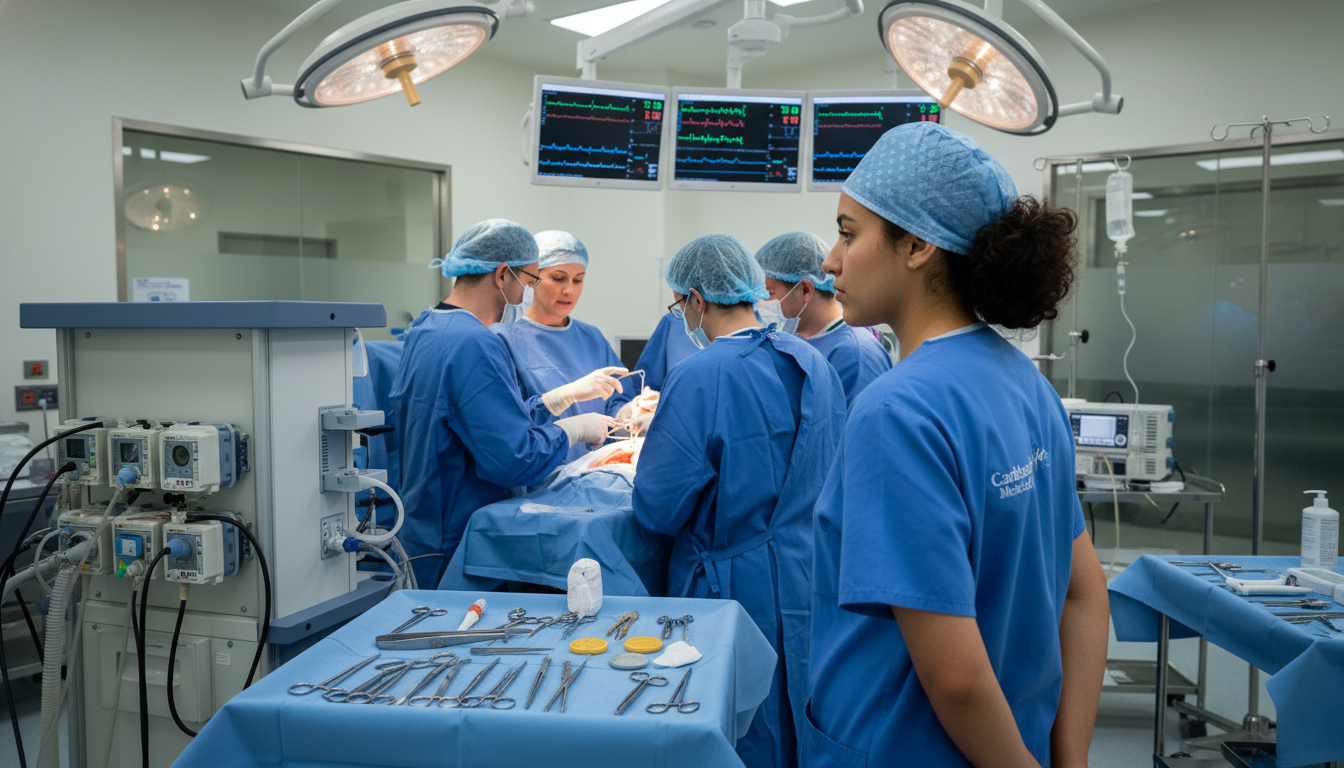
Once you’ve secured visiting student rotations in cardiothoracic or general surgery, your performance becomes the most important variable. For Caribbean IMGs, this is where you can genuinely erase much of the “IMG disadvantage.”
Week 1: Establish Reliability and Humility
- Arrive early, stay a bit late
- Be in the hospital before residents; know the day’s cases and patient list
- Learn every system quickly:
- EMR basics, order entry (if allowed), where to find imaging, labs, and supplies
- Introduce yourself clearly:
- “I’m [Name], a visiting student from [Caribbean school], really excited to work with your team this month.”
- Ask for expectations:
- “What’s expected of medical students on this service? What can I do to be most helpful?”
Show that you’re eager to help with:
- Pre-rounding (vitals, labs, note drafts)
- Dressing changes, drain checks, and basic procedures if allowed
- Organizing the list and updating the sign-out document
OR Behavior: Where CT Surgeons Judge You Quickly
In heart surgery training environments, OR culture is paramount. Your goal is to be:
Prepared:
- Read about the next day’s cases the night before
- Know basic anatomy (coronaries, valves, great vessels) and indications
Technically respectful:
- Learn proper gowning, gloving, and maintaining sterility
- Never lean on the Mayo stand, never contaminate fields
- Ask where you should stand before the case starts
Thoughtful, not intrusive:
- Ask short, relevant questions at appropriate moments
- Offer to close skin or place staples when invited—but don’t demand it
Example of a good approach:
“I read about this patient’s severe aortic stenosis overnight. I noticed the echo showed a mean gradient of 52 mmHg. I was wondering how that influences your choice of valve or approach in this case?”
Building Relationships With Faculty and Residents
Your Caribbean medical school residency application will depend heavily on the opinions of the people you work with during these rotations.
- Residents are your daily advocates
- Help them, make their jobs easier, and they will speak highly of you to attendings
- CT faculty notice:
- Who is always present, prepared, and calm
- Who reads and improves week-to-week
- Who maintains kindness toward nurses, perfusionists, and staff
Schedule brief, structured meetings:
Mid-rotation (Week 2–3):
- “Dr. X, I’d appreciate any feedback on how I’m doing and what I can improve over the rest of the rotation.”
End of rotation:
- “Working with you has confirmed my interest in surgery, and long-term, cardiothoracic surgery. If you feel you know me well enough, I’d be honored if you could consider writing a letter of recommendation for my residency applications.”
Show You Understand the Path: Not Just the Glamour
CT surgeons know who is fascinated by the procedure and who understands the lifestyle and training reality. Show maturity by:
- Asking about the pathway: general surgery vs integrated CT
- Asking how they chose programs and mentors
- Demonstrating awareness of:
- Long OR days
- Urgent/emergent cases
- The emotional weight of high-risk operations
You want them to see you as someone who is in this for the long journey, not the prestige alone.
Integrating Away Rotations Into Your Overall Residency Match Strategy
Using Rotations to Strengthen Both General Surgery and Cardiac Pathways
For Caribbean IMGs, the most realistic sequence is:
- Match into a strong general surgery residency
- Build a CT-focused resume during residency
- Match into a cardiothoracic surgery fellowship
Your away rotations should therefore:
Make you a stronger general surgery applicant:
- Strong letters from surgeons who have seen you work
- Proof you can thrive in US academic environments
Signal clear interest in CT:
- Letters that mention your interest in cardiothoracic surgery
- Documented CT exposure and participation in pre/post-op care
This dual-benefit strategy makes your away rotations high-yield even if you do not match directly into an I-6 position.
Prioritizing Programs for Your Rank List
If you complete an away rotation at a program and it goes well, that program often becomes a high-priority site on your rank list because:
- They know you personally
- You’ve seen the culture, workload, and teaching style
- You are more likely to interview there (or at least get serious consideration)
However, be honest with yourself:
- If the rotation revealed poor fit (geography, culture, support), you are not obligated to rank them highly.
- If you struggled on service, a different program may be better for you, even if the name is less prestigious.
Example Away Rotation Strategy for a Caribbean IMG Aiming for CT
Student Profile:
- SGU or other Caribbean school, strong Step 1/2 CK, solid surgery evaluations
- Moderate CT research, a few posters or abstracts
Rotation Plan:
Rotation 1 (Late 3rd year / early 4th year):
- General Surgery at a mid-to-high tier academic center with CT presence
- Goal: show strong clinical performance, earn a solid surgical letter
Rotation 2 (Summer before ERAS opens):
- Cardiothoracic Surgery at a CT center that accepts visiting students/IMGs
- Goal: gain direct CT exposure, show commitment, get a CT surgeon’s letter
Rotation 3 (Optional, if resources allow):
- ICU or another high-acuity surgical subspecialty rotation at a program likely to consider Caribbean IMGs
- Goal: reinforce critical care skills and broaden strong US letters
Then:
- Apply broadly to general surgery residency programs (academic and community with CT exposure)
- Consider applying to a small number of integrated CT programs only if your profile is genuinely competitive (high scores, excellent CT letters, significant research)
Common Pitfalls and How to Avoid Them
Pitfall 1: Choosing Only “Name Brand” Programs
Rotating only at ultra-competitive, IMG-averse programs may leave you with:
- No letters from programs that will actually interview you
- No genuine “home base” where you’re considered a top candidate
Solution: Mix “dream” and “realistic” programs, especially those with a track record of matching or training Caribbean graduates.
Pitfall 2: Doing Too Many Rotations and Burning Out
Back-to-back away rotations with constant travel, new systems, and pressure can:
- Lead to fatigue and decreased performance
- Make it harder to maintain Step 2 CK prep or research productivity
Solution:
Plan 2–3 high-yield rotations, with short recovery or study intervals between if possible.
Pitfall 3: Not Explicitly Asking for Feedback or Letters
Some students finish excellent rotations but never:
- Ask for feedback
- Clarify their career goals
- Request letters while the impression is fresh
Solution:
Schedule brief, polite meetings with attendings near the end of each rotation to:
- Ask how they perceived your performance
- Request a letter if appropriate
- Ask if they are comfortable highlighting your potential for surgery/CT in that letter
Pitfall 4: Neglecting Professionalism
Being late, disappearing midday without telling anyone, or speaking poorly of other programs or students can be fatal to a Caribbean IMG’s chances.
Remember:
- Nurses and residents will quietly but powerfully influence how attendings view you.
- You are always being evaluated—on the wards, in the OR, and even on breaks.
FAQs: Away Rotations for Caribbean IMGs in Cardiothoracic Surgery
1. As a Caribbean IMG, can I realistically match into cardiothoracic surgery?
Yes, but usually via a two-step pathway:
- Match into a strong general surgery residency
- Build a CT-focused resume (rotations, research, mentorship) during residency
- Apply for cardiothoracic surgery fellowship
Direct entry into integrated CT (I-6) is not impossible, but is very competitive, especially for Caribbean graduates. Your away rotations are crucial to keep both doors open.
2. How many away rotations should I do if I’m interested in cardiothoracic surgery?
For most Caribbean IMGs, 2–3 away rotations are appropriate:
- 1 cardiothoracic surgery rotation at a program that accepts IMGs
- 1–2 general surgery (or high-acuity surgical subspecialty) rotations at academic centers with CT services
Beyond 3 rotations, the financial and burnout costs often outweigh benefits.
3. Should I prioritize CT-specific rotations over general surgery away rotations?
You need at least one CT-focused experience, but you should not neglect general surgery:
- CT rotations: demonstrate focused interest and give you CT letters
- General surgery rotations: make you more competitive for categorical general surgery positions, which are often your first training step
A balanced strategy (1 CT + 1–2 general surgery rotations) is best for most Caribbean IMGs.
4. What if my Caribbean medical school doesn’t have strong CT exposure?
Use your away rotations and electives to compensate:
- Seek visiting student rotations in cardiothoracic surgery or cardiac surgery units in the US
- Arrange observerships or short shadowing experiences wherever possible
- Engage in CT or cardiac research remotely (case series, literature reviews, chart reviews) with faculty who can mentor you
Programs understand that not all schools offer robust CT exposure; they primarily care about how you use available opportunities and whether you’ve sought out CT experiences intentionally.
A deliberate, well-planned away rotation strategy can transform your prospects as a Caribbean IMG interested in cardiothoracic surgery. By selecting programs wisely, timing your rotations strategically, and performing at your highest level day after day, you can build a powerful narrative and network that will support both your initial general surgery match and your eventual journey into heart surgery training.