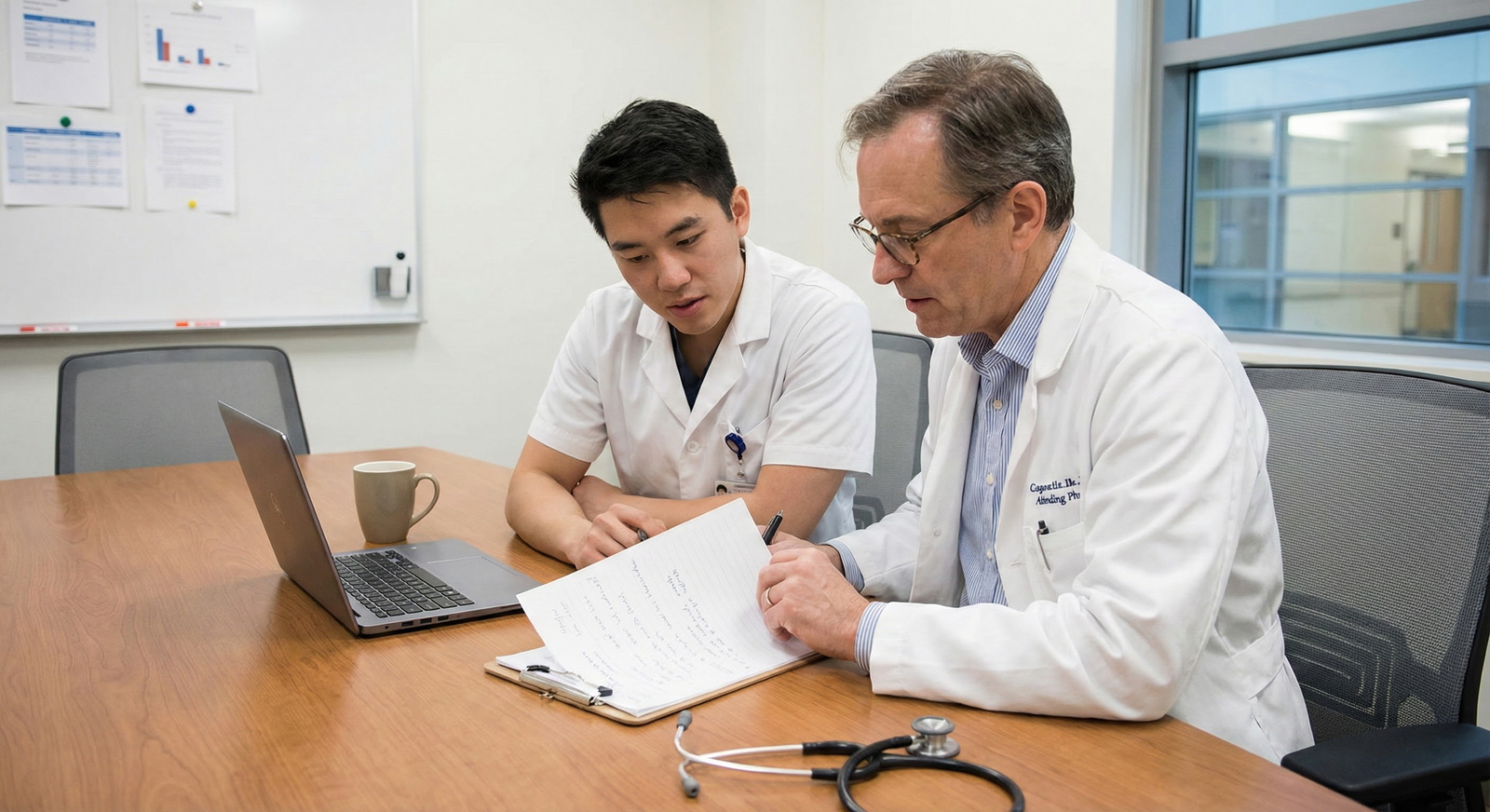
Understanding the Role of Away Rotations for Caribbean IMGs in Medicine-Psychiatry
For a Caribbean medical school residency applicant targeting a medicine-psychiatry combined program, away rotations (also called visiting student rotations or externships) are not optional “nice to have” experiences—they are often central to a successful match strategy.
As a Caribbean IMG, you typically face three added challenges:
- Limited home institution affiliations in the U.S.
- Less built-in visibility at programs that offer medicine-psychiatry combined training
- Bias and misconceptions about Caribbean medical schools
Thoughtfully planned away rotations can help counter all three by:
- Providing U.S. clinical experience in both internal medicine and psychiatry
- Allowing programs to directly assess your clinical ability, professionalism, and communication
- Earning strong, specialty-specific letters of recommendation (LoRs)
- Signaling commitment to medicine psychiatry combined training, which is still a relatively small niche
This article walks you through a strategic framework tailored specifically to Caribbean IMGs aiming for medicine-psychiatry combined programs: how many away rotations, where to do them, how to structure them across medicine and psychiatry, and how to maximize each one for your residency application.
Mapping the Landscape: Med-Psych Training and IMG Realities
Before you design an away rotation strategy, you need a realistic overview of the training pathway and the market you’re entering.
What Is Medicine-Psychiatry Combined Training?
Medicine-psychiatry combined (often shortened as med-psych) is a five-year integrated residency that leads to dual board eligibility in internal medicine and psychiatry. Training is structured to:
- Alternate or block internal medicine and psychiatry rotations
- Provide exposure to consult-liaison, psychosomatic medicine, and complex comorbidity
- Prepare graduates to work with medically and psychiatrically complex patients:
- Integrated primary care and behavioral health clinics
- Academic CL services
- Inpatient med-psych units
- Correctional, VA, or safety-net systems
For a Caribbean IMG, this niche can be strategically advantageous: applicant pools are smaller, and programs often value non-traditional paths and demonstrated resilience—attributes many Caribbean graduates bring.
How Many Med-Psych Programs Exist?
The exact number fluctuates slightly year to year, but there are generally 15–20 medicine psychiatry combined programs in the U.S. Total positions per year are limited, often in the 20–40 position range across all programs.
Implications for a Caribbean IMG:
- You must be highly targeted: you cannot afford a vague or unfocused strategy.
- Programs often look for:
- Genuine interest in integrated care
- Longitudinal experience or at least consistent interest in both medicine and psychiatry
- Clear career narrative (why med-psych vs medicine alone vs psychiatry alone)
Away rotations are one of the strongest ways to show that alignment.
Caribbean Medical School Residency Context (Including SGU)
If you’re at a Caribbean school—whether one of the larger ones like SGU (St. George’s University), Ross, AUC, Saba, or a smaller institution—you must assume:
- Programs may not be familiar with your curriculum or clinical evaluation system.
- Your SGU residency match or other Caribbean medical school residency outcomes can help demonstrate that graduates do succeed in competitive fields, but program directors still weigh direct observation heavily.
- U.S. clinical experience—especially at teaching hospitals with residency programs—carries more weight than excellent performance at unaffiliated community sites.
For medicine-psychiatry combined, away rotations at U.S. academic centers or strong teaching hospitals are your best way to show that you can function at the expected level.
Designing Your Overall Away Rotation Strategy
How Many Away Rotations Should a Caribbean IMG Do?
There is no single perfect number, but for a competitive medicine psychiatry combined candidate from a Caribbean school, a commonly effective target is:
- 3–4 total away rotations, if financially and logistically feasible
- 1–2 in internal medicine (preferably inpatient, with strong residency presence)
- 1–2 in psychiatry (inpatient and/or consult-liaison)
- Ideally 1–2 at institutions that either have a med-psych program or are med-psych–friendly
If resources are more limited, a strong minimum for a serious med-psych applicant is:
- 1 medicine away rotation + 1 psychiatry away rotation, with at least one at or near a med-psych program.
When programs ask “how many away rotations did you do?” they are really asking whether you:
- Prioritized U.S. clinical exposure
- Sought direct evaluation in your target disciplines
- Showed intentionality about where you see yourself training
It’s better to have 2–3 well-chosen, high-yield away rotations with excellent evaluations and LoRs than 6 loosely related short stints with generic feedback.
Optimal Timing for Away Rotations
For Caribbean IMGs, the calendar may differ slightly from U.S. MD/DO schools, but the principles are similar.
Ideal window:
- Late 3rd year through early 4th year (or equivalent)
- You want at least one completed away rotation with a letter by ERAS opening (September)
A possible timeline:
January–March (before application year):
- Research medicine psychiatry combined programs
- Identify hospitals that:
- Offer med-psych, or
- Have strong internal medicine and psychiatry departments with robust CL services
- Confirm eligibility for Caribbean students (some VSLO sites limit to U.S. schools)
April–May:
- Submit applications for away rotations (via VSLO/VSAS and direct institutional portals)
- Target rotations between June–September of the year before you apply
June–September:
- Complete 2–3 away rotations
- Request letters of recommendation promptly after each rotation
October–December (optional additional rotations):
- Late away rotations still help for post-interview updates and to build your narrative, though letters may be late for the initial ERAS wave.
Balancing Medicine and Psychiatry Exposure
As a medicine psychiatry combined applicant, you must avoid looking like a medicine-only or psychiatry-only candidate. The structure of your away rotations is part of that message.
Aim to demonstrate:
- Competence in core internal medicine
- Competence and authentic interest in psychiatry
- A mind that naturally integrates both lenses
A strong combination might look like:
- 1 inpatient internal medicine rotation at a site with a medicine residency (ideally academic)
- 1 inpatient psychiatry rotation (adult or CL)
- 1 additional rotation that shows integration, such as:
- Consult-liaison psychiatry
- Psychiatry on a medically complex unit (e.g., cancer, transplant, geriatrics)
- Primary care with integrated behavioral health
If you can secure an away rotation specifically in a med-psych program (some offer dedicated med-psych electives or CL experiences), that is particularly powerful.

Choosing High-Yield Sites: Where to Rotate and Why
Prioritizing Programs with Medicine-Psychiatry Combined Residencies
Start by identifying all U.S. programs that offer medicine psychiatry combined training. Once you have the list:
Sort by Caribbean-friendliness:
- Look at recent match lists and alumni bios on program websites.
- Note whether they list any IMGs or Caribbean graduates.
- If there are none, it does not mean “no,” but you may need a stronger application and direct contact.
Check for away rotation opportunities:
- Some med-psych programs host electives in:
- Med-psych inpatient units
- Consult-liaison psychiatry
- Integrated primary care/behavioral health
- If the central university blocks Caribbean students, consider affiliated community hospitals.
- Some med-psych programs host electives in:
Contact coordinators directly if needed:
- Politely ask if they accept visiting Caribbean students and which rotations are open to you.
- Express specific interest in medicine psychiatry combined training and ask if any rotations align with that focus.
Rotations at Non–Med-Psych Sites
Not every away rotation must be at a med-psych site. High-yield alternatives include:
- University-affiliated internal medicine services
- Large psychiatry departments with robust CL services
- VA hospitals with strong medicine and psychiatry programs
- Safety-net hospitals where complex comorbidity is common
What matters most is:
- Exposure to complex patients with both medical and psychiatric needs
- Opportunities to work under attendings who understand and value integrated care
- A formal evaluation structure that can support detailed, credible LoRs
Even if a hospital doesn’t have a medicine psychiatry combined program, your performance can lead to excellent letters and a strong narrative you can bring to med-psych interviews.
Balancing Geography and Program Tier
As a Caribbean IMG, it’s often wise to:
- Mix aspirational sites (major university med-psych centers) with:
- Realistic and backup sites (mid-tier academic or community-based teaching programs)
Factors to weigh:
- State and region: some states are historically more IMG-friendly.
- Visa sponsorship: if you require a visa (J-1 or H-1B), prioritize sites that sponsor and have a track record with IMGs.
- SGU residency match or your school’s match data: see where alumni in medicine, psychiatry, and med-psych have successfully matched and consider those institutions.
Maximizing Each Rotation: Performance, Networking, and Letters
Your away rotations are month-long interviews. For a Caribbean medical school residency applicant, every day is an opportunity to counter bias and build trust.
Clinical Performance: Internal Medicine
On your internal medicine away rotation, prioritize:
Solid medical knowledge and preparation
- Review common inpatient problems daily (CHF, COPD, sepsis, DKA, delirium).
- Read around your patients each night and bring that knowledge back on rounds.
Excellent presentations and notes
- Clear, concise, structured SOAP/APSOs.
- Explicitly integrate psychiatric and social history when relevant:
- “Given his uncontrolled depression and recent alcohol relapse, I’m concerned about adherence to our CHF regimen…”
Ownership of your patients
- Know every lab, imaging result, and consultant recommendation.
- Proactively coordinate with social work, PT, and psychiatry consults.
Your goal is to show that you can function at the level of a strong U.S. Sub-I (sub-intern).
Clinical Performance: Psychiatry
On psychiatry rotations, med-psych applicants should:
Demonstrate comfort with both medical and psychiatric thinking
- When evaluating a new patient with psychosis, also think about:
- Metabolic panel, TSH, B12, infectious workup where indicated
- Medication side effects (e.g., steroids, dopamine agonists)
- When discussing a patient with delirium, integrate internal medicine reasoning (infection, metabolic issues, medication toxicity).
- When evaluating a new patient with psychosis, also think about:
Excel in interviewing and rapport-building
- Use open-ended questions, validate distress, and maintain boundaries.
- Be culturally sensitive, especially if your accent or background is different from the patient’s.
Show understanding of systems of care
- Collaborate with nursing, social work, and primary teams.
- Understand discharge planning and outpatient follow-up.
Signaling Your Med-Psych Interest During Rotations
On both medicine and psychiatry away rotations:
Tell your team early that you are applying to medicine psychiatry combined:
- “I’m planning to apply to medicine-psychiatry combined programs because I’m particularly interested in caring for patients with both severe mental illness and complex medical needs.”
Ask for integrated learning opportunities:
- On medicine: request to see patients with delirium, substance use, severe mental illness.
- On psychiatry: volunteer for consults on the medical floors, or CL electives if available.
Frame your questions and discussions through an integrated lens:
- “How do we coordinate with cardiology and psychiatry for this patient with bipolar disorder starting amiodarone?”
- “What’s the best way to manage antipsychotic-induced metabolic syndrome in a patient with diabetes?”
Securing Strong Letters of Recommendation
For a competitive med-psych application, aim for:
- 2–3 specialty-relevant LoRs, ideally:
- 1 from an internal medicine attending
- 1 from a psychiatry attending
- 1 additional from either field, or ideally someone with med-psych or CL expertise
To maximize your LoRs:
Identify potential letter writers early (week 2–3).
- Pick attendings who directly observe your work and give feedback.
- Choose people who are engaged educators and seem enthusiastic about you.
Ask directly and specifically:
- “I’m applying to medicine psychiatry combined programs and would be honored if you could write a strong letter of recommendation that speaks to both my clinical performance and my fit for med-psych training.”
Support them with a packet:
- Updated CV
- Personal statement draft (or brief summary of your med-psych interest)
- ERAS letter form if needed
Clarify logistics:
- Confirm they can submit before ERAS deadlines.
- Follow up politely if needed.

Practical Logistics: Applications, Finances, and Common Pitfalls
Applying for Visiting Student Rotations
Most U.S. medical schools and teaching hospitals use:
- VSLO (Visiting Student Learning Opportunities, formerly VSAS)
- Or their own institutional application portals
As a Caribbean IMG, you must:
- Confirm that your Caribbean school participates in VSLO (many do, including SGU).
- If not, identify hospitals that accept international visiting students directly.
Typical requirements:
- Transcript
- Proof of clinical readiness (clerkships completed)
- Immunizations and health clearance
- Background check and drug screen
- Proof of malpractice coverage (your school may provide this)
- TOEFL or language proof for some IMGs (less common if your instruction is in English)
Apply early. Competitive rotations at major med-psych sites may fill 4–6 months in advance.
Financial Planning
Away rotations are expensive, especially for Caribbean IMGs who may be traveling from outside the U.S. Budget for:
- Application fees (VSLO + institutional)
- Housing (often short-term, high cost)
- Transportation (flights, local transit, parking)
- Meals and basic living expenses
- Additional costs: lab tests, TB testing, insurance gaps
Strategies to reduce cost:
- Group away rotations in the same city or region to reuse housing.
- Consider hospital-subsidized housing or short-term rentals shared with other students.
- Apply for scholarships or diversity/IMG travel grants when available.
Common Pitfalls for Caribbean IMGs and How to Avoid Them
Too few U.S. rotations
- At minimum, ensure you have several months of U.S. clinical experience, including both medicine and psychiatry.
Rotations without residency programs
- Community sites can be valuable, but make sure at least some of your rotations are at training hospitals with residents and faculty familiar with the match process.
Passive performance
- As an IMG, you cannot be invisible. Ask for tasks, volunteer to present, and demonstrate eager engagement—without overstepping.
Not addressing bias proactively
- Let your work speak for itself, but also be ready to explain your path clearly and calmly:
- Why Caribbean school?
- What you’ve learned from that path?
- How it prepares you for resilience in med-psych training?
- Let your work speak for itself, but also be ready to explain your path clearly and calmly:
Neglecting backup plans
- While targeting medicine psychiatry combined, also maintain a realistic plan for:
- Categorical internal medicine and/or
- Categorical psychiatry
- Your away rotations can still support those pathways.
- While targeting medicine psychiatry combined, also maintain a realistic plan for:
Integrating Your Away Rotations into a Strong Med-Psych Application
After you complete your away rotations, the work isn’t over. You must:
Reflect and Integrate into Your Personal Statement
Use specific experiences from your rotations to show:
- Why you belong in medicine psychiatry combined training
- How you think across disciplines
- How you have seen gaps in care for patients with complex comorbidities
Example themes:
- A patient with uncontrolled schizophrenia and heart failure who kept being readmitted due to poor care coordination.
- A medically complex inpatient whose delirium and depression were missed until psychiatry was involved.
- Your experience watching med-psych or CL teams bridge these gaps.
Communicate Your Story on Interviews
Programs will ask about your:
- Caribbean medical school experience
- Medicine and psychiatry rotations
- Motivation for med-psych vs single-board training
Use your away rotations to:
- Cite concrete experiences (“On my internal medicine away rotation at X Hospital, I saw…”).
- Highlight feedback you received and how you grew.
- Demonstrate that program faculty trusted you with responsibility.
Maintain Relationships
Away rotations are as much about relationships as resumes.
- Send thank-you emails to attendings and residents who mentored you.
- Provide updates when you submit ERAS and when you receive interviews.
- If you are strongly interested in a specific program, let your attendings there know—sometimes they can quietly advocate for an interview.
FAQs: Away Rotations for Caribbean IMGs in Medicine-Psychiatry
1. How many away rotations should I do specifically for medicine psychiatry combined?
For a Caribbean IMG targeting medicine psychiatry combined, a typical strong plan is:
- 3–4 total away rotations if possible
- 1–2 in internal medicine
- 1–2 in psychiatry
- At least 1, and ideally 2, at institutions that either have a med-psych program, strong CL services, or are known to value integrated care.
If limited by finances or scheduling, 2 high-quality rotations (one medicine, one psychiatry) at strong teaching sites can still be competitive if your performance and letters are excellent.
2. Do I need an away rotation at a program that has a med-psych residency to match there?
It certainly helps, but it is not absolutely required. Rotating at a med-psych site:
- Gives you direct exposure to the structure and culture of combined training
- Allows the program to see your performance first-hand
- Often improves your chance of getting an interview and a strong letter
If you cannot secure such a rotation, compensate by:
- Doing high-quality rotations in internal medicine and psychiatry at reputable U.S. teaching hospitals
- Emphasizing your integrated interest and experiences in your personal statement and interviews
- Seeking CL or integrated care electives where possible
3. As a Caribbean IMG, are medicine psychiatry combined programs realistic for me?
Yes, but they are competitive and niche, so you must be deliberate:
- Ensure strong USMLE scores (if required) and solid clinical evaluations
- Accumulate substantial U.S. clinical experience (both medicine and psychiatry)
- Use away rotations to earn excellent, detailed LoRs
- Apply broadly and realistically, and maintain a backup plan in categorical internal medicine and/or psychiatry
Some medicine psychiatry combined programs have taken Caribbean graduates, especially those with robust U.S. experience and a clear integrated-care narrative.
4. Should I prioritize internal medicine or psychiatry for away rotations if I can’t do both?
If you must choose:
- For medicine psychiatry combined, it is essential to have at least one psych and one medicine rotation somewhere in your overall training.
- If your school already gives you strong medicine exposure in the U.S. but limited psychiatry, then prioritize a psychiatry away rotation, ideally CL or inpatient.
- If your psychiatry exposure is strong but your internal medicine U.S. experience is weaker, then prioritize a rigorous inpatient internal medicine away rotation at a teaching hospital.
Ultimately, medicine psychiatry combined programs want to see evidence that you can succeed in both disciplines; your total clinical portfolio should reflect that balance, even if not every away rotation is split.
By approaching away rotations as a deliberate, integrated strategy rather than a last-minute scramble, a Caribbean IMG can transform potential disadvantages into strengths. With carefully chosen sites, strong performance, intentional mentorship, and clear communication of your med-psych vision, you can significantly enhance your competitiveness for a medicine psychiatry combined residency—and build the foundation for a career at the intersection of mind and body.