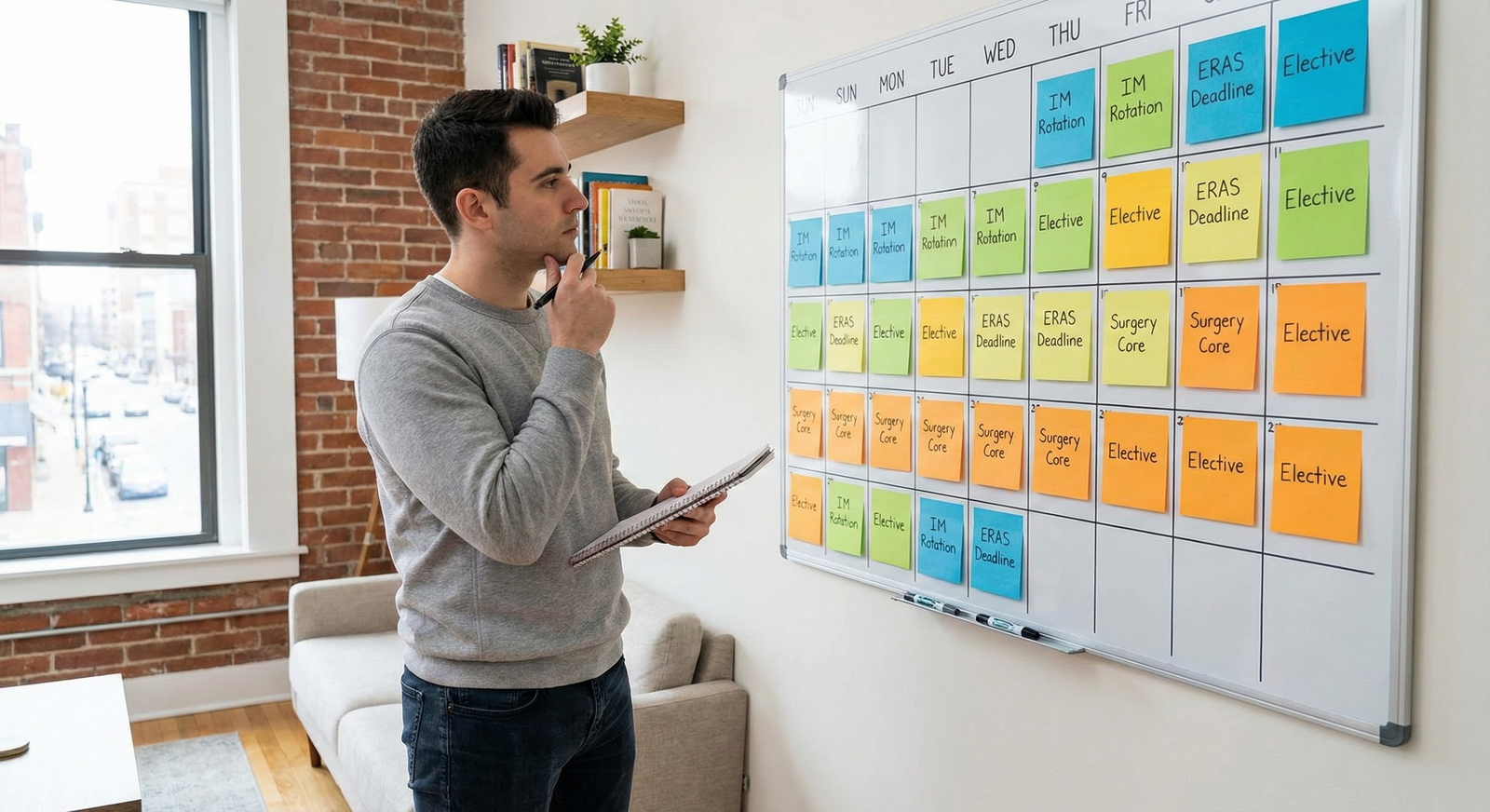
As a DO graduate targeting a combined Emergency Medicine-Internal Medicine (EM-IM) residency, your away rotation strategy can significantly influence your match outcome. EM-IM is small, competitive, and highly relationship-driven. Thoughtful planning of visiting student rotations is essential—both to demonstrate your capabilities in high-acuity care and to signal genuine interest in combined training.
Below is a comprehensive guide tailored specifically to a DO graduate planning away rotations for EM-IM.
Understanding the Role of Away Rotations for EM-IM as a DO Graduate
Away rotations (also called visiting student rotations or “auditions”) are especially impactful for:
- A DO graduate residency applicant seeking to demonstrate parity with MD peers
- Applicants targeting small, combined programs like EM-IM
- Students whose home institutions may not have EM-IM or even EM residency programs
Why Away Rotations Matter More for DO Graduates
As a DO graduate, away rotations can:
- Show program directors that you can thrive in allopathic academic environments
- Offset potential perceived disadvantages if:
- Your COMLEX-only scores are solid but you lack USMLE
- Your home school has limited EM prestige or connections
- Provide strong SLOEs (Standardized Letters of Evaluation) from ACGME EM programs, which are critical even for EM-IM
For EM-IM specifically, away rotations can:
- Demonstrate that you understand and truly want a dual-residency lifestyle (longer training, dual call responsibilities, complex career path)
- Allow you to meet faculty and residents across both Emergency Medicine and Internal Medicine at the same institution
- Mark you as a serious, informed applicant rather than someone concurrently applying broadly to categorical EM and IM with only superficial interest in the combined track
Deciding How Many Away Rotations and Where to Do Them
One of the most common questions is: how many away rotations should I do for EM-IM as a DO?
How Many Away Rotations Are Ideal?
For a DO graduate pursuing EM-IM, a reasonable strategy is:
- 2 EM-focused away rotations at ACGME EM programs that also have EM-IM or strong IM departments
- Optional:
- 1 Internal Medicine (or IM subspecialty) away if you want to highlight your IM strength or lack strong IM exposure at home
- 1 “home EM rotation” (if available) at your base institution or an affiliated site
Total: usually 2–3 away rotations, with 2 in EM being the minimum for a robust application.
CTQ: If you must prioritize because of cost/time:
- First priority: 1–2 EM or EM-IM away rotations where you could realistically match
- Second priority: Home EM rotation (if present) and strong IM letters
- Third priority: Additional IM away only if it adds something strategic (e.g., at an EM-IM program you’re highly interested in)
Where to Rotate as an EM-IM–Focused DO Applicant
You’ll want a mix of:
Programs that actually have EM-IM
- Aim for at least one away at an institution with an EM-IM program, if logistically feasible.
- This allows you to work directly with faculty who understand the combined pathway and can speak to your fit.
Highly regarded EM programs open to DOs
- Especially those that:
- Have a track record of interviewing/matching DOs
- Offer robust SLOEs recognized across the country
- These rotations help your EM side of the application and build strong letters.
- Especially those that:
Academic centers with strong IM departments
- If you do an IM away, prioritize:
- Academic internal medicine with strong inpatient exposure
- Programs that interact closely with EM (ED consults, ICU co-management, etc.)
- If you do an IM away, prioritize:
Key criteria to consider:
- Does the EM department produce standardized SLOEs?
- Does the program explicitly welcome DOs (check past resident rosters)?
- Is there an EM-IM track or at least a clear IM-leaning environment within EM (e.g., strong ED observation unit, co-managed ICU, complex medical patients)?

Timing and Sequence: When to Do Away Rotations for EM-IM
Strategic timing matters—especially since EM-IM programs often rely heavily on SLOEs and early impressions.
Ideal Timeline for a DO Graduate (Post–COVID Era Considerations)
Assuming a traditional final year schedule (adjust if on a different timeline):
January–February (prior year):
- Research EM-IM and EM programs
- Review VSLO (Visiting Student Learning Opportunities) / individual hospital websites
- Meet with EM and IM advisors familiar with DO applicants
February–March:
- Finalize your away rotations residency strategy
- Identify 6–10 programs to apply to for 2–3 away slots
- Clarify if you’ll apply to categorical EM and/or IM in addition to EM-IM
April–June:
- Submit applications via VSLO or program-specific portals
- Keep documents ready: transcript, board scores, immunizations, background checks, drug screen, COVID requirements
July–October:
- Complete your visiting student rotations
- Target at least one EM away before ERAS submission so that a SLOE is ready or in progress.
September:
- ERAS application submitted (EM-IM, EM, IM)
- SLOEs and IM letters ideally uploaded or planned to be uploaded early.
When to Schedule EM vs IM Rotations
First EM rotation (home or away):
- Aim for June–August so that your first SLOE can influence early interview offers.
- If your home EM rotation is strong and can produce a SLOE, doing that early is advantageous.
Second EM away rotation:
- Can be August–October to provide an additional SLOE and a chance to showcase growth.
IM rotation:
- If you do an IM away, it can be July–October, but prioritize not overlapping with key EM-IM application deadlines or EM away that could produce SLOEs.
- IM letters are valued but generally secondary to EM SLOEs for EM-IM selection.
If you’re a DO graduate outside a traditional 4th year (e.g., gap year, transitional year), coordinate your rotations to still generate recent, specialty-specific evaluations within the application year.
Choosing Rotation Types and Structuring Your EM-IM Narrative
Not all rotations are equal in value. You want a mix that convincingly supports your identity as a future emergency medicine-internal medicine physician.
High-Yield Rotations for EM-IM Applicants
Core EM Rotations (High Priority)
- Settings: Busy academic EDs, trauma centers, or hybrid community-academic sites
- Value:
- Generate SLOEs
- Prove you can manage undifferentiated patients, rapid decision-making, and acute resuscitation
Internal Medicine Inpatient Rotations
- Settings: Academic internal medicine, hospitalist service, or ICU
- Value:
- Demonstrate depth in longitudinal patient management
- Show your ability to think in systems, manage complex comorbidities, handle handoffs and long-term plans
ICU Rotations (Optional but Attractive)
- Medical ICU or mixed ICU
- Particularly valuable if:
- You lack heavy critical care exposure at your home institution
- You want to underscore interest in high-acuity internal medicine and critical care
Specialized Rotations with EM-IM Overlap
- Examples: ED observation unit, ED-based ultrasound, ED-ICU hybrid, ED-based sepsis or cardiology collaborations
- Value:
- Reinforce your dual-interest identity
- Provide sophisticated talking points for interviews and personal statements
Crafting a Cohesive EM-IM Story Through Your Rotations
Use your rotation choices to tell a deliberate story:
- “I enjoy rapid stabilization and ambiguity” → EM rotations
- “I also like longitudinal, complex medical problem-solving and inpatient management” → IM and ICU rotations
- “I’m comfortable bridging both worlds and want structured dual training” → EM-IM away or EM away with robust IM overlap
In your application materials, explicitly connect:
- Specific EM cases where you stabilized undifferentiated patients
- IM experiences managing chronic conditions, goals-of-care, or lengthy hospitalizations
- How those experiences drove you toward combined training rather than choosing EM or IM alone.

Maximizing Performance and Letters During Away Rotations
Once you secure away rotations, performance is everything. For a DO graduate, this is your best opportunity to erase biases and stand out.
What EM-IM and EM Programs Look for on Away Rotations
Faculty and residents are asking:
- Are you clinically solid and safe with patients?
- Do you show initiative without overstepping?
- Do you function well in high-pressure, team-based environments?
- Can you transition comfortably between rapid ED care and deliberate IM-style management?
- Are you someone they want to work 12+ hours with regularly?
Traits to demonstrate:
- Work ethic: be the first to help with new patients, procedures, or tasks
- Adaptability: smoothly integrate into new EMR, workflows, and team cultures
- Curiosity: ask focused, thoughtful questions; read and follow up on your patients
- Professionalism: be reliable, humble, and open to feedback
Specific Strategies to Excel on EM Rotations
Pre-rotation preparation
- Review common ED chief complaints: chest pain, abdominal pain, shortness of breath, fever, altered mental status.
- Practice concise EM presentations:
- “One-liner” including age, key PMH, chief complaint
- Brief differential prioritized by danger
- Initial plan and disposition thinking
On-shift behaviors
- Ask for patients: “Can I pick up the next patient?”
- Follow through:
- Reassess your patients regularly
- Update your attending on key changes
- Own tasks:
- Write notes promptly
- Place orders (with supervision at first)
- Coordinate with consultants
After-shift follow-up
- Look up final results, imaging, and outcomes of your patients
- Read one focused article or guideline nightly on something you saw that day
- Bring that knowledge back on the next shift when you see a related case
Maximizing IM Rotations for EM-IM
On IM or ICU rotations, highlight your ability to:
- Manage complex, multi-day hospital courses
- Collaborate with EM colleagues during admissions and rapid responses
- Communicate clearly with patients and families about evolving care
Focus on:
- Thoroughness in H&P and note-writing
- Meticulous follow-up on labs, imaging, and subspecialty recommendations
- Mastering hospital systems, discharge planning, and transitions of care
Securing Strong Letters (SLOEs and IM Letters)
For EM-IM applications, you’ll usually want:
- At least 2 EM SLOEs (home + away, or two away)
- 1 strong IM letter (inpatient or ICU attending)
- Optional additional letter from:
- An EM-IM faculty member (highly valuable if available)
- A research mentor in EM or IM
Tips:
- Let attendings know your goals:
- “I’m a DO graduate very interested in EM-IM; I’d be grateful for feedback on how I’m doing and whether I’m on track for a strong letter.”
- Ask near the end of the rotation:
- “Based on my performance, do you feel comfortable writing me a strong, supportive letter for EM-IM and EM?”
- Provide them with:
- Your CV
- Draft personal statement
- A brief bullet summary reminding them of specific cases or contributions
DO-Specific Considerations and Common Pitfalls to Avoid
As a DO graduate, you must be especially strategic in:
- Program selection
- Board exam presentation
- Communication of your goals
Addressing COMLEX vs USMLE
If you took:
COMLEX only:
- Target EM and EM-IM programs known to be DO-friendly.
- Use away rotations to demonstrate performance on equal footing with MD peers.
- Consider explicitly noting on ERAS and in interviews that you sought challenging academic rotations to validate your abilities.
Both COMLEX and USMLE:
- Be sure that USMLE scores are visible to all programs.
- Away rotations can still reinforce your profile, but the hurdle is lower if scores are strong.
Selecting Programs That Genuinely Consider DOs
Before applying for away rotations or ranking EM-IM programs, research:
- Resident roster: Are current or recent residents DOs?
- Program websites and social media: Do they highlight osteopathic residency match success or DO grads?
- EM advisor input: National EM organizations often know which programs historically welcome DOs.
Common Pitfalls in Away Rotation Strategy
Doing too many low-yield away rotations
- Four or more aways with redundant settings (small community EDs without SLOEs) add little value and increase burnout.
Ignoring IM entirely
- EM-IM programs expect you to genuinely want and fit in with IM. Have at least:
- Robust IM home rotations
- One strong IM letter
- A narrative that clearly includes IM motivations
- EM-IM programs expect you to genuinely want and fit in with IM. Have at least:
Failing to clearly articulate “Why EM-IM”
- During your rotations and interviews, you must be able to answer:
- Why not just EM?
- Why not just IM?
- What long-term career do you envision that requires both?
- During your rotations and interviews, you must be able to answer:
Underestimating professionalism signals
- Late arrivals, last-minute call-offs, or poor communication during rotations can quietly tank your application.
FAQs: Away Rotation Strategy for DO Graduates in EM-IM
1. How many away rotations should I do if I’m primarily targeting EM-IM but also applying to EM?
Aim for 2 EM away rotations, plus your home EM rotation if you have one. This typically yields 2–3 SLOEs, which is competitive for EM and EM-IM. You may add 1 IM or ICU rotation if your IM exposure is thin or you want a strong IM letter.
2. Do I need to do an away rotation at a specific EM-IM program to match there?
It’s not strictly required, but it can be very advantageous. EM-IM programs are small and value fit; rotating there lets them see your performance in both EM and IM-like settings. If you can’t rotate at an EM-IM site, prioritize strong EM aways at programs that:
- Frequently match EM-IM applicants
- Have robust internal medicine departments Then use your application and interviews to clearly articulate your combined-interest story.
3. As a DO graduate, will away rotations help overcome not having USMLE scores?
They can help substantially. Strong performance and excellent SLOEs from reputable EM programs can reassure PDs about your clinical capabilities, even if you are COMLEX-only. That said, some programs have hard USMLE filters regardless of clinical performance; research those early and adjust your list to emphasize DO-friendly programs.
4. Is an IM away rotation necessary for EM-IM, or can I rely on home IM rotations and letters?
You do not need an IM away if:
- You have robust IM exposure at your home institution
- You can secure a strong IM letter from an inpatient or ICU attending
If your home IM experience is limited or primarily outpatient, an IM or ICU away can strengthen your IM side. But from the perspective of EM-IM selection, high-quality EM SLOEs usually carry more weight than an extra IM away.
By thoughtfully choosing where, when, and how many away rotations to complete—and by maximizing your performance once you’re there—you can create a compelling EM-IM application as a DO graduate. Focus on building a cohesive narrative, securing strong EM SLOEs and at least one solid IM letter, and demonstrating that you truly belong at the intersection of emergency medicine and internal medicine.