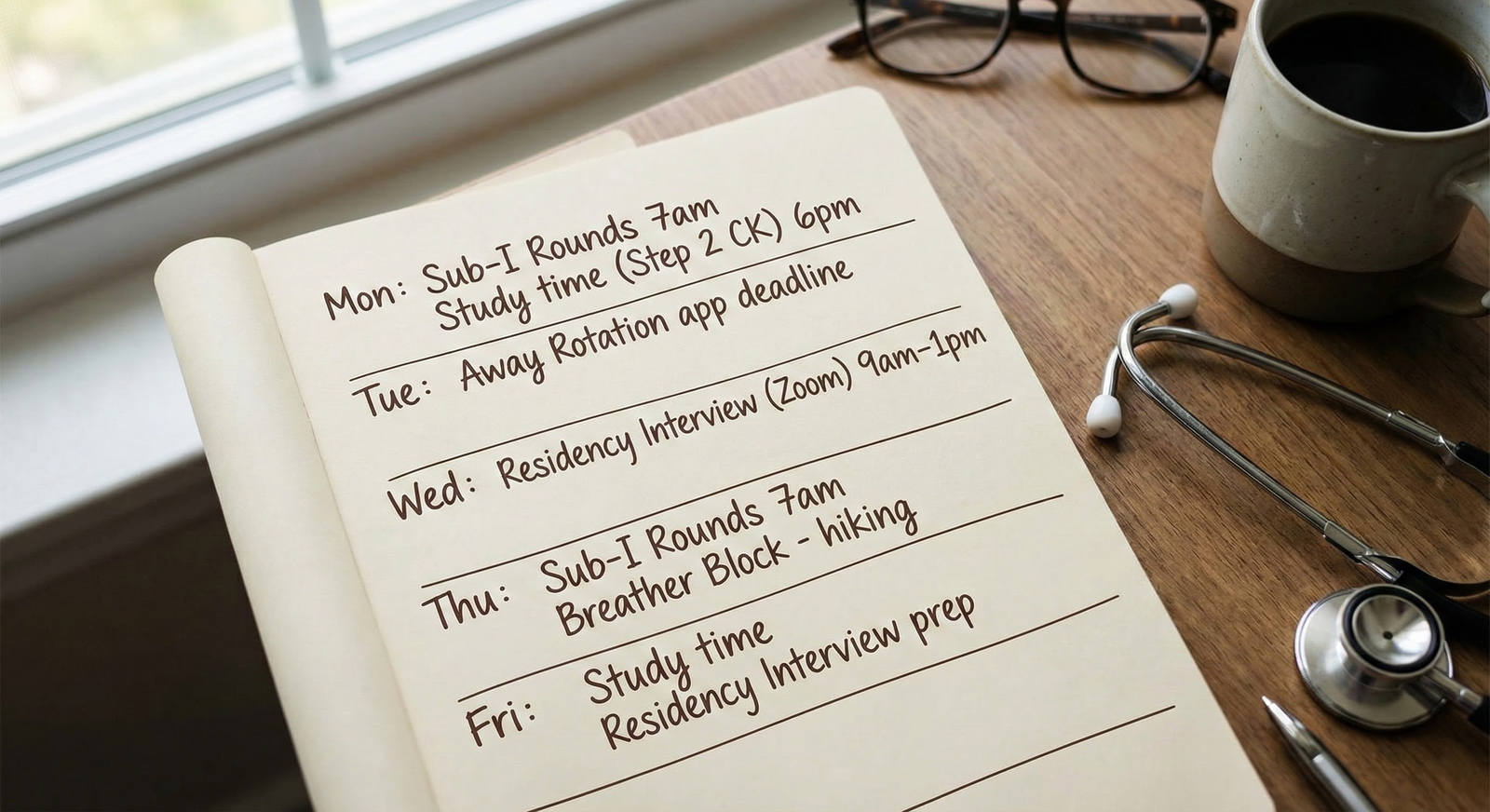
Understanding Away Rotations as an MD Graduate
Away rotations (also called visiting student rotations, audition rotations, or “aways”) are one of the most powerful tools you have to influence your residency trajectory. For an MD graduate, especially coming from an allopathic medical school, a well-planned away rotation strategy can:
- Open doors at competitive programs
- Help you decide where you truly fit
- Strengthen your letters of recommendation
- Mitigate weaknesses in your application (e.g., mid-range scores, limited home opportunities)
At the same time, away rotations are expensive, time-consuming, and physically and emotionally demanding. Doing them without a clear strategy can hurt more than help.
This guide will walk you through a comprehensive, step-by-step approach to away rotation strategy tailored to MD graduates—covering how many away rotations to do, where to apply, how to prepare, and how to maximize each experience for the allopathic medical school match.
Clarifying Your Goals: Why Are You Doing Away Rotations?
Before you click “submit” on VSLO/VSAS, you need a clear rationale. Different goals lead to very different away rotation strategies.
Common Goals for Away Rotations
Increase chances at a specific program or geographic region
- You have a dream institution or city and want to show serious interest.
- You have personal ties (family, partner) that make a location especially important.
Improve odds in a competitive specialty
- Specialties like dermatology, orthopedic surgery, neurosurgery, plastics, ENT, urology, and some competitive internal medicine or anesthesiology programs often look closely at away rotation performance.
- For these, an away can sometimes function as a “month-long interview.”
Compensate for limited home resources
- Your allopathic medical school may lack a home department or robust program in your chosen specialty (e.g., no home neurosurgery program).
- Away rotations can demonstrate exposure and commitment to that field.
Strengthen letters of recommendation (LoRs)
- You may need additional specialty-specific LoRs from academic faculty.
- Away rotations provide another chance to earn strong, recent letters.
Clarify fit and career direction
- You might be choosing between subspecialty tracks (e.g., academic vs community medicine, surgical vs non-surgical fields).
- Experiencing different practice styles can be decisive.
Aligning Goals With Strategy
Your specific goals should dictate:
- Where you rotate (institution type, region, program competitiveness)
- When you rotate in the academic year
- How many away rotations you attempt
- What you prioritize during the month (research networking vs clinical performance vs lifestyle fit)
Take 10–15 minutes to write down your top 3 goals for away rotations. Refer to them as you design the rest of your strategy.
Deciding How Many Away Rotations to Do
“How many away rotations” to pursue is one of the most critical strategic questions—and the answer depends heavily on your specialty, your competitiveness, and your financial and personal constraints.
General Guidelines by Specialty Competitiveness
While practices evolve, the following is a practical starting framework for an MD graduate:
Less-Competitive or Broad-Access Specialties
(e.g., Family Medicine, Pediatrics, Psychiatry, Internal Medicine at most programs)
- Typical strategy: 0–1 away rotations
- You may not need any away rotations to match successfully, especially if:
- You have a strong home program
- Your board scores and clinical grades are solid
- You have good mentorship and LoRs from your institution
- When to do 1 away:
- Strong geographic preference (e.g., want to be near a partner)
- Desire for a particular institution or academic brand
- Limited or no home program in that specialty
Moderately Competitive Specialties
(e.g., Anesthesiology, Emergency Medicine, some internal medicine subspecialty-track programs)
- Typical strategy: 1–2 away rotations
- For Emergency Medicine, historically:
- 1 home rotation + 1 away rotation is often sufficient
- 2 away rotations if you lack a strong home EM program or need additional SLOEs
- For anesthesiology or similar:
- 1 away rotation can signal strong interest to a region or top-tier program
- A second away only if there’s a compelling reason (e.g., no home program)
Highly Competitive Specialties
(e.g., Dermatology, Orthopedic Surgery, Neurosurgery, Plastic Surgery, ENT, Urology, Radiation Oncology)
- Typical strategy: 2–3 away rotations
- Many MD graduate residency applicants in these fields will:
- Do 1 “reach” away at a top-tier academic program
- Do 1–2 “target” away rotations at mid- to upper-tier programs where they are realistically competitive
- More than 3 is rarely wise—burnout, cost, and limited marginal benefit typically outweigh advantages.
Factors That Should Modify These Numbers
Presence and strength of a home program
- Strong home program in your specialty:
- Lean toward fewer away rotations; prioritize excelling at home.
- No or weak home program:
- You may need 2–3 away rotations to demonstrate exposure and obtain LoRs.
- Strong home program in your specialty:
Your competitiveness as an applicant
- Strong metrics (high Step scores, honors, research, leadership):
- You can be more selective with fewer aways; consider more “reach” programs.
- Middle-of-the-road metrics:
- Consider 2 away rotations, targeting solid mid-tier programs.
- Weaker metrics:
- 1–2 strategically chosen aways may help, but overextending yourself can backfire; program selection and realistic targeting matter more than sheer number.
- Strong metrics (high Step scores, honors, research, leadership):
Financial and logistical constraints
- Away rotations are expensive: application fees, travel, housing, lost income.
- If money is tight:
- Limit to 1–2 critically important aways.
- Apply for scholarships (VSLO diversity scholarships, specialty society funds, institution-based stipends).
Timing within the application cycle
- Early (May–August) aways:
- More impactful for your allopathic medical school match because performance can be reflected in LoRs and interview offers.
- Late (September–November) aways:
- Can still help, but impact may be limited to signaling interest and possible late LoRs.
- Early (May–August) aways:
Actionable step: Talk to a mentor or program director in your specialty and explicitly ask:
“Given my application profile, how many away rotations do you recommend, and at what types of programs?”

Choosing Where to Rotate: Program Selection Strategy
Once you know approximately how many aways you’ll do, the next step is choosing where. This is where many candidates make avoidable mistakes—either only applying to dream programs or scattering applications without a plan.
Step 1: Segment Programs Into Tiers
Think of your list in three categories:
- Reach programs
- Very competitive, top academic centers, often outside your metrics range
- Good for exposure and networking, but not guaranteed interviews
- Target programs
- Programs where your metrics and experiences closely match their typical residents
- Highest yield for matching and earning strong LoRs
- Safety/solid baseline programs
- Programs with broader intake, perhaps in less popular locations
- Still reputable; more likely to offer interviews and rank you highly
Practical mix per away:
- If doing 1 away:
- Aim for a strong target program in your preferred region.
- If doing 2–3 aways:
- 1 reach + 1–2 target/safety programs is often optimal.
Step 2: Align With Geographic and Personal Priorities
Think about:
- Where you and your family/partner would realistically live
- Regions where you have ties (hometown, undergrad, family)
- Areas that match your lifestyle preferences (urban, suburban, rural)
Programs value genuine geographic interest. Doing visiting student rotations in your preferred region is a strong signal that you are serious about living there.
Step 3: Assess Program Culture and Training Style
Review:
- Program websites, resident rosters, and alumni outcomes
- Call schedule, rotation structure, and subspecialty exposure
- Presence of research opportunities in your areas of interest
- Diversity, wellness initiatives, mentorship structures
Whenever possible, talk to current residents before applying. Ask:
- “What are the strengths and weaknesses of your program?”
- “How are away rotators evaluated?”
- “Do away rotations often lead to interview offers or matches here?”
Step 4: Consider “Hidden Gem” Programs
Not every good fit is a household name. For an MD graduate aiming for a strong but realistic allopathic medical school match:
- Look for mid-sized academic or large community programs with:
- Good fellowship match outcomes
- Stable leadership
- Positive resident reviews (e.g., Freida, specialty forums—used cautiously)
- These often provide excellent training and may value motivated away rotators more than ultra-competitive institutions overloaded with visiting students.
Application Logistics: Timing, VSLO, and Preparation
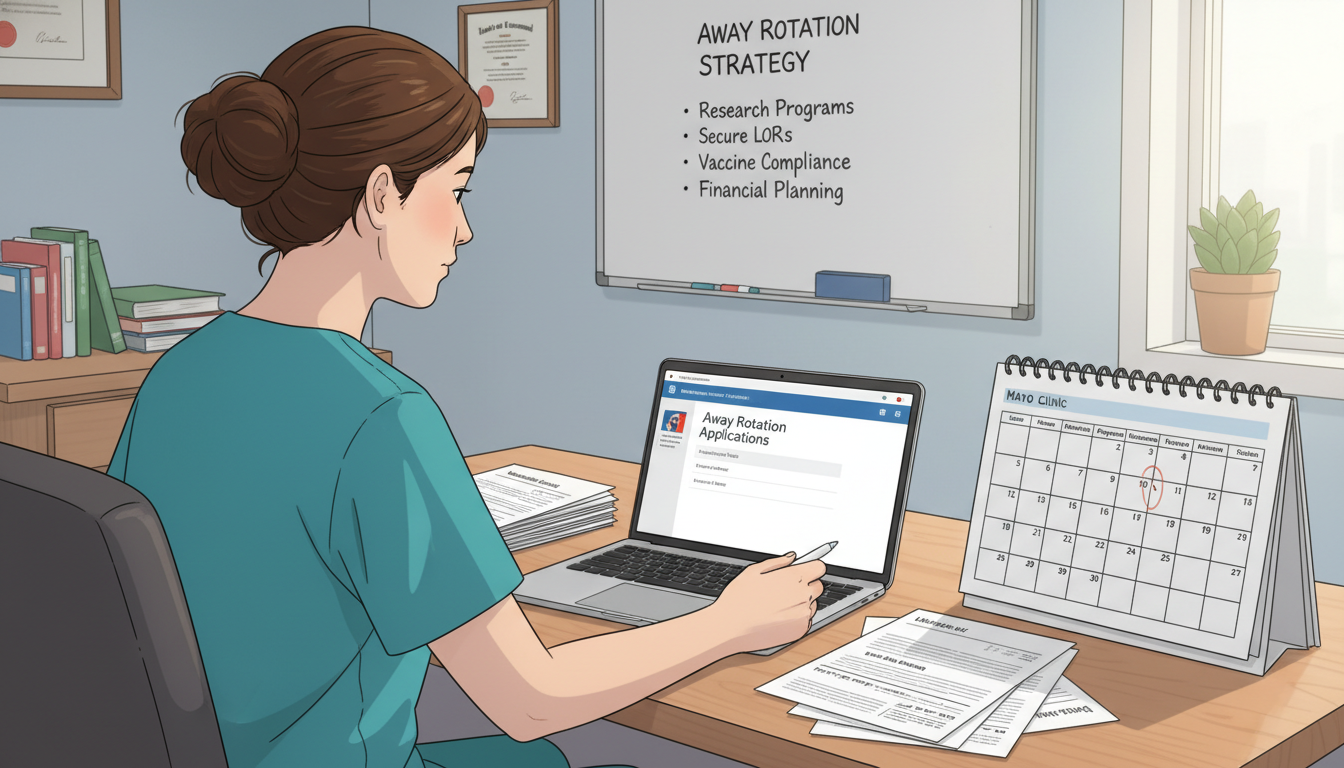
Successfully landing your ideal away rotations requires early, organized planning.
Know the Application Platform and Deadlines
Most U.S. MD students use VSLO (Visiting Student Learning Opportunities) (formerly VSAS) to apply for visiting student rotations. However, some institutions use their own systems.
Key steps:
Check each program’s visiting student page
- Application open date (often February–April)
- Deadline (can be rolling or fixed)
- Documents required (transcript, Step scores, immunizations, BLS/ACLS, etc.)
Request VSLO access early through your home school’s registrar or visiting students office.
Upload all required documents early:
- Immunization records and titers
- Background check or drug screen (if required)
- BLS/ACLS certifications
- CV and personal statement if requested
Optimal Timing of Aways in the Application Cycle
For residency applications opening in September:
- Prime months for away rotations:
- June – August of your final year
- These months allow time for:
- Performance to be reflected in LoRs
- Inclusion in your ERAS application
- September – October aways:
- Still useful for:
- Demonstrating interest
- Gaining insight into a program before ranking
- But letters may be late or only minimally influential
- Still useful for:
Work backward from ERAS deadlines and away program start dates to map out your schedule.
Coordinating With Graduation and School Requirements
As an MD graduate or final-year student, you must ensure:
- You meet your school’s core clerkship requirements before doing aways.
- You’re not jeopardizing graduation by overloading on visiting student rotations.
- You’ve arranged coverage for Step 2 CK (if not already taken).
Tip: Many students combine away rotations with lighter school requirements or electives to avoid schedule conflicts.
Maximizing Impact During the Rotation
Once you arrive at your away rotation, your behavior, clinical performance, and professionalism can directly influence interview and ranking decisions.
Understand Evaluation Expectations Early
On day one (or even before), clarify:
- Who will be evaluating you (attendings, fellows, senior residents)
- What they expect from students in your role
- How feedback is provided and whether it informs LoRs
You can explicitly ask:
“What does a top-performing student look like on this service?”
Show Up Prepared
Before starting:
- Review core knowledge for the specialty:
- For surgery: basic pre-op/post-op management, common complications, OR etiquette
- For medicine: work-ups for common admission complaints, note-writing standards
- For EM: algorithms for chest pain, abdominal pain, sepsis, trauma basics
- Know your fundamentals:
- Interpret basic labs and imaging
- Present a focused, organized assessment and plan
- Use evidence-based guidelines appropriately
Bring:
- Small notebook and pen
- Pocket reference or digital equivalent (e.g., specialty apps)
- Professional attire (including OR-appropriate clothing if applicable)
Excel in the Basics: Reliability and Professionalism
Programs pay close attention to:
- Punctuality: Always early, never just “on time”
- Ownership: Knowing your patients thoroughly, following up on labs and consults
- Team orientation: Helping co-students, not competing destructively
- Communication: Clear, respectful interactions with nurses, staff, and patients
- Humility: Admit what you don’t know; ask thoughtful questions
A common attending comment leading to a strong LoR:
“Hardworking, reliable, and an absolute pleasure to work with.”
Balancing Initiative With Boundaries
Demonstrate initiative by:
- Volunteering for admissions or procedures (within scope)
- Offering to give a brief presentation on a relevant topic
- Pre-rounding thoroughly and updating the team efficiently
But avoid:
- Overstepping into resident duties or arguing plans
- Trying to impress by pointing out minor errors publicly
- Being overly aggressive in seeking face time with the program director
Aim for dependable contributor, not spotlight chaser.
Building Relationships and Mentorship
Away rotations are an opportunity to expand your long-term professional network:
- Identify approachable faculty whose clinical or research interests match yours.
- Ask for advice on career development and training pathways.
- If you connect well, consider asking later if they’d be willing to write a LoR.
Timing for letter requests:
- Ideal: Last week of the rotation, after you’ve solidified your performance.
- Script example:
“I’ve really appreciated working with you this month and your feedback has been extremely helpful. I’m applying to [specialty] this cycle—would you feel comfortable writing me a strong letter of recommendation?”
Integrating Away Rotations Into Your Overall Match Strategy
Away rotations are just one part of your MD graduate residency application portfolio. You’ll need to integrate them with your broader allopathic medical school match plan.
Letters of Recommendation Strategy
From your aways, aim to obtain:
- At least one specialty-specific LoR from a faculty member who knows you well
- Ideally, a letter from:
- A program director or clerkship director, or
- A well-respected academic faculty member with whom you worked closely
Ensure that each letter writer:
- Knows your career goals (academic vs community, specific interests)
- Has your updated CV and personal statement
- Understands any key aspects of your story (e.g., research focus, nontraditional background)
Signaling Genuine Interest to Programs
When you do visiting student rotations at specific programs:
- Mention in your personal statement that you’re interested in their region or type of program (without sounding like a form letter).
- During the rotation, articulate your interest in:
- The program’s clinical strengths
- Research or academic opportunities
- Their culture and resident support systems
After your rotation:
- Consider sending a brief, professional thank-you email to key faculty, expressing appreciation and reiterating your interest.
Evaluating Fit: What You Should Be Looking For
While they evaluate you, you should evaluate them:
- Do residents seem genuinely supported and not burned out?
- How do attendings treat learners, nurses, and staff?
- Is there a culture of teaching, or are students mostly service-based?
- Can you see yourself thriving in this environment for 3–7 years?
Keep a brief, private reflection log during each away rotation:
- Pros: [teaching, culture, location]
- Cons: [schedule, resident morale, support]
- Overall: Would I be happy training here?
This log will be invaluable when constructing your rank list.
Frequently Asked Questions (FAQ)
1. As an MD graduate, do I need away rotations to match?
Not always. For many fields—such as family medicine, pediatrics, psychiatry, and a broad range of internal medicine programs—MD graduates from an allopathic medical school can match successfully without away rotations, especially if they have:
- A strong home program in their specialty
- Solid clinical evaluations and Step scores
- Good mentorship and LoRs
Away rotations become more important if you’re entering a competitive specialty, have no home program, or are targeting very specific regions or institutions.
2. How do away rotations affect my chances at that specific program?
In many competitive specialties, an away rotation effectively acts as a month-long audition. High-quality performance can:
- Increase your likelihood of receiving an interview
- Provide you with a strong, program-specific letter
- Make faculty advocates for you at the rank meeting
However, a poor or even mediocre performance can hurt you at that specific program. This doesn’t usually “blacklist” you nationwide, but it underscores the importance of being prepared and professional.
3. Should I prioritize big-name academic centers or mid-tier programs for my aways?
It depends on your goals and competitiveness:
- If you’re a very strong applicant aiming for an academic career, one away at a big-name center can be valuable exposure.
- If your metrics are average or slightly below a top program’s typical range, a mid-tier or “hidden gem” program may offer:
- More responsibility
- Closer interaction with faculty
- Higher chances of a standout evaluation and letter
A balanced approach—one reach and one or two realistic targets—is often ideal.
4. What if I can’t afford multiple away rotations?
You can still build a strong residency application. Consider:
- Prioritizing a single, highly strategic away (e.g., in your top geographic area or at a realistic dream program).
- Applying for scholarships through:
- Individual institutions’ diversity or visiting student scholarships
- Specialty societies (e.g., AAOS, AAD, AANS, ACEP)
- Focusing heavily on:
- Excelling at your home institution
- Building strong research and mentorship relationships
- Crafting focused, well-researched program lists for applications
One well-chosen away rotation, done superbly, is far more impactful than multiple scattered rotations done without clear purpose.
By thoughtfully planning your away rotation strategy—from deciding how many away rotations to do, to choosing where and when, to maximizing your performance—you can significantly enhance your MD graduate residency prospects. Integrate your visiting student rotations into a cohesive allopathic medical school match plan, and you’ll position yourself not just to match, but to train where you’ll truly thrive.