Why Away Rotations Matter So Much for Non‑US Citizen IMGs in PM&R
For a non-US citizen IMG (international medical graduate), away rotations (also called visiting student rotations or electives) are often the single most powerful tool for breaking into a US Physical Medicine & Rehabilitation (PM&R) residency. Programs may receive thousands of applications but interview only a small fraction. A strong US rotation:
- Puts your face, work ethic, and clinical judgment in front of faculty who can advocate for you
- Allows you to earn US-based letters of recommendation in physiatry
- Demonstrates that you understand the US healthcare system and can function on day one
- Helps programs feel more comfortable about visa sponsorship and onboarding a foreign national medical graduate
For PM&R specifically, away rotations are even more critical because:
- Physiatry is a small specialty where reputation and word-of-mouth matter
- Many PM&R programs strongly prefer or expect at least one PM&R-specific letter of recommendation
- Procedures, functional assessments, and interdisciplinary team skills are best assessed in person, not just on paper
If you are a non-US citizen IMG targeting the physiatry match, you should treat your away rotation strategy as a central pillar of your application plan, not an optional extra.
Understanding Away Rotations for PM&R: Terminology, Timing, and Eligibility
What is an Away Rotation?
In the US, an “away rotation” or “visiting student rotation” is a 2–4 week clinical experience at a medical school or teaching hospital other than your home institution. For IMGs, the terminology varies:
- Visiting Student Learning Opportunities (VSLO/VISA/VSAS) rotations
- Clinical electives
- Observerships (no direct patient care; less ideal if you can get hands-on electives)
Not all “away rotations” are equal in the eyes of PM&R programs. For the strongest impact on your physiatry match chances, prioritize hands-on, supervised clinical electives in PM&R over pure observerships.
Where PM&R Away Rotations Usually Happen
Common PM&R settings for visiting student rotations include:
- Inpatient rehabilitation hospitals or units (stroke, spinal cord injury, TBI, orthopedic rehab)
- Outpatient musculoskeletal and spine clinics
- EMG/neuromuscular clinics
- Sports medicine, pain, or interventional spine
- Pediatric rehabilitation clinics
Ideally, you should rotate in at least one core inpatient rehab service and, if possible, one outpatient MSK/pain/sports/EMG service to show breadth.
Timing Relative to the Match
For most applicants:
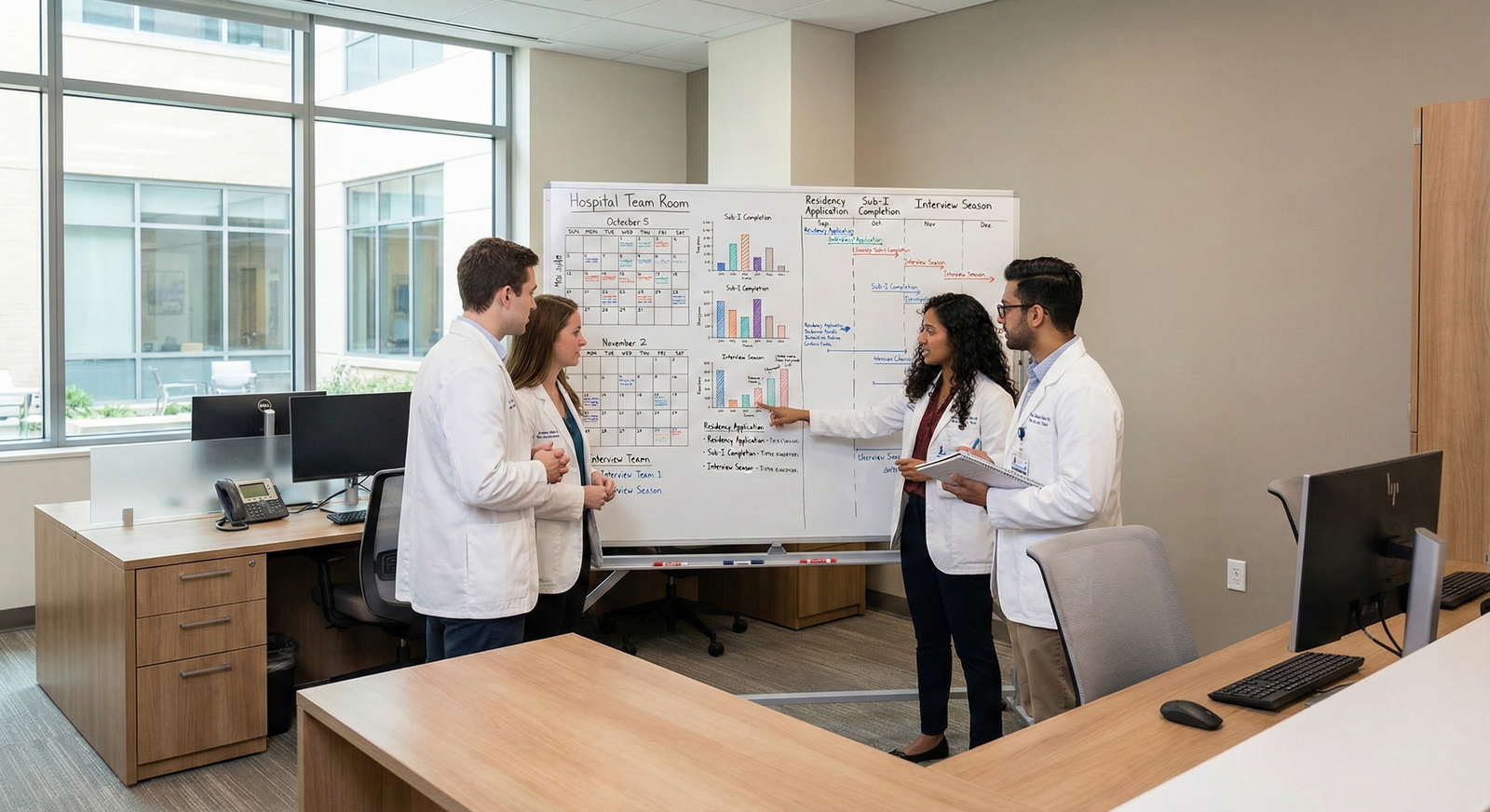
- PM&R application via ERAS: early September
- PM&R interview season: roughly October–January
- Match day: March
For a non-US citizen IMG, a practical timeline is:
18–24 months before Match
- Research PM&R residency programs that sponsor visas
- Identify institutions that explicitly accept foreign national medical graduates for visiting rotations
- Clarify what documents you will need (USMLE scores, proof of English proficiency, enrollment verification, immunizations, etc.)
12–16 months before Match
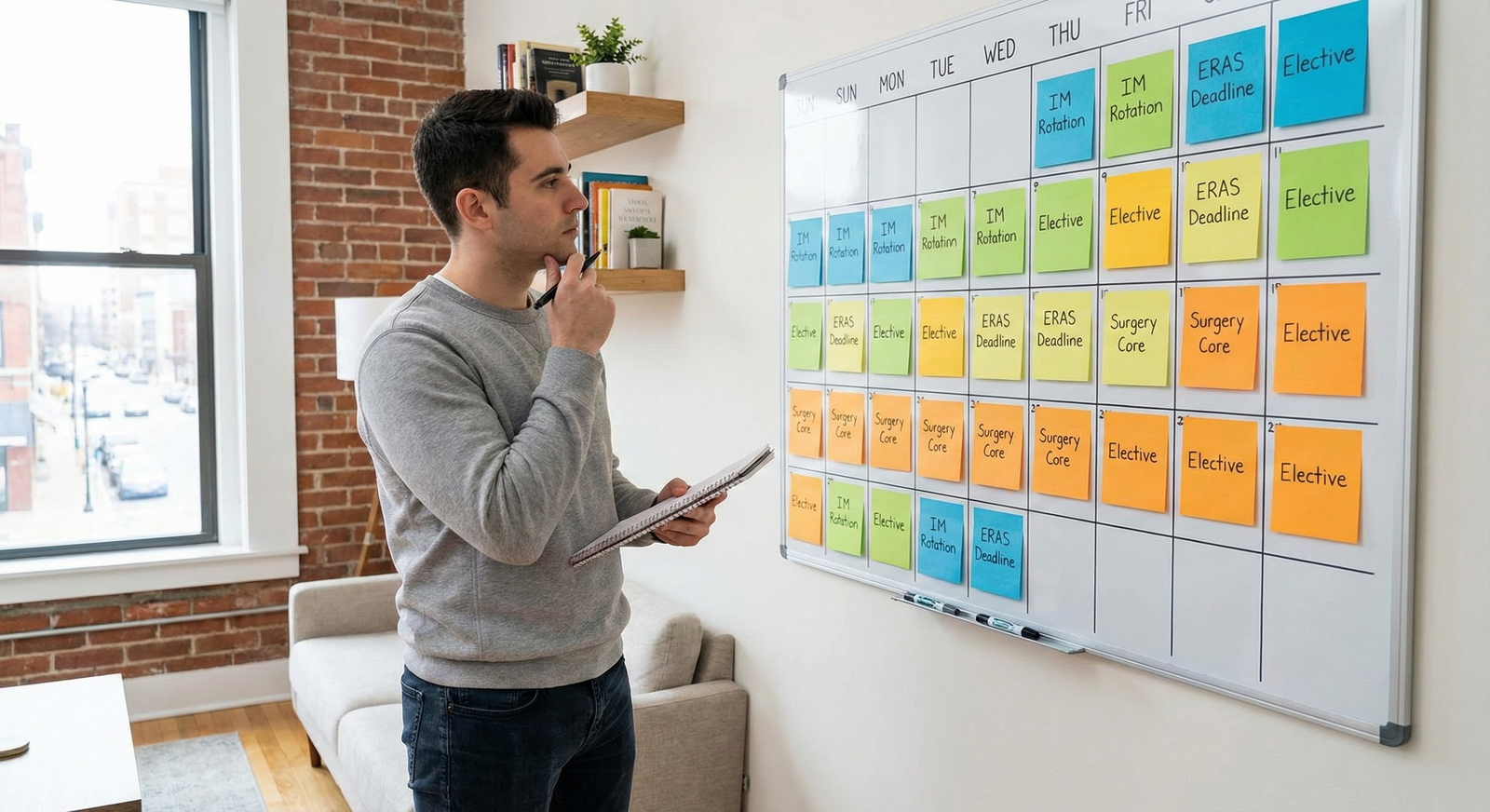
- Start applying for away rotations (some programs open applications 6–12 months in advance)
- Target PM&R rotations that will occur between March and August of the year before you apply (so letters can be ready by September)
6–9 months before ERAS opens
- Complete at least one PM&R away rotation at a program that regularly accepts non-US citizen IMGs
- Request letters of recommendation immediately at the end of each rotation
Eligibility Constraints for Non‑US Citizen IMGs
Every site has its own eligibility rules. Common patterns:
- Some universities only accept students from LCME- or ACGME-accredited schools – this excludes many IMGs
- Some require ECFMG certification or Step exams completed before rotation
- Others offer only observerships for foreign national medical graduates, not hands-on electives
- Visa issues: J-1 or B-1/B-2 visitor arrangements may be needed; some institutions help with paperwork, others do not
You must carefully review each institution’s visiting student / international medical student webpage and, if unclear, email the coordinator with very specific questions about your situation.
Selecting the Right Programs and Structuring Your Away Rotations
A strategic approach to where you rotate and how many away rotations you complete can significantly improve your physiatry match odds.
Step 1: Build a Target List of Visa-Friendly PM&R Programs
As a non-US citizen IMG, your first filter is not prestige—it’s visa reality. You need programs that:
- Sponsor J-1 visas at minimum; some will also sponsor H-1B
- Have a track record of matching IMGs
- Are known to be welcoming to foreign national medical graduates, not just theoretically open
Practical steps:
- Use FREIDA and program websites to check:
- “Visa sponsorship: J-1 / H-1B”
- Current/past residents who are IMGs
- Search program websites or call/email the coordinator to ask:
- “Have you had non-US citizen IMGs in your program recently?”
- “Do you accept international medical students for visiting rotations?”
Prioritize programs that are:
- IMG-friendly + visa-friendly
- Have PM&R faculty with diverse backgrounds
- Are in regions known to be more immigrant-friendly (many major academic centers, large cities)
Step 2: Decide How Many Away Rotations You Need
The question “how many away rotations” is common and tricky. There is no universal rule, but for a non-US citizen IMG in PM&R:
- Minimum goal:
- 1 solid, hands-on PM&R away rotation at a US academic center
- 1–2 US-based IM or neurology rotations if you can’t get more PM&R spots
- Ideal goal (if time and finances allow):
- 2–3 PM&R rotations at different institutions (at least one at a program where you would be happy to match)
Why 2–3 PM&R rotations can be powerful:
- You collect multiple PM&R-specific letters
- You demonstrate consistent performance in diverse settings
- You increase the chances of rotating at a program that eventually offers you an interview and ranks you highly
However, each away rotation is costly. Prioritize quality and strategy over quantity. Two strong, well-chosen rotations with excellent performance are more valuable than four scattered, unfocused ones.
Step 3: Balance “Audition” Rotations vs. “Exploration” Rotations
Not every rotation needs to be at your dream program. Think of two categories:
Audition Rotations
- At programs where you would love to match
- Focus: Show them you are reliable, collegial, and easy to train
- Objective: Earn a strong letter and an interview, and be remembered positively in the ranking meeting
Exploration Rotations
- At places that are IMG-friendly and clinically rich, even if you’re unsure about location
- Focus: Build core PM&R skills, understand US rehab systems, collect letters
- Objective: Broader training exposure and backup interview opportunities
For a non-US citizen IMG, aim for at least one audition rotation at a visa-friendly program you truly prioritize.
Step 4: Understand the Value of Institution Type
Different sites offer different benefits:
Major academic medical centers
- Pros: Name recognition, structured teaching, research possibilities
- Cons: Highly competitive, may be harder to obtain rotations as a foreign national medical graduate
Community-based programs with academic affiliation
- Pros: Often more open to IMGs, more hands-on opportunities, closer relationships with faculty
- Cons: Less name prestige, but letters still matter greatly
Rehabilitation hospitals affiliated with universities
- Pros: Strong PM&R exposure, integrated therapy teams, may be more accessible
- Cons: Application processes vary widely; some do not take international students
A mix can work well: one larger academic center rotation plus one at an IMG-friendly community-affiliated program.
Maximizing the Impact of Each Away Rotation: Before, During, After
Securing a PM&R away rotation is just the start. What you do with that opportunity is what moves you closer to a successful physiatry match.
Before the Rotation: Prepare Strategically
Clarify Your Role and Restrictions
Ask the coordinator or supervising physician:- Will I be allowed hands-on patient care or only observation?
- Can I write notes in the EMR?
- Will I be evaluated formally?
Revise Core PM&R Knowledge
Review:- Stroke rehab fundamentals (functional assessments, common complications)
- Spinal cord injury levels and expected deficits
- TBI basics (Rancho levels, common behavioral issues)
- Gait patterns and common MSK conditions
Use resources: PM&R textbooks, AAPM&R self-assessment materials, online lecture series.
Set Your Personal Goals
Examples:- “Obtain at least one strong PM&R letter of recommendation”
- “Perform an oral case presentation daily”
- “Complete one small QI or case report project”
Prepare Your Story as a Foreign National Medical Graduate
Be ready to confidently explain:- Why PM&R?
- Why the US?
- Your long-term goals in physiatry
- How your international background adds value to the team
During the Rotation: Behaviors That Stand Out
Programs evaluating a non-US citizen IMG on an away rotation look for:
Clinical reliability
- Show up early, prepared, and organized
- Pre-round and know your patients’ functional status, labs, imaging
Communication skills
- Speak clearly with patients, families, and team members
- Ask for clarification when needed; avoid pretending to understand
Team orientation
- Respect therapists and nurses; they heavily influence attendings’ impressions
- Offer to help within your scope—transporting charts, checking on therapy plans, following up imaging
Intellectual curiosity
- Ask focused questions: “For this TBI patient with agitation, how do you decide between medication A and B?”
- Volunteer brief, relevant literature searches for interesting cases
Professionalism under stress
- If you make a mistake, own it and show how you’ll prevent it in future
- Be calm and composed when systems or language barriers create difficulty
Example Scenario: Inpatient Rehab Rotation
Day-to-day, you might:
- Pre-round on 3–5 patients, review functional changes (PT/OT/SLP notes)
- Present concisely on rounds: current function, pain, medical issues, discharge planning barriers
- Join therapy sessions to observe gait training or ADL practice
- Help draft notes (if allowed) and discuss your impressions with residents/faculty
You impress the team when you:
- Anticipate issues (e.g., raising concerns about home safety before discharge)
- Propose a plan: “Given his spasticity is limiting transfers, could we adjust baclofen dosing or consider botulinum toxin?”
After the Rotation: Secure Letters and Maintain Relationships
Ask for a Letter of Recommendation Before You Leave
Approach a faculty member who:- Has worked with you closely
- Knows your clinical strengths and growth areas
Say something like:
“I’ve really valued this rotation and your teaching. I’ll be applying to PM&R residency as a non-US citizen IMG. Would you feel comfortable writing me a strong letter of recommendation that comments specifically on my performance here?”
Provide Helpful Materials to Your Letter Writer
- CV
- Personal statement draft
- List of programs you’re targeting
- Specific encounters that highlight your strengths (“We managed the patient with incomplete SCI…”)
Send a Thank-You Email
- Thank attendings, residents, coordinator
- Briefly restate your career goals in physiatry
- Let them know you’ll keep them updated about your application
Stay in Touch Before and During Application Season
- Send a short update when you submit ERAS
- Notify letter writers when you receive interviews or match
- This maintains connections for future fellowship or job opportunities
Special Considerations for Non‑US Citizen IMGs: Visas, Logistics, and Application Strategy
Visa Issues Related to Rotations and Residency
You operate on two time scales:
Short-term (visiting student rotations)
- Many rotations expect you to come on a B-1/B-2 visa or under existing student status, depending on your situation
- Institutions may provide invitation letters but may not sponsor a visa just for a rotation
Long-term (PM&R residency)
- Most PM&R residencies sponsor J-1 visas via ECFMG
- A subset sponsor H-1B, usually requiring USMLE Step 3
- As a foreign national medical graduate, you should prioritize programs that clearly state their visa policies and have recent non-US citizen residents
Action points:
- Talk with your institution’s international office and potential rotation sites about what visa type is appropriate
- For residency, confirm in writing (email) that the program accepts non-US citizen IMGs and sponsors the visa you will need
Application Components to Align with Your Away Rotations
Your away rotation performance should reinforce your broader application strategy:
USMLE Scores and Attempts
- Programs may be more flexible with scores if they have direct positive experience with you on rotation
- However, very low scores or multiple attempts may still be challenging; strong away rotations help but do not fully erase this
Personal Statement
- Reference specific experiences from your PM&R away rotations that solidified your interest
- Highlight how your international perspective enhances your approach to disability, function, and rehabilitation
Letters of Recommendation
- Aim for at least two PM&R letters from US-based physiatrists
- If possible, one from your “audition” rotation at a program where you’d love to match
Program Signaling and Communication
- If you rotated somewhere and liked the program, mention that explicitly in any emails or communications during interview season
- Faculty who know you may advocate for you at the rank meeting
Financial and Logistical Realities
Away rotations can be expensive when you consider:
- Application fees
- Visa and travel costs
- Housing and transportation
- Lost income/opportunity costs
Practical tips:
- Look for hospital/university housing, student host programs, or short-term rentals close to public transport
- Coordinate back-to-back rotations in the same region to minimize repeated travel
- Apply for scholarships or IMG support funds if available through international offices or specialty organizations
Putting It All Together: A Sample Away Rotation Plan for a Non‑US Citizen IMG
Imagine you are a final-year non-US citizen IMG aiming to apply for PM&R residency in the 2027 Match.
18–20 Months Before Match
- Identify 25–30 PM&R programs that:
- Accept J-1 visas
- Have at least one current or recent IMG
- Have clear information about visiting international students
12–16 Months Before Match
- Apply for 2–3 visiting student rotations with a focus on:
- 1 major academic center PM&R department
- 1 smaller IMG-friendly or community-affiliated program
- Optional: 1 neurology or internal medicine rotation if PM&R spots are limited
10–12 Months Before Match
- Complete first PM&R rotation (Exploration)
- Focus: Learn foundations of rehab, adjust to US system
- Goal: Solid letter, experience with interdisciplinary teams
8–10 Months Before Match
- Complete second PM&R rotation (Audition at a top-choice, visa-friendly program)
- Focus: Show that you would be a safe, reliable intern
- Goal: Strong letter + high program familiarity with you
6–8 Months Before Match
- If possible, complete a third rotation in PM&R or a related field (MSK/spine/sports)
- Finalize letters, personal statement, and program list
This kind of structured plan aligns your away rotations with your PM&R residency application timeline, maximizing the benefit of each experience.
FAQs About Away Rotation Strategy for Non‑US Citizen IMGs in PM&R
1. As a non-US citizen IMG, do I absolutely need a PM&R away rotation to match into physiatry?
You can match without one, but it is significantly harder, especially if you lack other strong US clinical experience. For a foreign national medical graduate, at least one US-based PM&R rotation with a strong letter from a physiatrist makes your application more credible and competitive.
2. How many away rotations should I aim for, realistically?
If finances and visas allow, aim for 2 PM&R away rotations at minimum. One can be exploratory; the other should be an audition at a program where you genuinely want to match. If you can only manage one, choose an IMG- and visa-friendly PM&R program and do everything possible to excel there.
3. What if programs only offer observerships and not hands-on rotations to IMGs? Are these still helpful?
Observerships are less powerful than hands-on electives but still better than having no US PM&R exposure. They can:
- Demonstrate interest in physiatry
- Allow networking with US physiatrists
- Occasionally lead to letters if you are highly engaged and observed closely
If possible, combine an observership with at least one hands-on rotation in another setting.
4. Should I prioritize an away rotation at a very prestigious institution or at an IMG-friendly program?
As a non-US citizen IMG, prioritize IMG- and visa-friendly programs where you have a realistic chance of receiving an interview and matching. A big-name institution can help, but a strong performance at a smaller, IMG-supportive program that knows you well may translate more directly into an interview and a strong ranking.
Designing a thoughtful away rotation strategy requires balancing ambition with practicality, especially as a foreign national medical graduate. With targeted program selection, excellent performance on rotations, and proactive communication, you can transform these short experiences into powerful stepping stones toward a successful PM&R residency match.