Why Away Rotations Matter So Much for Non‑US Citizen IMGs in Urology
For a non‑US citizen IMG, away rotations can be the single most powerful tool to transform you from “unknown foreign national medical graduate” to a competitive, known candidate in the urology match.
Urology is:
- Small (limited number of spots)
- Extremely network‑driven
- Earlier match timeline than most specialties (the AUA match is separate from NRMP)
- Very US‑centric in selection, especially for applicants who need visas
As a non‑US citizen IMG, you face additional challenges:
- Visa sponsorship uncertainty (J‑1 vs H‑1B)
- Less familiarity with your medical school among US program directors
- Limited US clinical experience
- Potential bias or misunderstanding about training standards in your home country
Strategic away rotations let you:
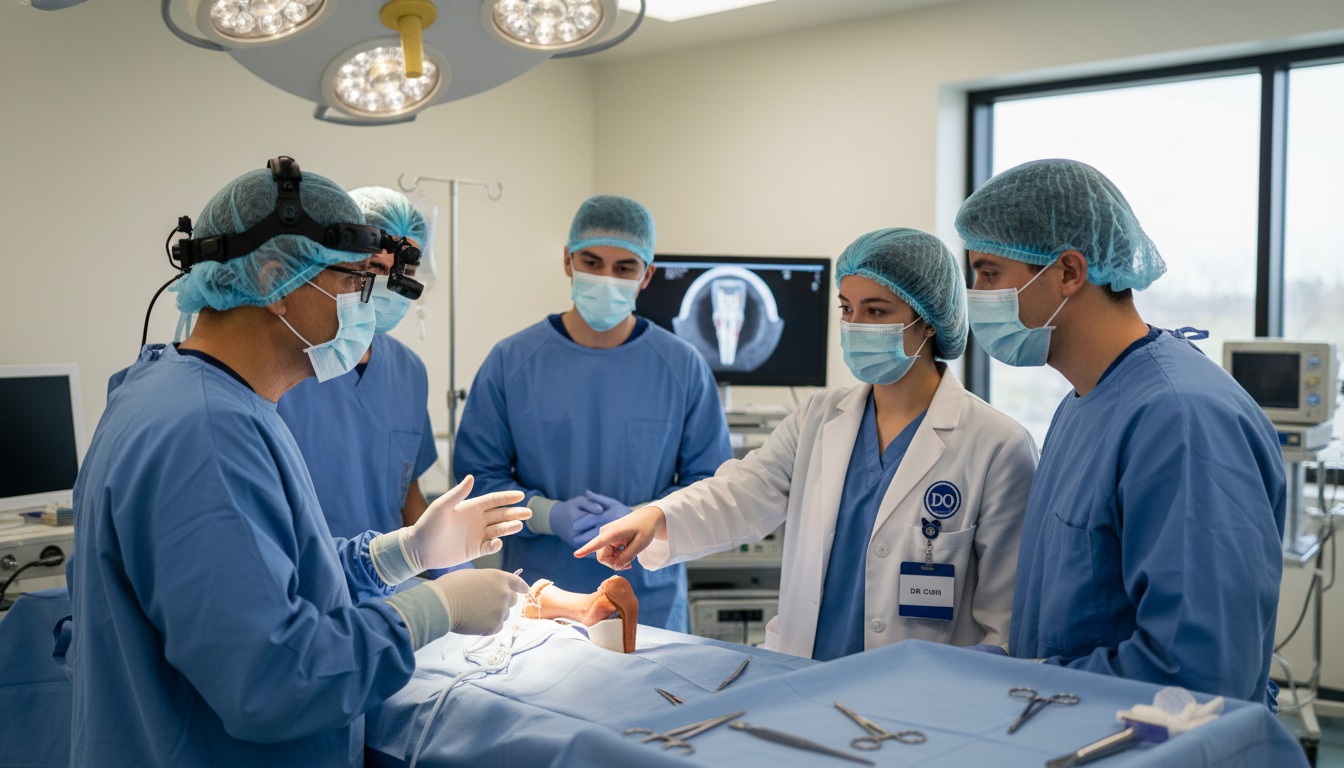
- Demonstrate that you can function effectively in a US academic urology service
- Earn strong letters of recommendation from US urologists
- Show your communication skills and professionalism in real time
- Signal serious interest in specific programs
- Expand your network among faculty and residents who can advocate for you
Your goal is not to do “as many rotations as possible,” but to create a targeted, realistic, and high‑yield away rotation strategy aligned with the urology match timeline and your visa status.
Understanding the Urology Match Timeline and Its Impact on Away Rotations
Before you plan where and how many visiting student rotations to complete, you must understand when away rotations matter most for urology.
Key Timing Considerations for Urology
- Urology applications typically open earlier than NRMP specialties (often late summer).
- Interviews usually occur in the fall, a bit earlier than many other specialties.
- Your most impactful away rotations are those completed before or during application season, so that:
- Faculty know you when they review applications.
- Letters of recommendation from those rotations can be uploaded in time.
- You can be remembered positively when interview decisions are made.
Ideal order of rotations (if possible):
- Home institution urology rotation (if available) – early in the academic year
- First away rotation – late spring/early summer
- Second away rotation – mid/late summer
- Optional third away rotation – early fall (understanding the letter may be too late for initial applications but can help during interview season or post‑interview advocacy)
For a non‑US citizen IMG, you may not have a US “home” urology program. In that case, your visiting student rotations essentially become your “home” experiences in the eyes of program directors.
Choosing Where to Rotate: Program Targeting for Non‑US Citizen IMGs
Selecting away rotation sites is not simply about big‑name institutions. It’s about picking places:
- That will accept you as a foreign national medical graduate
- That are realistic places you’d be happy to match
- That have a track record (or at least openness) of taking IMGs and sponsoring visas
1. Prioritize Programs That Accept Non‑US Citizen IMGs
Before sending any visiting student application or VSLO request, check:
- Program website FAQ:
- “Do you accept international medical graduates?”
- “Do you sponsor J‑1 or H‑1B visas?”
- Recent resident rosters:
- Do any residents or recent graduates have non‑US medical schools listed?
- Are there graduates from your region or country?
- Department social media / newsletters:
- IMG success stories
- Features on international collaborations
If a program:
- Has never had an IMG resident, and
- States “no visa sponsorship”
→ It’s likely low yield for a non‑US citizen IMG away rotation, no matter how prestigious.
2. Classify Programs Into Tiers of Realistic Fit
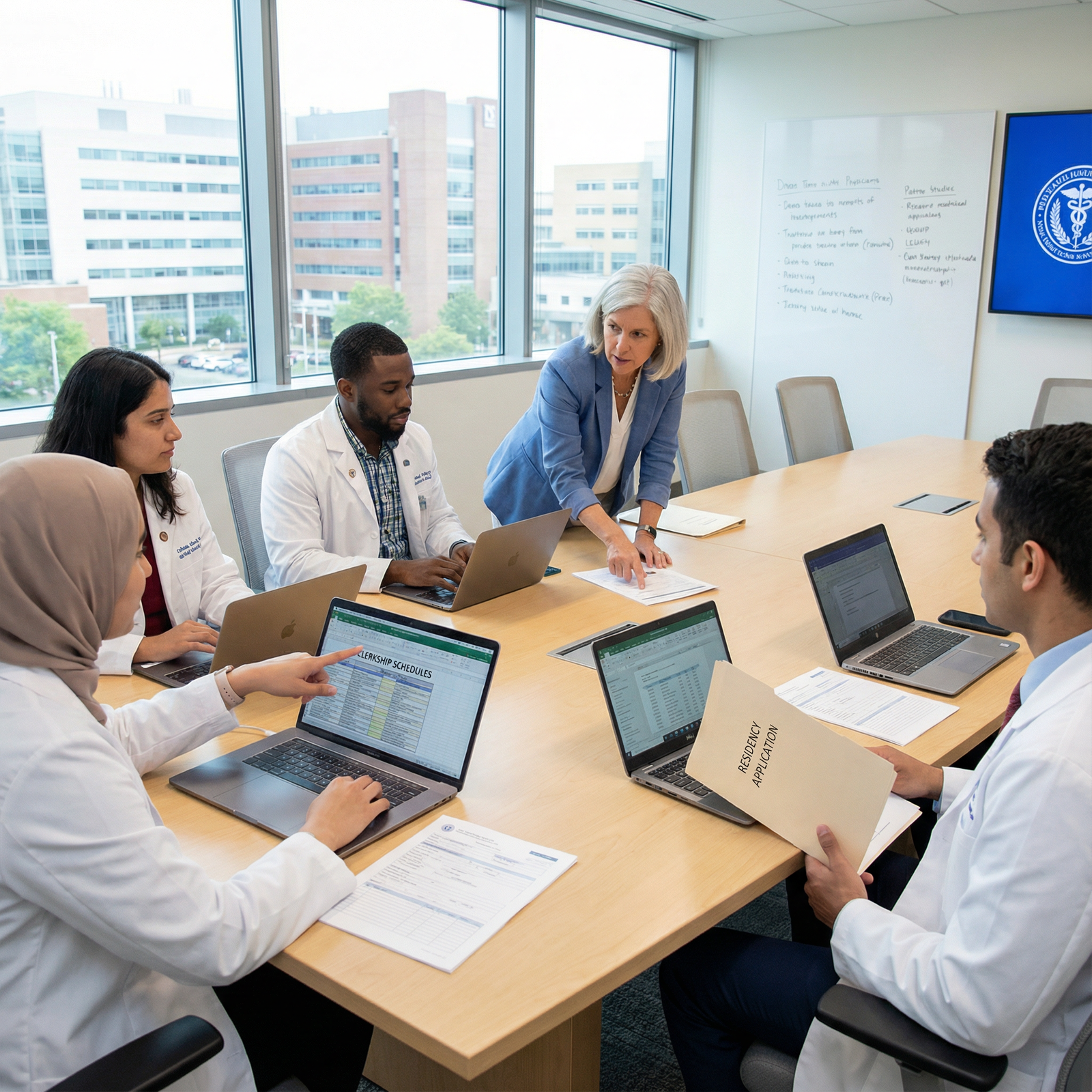
Make a simple worksheet or spreadsheet and categorize programs into:
High‑yield targets
- Accept and sponsor non‑US citizen IMG residents
- Have at least one current or recent foreign national resident
- Are mid‑size or community‑academic hybrids that may be more flexible
Stretch programs
- Highly academic or “name‑brand” centers
- May sponsor visas but have few or no IMGs historically
- Worth an away only if you have a strong connection (research, mentor, prior elective)
Low‑yield programs
- Explicitly do not sponsor visas
- No IMGs in training history, no global focus, no clear pathway for foreign nationals
Focus most of your energy and limited away slots on high‑yield and a few stretch programs.
3. Geographical and Visa Strategy
If you know you’ll need a J‑1 visa (most common for residency), almost any academic center can potentially sponsor.
If you are specifically hoping for an H‑1B visa, you need to be even more targeted:
- Search for “urology residency H‑1B” plus state or program name.
- Talk to recent graduates from your country who matched in urology and ask which programs have been H‑1 friendly.
- Recognize that some programs may be willing to support J‑1 but not H‑1B.
Also consider:
- Regional differences in competitiveness
- Some regions (e.g., Northeast, West Coast) have highly sought‑after programs.
- Others (certain Midwest/Southern programs) may be more open to strong IMGs.
- Where you can realistically live for a month (cost of living, housing, transportation).
How Many Away Rotations Should a Non‑US Citizen IMG Do in Urology?
The question “how many away rotations” is especially important when you have visa, travel, and financial considerations.
For most US students interested in urology, 2 away rotations is common. For a non‑US citizen IMG, you may benefit from:
- 2–3 away rotations in urology specifically
- Additional US‑based clinical experience in related surgical fields (general surgery, surgical oncology, transplant, etc.) if urology away options are limited
Recommended Structure
If you have no prior US clinical experience:
- 1 month: US general surgery or surgical subspecialty rotation
- 2–3 months: urology away rotations at your target programs
If you already have some US exposure:
- 2–3 urology away rotations is usually sufficient and more cost‑effective than 4–5.
Avoid:
- Overloading yourself with 4–5 urology away rotations. You may become exhausted, and performance could suffer.
- Ignoring financial limits. Each visiting student rotation can cost thousands (application fees, travel, housing, visas, insurance).
Your strategy: aim for quality and fit, not simply quantity.

Application Logistics: Getting Visiting Student Rotations as a Foreign National
Many US schools use VSLO (Visiting Student Learning Opportunities), but non‑US citizen IMGs face added layers: institutional affiliation, student status, and visa issues.
1. Understand Eligibility Categories
You may fall under:
- Visiting medical student (VSLO) – if your school participates or has agreements
- International visiting student – via each institution’s separate application
- Observer/non‑credit visitor – often less ideal for urology match (no hands‑on)
Check for each target institution:
- Do they accept international medical students or only LCME/COCA‑accredited US/Canadian students?
- Is there a designated path for foreign national medical graduates or students from non‑US schools?
- Are you allowed to:
- Scrub in?
- Write notes?
- Present patients?
You need hands‑on exposure and direct evaluation to get strong letters and to be seriously considered for urology residency.
2. Documents Commonly Required
For visiting student rotations, expect to provide:
- Dean’s letter or transcript from your home medical school
- Proof of being a student in good standing
- Immunization records and TB clearance
- Health insurance and sometimes liability/malpractice coverage
- English proficiency (TOEFL/IELTS) at some institutions
- Background check and drug screening
- Step scores (USMLE Step 1 is often expected; Step 2 CK very helpful)
- CV and sometimes a short personal statement
Start gathering and translating (if needed) these documents 6–9 months before you aim to start away rotations.
3. Visa Considerations for Visiting Student Rotations
Typically, you may enter on:
- B‑1/B‑2 (business/tourist) visa – some schools allow this for short educational experiences, but you must clarify with both the institution and immigration counsel.
- J‑1 short‑term scholar or student category – less common for short clinical electives, but possible in some settings.
Clarify with:
- Your target institution’s international office (not just the urology department).
- Your own country’s US consulate/embassy.
- Your school’s international education office.
Keep a file of:
- Official invitation letters
- Rotation dates
- Contact information for hosting department
These will be essential for visa interviews and border entry.
Maximizing the Impact of Each Urology Away Rotation
The key advantage of away rotations is your live audition. As a non‑US citizen IMG in a competitive field like urology residency, you must be deliberate in how you show up every day.
1. What Programs Are Looking For in a Visiting Student
Program directors and faculty typically evaluate visiting urology students on:
- Work ethic & reliability
- Showing up early, staying engaged late
- Following through on tasks
- Teamwork & communication
- Clear, concise communication with residents, nurses, and patients
- Professional interaction with all staff
- Clinical reasoning and surgical interest
- Sound judgment when presenting cases
- Attention to detail in pre‑ and post‑operative care
- Adaptability to the US system
- Comfort with EMR, orders (if allowed), and typical workflow
- Understanding of basic US patient safety and privacy standards
As a foreign national medical graduate, your performance is often scrutinized more closely because it’s the program’s main data point about how you would function as a resident.
2. Practical Strategies for Standing Out Positively
Before the rotation:
- Read a concise urology handbook (e.g., Pocket Urology, Campbell’s overview chapters).
- Review common inpatient issues: hematuria, urinary retention, kidney stones, BPH, testicular torsion, post‑operative care.
- Learn the names and roles of the faculty and residents from the program website.
First week:
- Introduce yourself clearly as a “visiting international medical student” and ask about expectations:
- “How do you prefer students to present?”
- “What is the typical student role in the OR?”
- Ask the chief resident or fellow:
- “What distinguishes a great visiting student on this service?”
- Show initiative:
- Pre‑round thoroughly and know your patients intimately.
- Volunteer to give a short presentation at conference (stone disease, bladder cancer, etc.).
In the OR:
- Learn basic scrub protocols and instrument names.
- Ask for feedback:
“Is there anything I can do differently to be more helpful in the OR?” - Be attentive:
- Anticipate needs (suction, retraction, positioning).
- Avoid being overly talkative during critical case moments.
On the wards/clinics:
- Offer to draft notes if allowed.
- Follow up on lab results and imaging for your patients.
- Practice clear, structured presentations:
- “This is a 65‑year‑old man with gross hematuria and known bladder tumor…”
3. Addressing Language and Cultural Differences
If English is not your first language:
- Practice presenting cases out loud before rounds.
- Ask a resident or senior for feedback on your clarity.
- Don’t hide your accent; focus instead on clarity, brevity, and structure.
Attend carefully to:
- US norms for hierarchy and feedback.
- Patient preferences (privacy, modesty, informed consent).
- Sensitivity in discussing genitourinary topics.
Over time, your professionalism and humility will weigh more than any small language differences.
Letters of Recommendation and Networking: Turning Rotations into Match Capital
The ultimate deliverables you want from each away rotation are:
- A strong urology‑specific letter of recommendation from a US faculty member.
- A supportive group of residents/fellows who can vouch for you.
- Advocates who will mention you to the program director when interview decisions are made.

1. When and How to Ask for Letters
Aim to request letters:
- Near the end of your rotation, once faculty have seen you in multiple settings.
- From attendings who:
- Supervised you directly (clinic, OR, rounds).
- Gave you feedback.
- Seem enthusiastic about your effort.
Approach them politely:
“I have really valued working with you this month. I am applying to urology residency as a non‑US citizen IMG, and your perspective would be extremely meaningful. Do you feel you know my work well enough to write a strong letter of recommendation?”
If they hesitate, thank them anyway and ask someone else. You need strong letters, not generic ones.
2. Content That Makes a Letter Powerful for a Non‑US Citizen IMG
Faculty who support IMGs can help by highlighting:
- Your ability to adapt rapidly to the US system.
- Your professionalism and reliability.
- Your surgical interest, skill acquisition, and technical potential.
- Explicit comparative statements, such as:
- “Among the visiting students I’ve worked with in the last 5 years…”
- “At the level of a strong sub‑intern at our institution.”
You may gently provide them with:
- Your CV
- Draft personal statement
- Brief bullet points of what you did on their service
3. Maintaining Relationships After the Rotation
Stay in touch by:
- Sending a brief thank‑you email after the rotation.
- Updating them when you submit your urology residency applications.
- Letting them know when you receive interviews or match results.
This is particularly important for non‑US citizen IMGs because ongoing advocacy (an email or call from a faculty member) can be decisive when programs are unsure about visa or IMG candidates.
Putting It All Together: Example Away Rotation Strategies
Case Example 1: Final‑Year Student With No US Experience
Background:
- Final‑year non‑US citizen IMG from a reputable but lesser‑known school
- Step 1 and Step 2 CK both above average
- No US clinical experience yet
Strategy:
Early Spring (Home Country):
- Complete a strong home urology rotation; secure a letter from the department.
- Start preparing documents for visiting student rotations and visa applications.
Late Spring (US):
- 1‑month general surgery rotation in the US at an institution that accepts IMGs.
- Resolve practical issues: EMR, US hospital culture, documentation practices.
Summer (US – June–August):
- Away #1: Mid‑tier academic urology program known to accept IMGs and sponsor J‑1.
- Away #2: Community‑academic hybrid program in a region with less competition.
Early Fall (Optional):
- Away #3: A stretch urology program where a mentor has a connection.
Outcome:
- 3–4 letters: 2 US urologists, 1 home‑country urologist, 1 US general surgeon.
- Programs see evidence of adaptation to US medical environment plus clear urology dedication.
Case Example 2: Student With Prior US Observerships, Limited Funding
Background:
- Non‑US citizen IMG with prior unpaid observerships but no hands‑on electives
- Strong research in urology with publications but tight finances
Strategy:
Limit to 2 high‑yield away rotations that:
- Accept non‑US citizen IMGs.
- Offer real hands‑on student roles.
- Are reachable with relatively affordable housing.
Use existing research mentors at a US institution to:
- Help with introductions to their urology colleagues.
- Potentially convert prior observership relationships into advocates or letter writers.
Fill the rest of the year with:
- Urology in your home country.
- Remote collaboration with US‑based research teams.
Outcome:
- Fewer but more focused away rotations, maximizing both financial and match yield.
Frequently Asked Questions (FAQ)
1. As a non‑US citizen IMG, can I match into urology without any away rotations?
It is possible but much harder. Without visiting student rotations:
- Programs lack US‑based clinical performance data on you.
- You miss the chance to show you function well in their environment.
- Letters of recommendation may all be non‑US or non‑urology, which is a major disadvantage.
For most non‑US citizen IMGs, at least 1–2 urology away rotations in the US are strongly recommended to be competitive.
2. Should I prioritize more research or more away rotations?
Both matter, but for urology residency:
- Strong, hands‑on away rotations with excellent letters typically outweigh a large number of publications alone.
- If you already have some research (especially urology‑related), your marginal gain from another paper may be less than the gain from a high‑yield rotation.
- If you have no research and plenty of clinical exposure, then adding research can strengthen your academic profile, especially at top academic programs.
Balance your time so that you have at least:
- 1–2 urology‑focused research experiences or projects, and
- 2–3 meaningful clinical exposures in urology (home + away rotations).
3. What if my away rotations are scheduled late and letters may not arrive before I apply?
Late rotations can still help you:
- Build relationships and advocates who may email or call programs during interview season.
- Show up in time to influence interview invitations if your file is under review.
- Contribute letters that, while late, can be uploaded and considered by some programs for rank list decisions.
If possible, schedule at least one urology away rotation before applications open, but don’t decline later opportunities; they can still add value.
4. How do I explain my non‑US background and visa needs without scaring programs away?
Be straightforward and prepared:
- Clearly state in your application and during interviews that you are a non‑US citizen IMG and what visa(s) you are eligible for (commonly J‑1).
- Emphasize your adaptability, prior international experiences, and long‑term career goals in urology.
- Have a concise explanation ready:
- Why you trained outside the US.
- Why you are now committed to a urology career in the US.
- If you know the program sponsors your needed visa type, you can mention:
“I understand your institution sponsors J‑1 visas, and I would be fully eligible for that pathway.”
Transparency builds trust; many program directors will work with strong applicants if they understand your situation early and clearly.
As a non‑US citizen IMG, your away rotation strategy in urology must blend realistic targeting, meticulous logistics, and outstanding day‑to‑day performance. With 2–3 carefully chosen visiting student rotations, strong US letters, and deliberate networking, you can significantly improve your chances in the urology match and turn your foreign training background into a unique strength rather than a barrier.