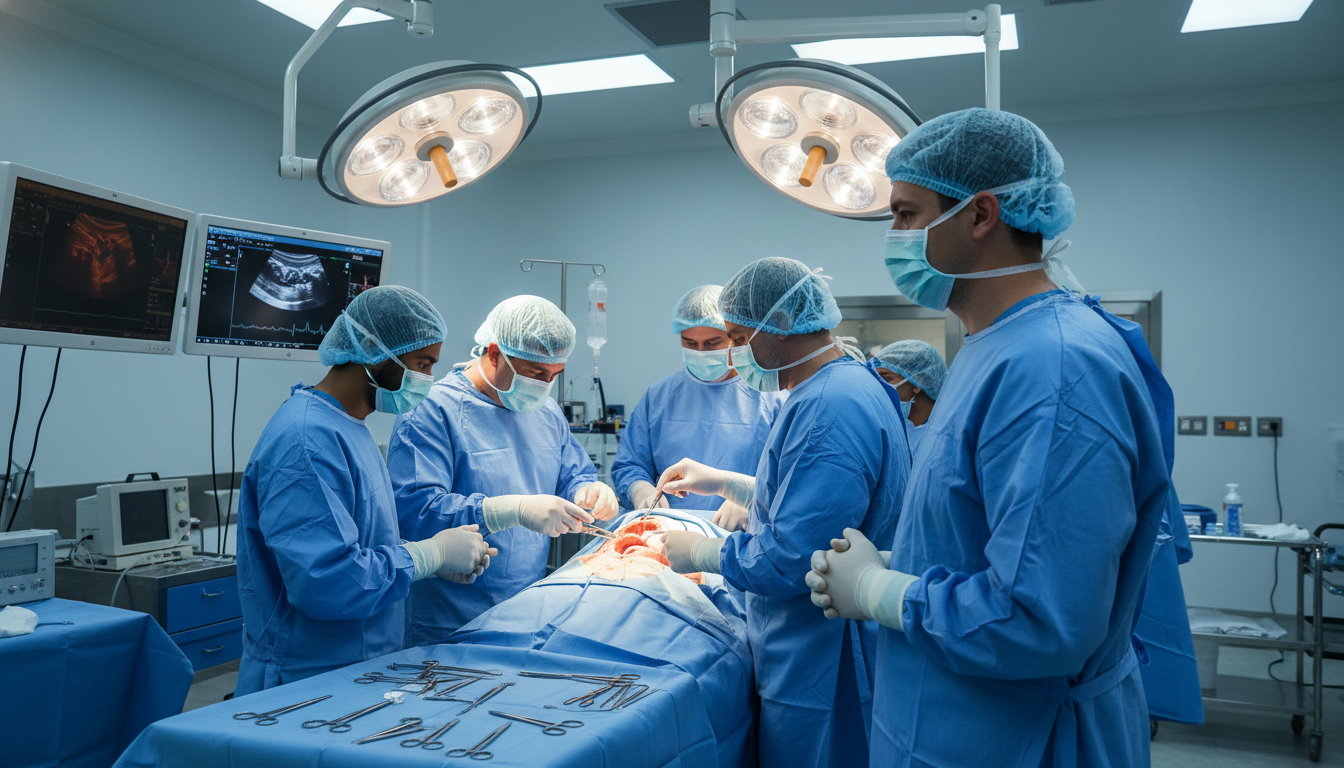
Understanding the Role of Away Rotations for Non-US Citizen IMGs in Cardiothoracic Surgery
For a non-US citizen IMG aiming for cardiothoracic surgery residency in the United States, away rotations (also called visiting student rotations or audition electives) are often the single most powerful part of your application strategy.
Cardiothoracic (CT) surgery is one of the most competitive training pathways. US programs want to see how you function inside their system, on real services, with their residents and faculty. For a foreign national medical graduate, away rotations can:
- Convert you from an “unknown” to a known quantity
- Demonstrate that you understand US hospital culture
- Generate strong, specialty-specific letters of recommendation
- Show that your visa status and logistics are manageable
This article will walk through a step-by-step away rotation strategy tailored specifically to the non-US citizen IMG aiming at cardiothoracic surgery residency or integrated cardiothoracic pathways. You’ll learn:
- How to choose the right institutions and timing
- How many away rotations to pursue and in what mix
- How to navigate visa, documentation, and eligibility barriers
- How to perform on rotation in a way that directly supports your match
Throughout, we’ll focus on actionable advice and realistic constraints for foreign national medical graduates.
Mapping Out Your Overall Away Rotation Strategy
Before diving into logistics, build a high-level plan. For a non-US citizen IMG, your away rotation strategy for cardiothoracic surgery should answer four core questions:
- What is my realistic target pathway?
- Where should I try to rotate?
- When should I rotate in relation to ERAS and interviews?
- How many away rotations can I realistically complete?
1. Clarify Your Target Pathway in Cardiothoracic Surgery
In the US, CT surgery training typically follows one of these tracks:
- Traditional pathway
- 5 years General Surgery residency → 2–3 years Cardiothoracic Surgery fellowship
- Many IMGs, especially non-US citizen IMGs, match more successfully via this route.
- Integrated I-6 Cardiothoracic Surgery residency
- 6-year residency starting directly after medical school
- Extremely competitive and with limited positions; even US MD/DO students face steep odds.
- 4+3 or other combined models in some institutions (less common, often internal pathways).
As a foreign national medical graduate, you need to decide:
- Primary target: General Surgery with the long-term goal of a CT fellowship, or direct I-6.
- Secondary options: Surgical prelim positions, research positions, or delayed application.
Why this matters for away rotations:
- If you’re targeting I-6, prioritize away rotations on CT surgery services or cardiovascular surgery research electives at I-6 programs.
- If you’re targeting General Surgery with future CT fellowship, you still benefit immensely from time on CT services, but you may also consider strong General Surgery away rotations at programs with reputable CT departments.
2. Choosing Which Institutions to Target
Use a structured approach to identify programs where an away rotation will have maximum impact.
A. Prioritize programs that:
- Accept and match IMGs, especially non-US citizen IMGs
- Check program websites, NRMP data, and resident bios.
- Offer J-1 or H-1B visas for residency or fellowship
- Many CT fellowships are J-1 only; some integrated programs accept H-1B.
- Have a track record of training CT surgeons and strong case volume
- Look for high-volume cardiac and thoracic centers, robust ICU experience, mechanical circulatory support, transplant, etc.
- Allow visiting students/rotators from outside the US via VSLO (VSAS) or institutional application.
B. Build a tiered list:
Tier 1: “Dream” programs
- Highly competitive integrated or major academic centers with robust CT divisions.
- Aim for 1–2 rotations here if feasible.
Tier 2: Realistic academic programs
- University-affiliated centers with good CT surgery exposure and moderate competitiveness.
- These may be the backbone of your interviews. Prioritize 1–2 rotations here.
Tier 3: Regionally strong or community-based programs with CT exposure
- Places where residents get significant cardiothoracic experience even if CT is not a standalone program.
- Consider 1 rotation if you have limited options elsewhere.
3. Timing: When to Do Away Rotations
For cardiothoracic surgery, timing is critical because faculty need time to see you perform before interview offers are made.
Ideal timing for away rotations for a non-US citizen IMG:
- Late 3rd year or early final year (by US-equivalent M4 July–September)
- Aim for June–October of the year before you start residency.
- If you are offset from the US academic calendar, align so you are rotating before or around ERAS submission.
- First away rotation: early summer (June–July)
- Second/third away rotation: late summer to early fall (August–October)
Programs often send interview invitations from October through January, so having completed at least one CT-related away rotation by September is extremely valuable.
If your school calendar doesn’t align perfectly, plan your most important rotation as early as possible and use later rotations to consolidate skills and letters.
4. How Many Away Rotations Should You Do?
The question of how many away rotations is especially important for a foreign national medical graduate with financial and visa constraints.
For a non-US citizen IMG targeting cardiothoracic surgery, a common and realistic target is:
- 2–3 total away rotations, if financially and logistically possible.
Balanced strategy:
- 1 rotation at a high-volume CT center or integrated program (Tier 1)
- 1 rotation at a realistic academic general surgery program with strong CT ties (Tier 2)
- Optional: 1 rotation at a place known to support non-US citizen IMG residents where visa sponsorship is clear (Tier 2–3)
More than 3 rotations provides diminishing returns and may be logistically challenging. Crucially, each rotation must be high-quality—where faculty get to know you well enough to write a detailed letter.

Navigating Eligibility, Visas, and Administrative Hurdles
For a non-US citizen IMG, administrative barriers can be as impactful as your CV. A strong away rotation strategy anticipates these early.
Understanding Your Eligibility as a Foreign National Medical Graduate
Common eligibility requirements for US visiting student rotations:
- Enrollment in a final year of medical school (or recent graduate, depending on policy)
- Good academic standing and dean’s approval
- USMLE Step 1 (and often Step 2 CK) scores reported
- Immunization records, TB testing, sometimes drug screens
- Proof of malpractice/liability insurance (often provided by your home school)
- Proof of English proficiency (implicit or explicit)
Action steps:
- Confirm your home school supports US visiting rotations and can complete necessary forms.
- Collect and standardize documentation early:
- Academic transcript
- Dean’s letter / certificate of enrollment
- USMLE scores
- Immunization documents
- CV and photo
- Review each target institution’s visiting student page 9–12 months in advance. Policies vary widely.
Visa Considerations for Away Rotations
For short-term visiting student rotations (4–12 weeks), most non-US citizen IMGs use:
- B-1/B-2 (Business/Tourist) visa, if allowed by the institution, when the activity is clearly unpaid, educational observation, or student rotation.
- Occasionally J-1 short-term scholar or specific student exchange visas, depending on institutional agreements.
Key points:
- Many hospitals do not provide visa sponsorship for away rotations, so you must manage this yourself.
- Your rotation should not involve employment or remuneration (no salary), which helps fit within B-1/B-2 frameworks.
- Check each institution’s policy: some explicitly state the visa they prefer or accept.
Action steps:
- Ask the visiting student office explicitly:
- “What visa status do you recommend for non-US citizen IMGs doing clinical electives?”
- Consult your home school’s international office and, if needed, an immigration attorney—especially if you later plan on J-1 or H-1B for residency.
- Ensure your travel dates, DS-2019 (if J-1), or visa letters align exactly with your rotation start and end dates.
Certification and Insurance Issues
Many institutions ask foreign national medical graduates to provide:
- Proof of malpractice insurance at a specified coverage limit
- Often your home institution provides this; if not, ask early about acceptable alternatives.
- Health insurance valid in the US during your stay
- Purchase a suitable plan well in advance.
- Sometimes additional paperwork if you are not from a US-accredited or LCME-listed school.
Be meticulous and submit documents early. Lost paperwork can cost you rotation slots at highly competitive CT centers.
Choosing and Structuring Your Rotations: CT vs. General Surgery
Your away rotation portfolio should convincingly tell a story: “This non-US citizen IMG is committed, capable, and realistic about heart surgery training.”
Cardiothoracic vs. General Surgery Rotations: What’s Optimal?
For a foreign national medical graduate targeting CT surgery, consider this blend:
Pure Cardiothoracic Surgery Rotation (or Cardiac/Thoracic Service)
- Goal: Show direct interest and hands-on exposure to CT surgery.
- Benefits:
- CT-specific letters of recommendation
- Experience in cardiac OR, thoracic cases, CT-ICU
- Demonstrates understanding of the specialty’s intensity and lifestyle
General Surgery Rotation at a CT-heavy Institution
- Goal: Demonstrate solid surgical fundamentals and comfort with acute care.
- Benefits:
- Strong letters from general surgeons at CT-focused centers
- Exposure to program culture that may funnel into CT fellowships
- Backup for General Surgery applications, if I-6 is not realistic
Research or Specialized Cardiovascular Elective (optional)
- If you already have clinical exposure but need academic productivity.
- Involvement in CT research, outcomes, or quality improvement projects.
Example Rotation Portfolios
Example A: Targeting Integrated I-6 and General Surgery (Strong Candidate)
- June–July: 4-week Cardiothoracic Surgery rotation at a university with an I-6 program
- August: 4-week General Surgery rotation at a strong academic center with a large CT department
- September or October: 4-week Cardiac Surgery or Surgical ICU elective at another academic center
Example B: Targeting General Surgery with Long-Term CT Fellowship (Typical IMG Path)
- July: 4-week General Surgery rotation at a university with an active CT fellowship
- September: 4-week Thoracic Surgery or Cardiac Surgery rotation at a regional CT center
- Optional: Research internship or observership in CT if no more clinical slots are possible
This mix ensures you’re not “overly narrow” but still clearly oriented toward cardiothoracic surgery.

Maximizing Impact During Each Away Rotation
Once you secure visiting student rotations, your performance must translate into letters, mentorship, and interview opportunities. Observership-style participation is not enough; you must stand out for the right reasons.
Professionalism and Work Ethic: Your Primary Evaluation
On a cardiothoracic or general surgery service, IMGs are often judged first by reliability:
- Arrive early: Before residents, know the list, labs, and imaging.
- Stay as late as is reasonably expected: Don’t leave before major tasks are done.
- Volunteer for tasks: Notes, discharge summaries, dressing changes, simple procedures (with supervision).
- Communicate clearly: If you don’t know how to do something, ask.
Faculty remember: “the visiting non-US citizen IMG who was always prepared, teachable, and uncomplaining.”
Clinical and Technical Engagement
For a non-US citizen IMG, demonstrating that you can integrate into the US clinical system is critical:
- Understand US documentation style (SOAP notes, pre-op notes, brief op notes, etc.).
- Use US clinical terminology and abbreviations accurately.
- In the OR:
- Introduce yourself to scrub nurse, anesthesiologist, and attending.
- Ask where you should stand and what you can safely help with.
- Show that you know basic sterile technique.
- Ask for opportunities to first assist, close skin, or place lines if appropriate.
You might not get the same hands-on opportunities as home students at first, but consistent interest and modest, competent performance usually lead to more involvement.
Building Relationships and Securing Letters of Recommendation
Your goal on each rotation is to secure 1 strong letter of recommendation from faculty who have seen you perform closely.
Practical advice:
- Identify attendings you work with frequently, especially those:
- Involved directly in CT surgery or surgical education
- Known to write detailed and supportive letters
- Affiliated with residency program leadership
- Around week 3 of a 4-week rotation, ask for feedback:
- “Dr. X, I’m very interested in cardiothoracic surgery and I value your perspective. Do you have any advice on how I can improve during the rest of this rotation?”
- If feedback is generally positive, ask near the end:
- “Would you feel comfortable writing a strong letter of recommendation in support of my application for cardiothoracic surgery–oriented training (I-6 and/or General Surgery)?”
- Provide:
- Your CV
- Personal statement draft
- USMLE scores and brief description of your goals
- Clear instructions and deadlines for letter submission
Try to obtain 2–3 US-based letters, with at least one from a CT surgeon if possible.
Converting Rotations into Interviews
At the end of your away rotation:
- Express your interest in returning as a resident:
- “I really enjoyed working with your team. This program is one of my top choices. I would be honored to interview here.”
- Ask the program coordinator or clerkship director:
- Whether rotators are typically considered for interviews
- Whether there is any additional information they need from IMGs (e.g., visa details, ECFMG timing)
- Follow up with a thank-you email to key faculty and residents within 1 week, briefly summarizing:
- Your appreciation
- Your interest in the program
- Your plan to apply in the upcoming cycle
Away rotations in CT or General Surgery don’t guarantee interviews, but they dramatically increase your chances compared to “cold” applications as a non-US citizen IMG.
Integrating Away Rotations into Your Overall Application Narrative
Finally, your away rotations should fit into a coherent story in your residency application: why cardiothoracic surgery, why the US, and why now.
Aligning Rotations with Your Personal Statement and CV
In your personal statement:
- Describe how specific experiences from your cardiothoracic surgery residency–oriented rotations clarified your goals.
- Reference concrete moments:
- A complex coronary bypass or valve case that changed your perspective
- Time spent in the CT-ICU managing ECMO, LVADs, or post-op complications
- Emphasize traits you exhibited on rotations:
- Resilience, attention to detail, team-based communication, and technical curiosity
On your CV:
- Clearly list US clinical experiences with:
- Institution name
- Service type (Cardiac Surgery, Thoracic Surgery, CT-ICU, General Surgery)
- Supervisor or attending of note
- Duration and dates
This demonstrates you are not only a foreign national medical graduate in theory, but one who has already adapted to US heart surgery training environments.
Planning for Contingencies and “Plan B”
Cardiothoracic surgery, especially integrated pathways, are ultra-competitive. A robust strategy for a non-US citizen IMG includes:
Primary plan:
- Apply to General Surgery programs with strong CT exposure
- Highlight CT rotations and letters in your application
- Show serious interest in eventually pursuing CT fellowship
Secondary options:
- Prelim General Surgery or research positions in CT surgery if you don’t match categorically
- Additional CT research experience in US centers to strengthen next year’s application
Your away rotations can support these backups. A strong evaluation from a CT or General Surgery rotation tells future programs: “This candidate has done real work in our environment and can be trusted.”
FAQs: Away Rotations for Non-US Citizen IMGs in Cardiothoracic Surgery
1. As a non-US citizen IMG, how many away rotations should I do for cardiothoracic surgery?
Most foreign national medical graduates targeting heart surgery training benefit from 2–3 away rotations if possible. A typical mix includes one pure cardiothoracic surgery rotation and one general surgery rotation at a CT-heavy center. More than three tends to have diminishing returns and may be limited by visas, costs, and home school approval.
2. Should I prioritize cardiothoracic surgery rotations or general surgery rotations?
If you’re applying to integrated I-6 cardiothoracic surgery residency, a CT-specific rotation at an I-6 program is extremely valuable. If your primary plan is General Surgery with future CT fellowship, then a strong General Surgery away rotation plus at least one CT-related experience (either at home or away) is ideal. A balanced strategy often includes both, with one at a high-volume CT center.
3. Can I do visiting student rotations in the US if I’m a recent graduate and not currently enrolled?
Many US institutions restrict away rotations to currently enrolled medical students in their final year. Some, however, offer observerships or research rotations for graduates. As a non-US citizen IMG, you must carefully read each institution’s policy. If clinical electives are restricted, consider research positions in cardiothoracic departments as an alternative to show specialty interest.
4. What if I can’t get a cardiothoracic surgery away rotation due to capacity or visa issues?
You can still strengthen your application by:
- Doing General Surgery away rotations at programs with strong CT volumes and fellowships
- Arranging observerships or research roles in CT surgery departments
- Gaining CT exposure at your home institution or country and clearly describing it in your application
- Focusing on excellent USMLE scores, strong letters from general surgeons, and documented interest in heart surgery training (courses, conferences, publications)
Away rotations are a major asset, but not the only path. A thoughtful, realistic strategy can still produce a strong application, even with limited CT-specific away opportunities.