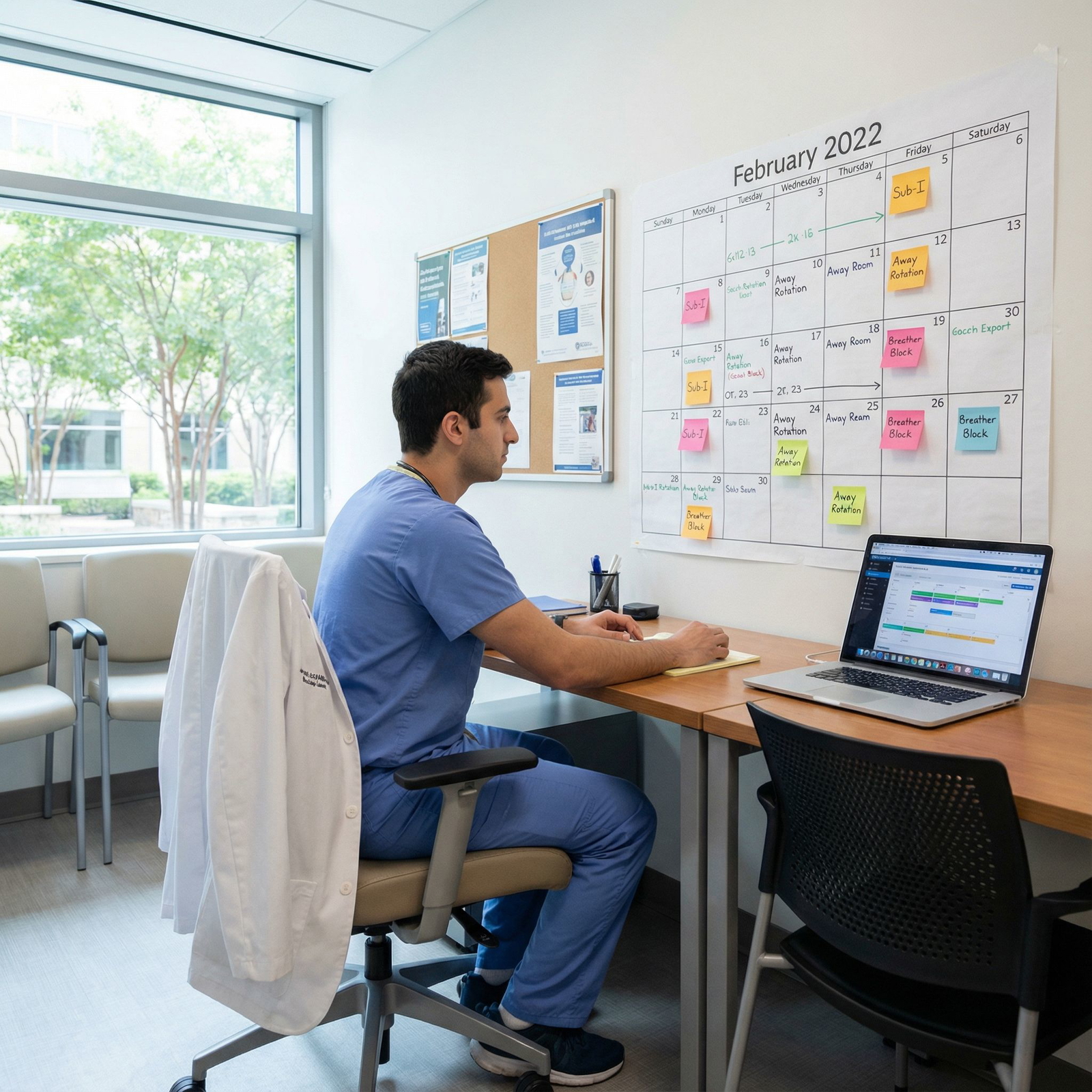
Understanding Away Rotations as a US Citizen IMG in OB‑GYN
Away rotations (also called visiting student rotations or “audition rotations”) are one of the most powerful tools a US citizen IMG can use to strengthen an OB GYN residency application. As an American studying abroad, you often have limited organic exposure to US clinical environments, fewer built‑in networking opportunities, and sometimes less familiarity with the unspoken expectations of US programs. Thoughtful away rotation strategy can directly address these gaps.
For Obstetrics & Gynecology, where programs value hands‑on skills, team fit, and work ethic, away rotations can:
- Show that you function well in a US clinical setting
- Demonstrate commitment to OB‑GYN, not just a “backup” choice
- Generate strong US letters of recommendation (LORs)
- Get you “known” by programs likely to rank you
- Help you understand what type of OB‑GYN program environment fits you
This article lays out a step‑by‑step away rotation strategy tailored specifically for a US citizen IMG pursuing an obstetrics match: how to choose sites, how many away rotations to do, when to apply, and how to perform at a level that moves your application into the “interview” pile.
Step 1: Clarify Your Goals and Constraints
Before deciding how many away rotations or which hospitals to target, you need a clear picture of your starting point and priorities. Not every US citizen IMG needs the same rotation strategy.
Key Questions to Ask Yourself
Academic profile
- Are your USMLE Step scores around or above the median for OB‑GYN applicants?
- Do you have any red flags (failed exams, gaps, leaves of absence)?
- Do you have strong OB‑GYN‑specific experiences on your CV (research, leadership, advocacy, women’s health work)?
Clinical background
- Have you already completed any clinical clerkships in the US?
- Do you have at least one solid OB‑GYN letter from your home institution?
- Are you comfortable with basic OB‑GYN skills: pelvic exams, prenatal visits, labor progress notes, postpartum care?
Geographic and visa considerations
- As a US citizen IMG, visa issues are less of a barrier—but geography still matters.
- Where do you realistically want to match (specific regions, family ties, partner’s job, etc.)?
Financial and time constraints
- Away rotations are expensive: travel, housing, applications, and sometimes extra institutional fees.
- How much time do you have in your final year? Can you cluster several months in the US?
Translating This Into Goals
Most US citizen IMGs in OB‑GYN will have one or more of these goals:
- Get 1–2 strong US OB‑GYN letters of recommendation from academic faculty
- Demonstrate success in a US teaching hospital (especially if your school’s clinical sites are non‑US)
- Target specific programs or regions where you hope to match
- Offset weaknesses (marginal test scores, late specialty decision, fewer OB‑GYN experiences)
Clarifying this upfront lets you design a targeted—not random—away rotation plan.
Step 2: How Many Away Rotations for OB‑GYN as a US Citizen IMG?
There is no single correct number, but there are patterns that work well for an American studying abroad applying to OB GYN residency.
General Recommendations
Typical range: 2–3 away rotations in OB‑GYN
- 1 rotation is usually not enough for a US citizen IMG who has limited US exposure.
- 2 rotations is a strong baseline: allows one to generate a key LOR and one to focus on a region or “reach” program.
- 3 rotations can be valuable if:
- You’re aiming for highly competitive academic programs
- You have academic red flags
- You have no prior US clinical experience
Doing more than 3 away rotations in OB‑GYN often brings diminishing returns and may strain your time and finances. Remember you also need time to apply, interview, and complete requirements for graduation.
Example Scenarios
Scenario 1: Strong applicant, limited US exposure
- US citizen IMG with solid scores, timely graduation, good home‑institution OB‑GYN evaluations.
- Strategy:
- 2 OB‑GYN away rotations (July–September)
- Focus on regions of interest (e.g., Northeast and Midwest)
- Aim for at least 2 US faculty LORs from away sites or home OB‑GYN department
Scenario 2: Average scores, no US letters, no OB‑GYN research
- US citizen IMG whose school is entirely overseas and non‑US‑style clinicals.
- Strategy:
- 3 OB‑GYN away rotations (July–October)
- One in a mid‑tier academic program, one at a community‑based program, one at a “home state” or regionally relevant site
- Work intensely to obtain 2–3 strong OB‑GYN LORs from US faculty
Scenario 3: Late switch to OB‑GYN
- Initially planning another specialty, pivoted to OB‑GYN late.
- Strategy:
- 2 focused OB‑GYN away rotations (even if later in the cycle)
- One early enough to generate a letter, one at a program you could realistically match at
- Use rotations to show clear, committed interest in obstetrics and gynecology
Step 3: Choosing the Right OB‑GYN Away Rotation Sites
For a US citizen IMG, not all visiting student rotations are equal. You want rotations that maximize:
- Letter of recommendation potential
- Interview and match chances
- Educational value and hands‑on exposure
1. Prioritize Programs That Accept and Match IMGs
You can often glean this from:
- Program websites: Some explicitly state their IMG policies.
- Resident profiles: Check if any current OB‑GYN residents are IMGs.
- NRMP/ERAS data: Look at historical match outcomes for IMGs in OB‑GYN generally.
- Word‑of‑mouth: Forums, alumni networks, or mentors familiar with IMG‑friendly OB‑GYN programs.
As a US citizen IMG, you have an advantage compared with non‑citizen IMGs (no visa sponsorship needed), but many programs still tend to prefer US MD/DO applicants. Focus away rotations where there is at least a realistic path to ranking and matching.
Pro tip: Don’t spend all your away months at “reach” programs with minimal history of taking IMGs. Include some where your profile matches current residents’ statistics.
2. Geographic Strategy
Think about geography deliberately:
- Home ties: If you have strong ties to a state or region (family, long‑term residence, spouse/partner), doing away rotations there can signal seriousness and improve your odds.
- Regional preference: If you don’t have strong geographic ties, choose 1–2 regions where you could see yourself living and focus multiple applications there.
- Weather and call structure: OB‑GYN is an intense specialty; some regions and programs may have distinctive cultures (e.g., high‑volume urban centers vs. smaller community programs). Try to sample what fits you.
3. Program Type: Academic vs Community vs Hybrid
As an American studying abroad, you may benefit from exposure to both academic and community‑based OB GYN residency programs.
Academic centers
- Pros: Strong research opportunities, name recognition, subspecialty exposure (MFM, Gyn Onc, REI), structured teaching.
- Cons: Often more competitive and less IMG‑friendly at the top tier.
Community programs (often with university affiliation)
- Pros: More hands‑on early, sometimes more IMG‑friendly, closer resident‑faculty relationships.
- Cons: Less research, potentially fewer subspecialties in‑house.
Hybrid programs
- Offer a balance—often ideal for rotation: enough volume and academic structure, but with accessible faculty and a realistic chance of matching.
Aim for at least one rotation at a program type similar to where you realistically expect to match.
4. Rotation Structure and Student Role
Review rotation descriptions carefully:
- Do students:
- Take call or night shifts?
- Scrub into deliveries and C‑sections?
- See patients independently before presenting?
- Rotate through clinic, L&D, and gynecologic surgery?
A high‑quality OB‑GYN away rotation should allow you to demonstrate:
- Reliability (show up on time for early L&D rounds)
- Procedural comfort (pelvic exams, suturing, basic operative skills)
- Teamwork with residents and nurses
- Compassion and professionalism in emotionally charged situations (pregnancy loss, emergencies, complex social situations)
Rotations where students mostly “shadow” are less useful for you as an IMG trying to prove readiness for residency.
Step 4: Timing and Application Logistics for Visiting Student Rotations
Planning is critical. Many US citizen IMGs underestimate how early they must start.
When to Apply
Most US medical schools use the AAMC Visiting Student Learning Opportunities (VSLO) system; some use their own institutional applications. OB‑GYN slots, especially in July–October, fill quickly.
- Start researching programs: 9–12 months before the desired rotation start date.
- Submit applications: As early as each site allows—often March–April for rotations starting in July–September of the same year.
- Have documents ready:
- Immunization records and titers
- Background checks, drug screens (if required)
- BLS/ACLS (if required)
- Transcript and dean’s letter (or interim equivalent)
- USMLE Step scores (if requested)
- Proof of malpractice insurance (often provided by your school)
As an American studying abroad, coordinating these through your overseas institution can be slow—start early, anticipate delays.
Ideal Timing Within the Academic Year
For OB‑GYN residency, away rotations are most impactful before or early in ERAS application season:
- July–August rotations
- Prime time for securing letters before ERAS opens.
- Programs may strongly remember you at rank time because you rotated early.
- September rotations
- Still helpful for letters, though they may arrive closer to or after application opening.
- Good time if you needed more time to prepare clinically.
- October or later rotations
- Less helpful for first‑wave interview invitations but can:
- Support late‑season interview offers
- Positively influence how a program ranks you after you interview
- Be useful if you apply more broadly and aim for SOAP backup options
- Less helpful for first‑wave interview invitations but can:
Try to have at least one OB‑GYN away rotation completed by the time you submit ERAS or very shortly thereafter.

Step 5: Maximizing Performance on OB‑GYN Away Rotations
Getting the rotation is only half the battle. As a US citizen IMG, how you perform can heavily influence your obstetrics match chances.
1. Pre‑Rotation Preparation
Before Day 1:
- Review core OB‑GYN knowledge
- Normal labor and delivery
- Common OB triage complaints (vaginal bleeding, decreased fetal movement, hypertension)
- High‑yield topics: preeclampsia, postpartum hemorrhage, ectopic pregnancy, contraception, abnormal uterine bleeding, STIs in pregnancy.
- Practice documentation and presentations
- Learn US‑style SOAP notes and OB triage notes.
- Practice concise, structured oral presentations (especially in L&D and clinic).
- Clarify expectations
- If possible, email the clerkship coordinator for:
- Start times, dress code, call expectations
- Required orientation modules or readings
- If possible, email the clerkship coordinator for:
Entering the rotation clinically prepared helps overcome bias some may hold about IMGs’ training backgrounds.
2. Professionalism and Work Ethic
In OB‑GYN, where the pace is fast and emotions run high, professionalism is a major determinant of your evaluation.
Actionable behaviors:
- Be early, every day. For 5:30 AM rounds, aim for 5:15 AM.
- Volunteer intelligently. Ask to help with:
- Admissions and discharges
- Writing progress notes
- Calling consults (with supervision)
- Following up labs and imaging
- Respect nursing and midwifery staff. They will often informally share feedback about you with residents and attendings.
- Maintain a calm, compassionate demeanor in emergencies and stressful encounters.
Programs often look for “someone I’d want on my 3 AM L&D team.” Show you’re that person.
3. Clinical Engagement and Initiative
On an away rotation, you want to be visible—but not intrusive.
- On L&D:
- Ask, “Can I follow this patient from admission through delivery?”
- Offer to write labor progress notes or present updates.
- When appropriate, ask, “Would it be okay if I assist with this delivery or repair?”
- In the OR:
- Read about the case the night before.
- Introduce yourself to the scrub techs and anesthesiology team.
- Ask to perform tasks within your competency: holding retractors, cutting sutures, closing skin if the attending/resident offers.
- In clinic:
- See patients independently when allowed, then present succinctly.
- Practice counseling on contraception, prenatal care, and simple gynecologic issues.
Consistently show that you are learning, reading, and improving over the course of the rotation.
4. Communication and “Team Fit”
OB‑GYN residency programs care deeply about team dynamics.
- Communicate clearly and proactively:
“I’m going to check on our postpartum patients and update you on new vitals in 20 minutes.” - Be adaptable:
If the team suddenly becomes overwhelmed on L&D, help where needed instead of insisting on a teaching session at that moment. - Show coachability:
When given feedback (e.g., “Tighten your presentations; lead with the problem first”), apply it immediately and visibly.
Residents and attendings will often ask themselves: “Would I want to work next to this person for four years?”
Your daily interactions answer that question more than a personal statement ever will.
5. Securing Strong Letters of Recommendation
Away rotations are one of the best opportunities to earn US faculty LORs in OB‑GYN.
Whom to ask:
- Attending physicians who:
- Observed you consistently
- Saw you in more than one setting (L&D + clinic, or OR + wards)
- Can comment on your growth over the rotation
- Clerkship director or site director, if they interacted with you meaningfully
When and how to ask:
- Ask near the end of the rotation, once they’ve seen your progression.
- Approach them directly:
“Dr. Smith, I’ve really valued working with you. I’m a US citizen IMG applying to OB‑GYN this cycle, and I was wondering if you’d feel comfortable writing me a strong letter of recommendation.” - Provide:
- Your CV
- A draft of your personal statement (if ready)
- A summary of your experiences and any specific strengths you hope they might highlight
Number to aim for:
- For OB‑GYN residency, try to have at least 2–3 strong OB‑GYN letters, including:
- 1–2 from away rotations
- 1 from your home institution or primary OB‑GYN clerkship site
Step 6: Integrating Away Rotations Into Your Overall OB‑GYN Match Strategy
Away rotations are powerful, but they are only one part of a successful obstetrics match plan.
Using Rotations to Target Programs
- Signal specific interest:
- Rotate at a program you genuinely would rank highly.
- Attend resident didactics, conferences, and social events when invited.
- Let the program know—appropriately—that you are strongly interested in matching there.
- Follow up professionally:
- After the rotation, send a brief thank‑you email to key faculty and the program coordinator.
- Once ERAS is submitted, it’s acceptable to let them know you’ve applied and remain enthusiastic.
Programs are more likely to offer interviews to students they know, particularly when residents and faculty vouch for them.
Balancing Away Rotations With Other Priorities
You still need to:
- Prepare for and take Step 2 CK (if not already done)
- Write a polished personal statement that reflects your authentic interest in OB‑GYN
- Gather supporting experiences:
- Women’s health advocacy
- Quality improvement projects
- OB‑GYN‑related research (if accessible)
- Teaching or leadership roles
When choosing rotation timing and number, ensure you preserve enough time for these tasks. Overloading on away rotations and neglecting exams or ERAS preparation can backfire.
Plan B and Risk Management
Even with ideal away rotation performance, OB‑GYN can be competitive for US citizen IMGs. Consider:
- Applying broadly, including:
- A mix of academic, community, and hybrid programs
- States and regions you may not initially have considered
- Discussing strategy with mentors who know your full profile:
- US faculty from away rotations
- Advisors at your medical school
- OB‑GYN residents or fellows who understand the current landscape
Your away rotation performance can sometimes open doors to programs you didn’t rotate at—if your letter writers advocate for you or share your name informally within their professional networks.
FAQs: Away Rotations for US Citizen IMG in OB‑GYN
1. As a US citizen IMG, do I absolutely need away rotations to match into OB‑GYN?
They are not strictly mandatory, but for most American students studying abroad, away rotations in OB‑GYN are strongly recommended. They provide US clinical experience, OB‑GYN–specific LORs, and direct exposure to residency programs that may consider you. Without them, it is harder to prove your readiness for US training and to compete with US MD/DO applicants.
2. How many away rotations are ideal for OB‑GYN as a US citizen IMG?
Most will benefit from 2–3 OB‑GYN away rotations. Two is usually a solid minimum: one to secure a strong letter and one to target a particular region or program type. Three can help if you have no US letters, borderline scores, or want to increase visibility across several programs. More than three tends to add cost without proportionally increasing match chances.
3. Should I choose away rotations only at “top‑tier” OB‑GYN programs?
No. As a US citizen IMG, concentrating only on highly competitive academic centers that rarely take IMGs is risky. It’s reasonable to include one “reach” rotation if your profile supports it, but make sure at least one or two rotations are at programs where you realistically could match (based on IMG history, program culture, and your metrics).
4. If I do an away rotation, am I guaranteed an interview or higher ranking at that program?
No guarantee—but your chances usually improve if you perform well. Programs vary: some routinely interview most of their visiting students; others are more selective. Your away rotation evaluation, how you fit with the residents, and your overall application still matter. Even without a guaranteed interview, a strong rotation can yield an influential LOR that helps you with many other programs.
Thoughtful planning, careful program selection, and excellent on‑site performance can turn away rotations from a logistical hurdle into a major asset. As a US citizen IMG aspiring to OB GYN residency, use these months not just to prove yourself, but to find the environments where you can truly thrive as a future obstetrician‑gynecologist.