
As a US citizen IMG (American studying abroad), away rotations are one of the most powerful tools you have to break into orthopedic surgery residency in the United States. Because program directors may be less familiar with your school, your performance in person at US hospitals often matters more than your transcript or even your USMLE scores.
This guide walks through a detailed, realistic away rotation strategy tailored for a US citizen IMG targeting orthopedic surgery. We’ll cover when to apply, how many away rotations to do, how to choose programs, how to perform on rotation, and how to link it all to a successful ortho match.
Understanding the Role of Away Rotations for a US Citizen IMG
For US MD/DO students, away rotations are important. For a US citizen IMG in orthopedic surgery, they are often critical.
Why away rotations matter so much for US citizen IMGs
Orthopedic surgery is one of the most competitive specialties. As a US citizen IMG, you’re facing several barriers:
- Program directors often don’t know your school’s reputation.
- You may have fewer home resources (no home ortho department, no away rotations office, limited research support).
- Some programs historically interview very few IMGs.
Visiting student rotations and audition rotations do three essential things for you:
Provide a “US-based” clinical performance scorecard
- Faculty and residents can directly compare you to US MD/DO students.
- Strong clinical performance can overcome doubts about school reputation.
Generate meaningful advocacy
- A powerful letter of recommendation (LOR) from a US orthopaedic surgeon who knows you well is priceless.
- During ranking, faculty often say: “I worked with this student for 4 weeks—they’re great.”
Show programs you’re serious about US training
- Especially if you’re an American studying abroad (Caribbean, Europe, etc.), away rotations prove that you can thrive in the US clinical environment.
“Home” vs “Away” for US citizen IMGs
Many IMGs do not have a true “home ortho program.” That changes your strategy:
- For US MD/DO:
- 1 home ortho rotation + 2–3 away rotations is common.
- For US citizen IMG:
- You may have 0 home rotations and must build your US ortho experience entirely through away rotations and observerships.
If your foreign medical school has an affiliated US teaching hospital where you can do an orthopedic sub-internship with hands-on duties, treat that as a “home” rotation and prioritize getting a strong LOR there. But most still need several US-based away rotations.
Planning Your Overall Away Rotation Strategy
When to start planning
Because you’re competing in a crowded applicant pool, planning early is essential.
18–24 months before ERAS submission (mid–MS3 equivalent)
- Clarify that orthopedic surgery is truly your goal.
- Start collecting basic US clinical experience (general surgery, internal medicine, etc.).
- Begin building research involvement if possible.
12–18 months before ERAS submission
- Identify programs that may be IMG-friendly.
- Learn each program’s visiting student / away rotations residency policies.
- Map out ideal months for your rotations.
9–12 months before your first away rotation
- Prepare required documents (USMLE Step 1, immunizations, visa/SSN, background check).
- Draft your away rotation personal statement (can be short and focused).
- Confirm whether you’ll apply through VSLO/VSAS or each program’s own portal.
For many applicants, this means planning during your penultimate clinical year so that you rotate in the “final” clinical year (the year before you apply or the ERAS year, depending on your school’s calendar).
Core principles for US citizen IMG away rotation planning
Front-load your ortho exposure as much as possible
You want your strongest rotations and letters ready by ERAS submission in September.Use early aways to prove yourself and refine your approach
If possible, avoid making your absolute dream program your very first rotation; you’ll be more polished after a month or two of US ortho experience.Balance quality, feasibility, and volume
You must answer: “How many away rotations can I realistically do?” while maintaining performance, research, and exam prep.
How Many Away Rotations Should a US Citizen IMG Do?
This is one of the biggest strategic questions: how many away rotations are enough for a competitive orthopedic surgery residency application, particularly for a US citizen IMG?
Typical ranges and what they mean
2 away rotations
- Minimum for many US MD/DO applicants.
- For a US citizen IMG, this is often on the low side unless supplemented by a strong home ortho rotation and substantial research.
3–4 away rotations (common target for US citizen IMG)
- Allows you to:
- Show consistency across multiple environments.
- Collect 2–3 strong US ortho letters.
- Demonstrate broad interest while still having some geographic focus.
- Often the sweet spot: enough exposure without burnout.
- Allows you to:
5+ away rotations
- Occasionally done by IMGs, but increasingly risky.
- Burnout is real, and performance quality can drop.
- Leaves less time for Step 2 CK preparation and research.
- May be perceived as “shopping around” unless clearly justified.
For a US citizen IMG in orthopedics, 3–4 well-chosen, high-quality away rotations is a realistic and often optimal strategy, assuming you can secure them.
Scheduling strategy within the application year
Your goal: have at least two strong ortho letters uploaded to ERAS by early September.
Ideal sequence:
Early rotations (May–July)
- Get comfortable with US hospital culture, documentation, and workflow.
- Try to secure one letter from these months.
Prime rotations (July–September)
- These generate key letters and influence interview offers.
- Aim for 1–2 “target” programs you’d truly love to match at.
Later rotations (October–January)
- Helpful for programs that interview later.
- Can still produce late LORs and strong word-of-mouth advocacy.
- May lead to “add-on” interviews or signal interest in a region.
If your school calendar is different (e.g., rolling clinical years abroad), coordinate with your dean’s office to align US rotations with the US residency timeline.
Choosing Where to Rotate: Targeting the Right Programs
Selecting where to do visiting student rotations is just as important as how many you do.
Create tiers of target programs
Think of your away rotation options in three broad tiers:
Reach programs (very competitive, limited IMG intake)
- Top-tier academic centers with strong research reputations.
- Historically low IMG match rates, but not impossible.
- Useful if you have exceptional Step scores, significant research, or strong connections.
Realistic/target programs (moderate competitiveness, some US citizen IMG presence)
- Mid-tier academic or strong community programs.
- Programs where recent rosters show US citizen IMGs or DOs.
- Often where you’ll have your best match chances.
Safety-but-still-strong programs (more IMG-friendly)
- Programs with a track record of taking IMGs.
- May be community-based with solid operative volume.
- Critical backbones of your match strategy.
Most US citizen IMG applicants should aim to spend at least 2 aways at realistic/IMG-friendly programs, with perhaps 1 reach and 1 safer option (depending on your competitiveness).
How to research IMG-friendliness in orthopedics
Review resident rosters on program websites
- Look for names of foreign schools or Caribbean schools.
- Check LinkedIn or Doximity to confirm educational backgrounds.
Use NRMP Charting Outcomes and program lists (where available)
- Identify programs that historically rank or match IMGs.
Talk to previous US citizen IMG ortho residents or fellows
- Networking with alumni from your school or region is invaluable.
- Ask specifically: “Which programs were open to IMG rotators and seriously considered them?”
Email coordinators carefully (when appropriate)
- Ask about eligibility for international students.
- Avoid asking whether they “take IMGs” as your first contact; instead, frame questions around rotation logistics and eligibility (after doing your homework).
Geographic and strategic considerations
Region where you want to live long-term
Programs often favor applicants with geographic ties or real interest in their region.States with many programs and varied competitiveness (e.g., NY, PA, OH, TX)
- Offer more options for both away rotations and match applications.
Logistics and cost
- Away rotations are expensive: housing, travel, VSLO fees, background checks, etc.
- Plan your budget early and look for hospital-subsidized housing or student housing networks.
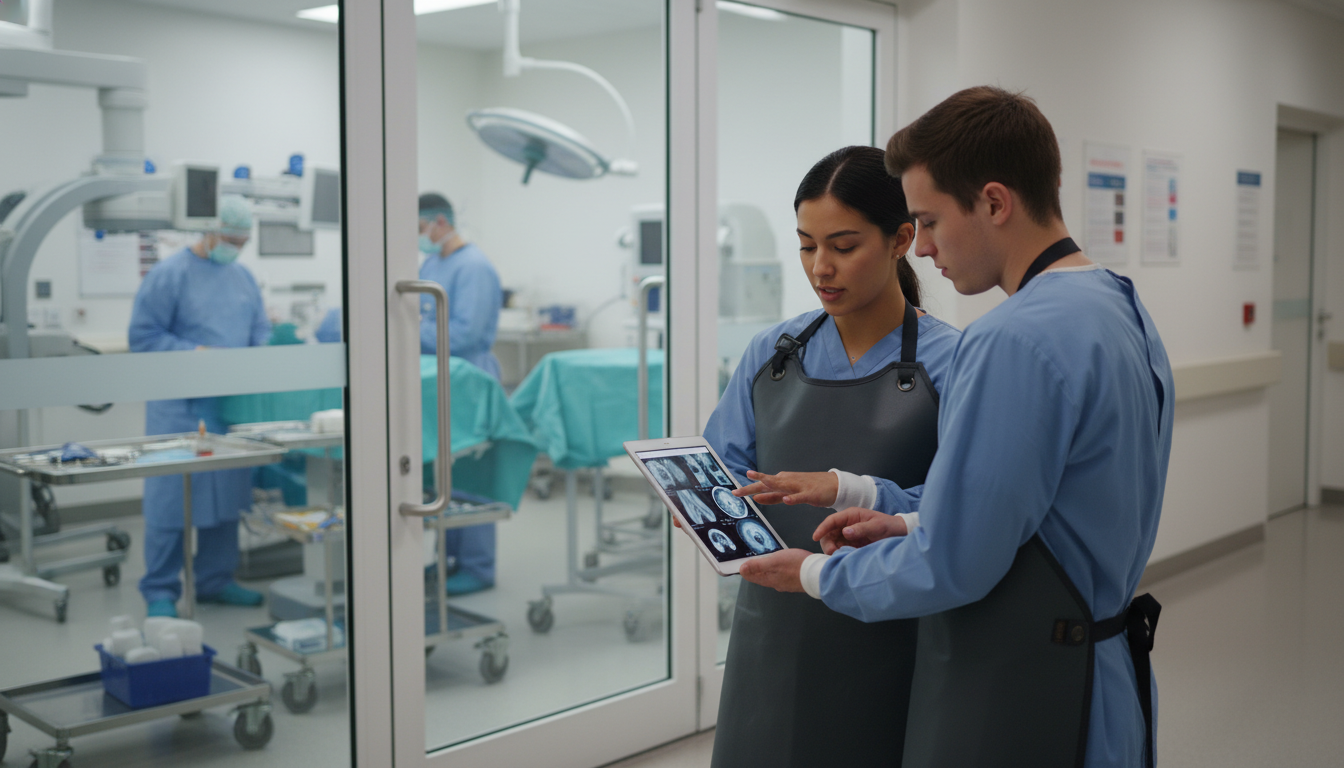
Executing the Rotation: How to Perform Like a Top Orthopedic Sub-Intern
Once you’ve secured your away rotations, performance is everything. As a US citizen IMG, you may be under closer scrutiny; your goal is to be indistinguishable from, or better than, US MD/DO rotators.
Expectations on an orthopedic surgery sub-internship
On most ortho away rotations, you’ll be expected to function near the level of an intern:
- Pre-round on assigned patients and present succinctly.
- Write progress notes that are accurate and timely.
- Scrub into cases and assist appropriately.
- Participate in consults and ED evaluations.
- Attend didactics, journal clubs, and conferences.
- Communicate clearly with residents, nurses, and other staff.
Ask on day 1:
“Where can I be most helpful to the team? How do you like your medical students to contribute?”
Core behaviors that stand out (in a good way)
Reliability and early presence
- Arrive before the interns; be ready to pre-round.
- Never be late to the OR—aim to be there before the attending.
Eagerness balanced with humility
- Volunteer for tasks, but don’t demand special treatment.
- Ask questions at appropriate times—not while the attending is handling a critical surgical step.
Strong work ethic and stamina
- Ortho is physically demanding: long cases, standing, lead aprons.
- Maintain energy and focus; avoid complaining about hours.
Preparation outside of clinical hours
- Read about common cases the night before (e.g., hip fractures, ACL reconstructions).
- Learn indications, basic steps, and post-op care.
- Use ortho review texts and concise resources to stay sharp.
Understanding your role in the OR
- Know how to handle retractors, suction, and basic assistance.
- Anticipate the surgeon’s needs (based on watching and learning).
- Maintain a sterile field and ask for help if you’re unsure.
Leveraging your IMG background positively
Being an American studying abroad can be reframed as a strength:
- Emphasize adaptability: you’ve navigated different health systems.
- Highlight resilience: you chose a more challenging path and succeeded.
- Demonstrate cultural competence: you’ve worked with diverse patient populations.
You don’t need to over-defend your school; instead, let your current performance speak loudly, and reference your path confidently when asked.
Directly building towards a strong LOR
You should identify 1–2 faculty members per rotation who could write you a letter.
Steps:
Work closely with them in clinic and OR
- Try to be on their service repeatedly.
- Ask residents how best to impress that attending (“What does Dr. X value in students?”).
Ask for feedback around mid-rotation
- “How am I doing compared with other students you’ve worked with? What can I improve this month?”
- This shows maturity and gives you a chance to fix issues early.
Formally request a letter before leaving
- Ask: “Based on my performance, would you feel comfortable writing me a strong letter of recommendation for orthopedic surgery residency?”
- If they hesitate, that’s a sign to ask someone else.
Provide a concise packet
- CV, USMLE scores, brief personal statement, and your ERAS ID.
- Clarify deadlines and how to submit the letter.
Integrating Away Rotations into Your Overall Ortho Match Strategy
Away rotations are not isolated experiences—they must connect to a coherent ortho match plan.
Aligning rotations with your application narrative
Think about the story your application will tell:
- “US citizen IMG with strong US-based ortho clinical performance and increasing responsibility across 3–4 major US centers.”
- “Focused interest in [trauma/sports/arthroplasty/pediatrics] shown through away rotations, research, and electives.”
- “Geographically interested in [Midwest/West Coast/Northeast] as shown by multiple rotations and personal ties.”
Programs should be able to see a logical pattern in where you rotated and ultimately applied.
Using away rotations to prioritize your rank list
Your rotations are like month-long interviews. During each:
- Observe resident morale and culture.
- Notice how faculty treat trainees and support education.
- Track operative exposure—are residents getting hands-on experience?
- Ask residents privately: “Would you choose this program again?”
After the rotation:
- Write brief reflections about pros/cons of each program.
- Rank them personally long before the official NRMP rank list is due.
Managing letters and ERAS timing as a US citizen IMG
Ideal letter portfolio for ortho:
- 2–3 letters from US orthopedic surgeons you worked closely with on rotations.
- 1 general/medicine/surgery letter or research mentor letter (if strong and relevant).
Timing:
- Aim to have at least 2 ortho letters uploaded by early September.
- Follow up politely with letter writers 3–4 weeks before ERAS opens if needed.
For each application, select the 3–4 strongest letters that best represent you, giving priority to:
- Faculty at programs with strong reputations.
- Surgeons who know you best and can comment on your clinical ability, work ethic, and team skills.
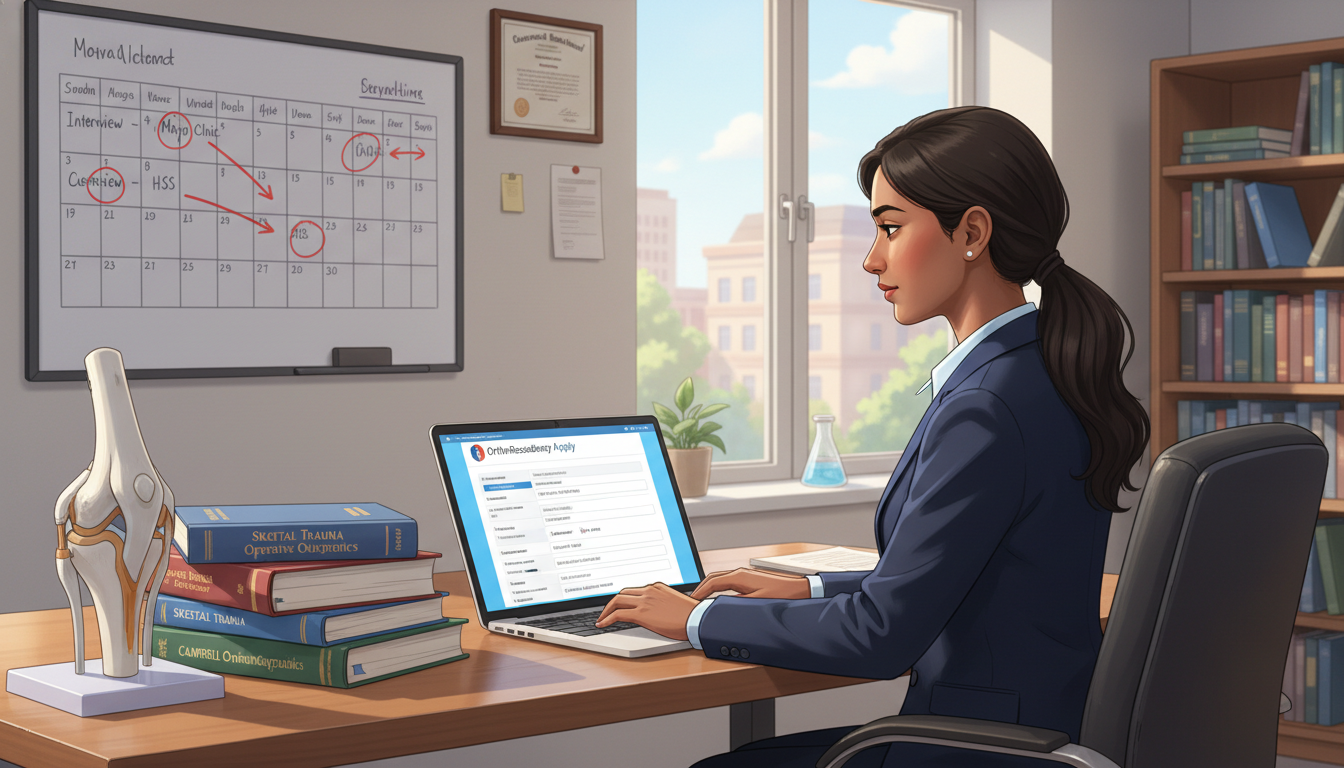
Practical Tips, Pitfalls, and Example Pathways
Practical tips specifically for US citizen IMGs
Clarify visa and credentialing issues early
- As a US citizen IMG, you usually don’t need a training visa, which is a major advantage.
- Still, programs may have policies for international schools—ensure they accept your school’s transcripts, clinical requirements, and malpractice coverage.
Maximize your USMLE profile before applying for aways
- Many ortho visiting programs require Step 1 (and increasingly Step 2 CK) scores.
- Strong scores help you secure better rotations, which then help your ortho match chances.
Use earlier US rotations (non-ortho) to prove you can function in the US system
- Strong internal medicine or general surgery evaluations also reassure ortho program coordinators.
Engage in ortho research if at all possible
- Even small contributions to multi-author projects show your persistent interest.
- If the rotation site has ongoing research, ask respectfully how you might help.
Common pitfalls for US citizen IMGs on away rotations
Over-rotating and underperforming
Doing 5–6 aways but being “average” at all is less effective than 3 rotations with outstanding performance and letters.Ignoring Step 2 CK or OET/other requirements
Don’t let aways cause exam failure or delays; programs care deeply about board performance.Acting as a “tourist” rotator
If you seem more interested in the city than the program, residents notice. Show genuine commitment.Not clarifying expectations for hands-on responsibilities
Some hospitals may limit what IMGs can do. Clarify early what your scope will be.
Example pathway: US citizen IMG strategy scenario
Profile:
- American studying abroad in the Caribbean.
- Step 1: Pass, Step 2 CK: 247.
- Minimal home ortho exposure, but 1 ortho research project in progress.
Year before ERAS:
Winter–Spring:
- Complete 2–3 months of US-based general surgery and internal medicine.
- Start contacting ortho programs about visiting rotations.
- Identify 15–20 realistic programs, prioritize 6–8 for applications.
Summer–Fall:
- July: Away rotation #1 at a mid-tier academic ortho program in the Midwest (IMG-friendly).
- August: Away rotation #2 at a community-based academic program in the South.
- September: Away rotation #3 at a “reach” academic program on the East Coast.
Each rotation:
- Aim to work with at least one attending who writes a letter.
- Ask for feedback mid-rotation.
- Show consistent work ethic and positive team presence.
Application cycle:
- ERAS: Submit with 3 ortho LORs + 1 surgery letter.
- Rank list: Top 3 programs are the ones you rotated at where you fit best; others are geographically and IMG-friendly programs.
Outcome:
- Even if the “reach” program doesn’t offer an interview, the two realistic IMG-friendly programs where you rotated know you well, and your chances there are significantly higher than they would be without visiting student rotations.
FAQs: Away Rotations in Orthopedic Surgery for US Citizen IMGs
1. As a US citizen IMG, how many away rotations should I do for orthopedic surgery?
Most US citizen IMGs should aim for 3–4 away rotations in orthopedic surgery if possible. This usually provides:
- Enough chances to prove yourself in US clinical settings.
- 2–3 strong letters of recommendation from US orthopedic surgeons.
- A mix of programs where you’re a realistic match candidate.
If circumstances limit you to 2 aways, focus intensely on performance and look for additional ortho exposure (electives, research) to strengthen your profile.
2. Can I match ortho without any away rotations?
It’s theoretically possible but much more difficult for a US citizen IMG. Because program directors may not know your medical school, away rotations are often their main opportunity to see you in action. If you cannot do away rotations residency experiences for some reason, you should:
- Maximize US-based non-ortho rotations with strong evaluations.
- Build robust ortho research and networking.
- Focus on programs that have historically matched IMGs without prior aways (rare).
But in general, if you are committed to orthopedic surgery, you should do everything possible to secure at least a couple of visiting student rotations.
3. How do I choose which month to rotate at my top-choice program?
For a top-choice program, consider:
- July–September: Best for influencing interview offers and generating early letters.
- Avoid being their very first rotation ever if you’re uncomfortable with being new to US ortho culture; consider doing one away first elsewhere to “warm up,” then going to your dream program once you’re polished.
- Ask: “When do most students rotate who end up matching here?”—some programs have patterns.
Ultimately, choose a month when you’re free from major exam obligations and can give 100% effort to the rotation.
4. What if I don’t get an away rotation at programs I’m interested in?
If you can’t secure visiting student rotations at your top programs:
- Still apply for residency there if they are IMG-friendly or a good fit.
- Strengthen your application with:
- Strong letters from other reputable US ortho programs.
- Solid Step scores and strong clinical evaluations.
- Research connected to the program’s subspecialty interests if possible.
You can also use later fourth-year electives (even in related fields like trauma surgery or sports medicine) to show continued orthopedic interest and build additional US-based advocacy.
Away rotations, when approached strategically and executed with discipline, can transform the outlook for a US citizen IMG pursuing orthopedic surgery. Plan early, choose programs wisely, commit fully during each month, and integrate every rotation into a clear, compelling application narrative.