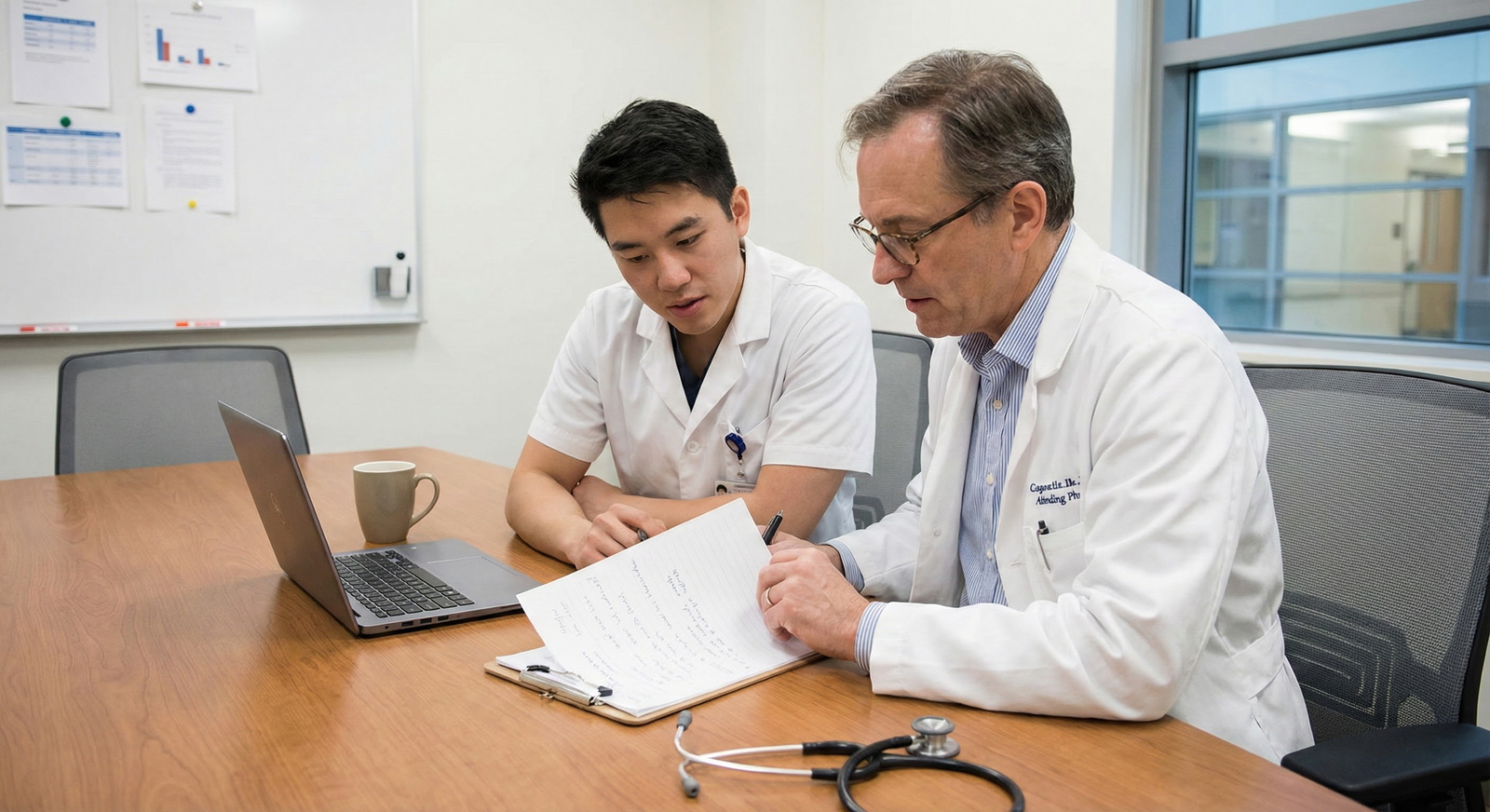
Understanding Away Rotations as a US Citizen IMG Aiming for Transitional Year
Away rotations (also called visiting student rotations or audition rotations) can be one of the most powerful tools in a US citizen IMG’s strategy to match into a transitional year residency (TY program), especially if you’re an American studying abroad. For many program directors, seeing your performance in their own hospital is more persuasive than any exam score or letter from overseas.
But away rotations can also be expensive, competitive, and time‑intensive. The key is not “doing as many as possible,” but designing a smart, targeted away rotation strategy that maximizes your chances of matching into a TY program and building a long‑term specialty path.
This guide walks through what away rotations are, why they matter specifically for transitional year applicants, how many away rotations to do, when and where to apply, and how to perform at a level that turns an away rotation into an interview and ultimately a ranking.
1. Why Away Rotations Matter So Much for US Citizen IMGs
1.1 Unique challenges for an American studying abroad
As a US citizen IMG (US citizen IMG), especially an American studying abroad in the Caribbean or elsewhere, you face several predictable obstacles:
- Limited US clinical exposure at home institution
- Variable reputation of your overseas school in the eyes of program directors
- Less built‑in networking with US residency programs
- Fewer US-based mentors who know specific transitional year residency programs
Away rotations in US hospitals are one of the most direct ways to counter these issues. A strong month on site allows you to:
- Prove you can function smoothly in US hospital systems
- Demonstrate communication and professionalism with US teams and patients
- Earn US-based letters of recommendation (LORs) from known faculty
- Put a “face and story” to your ERAS application rather than being just another PDF
1.2 Why they are especially important for Transitional Year (TY)
Transitional year residency spots are limited and competitive because:
- Many applicants (including US grads) want a flexible, broad‑based year before specialties like radiology, dermatology, ophthalmology, PM&R, anesthesia, or neurology.
- Some TY programs are attached to highly sought‑after advanced specialty programs; they choose interns largely in line with their advanced slots.
For a US citizen IMG, this means:
- You are often competing not only with other IMGs but with US MD and DO seniors.
- Many TY programs prefer applicants they have seen in person or who came via away rotations residency experiences.
Programs frequently use away rotations as extended interviews. If you excel, you may jump ahead of stronger-on-paper candidates who never rotated there.
2. Planning Your Away Rotation Strategy for a Transitional Year

2.1 Clarify your ultimate specialty goal first
Transitional year is usually a preliminary year before an advanced specialty. Your away rotation strategy should align with both:
- Your desired advanced specialty (e.g., radiology, PM&R, anesthesia)
- The type of transitional year that best supports that specialty
Ask yourself:
- Do I already have a secured advanced position, and just need a strong TY?
- Am I applying to both TY and categorical programs (e.g., internal medicine, prelim medicine)?
- Which TY program structures match my interests (more ICU vs more outpatient vs specialty electives)?
Your answers shape:
- Which departments to rotate in (medicine, surgery, emergency, specialty electives)
- Which institutions to target (community vs academic vs hybrid)
2.2 How many away rotations should you do?
A common question is “how many away rotations” are ideal for a US citizen IMG seeking a transitional year residency.
There is no universal number, but practical guidance:
- Minimum: 1–2 away rotations if possible
- Ideal for most US citizen IMGs: 2–3 carefully chosen rotations
- Upper limit: 4 away rotations is usually the maximum that’s practical without burning out or draining finances
Quality > quantity. Four mediocre or poorly chosen rotations are far less valuable than two strong rotations at realistic, IMG‑friendly programs where you can shine.
A sample breakdown:
- Rotation 1: At a program where you are a realistic candidate for TY and/or categorical IM
- Rotation 2: At a second target TY program or a program with many prelim/TY spots
- Optional Rotation 3: In your intended advanced specialty (e.g., radiology) to support your long‑term application and get a specialty‑specific LOR
2.3 Timing your away rotations
Timing is critical for away rotations residency planning:
- Ideal months: May–September of your final year of medical school (before ERAS applications are reviewed in depth)
- Letters of Recommendation: Aim to complete at least one rotation by August so that a strong letter can be uploaded early in the season
- Interview synergy: Rotations in September–October still help; programs may remember you when interview decisions are made
As a US citizen IMG:
- Clarify with your school when you are eligible for final-year electives and any travel restrictions.
- Some programs only accept visiting students in certain months; plan your schedule around application windows (often via VSLO or direct institutional applications).
3. Choosing the Right Programs and Rotations
3.1 Types of hospitals and programs to target
For a transitional year residency strategy, prioritize programs where a strong performance can realistically convert into an interview and ranking.
Consider:
Community programs with strong teaching
- Often more open to IMGs
- More hands-on opportunities
- TY programs often attached to community hospitals or regional academic centers
Academic-affiliated community hospitals
- Offer good teaching and structure
- May have advanced specialties (e.g., radiology or ophthalmology) that select from their own TY pool
Large academic centers
- More competitive, but if they have a known history of matching US citizen IMGs into TY, they can be worth an away rotation
Study each TY program’s:
- NRMP and FREIDA data to see how many IMGs they match
- Website and resident bios: note how many residents trained abroad or are American studying abroad
- Past USMLE score ranges or informal cutoffs (if available)
3.2 Selecting clerkship types that support a TY application
Transitional year programs value broad clinical competence and reliability. Strategic clerkships for visiting student rotations include:
1. Inpatient Internal Medicine
- Universally relevant for any TY program
- Demonstrates your ability to manage admissions, follow‑ups, and complex patients
- Often leads to strong LORs detailing your diagnostic reasoning and work ethic
2. General Surgery or Surgical Subspecialties
- Many TY programs blend medicine, surgery, and electives
- A strong performance on a surgical service demonstrates stamina, procedural interest, and teamwork
- Important if your advanced specialty is procedural (e.g., radiology, anesthesia)
3. Emergency Medicine
- Highlights your ability to triage, rapidly assess, and communicate
- Some TY programs highly value EM rotations due to call/ED coverage from interns
4. Specialty relevant to your future field
- For example, radiology, PM&R, neurology, ophthalmology, or anesthesia
- Even if you rotate in the specialty rather than the TY service, this can yield a highly targeted LOR and helpful networking
3.3 Using VSLO and direct applications strategically
Most US schools and many IMGs use VSLO (Visiting Student Learning Opportunities) to apply for away rotations, but as a US citizen IMG, your situation may be more complex:
- Some programs do not accept non-US schools via VSLO; you may need to apply directly via institutional portals.
- Start collecting documents early: immunization records, background checks, CV, transcript, USMLE Step scores, malpractice coverage details from your school.
- Track application fees and deadlines in a spreadsheet.
When possible, email program coordinators:
- Introduce yourself as a US citizen IMG
- Briefly mention your interest in transitional year and/or a specific advanced specialty
- Ask if they accept visiting students from your school and in which departments
This shows initiative and can help you avoid wasted applications.
4. Performing on Away Rotations to Earn Interviews and LORs

4.1 Treat every away rotation as a month-long interview
For a US citizen IMG, an away rotation is often the interview before the interview. Program directors and residents are asking:
- Can this person function reliably as an intern?
- Are they coachable and safe?
- Will they improve or strain team dynamics?
Behaviors that strongly influence their perception:
- Consistency: Show up early, stay until work is done, never disappear
- Professionalism: Respect staff at all levels – nurses, custodial staff, case managers, etc.
- Adaptability: Learn the EMR quickly, follow local protocols, adjust to new workflows
Aim to be the most prepared, most reliable student on service—not the loudest or flashiest.
4.2 Clinical performance: what TY programs care about
Transitional year residency programs want interns who can handle a broad workload. On away rotations, they will scrutinize:
1. Clinical reasoning and organization
- Present patients in a structured, concise format (CC, HPI, PMH, meds, assessment, plan).
- Anticipate next steps (labs, imaging, consultants) and be ready to justify them.
- Formulate problem lists and prioritize issues.
2. Work ethic and ownership
- Voluntarily follow up labs, imaging, and consult recommendations.
- Update the team without being asked repeatedly.
- Own “your” patients: know every detail about them.
3. Communication skills
- Clear, empathetic conversations with patients and families.
- Respectful and timely pages to residents and attendings.
- Smooth handoffs to night float or other teams.
4. Team dynamics
- Collaborate with co‑students instead of competing destructively.
- Offer to help others when your work is done.
- Accept feedback without defensiveness, and show rapid improvement.
4.3 Securing strong letters of recommendation (LORs)
A powerful LOR from a US faculty member who knows your work is critical for a US citizen IMG, especially for TY applications.
Steps to maximize your chances:
Identify potential letter writers early
- Target attendings who see you frequently and on busy services.
- If a senior resident strongly supports you, ask them to give feedback to the attending too.
Ask explicitly and professionally
- Near the end of rotation, ask:
- “Based on how I performed this month, do you feel you could write me a strong letter of recommendation for transitional year and internal medicine applications?”
- This phrasing allows them to be honest; you want strong letters, not neutral ones.
- Near the end of rotation, ask:
Provide a support packet
- Updated CV
- Personal statement (even a working draft)
- Score reports and transcript
- Brief list of specific experiences from the rotation that highlight your growth
Clarify logistics
- Ensure they know how to upload to ERAS.
- Follow up with a short, polite reminder email if you haven’t seen it submitted after a few weeks.
Letters from away rotations at TY or IM programs are particularly impactful when they:
- Explicitly state that you functioned at or above the level expected of a starting intern
- Comment on your reliability, communication, and teamwork
5. Targeting Transitional Year Programs as a US Citizen IMG
5.1 Understanding structures of TY programs
Not all transitional year programs are the same. When comparing options for away rotations and eventual ranking, note:
“Medicine-heavy” TY
- More inpatient internal medicine and ICU
- Good if you’re unsure of your final specialty or considering IM/neurology/PM&R
“Balanced” TY
- Mix of medicine, surgery, outpatient, elective time
- Often ideal for radiology, anesthesia, ophthalmology applicants
“Specialty-oriented” TY
- TY year is embedded in a program tailored for a specific advanced specialty
- Example: A TY attached to a radiology department that selects many of its interns from the TY pool
As a US citizen IMG, pay attention to:
- Whether the TY program is linked to advanced positions (integrated) or open (independent)
- Whether they historically rank IMGs, visible from past resident rosters
5.2 Using away rotations to show “fit”
Program directors want interns who fit their:
- Workload and call structure
- Educational culture
- Patient population (urban, suburban, rural)
On your away rotation:
- Ask residents about intern schedules, call, and work‑hour realities.
- Show interest in the program’s specific strengths (e.g., strong ICU, global health initiatives, ultrasound curricula).
- Attend conferences, noon lectures, and grand rounds—even if not strictly required.
These behaviors send a clear message: you’re not only auditioning; you’re genuinely evaluating and investing in the program.
5.3 Managing risk: balancing reach vs realistic programs
When deciding where to do visiting student rotations and which TY programs to prioritize, be realistic:
Reach programs
- Prestigious academic hospitals
- TY positions tightly linked to competitive specialties
- Limited IMG representation in recent years
Realistic/target programs
- Community-based or hybrid hospitals
- Documented history of welcoming US citizen IMG and other IMGs
- Reasonable USMLE score expectations
Safety programs
- Programs in less desirable locations or smaller cities
- Highly IMG‑friendly track record
- Solid but less flashy reputations
Aim for a mix in both your away rotations and rank list:
- 1 rotation at a realistic/target program with known IMG friendliness
- 1 rotation at a slightly more competitive program that you would love to join
- Optional 3rd rotation in your advanced specialty or another realistic TY/IM site
This approach balances aspiration with pragmatism and improves your overall match odds.
6. Practical Tips, Logistics, and Common Pitfalls
6.1 Financial and logistical planning
Away rotations are costly, particularly if you’re flying in from abroad:
- Application fees: VSLO or institution‑based
- Housing: Short‑term rentals or medical student housing if offered
- Transportation: Local commuting costs, parking fees
- Licensing requirements: Some states require additional paperwork or short‑term permits
Strategies to reduce burden:
- Apply regionally (e.g., multiple programs in one city/state) to reuse housing.
- Ask about hospital-sponsored student housing or stipends.
- Coordinate with classmates for shared housing.
- Apply early to get better choices on affordable accommodation.
6.2 Common mistakes US citizen IMGs should avoid
Overloading on away rotations without focus
- Doing 4–5 random electives at prestigious places that rarely take IMGs is usually not a good investment.
Neglecting your “home” or core US rotations
- Program directors care a lot about how you performed on core US clinical clerkships, not only visiting electives.
Underestimating USMLE Step scores
- Away rotations help, but they do not eliminate the importance of strong Step 1 (if scored) and Step 2 CK scores.
- If your scores are borderline, a stellar away rotation can help, but you still need to explain and compensate through performance.
Failing to ask for feedback
- Without feedback, you may repeat the same errors. Mid-rotation check‑ins with residents/attendings can help you adjust in real time.
Not signaling interest in the TY track
- On rotations in IM or surgery departments at hospitals with TY programs, make your interest in the transitional year residency explicit. Some faculty may assume you are only aiming for their categorical specialty unless told otherwise.
6.3 Integrating away rotations into your ERAS and interview story
When ERAS opens and interview season begins, leverage your away rotation experiences:
- Highlight 1–2 key cases or learning moments in your personal statement, especially those that show growth in autonomy or professionalism.
- List away rotations prominently in the Experience section with clear descriptions of responsibilities.
- In interviews, discuss what you learned about yourself and your preferred learning environment from each visiting student rotation.
For example:
“During my inpatient medicine away rotation at [Hospital X], I managed a high census of complex patients under close supervision. That month confirmed that I value hands‑on teaching and a collegial, team‑oriented culture—the same attributes that drew me to your transitional year program.”
FAQ: Away Rotations for US Citizen IMGs Pursuing Transitional Year
1. As a US citizen IMG, how many away rotations should I do for a transitional year application?
Most US citizen IMGs do 2–3 away rotations that are carefully chosen for realistic match potential. Aim for:
- 1 rotation at a strongly IMG‑friendly program
- 1 at a target program you would be excited to join
- Optional 3rd in your future specialty or another TY/IM site
Doing more than 4 away rotations rarely adds value and can drain time, energy, and finances.
2. Should I prioritize away rotations in transitional year programs or in my future advanced specialty?
Ideally, you do a mix:
- At least one rotation in a department linked to a TY program (e.g., internal medicine, surgery, or an official TY elective at that hospital).
- One rotation in your advanced specialty (e.g., radiology or PM&R) if you are concurrently building that application.
If you have to choose, prioritize the rotation that offers the strongest chance of a meaningful letter and direct observation, especially in a program that historically matches IMGs.
3. Can a strong away rotation overcome a lower Step 1 or Step 2 CK score?
A strong away rotation cannot erase exam scores, but it can significantly mitigate concerns:
- A glowing LOR stating you function at an intern level, are reliable, and have strong clinical reasoning can convince programs to grant interviews despite modest scores.
- This is especially true at the specific program where you rotated, since they’ve seen your performance firsthand.
However, you should still aim to optimize your Step 2 CK and be ready to discuss any score issues honestly.
4. How do I choose where to apply for away rotations as an American studying abroad?
As an American studying abroad, prioritize:
- Programs that explicitly accept IMGs for visiting student rotations
- Hospitals with a documented history of matching US citizen IMG or other IMGs into TY or prelim IM spots
- Locations where you can afford to live for a month (consider regional clustering)
Use FREIDA, program websites, and resident rosters to identify IMG‑friendly places, then contact coordinators to confirm they accept your school and clarify application routes (VSLO vs direct).
By approaching away rotations with a clear strategy—choosing the right programs, timing your applications, and performing at an intern level—you, as a US citizen IMG, can dramatically strengthen your candidacy for a transitional year residency and set the stage for your ultimate specialty match.