Understanding the Role of Away Rotations for a US Citizen IMG in Vascular Surgery
For a US citizen IMG (American studying abroad), away rotations are often the single most important factor in breaking into a competitive specialty like vascular surgery. Because program directors have limited ways to assess you compared with US MD students, your performance during visiting student rotations can:
- Showcase your clinical and technical skills live
- Demonstrate that you understand the US hospital system
- Overcome concerns about unfamiliar schools or grading scales
- Provide strong, specialty-specific letters of recommendation
- Help you decide if you truly want — and are ready for — an integrated vascular program
In vascular surgery, away rotations are particularly critical because:
- The integrated vascular surgery residency track (0+5) has very few positions nationwide.
- Most vascular programs are small; each resident matters a lot to program culture and workload.
- Faculty want to see if you can function on a high-acuity surgical service with complex, often fragile patients.
If you are an American studying abroad and serious about a vascular surgery residency, your away rotation strategy should be deliberate, early, and tailored to your profile. The rest of this article will walk through a step-by-step approach to:
- Choosing where to rotate
- Deciding how many away rotations are appropriate
- Strengthening your application before and during rotations
- Maximizing impact on each vascular surgery and related service
- Avoiding common pitfalls specific to US citizen IMG applicants
Step 1: Clarify Your Goals and Profile Before Planning Rotations
Before you start clicking “apply” on every visiting student rotations posting you can find, you need a clear and honest self-assessment. This will shape your away rotation strategy more than anything else.
1. Know Your Objective for Each Rotation
As a US citizen IMG, you typically have three main goals:
- Get noticed and evaluated at programs where you’d be happy to match.
- Earn strong vascular surgery letters of recommendation.
- Prove you can function at the level of a top US senior medical student.
For each potential rotation, ask:
- Is this a program where I’d be genuinely happy to train?
- Is this a realistic stretch target, moderate reach, or safety option for me?
- Will I have direct exposure to vascular faculty who write meaningful letters?
- Does this rotation fill a gap in my CV (e.g., no prior US clinical, no vascular exposure, fewer home letters)?
2. Honestly Assess Your Competitiveness
Program directors in an integrated vascular program want:
- Strong Step scores (especially Step 2 CK if Step 1 is pass/fail)
- Evidence of clinical excellence and professionalism
- Demonstrated interest in vascular surgery (research, shadowing, electives)
- Strong letters from vascular surgeons they trust
- Maturity, resilience, and excellent communication
As a US citizen IMG, you must also consider:
- School reputation: If your school is less well-known in the US, away rotations become more critical.
- Prior US clinical experience: Zero US rotations → start with more broad-based surgery or internal medicine US rotations before vascular-specific aways.
- Research: If you lack vascular or surgery research, you may need departments that are open to research-inclined visiting students.
Use this self-assessment to stratify programs into:
- “Reach” vascular programs: big academic centers, heavy research emphasis, nationally known faculty
- “Middle-tier/realistic” programs: strong training, maybe smaller or less research-intensive
- “Safety” rotations: places more IMG-friendly or where you may have a personal connection
Your away rotation list should include a mix, not only elite reach programs.
Step 2: Deciding How Many Away Rotations (and What Kind)
The natural question is: how many away rotations should a US citizen IMG interested in vascular surgery do?
1. General Numbers: How Many Away Rotations?
Most applicants to integrated vascular programs typically do:
- 1–2 vascular surgery aways if they have a home vascular surgery program
- 2–3 vascular surgery aways if they do not have a home vascular program
For a US citizen IMG, especially one with:
- No home US institution
- Limited US clinical exposure
- Or lower Step scores / non-traditional school
…it is often beneficial to target:
- 2 vascular surgery away rotations (primary goal: letters + visibility)
- 1 additional surgical or critical care away (optional but helpful) in general surgery, surgical ICU, or interventional radiology at a US academic center
Doing more than 3 away rotations can become counterproductive:
- Financially burdensome (housing, travel, fees)
- Logistically complex
- Hard to maintain peak performance over many back-to-back high-intensity months
- Leaves less time for Step 2 CK, research, and application preparation
So, for most US citizen IMG applicants in vascular surgery, 2–3 total visiting student rotations is a realistic, balanced target.
2. Types of Away Rotations That Help Vascular Applicants
You can think of away rotations in three tiers of relevance:
Direct Vascular Surgery Rotations (Highest Priority)
- Integrated vascular surgery services at academic centers
- Combined vascular/endovascular and open surgical exposure
- Opportunities to scrub in, participate in endovascular cases, see clinic and consults
- These are the rotations that most directly impact your vascular surgery residency chances.
Broad Surgical Rotations That Still Signal Surgical Strength
- General surgery (especially at institutions with a vascular program)
- Surgical ICU or trauma ICU
- Transplant or cardiothoracic surgery in select cases
- These build your narrative as a strong future surgical resident and can provide powerful letters from other surgeons.
Closely Related Rotations (Supplemental)
- Interventional radiology with significant peripheral arterial/venous disease exposure
- Vascular medicine or advanced diagnostic imaging electives
- These are helpful add-ons but should not replace core vascular or general surgery experiences if your primary goal is an integrated vascular program.
3. Timing Your Away Rotations
For a US citizen IMG applying to vascular surgery, the ideal away rotation windows are:
- Late 3rd year / early 4th year (US equivalent):
- First surgical or vascular-related US rotation to adapt to the system.
- Summer to early fall before ERAS submission:
- Key vascular surgery away rotations where you want letters and evaluation.
Because academic calendars differ for Americans studying abroad, you must map:
- Your home school year
- US VSLO / VSAS timelines (usually applications open in spring for July–December rotations)
Aim to complete at least one vascular surgery away rotation before ERAS opens so that:
- You have at least one vascular-specific US letter in time for application submission.
- Faculty can mention your performance while it’s still fresh.
Step 3: Choosing the Right Programs for Away Rotations
Choosing where to rotate is as important as how many rotations you do. As a US citizen IMG, you must think strategically about signal strength, fit, and feasibility.
1. Prioritize Programs with an Integrated Vascular Program
If your goal is specifically an integrated vascular surgery residency, prioritize away rotations at institutions that:
- Have a 0+5 integrated vascular program
- Consistently participate in the Match for vascular surgery
- Have a track record of interviewing or matching IMGs, or at least are not explicitly hostile to IMG applicants
Reasons:
- You can see exactly how integrated vascular residents are trained.
- Faculty there are more familiar with evaluating integrated applicants (vs. only traditional general surgery → fellowship pathway).
- If you impress them, you become a known quantity when interview season comes.
You can research programs by:
- Reviewing program websites and FREIDA
- Checking NRMP or program-specific match lists
- Looking for “International medical graduates welcome” or prior IMG residents/fellows on their websites
- Reaching out (politely and briefly) to current vascular residents to ask whether they see IMG applicants in their program
2. Consider Geographic and Personal Ties
Programs often favor applicants who:
- Have ties to the region (grew up nearby, family in the area)
- Express a sincere, well-founded desire to live and work there long term
As a US citizen IMG, your US ties are an asset. Use them:
- Rotate in regions where you’d seriously consider establishing your career
- Mention local connections subtly but clearly in your emails and application essays
- Consider 1 away in a “home region” and 1 in a major academic hub (e.g., Northeast, Midwest, West Coast, South)
3. Target a Realistic Range of Program Competitiveness
Distribute your away rotations across different tiers:
One reach or aspirational program:
- Large academic center, top vascular research group, or a famous integrated vascular program
- High risk/high reward: if you perform well, it can open doors.
One or two realistic-to-slight-reach programs:
- Medium-sized academic or hybrid academic/community programs
- Good case volume, supportive vascular faculty, maybe slightly more open to IMGs
For most US citizen IMG applicants, rotating only at ultra-competitive “name brand” programs without backups can be risky. Balance ambition with strategy.
4. Evaluate Programs for Educational Value
Beyond prestige, assess:
- Case mix: Are there open AAA repairs, complex endovascular procedures, limb salvage, dialysis access, venous work?
- Resident role: Will you actually participate or just observe?
- Student involvement: Are they known for actively teaching students, or is the service overwhelmed?
- Letter potential: Are faculty invested enough to know you and write meaningful letters?
Sometimes a slightly less famous program with a high-volume, engaged faculty and residents will give you a stronger letter and better training than a top-tier institution where you’re unseen.
Step 4: Preparing Before the Rotation Starts
Your away rotation is essentially a multi-week interview. Preparation ahead of time separates forgettable students from standouts.
1. Solidify Core Knowledge
Before starting a vascular surgery away:
- Review basic vascular anatomy (aorta, iliac, femoral, tibial, carotid, visceral arteries, major veins).
- Understand common diseases:
- Peripheral arterial disease (PAD)
- Acute limb ischemia
- Aortic aneurysm and dissection
- Carotid stenosis
- Dialysis access issues
- DVT and venous insufficiency
- Learn standard indications and principles for:
- Open bypass vs endovascular interventions
- Amputation levels and decision-making
- Carotid endarterectomy vs stenting
Use resources like:
- Society for Vascular Surgery (SVS) student resources
- Pocket vascular surgery handbooks
- Core surgery texts (e.g., Sabiston or Greenfield)
- Question banks with vascular sections
2. Brush Up on General Internal Medicine and ICU Basics
Vascular patients are medically complex. Be ready to discuss:
- Anticoagulation and antiplatelet management
- Diabetes control and wound care
- Smoking cessation and risk factor modification
- Basic hemodynamics and shock states
- Perioperative management of cardiac and renal risk
You will stand out if you can integrate surgical thinking with solid medical knowledge.
3. Logistics and Professional Details
- Ensure your documentation is complete:
- USMLE scores (if available)
- Immunizations, background checks, drug screens as required by the institution
- Malpractice coverage proof from your school
- Arrange housing and transport early (especially near major academic centers).
- Pack appropriate attire (scrubs if allowed, professional clinic clothes, comfortable shoes).
- Prepare a simple introduction; as an American studying abroad, be ready for questions about your educational path without sounding defensive or apologetic.

Step 5: Performing on Rotation: How to Stand Out (in the Right Ways)
Once your away rotation starts, everything you do contributes to your unofficial “evaluation.” This is especially true as a US citizen IMG because faculty are deciding whether to trust you as an integrated vascular resident for five years.
1. Professionalism and Work Ethic
Program directors consistently rank professionalism as a top factor. Demonstrate:
- Punctuality: Arrive early; never be late to rounds or the OR.
- Reliability: If you say you’ll follow up on a patient issue or lab, actually do it.
- Ownership: Learn your patients thoroughly and track them day to day.
- Humility and coachability: Accept feedback without defensiveness.
Ask residents early on:
“What’s the best way for me to be helpful on this service as a visiting student?”
Then act on their guidance. Being genuinely useful (notes, orders where allowed, calling consults under supervision, prepping cases) will get noticed.
2. Clinical Engagement
- Present patients succinctly and clearly during rounds.
- Anticipate next steps: imaging, vascular lab studies, anticoagulation decisions.
- Know the vascular history, comorbidities, and recent interventions for your patients.
- Assist with dressing changes, wound checks, and bedside procedures when allowed.
If you don’t know something, say:
“I’m not sure, but I’ll look that up and get back to you.”
Then follow through and share what you learned.
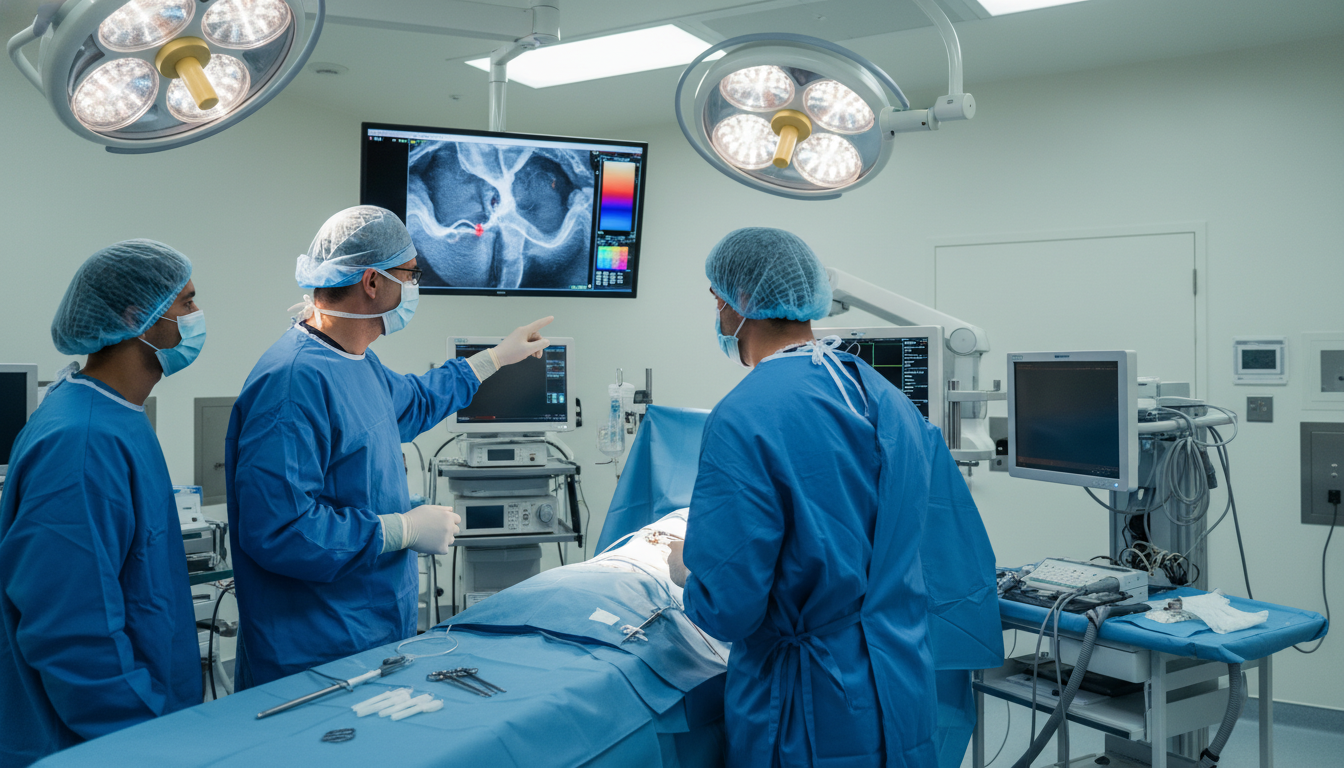
3. In the OR and Endovascular Suite
For integrated vascular programs, your behavior in the OR is closely watched:
- Learn basic sterile technique and OR etiquette before your first case.
- Review the case indication and relevant imaging the night before.
- Introduce yourself to the team (attending, fellow, residents, scrub tech, nurse).
- Ask where you should stand and what your role should be.
- Be ready to help with positioning, prepping, draping, and simple tasks.
During cases:
- Watch the monitor and field; follow the flow of the operation.
- Ask brief, focused questions at appropriate times (not during crisis points).
- Don’t push for “time on the knife” on day one; it will come as trust builds.
If you’re invited to suture, tie knots, or manipulate devices, be prepared with:
- Solid knot-tying fundamentals
- Gentle, controlled instrument handling
- Calm responses even if you fumble; recover and learn
4. Building Relationships for Letters of Recommendation
A major objective of away rotations is to earn strong vascular surgery letters.
Steps:
Identify 1–2 attendings who:
- Have seen you regularly (clinic, OR, rounds)
- Have given you feedback
- Are respected within the program (and ideally nationally)
About two weeks before the rotation ends, ask directly and respectfully:
“Dr. Smith, I’m applying to an integrated vascular surgery residency this year. I’ve really appreciated working with you. Would you feel comfortable writing a strong letter of recommendation on my behalf?”
- Provide them with:
- A CV
- Your personal statement draft
- USMLE transcript
- A short “highlights” page with specific patients or cases you’ve followed that they might remember
Letters from vascular surgeons who worked closely with you during visiting student rotations are among the most valuable items in your application, especially for American IMGs.
Step 6: Integrating Away Rotations into Your Overall Application Strategy
Your rotations should fit into a coherent story about why you are a strong match for vascular surgery.
1. Crafting Your Application Narrative
In your personal statement and interviews, link:
- Early exposure to surgery or vascular disease (family member, prior clinical work, research).
- Experiences as an American studying abroad that show resilience, adaptability, and cultural competence.
- Specific vascular cases or mentors from your away rotations that solidified your decision.
- Your long-term goals (e.g., limb salvage in underserved populations, academic vascular practice, endovascular innovation).
Each visiting rotation should provide examples to support these themes: complex patients you helped care for, challenging OR days, ethical dilemmas, or team interactions that shaped your professional identity.
2. Using Away Rotations to Build a Realistic Rank List
Away rotations serve both sides:
- Programs are evaluating you.
- You should be evaluating them.
Pay attention to:
- Resident morale and culture
- Workload and operative autonomy
- Faculty mentorship and accessibility
- How they treat medical students and visiting trainees
- Support for research, conferences, and career development
After each rotation, write brief reflection notes on:
- What you liked and disliked
- Whether you felt you could thrive there for 5 years
- How the program responded to your presence as a US citizen IMG
This will help you later when ranking programs and writing tailored emails or thank-you notes.
Common Pitfalls for US Citizen IMGs and How to Avoid Them
1. Overloading with Too Many Away Rotations
Doing 4–5 away rotations might sound impressive but often leads to:
- Burnout and declining performance over time
- Less time for Step 2 CK or research
- Financial strain
Focus on 2 vascular-focused and possibly 1 related rotation done exceptionally well, rather than many done merely adequately.
2. Ignoring “Backup” Strategies
Even with stellar away rotations, vascular surgery is extremely competitive. As a US citizen IMG:
- Consider whether you will also apply to general surgery as a parallel plan.
- Use one rotation (if you choose) in a strong general surgery program that might also be a place you’d be happy to train.
- Be honest with yourself about risk tolerance and long-term goals (remember you can pursue vascular fellowship after general surgery).
3. Not Clarifying Your US Work Eligibility
As a US citizen IMG, you don’t face visa barriers, which is a major advantage. Make sure programs understand that clearly:
- Indicate “US citizen” prominently in ERAS and in your CV.
- If asked about visas, clarify that you do not require sponsorship.
Do not assume this is obvious to everyone reading your file.
4. Being Passive During Rotations
Simply showing up isn’t enough. Pitfalls include:
- Standing silently in the back of the OR
- Failing to take ownership of patients
- Not asking for feedback or responsibilities
- Leaving without clarifying expectations for letters
Instead, take appropriate initiative, show curiosity, and be proactive without being intrusive.
Frequently Asked Questions (FAQ)
1. As a US citizen IMG, how many away rotations do I really need for vascular surgery?
Most US citizen IMG applicants aiming for integrated vascular surgery should plan on 2 vascular surgery away rotations, and optionally 1 additional rotation in a related surgical field (general surgery, surgical ICU, or interventional radiology). More than 3 total away rotations is usually unnecessary and may detract from exam prep, research, and application quality.
2. Should I only do away rotations at top-name academic centers?
No. While it’s valuable to do one reach rotation at a high-profile integrated vascular program, it’s equally important to rotate at realistic and IMG-friendly programs where you are more likely to secure strong letters and a match. A balanced list that includes aspirational and attainable programs is far better than only aiming at the most famous institutions.
3. How important are letters from vascular surgeons compared with general surgery attendings?
For an integrated vascular program, letters from vascular surgeons who directly supervised you during a visiting student rotation are extremely valuable. Ideally, your application will include:
- 1–2 letters from vascular surgeons (preferably at US institutions where you rotated)
- 1 letter from a general surgeon or other surgical subspecialist
- Optional additional letter from a research mentor
Program directors want to see that vascular surgeons, specifically, believe you have the aptitude and temperament for their field.
4. What if my first away rotation doesn’t go well? Can I recover?
Yes. A single rotation that feels “average” or not ideal doesn’t define your candidacy. You can:
- Reflect honestly on what didn’t go well (knowledge gaps, communication, cultural adjustment).
- Apply those lessons to your next rotation—most students improve significantly.
- Seek letters from attendings who still saw your growth and strengths, even if you weren’t perfect.
- Emphasize your progress over time in your application narrative.
Programs understand that transitions (especially from an international school into a US system) can be challenging. A strong performance on later away rotations, coupled with clear growth, can absolutely keep you competitive for a vascular surgery residency.
By carefully planning your away rotation strategy, focusing on performance and relationship-building, and integrating each experience into a coherent application story, you can turn your status as a US citizen IMG into a strength rather than a liability. With deliberate choices and excellent execution, visiting student rotations can become the backbone of a successful application to an integrated vascular surgery program.