Understanding the Role of Away Rotations in Cardiothoracic Surgery
For aspiring cardiothoracic surgeons, away rotations—often called visiting student rotations—are one of the highest-yield tools you have to shape your application, refine your interests, and demonstrate your potential. In a small, competitive field like cardiothoracic surgery, where programs often recruit only 1–3 residents per year, get-to-know-you time is invaluable.
This guide focuses on away rotation strategy within cardiothoracic surgery residency pathways, particularly integrated (I‑6) programs but with relevance for traditional (4+3) applicants as well. You’ll learn how to decide where, when, and how many away rotations to do, how to perform well, and how to use these experiences to strengthen your heart surgery training trajectory.
1. Big-Picture Strategy: Why Away Rotations Matter in CT Surgery
1.1 Unique Features of Cardiothoracic Surgery Training
Cardiothoracic surgery residency is unlike many other specialties:
- Small applicant and program pool: There are relatively few integrated cardiothoracic surgery residency positions nationwide, with many programs taking only 1 resident per year.
- Intensive longitudinal training: Heart surgery training is long and technically demanding, often 6–8 years of residency plus potential fellowships.
- Culture and fit matter greatly: You will work closely with a small group of surgeons for many years; programs are selective about personality, resilience, and team dynamics.
- Early technical expectations: Even at the student level, your hands-on skills, operating room comportment, and ability to function in a high-acuity environment are noticed.
Because of these factors, away rotations residency strategy is not just about “auditioning” in the traditional sense. It’s about:
- Building relationships with mentors in a tight-knit specialty
- Demonstrating maturity and stamina in a high-stress setting
- Clarifying whether CT surgery is genuinely the right path for you
- Assessing whether a particular program’s volume, culture, and training style align with your own goals
1.2 What Away Rotations Can and Cannot Do
Away rotations can:
- Make you a known quantity to a program’s selection committee
- Generate strong specialty-specific letters of recommendation
- Provide firsthand experience with the lifestyle and demands of heart surgery training
- Allow you to compare different models of cardiothoracic practice (academic vs community-based, high-volume transplant vs general thoracic vs cardiac-focused programs)
Away rotations cannot:
- Fully compensate for major deficiencies in academic performance
- Guarantee an interview or a match at that program
- Replace the need for strong home institution performance in surgery and core clerkships
Think of them as strategic amplifiers of an already solid application.
2. Planning Your Away Rotations: Timing, Number, and Types
2.1 When to Do CT Surgery Away Rotations
Most students interested in cardiothoracic surgery will target late third year and early fourth year for away rotations, but exact timing depends on your school’s calendar and whether you’re pursuing the integrated I‑6 pathway.
General guideline:
- Core clerkships finished by early M3/M4 transition: You should have completed surgery, internal medicine, and ideally anesthesiology or critical care before your first CT-focused away.
- First CT exposure: It’s usually best to get at least one home institution CT experience (e.g., elective, shadowing, or sub-internship) before visiting away—both to confirm interest and to build baseline knowledge.
For integrated cardiothoracic surgery residency applicants:
- Aim for your first CT-specific away rotation between May–August of the year before you apply (i.e., early M4 for most).
- Make sure at least one away rotation is completed before ERAS submission, so that a letter can be ready or nearly ready.
If your school doesn’t offer CT surgery exposure:
- Try to schedule one general surgery sub-internship before your CT away rotation.
- Supplement with ICU, cardiology, or thoracic imaging electives to build contextual understanding.
2.2 How Many Away Rotations for CT Surgery?
The question of how many away rotations to do is common and nuanced. For cardiothoracic surgery, the sweet spot is often 2–3 carefully chosen away rotations with a strong CT component.
A typical breakdown might look like:
- 1 home CT surgery rotation (or the closest equivalent you can arrange)
- 2 away CT surgery rotations at institutions of interest
- Optional: 1 additional related rotation (e.g., surgical ICU, cardiac anesthesia, or general surgery sub-I) if schedule allows
More than 3 away rotations in CT alone can be counterproductive:
- You may become fatigued and less able to perform at your best.
- You might send a signal of uncertainty or overcompensation.
- You lose time for other high-yield experiences (research, ICU, cardiology, general surgery sub-internships).
If limited to only 1 away rotation, prioritize:
- A program where:
- You are geographically flexible or likely to rank highly
- You have realistic competitiveness (board scores, research, home support)
- The program is known for taking students who rotated there
2.3 Types of Rotations: CT-Focused vs Related Rotations
When designing your away rotation strategy in cardiothoracic surgery, consider a mix of:
Integrated CT Surgery Services
- Rotations that sit on the faculty and resident team for CT surgery, often within an integrated I‑6 program.
- Highest yield for making an impression on the exact decision-makers for integrated cardiothoracic surgery residency.
Cardiac or Thoracic Surgery Services
- Some institutions still separate cardiac surgery and general thoracic surgery.
- High cardiac volume rotations are useful if you are especially interested in heart surgery training (e.g., valve, CABG, aortic work, transplant).
ICU / Cardiothoracic ICU Rotations
- Tremendous value for understanding perioperative care, ECMO, mechanical circulatory support, and complex post-op management.
- Strongly signals interest in the full continuum of CT care, not just the OR.
Surgical Sub-Internships with CT Contact
- Some general surgery sub-I’s provide substantial exposure to CT consults and operations.
- Good for building basic surgical workflow skills if direct CT rotations are limited.
Your rotation portfolio should reflect both commitment to CT and overall surgical readiness.
3. Choosing Programs: Where to Rotate and Why
3.1 Clarify Your Goals Before Selecting Sites
Before submitting any visiting student rotations applications, ask yourself:
- Is my primary goal to:
- Maximize my chance at a single dream institution?
- Broaden my exposure to different CT practice models?
- Secure strong letters from recognizable names in CT surgery?
- Demonstrate geographic flexibility?
Your answers will guide where you rotate and how you prioritize options if slots are limited.
3.2 Criteria for Selecting Cardiothoracic Away Rotation Sites
Consider these factors:
Presence of an Integrated (I‑6) CT Surgery Residency
- If you intend to match into an integrated program, rotating where such a program exists lets you:
- Meet the program director and faculty directly involved in I‑6 selection
- Work with current integrated residents and understand their experience
- Not mandatory, but highly strategic.
- If you intend to match into an integrated program, rotating where such a program exists lets you:
Case Volume and Breadth
- Look for programs with:
- Robust adult cardiac surgery volume (CABG, valves, aortic, complex re-ops)
- Exposure to thoracic oncology, esophageal surgery, or robotic thoracic surgery, if you have interest
- Possibly specialized programs in heart failure, transplant, or structural heart disease
- Look for programs with:
Mentorship Opportunities
- Programs known for:
- Engaged faculty who enjoy teaching students
- Strong research groups where you could plug in short- or long-term
- Alumni network involvement in the broader CT community (e.g., STS, AATS)
- Programs known for:
Match History and Culture
- Investigate:
- How many residents they’ve matched from visiting student rotations
- Whether they traditionally favor their own rotators or home students
- Resident satisfaction and training environment (via word of mouth or alumni)
- Investigate:
Geography and Lifestyle
- Think honestly about where you could see yourself living during the intense years of heart surgery training.
- Rotating in a region you’re serious about can strengthen a geographic narrative in your application.
3.3 Example Strategies for Different Applicant Profiles
Example 1: Highly Competitive Applicant with Early CT Track Record
- Strong USMLE/COMLEX, multiple CT publications, active CT mentors at home.
- Strategy:
- 1 home CT surgery sub-I
- 2 away rotations at top-tier academic I‑6 programs with high CT volume
- 1 ICU or advanced cardiac imaging elective to deepen clinical understanding
Example 2: Solid Applicant from a School Without CT Surgery
- Good grades and Step scores, but limited direct CT exposure.
- Strategy:
- 1 general surgery sub-I at home, emphasizing cardiac and thoracic cases when possible
- 2 away rotations at mid- to high-volume CT centers, ideally with integrated programs
- 1 cardiology or cardiothoracic ICU elective to show commitment to cardiovascular care
Example 3: Applicant Unsure Between General Surgery and CT Surgery
- Genuinely open to both fields.
- Strategy:
- 1 general surgery sub-I
- 1 CT-focused rotation at home or away
- 1 CT away rotation at a strong but not ultra-competitive program
- Keep flexibility in your personal statement and letter strategy, but ensure at least one strong CT letter if you apply to I‑6.
4. Performing Well on CT Visiting Student Rotations
4.1 Core Expectations in the OR and ICU
Cardiothoracic surgery teams value reliability, humility, and composure above raw knowledge. Your fundamental responsibilities include:
- Showing up early and prepared:
- Pre-round on patients
- Know the indication, anatomy, and basic steps of the cases scheduled
- Owning your patients (within reason):
- Track key labs (Hgb/Hct, creatinine, troponin, lactate)
- Understand chest tube output trends, hemodynamics, and ventilation status
- Being useful but not intrusive in the OR:
- Anticipate needed equipment (sutures, suction, instruments requested)
- Maintain sterility and situational awareness
- Ask questions at appropriate times (e.g., during skin closure, or when invited)
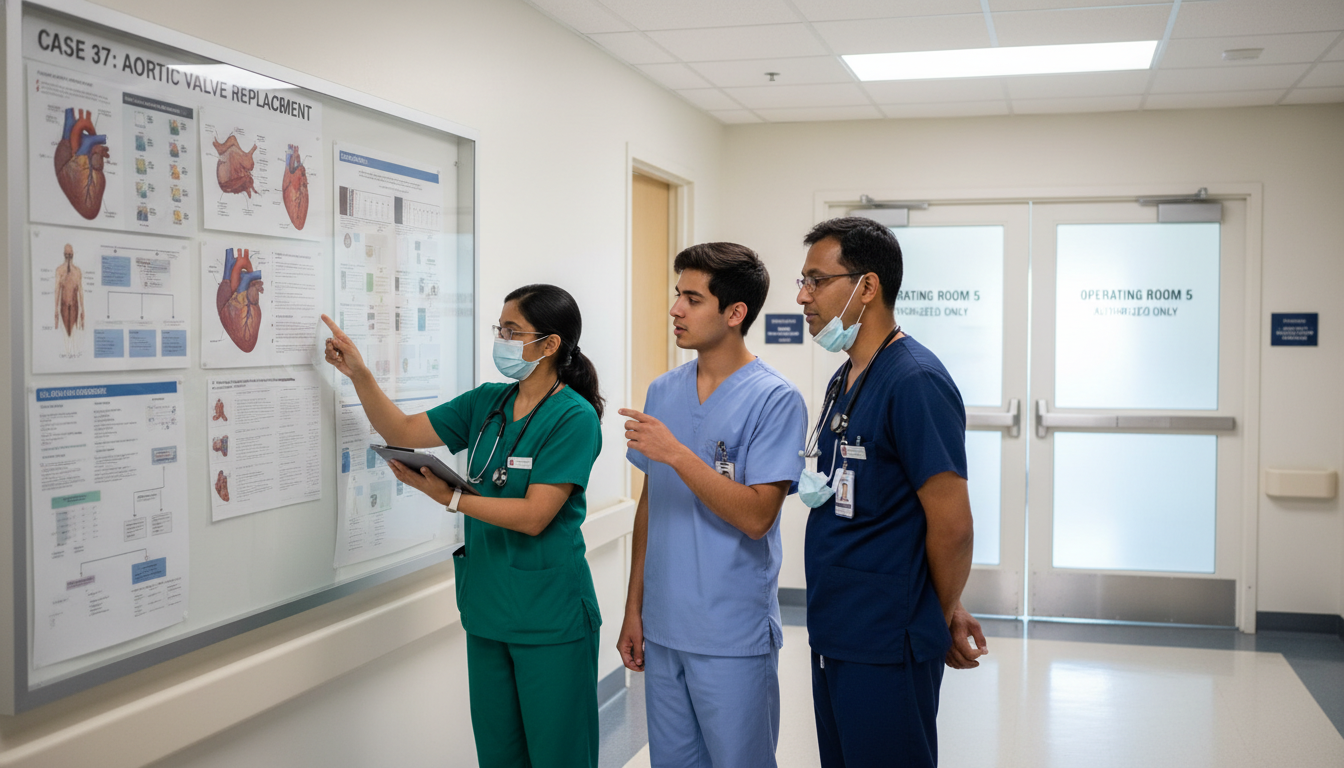
Example: For an aortic valve replacement, you should be able to succinctly explain:
- The patient’s main presenting problem
- Why surgical vs transcatheter approach was chosen
- Basic anatomy of the aortic valve and relevant pathology
- Key postoperative concerns (conduction issues, anticoagulation, afterload)
4.2 Professional Behaviors That Stand Out
Faculty often remember:
- Grace under pressure: Staying calm when cases run late or days get long.
- Team orientation: Offering help to residents, nurses, or PAs without being asked.
- Consistency: Being the same reliable, pleasant person on day 18 as on day 2.
- Intellectual curiosity: Reading about cases and following up with pointed, thoughtful questions—not just “What is X?” but “Why did we choose approach A over B for this patient’s anatomy?”
Conversely, red flags include:
- Complaining about hours or workload
- Leaving early without checking in with the team
- Overstepping your role in the OR
- Gossiping about other programs, students, or residents
4.3 Maximizing Learning and Visibility Without Overstepping
To be visible in a good way:
- Ask the senior resident how you can add the most value each day.
- Offer to:
- Draft daily progress notes
- Pre-round on a subset of patients
- Help with simple procedures under supervision (e.g., chest tube removals, line pulls)
- Communicate:
- Let the intern or resident know where you are (ICU, OR, clinic) so they can call you for key cases.
If multiple medical students are on service:
- Collaborate, don’t compete in public.
- Divide tasks and share opportunities so everyone shines.

5. Letters of Recommendation, Networking, and Post-Rotation Follow-Up
5.1 Securing High-Impact Letters
For integrated cardiothoracic surgery residency, letters from cardiothoracic surgeons carry particular weight. Visiting student rotations are a prime opportunity to earn them.
To maximize your chances:
- Early in the rotation, inform the clerkship director or a key attending that you are applying to CT and would value feedback on your performance.
- Identify 1–2 faculty who:
- Have seen you consistently (in OR, rounds, and maybe clinic)
- Are respected within the program or nationally
- Around week 3 (for a 4-week rotation), request a letter if:
- You have received positive informal feedback
- You have maintained a strong work ethic and presence
Frame the ask clearly and professionally:
“I’ve really valued working with you and learning from your cases. I’m applying to integrated cardiothoracic surgery programs this cycle. If you feel you know my work well enough, I would be honored to have a letter of recommendation from you.”
Provide:
- Your CV
- Brief personal statement or a short paragraph about your goals
- ERAS/AAMC letter instructions and deadlines
5.2 Building Long-Term Mentorship and Collaboration
Strong away rotations can lead to:
- Ongoing mentorship calls or emails
- Research collaborations (e.g., case series, quality improvement)
- Advocacy during the application and ranking process
To maintain relationships:
- Send a brief thank-you email after the rotation:
- Highlight 1–2 specific learning points or experiences
- Express genuine gratitude for teaching and opportunities
- Periodically (every 2–3 months) update key mentors on:
- New research or presentations
- Step scores (if asked)
- Application milestones (submission, interview season)
5.3 Using Away Rotations During Interview Season
Having rotated at a program can:
- Make interviews feel more conversational and less scripted
- Allow you to ask targeted questions about resident experiences, recent cases, and curriculum changes
- Help you write more authentic secondary essays or program-specific communications
On the other hand, if you had a challenging or less-than-ideal rotation:
- Be honest with yourself and mentors about whether the fit was truly good.
- Recognize that you can still match there if the issues were minor and your letters remain strong.
- Use other interviews to show growth and reflection from difficult experiences.
6. Common Pitfalls and How to Avoid Them
6.1 Overloading Your Schedule
Doing too many high-intensity away rotations back-to-back can lead to:
- Burnout and decreasing performance
- Less time to study for Step 2 or to finalize your application
- Lost opportunities for meaningful research productivity
Build in:
- At least one lighter/ambulatory month or research block between intense rotations when possible.
- Time in your calendar for personal logistics (housing, travel, ERAS preparation).
6.2 Under-Preparing for the Clinical and Technical Demands
Students sometimes underestimate the learning curve in cardiothoracic surgery. Avoid this by:
- Reviewing:
- Basic cardiac and pulmonary anatomy (including imaging)
- Common CT procedures: CABG, AVR, MVR, lobectomy, pneumonectomy
- Fundamentals of cardiopulmonary bypass and hemodynamics
- Practicing:
- Knot tying and instrument handling before day 1
- Reading EKG basics, chest X-rays, and common post-op complications (e.g., AFib, tamponade, pneumonia)
6.3 Lack of Alignment Between Rotations and Application Story
Your away rotation choices should support a coherent narrative:
- If all your experiences and letters are from cardiac-heavy programs, but you state strong interest in thoracic oncology, the mismatch can raise questions.
- If you emphasize regional ties to one area but rotate exclusively elsewhere, be prepared to explain.
Work with a mentor to ensure that your:
- Rotations
- Research
- Personal statement
- Letters
all point in a consistent, believable direction—even if you maintain some openness within CT.
FAQs: Away Rotation Strategy in Cardiothoracic Surgery
1. Do I need to do an away rotation to match into an integrated cardiothoracic surgery residency?
No rotation is strictly mandatory, but in such a small, competitive field, at least one CT-focused visiting student rotation is highly advantageous—especially if your home institution has limited CT exposure. Programs often want to see that you have experienced the realities of heart surgery training and still remain committed.
2. How many away rotations should I do for cardiothoracic surgery?
For most applicants, 2–3 total away rotations with a strong cardiothoracic component is ideal. This typically includes 2 CT-specific rotations plus possibly 1 related rotation (e.g., ICU, general surgery with heavy CT exposure). Doing more may diminish your performance and limit time for other critical aspects of your application.
3. Should I prioritize big-name programs or places where I’m more likely to match?
Balance is key. Many applicants choose:
- One highly competitive, big-name program to maximize exposure and letters
- One or two programs where their profile fits well and the program historically matches rotators
Your mentor’s insight, your academic record, and your geographic preferences should all inform this mix.
4. When should I ask for letters of recommendation during an away rotation?
Ask near the end of week 3 or early week 4 of a month-long rotation, after an attending has seen you consistently in the OR and on rounds. Make sure you’ve received positive feedback and that they seem enthusiastic about your performance. Provide your CV and personal statement and clarify timelines, so they can submit before ERAS deadlines.
Thoughtful planning and execution of your away rotation strategy in cardiothoracic surgery can significantly strengthen your candidacy. By choosing rotations intentionally, performing consistently well, and cultivating mentorship, you’ll not only improve your odds of matching, you’ll also clarify whether this demanding but deeply rewarding field is the right home for your career.