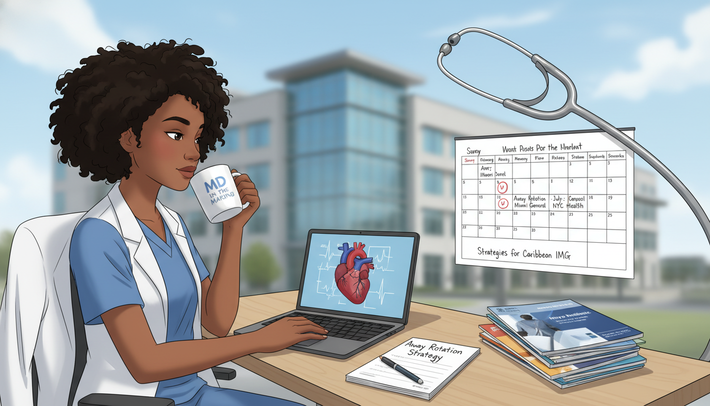
Why Away Rotations Matter So Much for Caribbean IMGs in Family Medicine
For a Caribbean medical school student or recent graduate aiming for a family medicine residency in the United States, away rotations can be the single most powerful tool to strengthen your residency application.
Unlike many U.S. MD students, Caribbean IMGs face additional hurdles:
- Program directors may be less familiar with your school
- You may not have large academic health system affiliations
- You must compete with U.S. MD and DO applicants, many with home programs
Away rotations (also called visiting student rotations, audition rotations, or sub-internships) help you:
- Demonstrate you can perform at the level of a U.S. senior medical student
- Earn strong U.S. clinical letters of recommendation from family medicine faculty
- Show commitment to a region or specific program
- Convert “unknown applicant” into “someone we know and trust”
For Caribbean IMGs—even from well-known schools with strong SGU residency match or other Caribbean medical school residency histories—strategic away rotations can be the difference between an FM match and going unmatched or scrambling.
This article focuses on how to plan, execute, and leverage away rotations specifically for Caribbean IMGs targeting family medicine residency programs in the U.S.
Understanding Away Rotations for Caribbean IMGs
What Are Away Rotations?
Away rotations are short-term clinical experiences (typically 2–4 weeks) at institutions where you are not a regular student. For Caribbean students, these are usually:
- U.S. teaching hospitals affiliated with ACGME-accredited residencies
- Community programs with structured teaching and evaluation systems
- Family medicine clinics or hospital services supervised by residency faculty
They may be called:
- Away rotations
- Visiting student rotations (VSLO / VSAS)
- Audition rotations
- Externships or sub-internships (Sub-I) in family medicine
For residency purposes, what matters is:
- You have direct supervision by U.S.-licensed physicians
- You receive formal evaluations
- There is potential for letters of recommendation and program exposure
Why Away Rotations Are Especially Important for Caribbean IMGs
Compared with U.S. MDs, Caribbean IMGs often have:
- Less face time with U.S. residency decision-makers
- Fewer home institution connections to FM programs
- Potential skepticism about clinical training quality
A well-executed away rotation can:
- Prove your clinical competence and communication skills
- Show you can integrate into a U.S. healthcare team
- Provide evidence of professionalism and reliability
- Generate powerful LORs that directly address IMG concerns
Programs frequently mention that a strong in-person performance on an away rotation can outweigh concerns about school name or modest test scores, especially in family medicine, where fit, teamwork, and communication are heavily valued.
Are Away Rotations Required for Family Medicine?
No, away rotations are not formally required for family medicine residency. Many applicants match without them. But for a Caribbean IMG, they are often functionally essential, particularly if you have:
- Average or slightly below-average USMLE/COMLEX scores
- Limited U.S. clinical experience
- Gaps in training or extended graduation timelines
- A Caribbean medical school without a strong U.S. hospital network
If you already attend a Caribbean school with a strong track record (e.g., robust SGU residency match history) and have multiple core and elective U.S. rotations, you’re in a better position—but targeted family medicine away rotations can still significantly improve your application.

Strategic Planning: When, Where, and How Many Away Rotations
When to Do Away Rotations
Your timing should align with your ERAS application cycle and school calendar.
Ideal timing:
- Late 3rd year to early 4th year (or final year for Caribbean curricula)
- Try to schedule at least one FM away rotation before ERAS opens (June–September of application year) so:
- You can request letters of recommendation in time
- Programs already know you when they review applications
Practical sequence for Caribbean IMGs:
- Complete core rotations (internal medicine, surgery, pediatrics, OB/GYN, psychiatry, family medicine if available)
- Do 1–2 inpatient or outpatient medicine electives to strengthen general clinical skills
- Schedule your first family medicine away rotation once you’re comfortable seeing patients semi-independently
- Add additional FM visiting student rotations or related electives (urgent care, outpatient pediatrics, geriatrics) as schedule and budget allow
If your school allows, aim for:
- 1 FM away rotation before ERAS submission
- 1–2 additional FM away rotations during ERAS season (Sept–Nov)
How Many Away Rotations Do Caribbean IMGs Need?
A common question is: how many away rotations should a Caribbean IMG do for a successful FM match?
Consider this framework:
Minimum recommended for Caribbean IMG in FM:
- 1–2 family medicine–focused away rotations at U.S. ACGME-affiliated sites
Ideal if feasible (financially and logistically):
- 2–3 family medicine away rotations at target residency programs or similar sites
- Additional relevant electives (e.g., outpatient internal medicine, geriatrics, urgent care)
Upper limit:
- Beyond 3–4 FM-focused aways, returns begin to diminish. Focus on quality over quantity.
- Each away rotation is expensive and time-consuming; do fewer, but do them exceptionally well.
Remember: Programs value sustained performance and strong letters, not just the raw number of away rotations.
Choosing Where to Rotate: Targeting Family Medicine Opportunities
Your away rotation sites should be chosen strategically to maximize your FM match potential.
1. Rotate Where You Want to Train
Prioritize programs you genuinely would attend if matched. This includes:
- Community-based FM programs in IMG-friendly regions
- University-affiliated community hospitals with strong primary care emphasis
- Programs known to accept Caribbean graduates (check their past match lists)
Research each potential program:
- Look at resident bios: How many IMGs? Any Caribbean graduates listed?
- Check program websites and social media for culture and focus (e.g., urban underserved, rural medicine, academic primary care)
- Email coordinators/programs to ask if they:
- Accept Caribbean medical school students for visiting student rotations
- Have a track record of interviewing or matching IMGs
2. Focus on IMG-Friendly Regions
Broadly, Caribbean IMGs tend to fare better in:
- Northeast (NY, NJ, PA, MA, CT)
- Midwest (MI, OH, IL, IN, WI, MN)
- Some Southern states (FL, GA, TX, NC)
- Certain community-based programs in other regions
Look for programs that:
- Explicitly state openness to IMGs on their website
- Have 25–50% or more IMGs in their current resident cohorts
- Participate in community-clinic–heavy family medicine training
3. Consider the Structure of the Rotation
High-yield FM away rotations usually:
- Are directly supervised by FM faculty or core residency faculty
- Allow meaningful patient interaction (H&Ps, progress notes, presentations)
- Include participation in:
- Clinic sessions
- Inpatient FM service (if part of program structure)
- Didactics, morning report, case conferences
- Provide formal written evaluations and encourage faculty LORs
Avoid settings where you:
- Only shadow with minimal patient contact
- Have limited access to residency faculty
- Spend the majority of time doing scut work (purely clerical tasks)
4. Diversify but Stay Focused
A reasonable approach:
- 1 rotation at a highly desired “reach” program
- 1–2 rotations at solid, IMG-friendly programs with good training and realistic match chances
- Optional: 1 FM-adjacent elective at a hospital with FM residency to build relationships
This combination balances aspiration and realism while maximizing your network.
Application Logistics for Visiting Student Rotations
Platforms and Processes
Common application pathways:
VSLO (Visiting Student Learning Opportunities)
- Many U.S. schools use this centralized system
- Caribbean schools may or may not be VSLO-affiliated
- Check if your school provides access; if not, you’ll often apply directly to hospitals
Direct Institutional Applications
- Many community programs and some universities accept email or online portal applications
- Look under “Visiting Students,” “International Students,” or “Clinical Electives” on hospital websites
Third-Party Programs
- Some hospitals contract with external organizations to manage IMG electives
- Ensure any such rotation provides documented evaluation and LOR potential
Core Application Elements
Typically required documents:
- CV (updated, U.S.-style)
- USMLE Step 1 (and Step 2 if taken) scores
- Medical school transcript
- Dean’s letter or equivalent
- Immunization records and TB/health screening
- Proof of malpractice insurance (often via your school)
- Personal statement (short, tailored for family medicine)
- English proficiency (if applicable)
For Caribbean IMGs, strong USMLE performance and clear documentation of prior U.S. clinical experience help secure better rotation sites.
Financial and Visa Considerations
Budget carefully:
- Application fees for each site
- Housing (short-term apartments, extended-stay hotels, or shared student housing)
- Transportation (airfare, local transit, car rental/parking)
- Meals and incidental expenses
- Professional attire, printing, etc.
If you are not a U.S. citizen or permanent resident:
- Confirm whether rotation sites accept non–U.S. citizen IMGs
- Check visa requirements for short-term clinical electives (often B-1/B-2 with specific language; institutional rules vary)
- Coordinate with your Caribbean medical school’s international office for documentation
Starting planning 6–9 months in advance improves your chances of landing preferred dates and locations.

Maximizing Your Performance on Family Medicine Away Rotations
Securing the rotation is only half the battle. For a Caribbean IMG, the real goal is to leave with:
- A glowing letter of recommendation
- Advocates within the program who will push for your interview
- A reputation as a reliable, teachable, compassionate future colleague
Before You Start: Preparation
Clarify Expectations
- Email the clerkship coordinator ahead of time:
- Ask about schedule, start time, dress code, documentation, and EHR training
- Request any orientation materials or reading lists
- Understand whether you will be on:
- Outpatient clinic only
- Inpatient FM service
- A mix of ambulatory and inpatient
- Email the clerkship coordinator ahead of time:
Review Core Family Medicine Topics Focus on:
- Chronic disease management: diabetes, hypertension, COPD, asthma
- Common acute complaints: URI, UTI, back pain, headache, abdominal pain
- Preventive care: vaccines, cancer screening (breast, cervical, colon), well-child checks
- Women’s health, prenatal care basics, contraception counseling
Use question banks and concise review resources relevant to FM.
Set Personal Goals Examples:
- “By week 2, I want to independently present 4–6 patients per clinic session.”
- “I will develop a template for SOAP notes that meets this program’s standards.”
- “I will ask for formal feedback at least once per week.”
On Rotation: Behaviors That Stand Out
Family medicine values teamwork, communication, and patient-centered care. Your daily conduct should reflect that.
Key behaviors:
Punctuality and reliability
- Arrive early; be prepared for the day’s patients
- Never miss or arrive late to clinic, rounds, or conferences
Professional communication
- Introduce yourself clearly to patients and staff (name, role, where you train)
- Present cases clearly and concisely, highlighting assessment and plan
- Be respectful and appreciative to nurses, MAs, front-desk staff
Active learning
- Ask thoughtful, focused questions after you’ve tried to reason through the problem
- Volunteer for procedures appropriate to FM (Pap smears, joint injections, I&D, etc.)
- Attend all didactics and participate when invited
Ownership and follow-through
- Know your patients—labs, imaging, social context
- Volunteer to call patients with results (when allowed)
- Follow up on tasks assigned to you without being reminded
Cultural humility and empathy
- Family medicine patient populations are often diverse and underserved
- Demonstrate understanding of social determinants of health
- Use interpreters appropriately; be sensitive to cultural differences
Common Pitfalls to Avoid
- Over-selling your skills, then underperforming
- Being passive and waiting to be told what to do
- Focusing only on impressing attendings while ignoring team members
- Complaining about workload, documentation, or patient volume
- Comparing your Caribbean medical school training unfavorably to U.S. systems in a defensive way
Your goal is to be perceived as:
“A highly motivated, humble, and capable student who fits perfectly in our residency culture.”
Getting Strong Letters of Recommendation
To convert a good rotation into a powerful asset for your FM match:
Identify Potential Letter Writers Early
- Target attendings who:
- Work closely with residents
- See your performance in multiple settings
- Provide you with feedback
- Target attendings who:
Ask Directly and Professionally
- Near the end of the rotation, ask:
- “Dr. X, based on my performance this month, do you feel you know me well enough to write a strong letter of recommendation for family medicine residency?”
- This phrasing allows them to decline if they cannot write a strong letter.
- Near the end of the rotation, ask:
Provide Supporting Materials
- CV and personal statement (tailored to family medicine)
- ERAS Letter Writer’s Portal instructions
- Summary of cases or contributions you’re proud of
Clarify Your Caribbean IMG Context
- Briefly explain:
- Where you trained
- Your goals (family medicine, likely geographic preference)
- Any unique strengths or obstacles (e.g., first-generation college/physician)
- Briefly explain:
Maintain Relationships
- Send a thank-you email after the rotation
- Update them when you apply and when you match
- These relationships can help you beyond residency applications (jobs, fellowships, references)
Leveraging Away Rotations in Your Family Medicine Residency Application
Showcasing Away Rotations in ERAS
In your ERAS application:
Clearly list all U.S. clinical experiences, highlighting:
- “Family Medicine – Visiting Student Rotation”
- Institution name and location
- Dates and responsibilities
In your experience descriptions, emphasize:
- Independent patient evaluations
- Continuity of care experiences
- QI or small projects completed
- Procedures performed (if applicable)
In your personal statement, you can:
- Reference specific patient stories or learning moments from your away rotations
- Describe how the experiences confirmed your commitment to family medicine
- Demonstrate understanding of FM scope (outpatient, inpatient, behavioral health, procedures, community engagement)
Signaling Program Fit During Interviews
If you rotated at the interviewing program:
Reference specific positive experiences:
- “During my visiting student rotation here, I appreciated your emphasis on longitudinal patient relationships in the continuity clinic.”
- “Working with Dr. Y on inpatient service showed me how closely the attending and residents collaborate.”
Highlight that you’ve already:
- Adapted to their documentation system
- Worked effectively with their residents and staff
- Integrated into their clinic flow
If you rotated at similar programs:
- Draw parallels:
- “During my FM away rotation at a similar community-based program in the Midwest, I learned how much I value integrated behavioral health and team-based care, which I see is also central to your curriculum.”
How Programs View Caribbean IMGs with Strong Away Rotations
When programs review a Caribbean medical school residency application with:
- Solid USMLE scores
- Multiple robust away rotations at U.S. sites
- Strong, specific letters from U.S. family medicine attendings
They are more likely to think:
- “This candidate has already done what our residents do and thrived.”
- “Our colleagues speak highly of this applicant’s work ethic and fit.”
- “Any initial concerns based on school location are mitigated by clear in-person evidence.”
Especially in family medicine—where interpersonal skills, reliability, and alignment with mission are crucial—a well-executed away rotation strategy can significantly elevate a Caribbean IMG’s FM match prospects.
FAQs: Away Rotation Strategy for Caribbean IMGs in Family Medicine
1. How many away rotations should a Caribbean IMG do for family medicine?
For most Caribbean IMGs, 1–2 family medicine away rotations is the minimum target. If you can manage it financially and logistically, 2–3 FM-focused visiting student rotations at IMG-friendly programs or regions is ideal. Beyond 3–4, the time and cost may outweigh added benefit—focus on impressive performance and strong letters rather than just the number.
2. Should I only do away rotations at programs where I want to match?
Prioritize programs where you would seriously consider training, but don’t limit yourself exclusively to “dream” programs. A balanced approach includes:
- 1 “reach” program you really love
- 1–2 realistic, IMG-friendly programs
- Possibly 1 FM-adjacent elective at an institution with an FM residency
Even if you don’t match at a specific rotation site, strong letters and experience from that setting will still help across many family medicine programs.
3. Are away rotations more important than USMLE scores for Caribbean IMGs?
You need both. Competitive family medicine programs often use score thresholds to screen applications. Good USMLE performance opens doors to interviews. However, away rotations can:
- Compensate somewhat for borderline or slightly below-average scores
- Demonstrate U.S. clinical readiness and communication skills
- Provide strong LORs that address concerns about being an IMG
For Caribbean IMGs, the combination of respectable scores + strong away rotations is far more powerful than either alone.
4. Can I match into family medicine without any away rotations?
It is possible, especially for Caribbean students from schools with strong U.S. affiliations and robust clinical networks (e.g., some students from institutions with strong SGU residency match outcomes). However, for many Caribbean IMGs—particularly those with average scores, limited U.S. clinical experience, or no direct link to U.S. teaching hospitals—away rotations significantly improve the odds of a successful FM match. If you can do at least one well-chosen, well-performed visiting student rotation, it is strongly recommended.
By planning early, targeting the right programs, and performing at your best, you can turn away rotations into a powerful bridge between your Caribbean medical education and a successful family medicine residency in the United States.