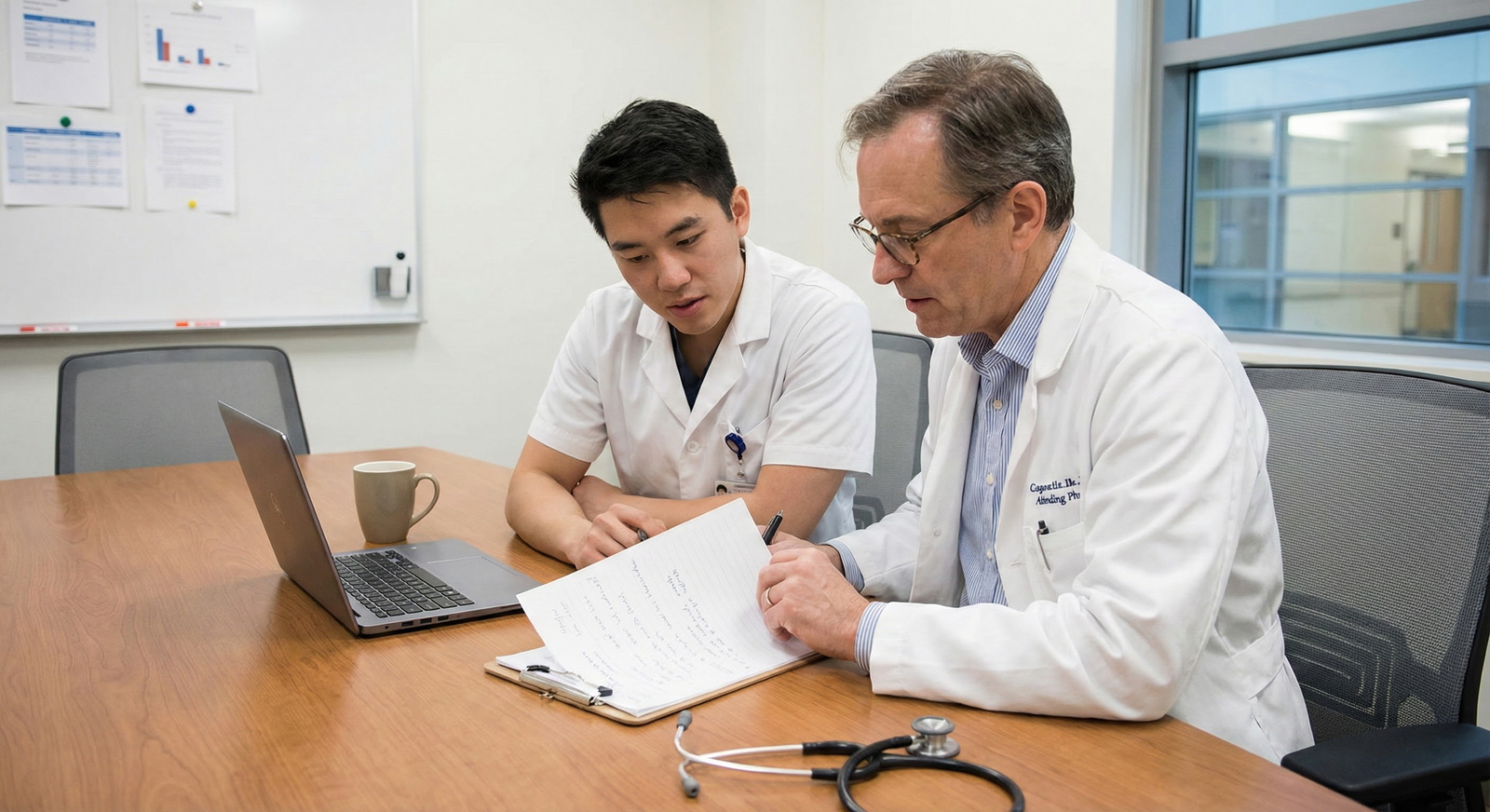
Why Away Rotations Matter So Much for Non‑US Citizen IMGs in Transitional Year
For a non‑US citizen IMG or foreign national medical graduate, away rotations can be the single most powerful tool to boost your chances of matching into a transitional year (TY) residency program.
Transitional year residency spots are limited and highly competitive, yet they are extremely valuable: they serve as a bridge into advanced specialties like radiology, dermatology, anesthesiology, ophthalmology, PM&R, radiation oncology, and more. Program directors know that many TY applicants are strong on paper; what differentiates you is often your US clinical performance, letters from US faculty, and how well you fit into a team.
Away rotations (also called visiting student rotations or electives, sub‑internships, or observerships, depending on structure) are where you can:
- Demonstrate that you can function in the US system
- Earn strong, specific, US-based letters of recommendation
- Prove that visa status will not be an obstacle to your success
- Show that you understand and can handle intern‑level responsibilities
For non‑US citizen IMGs, these rotations also compensate for the lack of a home US medical school network and often serve as your only direct exposure to US program leadership.
The rest of this article explains exactly how to create a strategic away rotation plan tailored to transitional year programs and the specific needs of a non‑US citizen IMG.
Understanding Transitional Year Programs and What They Look For
Before designing your away rotation strategy, you must understand what a TY program expects.
What Is a Transitional Year (TY) Program?
A transitional year residency (TY program) is a one-year, broad-based clinical training year. Interns rotate through:
- Internal medicine wards and clinics
- General surgery and surgical subspecialties
- Emergency medicine
- ICU or critical care
- Various electives (e.g., radiology, anesthesia, neurology)
TY programs are often linked—formally or informally—to advanced categorical programs. Many TY residents already have a guaranteed advanced spot, but some apply separately to TY and their advanced specialty.
What TY Program Directors Want to See
Most TY programs want residents who can:
- Function safely at an intern level from day one
- Handle high workload and night call
- Communicate clearly with patients, nurses, and consultants
- Work well in multidisciplinary teams
- Adapt quickly to new services and workflows
For a non‑US citizen IMG, PDs additionally evaluate:
- Ability to navigate US medical culture
- English language proficiency (especially for phone calls, handoffs, and documentation)
- Reliability regarding visa sponsorship and timelines
- Evidence that you truly understand what an intern year in the US entails
Your away rotations residency strategy should be built around demonstrating these traits.
Choosing the Right Away Rotations for a TY‑Focused Strategy

Core Principle: Think Like a Program Director
When you design your away rotation plan, ask:
“If I were a TY program director, what experiences would convince me this foreign national medical graduate can handle my internship?”
That frame helps you prioritize US-based, hands‑on, inpatient rotations in core TY areas, especially internal medicine, general surgery, emergency medicine, and ICU.
Types of Rotations That Help Most for TY
For a transitional year–oriented application, high‑impact choices include:
Internal Medicine Sub‑Internship (Sub‑I) or Acting Internship (AI)
- Most TY programs include a large internal medicine component.
- A strong performance in a US IM sub‑I closely mirrors TY ward rotations.
- You can demonstrate admission/discharge skills, daily progress notes, order writing (where allowed), and coordination of care.
General Surgery or Surgical Subspecialty Rotation
- TY interns usually take some form of surgical call or float.
- Shows you can function on a fast‑paced, procedure‑oriented team.
- Especially helpful if your advanced specialty is surgical (e.g., ophthalmology, some radiology programs with procedural emphasis).
Emergency Medicine Rotation
- Highlights your ability to triage, think quickly, and communicate under pressure.
- Demonstrates comfort with undifferentiated patients and interprofessional teamwork.
ICU / Critical Care Rotation
- TY programs value interns who are not intimidated by sick patients and ventilators.
- Even an ICU elective (if not fully sub‑I level) signals readiness for higher‑acuity care.
Electives Directly Tied to Your Advanced Specialty
- If you are applying advanced Radiology, Anesthesiology, Dermatology, Ophthalmology, etc., an away rotation in that field can:
- Build relationships in your advanced field
- Provide specialty-specific letters
- Clarify how that specialty views various TY programs
- But for TY itself, you should still ensure at least one core inpatient rotation in the US.
- If you are applying advanced Radiology, Anesthesiology, Dermatology, Ophthalmology, etc., an away rotation in that field can:
Academic vs Community Settings
Academic centers
Pros:
- Stronger name recognition
- More structured evaluations and letters
- Often have established visiting student programs
Cons: - More competitive to secure
- May prioritize US MD/DO students
Community hospitals
Pros:
- More hands‑on, practical intern‑like experience
- Often more open to non‑US citizen IMG participation
- Evaluations may comment extensively on independence and work ethic
Cons: - Less brand recognition (though a strong letter from a known, well-trained faculty member still carries weight)
An ideal portfolio for a non‑US citizen IMG applying to TY is one academic and one community rotation, both with substantial inpatient exposure.
How Many Away Rotations Should You Do?
The question of how many away rotations is especially important for IMGs with visa and financial limitations.
- Minimum meaningful exposure: 1 strong US away rotation (ideally 4 weeks)
- Optimal for TY‑focused strategy: 2–3 away rotations, if feasible
- 1 inpatient Internal Medicine sub‑I (or equivalent)
- 1 rotation closely tied to your advanced specialty or TY‑heavy service (e.g., Emergency Medicine, Surgery)
- Optional 3rd: ICU or another core inpatient service
More than 3 away rotations usually gives diminishing returns, and the extra cost and time may not add proportional benefit—especially when you also need time to prepare for exams, ERAS, and interviews.
Visa, Logistics, and Application Strategy for Visiting Student Rotations
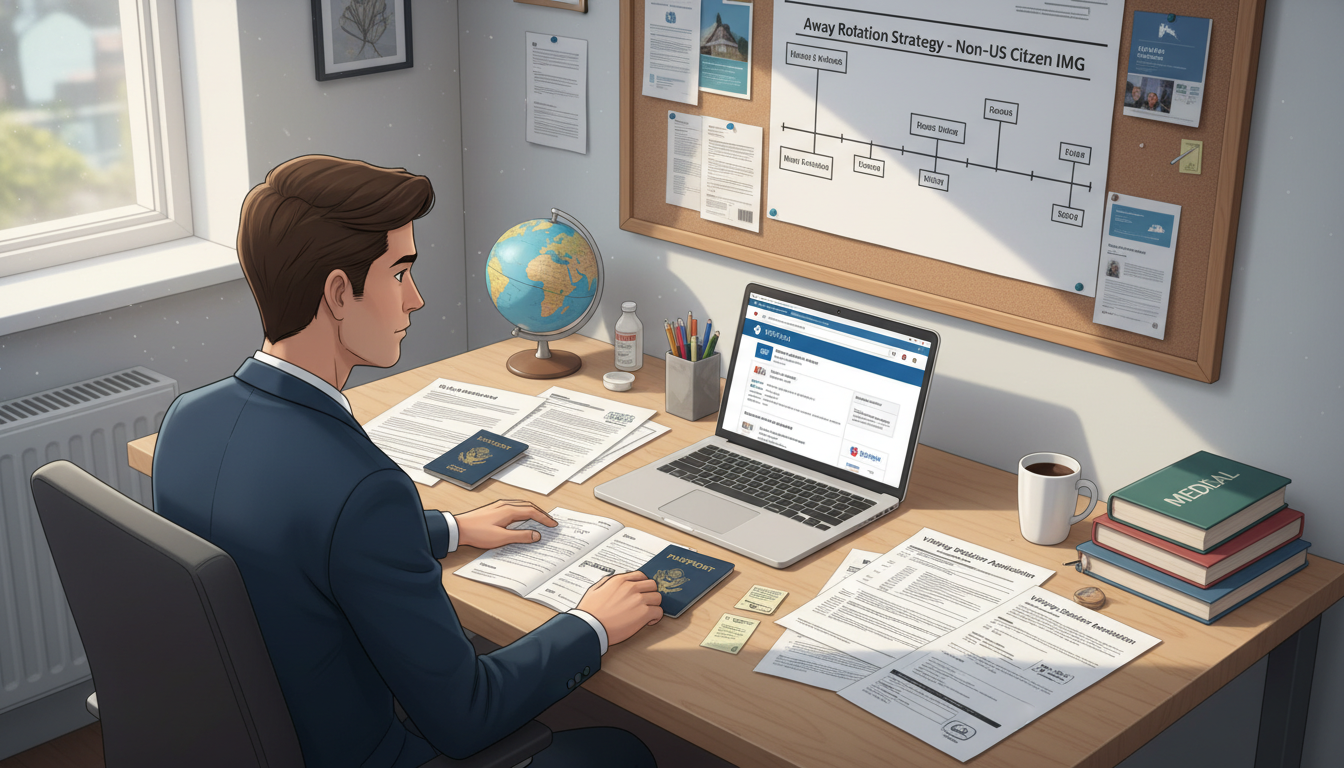
For a non‑US citizen IMG, logistic planning can make or break your away rotation strategy. Securing the rotation is only half the challenge; you must also ensure you can legally and practically participate.
Understand Your Visa Framework Early
Clarify which of the following applies:
- You are currently outside the US and will need a visa for short‑term electives (often B‑1/B‑2 or J‑1 short‑term exchange, depending on the institution).
- You are in the US on F‑1 (e.g., MPH, research) and may use CPT/OPT under certain conditions.
- You have previously had a J‑1 or B‑1/B‑2 visa and must consider prior status when planning new entries.
Each hospital has its own policies on:
- Whether non‑US citizen IMGs can rotate
- Which visa categories are acceptable
- Whether the hospital assists with DS‑2019 or other documents
Start by checking the visiting student or international observer section of each program’s website and, if unclear, email the coordinator with:
- Your current country and medical school
- Anticipated graduation date
- Current visa status (if any)
- Whether you are seeking a hands‑on clinical role vs observational only
Clinical vs Observership vs Research Rotations
For residency applications—especially for TY programs—hands‑on US clinical experience is ideal, but you must respect legal and institutional boundaries.
- Hands‑on elective / Sub‑I
- Direct patient contact, orders under supervision (depending on hospital), notes in EMR
- Strongest evidence of readiness for internship
- Observership
- Shadowing only, no independent orders or documentation
- Weaker than a sub‑I but still better than no US exposure; can yield useful letters
- Research rotation
- Good for building publications, but does not substitute for clinical evaluation in the US setting
Where possible, prioritize at least one true clinical elective or sub‑internship before your ERAS submission.
Using VSLO and Non‑VSLO Pathways
Many US medical schools use the Visiting Student Learning Opportunities (VSLO) system. Challenges for non‑US citizen IMGs include:
- Not all foreign schools are VSLO‑participating
- Some institutions restrict VSLO access to US LCME-/COCA-accredited schools
- International applicants may face earlier deadlines or extra documentation
Important steps:
- Check if your school participates in VSLO. If yes, work with your Dean’s office early (6–9 months before desired rotation).
- For non‑VSLO options, identify hospitals and community programs with free‑standing visiting student or observer programs. Some smaller TY‑affiliated hospitals offer these directly.
- Prepare a standard packet of documents commonly required:
- Dean’s letter / good standing
- Transcript
- Immunization form, including TB test and titers
- Proof of malpractice insurance (sometimes provided via your school or you may have to buy short‑term coverage)
- Background check or drug screen, if required
- English proficiency documentation (TOEFL, IELTS) if needed
Timing Your Away Rotations for Maximum Benefit
For a typical matched entry in July Year X:
- Best months for away rotations: March–September of Year X-1 (your final year)
- Goal: Have at least one strong rotation completed by August–September to secure letters for ERAS in September
If your graduation calendar is different (common for some non‑US schools):
- Try to align at least one rotation to finish no later than early October of the application year so the letter can still be uploaded early in the season.
- Late rotations (November–January) are still valuable for interview preparation and backup planning, but less helpful for initial application strength.
Maximizing Impact During Your Away Rotations
Once you secure an away rotation, the real work begins. For a foreign national medical graduate, this month may be the single most influential factor in how TY programs view you.
Behave Like a Reliable, Trainable Intern
On rotation, aim to be the student who:
- Arrives early, leaves late, and is prepared for every patient
- Asks for feedback proactively (“Is there anything I can do differently on my notes or presentations?”)
- Volunteers for admissions, procedures, and admissions/discharges (within scope)
- Owns tasks—never waits to be told a second time
- Handles “scut work” gracefully while understanding its importance for patient care
Examples of intern‑like behavior:
- After rounds, you independently check labs and imaging, update your notes, and alert the resident to significant changes.
- You consistently call consults with clear, concise, SBAR‑style communication (once allowed to do so).
- You anticipate next steps and propose them (“For this CHF patient, would it be reasonable to increase diuretics and repeat BMP this afternoon?”).
Communicating as a Non‑Native English Speaker
Even with excellent test scores, spoken communication is often a concern for program directors evaluating non‑US citizen IMGs.
Practical strategies:
- Before your rotation, practice case presentations in English with peers or mentors.
- On rotation, ask residents to correct your common phrasing issues; show that you welcome feedback.
- Use structured formats for presentations (e.g., SOAP, one‑liner + HPI + focused physical + problem-based assessment/plan).
- Be especially clear and professional on the phone:
- “Hi, this is Dr. [Your Last Name], the medical student on the medicine team. I’m calling about Mr. X, a 65‑year‑old with…”
Program directors often comment positively when they see rapid improvement in your communication during a single month.
Requesting Strong Letters of Recommendation
Your away rotations residency plan should be explicitly designed to generate 2–3 high‑quality US letters that serve both TY and your advanced specialty.
Steps:
- Identify potential letter writers early
- Attendings who directly supervised your clinical work for at least 2 weeks
- Program director or clerkship director who observed or reviewed your performance
- Ask explicitly and respectfully near the end of the rotation:
- “Would you feel comfortable writing me a strong letter of recommendation for transitional year and [your specialty]? I’ve really valued your teaching and feedback.”
- Provide:
- Your CV and personal statement draft
- Brief bullet points of specific cases or responsibilities you had
- Clarification of your visa status (so they understand context)
Letters are most impactful when they mention:
- Comparison to US seniors (“At or above the level of our US MS4s”)
- Evidence of readiness for internship
- Communication skills and team interactions
- Rapid adaptation to US healthcare norms despite being trained abroad
Aligning Away Rotations With Your Overall TY and Specialty Application
A strong away rotation strategy only works if it fits into your global residency plan: TY + advanced specialty + visa pathway + geographic preferences.
Geographic Targeting
Many TY programs prefer—or at least are more comfortable with—applicants who have demonstrated interest in their region.
Consider:
- Doing at least one away rotation in the region where you plan to apply heavily (e.g., Midwest, Northeast, South).
- If you have personal or family ties to an area, mention this consistently during rotations and later in your personal statement and interviews.
Coordinating with Advanced Specialty Goals
Your away rotations should support both:
- Your transitional year application, and
- Your advanced specialty application
Example pathways:
Future Radiologist:
- Internal Medicine sub‑I (academic)
- Radiology elective (preferably where you may later match)
- Optional TY‑style rotation (e.g., ED or ICU)
Future Anesthesiologist:
- Internal Medicine sub‑I or Surgery sub‑I
- Anesthesiology elective (away rotation at a major program)
- ICU or PACU‑heavy elective
Future Dermatologist or Ophthalmologist:
- Internal Medicine sub‑I
- Specialty elective at a competitive academic center
- Additional inpatient rotation showing you can manage systemic disease / surgical care relevant to your field
Your TY personal statement should explicitly connect your away experiences to your readiness for a demanding intern year in the US.
Being Transparent About Visa Needs
Because you are a non‑US citizen IMG, program directors need clarity on visas:
- Know whether you will be eligible for J‑1 through ECFMG (most common) and whether you hope for H‑1B for advanced specialty.
- On rotation, you don’t need to lead with visa talk, but you should be ready if asked:
- “Yes, I am ECFMG‑certified or will be by [month, year]. I am fully eligible for J‑1 sponsorship and understand the process.”
Demonstrating that you have already thought this through can slightly reduce PDs’ anxiety about hiring a foreign national medical graduate.
FAQs: Away Rotations and Transitional Year for Non‑US Citizen IMGs
1. I’m a non‑US citizen IMG with no prior US clinical experience. Is one away rotation enough to apply for a TY program?
One strong, well‑documented, hands‑on away rotation is far better than none and may be enough to make you a viable candidate, especially if:
- The rotation is in a core field (e.g., Internal Medicine sub‑I).
- You obtain at least one detailed US letter that strongly endorses your readiness for internship.
However, if financially and logistically possible, 2 rotations (e.g., IM sub‑I + another inpatient or specialty‑relevant rotation) provide more evidence and usually stronger odds.
2. Do TY programs care more about away rotations at big academic centers or any US hospital?
Both can be valuable. Big academic centers offer name recognition and more standardized letters, while community hospitals may give you more hands‑on, intern‑like responsibilities and highly personalized feedback.
For a non‑US citizen IMG, what matters most is that:
- The rotation is clearly clinical (not purely observational).
- The letter writer is willing to compare you favorably to US seniors.
- Your performance shows you can handle US inpatient responsibilities.
One academic + one community rotation is often an excellent combination.
3. How should I answer if asked why I did away rotations as a foreign national medical graduate?
A concise, honest answer works best, for example:
“I knew that as a non‑US citizen IMG, I needed to prove that I can function effectively in the US system. Away rotations allowed me to learn US hospital workflows, adapt my communication style, and receive objective feedback from US faculty. They also helped me confirm that I can handle the workload and expectations of a transitional year residency.”
This emphasizes motivation, professionalism, and insight rather than anxiety about your IMG status.
4. I can only afford observerships, not full clinical electives. Will that still help my TY application?
Observerships are less powerful than hands‑on electives, but they are still useful if:
- You are visibly engaged: reading on cases, attending conferences, asking thoughtful questions.
- A supervising physician is willing to write a detailed letter that comments on your clinical reasoning, professionalism, and communication—even if you did not write orders or notes.
If you must rely mainly on observerships, try to:
- Combine them with research or quality‑improvement work to show deeper engagement.
- Seek at least one setting where you can participate more actively (e.g., student clinics, simulation, structured teaching sessions) and have that reflected in your letter.
Away rotations are not just a checkbox for non‑US citizen IMGs applying to transitional year programs; they are your chance to step into the US system, prove your readiness, and build advocates who will speak for you during the match. With careful planning—choosing the right sites, timing the rotations well, managing visa constraints, and performing at an intern level—you can transform a single month into a powerful asset that strengthens both your TY and advanced specialty applications.