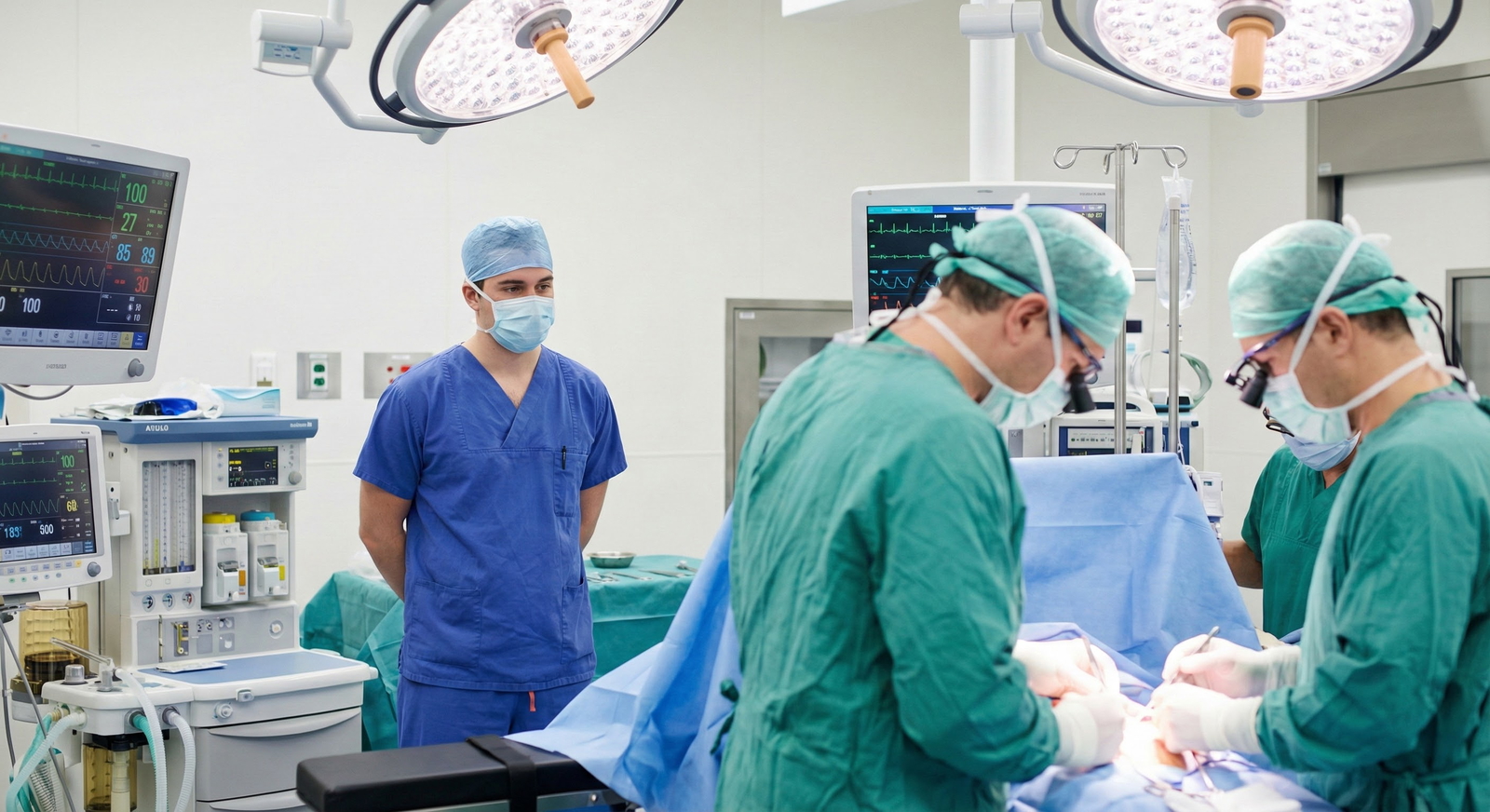
Why Away Rotations Matter So Much in Vascular Surgery
Among all surgical subspecialties, vascular surgery is one of the fields where away rotations can have an outsized impact on your residency match prospects. With a growing number of integrated vascular program positions but still relatively small class sizes (often 1–3 residents per year per program), programs rely heavily on first-hand exposure to applicants.
In vascular surgery, an away rotation—often called a sub-internship, visiting student rotation, or “audition rotation”—is both:
- A month-long interview for you
- A month-long observation period for them
For many integrated vascular surgery residencies, their matched residents each year often include at least one student who rotated with them. That doesn’t mean you must rotate everywhere you’re interested in, but it does mean you should be strategic.
This guide will walk you through:
- How to decide where to do away rotations
- How many away rotations make sense for vascular surgery
- What to prioritize before, during, and after each rotation
- Common pitfalls and how to avoid them
Throughout, we’ll tie it to the realities of the integrated vascular program match and the unique workflow of vascular surgery.
Choosing Where to Rotate: Building a Strategy
One of the first big questions for students aiming for a vascular surgery residency is which institutions to target for visiting student rotations and away rotations residency experiences. The right choices will differ based on your home institution, competitiveness, and personal needs.
Step 1: Clarify Your Goals for Away Rotations
Before you start listing programs, decide what you need away rotations to do for you. Common goals include:
- Secure strong letters of recommendation in vascular surgery
- Particularly important if your home institution has no integrated vascular program or limited vascular faculty.
- Demonstrate competitiveness to top programs
- Show you can perform at the level of their residents.
- Bridge a “gap” in your application
- Lower Step scores, limited research, or lack of home program exposure.
- Explore different program types and geographies
- Community vs. academic, East vs. West Coast, large vs. smaller programs.
- Confirm that vascular surgery is the right fit
- Daily life in vascular surgery is unique: sick patients, high-stakes emergencies, frequent endovascular work, and longitudinal patient care.
You might have more than one goal, but identify your top two. Those should drive your rotation choices.
Step 2: Understand the Types of Target Programs
When mapping out your rotation list, think in three “tiers” rather than pure prestige:
“Reach” Programs
- Highly competitive academic centers with national reputations.
- Often large vascular divisions, extensive research, high case volume.
- Rotating here is ideal if you have strong academics and want to compete at the highest level.
“Realistic Match” Programs
- Programs where your metrics (Step scores, research, school reputation) place you squarely in the competitive pool.
- These are often the best places to do an away, as your chance of converting a strong month into an interview and match is highest.
“Safety” or “Fit-Focused” Programs
- Programs where you may be slightly above average academically, or where you have a specific geographic/family reason.
- Particularly valuable if you must be in a certain region.
A balanced away rotation strategy in vascular surgery typically includes:
- 1 program where you’re a solid fit/realistic match
- 1 program that might be a reach or a highly desired geographic fit
- Optionally, 1 additional program if you have no home vascular integrated program or need more letters
Step 3: Factor in Your Home Institution Situation
Your home program context matters enormously:
If you have an integrated vascular surgery residency at your home institution:
- You should almost always complete a dedicated vascular sub-I there.
- This rotation is foundational; your home program’s letter may carry significant weight.
- Away rotations then become a way to expand your network and broaden options.
If you do NOT have an integrated vascular surgery residency at your home institution:
- Away rotations become more critical.
- You should plan more vascular-focused time:
- 1–2 vascular-specific away rotations
- 1 robust vascular exposure at your home institution (even if through general surgery or mixed services)
- Your letters from away institutions may be your best “proof” of fit for vascular.
Step 4: Geographic and Lifestyle Considerations
Vascular surgeons often build long-term referral networks with community physicians and hospitals. Where you train often influences where you eventually practice.
Consider:
- Regions where you might want to live long-term
- Urban vs. suburban vs. smaller city training environments
- Proximity to family or a partner’s job
- Program-specific lifestyle: call schedules, research expectations, and fellowship options for 0+5 grads (e.g., endovascular, critical care, advanced training opportunities)
You don’t have to rotate only in your “dream region,” but having at least one away rotation in your preferred geographic area can help you be seen as a serious candidate there.

How Many Away Rotations in Vascular Surgery Is Ideal?
A persistent question is how many away rotations are appropriate. The answer depends on your goals, but there are some general patterns.
Typical Numbers for Vascular Surgery Applicants
For integrated vascular surgery residency applicants, a common pattern is:
- 1 home vascular sub-I (if available)
- 1–2 away vascular surgery rotations
- Occasionally an additional visiting rotation that’s closely allied (e.g., general surgery at a vascular-heavy institution, or a second vascular sub-I if no home program)
Doing 2 vascular away rotations is often sufficient and avoids overextending yourself. More than 3 vascular-specific aways usually adds diminishing returns and increases the risk of burnout.
When One Away Rotation Might Be Enough
You might lean toward just one away rotation if:
- You have a strong home integrated vascular program rotation.
- You have robust letters from vascular surgeons at home.
- Your Step scores and clinical performance are above average.
- You have research or other evidence of commitment to vascular surgery.
In that scenario, one strategically chosen away rotation at a realistic or highly desired program can be enough to open doors and provide an external letter.
When Two or More Away Rotations Are Helpful
Consider two vascular away rotations if:
- Your home institution lacks an integrated vascular program or has limited vascular exposure.
- You need more than one vascular surgeon letter to demonstrate consistency.
- You are switching into vascular from another field later in MS3 or MS4 and want to show sustained interest.
- Your academic record is borderline and you want multiple months of strong performance to offset metrics.
Three vascular-focused aways may make sense only in special circumstances:
- No home vascular exposure + late decision to pursue vascular + weaker exam scores.
- You are strongly geographically constrained and want one rotation in each of two target regions plus a “backup/flex” site.
Balancing Away Rotations with Other Priorities
Remember that away rotations:
- Are physically and emotionally demanding.
- Often limit time for dedicated research, Step 2 studying, and personal well-being.
- Can be expensive (housing, travel, applications).
Your away rotation strategy should fit into a broader MS4 plan that includes:
- Solid Step 2 CK performance
- A focused research or scholarly project (not always required, but helpful)
- Adequate time to write your personal statement and ERAS application thoughtfully
Over-rotating can actually hurt if it leads to fatigue or mediocre evaluations at the end of a long stretch.
Making the Most of Your Vascular Surgery Away Rotation
Once you’ve chosen where to go, the way you perform on the rotation is far more important than the name of the institution.
Before the Rotation: Preparation That Pays Off
Clinical Knowledge
- Review core vascular topics:
- Peripheral arterial disease and claudication
- Critical limb ischemia
- Aneurysmal disease (AAA, thoracic aortic aneurysm)
- Acute limb ischemia
- Carotid disease and stroke prevention
- Dialysis access
- Understand basic management decisions: when to operate, when to stent, when to observe.
- Review core vascular topics:
Imaging Fundamentals
- Refresh:
- Reading basic CT angiograms (location of aneurysm, level of occlusion)
- Duplex ultrasound concepts (velocity criteria, inflow/outflow issues)
- You’re not expected to read like an attending, but familiarity helps you stand out.
- Refresh:
Procedural and OR Basics
- Practice knot-tying, suturing, and instrument handling.
- Review general OR etiquette and sterile technique.
- Know basics about common vascular tools: Fogarty catheters, clamps, grafts, wires, and sheaths.
Program-Specific Research
- Learn key faculty names and subspecialty interests.
- Review program’s structure: number of residents, clinical sites, research opportunities.
- Skim a few recent publications from key faculty if research is important at that institution.
On the Rotation: Behaviors That Programs Notice
Programs primarily assess how you function as a potential intern and future colleague. They look for:
1. Reliability and Work Ethic
- Show up early, prepared, and eager.
- Volunteer for consults, notes, and follow-up phone calls.
- Learn how to be the “glue” on the team—anticipate needs before they’re expressed.
Example:
If you’re on call and a patient is going to the OR for an emergent embolectomy, you can:
- Pre-chart the H&P in the EMR.
- Print or pull up the latest imaging.
- Prep consent forms (if permitted by institution).
- Notify anesthesia or coordinate with the OR desk when appropriate.
2. Initiative Without Overstepping
- Offer to do tasks: “I can write that note,” “I’ll call radiology to confirm the CT scan time.”
- Ask if you can see consults independently and then present succinctly.
- In the OR, ask for opportunities: “Is there a part of the case where I might be able to close or assist more directly?”
The balance: be proactive but not demanding. Accept “not this time” gracefully and ask again later.
3. Clinical Reasoning and Teachability
- When you present, include a brief plan (even if it’s tentative):
“For this patient with new rest pain and diminished pulses, I’m concerned about progression of peripheral arterial disease and possibly acute on chronic limb ischemia. I think we should…” - When corrected, adjust your approach quickly. Programs look for steep learning curves, not perfection on day one.
4. Teamwork and Professionalism
Vascular surgery is team-based and often deals with very high-risk patients.
Programs watch:
- How you interact with nurses, techs, and ancillary staff.
- How you handle stress on call nights or in emergencies.
- Whether you can stay calm when cases are delayed, cancelled, or complicated.
A single unprofessional interaction can outweigh weeks of excellent clinical performance.
Documenting Your Interest in the Program
During the rotation:
- Express authentic interest—not flattery, but specific reasons:
- “I’ve really appreciated how much independence your PGY-3s have in endovascular cases.”
- “I like your focus on limb salvage and the multidisciplinary wound care clinic.”
- Meet with the program director or chair if possible:
- Ask thoughtful questions about resident autonomy, case mix, and graduate outcomes.
- Briefly share your background and why you’re drawn to vascular surgery.
Before leaving, it’s reasonable to say to a few key faculty:
“I’ve really enjoyed my time here and would be very interested in training here. I’d be grateful if you’d consider writing a letter of recommendation if you feel you know me well enough.”

Letters, Timing, and Logistics: Practical Nuts and Bolts
The logistics of visiting student rotations can be as important as your strategy. Poor timing or missing deadlines can derail your plans.
When to Schedule Your Vascular Away Rotations
For most integrated vascular applicants, ideal timing is:
- First away: Late spring to mid-summer of your final year (e.g., June–August)
- Second away: Late summer or early fall (e.g., August–October)
Consider:
- Step 2 CK timing:
- Try to take Step 2 before or between away rotations so you’re not studying heavily during the month.
- ERAS application:
- ERAS opens early; aim to have at least one strong vascular letter ready by the time you apply.
- Letter deadlines:
- Talk to faculty near the end of your rotation about timeline; remind them (politely) with your CV and personal statement draft.
Using VSLO/VSAS and Program-Specific Portals
Most vascular away rotations are applied for via the Visiting Student Learning Opportunities (VSLO/VSAS) system, but some programs use direct institutional portals.
Key tips:
- Start researching requirements early (January–March of your third year).
- Have:
- Updated CV
- Transcript
- Immunization records
- USMLE Step scores
- Personal statement or short interest statement (if requested)
- Apply broadly enough to account for:
- Limited spots
- Preference for home or regional students at some institutions
Because vascular rotations can be capacity-limited (especially in hybrid ORs or small teams), flexibility in dates and location will help.
Maximizing Your Letters of Recommendation
Strong, personalized letters from vascular surgeons can significantly influence vascular surgery residency programs.
To help letter writers:
- Provide:
- Your updated CV
- A short personal statement or paragraph about why vascular surgery
- A reminder of specific cases or contributions you made during the month
Tell them:
“If there are any specific details you recall about my performance or growth during the rotation, I’d be grateful if you could include them—programs really value concrete examples.”
Aim for at least:
- 1–2 letters from vascular surgeons (home and/or away)
- 1 letter from a general surgeon or core surgery mentor
- Optional: 1 research or subspecialty letter (if deeply involved in a project)
Financial and Practical Considerations
Away rotations can be costly. Plan for:
- Housing (short-term furnished rentals, medical student housing, or staying with friends/family).
- Transportation (especially if commuting between clinical sites).
- Application fees.
Look into:
- School-based travel grants or scholarships.
- National organizations (e.g., SVS, institutional DEI offices) that sometimes offer support for visiting students, especially those underrepresented in medicine.
Common Pitfalls and How to Avoid Them
Even strong applicants can make strategic or behavioral errors on away rotations. Being aware of these pitfalls helps you avoid them.
Pitfall 1: Treating the Rotation Like a Pure “Audition”
Of course, away rotations function as auditions—but if you act like you’re always “on stage,” you may:
- Ask fewer genuine questions (for fear of looking uninformed).
- Appear stiff or overly rehearsed.
- Miss the chance to honestly evaluate the program yourself.
Instead, treat it as:
- A serious job interview
- AND also a realistic “test drive” of your future life
Ask yourself daily: “Could I see myself doing five years of integrated vascular residency here?”
Pitfall 2: Overcompensating for Weak Metrics
If you have a lower Step score or a few weaker clerkship grades, away rotations can help—but only if you perform consistently well. Trying too hard to “prove yourself” may lead to:
- Over-talking or interrupting in the OR.
- Competing with other students or residents rather than collaborating.
- Taking on tasks beyond your competence without asking for supervision.
Focus on:
- Reliability, humility, and visible growth.
- Asking for feedback halfway through: “Is there anything I can do differently to be more helpful to the team?”
Pitfall 3: Neglecting Fit and Wellness
A high-prestige program that leaves you burned out and unhappy may not be better than a mid-sized program that invests in your growth and well-being.
On each rotation, quietly assess:
- How residents treat each other and students.
- How attendings respond to complications and stress.
- Whether residents seem supported in learning endovascular and open skills.
You’re not only trying to match somewhere—you’re trying to match where you will thrive.
FAQs: Away Rotations in Vascular Surgery
1. How many away rotations should I do for an integrated vascular program?
Most vascular surgery applicants do 1–2 vascular surgery away rotations, in addition to a home sub-internship if available. One strong vascular away at a realistic target program may be enough if you have a robust home experience. Consider a second if you lack a home integrated vascular program, need more vascular letters, or are geographically constrained.
2. Do I have to rotate at my top-choice program to match there?
Not necessarily, but it can help. Many programs give preference to students who rotated with them, because they know how they function on the team. However, if you cannot rotate at your top-choice institution, you can still be competitive by:
- Demonstrating commitment to vascular surgery elsewhere (home and away).
- Building a strong research or clinical profile in vascular.
- Writing a tailored personal statement and expressing interest in your communications.
3. What if my school doesn’t have an integrated vascular surgery residency?
If your home institution lacks an integrated vascular program:
- Prioritize two vascular-specific rotations (away) if possible.
- Seek out vascular experiences through general surgery, interventional radiology, or vascular medicine.
- Build relationships with vascular surgeons at nearby institutions for mentorship and potential letters.
- Use away rotations to obtain high-impact vascular letters and show that you can perform in a dedicated vascular environment.
4. Are research and publications required for vascular surgery residency?
They are not strictly required, but in many integrated vascular programs, vascular-related research can strengthen your application and show long-term interest in the specialty. Away rotations can connect you to mentors for future projects. If you lack extensive research, outstanding clinical performance on vascular rotations, strong letters, and clear commitment in your personal statement can partially offset that gap.
A thoughtful, well-planned away rotation strategy—centered on a few carefully chosen programs and excellent performance on each rotation—can dramatically improve your chances in the vascular surgery residency match. Focus on fit, reliability, and authentic curiosity, and let your time on service demonstrate the kind of vascular surgeon you hope to become.