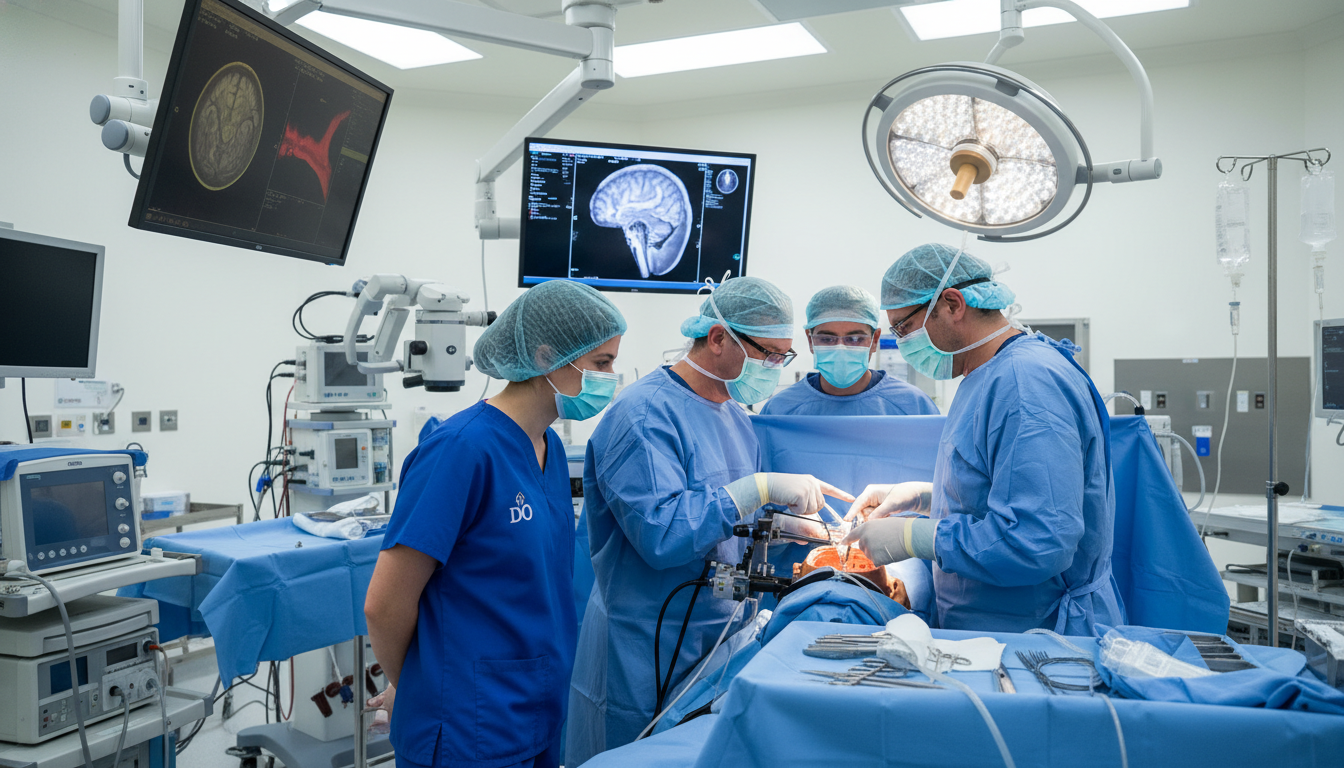
Why Away Rotations Matter So Much for DO Graduates in Neurosurgery
For a DO graduate interested in neurosurgery, away rotations (also called visiting student rotations, sub-internships, or “aways”) are not optional—they are one of the single most powerful tools you have to break into a highly competitive specialty. In neurosurgery, your away rotation performance can matter more than your board scores, personal statement, or even your MSPE.
As a DO graduate, you face two parallel realities:
- Neurosurgery is ultra-competitive with limited positions, heavy academic expectations, and very strong applicant pools.
- DOs are still underrepresented in many neurosurgery residency programs, especially at historically MD-dominant academic centers.
Well-planned and executed away rotations can help you:
- Demonstrate your capabilities directly to faculty and residents
- Show that your DO background is an asset, not a liability
- Secure strong, personalized letters of recommendation
- Prove you can fit into the culture and workflow of a neurosurgery team
- Increase your chances in both the osteopathic residency match (if applicable) and the ACGME neurosurgery match
This guide focuses on building a smart, realistic, and high-yield away rotation strategy tailored specifically for a DO graduate targeting neurosurgery.
Understanding the Role of Away Rotations in Neurosurgery for DOs
Why Away Rotations Are Critical in Neurosurgery
Among all specialties, neurosurgery likely places the highest value on away rotations, especially for applicants outside the traditional MD academic pipeline. Program directors use them to answer key questions:
- Can you handle the intensity and workload of neurosurgery?
- Do you function like an intern-level team member?
- Are you someone they can trust at 2 a.m. in the ICU or ED?
- Do you fit the culture of their program?
- Are you serious about brain surgery residency, not just “trying it out”?
For DO applicants, aways are also a way to:
- Offset program leaders’ uncertainty if they are less familiar with your medical school or with DO training in general
- Demonstrate academic seriousness (research, presentations, conference involvement)
- Show that you’re comfortable in high-volume, high-acuity academic neurosurgery environments
How Programs View DO Graduates on Rotation
Most neurosurgery programs will not reject you just because you’re a DO, but they may:
- Look more closely at your board exams (USMLE scores if taken, COMLEX interpretation)
- Pay more attention to your clinical performance on service
- Expect clear evidence of maturity and grit
Your job on an away rotation is to make it extremely easy for them to say, “We would be lucky to have this person in our neurosurgery residency.”
Planning Your Away Rotations: Timing, Number, and Program Selection
When to Do Away Rotations as a DO Graduate
If you are a current 4th-year DO student, away rotations are usually done during:
- Late spring to early fall of fourth year (May–October), often June–September being peak months
If you are a DO graduate taking a gap year or research year:
- You may still be able to do visiting student rotations through:
- Institutional “observer” or “research fellow” roles with significant clinical exposure
- Post-graduate sub-internships (varies by institution; some will only accept current students)
- Plan at least 6–9 months ahead, as neurosurgery away spots are limited and fill early.
How Many Away Rotations Should You Do?
The “how many away rotations” question is especially important in neurosurgery, because each rotation is physically and emotionally demanding.
For neurosurgery as a DO:
- 2 neurosurgery away rotations is a strong, balanced target for most applicants
- 3 neurosurgery away rotations may be reasonable if:
- You need to demonstrate your abilities to programs more directly
- Your home neurosurgery exposure is limited or nonexistent
- You are applying from a school or DO program with historically fewer neurosurgery matches
- 1 neurosurgery away rotation may be sufficient only if:
- You have a home neurosurgery department where you can do a strong sub-I
- You already have strong neurosurgery mentorship and research
More than 3 away rotations in neurosurgery usually adds diminishing returns and can lead to burnout or inconsistent performance. Remember: you must be at or near your best performance on each away.
Balancing Home, Away, and DO-Focused Programs
Your overall strategy should include:
Home Sub-Internship (if available)
- Treat this as your “first audition.”
- Programs will expect a strong letter from your home neurosurgery department if you have one.
Away Rotations at Target Academic Programs
- Aim for 1–3 programs where:
- You have a realistic shot at matching
- They have a track record of considering DOs
- You genuinely would be happy training there
- Aim for 1–3 programs where:
Safety and Fit Considerations
- Include at least one program that:
- Has previously matched DOs into neurosurgery or other surgical subspecialties
- Aligns with your academic profile (scores, research, geography)
- Include at least one program that:
Choosing Which Programs to Target as a DO Graduate
Focus on programs where your presence as a DO is an asset, not an outlier. Consider:
- Programs with prior DO residents in neurosurgery or other highly competitive specialties
- Departments that have DO faculty members (in any surgical field)
- Places where your geographic ties are strong (home state/region, spouse’s job, family ties)
- Institutions with a culture emphasizing:
- Teaching and mentorship
- Collegial, not toxic, environment
- Openness to diverse training backgrounds
Practical steps:
- Review residency program websites for:
- Current and past residents’ credentials (any DOs?)
- Faculty backgrounds (any DOs or DO-friendly training environments?)
- Ask DO neurosurgeons or senior residents (if you can find them) which programs are historically DO-friendly.
- Attend neurosurgery conferences (AANS, CNS, regional meetings) and introduce yourself—this can lead to informal advocacy when away applications are reviewed.
Getting and Structuring Your Away Rotations: Logistics for DOs
Application Platforms and Timing
Most neurosurgery away rotations are processed through:
- VSLO/VSAS (Visiting Student Learning Opportunities) for current students
- Institution-specific applications for observers, research fellows, or post-graduate rotators
Key tips:
- Start researching 10–12 months before your intended rotation period.
- Track:
- Application open dates (often February–April for the following academic year)
- Required immunizations, background checks, and health forms
- Any restrictions regarding DO students or graduates
As a DO graduate, you may encounter:
- Programs that will only take currently enrolled students
- Others that will consider post-graduate rotators under research, observer, or special elective designations
You may need to:
- Reach out directly to neurosurgery program coordinators and program directors by email
- Attach:
- CV
- Brief concise statement of interest
- Step/COMLEX scores
- Letter of support from your DO school or neurosurgery mentor
Selecting the Order of Your Rotations
For a DO applicant, the rotation order can matter:
- First rotation:
- Choose a supportive, teaching-oriented environment where you can learn the ropes and adjust to neurosurgery workflow.
- Second (and third) rotations:
- Aim for your highest-priority programs after you have gained confidence and refined your OR and inpatient skills.
Avoid scheduling your top-choice program as your very first away rotation unless circumstances force you to. You want to arrive there as the best, polished version of yourself.

How to Excel on Neurosurgery Away Rotations as a DO Graduate
Mindset: You Are Auditioning for a Job
Think of each away rotation as a month-long interview for a neurosurgery residency position. Your goal is not just to “learn neurosurgery”—it is to convince them that:
- You function like a reliable, low-maintenance intern
- You are coachable, humble, and resilient
- You will take good care of patients and fit well with the team
Core Behaviors That Make You Stand Out
Show Up Early, Leave Late—But With Purpose
- Be on the floor or in the workroom before the residents on day 1.
- Help print sign-out lists, review overnight events, and pre-round.
- Stay until patient care is clearly complete or until residents tell you to go (and believe them when they do).
Master Basic Neurosurgical Student Responsibilities
- Daily notes (clear, concise, structured)
- Pre-rounding on your assigned patients
- Presenting succinctly on rounds
- Knowing your patients’ imaging, labs, and current plan cold
- Helping with discharges, consults, and basic orders (as allowed by institution policies)
Be Proactive Without Being Pushy
- Offer: “Would it be helpful if I called radiology for this MRI?”
- Volunteer to help with:
- Clinic preparation
- Consent forms (if allowed)
- Gathering outside records and images
- Ask: “Is there anything I can take off your plate right now?”
Be Coachable and Calm Under Pressure
- When corrected, respond briefly and positively: “Thank you—got it.”
- Avoid arguing or over-explaining unless patient safety is at stake.
- Show you can maintain composure during long cases and high-stress moments.
In the Operating Room: Building a Reputation for Reliability
For a neurosurgery or brain surgery residency applicant, the OR is where many attendings will form their lasting impression of you.
Before the case:
- Read about the pathology and planned procedure (e.g., “L4-5 laminectomy,” “frontal craniotomy for glioma”).
- Review the patient’s imaging and know:
- Side and location of lesion
- Relevant neuroanatomy
- Know key indications and major risks.
During the case:
- Understand your role: retract, suction, cut sutures, and help maintain a clean field.
- Anticipate needs: Have suction ready, adjust retractors when asked, manage the microscope cord or tubing.
- Ask brief, focused questions at appropriate times:
- Not during critical steps or when tone is tense.
- “After the case, could I ask you about how you chose this approach?”
After the case:
- Help with dressings and patient transport if allowable.
- Read about what you saw; if appropriate, mention next day:
“I read more about cavernous malformations last night—fascinating case yesterday.”
Clinic and Consults: Where DO Applicants Can Really Shine
Programs often notice DO students’ strong patient interaction and bedside manner. Use this as a differentiating strength:
- In clinic:
- Be ready to present new patients concisely.
- Help with documentation if permitted.
- Learn how attendings counsel patients on surgery vs conservative management.
- On consults:
- Take a careful neurologic history and exam.
- Call residents with organized, relevant information:
- Chief concern, key neurologic findings, imaging summary, and what has already been done.
This is where you show that you can be trusted to gather data accurately and communicate clearly.
Building Relationships and Getting Strong Letters of Recommendation
Your away rotations are your best chance to secure high-impact letters from neurosurgeons.
To maximize your chances:
- Identify 1–2 attendings at each away who:
- Have seen you in multiple settings (OR, ward, consults, clinic)
- Have a reputation for writing detailed letters
- Ask for feedback around week 2–3:
- “I value your feedback—are there specific things I could improve on to be a stronger neurosurgery applicant?”
- Near the end of the rotation, if feedback is positive:
- “Would you feel comfortable writing a strong letter of recommendation for my neurosurgery application?”
As a DO graduate, letters from neurosurgeons at ACGME programs who explicitly state your performance relative to MD peers can have a major impact on how PDs view your candidacy.
Integrating Away Rotations into Your Overall Neurosurgery Application Strategy
Coordinating With Exams, Research, and the Application Timeline
Your away rotation strategy should be integrated with the rest of your application plan:
Before your first away:
- Have USMLE Step 1/COMLEX Level 1 in hand (and ideally Step 2/Level 2 scheduled or completed).
- Prepare a polished CV listing:
- Neurosurgery-related shadowing or electives
- Research and posters
- Leadership roles
- Identify neurosurgery or surgery mentors who can:
- Help you prioritize away rotation choices
- Make informal calls or send emails on your behalf
During away rotations:
- Collect cases or topics that may inform your personal statement.
- Ask residents and faculty about:
- Program culture
- What they value most in applicants
- Keep a running list of programs where you felt a good mutual fit.
After each away:
- Send personalized thank-you emails to key faculty and residents.
- Politely update them when:
- ERAS is submitted
- You are invited for interviews at their or other programs
- This keeps you on their radar when they generate their rank lists.
Osteopathic vs ACGME Programs and the “DO Graduate Residency” Picture
Although neurosurgery is now under a unified ACGME system, the term osteopathic residency match still comes up as DO graduates think about their options across specialties. For neurosurgery specifically:
- Almost all neurosurgery positions now participate in the ACGME match.
- Some programs may still actively seek DO graduates, especially:
- Historically osteopathic institutions
- Programs with DO neurosurgery faculty or alumni
- Be aware of:
- Any osteopathic neurosurgery traditions (e.g., prior AOA programs now accredited under ACGME)
- Regions with a strong osteopathic presence (Midwest, some parts of the Midwest and Northeast, certain community-academic hybrids)
Your away rotations should include at least one program where your DO identity is familiar and valued, even as you aim for large academic centers.
Geographic and Lifestyle Considerations
Be honest with yourself about where you can realistically live and thrive during 7 years of neurosurgery residency:
- If you have significant family or partner constraints, prioritize away rotations in those regions.
- Programs are more likely to rank you highly if they believe you truly want to be there long-term.
You should be able to explain, on interviews:
- Why you chose each away rotation.
- How that experience confirmed or refined your goals for a neurosurgery career.
Common Pitfalls for DO Applicants on Away Rotations (and How to Avoid Them)
Over-Rotating and Burning Out
Doing too many away rotations can hurt your performance:
- Signs you are over-rotating:
- Difficulty staying engaged and positive
- Making basic mistakes from fatigue
- Struggling to read or prepare between long days
Solution:
- Aim for 2–3 away rotations in neurosurgery.
- Build in at least a short recovery or lighter elective in between, if possible.
Being Too Passive or Too Aggressive
Neurosurgery faculty expect initiative but also professionalism:
Too passive:
- You stand in the back, never volunteer, never read about cases.
- You are remembered as “quiet” or “not very engaged.”
Too aggressive:
- You constantly push for OR time, interrupt, or demand attention.
- You ignore team cues or institutional culture.
Aim for:
- Consistent offers to help
- Focused questions
- Respect for hierarchy and timing
Not Owning Your DO Identity
Trying to hide or minimize your DO background can backfire. Instead:
- Be comfortable explaining:
- Why you chose a DO school
- What unique skills you’ve gained (e.g., hands-on approach, patient rapport)
- Demonstrate that you are fully prepared for a rigorous, research-driven neurosurgery residency, not just a “community” or “less academic” path.
Programs want confident, grounded applicants—not ones who seem insecure about their training.
FAQs: Away Rotations and Neurosurgery for DO Graduates
1. As a DO graduate, how many away rotations should I realistically do in neurosurgery?
Most DO applicants should aim for 2 neurosurgery away rotations, plus a strong home neurosurgery sub-internship if available. A third away rotation can be helpful if you lack a home program or need more face-time at DO-friendly institutions. Doing more than three neurosurgery aways usually offers minimal additional benefit and increases the risk of burnout and inconsistent performance.
2. Do I need to take the USMLE exams as a DO targeting neurosurgery?
While some programs will consider COMLEX alone, many competitive neurosurgery residencies strongly prefer or expect USMLE scores. If you are early enough in your training, taking USMLE Step 1 and Step 2 CK can significantly widen the range of programs that will take your application—and accept you for away rotations. If you have already graduated and cannot add USMLE, maximize other strengths: stellar clinical performance, strong neurosurgery letters, and meaningful research.
3. How important are letters from away rotations compared to my home program?
For neurosurgery, letters from away rotations at ACGME neurosurgery programs can be extremely high-yield—especially if they directly compare you favorably to their own MD students or sub-interns. At the same time, if you have a home neurosurgery program, many residency programs will expect at least one strong letter from that institution. Aim for a letter mix of:
- Home neurosurgery faculty
- 1–2 away rotation neurosurgeons
- Possibly a research mentor or surgical faculty who knows you well
4. What if I do an away rotation at my top-choice program and don’t feel it went perfectly?
First, get honest feedback before you assume the worst. Ask a trusted resident or faculty member near the end:
“I’m very interested in this program—do you have any feedback on how I performed or ways I could strengthen my application?”
If the feedback is lukewarm, you can still rank the program if you like it, but make sure you also:
- Leverage stronger away rotations or home rotations for letters
- Apply broadly to a range of DO-friendly neurosurgery programs
- Highlight your best clinical and research experiences in your ERAS application and interviews
A thoughtful, deliberate away rotation strategy can dramatically increase your chances of matching into neurosurgery as a DO graduate. Plan early, choose programs wisely, and treat each rotation as a genuine audition for the kind of neurosurgeon—and colleague—you intend to become.