
Why Away Rotations Matter So Much for DO Graduates in Urology
For a DO graduate pursuing urology, away rotations can be the single most important strategic tool you control for the urology residency match. Urology is small, competitive, and still uneven in how programs view osteopathic training. A well-chosen, well-executed visiting student month can:
- Convert you from an unknown applicant to a known, trusted future colleague
- Generate powerful, personalized letters of recommendation from urologists
- Offset initial bias some programs may have toward MD applicants
- Demonstrate that you can perform at the same level as interns on that particular service
Because the urology match is early and the field is small, you don’t have many chances to make an impression. Thoughtful planning of away rotations residency strategy is especially critical for a DO graduate residency applicant in urology.
This guide walks you through how to plan, choose, and maximize visiting student rotations in urology as a DO graduate, including how many aways to do, when to apply, and how to stand out once you’re there.
Understanding the Role of Away Rotations in the Urology Match
Why Away Rotations Matter More in Urology
Urology is a “relationship-heavy” specialty. Faculty know one another across programs, and your reputation can spread both positively and negatively. Away rotations are central to the urology match because they allow programs to answer questions that don’t show up on paper:
- Can you function like a sub-intern from day one?
- Are you someone they’d want with them at 3 a.m. on call?
- Do you fit the culture and work ethic of the department?
For DO graduates, aways serve an additional purpose:
They normalize you within a traditionally MD-dominant space and give faculty a direct opportunity to vouch that “this DO applicant performs as well as our top MD students.”
How Programs Use Away Rotation Performance
During ranking discussions, faculty routinely draw on away rotation experiences:
- “This student rotated with us; they were always early, eager, and reliable.”
- “Great knowledge base, but struggled with communication.”
- “Honestly, I’d be happy to work with them as a resident.”
These sorts of comments can boost or sink your application far more than a small difference in board scores.
Common ways away rotations influence your urology application:
Letters of Recommendation (LORs)
- A strong, detailed letter from a urologist who worked closely with you is invaluable.
- For DO applicants, a letter saying “I would rank this student in the top X% of our MS4s” carries particular weight.
Interview Invitations
- Many programs offer interviews almost automatically to strong rotators.
- At some sites, if you rotate and clearly do well, not getting an interview is rare.
Rank List Position
- Programs are generally more comfortable ranking someone they know and trust higher than a paper-strong unknown.
Planning Your Urology Away Rotation Strategy as a DO Graduate
How Many Away Rotations Should You Do?
There is no absolute rule, but for a DO graduate residency applicant in urology, a common and effective target is:
- 2–3 urology away rotations
- Plus your home urology rotation (if available)
Here’s how to think about how many away rotations:
- 1 away: Minimum if you have a strong home urology department that knows you well and can provide robust letters. Risky if your home support is weak or non-existent.
- 2 aways: Ideal for many DO applicants—allows exposure at a mix of “reach” and “realistic” programs.
- 3 aways: Reasonable for a DO candidate, especially if:
- You lack a strong home urology presence, or
- You need more face time at ACGME programs that regularly take DOs.
More than 3 is usually not necessary and may strain your bandwidth, finances, and ability to perform consistently at a high level.
Timing: When to Schedule Urology Aways
Because the urology match is early (applications typically open late summer, with interviews in the fall), your away rotations should be:
Primary away rotations:
- Target: Late spring through early fall of the year before you graduate (e.g., May–September of your final year).
- Ideal windows: June, July, August.
- Rationale: Faculty can write letters in time for your application, and your performance is fresh during interview season.
Home rotation (if available):
- Ideally early, such as May–July, so you can:
- Confirm your interest in urology
- Obtain your first urology letter
- Practice being a strong sub-intern before external away rotations
- Ideally early, such as May–July, so you can:
If you must rotate later (e.g., October), it can still help with interview impressions and rank list—but letters from those late rotations may be harder to integrate into your initial application.
Building a Balanced Away Rotation List
For DO applicants, you want a portfolio of rotations that balances aspiration with realism:
Home or Core Urology Site (if available)
- Anchor of your urology experience
- Source of at least one strong LOR
- Place where you can get honest feedback on your competitiveness
1–2 “Realistic” Away Sites
- Programs with a history of:
- Interviewing and accepting DO applicants
- Valuing clinical performance over school name
- Regional connections (e.g., near where you trained or want to live) can help.
- Programs with a history of:
0–1 “Reach” Away Site
- More competitive or academic programs where you’d love to match.
- Even if it’s a stretch, a strong rotation here can open doors—or at least yield a strong letter.
Choosing Programs: Smart Targeting for DO Graduates
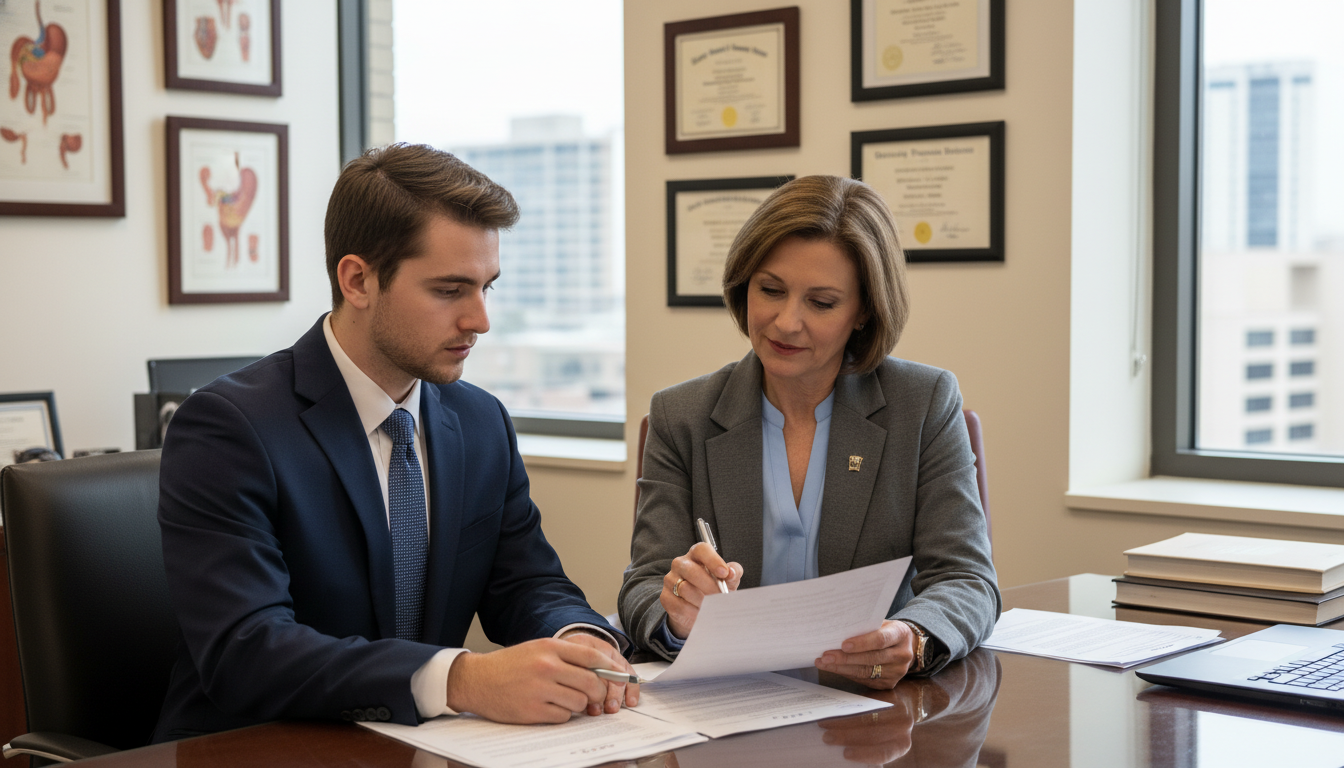
Step 1: Identify Programs That Have Taken DOs
Your first filter should be: “Has this program interviewed or matched DO applicants in recent years?”
Ways to research this:
- Program websites or social media (resident bios often list DO vs MD)
- Talking to upperclass DO students who matched into urology
- Reaching out to DO alumni or your school’s match advisors
- National forums and match reports (verify informally gathered info with direct program information when possible)
Programs that consistently have DO residents are more likely to:
- Appreciate osteopathic training
- Understand COMLEX scores
- Advocate for equitable review during the selection committee
Step 2: Consider Program Type and Culture
Think about what kinds of urology programs align best with your background and strengths:
Academic, research-heavy programs
- Strongly value publications, abstracts, and basic science work
- May still favor MDs, but not uniformly
- Good fits if you have substantial research and are comfortable in high-intensity academic environments
Large community or hybrid academic–community programs
- Often more clinically oriented, strong surgical training, slightly less emphasis on big-name research
- Frequently more open to DO applicants
- Excellent environments to shine on clinical performance
Programs in regions with historically strong DO presence
- Midwest, some parts of the South and Northeast
- Areas with multiple osteopathic medical schools nearby
Step 3: Match Aways to Your Application Narrative
Your away choices should make sense within your broader story:
- If you’re a DO graduate who wants to stay in the Midwest near family, doing multiple Midwestern visiting student rotations is logical and helps show genuine geographic interest.
- If you’ve done notable research in urologic oncology, it makes sense to seek at least one away at a program with a strong oncology presence.
Step 4: Be Strategic About Your “Reach” Rotations
A “reach” away can pay off—but you should be honest about your baseline competitiveness:
Strong candidate for reach away if you have:
- Solid board performance (COMLEX and ideally USMLE)
- Strong clinical evaluations
- At least some urology research or scholarly activity
More cautious about reach away if:
- Multiple attempts on licensing exams
- Very limited or no urology exposure
- Weak clinical comments like “quiet,” “not proactive,” or “struggles with task management”
If you choose a big-name academic site, you must arrive fully prepared to perform like a top-tier sub-intern; the expectations will be high.
Application Logistics: VSLO, Contacts, and Deadlines
Using VSLO/VSAS and Program Portals
Most urology away rotations use:
- VSLO (Visiting Student Learning Opportunities) / VSAS
- Or individual institutional portals (some still use direct departmental applications)
Key points:
- Application windows often open between February and April for rotations starting as early as May/June.
- Competitive sites may fill quickly, so:
- Have transcripts, immunizations, Step/COMLEX scores, and other documents ready early.
- Apply broadly, with backup options.
Specific Issues for DO Applicants
As a DO graduate, you may encounter:
- Programs that list “LCME-accredited schools only” (which may formally or informally exclude DO schools, despite ACGME unification).
- Requirements for USMLE Step scores even if you have COMLEX; some places will accept COMLEX, others will not.
Action steps:
- Clarify early
- Email the program’s student coordinator politely:
- Ask whether they accept DO students for visiting sub-internships
- Ask if COMLEX alone is sufficient if you did not take USMLE
- Email the program’s student coordinator politely:
- Keep records ready
- COMLEX Level 1 and 2 (and USMLE if taken)
- Updated CV
- Brief personal statement or paragraph about your interest in urology and that institution
Maximizing Your Performance on Urology Away Rotations
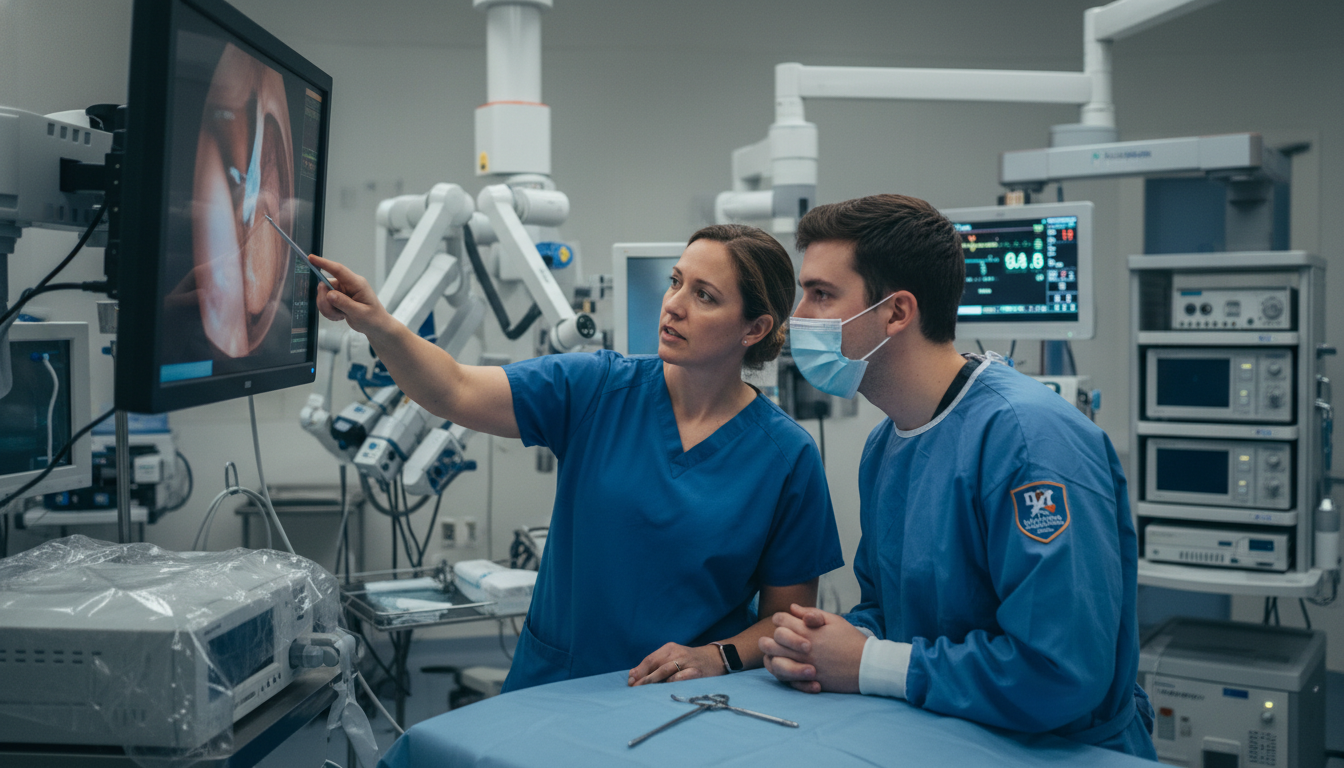
This is where you turn opportunity into results. Your conduct during away rotations will heavily shape your letters, your reputation, and ultimately your chances in the urology residency match.
General Expectations for a Urology Sub-Intern
You’ll be expected to function close to an intern level in several domains:
- Pre-rounding and knowing your patients’ overnight events, labs, and plans
- Writing organized progress notes and post-op notes
- Assisting in the OR (positioning, basic suturing, camera driving)
- Participating in consults in the ED and inpatient wards under supervision
- Attending clinics, conferences, tumor boards, and educational sessions
For a DO applicant, this is your chance to show you’re clinically indistinguishable from your MD peers.
Keys to Standing Out (for the Right Reasons)
Preparation Before the Rotation
- Review:
- Common urologic conditions: BPH, hematuria, nephrolithiasis, urinary retention, bladder cancer, prostate cancer, testicular torsion, etc.
- Basic perioperative management principles.
- Read a concise urology handbook or high-yield notes.
- Brush up on common instruments and OR etiquette.
- Review:
First Impressions
- Arrive on time (early) every day.
- Introduce yourself to residents, nurses, and staff: “I’m [Name], the DO visiting student in urology this month.”
- Keep a low-ego, high-effort demeanor.
Clinical Work Ethic
- Volunteer for tasks, but don’t overstep.
- Finish what you start; if you say you’ll follow up a lab or call a consult, do it and report back.
- Anticipate team needs (pull scans, prep consent forms, have supplies ready for procedures if allowed).
In the OR
- Learn the typical setup for common cases: TURP, TURBT, ureteroscopy, robotic prostatectomy, nephrectomy, etc.
- Ask where you should stand and what your primary role will be.
- Handle instruments with care; be attentive and engaged even when not scrubbed.
- Don’t talk excessively; speak when it helps the case or demonstrates thoughtfulness.
On Rounds and in Clinic
- Present succinctly and clearly.
- Offer brief, thoughtful assessments and plans—not long monologues.
- Take notes on teaching points and read on them that night. Bring those insights back the next day.
Professionalism and Team Dynamics
- Be kind and respectful to everyone: techs, nurses, custodial staff, admin. Programs notice this.
- Never complain about hours, cases, or other students.
- If you make a mistake, own it, learn, and move forward.
As a DO Applicant: Addressing Subtle Bias Through Performance
You may encounter ignorance or mild bias:
- “So where is your school again?”
- “Do you guys take the same boards as MDs?”
- “I haven’t worked with many DO students before.”
Your goal is to disarm these perceptions through consistency and humility:
- Answer questions about osteopathic training straightforwardly and without defensiveness.
- Don’t overemphasize “being a DO” during the rotation—be the best medical student in the room.
- If asked about OMM/OMT, acknowledge its parts of your education, but focus discussions on your urologic interests and clinical growth.
Letters of Recommendation and Post-Rotation Follow-Up
Positioning Yourself for Strong Letters
Ideally you want 2–3 letters from urologists, with at least one from:
- Your home urology department (if available)
- A faculty member at an away rotation where you clearly performed well
How to optimize your chances:
Identify Potential Letter Writers
- Attendings who:
- Worked with you directly in OR and clinic
- Saw your progression over several weeks
- Seemed receptive to your questions and invested in your learning
- Attendings who:
Ask for a “Strong” Letter
- Near the end of the rotation, request a meeting or catch them at an appropriate time:
- “Dr. X, I’ve really enjoyed working with you and learning from you this month. I’m applying to urology this cycle. Would you feel comfortable writing me a strong letter of recommendation?”
- Near the end of the rotation, request a meeting or catch them at an appropriate time:
Provide Supporting Materials
- Updated CV
- Personal statement draft
- Brief bullet list of cases or projects you worked on with them
This helps the letter be more specific—critical for DO applicants who need clear advocacy.
Following Up After the Rotation
After your rotation:
- Send a thank-you email to key faculty and residents:
- Express appreciation for teaching and mentorship.
- Mention 1–2 specific things you learned.
- If you receive an interview offer from that program, mention your away rotation in any communication and during the interview itself.
Some programs may ask for your feedback or evaluation of the rotation; answer honestly but diplomatically. You’re still building a long-term professional reputation.
Integrating Aways Into Your Overall Urology Match Strategy
Away rotations are powerful, but they are only one component of your osteopathic residency match strategy in urology.
Other Key Elements to Align With Your Aways
Exams (COMLEX and USMLE)
- If possible, many DO applicants benefit from also taking USMLE Step 1 and/or Step 2, as some urology programs still prefer or require USMLE scores.
- If you did not take USMLE, prioritize away rotations at programs that explicitly accept COMLEX.
Research and Scholarly Activity
- Even small projects, case reports, or QI projects in urology can help.
- If an away program is research-active, express interest in ongoing urology projects—just don’t overpromise what you can deliver during a short month.
Personal Statement and Application Narrative
- Use what you learned on away rotations to refine your personal statement.
- Mention meaningful cases, mentors, or sub-specialty interests you encountered on rotation.
Program Signaling and Geographic Strategy
- Tailor your signals (if used in the cycle) to align with places where you rotated or have strong ties.
- Use aways to establish a presence in regions where you truly want to live and train.
Common Pitfalls and How to Avoid Them
Pitfall 1: Overloading With Too Many Aways
Doing 4–5 away rotations in a row may sound impressive, but can lead to:
- Burnout and declining performance by the time you reach later rotations
- Difficulty carving out time for Step 2/Level 2, application prep, and interviews
Aim for quality over quantity; 2–3 high-impact rotations are better than many lukewarm ones.
Pitfall 2: Choosing Only “Reach” Programs
If every away is at a hyper-competitive academic powerhouse, you risk:
- Being average in a sea of super-competitive peers
- Getting solid but not standout letters that say “fine student,” rather than “must-have resident”
Balance your list with programs where you can realistically be near the top of the student cohort.
Pitfall 3: Being Too Passive on Rotation
Waiting to be told every next step signals lack of initiative.
Instead:
- Politely ask, “Is there anything I can help with right now?”
- Volunteer for notes, calls, or consults within your level of training.
- Read about every unfamiliar condition or procedure you see that day.
Pitfall 4: Neglecting Professionalism
Showing up late, using your phone inappropriately, acting disinterested in “less exciting” cases—these are red flags that will haunt your evaluations. As a DO applicant trying to overcome any initial skepticism, your professionalism must be unquestionable.
FAQs: Away Rotations for DO Graduates Applying in Urology
1. As a DO applicant to urology, is an away rotation absolutely required?
Strictly speaking, no—but functionally, for most DO applicants, yes. Because urology is small and competitive, many programs expect at least one strong sub-internship in urology. An away rotation is often your best chance to demonstrate parity with MD peers, get influential letters, and signal serious interest in the specialty.
2. How many away rotations should I do for the urology match as a DO?
Most DO applicants aiming for the osteopathic residency match into urology should target 2–3 urology away rotations, in addition to a home rotation if available. One away may be sufficient if you have a robust home urology department and strong support; three may be appropriate if you have limited home exposure or want broader visibility.
3. Do I need to take USMLE if I have COMLEX for urology?
Not universally, but it helps. Some urology programs still either prefer USMLE or do not formally know how to interpret COMLEX. If you already have strong COMLEX scores and can safely add USMLE without jeopardizing your performance, it may expand your options. If you do not take USMLE, prioritize away rotations and residency applications at programs that explicitly accept and are familiar with COMLEX.
4. When should I ask for a letter of recommendation during an away rotation?
Typically during the last week of your rotation. Approach an attending who has worked closely with you and say something like:
“I’ve really appreciated learning from you this month and I’m applying in urology. Would you feel comfortable writing me a strong letter of recommendation?”
Then provide your CV, personal statement, and a brief reminder of key cases or contributions so they can craft a detailed, personalized letter.
Thoughtful planning of away rotations residency strategy, especially as a DO graduate, can transform your urology application. Choose programs wisely, prepare intensely, perform like a dependable sub-intern, and convert those months into powerful letters and advocates in the urology residency community.