Understanding Away Rotations in Pathology as an IMG
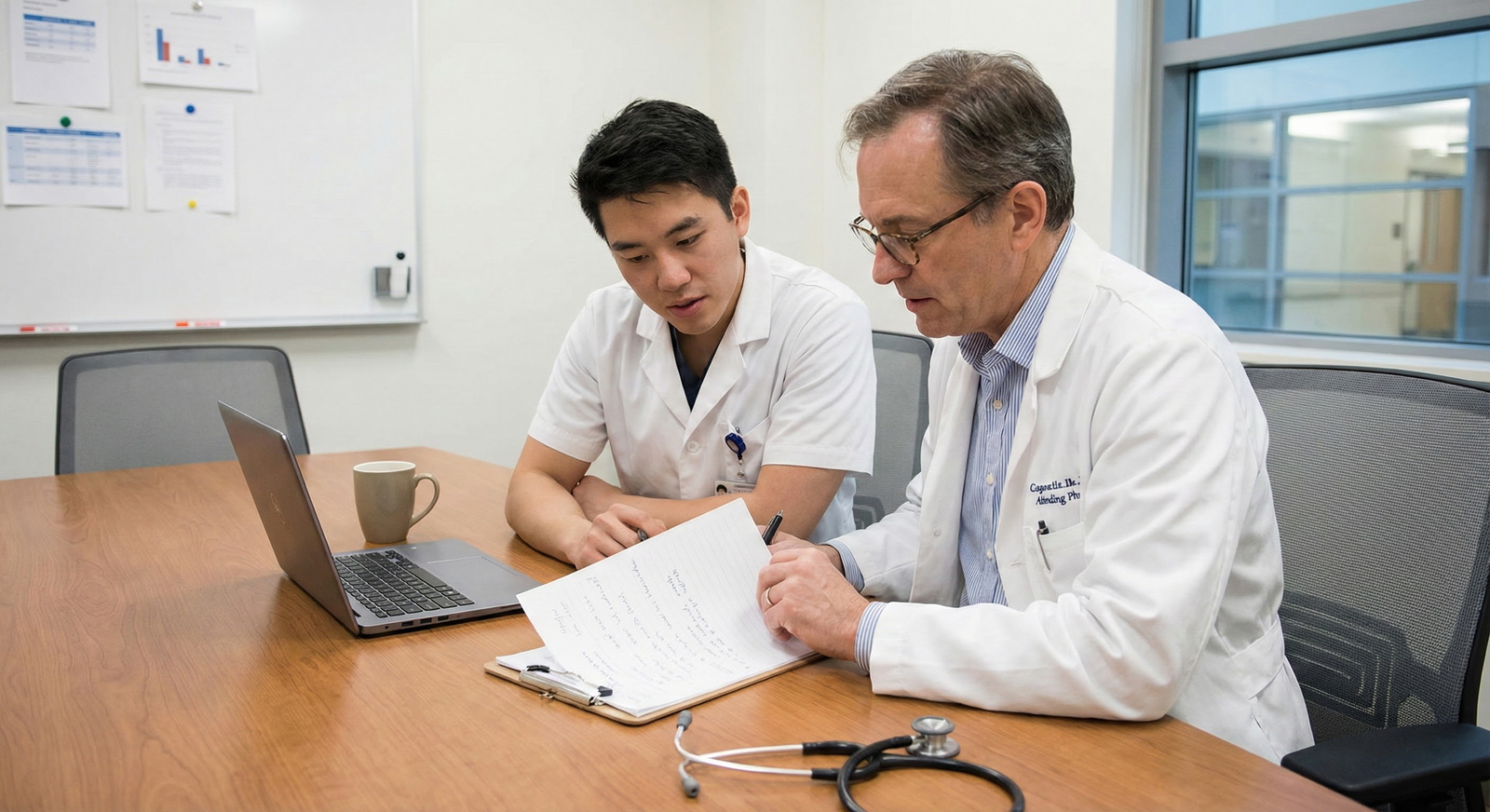
Away rotations (also called visiting student rotations or electives) are one of the most powerful tools an international medical graduate can use to improve their pathology match chances. For IMGs, especially those who did not attend U.S. or Canadian medical schools, an away rotation strategy often matters more than it does for U.S. grads.
In pathology, away rotations are typically:
- 2–4 weeks long
- Based in anatomic pathology (AP), clinical pathology (CP), or subspecialties (e.g., hematopathology, cytopathology)
- Structured as observerships or hands-on electives, depending on your status (student vs graduate, and visa/insurance rules)
- Important sources of U.S. clinical experience (USCE), letters of recommendation (LORs), and direct exposure to program culture
This IMG residency guide will walk you stepwise through planning, choosing, and succeeding in pathology away rotations so they strategically support your pathology residency application.
1. Why Away Rotations Matter So Much for IMGs in Pathology
For an international medical graduate, an away rotation in pathology is more than “extra experience.” It directly addresses common weaknesses in an IMG application and showcases your readiness for U.S. training.
1.1 What Away Rotations Do for Your Pathology Match
Well-chosen visiting student rotations can:
- Generate strong, U.S.-based LORs
- From academic pathologists who know the residency selection process
- On institutional letterhead recognized by program directors
- Demonstrate familiarity with U.S. pathology practice
- Use of LIS (laboratory information systems), synoptic reports, tumor boards, and CAP/CLIA standards
- Showcase your communication and team skills
- Presenting cases, discussing differential diagnoses, interacting with clinicians
- Provide evidence of genuine interest in pathology
- Especially important if your home school offers limited pathology exposure or if you decided late
- Create a network of advocates
- Faculty who might email program directors, personally recommend you, or call during rank meetings
Many program directors use away rotations as a “month-long interview,” especially for IMGs. A strong performance here can outweigh less-than-perfect scores or a less recognized home medical school.
1.2 Why Pathology Is Unique for IMGs
Compared with more “patient-facing” specialties:
- Direct patient interaction is limited, so your ability to show value depends heavily on:
- Slide review skills
- Histology and pathophysiology understanding
- Written/verbal communication in English
- Hands-on opportunities can vary
- Some institutions restrict IMGs to observerships (no direct order entry, no sign-out responsibility)
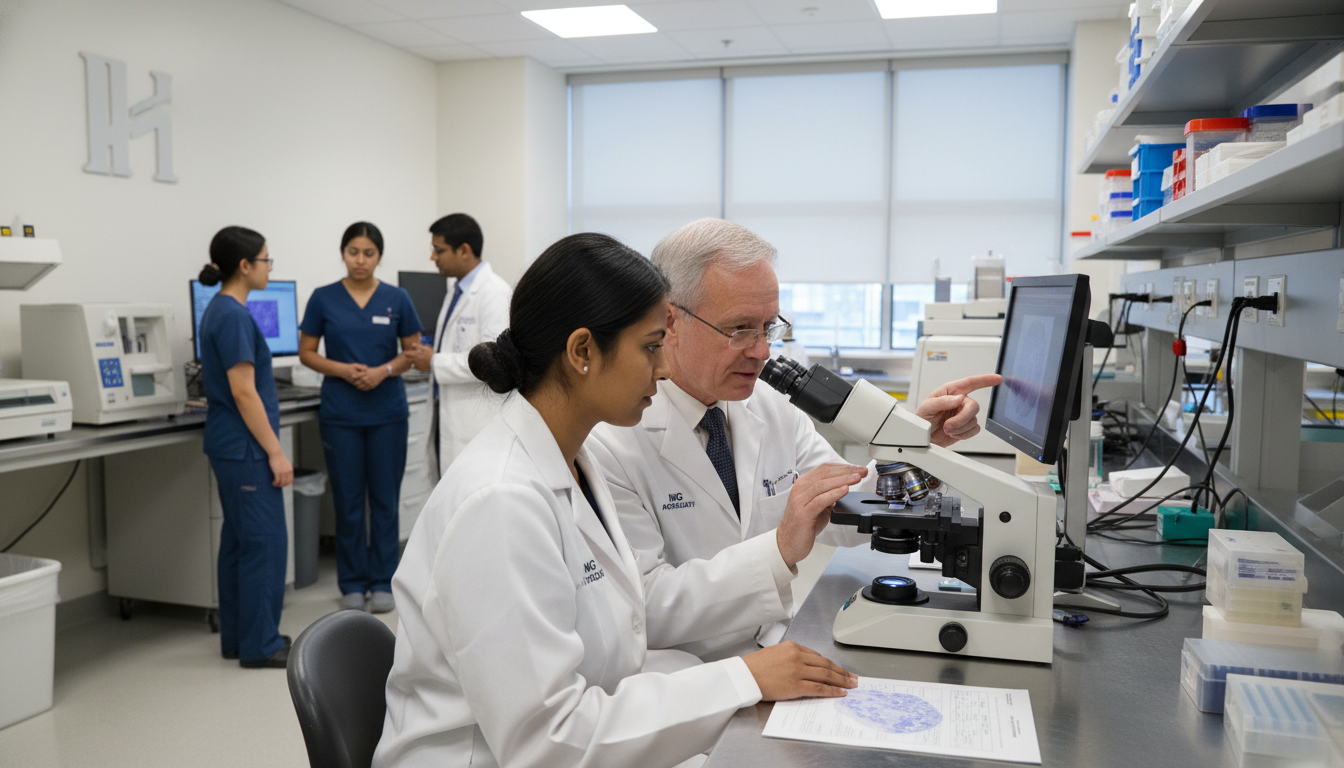
- Others allow full student-level participation at the multi-headed microscope, grossing under supervision, and tumor boards
- There is often less formal structure than in core clerkships like Internal Medicine, so self-direction and initiative matter greatly.
Understanding these nuances helps you choose rotations that actually strengthen your pathology residency profile.
2. Planning Your Pathology Away Rotation Strategy
2.1 When to Do Away Rotations
For most IMGs targeting the U.S. pathology match:
- Ideal timing:
- Final year of medical school OR
- Immediately after graduation, before you apply for residency
- Align with ERAS timeline:
- Aim to finish at least one strong rotation by June–August of the year you apply
- This allows faculty time to write LORs before ERAS opens (usually September)
If your path to the match is multi-year (e.g., you still need Step exams), plan your away rotations after you:
- Pass at least Step 1 (or its equivalent)
- Demonstrate basic medical knowledge and English fluency
- Have documentation ready (transcripts, immunizations, etc.)
2.2 How Many Away Rotations Should an IMG Do?
There is no universal number, but for an international medical graduate applying to pathology residency:
- Minimum strongly recommended:
- 1–2 substantial away rotations in pathology (4–8 total weeks)
- Ideal (if resources allow):
- 2–3 rotations (8–12 weeks), especially if you:
- Need more U.S. clinical experience
- Come from a lesser-known school
- Have older graduation date (>5 years)
- 2–3 rotations (8–12 weeks), especially if you:
Consider your time, money, visa status, and exam schedule. Doing many short, low-quality observerships is less useful than 1–2 high-quality, immersive rotations where faculty really know you.
2.3 Types of Pathology Rotations for IMGs
You’ll typically see three broad categories:
Formal Visiting Student Rotations (VSLO/VSAS)
- Designed for enrolled medical students (often require enrollment in a recognized medical school, malpractice coverage, etc.)
- Offer the best chance at:
- Regular participation at sign-out
- Presentations at conferences
- Graded performance and official evaluations
Institutional Electives for IMGs
- Some hospitals or universities have specific IMG programs:
- Structured curriculum
- Defined start/end dates
- Educational objectives
- Can count as USCE and often lead to strong letters if well organized
- Some hospitals or universities have specific IMG programs:
Observerships / Shadowing
- Most accessible after graduation, but more limited:
- No responsibility for patient care or orders
- Often cannot log into hospital systems
- However, if structured and educational, they can still:
- Show your commitment
- Build relationships
- Provide exposure to U.S. pathology practice
- Most accessible after graduation, but more limited:
For a strong IMG residency guide, your goal is at least one rotation that involves real academic engagement (slide review with teaching, case presentations, academic discussions), not just passive observation.

3. Choosing the Right Institutions and Rotations
3.1 Identifying Pathology Programs That Welcome IMGs
When you explore away rotations residency options, prioritize pathology departments and residency programs that have a proven track record with IMGs. You can:
- Search programs on FREIDA and individual program websites
- Look under “Current Residents” and alumni to see:
- How many IMGs are in the program
- Their medical schools and countries
- Look under “Current Residents” and alumni to see:
- Review program policies:
- Some programs explicitly state:
- Whether they consider IMGs
- Requirements (Step scores, graduation year, visa support)
- Some programs explicitly state:
- Email coordinators or education offices:
- Ask if they accept international visiting students/physicians for pathology rotations
- Inquire about observerships if electives are not available
If a program has multiple IMGs among current residents, your away rotation there is more likely to be genuinely evaluated and valued.
3.2 Academic vs Community Programs
For away rotations, both types can be helpful but in different ways:
Academic Centers (University Hospitals):
- Pros:
- Strong faculty names on LORs
- Subspecialty exposure (hemepath, neuropath, GI, etc.)
- Research and teaching opportunities
- Cons:
- Highly competitive
- Some may restrict IMGs to observerships only
- Pros:
Large Community or Hybrid Programs:
- Pros:
- Sometimes more flexible in accepting IMGs
- Strong experience in bread-and-butter pathology
- May still be well respected in their region
- Cons:
- Fewer subspecialties and research options at some sites
- Pros:
Strategy:
Aim for at least one academic program rotation and one community or hybrid program if possible. This gives you diverse experience and two different types of letters.
3.3 Selecting Subspecialties for Your Rotations
For your core pathology residency application, prioritize:
- General Anatomic Pathology (AP) / Surgical Pathology
- Cytopathology
- Hematopathology (often via combined hemepath/hematology experience)
- Autopsy / Forensic Pathology exposure (where available)
You can later add niche interests (e.g., neuropathology, molecular pathology) if you have time and clear career goals. But for the match, you mainly need:
- Solid foundational exposure in AP/CP
- Evidence that you understand what daily pathology work actually looks like
3.4 Evaluating the Quality of a Rotation
Not all visiting student rotations are equal. Before committing, try to determine:
- Access to sign-out:
- Do students sit at the multi-headed scope with attendings?
- Are they encouraged to preview slides and discuss cases?
- Educational structure:
- Scheduled teaching conferences, unknown slide sessions, journal clubs
- Clear orientation and learning objectives
- Role of visiting students:
- Are IMGs treated similarly to home students?
- Are they allowed to present at tumor boards or educational conferences?
- Potential for letters and advocacy:
- Will you work closely with 1–2 faculty members for at least 2–4 weeks?
- Are faculty known to write detailed LORs for rotating students?
A brief email or call to the rotation coordinator, and reading past student testimonials (if available), can help you avoid superficial observerships that provide a certificate but little substance.
4. Application Logistics: How to Secure Pathology Away Rotations as an IMG
4.1 Typical Requirements You’ll Need
Most U.S. institutions will expect:
- Dean’s letter / official transcript from your medical school
- Proof of enrollment or graduation
- USMLE Step 1/2 scores (or equivalent), if available
- Immunization records (Hep B, MMR, Varicella, TB test, COVID, etc.)
- Proof of health insurance (U.S.-compatible)
- English proficiency (TOEFL/IELTS, or documentation from your school)
- Professional CV tailored for pathology
- Personal statement or brief statement of interest in pathology and that specific institution
Some sites will also require:
- Background check
- Drug screening
- Malpractice/ liability coverage (sometimes provided via your home school)
4.2 Using VSLO (VSAS) vs Direct Applications
VSLO/VSAS (Visiting Student Learning Opportunities):
- Mainly for students at U.S.-affiliated or VSLO-participating schools
- If your international medical school is a VSLO member, use that system—many departments prefer standardized applications
Direct institutional applications:
- For IMGs whose schools are not in VSLO
- Look for:
- “International visiting student” sections on med school/hospital websites
- “Observer/Visiting Physician” programs within pathology or graduate medical education (GME) offices
Prepare a spreadsheet to track:
- Institution, rotation name
- Application deadline
- Required documents
- Fees (application, processing, ID badge)
- Duration and start dates
- Visa/insurance requirements
- Contact person
4.3 Visa and Legal Considerations
Visa rules can affect which away rotations residency programs you can join:
- If you are still a student abroad:
- You might use a B-1/B-2 visitor visa for short-term electives, depending on the institution
- Some universities sponsor short-term J-1 scholarly visits
- If you are a graduate:
- Many formal “student” electives are limited
- You may be able to do observerships on a visitor visa (B-1/B-2) or under waiver programs
- Each institution has its own rules—never assume; always confirm
Critically, comply strictly with immigration rules: away rotations should be labeled and structured according to your visa type (observation vs hands-on training). Any misrepresentation can harm both your visa status and professional future.

5. Maximizing Impact During Your Pathology Away Rotation
Once you have secured spots, how you perform during these visiting student rotations will determine whether they become powerful assets for your pathology match.
5.1 Pre-Rotation Preparation
Before day one:
- Review core pathology knowledge:
- Basic histology of major organs
- Common malignancies (breast, colon, lung, prostate, lymphomas, leukemias)
- Principles of immunohistochemistry (IHC), molecular techniques, and lab workflows
- Learn common English terminology in pathology:
- Descriptive words for gross and microscopic features (e.g., “pleomorphic,” “cribriform,” “papillary,” “necrotizing granulomatous inflammation”)
- Understand U.S. healthcare basics:
- HIPAA and patient privacy rules
- Structure of multidisciplinary care teams
- Clarify expectations with your supervisor:
- Ask whether you can:
- Preview slides
- Attend tumor boards
- Give a short presentation or case discussion
- Ask whether you can:
Having clear goals (e.g., “by the end of this month I want to confidently describe basic malignant lesions at the scope and present at least one case”) helps you stay focused.
5.2 Day-to-Day Behavior That Impresses Faculty
Program directors and attendings consistently value:
- Reliability and punctuality
- Arrive early, stay engaged throughout the day
- Preparedness
- Read about cases you see; look up differential diagnoses
- Bring a notebook for quick sketches and terminology
- Active participation (without overstepping)
- At the scope: describe what you see using systematic terminology
- Ask thoughtful, specific questions showing you have read before asking
- Professional communication
- Clear, respectful English
- Ability to explain your reasoning and accept feedback graciously
- Team orientation
- Help residents if appropriate (e.g., pulling slides, organizing materials)
- Volunteer to present at conferences or unknown slide sessions if allowed
Treat every day as a prolonged interview for the pathology residency. Faculty will mentally ask: “Would I trust this person as my future resident?”
5.3 Building Relationships and Securing Strong LORs
During the rotation, identify:
- 1–2 faculty members who see your work frequently
- Possibly 1 senior resident or chief resident who can advocate for you informally
Steps:
Ask for feedback mid-rotation.
- “I am hoping to apply for pathology residency in the U.S. next year. Could you please share feedback on how I’m doing and what I should improve?”
Respond to feedback.
- If they suggest working on case write-ups or terminology, show noticeable improvement in the following week.
Request a letter of recommendation near the end.
- Ask in person if possible:
- “Based on your experience working with me this month, would you feel comfortable writing a strong letter of recommendation for my pathology residency applications?”
- Provide:
- Updated CV
- Personal statement draft
- ERAS letter request form/ instructions
- Ask in person if possible:
A strong letter (with detailed examples of your work) is vastly better than multiple generic letters. Prioritize depth of relationship over sheer number of letters.
5.4 Documenting and Showcasing Your Experience
After the rotation:
- Request an official evaluation or certificate of completion
- Note specific cases or activities:
- Tumor boards you attended/presented at
- Specific subspecialty exposure (e.g., 2 weeks in hemepath)
- Any teaching or mini-presentations you gave
- Mention concrete skills in your ERAS application:
- “Participated in daily sign-out of 40–60 surgical pathology cases; previewed slides independently and discussed preliminary diagnoses with faculty.”
- “Presented an unknown case conference on diffuse large B-cell lymphoma, including differential diagnosis and relevant IHC panel.”
These details add credibility to your CV and personal statement and give interviewers questions to ask that help you shine.
6. Integrating Away Rotations into a Winning IMG Pathology Match Plan
Away rotations are one pillar of a broader strategy. To maximize their value for your pathology residency match:
6.1 Align Rotations with Your Overall Application Story
Your away rotations should support a coherent narrative:
- Example narrative A: “Early and consistent interest in pathology”
- Early pathology elective at home institution
- One U.S. academic surgical pathology away rotation
- One heme/onc + hemepath rotation
- Research poster on a pathology topic
- Example narrative B: “Transition from clinical to diagnostic specialty”
- Initial core clerkships with strong internal medicine performance
- Discovery of interest through hematology or oncology
- Formal away rotations in pathology to confirm choice
- Letters from both clinical faculty and pathologists highlighting your diagnostic strengths
As an international medical graduate, your IMG residency guide story should show that you are deliberate, not simply applying to pathology as a “backup.”
6.2 Targeting Programs with Knowledge from Your Rotations
Use insights from your visiting student rotations to refine your rank list and applications:
- Note which types of curricula you enjoyed:
- Heavy subspecialization vs general sign-out
- Strong CP exposure vs mainly AP
- Academic/research focus vs community efficiency
- During interviews, you can say:
- “During my away rotation at [Program A], I appreciated X, but I realized I would prefer Y—which is exactly what your program offers.”
- Faculty from your rotations may informally advocate for you:
- By emailing colleagues at other institutions
- By advising you on where you are most competitive
An away rotation is both a learning experience and a networking platform for the pathology match.
6.3 Common Mistakes IMGs Make with Away Rotations
Avoid:
- Too many short, superficial observerships
- One month of real, engaged sign-out experience is more valuable than four separate one-week shadowing experiences.
- Choosing only extremely competitive, top-10 programs
- A single “dream” rotation is fine, but also include realistic targets that regularly match IMGs.
- Not asking for feedback or letters
- Faculty may assume you are simply exploring the field unless you express your intention to match.
- Ignoring CP and lab medicine entirely
- Even if AP is your passion, showing understanding of clinical pathology and lab operations strengthens your profile.
If you’re unsure how many away rotations you can realistically afford—in terms of time, travel, and finances—prioritize quality and letter potential above all.
FAQs: Away Rotation Strategy for IMGs in Pathology
1. As an IMG, how many away rotations should I do for pathology residency?
Most international medical graduate applicants benefit from 2 pathology away rotations (totaling 8 weeks), ideally at different institutions. One strong 4-week rotation can suffice if it leads to an excellent letter and you have other relevant experiences (e.g., research, strong home pathology experience). More than 3–4 rotations rarely adds value unless each provides unique strengths—focus on depth over quantity.
2. Do observerships count as U.S. clinical experience (USCE) for pathology?
Definitions vary by program. Many pathology residency programs will accept well-structured observerships as meaningful exposure, especially if you:
- Attend sign-out and teaching conferences
- Receive formal evaluations or letters from faculty
- Can describe specific cases and responsibilities you had
However, formal visiting student rotations with active participation are generally viewed as stronger than pure shadowing. When possible, prioritize rotations labeled as “electives,” “clerkships,” or “visiting student rotations” over unstructured observerships.
3. Can I match into pathology without any away rotations in the U.S.?
It is possible, but more difficult for IMGs. Away rotations provide:
- U.S.-based LORs from pathologists
- Evidence of familiarity with U.S. healthcare and lab systems
- A stronger narrative of commitment to pathology
If you absolutely cannot travel for visiting student rotations, try to compensate with:
- Research collaborations with U.S. institutions (remote or hybrid)
- Virtual electives or courses in pathology
- Strong home institution pathology experience, clearly documented in your application
Still, even one well-timed rotation can significantly improve your pathology match odds.
4. Should I focus only on programs where I rotate when applying for pathology residency?
No. You should apply broadly. Away rotations mainly strengthen your overall application and provide inside knowledge about specific programs, but you should still:
- Apply to a wide range of academic and community programs that welcome IMGs
- Use your rotation experiences to:
- Calibrate your expectations
- Improve your interview performance
- Inform your rank list
Even if you do not match where you rotated, the skills, letters, and confidence gained from those visiting student rotations will help you stand out across many programs.
By planning intentionally, selecting rotations strategically, and performing at a consistently high level, an international medical graduate can transform away rotations from a logistical challenge into a core strength of a winning pathology residency application.