Understanding Away Rotations for IMGs Interested in Clinical Informatics
Away rotations are one of the most powerful tools an international medical graduate (IMG) can use to bridge the gap between prior training and the expectations of U.S. programs. For those targeting a future in clinical informatics—either through a clinical informatics fellowship, health IT training pathways, or informatics-heavy residency programs—your visiting student rotations can be strategically designed to showcase both your clinical competence and your interest in health information technology.
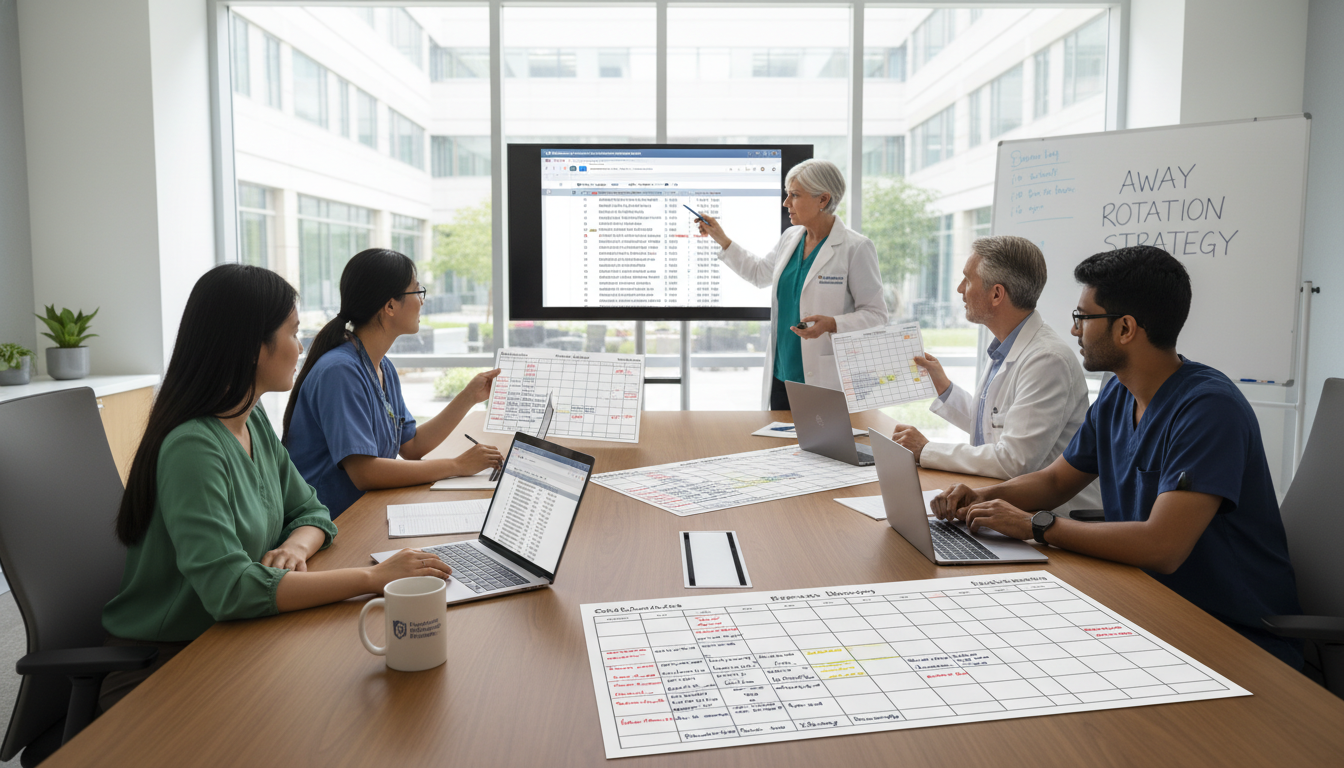
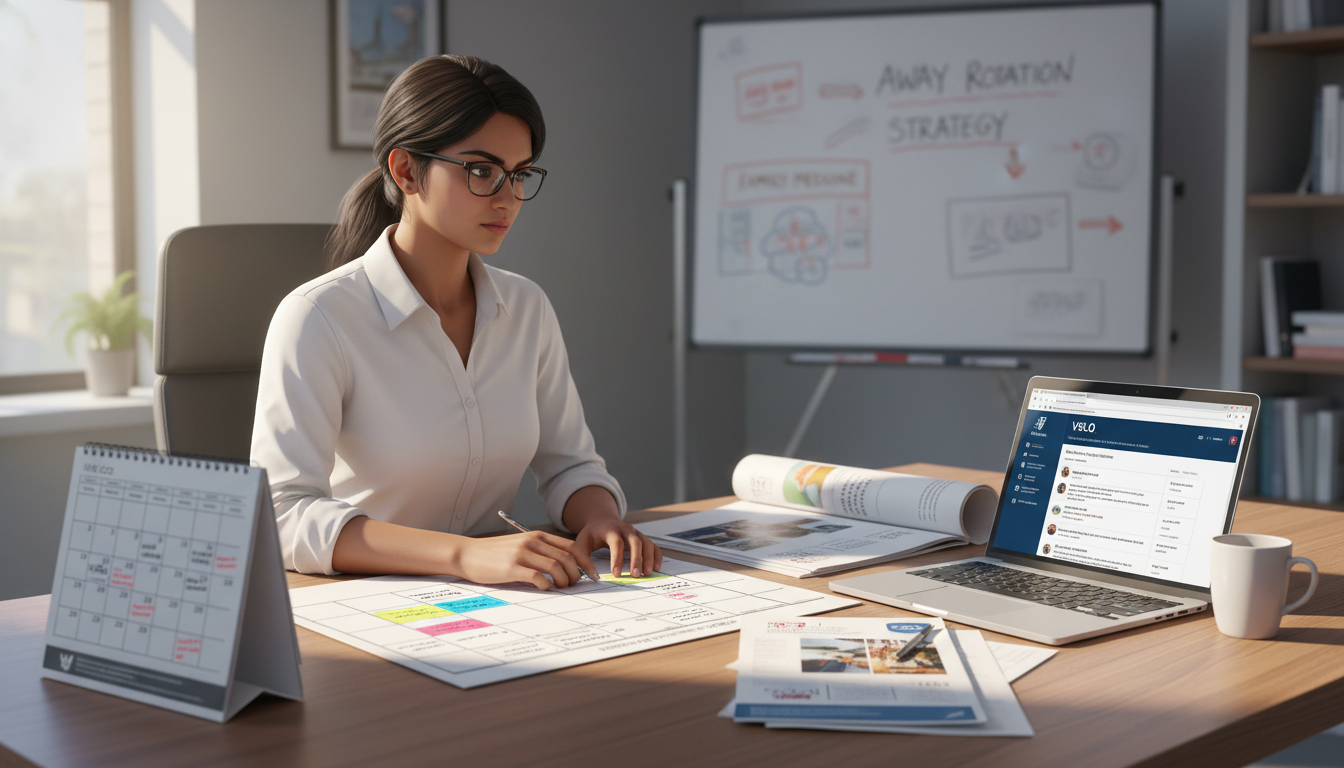
This IMG residency guide focuses specifically on away rotation strategy for IMGs who ultimately want to work in clinical informatics. It will help you decide where to rotate, what kind of rotations to choose, how many away rotations to do, and how to maximize each experience to support both residency and later clinical informatics pathways.
1. Clarifying Your Path: How Clinical Informatics Fits into Your Training
Clinical informatics in the U.S. is most commonly pursued after completing a primary clinical residency, via:
- A Clinical Informatics Fellowship (ACGME-accredited, 2 years, usually after residency in specialties like Internal Medicine, Pediatrics, EM, Pathology, etc.)
- A hybrid clinical + informatics career without formal fellowship but with strong health IT training during residency and early practice
- Roles in health systems, EHR vendors, or digital health startups that value both clinical background and informatics experience
As an IMG, you need to think in two stages:
- Stage 1 – Match into a U.S. residency (typically in a core clinical specialty such as Internal Medicine, Family Medicine, Pediatrics, Psychiatry, Pathology, or Emergency Medicine).
- Stage 2 – Build a track toward clinical informatics, either via fellowship or an informatics-focused career track.
Your away rotation strategy should primarily support Stage 1 (residency match) while signaling a clear, credible trajectory toward clinical informatics.
What Program Directors Want to See
For clinical residency programs that welcome informatics-minded applicants, program directors typically look for:
- Solid clinical performance in core rotations
- Teamwork, communication, and professionalism
- Comfort with technology and basic understanding of EHR systems
- Evidence of genuine, practical interest in informatics (projects, QI, data work, EHR optimization, teaching resources, etc.)
- Long-term commitment to U.S. clinical practice (not just IT/industry only)
Your away rotations should let you demonstrate these traits in person, particularly important for IMGs who may be less familiar to program directors.
2. Choosing the Right Type of Away Rotations (and How Many)
A key question for any IMG residency guide is simply: how many away rotations? There is no single universal number, but there are strong patterns—especially relevant for IMGs.
How Many Away Rotations Should an IMG Do?
For most IMGs targeting clinical informatics in the long run, a good target is 2–3 away rotations, with 1–2 being at your highest-priority “dream” or “reach” institutions.
- Minimum: 1 well-chosen away rotation can still be impactful, especially if you already have some U.S. clinical experience (USCE).
- Ideal range: 2–3 visiting student rotations that are high-yield (aligned with your target specialty and informatics interests).
- More than 3: Rarely necessary; can be costly, exhausting, and may not add proportional benefit unless you are markedly strengthening a weak application (e.g., no prior USCE or gaps in training).
For IMGs, each away rotation has marginally more value than for many U.S. grads because it helps:
- Convert your profile from “unknown IMG” to a known quantity.
- Generate strong U.S. letters of recommendation (LoRs).
- Demonstrate your ability to work within U.S. hospital systems and EHRs.
- Showcase your extra dimension in clinical informatics.
Priorities in Selecting Rotations
When you choose away rotations, you should align them with three overlapping goals:
- Match into a residency in a field that supports clinical informatics.
- Position yourself competitively for a future clinical informatics fellowship or informatics leadership pathway.
- Maximize your chance to stand out as an IMG.
Given those objectives, it usually makes sense to prioritize:
- Core clinical rotations in your target specialty
- Example: If you want to pursue Internal Medicine → Clinical Informatics, choose away rotations in Internal Medicine inpatient wards, Sub-I/MICU, or ambulatory continuity clinics at programs where you’d like to match.
- Rotations at institutions with strong clinical informatics presence
- Academic medical centers with:
- An ACGME-accredited Clinical Informatics Fellowship
- A formal health IT training track
- Chief Medical Information Officer (CMIO), associate CMIOs, or clinician-informatics leaders
- Academic medical centers with:
- Elective or selective rotations that allow you to engage with informatics
- Examples:
- Quality Improvement & Patient Safety
- Data analytics / clinical decision support (if offered)
- EHR optimization / “Provider Informatics” electives
- Population health or health systems management
- Examples:
For most IMGs, your first and second away rotations should be clinically focused (strong letters, strong performance), with subtle but real informatics engagement, while additional rotations (if feasible) can be more overtly informatics-oriented.
3. Where to Rotate: Targeting Programs for an Informatics-Oriented Career
Selecting where to do away rotations is more nuanced than simply picking “brand-name” hospitals. As an IMG, you need places where:
- You will be considered seriously for residency (not just as temporary help).
- There is real interest in informatics in the program culture.
- You can build lasting mentorship relationships and secure strong letters.
Step 1: Start from Your Target Specialty and Geography
First, define your primary clinical specialty and preferred geographic regions:
- Internal Medicine → broadest base for clinical informatics fellowship
- Family Medicine or Pediatrics → good for population health / primary care informatics
- Emergency Medicine → strong in operational, real-time decision support informatics
- Pathology → naturally data-intensive, laboratory informatics
- Psychiatry → emerging field in digital mental health and telepsychiatry informatics
Then list:
- Regions where you have ties (family, prior education, spouse/partner).
- States with larger IMG representation (New York, New Jersey, Michigan, Illinois, Texas, Florida, etc.).
- Hospitals with known Clinical Informatics Fellowships (search via AMIA or ACGME).
Overlay these lists to identify:
- Programs with both:
- Reasonable openness to IMGs in your specialty
- Established or emerging clinical informatics presence
Step 2: Identify Clinical Informatics-Friendly Institutions
Indicators that a hospital is informatics-friendly:
- They host a Clinical Informatics Fellowship.
- They describe informatics, data analytics, or health IT training on their residency webpage.
- They have faculty with titles like:
- Chief Medical Information Officer (CMIO)
- Associate CMIO
- Director of Clinical Informatics
- Medical Director of EHR / Clinical Decision Support
- They participate in EHR optimization, digital health, or telemedicine initiatives mentioned publicly.
For each candidate program, ask:
“If I excel here, is there a realistic path to:
(a) Match into residency here or at a similar institution, and
(b) Engage in informatics activities (projects, QI, data work, mentorship)?”
If the answer is yes, it’s a strong candidate for an away rotation.
Step 3: Balance Prestige, Fit, and IMG-Friendliness
Prestige matters, but fit and IMG-friendliness matter more, particularly for away rotations.
- A mid-tier academic center that regularly matches IMGs and has active informatics initiatives may offer:
- Higher chance of serious consideration.
- Greater access to hands-on informatics projects.
- A top-tier “brand” institution may:
- Impress on your CV.
- Be more competitive; possibly fewer IMGs in their typical match.
A balanced strategy:
- 1 away rotation at a higher-reach academic center with strong clinical informatics footprint.
- 1–2 away rotations at solid, IMG-welcoming institutions that have informatics activities and where you realistically could match.
4. Designing Each Rotation for Maximum Informatics Impact
Once you have your visiting student rotations arranged, you need a deliberate strategy before, during, and after each rotation to leverage it for both residency and informatics.
Before the Rotation: Pre-Rotation Preparation
- Clarify expectations
- Review rotation goals and evaluation forms.
- Understand the typical team structure, schedule, and evaluation criteria.
- Learn the basics of the hospital’s EHR system (if known—Epic, Cerner, Meditech, etc.).
- Strengthen your informatics vocabulary, including:
- Clinical decision support (CDS)
- Order sets, care pathways
- Data governance, data warehouse, quality metrics
- Interoperability, HL7/FHIR (basic understanding is enough)
- Identify potential informatics mentors in advance:
- Search the institution’s website for CMIOs or informatics faculty.
- Note their names and roles—you may meet them indirectly through your team.
Prepare a concise personal statement you can use informally when people ask about your interests:
“I’m an IMG with strong interest in internal medicine and how we can use data and EHR tools to improve patient outcomes and clinician workflow. Long-term, I hope to pursue a clinical informatics fellowship, so I’m looking to learn how your team uses the EHR and data in daily practice.”
This gives preceptors a clear narrative and increases the chance they connect you with informatics-minded faculty.
During the Rotation: Clinical Excellence First, Informatics Second
As an IMG, the most important thing is to prove you are a strong clinician in the U.S. environment:
- Nail the fundamentals
- Show up early, prepared, and professional.
- Provide thorough yet concise patient presentations.
- Write high-quality notes; show that you can adapt to the local EHR.
- Communicate clearly with nurses, pharmacists, and allied professionals.
- Use the EHR thoughtfully
- Learn local order sets, problem lists, and clinical decision support tools.
- Ask clarifying questions:
- “Is there a standardized order set for this condition?”
- “How do you track quality measures for this diagnosis?”
- Show curiosity about systems and data
- During calmer moments, ask:
- “How does the team learn about patient safety trends here?”
- “Are there dashboards for readmissions, sepsis alerts, or antibiotic stewardship?”
- Offer to help with small EHR-related tasks:
- Cleaning up medication lists
- Ensuring problem lists are accurate
- Using templates efficiently while maintaining quality
- During calmer moments, ask:
Important balance: Do not let informatics curiosity distract you from 직접 patient care. Program directors prioritize trainees who are clinically reliable. Your informatics interest should be visible but not overpowering.
Seeking Small, Practical Informatics Projects
In a typical 4-week away rotation, you may not have time for a full research project, but you can:
- Identify a small workflow, documentation, or safety issue.
- Discuss with your senior resident or attending:
- “I noticed this step causes delays/errors—has there been any work to streamline it?”
- Offer to:
- Collect brief observational data.
- Look up literature on solutions.
- Draft a short proposal or informal summary.
Even a modest initiative can later be framed in your CV and personal statement as:
- A micro-quality improvement project
- A data-informed workflow observation
- Evidence of applied informatics thinking

5. Building Relationships and Letters that Highlight Informatics Potential
Away rotations are not just about performance—they are about relationships. For an IMG with informatics aspirations, the ideal outcome from a visiting student rotation is:
- At least one strong letter of recommendation from a faculty member who:
- Can attest to your clinical competence and professionalism.
- Also mentions your interest and promise in clinical informatics.
- A mentor or advocate who may:
- Advise you on residency ranking.
- Connect you with informatics colleagues.
- Potentially involve you in a small project or manuscript.
How to Cultivate Faculty Support
Identify likely letter-writers by Week 2
- Who works with you most closely?
- Who has seen you in different clinical contexts (rounds, admissions, night calls, etc.)?
- Who seems interested when you talk about informatics or systems improvement?
Ask for feedback explicitly
- “I’m very interested in improving and I value your perspective. Are there any specific areas I should work on over the next week?”
- Incorporate that feedback and show visible progress.
Have a focused conversation about your goals
- Near the end of the rotation, schedule a brief meeting:
- “I wanted to thank you for supervising me this month and also share my long-term goals in internal medicine and clinical informatics. I’d value any advice about programs or paths that support informatics.”
- Near the end of the rotation, schedule a brief meeting:
Request a letter in a professional, targeted way
- Ask:
“Based on what you’ve seen of my clinical work and interests, do you feel you could write a strong letter of recommendation for my internal medicine applications, ideally also mentioning my interest in clinical informatics?”
- Ask:
If they say yes, provide:
- CV
- Personal statement draft (especially if you mention informatics)
- Brief bullet points highlighting:
- Specific patients or cases you worked on together.
- Any informatics-related observations or mini-projects.
This helps them write a concrete, detailed letter that supports both your residency and clinical informatics narrative.
6. Integrating Away Rotations into Your Broader Informatics Strategy
Away rotations are just one component of your overall journey toward clinical informatics. To strengthen your entire profile as an international medical graduate, combine them with:
A. Prior or Parallel Informatics-Related Experience
- Coursework or certificates in:
- Health informatics
- Data science or statistics
- Public health and epidemiology
- Participation in:
- QI projects or chart reviews
- EHR optimization committees (if you previously worked in another system)
- Data analysis for research teams (even basic Excel, R, or Python)
If you have a non-clinical gap in your timeline, demonstrating health IT training or informatics projects during that gap can help reframe the time as intentional career development, not inactivity.
B. Thoughtful Positioning in Your Application Materials
Your away rotations should feed directly into:
- Personal Statement
- Highlight a specific case or experience from your visiting student rotations where:
- EHR tools affected patient care.
- Data or reporting changed clinical decision-making.
- Connect that to your motivation to contribute to clinical informatics while remaining a strong clinician.
- Highlight a specific case or experience from your visiting student rotations where:
- ERAS Application
- In “Experiences,” detail:
- Small QI/informatics observations or initiatives.
- Any involvement in dashboards, decision support, or data work.
- In “Experiences,” detail:
- Interview Talking Points
- Be ready to discuss:
- What you learned about clinical workflows and EHR use during away rotations.
- A concrete example of an informatics-related improvement or question you explored.
- How you will balance being a clinician first while contributing to informatics projects.
- Be ready to discuss:
C. Post-Rotation Follow-Up and Long-Term Networking
After each away rotation:
- Send thank-you emails to key faculty and residents:
- Mention specific things you learned, especially about the institution’s EHR, QI, or informatics initiatives.
- Update mentors as you progress:
- When you submit ERAS.
- When you receive interview invitations or match results.
- Stay lightly connected with any informatics-oriented faculty:
- Ask if you can assist remotely with data analysis, literature reviews, or manuscript drafting (only if realistic).
Over time, this can:
- Build a mini-network of informatics-friendly clinicians who know your work.
- Create opportunities for clinical informatics fellowship recommendations later.
Frequently Asked Questions (FAQ)
1. How many away rotations should an IMG do if they’re interested in clinical informatics?
For most IMGs, 2–3 away rotations are ideal. At least one should be:
- In your target specialty at a program where you would be happy to match, and
- At an institution with some informatics or health IT training infrastructure.
If finances or visas limit you, even 1 well-selected away rotation at a clinically and informatics-friendly institution can still be very valuable. Focus on quality over quantity—excellent performance and strong letters matter more than a large number of visiting student rotations.
2. Should I choose a purely clinical away rotation or a dedicated informatics elective?
As an IMG focused on residency match first, your top priority is a strong clinical rotation where you can prove your ability to function in a U.S. system. If you have room, you may add:
- A dedicated informatics-related elective (e.g., Quality Improvement, Healthcare Systems, or an EHR informatics elective) as a second or third rotation.
However, many residency program directors are more convinced by clinical excellence with informatics insight than by a rotation that is almost entirely non-clinical. The best scenario is a core clinical rotation at a place where informatics projects and mentors exist in the background.
3. What if my away rotation hospital doesn’t have a Clinical Informatics Fellowship—does it still help?
Yes. Your primary goal as an IMG is to:
- Demonstrate strong clinical skills,
- Adapt successfully to a U.S. EHR workflow, and
- Build U.S. letters of recommendation.
Even if the institution lacks a formal clinical informatics fellowship, you can still:
- Observe how EHR tools, decision support, and reports shape care.
- Engage in small QI or workflow-improvement discussions.
- Highlight your interest and insight in your application and interviews.
A great clinical rotation with a strong letter is more beneficial than a weak rotation at an informatics-heavy site.
4. How can I talk about clinical informatics on away rotations without seeming “too tech-focused” or less interested in patient care?
Frame your interest in informatics as a tool to improve clinical care, not a separate career that replaces bedside medicine. For example:
- “I’m excited about how data and EHR tools can help us reduce errors and improve outcomes, but I want to stay grounded as a clinician first.”
- Show through your actions that:
- You prioritize patients and team responsibilities.
- You ask informatics-related questions after clinical tasks are complete.
- Any suggestions you make are clearly about patient care quality, safety, and efficiency.
Program directors are more reassured when they see informatics as an extension of your clinical commitment, not a detour away from medicine.
By choosing your away rotations strategically, focusing on clinical excellence, and intentionally weaving in clinical informatics interests, you can transform these short experiences into powerful leverage for both your residency match and your longer-term path toward a clinical informatics fellowship or informatics-focused career in health IT.