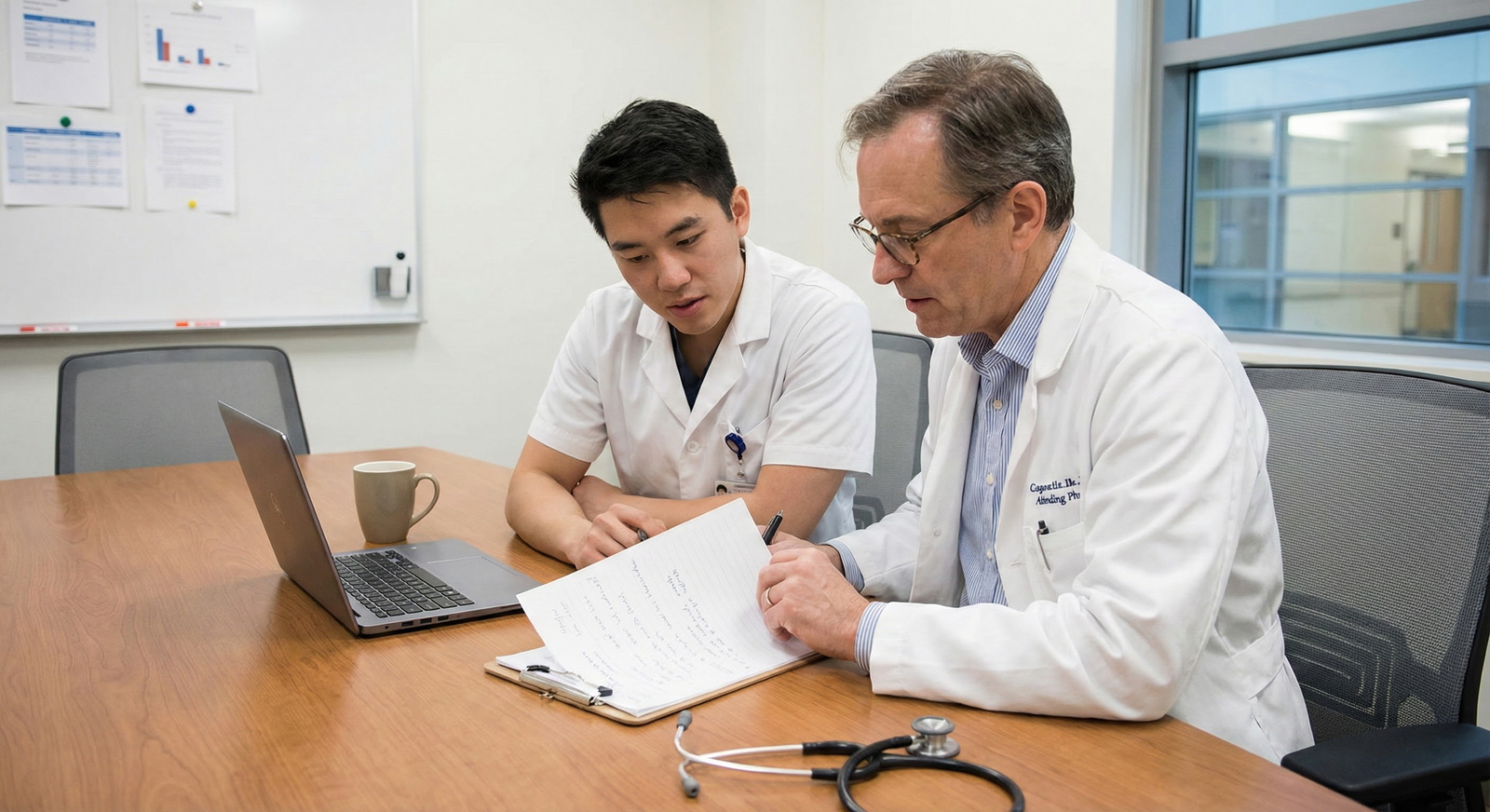
Why Away Rotations Matter So Much for IMGs in Family Medicine
Away rotations (also called visiting student rotations or electives) are one of the most powerful tools an international medical graduate (IMG) can use to strengthen their family medicine residency application. For IMGs, an away rotation in the U.S. (or Canada, if applicable) is more than just extra clinical exposure—it’s:
- A four-week audition in front of the program that might rank or reject you
- A chance to earn U.S.-based letters of recommendation (LORs) in family medicine
- A way to demonstrate you can function effectively in the U.S. healthcare system
- An opportunity to show you are a good “fit” with the program’s culture and priorities
Family medicine residency programs value continuity of care, communication skills, teamwork, and adaptability. Away rotations put these qualities on display in real time. For many IMGs, performance during these rotations can override doubts about unfamiliar schools, limited U.S. clinical experience, or slightly lower test scores.
This IMG residency guide will walk you step-by-step through an effective away rotation strategy for family medicine—from deciding how many away rotations to do, to choosing where to go, to impressing during the month so that you maximize your FM match prospects.
Understanding the Purpose of Away Rotations for FM IMGs
Before planning, you need clarity on what away rotations can and cannot do for you as an international medical graduate.
What Away Rotations Can Do
Generate Strong, Specialty-Specific LORs
Programs often prefer at least two letters from U.S. family medicine physicians. An away rotation is your best chance to earn letters that say:- You communicate clearly with patients and staff
- You work hard, are teachable, and take feedback well
- You understand primary care workflow and documentation
Prove You Understand U.S. Clinical Practice
Even if you are a strong clinician in your home country, U.S. practice has:- Different documentation expectations (EMR, billing requirements)
- Different team structures (NPs, PAs, care coordinators)
- Different patient expectations (shared decision-making, health literacy issues)
Performing well on an away rotation reassures programs that you can adapt quickly.
Show Fit with Family Medicine Culture
Family medicine values:- Longitudinal care and continuity
- Holistic, patient-centered communication
- Advocacy for underserved communities
During an away rotation, you can demonstrate that your values align with FM and that you will contribute positively to clinic and resident life.
Give You a “Home Program” Advantage—Even as an IMG
Many IMGs lack a U.S. “home” department in family medicine. An away rotation can partially compensate by:- Making you known to a program’s leadership and faculty
- Giving you an internal champion who can mention you during rank meetings
- Allowing you to understand the program’s priorities so you can tailor your personal statement and interview answers
What Away Rotations Cannot Do (By Themselves)
- They cannot fully compensate for major red flags such as repeated exam failures, professionalism concerns, or incomplete credentials.
- They do not guarantee an interview or a match—even if you do well.
- They will not automatically erase concerns about visa sponsorship; programs still have institutional rules.
However, in a close decision between two applicants, a strong month of face-to-face performance often carries as much weight as a few extra exam points.
Strategic Planning: How Many Away Rotations, Where, and When
Planning an effective away rotation strategy is as critical as your performance during the rotation. As an IMG, you have additional constraints—visa issues, travel time, finances—so you must be deliberate and focused.
How Many Away Rotations Should an IMG Do in Family Medicine?
There is no single “correct” answer, but you can use these guidelines:
Minimum:
- 1–2 away rotations in U.S. family medicine (ideally 4 weeks each)
- Enough to obtain at least two strong U.S. FM letters and demonstrate U.S. clinical adaptability
Ideal Range for Most IMGs:
- 2–3 away rotations in family medicine or closely related primary care (e.g., community health, outpatient internal medicine with a strong primary care focus)
Upper Limit (with caution):
- More than 3 away rotations can become financially and logistically challenging and may not provide additional benefit relative to the cost.
- Instead of chasing the maximum number, focus on quality, fit, and performance.
Key principle:
It’s better to do two high-quality rotations at realistic target programs than four scattered, unfocused experiences at places that will likely not interview you.
Timing Your Away Rotations for the FM Match
For the NRMP cycle, the most influential away rotations are usually done:
- Between April and October of the year before you start residency
- Months that are particularly strong for IMGs:
- May–August: Good time to secure letters before ERAS submission
- September–October: Closer to interview season; faculty will remember you more clearly
Ideal Sequence:
First rotation (early cycle, e.g., May–July)
- Adjust to U.S. system
- Develop comfort with documentation and clinic flow
- Earn at least one early LOR to upload to ERAS
Second rotation (mid-cycle, e.g., July–September)
- Target a program you are seriously interested in
- Aim for a standout performance and a very strong LOR
Optional third rotation (late cycle, e.g., September–October)
- For programs you would genuinely rank highly
- Use this as a “live audition” that might convert into an interview
Where Should IMGs Apply for Away Rotations?
Think of your away rotation destinations as strategic investments toward the FM match. Consider:
IMG-Friendliness and Visa Sponsorship History
- Review program websites and NRMP data (Charting Outcomes, Residency Explorer, etc.)
- Look for:
- Current or recent IMG residents
- Clearly stated visa sponsorship (J-1, H-1B when relevant)
- Language about diversity or welcoming IMGs
Geographic and Lifestyle Fit
- Consider states/regions where you could realistically see yourself living (and possibly obtaining long-term visas or jobs)
- Some regions (e.g., Midwest, certain Southern or rural programs) may be more open to IMGs and in greater need of physicians
Program Mission and Patient Population
- Family medicine is very mission-driven. Match your background and goals to the program’s focus:
- Urban underserved
- Rural primary care
- Global health
- Behavioral health integration
- Family medicine is very mission-driven. Match your background and goals to the program’s focus:
Scope of Practice in Family Medicine
- Some FM programs are heavily outpatient; others include robust inpatient medicine, obstetrics, or procedures.
- As an IMG, demonstrating flexibility across varied settings can be appealing, especially if your home experience is broad.
Prioritizing Programs for Visiting Student Rotations
To decide where your limited away rotation slots should go, categorize programs:
Tier 1: “Realistic but Competitive Targets”
- IMG-friendly
- Sponsor your desired visa type
- You meet or exceed typical exam and academic metrics
Tier 2: “Safety but Still Solid Training”
- Strong IMG representation
- Less competitive locations (e.g., rural or smaller cities)
- Programs excited to train IMGs and often value clinical maturity
Tier 3: “Reach Programs”
- Highly competitive locations or academic centers
- Fewer IMGs historically but some openness
Spend your limited away rotation time mainly in Tier 1 and Tier 2, with perhaps one rotation at a Tier 3 program if there is a strong reason (e.g., unique global health track, research interest alignment).

Building a Targeted Rotation Plan as an IMG
Once you know how many away rotations and generally where and when, it’s time to build a concrete plan.
Step 1: Clarify Your Profile and Goals
Self-assess honestly:
- Exam scores (USMLE/COMLEX or equivalents)
- Previous U.S. clinical experience (if any)
- Strength of English communication
- Clinical strengths: continuity care, procedural skills, inpatient vs outpatient comfort
Then set specific goals for your away rotations, such as:
- Obtain at least two strong U.S. FM LORs
- Demonstrate adaptability to the U.S. outpatient setting
- Build relationships at 3–5 programs you would be happy to join
- Gain experience in underserved or rural medicine if that fits your narrative
Step 2: Investigate Application Pathways
For visiting student rotations, especially as a non–U.S. student or graduate, you may encounter:
- VSLO/VSAS (Visiting Student Learning Opportunities) – used by many U.S. schools
- Institutional applications via program or school websites
- International visiting student offices with separate criteria
Common requirements for IMGs include:
- Proof of English proficiency (e.g., TOEFL, school certification)
- Immunization and health screening documentation
- Malpractice or liability coverage (sometimes provided by your home institution or must be purchased)
- Proof of enrollment or recent graduation from a recognized medical school
- Sometimes Step 1/2 scores or documentation of clinical competency
Because paperwork and approvals can take months, start planning your away rotation applications 8–12 months in advance when possible.
Step 3: Match Rotations to Your Story
As an international medical graduate, your application will be stronger if there is a coherent narrative:
- If you are passionate about rural/underserved medicine:
- Target community-based or rural FM programs with strong continuity clinics
- If you have a background in women’s health:
- Choose FM programs with robust OB and women’s health experiences
- If global health is a major theme:
- Look for family medicine residencies with global or immigrant health tracks
When your rotation choices reinforce your personal statement and experiences, program directors are more likely to remember you and see you as a purposeful, mission-aligned candidate.
Step 4: Budget realistically
Away rotations are expensive, especially for IMGs traveling internationally. Build a budget that includes:
- Application fees (VSLO, institutional fees)
- Visa fees and travel costs
- Housing (short-term rentals, dorms, or staying with friends/family)
- Local transport (public transportation, rideshare, or rental car)
- Food and basic living expenses
It’s better to do two well-supported, focused rotations than four low-budget, stressful experiences where you are constantly worried about logistics and finances.
Succeeding on Away Rotations: Day-to-Day Strategy for IMGs
Once you land a rotation, your performance is what really matters. Every day is an opportunity to influence how faculty and residents will speak about you when they write LORs or sit in rank meetings.
Core Principles for IMGs on Family Medicine Rotations
Be Early, Prepared, and Reliable
- Arrive 10–15 minutes before clinic or rounds
- Review patient charts the night before when possible
- Carry a small notebook or use a secure app to track tasks and follow-ups
Reliability is especially valued in family medicine, where continuity and follow-up are essential.
Communicate Clearly and Proactively
- If English is not your first language, prioritize clarity over complexity
- Use structured presentations (e.g., SOAP format in clinic; concise H&P on inpatient services)
- Ask clarifying questions rather than remaining uncertain about tasks
Demonstrate Respect for U.S. Systems and Culture
- Respect privacy and confidentiality strictly
- Document carefully and accurately; never copy-paste from previous notes without verification
- Learn local EMR shortcuts and templates to improve efficiency
Clinical Performance Expectations in Family Medicine
Family medicine away rotations can include:
- Outpatient continuity clinic
- Urgent care or same-day clinic
- Inpatient service (at some programs)
- Obstetrics and women’s health clinics
- Behavioral health or integrated care teams
To stand out as an IMG:
In Outpatient Clinic
- Be comfortable with common primary care issues: diabetes, hypertension, depression, back pain, well-child visits, preventive care.
- Show that you can communicate complex information in simple, patient-friendly language.
- Ask for feedback on your documentation and adjust quickly.
In Inpatient or OB Settings
- Learn hospital protocols early (hand-off style, order entry, note structure).
- Be a team player—offer to help with simple tasks (discharge summaries, progress notes, organizing follow-up appointments).
- When appropriate, volunteer to admit or present new patients for supervised learning.
With Underserved or Diverse Populations
- Show cultural humility: ask about beliefs, barriers, social determinants of health.
- Use interpreters correctly; never rely on your own partial abilities in a language if interpretation is available and needed.
- If you share cultural or linguistic background with patients, that can be a powerful asset—use it professionally and thoughtfully.
Showcasing IMG Strengths
IMGs often bring unique strengths that are highly valued in family medicine:
- Experience in resource-limited settings
- Comfort with diverse languages and cultures
- Mature clinical judgment from prior training or practice
Highlight these naturally during your rotation—for example:
“In my training at X Hospital, I saw many patients with limited access to medication. That experience helped me become creative in finding affordable treatment plans, which I would love to apply in this community as well.”

Turning Rotations into Strong LORs, Interviews, and FM Match Success
Your away rotations should end with more than just a completed evaluation. Aim to convert them into tangible match advantages.
Securing Strong Letters of Recommendation
Identify Potential Letter Writers Early
- Target attendings who have observed you closely and consistently:
- Preceptors in continuity clinic
- Inpatient or OB attendings who saw you on multiple shifts
- Residents can be advocates but typically do not write LORs themselves; they can, however, speak positively about you to attendings.
- Target attendings who have observed you closely and consistently:
Ask Directly and Professionally
- Toward the end of your rotation (last week), ask:
- “Dr. X, I’ve really appreciated working with you this month. Would you feel comfortable writing me a strong letter of recommendation for family medicine residency?”
- Using the word “strong” helps ensure that the writer truly supports you.
- Toward the end of your rotation (last week), ask:
Make It Easy for Them
- Provide:
- Your CV
- Personal statement draft (especially if tailored to FM)
- Unofficial score report or transcript if they request it
- A brief bullet list of clinical experiences or patient encounters that represent your strengths
- Provide:
Timing for ERAS
- Ensure letters are uploaded before ERAS opens for programs to review applications, ideally by September.
- Follow your institution’s process for LOR submission (ERAS, dean’s office, etc.).
Converting Rotations into Interviews
Strong away rotations significantly increase your chances of being invited to interview, especially when:
- You expressed clear interest in the program’s mission and location
- Faculty and residents enjoyed working with you and told leadership
- Your LORs and evaluations reflect enthusiastic support
Practical tips:
- At the end of the rotation, politely express your interest:
- “I’ve really enjoyed my time here and could see myself thriving in this program. I would be honored to have the opportunity to interview for residency.”
- Follow up with a thank-you email to key faculty, briefly reiterating your interest and appreciation.
If interviews are being offered and you have not heard back, a short, polite email to the program coordinator or director referencing your rotation can sometimes help remind them of your candidacy.
Reflecting Your Away Rotations in Your Application
In your ERAS application and personal statement:
- Mention your most meaningful away rotations, especially if they relate to your target programs or type of practice.
- Highlight specific experiences demonstrating:
- Continuity of care
- Work with underserved or immigrant populations
- Multidisciplinary teamwork
- Adaptation to U.S. documentation and systems
Example (for personal statement):
“During my visiting student rotation at ABC Family Medicine, I followed a patient with uncontrolled diabetes from an urgent visit through follow-up appointments. Collaborating with a dietitian and social worker, I learned how small, realistic goals and attention to social barriers could significantly improve outcomes. This experience confirmed my desire to practice full-spectrum, team-based family medicine in a community-focused residency like yours.”
Common Pitfalls for IMGs and How to Avoid Them
Even strong IMGs can undermine their away rotation impact by falling into predictable traps. Awareness is your best defense.
Pitfall 1: Overemphasis on Number of Rotations vs. Quality
Doing too many away rotations can:
- Drain your finances and energy
- Limit your ability to truly stand out at each site
- Reduce time available for Step 3 (if relevant), research, or application writing
Solution:
Focus on 2–3 well-chosen rotations where you can realistically match. Maximize performance and relationships at each site.
Pitfall 2: Underestimating Cultural and System Differences
Some IMGs struggle with:
- Documentation expectations
- Patient-centered communication style
- Hierarchy and supervision norms
Solution:
- Observe how residents and attendings interact with patients and with each other.
- Ask for specific feedback early (e.g., after week 1):
- “Is there anything I should adjust about my presentations or documentation to better fit your expectations?”
Pitfall 3: Being Too Passive
Standing quietly in the background rarely produces strong letters or interviews.
Solution:
- Volunteer (within reason) to see more patients, present more cases, or help with tasks.
- Show authentic curiosity—ask thoughtful questions about differential diagnoses, management decisions, and health system factors.
- Participate in teaching sessions, case conferences, and journal clubs.
Pitfall 4: Ignoring Program Culture and Fit
Some IMGs focus only on exam scores and overlook whether their personality and values align with the program.
Solution:
- During your rotation, pay attention to:
- How residents support each other
- How the program engages with patients and the community
- The balance between service and education
- If the culture clearly doesn’t fit you, it may not be a good place to pursue long-term, even if it seems like an “easier” match.
FAQs: Away Rotations for IMGs in Family Medicine
1. As an international medical graduate, do I absolutely need away rotations to match into family medicine?
Not absolutely—but they are highly advantageous. Many FM programs are IMG-friendly and may consider applicants without U.S. rotations, especially if they have strong home-country experience and good scores. However, away rotations can:
- Provide essential U.S.-based family medicine LORs
- Show your ability to function in the U.S. system
- Give you direct exposure to potential programs
If you have the means and access, 1–2 well-chosen away rotations significantly strengthen your FM match prospects.
2. How many away rotations should I do specifically as an IMG targeting family medicine?
For most IMGs, 2–3 away rotations in family medicine (or closely allied primary care) are ideal:
- 1 rotation: Minimum acceptable, especially if combined with other U.S. clinical experience
- 2 rotations: Strong and realistic for most applicants
- 3 rotations: Reasonable upper limit if finances and time allow
Focus on quality, fit, and performance rather than pushing the absolute maximum number.
3. What if I cannot secure any away rotations in the U.S.?
If U.S. visiting student rotations are not possible:
- Seek observerships or externships in family medicine clinics or community health centers
- Obtain letters from U.S. family physicians, even if unofficial or through non-rotational work
- Highlight extensive primary care experience in your home country
- Emphasize other strengths: research, teaching, rural/underserved work, or public health projects
You can still match into FM as an IMG without formal away rotations, but you must make your clinical readiness and adaptability very clear in your application and interviews.
4. Should I prioritize academic university programs or community programs for my away rotations?
Choose based on your goals and competitiveness:
Academic programs:
- Offer research, teaching, and subspecialty exposure
- Can be more competitive and may take fewer IMGs
- Good if you have strong scores and academic interests
Community or community-based university programs:
- Often have more IMG representation
- Provide strong clinical and community-focused training
- May offer more hands-on responsibility for visiting students
For many IMGs, a mix of one academic-leaning and one community-focused family medicine program can be an effective strategy.
By planning your away rotations thoughtfully, targeting IMG-friendly family medicine programs, and performing at a high level during each month, you can transform these experiences into strong letters, interviews, and ultimately a successful FM match. As an international medical graduate, your unique background is an asset—away rotations are your stage to show U.S. programs exactly how you will enrich their residency and the patients they serve.