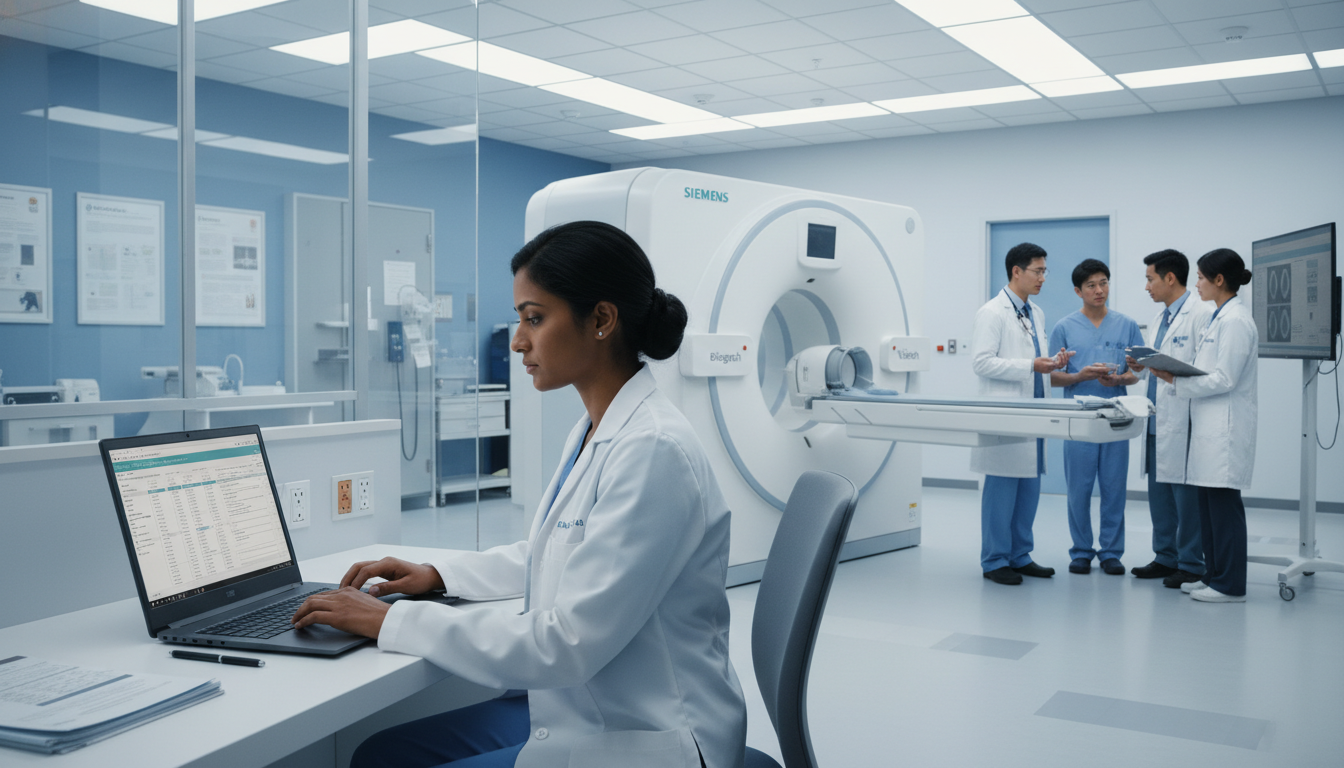
Why Away Rotations Matter So Much for IMGs in Nuclear Medicine
For an international medical graduate (IMG), away rotations (also called visiting student rotations or electives) can be the single most powerful tool to break into a competitive U.S. training pathway. In nuclear medicine specifically—where programs are relatively few, the field is highly specialized, and many PDs prefer candidates they “know”—a strong away rotation strategy can significantly improve your nuclear medicine match chances.
Unlike some larger specialties, nuclear medicine residency programs often:
- Have small resident classes (1–3 residents per year)
- Rely heavily on “fit” and observed clinical performance
- Give tremendous weight to letters of recommendation (LORs) from U.S. nuclear medicine faculty
- Prefer candidates familiar with U.S. imaging workflow, radiation safety, and multidisciplinary tumor board culture
For IMGs, this means:
- You must be strategic about which programs you visit
- You must be extremely prepared before you arrive
- You should use away rotations not just to learn, but to actively market yourself as a future colleague
This IMG residency guide will walk you through a step‑by‑step away rotation strategy tailored to nuclear medicine: from planning and applications to day‑to‑day performance, letters, and post-rotation follow‑up.
Planning Your Away Rotations: Timing, Number, and Target Programs
1. Timing: When to Do Away Rotations as an IMG
Your timing depends heavily on your training stage:
If you are still a student (final year or pre‑internship)
- Ideal: 4th year of medical school (or equivalent final year).
- Best months: April–October of the year before you apply (e.g., if applying in September 2027, aim for rotations April–October 2026).
- Reason: You need letters of recommendation ready for ERAS and time to reflect and adjust your application strategy.
If you are a graduate (IMG with degree, not in U.S. med school)
- Many formal “visiting student” programs require current enrollment in a medical school; however, some institutions offer:
- Observer positions (observerships)
- Externships (limited)
- Custom nuclear medicine rotations through international offices
- Aim to complete them 6–12 months before your nuclear medicine residency application, so LORs are current.
Certification and exams
To maximize your away rotation chances in the U.S.:
- USMLE Step 1: Passed (ideally on first attempt)
- USMLE Step 2 CK: Strong score improves your CV, but not always mandatory for the rotation itself
- ECFMG certification: Often required for graduates and some student electives
- Visa planning: Start early (B1/B2 or J‑1 depending on program rules)
2. How Many Away Rotations for Nuclear Medicine?
The question “how many away rotations” does not have a one‑size‑fits‑all answer, but some practical guidance:
- Minimum: 1 structured U.S. nuclear medicine or PET/CT rotation
- Ideal for IMGs interested in nuclear medicine: 2–3 rotations in imaging disciplines:
- 1–2 in dedicated nuclear medicine (or hybrid nuclear medicine/radiology) departments
- 1 in a related imaging field (diagnostic radiology or radiation oncology tumor board‑heavy service)
If you are budget‑constrained:
- Prioritize 1–2 high‑yield nuclear medicine programs where:
- IMGs have historically matched
- You can realistically be considered a serious candidate
- There is a structured nuclear medicine residency or nuclear radiology pathway
Quality and alignment with your goals matter more than simply increasing the number of visiting student rotations. Two excellent, well‑planned rotations at target programs can impact your nuclear medicine match prospects more than five generic observerships.
3. Identifying High‑Yield Target Programs
To build a smart IMG residency guide strategy, focus on three things:
Program Structure and IMG Friendliness
- Check if the program:
- Has dedicated nuclear medicine residency or nuclear radiology fellowship
- Has current or recent IMG residents/fellows (look up resident profiles on websites, LinkedIn, or program Instagram/Twitter)
- Search program websites and NRMP data for:
- “Visa sponsorship”
- “International medical graduate”
- “ECFMG”
- Check if the program:
Clinical Volume and Exposure
- Look for institutions with:
- Busy PET/CT services, including oncology imaging
- Theranostics (e.g., I‑131, Lu‑177, Y‑90)
- Cardiac nuclear imaging
- Strong multidisciplinary tumor boards
- These experiences will help you stand out in personal statements and interviews.
- Look for institutions with:
Realistic Match Probability
- Programs that:
- Are in slightly less saturated cities/regions
- Have smaller applicant pools
- Are known to be IMG‑friendly in radiology or internal medicine
- Do not neglect mid‑tier or less “famous” centers—they may be more open to IMGs and still provide outstanding training.
- Programs that:

Navigating Applications: Systems, Logistics, and Common IMG Barriers
1. Application Portals: VSLO/VSAS and Direct Applications
U.S. medical students usually apply for visiting student rotations through:
- VSLO/VSAS (Visiting Student Learning Opportunities)
As an IMG, you may:
- Not have access to VSLO (your school must be a participating institution)
- Need to apply directly to institutions instead
Strategies for IMGs:
Check your home school’s status
- If your medical school participates in VSLO, you can often apply similarly to U.S. students.
- Talk to your dean’s office and international office early.
Direct institution applications
Many hospitals have their own international visiting student or observership programs. Search:- “[Hospital name] international visiting student program nuclear medicine”
- “[University name] observership radiology nuclear medicine”
- Contact the GME office or radiology/nuclear medicine department coordinator directly.
Use networks
- Ask alumni from your school who have done U.S. clinical experience in radiology or nuclear medicine for contact names.
- Reach out politely to faculty you meet at conferences.
2. Core Documents and Requirements
Most visiting student rotations or observerships request:
- Updated CV (U.S. format, concise, with USMLE & publications)
- Dean’s letter or letter of good standing (for students)
- Transcript and proof of being in final year (or recent graduate)
- Immunization records (MMR, Varicella, Hep B, TB testing, Covid, Flu)
- Proof of health insurance
- Some require malpractice coverage (may be provided by your school or require purchase)
- English proficiency proof (TOEFL/IELTS or dean’s statement) at some institutions
For graduates requesting observerships:
- ECFMG certificate, if available
- Explanation of your current status (research, clinical practice, preparation for USMLE, etc.)
3. Visa and Financial Planning
Nuclear medicine away rotations can be expensive for IMGs:
- Program fees ($100–$250 application + possible rotation fee)
- Housing and living costs (typically $1200–$2500/month in many U.S. cities)
- Travel, visas, and insurance
Visa tips:
- Many non‑paid visiting student rotations are done on B1/B2 visas; confirm with the hosting institution.
- Get detailed invitation letters from the hospital for visa interviews.
- Plan well ahead—3–6 months before your planned start date.
Budgeting advice:
- Prioritize 1–2 high‑yield rotations instead of many low‑impact ones.
- Consider cheaper cities with good training (large community hospitals with active PET/CT) vs extremely expensive metro areas, unless those are strategically crucial to your plans.
Succeeding on Rotation: How to Stand Out in Nuclear Medicine
Once you secure a visiting student rotation, your daily performance becomes your most powerful tool in the nuclear medicine match.
1. Understand the Nuclear Medicine Workflow Before You Arrive
Before day 1, study:
- Basics of:
- PET/CT in oncology (FDG indications, common cancer staging)
- Thyroid imaging (I‑123, I‑131)
- Bone scans (Tc‑99m MDP)
- Myocardial perfusion imaging (SPECT)
- Renal scans (MAG3, DTPA, DMSA)
- Radiation safety principles:
- ALARA
- Dose units (mCi/MBq)
- Common radiopharmaceuticals and half‑lives
Use free or low‑cost resources:
- SNMMI (Society of Nuclear Medicine and Molecular Imaging) basic curriculum
- Radiopaedia nuclear medicine articles and cases
- Online PET/CT and theranostics webinars
This preparation allows you to:
- Ask intelligent questions
- Follow readouts and tumor boards
- Show real interest beyond just “needing a letter”
2. Daily Habits that Impress Faculty
On your away rotation:
Arrive early, leave late (within reason)
- Be present at:
- Morning readouts
- Scheduled procedures (e.g., thyroid ablations, sentinel node injections)
- Tumor boards and interdisciplinary conferences
Be visibly engaged but not intrusive
Concrete ways to stand out:
- Before readout:
- Look at the list of cases and read any available prior images/reports.
- Write down a few differential diagnoses you can briefly share if asked.
- During readout:
- Ask short, focused questions:
- “What features help distinguish bone metastases from degenerative changes on this bone scan?”
- “How does the timing of therapy affect PET/CT interpretation in lymphoma?”
- Ask short, focused questions:
- After reading:
- Offer to help with non‑interpretive tasks:
- Preparing case lists for tumor boards
- Organizing teaching cases
- Summarizing protocols or creating a quick reference sheet for residents
- Offer to help with non‑interpretive tasks:
Show reliability and professionalism
- Follow dress code and radiation badge rules
- Respect patient privacy and HIPAA rules strictly
- Do not use your phone in reading rooms except for learning (e.g., looking up articles)
- Communicate absences early and formally
3. Building Genuine Relationships with Residents and Faculty
Nuclear medicine departments are often small. This is an advantage for you:
- You can interact frequently with the same attendings and residents.
- Your work ethic and attitude become quickly visible.
Suggestions:
- Ask residents:
- How they prepared for the match
- What helped them the most as applicants
- Which cases are best to study for learning nuclear medicine
- Offer help:
- Volunteer to assist with simple retrospective chart reviews or data collection for ongoing research projects.
- Attend social or educational events:
- Noon conferences
- Journal clubs
- Departmental grand rounds
Showing that you see yourself as a future colleague—not just a transient observer—builds trust and leads to strong advocacy when ranking decisions are made.
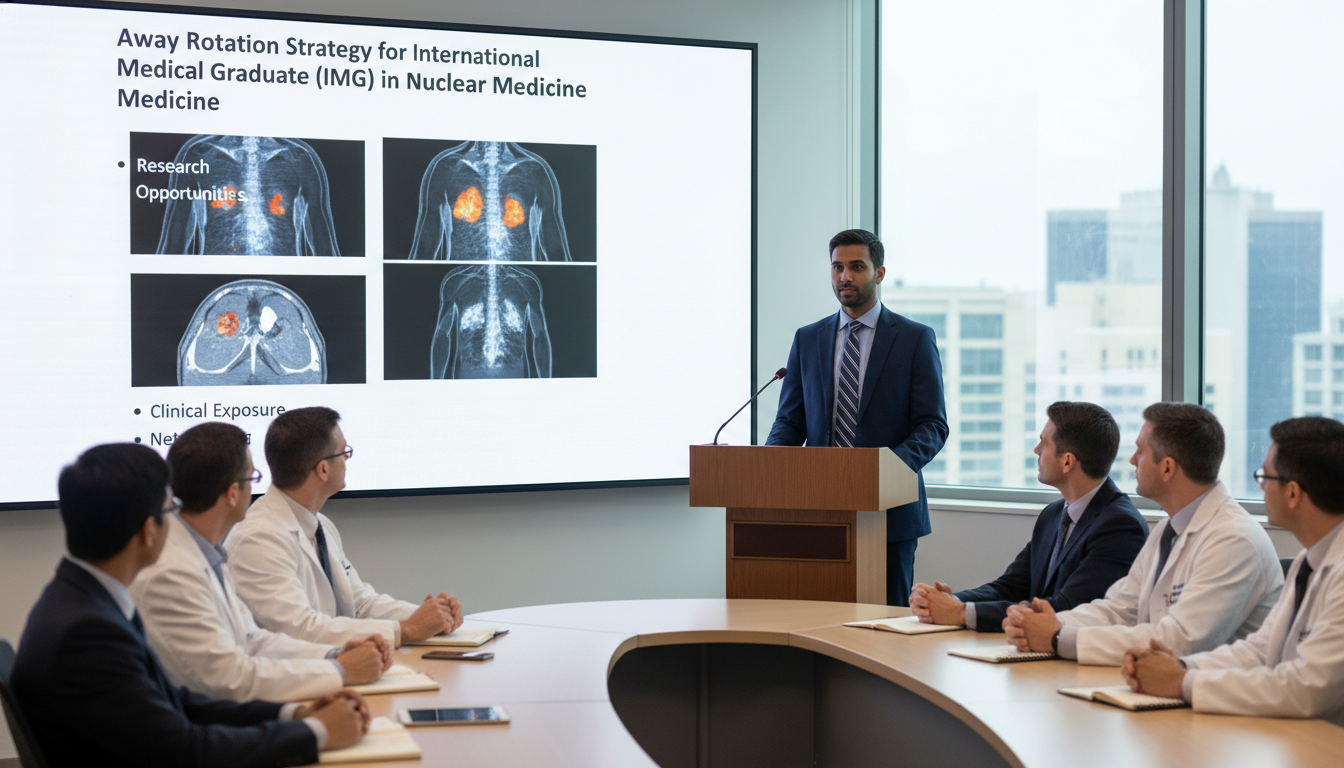
Maximizing Match Value: Letters, Research, and Post‑Rotation Strategy
1. Securing Strong Letters of Recommendation (LORs)
For an international medical graduate, letters from U.S. nuclear medicine faculty can dramatically strengthen your nuclear medicine residency application. Aim for:
- At least 1–2 strong LORs from nuclear medicine or radiology attendings
- Ideally from program directors, section chiefs, or faculty well‑known in the field
How to earn a strong letter:
- Perform consistently well across several weeks—not just in the last few days.
- Show growth: ask for feedback midway through the rotation and act on it.
- Demonstrate specific strengths:
- Initiative (offering to help with projects)
- Independent learning (reading about cases seen that day)
- Professionalism and communication with the team
When and how to request the LOR:
- Ask about 1–2 weeks before the end of the rotation, after you’ve demonstrated your best work.
- Approach them respectfully:
- “Dr. X, I’ve really appreciated learning from you this month. I’m applying for nuclear medicine residency this coming cycle and would be honored if you felt comfortable writing a strong, supportive letter of recommendation based on my performance here.”
- Provide:
- Your CV
- Personal statement draft
- ERAS ID and instructions
- A brief bullet list of projects or activities you did during the rotation
If a faculty member seems hesitant, thank them anyway, and consider asking someone else who seems more enthusiastic about your performance.
2. Using Rotations to Build a Research/Academic Profile
Research is not mandatory for all programs, but in nuclear medicine it can:
- Demonstrate your interest in imaging science
- Show academic potential (important in smaller, academic‑heavy departments)
- Provide talking points for interviews
On rotation, you can:
- Ask faculty if they have ongoing:
- Retrospective case series
- Review articles
- Educational projects (teaching cases, online modules)
- Offer to:
- Help collect data
- Draft background and literature review
- Build image figures for publications (subject to patient privacy and IRB rules)
Be realistic with timelines: many papers take months. Even an in‑progress project or accepted educational exhibit can help your application.
3. Converting an Away Rotation into an Interview
Your rotation is more than a learning experience—it is an extended interview. Programs often:
- Automatically consider away rotators for interviews
- Rely heavily on the impressions shared by:
- Attendings
- Residents
- Technologists and staff
To increase your chances of getting an interview:
Express explicit interest
- During or near the end of the rotation, tell the program director or key faculty:
- “I plan to apply to your nuclear medicine residency program this fall. I’ve really enjoyed working with your team and would be very grateful to be considered for an interview.”
- During or near the end of the rotation, tell the program director or key faculty:
Follow up professionally
- Send a thank‑you email within a week after finishing:
- Express what you learned, specific cases or conferences that affected you
- Reiterate your interest in the program if sincere
- Send a thank‑you email within a week after finishing:
Keep them updated
- Once ERAS opens, send a short email:
- Confirm you have applied
- Attach your updated CV
- Politely express that you would value the chance to interview
- Once ERAS opens, send a short email:
Avoid over‑emailing; 1–2 well‑timed, respectful messages are enough.
Example Away Rotation Pathways for Different IMG Profiles
Example 1: IMG with Strong Scores, Little Nuclear Medicine Exposure
- USMLE Step 1/2: High scores, but clinical background mostly in internal medicine and general surgery.
- Strategy:
- Do 1 away rotation in diagnostic radiology at an institution that has nuclear medicine.
- Then 1 dedicated nuclear medicine visiting student rotation where IMGs have matched before.
- Focus on:
- Showing rapid learning and commitment to imaging
- Getting at least one strong nuclear medicine LOR
- Use the diagnostic radiology rotation to demonstrate teamwork and imaging aptitude; mention nuclear medicine interest early.
Example 2: IMG Graduate with Prior Radiology Training Abroad
- Already a radiologist in home country, wants U.S. pathway in nuclear medicine.
- Challenges: Not a current student; limited access to visiting student rotations.
- Strategy:
- Seek observerships in high‑volume nuclear medicine centers.
- Target centers with nuclear medicine fellowships and radiology residencies open to IMGs.
- During observership:
- Attend readouts and tumor boards aggressively
- Offer to support retrospective research using your prior radiology background
- Try to secure 1–2 U.S. LORs that emphasize:
- Your existing imaging skills
- Your ability to adapt to the U.S. system
- Tailor your nuclear medicine match application to highlight your prior radiology experience as an asset.
Example 3: IMG with Limited Finances (Can Only Do One U.S. Rotation)
- Cannot afford multiple visiting student rotations.
- Strategy:
- Research extensively to choose one high‑impact rotation:
- IMG‑friendly
- Nuclear medicine residency present
- Moderate cost of living
- Prepare intensively before arrival:
- Read widely about nuclear medicine basics
- Learn some PACS/reporting terminology
- On rotation:
- Over‑deliver in terms of effort and engagement
- Request 1–2 strong LORs from that single institution
- Consider supplementing with remote research or case‑based collaborations after returning home.
- Research extensively to choose one high‑impact rotation:
Frequently Asked Questions (FAQ)
1. As an IMG, do I need a dedicated nuclear medicine away rotation to match into nuclear medicine?
It is not absolutely required, but strongly recommended. A dedicated nuclear medicine away rotation:
- Proves your genuine interest in the field
- Provides crucial letters from nuclear medicine faculty
- Helps you understand daily workflow and expectations
If you cannot secure a nuclear medicine rotation, try to obtain at least an imaging‑focused rotation (diagnostic radiology) and demonstrate nuclear medicine interest through research, conferences, and focused reading.
2. Are observerships as valuable as hands‑on visiting student rotations?
Hands‑on visiting student rotations are usually more valuable because:
- You may be allowed to take limited responsibility under supervision
- You can show clinical reasoning and communication
- Letters may be stronger because your performance is more directly observed
However, observerships can still be useful, especially for graduates. Their value depends on:
- How much you engage with the team
- Whether you attend conferences and readouts regularly
- The quality of relationships and letters you build
3. How do I mention my away rotations effectively in my personal statement?
In your nuclear medicine residency personal statement:
- Briefly describe key experiences from your away rotations:
- A formative PET/CT case
- A tumor board discussion that shaped your understanding of imaging’s role
- A particular patient interaction if allowed and de‑identified
- Emphasize:
- What you learned about nuclear medicine as a specialty
- How the rotation confirmed your long‑term interest
- How it prepared you to contribute as a resident
Avoid simply listing “I did a rotation at X and Y.” Focus instead on how those rotations transformed your goals and habits.
4. If I do an away rotation at a program, will I definitely get an interview there?
No program can guarantee an interview, but in practice away rotations significantly increase the likelihood of being invited, especially if:
- Your performance was strong
- Your letters from that program are positive
- You expressed sincere interest in training there
Even if you do not match at that particular institution, the rotation can still help your overall nuclear medicine match chances by strengthening your application and expanding your professional network.
A thoughtful away rotation strategy can transform an IMG from an unknown name on a file into a memorable, trusted candidate. By targeting the right programs, preparing deeply, showing up as a reliable team member, and translating each rotation into letters, relationships, and experience, you give yourself the best possible chance to enter U.S. nuclear medicine residency and build the career you’re aiming for.