
Why Away Rotations Matter So Much for IMGs in ENT
For an international medical graduate, away rotations in otolaryngology are often the single most powerful tool to enter the U.S. residency system. ENT is one of the most competitive specialties, and program directors heavily value “known quantities” they have seen perform in their own clinics and ORs.
A thoughtful, well-planned away rotation strategy can:
- Turn you from a “paper application” into a trusted colleague
- Generate strong U.S. letters of recommendation from ENT faculty
- Demonstrate that you can function effectively in the U.S. system
- Help answer the program’s “risk” question: Can this IMG succeed here?
This IMG residency guide will walk you through how to choose, prepare for, and maximize away rotations (also called visiting student rotations or audition rotations) specifically for otolaryngology, from an international medical graduate’s perspective.
Understanding the Role of Away Rotations in the Otolaryngology Match
What Are Away Rotations and Why Are They Critical for IMGs?
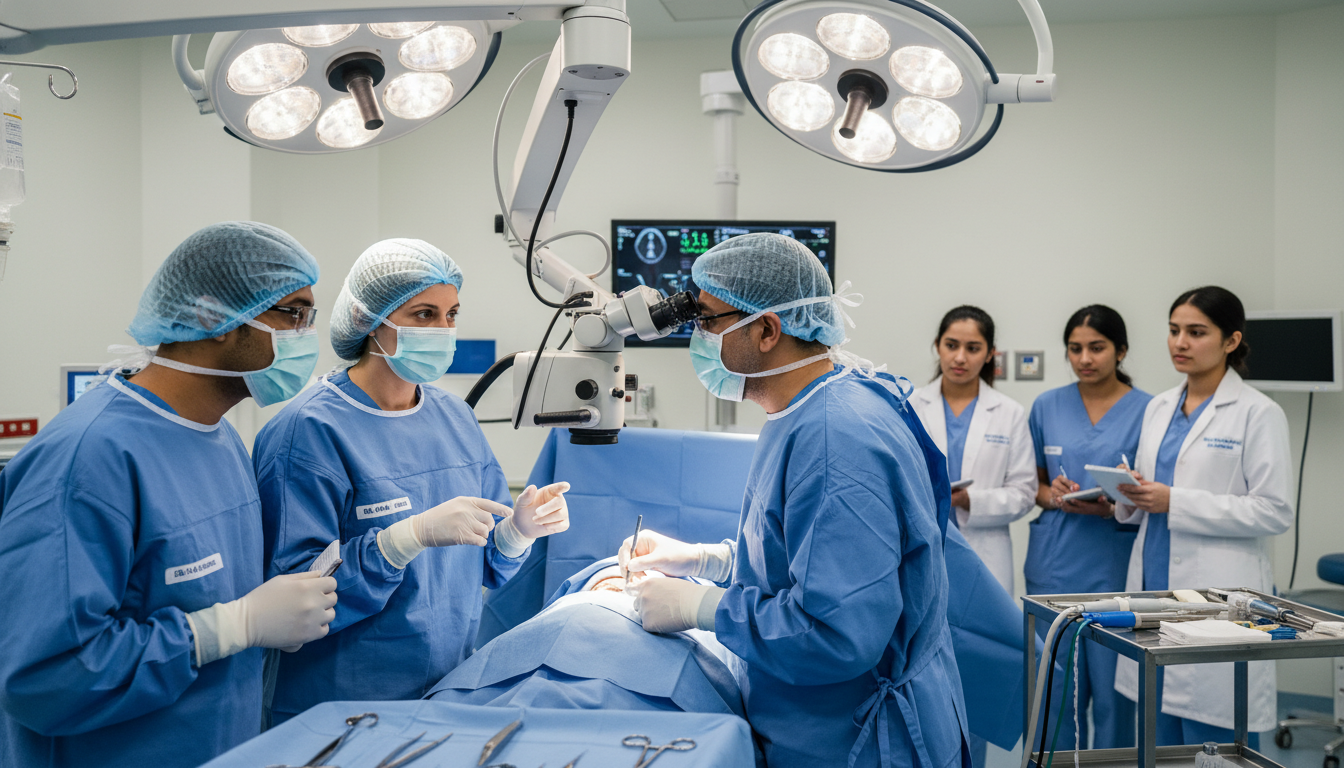
Away rotations are 2–4 week clinical rotations at institutions other than your “home” school (or main U.S. clinical site, if you’re an IMG without a U.S. home program). In ENT, they usually involve:
- Time in the OR (head and neck, otology, rhinology, pediatrics, etc.)
- Outpatient clinics
- Call with residents
- Conferences and didactics
For U.S. seniors, away rotations are often a way to “audition” at a few top programs. For an international medical graduate, they are often essential for:
- Securing U.S.-based ENT letters
- Showing that language, communication, and clinical skills are at a U.S. residency level
- Demonstrating cultural and systems literacy in U.S. healthcare (documentation, EMR, team communication, professionalism)
Program directors in ENT frequently report that they rank students they have seen on rotation higher than similarly strong applicants they have not worked with. For IMGs, this effect is even stronger because:
- Many programs have limited prior experience with graduates from your school
- Your clinical evaluation and LORs can directly counteract concerns about unfamiliar training systems
How Many Away Rotations Should an IMG Do in ENT?
For U.S. MD students, 1–3 away rotations is common in ENT. For IMGs, the answer to “how many away rotations” is nuanced:
- Minimum to be competitive:
- 2 away rotations in otolaryngology strongly recommended
- 1 home or anchor ENT experience (if available)
- Ideal target for a highly motivated IMG applicant:
- 2–3 away rotations in ENT
- Plus supplemental experiences (research blocks, observerships) if needed
More is not always better. Doing 5–6 short, superficial rotations can hurt you:
- You become fatigued and risk underperforming
- Your story can look unfocused
- Programs may wonder why you needed so many chances to impress
Focus on quality over quantity:
- Choose rotations where you can truly integrate with the team
- Aim for 3–4 weeks per site instead of multiple 1–2 week “drive-by” experiences
The Unique ENT Challenges for International Medical Graduates
ENT programs are small, and each match spot is precious. As an international medical graduate, you need to address:
- Perceived risk: Will you handle complex ORs, high communication demands, and call responsibilities?
- Procedural expectations: ENT is hands-on; faculty will be watching your technical potential, not just knowledge.
- Communication intensity: ENT involves counseling about cancer, airway emergencies, and hearing loss; clear English and cultural sensitivity are non-negotiable.
An effective away rotation strategy addresses these questions head-on:
- Give faculty multiple weeks to see you perform
- Show you can adapt quickly to new systems and teams
- Build a track record of reliability and continuous improvement

Choosing the Right Away Rotations as an IMG
Step 1: Clarify Your Overall ENT Strategy
Before selecting visiting student rotations, define your goals:
- Do you already have strong U.S. clinical experience in internal medicine or surgery but not in ENT?
- Do you need ENT research, letters, and clinical exposure all at once?
- Are you open geographically, or tied to specific regions (family, visas, cost)?
Your away rotation plan should align with:
- Your Step scores and academic record
- The strength of your ENT-related CV (research, publications, prior exposure)
- Whether you are a first-time applicant or a re-applicant
For example:
- High Step scores, strong ENT research, new to U.S. system: Choose academically strong programs with a track record of supporting IMGs.
- Moderate scores, little ENT research, strong general clinical experience: Target programs in less saturated regions that are more open to IMGs and emphasize clinical performance.
Step 2: Target Programs that Historically Consider IMGs
Not all ENT residencies are IMG-friendly. Your effort is best spent where you have a realistic chance. Look for:
- Programs that have current or recent international medical graduates in their roster
- Program websites that explicitly welcome IMGs (or mention visa sponsorship)
- Publications or faculty interests that align with your background (e.g., global surgery, outcomes research)
Practical steps:
- Use FREIDA and program websites to check visa sponsorship and IMG status
- Study resident biographies on program pages
- If you see graduates from your region or similar schools, that’s encouraging
- Network: Ask prior IMGs from your country which ENT programs were receptive
Step 3: Balance “Reach” and “Realistic” Rotations
An effective ENT away rotation portfolio often includes:
- 1 “reach” rotation – A well-known academic center that may boost your profile and letters, even if matching there is a long shot
- 1–2 realistic rotations – Mid-sized or community-based academic programs that:
- Have smaller applicant pools
- May be more open to strong, hardworking IMGs
- Offer more hands-on exposure
Example mix for an IMG:
- University A (academic, moderate IMG history) – July
- Regional University B (strong clinical focus, known to sponsor visas) – August
- Community-University hybrid C (good procedural exposure, smaller program) – September
Step 4: Understand Eligibility and Logistics for IMGs
Visiting student rotations for IMGs can be complicated. Each institution may require:
- Enrollment through VSLO/VSAS or a separate institutional application
- Proof of malpractice coverage and health insurance
- Immunization records and TB testing
- USMLE Step 1 (and sometimes Step 2 CK) scores
- English proficiency and sometimes TOEFL
- Affiliation agreements if you’re still a student at a non-U.S. school
Plan your timeline:
- Many ENT rotations open applications 6–9 months before the start date
- For a July start, you may need to apply as early as December–February of the preceding year
- Visa and travel: If you need a visa (B-1, J-1 student, or other), factor in processing time and institutional documentation
If you are already a graduate (not a current student), your options for official visiting student rotations may be limited. In that case:
- Look for specially structured IMG clerkships or observership-to-hands-on pathways
- Consider research positions that include limited clinical shadowing, then transition to more formal rotations at affiliated programs
When to Schedule Away Rotations in the ENT Application Cycle
Ideal Timing in Relation to ERAS and Interviews
For the otolaryngology match, timing is critical. You want:
- Enough time after rotations to get letters uploaded to ERAS
- Rotations scheduled before programs build their interview lists
Common structure for a single application cycle:
- May–June:
- Early ENT rotation (if possible) to confirm interest and build first LOR
- July–September:
- Main away rotations in ENT at target programs
- September:
- ERAS submission (make sure at least one ENT letter is ready)
- October–January:
- Interviews, often influenced by your performance during away rotations
If you must choose between:
- One late rotation in October/November, or
- An earlier rotation in July/August,
prioritize earlier away rotations so letters and impressions can influence interview offers.
Early vs. Late Rotations for IMGs
Early rotations (June–August):
- Pros:
- More likely to impact interview offers
- You are fresher and can devote maximum energy
- Cons:
- Less time to prepare clinically and logistically
Late rotations (September–November):
- Pros:
- You may be more comfortable in the U.S. system by then
- Helpful if you’re a re-applicant building a case for the following cycle
- Cons:
- Less likely to change interview decisions for that same year
- Travel conflicts with interview season
For a first-time IMG applicant:
- Aim for at least one major away rotation by August 31
- If you can add a second in September, do so, but don’t rely on it for interviews that cycle
How to Excel During Away Rotations as an IMG in ENT
Master the Fundamentals Before Day 1
Because you are an international medical graduate, you may be judged more quickly than a U.S. student. Arrive prepared.
Clinical knowledge to review:
- ENT anatomy (temporal bone, neck levels, paranasal sinuses, laryngeal cartilages)
- Common ENT pathologies:
- Otitis media/externa, hearing loss, cholesteatoma
- Chronic rhinosinusitis, nasal polyps, epistaxis
- Head and neck squamous cell carcinoma, thyroid nodules
- Airway issues (stridor, tracheostomy management)
- Tonsillitis, peritonsillar abscess, sleep apnea
- Basic ENT exam techniques:
- Otoscopic exam (ear)
- Anterior rhinoscopy
- Oral cavity and oropharynx inspection
- Neck exam and lymph node levels
Practical preparation:
- Watch high-quality ENT exam videos
- Practice concise oral case presentations
- Learn U.S.-style SOAP notes and operative notes (if allowed to document)
Overcome Communication and Cultural Barriers Proactively
You must prove you can communicate clearly and safely with patients, nurses, and attendings.
Tactics:
- Speak slowly and deliberately, especially on rounds and in the OR
- Use standardized phrases for presentations:
- “This is a 54-year-old man with a history of tobacco use presenting with…”
- “The key issues for today are…”
- Ask for feedback early:
- “Dr. Smith, I want to make sure my communication is clear. Is there anything I can adjust in how I present or talk with patients?”
Cultural and system awareness:
- Learn local norms: who writes notes, who calls consults, how pages work
- Use formal address initially (“Dr. X”) until invited otherwise
- When uncertain, ask: “I’m familiar with the approach in my home system; how do you usually handle this here?”
Behaviors That Impress ENT Faculty and Residents
ENT is small; your reputation will spread quickly across the department.
Key behaviors:
- Reliability:
- Arrive early (often before residents)
- Offer to pre-round on your patients
- Follow through on tasks without reminders
- Preparation:
- Read about your OR cases the night before
- Know indications, key steps, and common complications of procedures
- Team orientation:
- Ask residents: “How can I be most useful to you today?”
- Volunteer for non-glamorous tasks (transporting patients, writing notes, organizing consult lists)
- Humility with confidence:
- Admit when you don’t know: “I’m not sure, but I think X; may I look it up and report back?”
- Avoid overstating your prior experience, especially procedurally
Examples of high-yield actions:
- Before clinic: review the schedule and read about 1–2 key diagnoses
- In the OR: anticipate instruments; help with positioning, suction, and retraction when appropriate
- After cases: ask one or two targeted questions linked to reading you did
What ENT Programs Look for Specifically in IMGs During Rotations
Faculty evaluating international medical graduates often focus on:
- Adaptability: How quickly do you adjust to a new EMR, new OR routines, and new clinical guidelines?
- Teachability: Do you respond constructively to feedback, or become defensive?
- Attention to detail: ENT can be unforgiving—small errors matter.
- Professionalism: Respectful interactions, ownership of mistakes, reliability.
Your goal is to leave each attending thinking:
“This student could be an intern here tomorrow, and we would trust them on our team.”
Building Relationships and Securing Strong Letters
Do not assume that performance alone will automatically produce a letter. You need to:
- Identify potential letter writers early (faculty who see you repeatedly in clinic and OR).
- Signal your interest in ENT and in their program:
- “I’m very interested in applying to otolaryngology, and your program in particular.”
- Ask directly and professionally near the end of the rotation:
- “Dr. Patel, I’ve really valued working with you. I plan to apply in ENT this cycle. Would you feel comfortable writing a strong letter of recommendation for my application?”
Make it easy for them:
- Provide your CV, personal statement draft, and Step scores
- Remind them of key cases or projects you did with them
- Follow up with a polite email including all necessary information
Strong U.S. ENT letters that specifically praise your clinical work are often the single most important outcome of your away rotations.
Alternative and Supplemental Options When Away Rotations Are Limited
If You Can Only Get 1 ENT Away Rotation
Many international medical graduates face barriers (visa, cost, institutional policies) that limit how many away rotations they can do. If you can only secure one ENT rotation:
- Choose the program most likely to:
- Write strong, detailed letters
- Genuinely consider IMGs for residency
- Maximize impact:
- Arrive overprepared
- Ask for early and mid-rotation feedback
- Request a formal meeting with the program director or clerkship director near the end to discuss your interest and performance
Supplement with:
- ENT research at a U.S. institution (even if remote initially)
- Non-ENT U.S. clinical rotations in surgery or internal medicine to show U.S. system experience
- Observerships that might later convert into hands-on roles once trust is established
Research Rotations and ENT Outcomes
If clinical away rotations are scarce:
- A dedicated ENT research year in the U.S. can:
- Build relationships with ENT faculty
- Lead to papers, presentations, and mentorship
- Open doors for subsequent clinical away rotations at that or affiliated institutions
To make research time count:
- Choose a mentor who is clinically active and respected within their department
- Show up to ENT grand rounds and conferences even if you are “just” doing research
- Politely ask if you can observe surgeries to learn and show interest
Financial and Practical Considerations for IMGs
Away rotations can be expensive:
- Application fees
- Housing and transportation
- Visa and document costs
Strategies to manage this:
- Cluster rotations geographically to reduce travel costs
- Use short-term housing platforms, student dorms, or hospital housing where possible
- Apply for any international medical graduate scholarships or travel grants available through:
- National ENT societies
- Your home or host institution
- Discuss with your family/support network early to plan finances over 12–18 months
Frequently Asked Questions (FAQ)
1. As an IMG, how many away rotations in ENT do I truly need?
For most international medical graduates:
- Aim for 2 away rotations in ENT if at all possible.
- Consider 3 if:
- You have the financial and logistical capacity
- You can maintain high performance throughout
- The third rotation is at a genuinely interested, IMG-friendly program
If you can only manage 1 ENT away rotation, make it count and supplement with:
- Strong ENT research
- U.S. clinical experiences in other specialties
- Observerships in ENT where possible
2. Should I prioritize big-name academic centers or smaller, more IMG-friendly programs?
A balanced approach works best:
- Do at least one rotation at the most IMG-friendly program that genuinely might rank you.
- If feasible, consider one “reach” academic center, especially if they actively support research and education and have had IMGs before.
Remember: the goal is not just prestige; it’s to match. A mid-sized program where you impress everyone may be more valuable than a top-10 name where you are barely known.
3. Can observerships replace away rotations for the otolaryngology match?
Observerships are helpful but not equivalent to true visiting student rotations:
- Observerships:
- Often do not allow hands-on care or formal evaluations
- May produce weaker, more generic letters
- Away rotations:
- Provide direct patient care, real-time evaluations, and EMR use
- Generate stronger, detailed ENT letters about your clinical performance
If away rotations are unavailable, observerships are better than nothing, but try to:
- Pair them with research in the same department
- Turn long-term observership plus research into a future hands-on role where institutional policies allow
4. When should I ask for letters of recommendation during an away rotation?
The best time is:
- Late in the rotation, after faculty have seen you in multiple settings (clinic, OR, wards)
- Preferably after you’ve received some informal feedback and addressed any concerns
Process:
- Ask in person if possible in the final week
- Follow up with a detailed email including your CV, personal statement, and deadlines
- Politely confirm that the letter has been uploaded several weeks before ERAS submission
By designing a deliberate, realistic away rotation strategy—selecting programs carefully, timing rotations wisely, and performing at your absolute best—you can significantly improve your chances of a successful otolaryngology match as an international medical graduate. Each ENT away rotation is both a four-week interview and a four-week learning opportunity; if you treat it as both, it can become the cornerstone of your path into this highly competitive specialty.