Understanding the Role of Away Rotations for IMGs in Pediatrics
For an international medical graduate (IMG) interested in pediatrics residency, away rotations (also called visiting student rotations or electives) can be one of the most powerful tools to improve your peds match chances. They give you something you often lack compared with U.S. grads: direct evaluation in the U.S. clinical environment, U.S.-based letters of recommendation, and a chance to show programs that you understand American pediatric practice and culture.
However, away rotations are also expensive, limited in number, and highly competitive—especially for IMGs. That makes having a deliberate away rotation strategy essential. This IMG residency guide will walk you through how many away rotations to aim for, where and when to apply, how to choose sites, and how to perform in a way that actually moves the needle for your pediatrics residency application.
Step 1: Clarify Your Goals and Constraints as an IMG
Before you start applying, define why you are doing away rotations and what is realistically possible for you.
Core goals for IMGs doing pediatrics away rotations
Most IMGs should aim to achieve at least three of the following with their away rotations:
Obtain strong U.S. letters of recommendation in pediatrics
- Ideally 2–3 letters from U.S.-based pediatric faculty.
- At least one from a clerkship director, program director, or division chief if possible.
Demonstrate clinical competence in the U.S. context
- Show that you can function on a U.S. team, understand expectations, and communicate effectively.
- Reduce program concerns that you will struggle to adapt.
Build a track record at target programs or systems
- Show interest in specific hospitals or geographic regions.
- Convert “cold” application to a “known” candidate.
Fill gaps in your CV that are common for IMGs
- Little or no U.S. clinical experience.
- No exposure to subspecialty pediatrics (PICU, NICU, heme/onc, etc.).
- Limited or non-peds-focused letters.
Clarify whether pediatrics in the U.S. is the right fit
- Experience different practice styles (community vs academic vs safety-net children’s hospitals).
- Understand lifestyle, workload, and expectations.
Practical constraints specific to IMGs
You also need to be honest about constraints that shape your away rotation strategy:
Visa and travel limitations
- Can you enter and stay in the U.S. for multiple months?
- Will you need to cluster away rotations together?
Timing relative to graduation and USMLE exams
- Many programs require you to be within a certain time of graduation (e.g., within 1–2 years).
- Some require Step 1 and/or Step 2 CK scores before offering rotations.
Financial cost
- Application fees (VSLO/VSAS or institutional portals).
- Rotation tuition fees (often $1,000–$4,000 per month for IMGs).
- Housing, transportation, visas, health insurance, vaccinations.
Eligibility as a non-U.S. school student or graduate
- Some pediatric programs only accept visiting students from LCME- or AOA-accredited schools (i.e., U.S. and Canadian).
- Others accept “international visiting students” or graduates; many do not.
Before you send a single application, create a spreadsheet of potential programs and note:
- Do they take IMGs for visiting student rotations?
- Do they accept graduates or only current students?
- Visa requirements?
- Fees and deadlines?
- Do they have a pediatrics residency program?
This clarity will drive all further decisions.
Step 2: How Many Away Rotations Do IMGs Really Need?
A common question is: how many away rotations are ideal for the pediatrics match if you are an international medical graduate?
General guidance for IMGs targeting pediatrics
For most IMGs, a powerful strategy is:
- Minimum: 1–2 months of U.S. pediatrics clinical experience.
- Competitive target: 2–3 months of pediatrics-focused away rotations at institutions with residency programs.
- Upper limit: 3–4 months, unless your financial situation and visa status comfortably allow more.
Why not more? Because:
- Each rotation is expensive.
- Marginal benefit decreases after you secure strong letters and evidence of performance.
- You also need time for ERAS, Step 2 CK, OET/TOEFL (if needed), and interviews.
Example IMG profiles and rotation numbers
Case 1: IMG with no U.S. experience
- Goal: Build basic U.S. clinical credibility.
- Recommended:
- 1 month: core inpatient pediatrics.
- 1 month: pediatric sub-internship or high-responsibility ward month.
- If possible, add:
- 1 additional month in NICU or PICU or a community pediatric hospital.
Case 2: IMG with prior U.S. observerships but no hands-on pediatrics
- Goal: Get hands-on pediatrics experience and letters.
- Recommended:
- 2 months of hands-on peds at institutions that allow active participation (writing notes, orders with cosign, presenting patients).
Case 3: Older graduate or multiple attempts on USMLE
- Goal: Show current clinical competence and commitment.
- Recommended:
- 2–3 strong rotations, preferably:
- 1 academic children’s hospital.
- 1 community program that historically takes IMGs.
- Possibly 1 rotation at a “safety” program you identify as IMG-friendly.
- 2–3 strong rotations, preferably:
Your exact number will depend on budget, schedule, and availability. For many IMGs, 2 well-chosen away rotations can be more powerful than 4 scattered or low-yield ones.
Step 3: Choosing the Right Programs and Rotation Types
Not all away rotations are equal for residency impact. Being strategic is crucial for your peds match.

Prioritize programs with a pediatrics residency
Whenever possible, aim for institutions that have an ACGME-accredited pediatrics residency program. These rotations:
- Expose you to real training environments.
- Put you in front of people who influence resident selection.
- Allow you to interact with current residents, gaining insights and advocacy.
This doesn’t mean you must rotate only where you hope to match, but an away rotation at a program you’d genuinely be happy to rank highly is extremely valuable.
Consider IMG-friendliness
As an international medical graduate, prioritize pediatric programs that:
- Regularly interview or match IMGs (check recent resident bios).
- Have faculty or PDs who are themselves IMGs.
- Explicitly state they consider or welcome IMGs.
You can:
- Check program websites and resident profiles.
- Use databases (e.g., NRMP data, unofficial IMG lists) to identify programs with a history of taking IMGs.
- Network with senior IMGs who recently matched into pediatrics.
A “dream” away rotation at a top-tier program that never takes IMGs might be less strategic than one at a solid mid-tier academic or community program that reliably interviews IMGs.
Core vs subspecialty: what kind of peds rotations?
For pediatrics residency, the highest-yield visiting student rotations typically include:
Inpatient General Pediatrics (Ward Service)
- Best choice for demonstrating bread-and-butter clinical skills.
- High visibility: daily rounds, sign-out, admissions.
- Shows your ability to manage common pediatric problems and work in teams.
Pediatrics Sub-Internship (Sub-I) or Acting Internship
- If available to IMGs, this is ideal.
- You’re treated like an intern: managing patients more independently, writing notes, calling consults (under supervision).
- Extremely strong platform for letters.
Pediatric Intensive Care Unit (PICU) or Neonatal ICU (NICU)
- Useful if you already have one strong inpatient month and want to show higher-level skills.
- More complex, sometimes less direct patient ownership for students, but can still be powerful.
Outpatient General Pediatrics or Continuity Clinic
- Great to show communication with families, preventive care knowledge, and long-term follow-up.
- Often less intense than inpatient but valuable if letters are strong.
Selective subspecialties (e.g., pediatric cardiology, heme/onc, emergency medicine)
- Can be high-yield at institutions where you might want to match, especially if the subspecialty faculty are influential.
- Best as a supplement, not a substitute, for core inpatient or sub-I experience.
For a 2–3 rotation plan, a common high-yield structure is:
- Rotation 1: Inpatient pediatrics at an IMG-friendly program.
- Rotation 2: Peds sub-I or another inpatient month at a program you’d like to match at.
- Optional Rotation 3: PICU/NICU or outpatient general peds at a strong, interview-likely program.
Academic vs community children’s hospitals
Both can be excellent, but they help you in different ways:
Academic children’s hospitals
- Strong for letters from well-known faculty.
- More research, teaching, complex cases.
- Often more competitive; some may be less IMG-friendly.
Community teaching hospitals
- Often more open to IMGs.
- Closer resident-faculty relationships, which can yield very personal letters.
- Good place to demonstrate reliability, work ethic, and adaptability.
Ideally, include at least one rotation in each environment if possible and relevant.
Step 4: Timing and Logistics – When and How to Apply
Optimal timing relative to ERAS and the peds match
For your away rotations to meaningfully influence your pediatrics residency application:
- Aim to complete at least one away rotation before ERAS submission (September).
- If you can, have two rotations completed by late September–October so letters are available for early and mid-interview season.
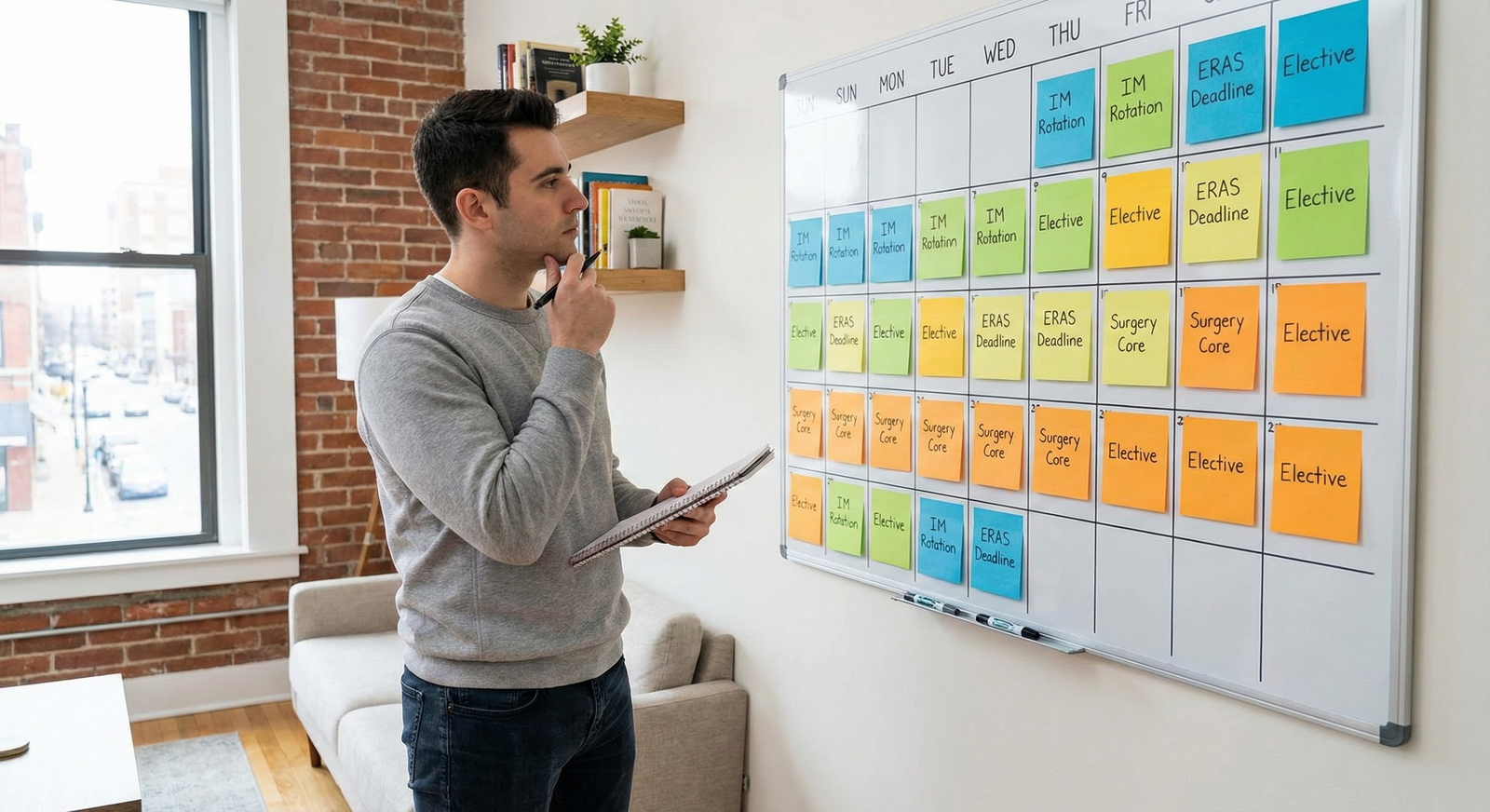
A common, effective schedule for IMGs is:
- Late winter–spring: Research programs, finalize USMLE exams (especially Step 2 CK).
- Spring (Feb–May): Apply for visiting student rotations for July–October.
- Summer–early fall (July–October): Complete 1–3 away rotations.
- September: Submit ERAS; ensure at least 1–2 letters from U.S. pediatric faculty are uploaded.
- Fall–winter: Interview season, leveraging connections from your rotations.
Keep in mind:
- Some systems use VSLO (Visiting Student Learning Opportunities, formerly VSAS), which may not accept non-LCME schools; others have their own application portals.
- Application deadlines are often 3–6 months before the rotation start date.
Common eligibility requirements you must anticipate
As an international medical graduate, you’ll frequently need:
- Proof of enrollment or recent graduation from a recognized medical school.
- Official transcripts and dean’s letter.
- Immunization records (MMR, Varicella, Hep B, TB screening).
- BLS/ACLS certification (sometimes).
- USMLE Step 1 and possibly Step 2 CK scores.
- Proof of English proficiency (TOEFL or OET) in some cases.
- Malpractice/liability insurance (may need to purchase if your school doesn’t cover you).
- Health insurance coverage valid in the U.S.
Start organizing these documents early. Delays in vaccination records or insurance proof can make you miss opportunities.
Budgeting and planning logistics
Estimate total cost per month:
- Program fees (often higher for IMGs).
- Housing (short-term rentals near children’s hospitals can be expensive).
- Transport (flights, local transit, possibly car rental).
- Food and daily expenses.
- Visa and immigration-related fees, if applicable.
Plan for unexpected costs, such as:
- Extra lab work for titers.
- Additional malpractice insurance.
- Application fees to multiple programs when you are not sure who will accept IMGs.
Step 5: Maximizing Impact During the Away Rotation
Once you secure a visiting student rotation, your performance will determine whether it translates into interviews and strong letters.

Understand expectations from day one
Early in the rotation:
- Ask your senior/resident: “What are the expectations for medical students on this service?”
- Ask the attending: “Is there anything specific you value in students on this team?”
Clarify:
- Number of patients you should follow.
- What time to pre-round and arrive.
- Expectations for notes, orders, and presenting.
- Policies on contacting families, using the EMR, and writing in the chart.
Being explicit shows maturity and reduces misunderstandings.
Behaviors that impress pediatric faculty
In pediatrics, programs often value:
Communication with children and families
- Sit at eye-level with children.
- Use age-appropriate language.
- Show empathy and patience with anxious parents.
Teamwork and reliability
- Arrive early, stay engaged until sign-out.
- Volunteer for tasks: calling labs, following up on imaging, teaching families.
- Follow through on what you promise; if you say you will do something, do it.
Clinical reasoning and curiosity
- Think out loud: propose differential diagnoses and management plans.
- Ask thoughtful questions after rounds.
- Read about your patients’ conditions and share one or two key learning points.
Adaptability and cultural humility
- Show that you understand there are differences between your home system and the U.S.
- Avoid criticizing local practices; instead, show a willingness to learn.
- Respect all team members, including nurses and ancillary staff.
Common pitfalls for IMGs to avoid
Some patterns can raise concerns for program directors:
- Over- or under-confidence
- Overconfidence: giving orders to nurses without permission, arguing with residents.
- Under-confidence: refusing to present patients, not answering questions, appearing disengaged.
- Documentation issues
- Writing in charts without permission, or copying and pasting from other notes.
- Using non-standard abbreviations from your home country.
- Communication barriers
- Speaking too quietly or too fast.
- Not asking for clarification when you don’t understand.
Ask for mid-rotation feedback:
- “I’d like to improve as much as possible—what is one thing I’m doing well, and one thing I can improve before the end of this rotation?”
Then actively work on that feedback and let faculty see your improvement.
Securing strong letters of recommendation
To convert your away rotations into peds match strength, you must be intentional about letters:
Identify strong letter writers
- Faculty who have observed you directly (rounds, presentations, patient care).
- Ideally pediatric hospitalists, subspecialists, clerkship directors, or program directors.
Ask in person, near the end of the rotation
- Phrase it as: “Based on what you’ve seen of my work, do you feel you could write a strong letter of recommendation for my pediatrics residency applications?”
- This wording gives them an “out” if they can’t be strongly supportive.
Provide a letter packet
- CV or resume.
- Personal statement draft (if available).
- ERAS ID or instructions for submission.
- Brief bullet list of cases or accomplishments during the rotation to help them remember you.
Follow up professionally
- Send a polite email thanking them.
- Gently remind them 4–6 weeks later if the letter has not been uploaded.
- Update them when you receive interviews or match.
A single enthusiastic, detailed letter from your away rotation can be more valuable than several generic letters from your home institution.
Step 6: Integrating Away Rotations into Your Overall Pediatrics Match Strategy
Away rotations are just one part of your pediatrics residency application as an international medical graduate. They must fit into a broader plan that includes exams, research (if any), and geographic strategy.
Align rotations with your geographic and program strategy
Use each away rotation to:
- Explore areas you might realistically live in for 3 years.
- Test academic vs community settings.
- Build connections: residents, fellows, faculty, program leadership.
After each rotation, ask yourself:
- Would I be happy training here?
- Did I feel supported and included as an IMG?
- Does the program’s patient population align with my long-term goals (underserved care, global health, subspecialty interest)?
You can then:
- Signal genuine interest in these programs in your ERAS application and interviews.
- Mention your positive away rotation experience in your personal statement or supplemental ERAS.
Using your away rotations to strengthen weaker areas
For example:
If your Step 1 score is lower than average:
- Emphasize clinical excellence, communication, and professionalism in your away rotations.
- Ask letter writers to highlight your clinical reasoning and work ethic.
If you are an older graduate:
- Use rotations to prove you are clinically current and adaptable.
- Demonstrate that you can handle U.S.-style work hours and systems.
If you lack research:
- While rotating, ask if there are any small QI projects, case reports, or chart reviews you could assist with.
- Even minor contributions can show engagement and academic interest.
Documenting and reflecting on your experiences
Keep a brief record for each rotation:
- Patient types you saw.
- Skills you gained (e.g., managing bronchiolitis, asthma, sepsis pathways).
- Teaching or QI involvement.
- Any specific comments or praise from faculty.
These notes will:
- Help you craft more specific personal statements and interview answers.
- Provide talking points if interviewers ask, “Tell me about your away rotation at X program.”
Frequently Asked Questions (FAQ)
1. As an IMG, is an away rotation absolutely necessary for pediatrics residency?
Not absolutely—but it is highly advantageous. Many successful IMGs match without U.S. pediatrics away rotations, especially if they have strong scores and research. However, for most IMGs, at least one solid U.S. pediatrics rotation significantly improves competitiveness by providing:
- U.S.-based clinical letters.
- Evidence of functioning in the U.S. system.
- Networking opportunities with pediatric faculty.
If you can only afford one rotation, choose a high-yield, inpatient pediatrics month at an IMG-friendly hospital with a residency program.
2. How many away rotations should I do if I am on a tight budget?
If you face financial constraints, aim for 1–2 carefully selected rotations rather than spreading yourself thin:
- Prioritize:
- 1 inpatient pediatrics or sub-I rotation at a realistic target program.
- Optional 1 additional rotation at another IMG-friendly program or in a complementary setting.
Make sure those rotations allow meaningful participation and observation by faculty who can write strong letters. Quality matters more than quantity.
3. Can I do away rotations after graduation as an IMG?
Yes, but options are more limited. Some institutions offer “international visiting physician” or “graduate observer” programs; these often:
- Are more observer-like and less hands-on.
- May not fully replicate medical student duties.
- Still can yield letters, if structured well.
When searching, look specifically for:
- Programs that state they accept international graduates for visiting clinical electives.
- Post-graduate clinical experiences that are more than pure observerships.
Always clarify ahead of time what your role and responsibilities will be.
4. Should I choose subspecialty pediatrics rotations (e.g., NICU, PICU) or stick to general pediatrics?
If you have no prior U.S. pediatrics experience, start with general inpatient pediatrics or a pediatrics sub-internship. Once you have at least one core pediatrics month:
- Adding a subspecialty rotation (NICU, PICU, pediatric emergency) can be beneficial:
- Shows comfort with higher-acuity pediatrics.
- May help if you have a specific long-term interest.
However, subspecialty rotations should supplement, not replace, core general pediatrics experiences for residency application purposes.
A thoughtful away rotation strategy—balanced between number of rotations, program selection, rotation type, and timing—can dramatically enhance your pediatrics residency prospects as an international medical graduate. By targeting IMG-friendly programs, prioritizing high-yield inpatient experiences, and performing at your absolute best, you convert visiting student rotations into interviews, strong letters, and, ultimately, a successful peds match.