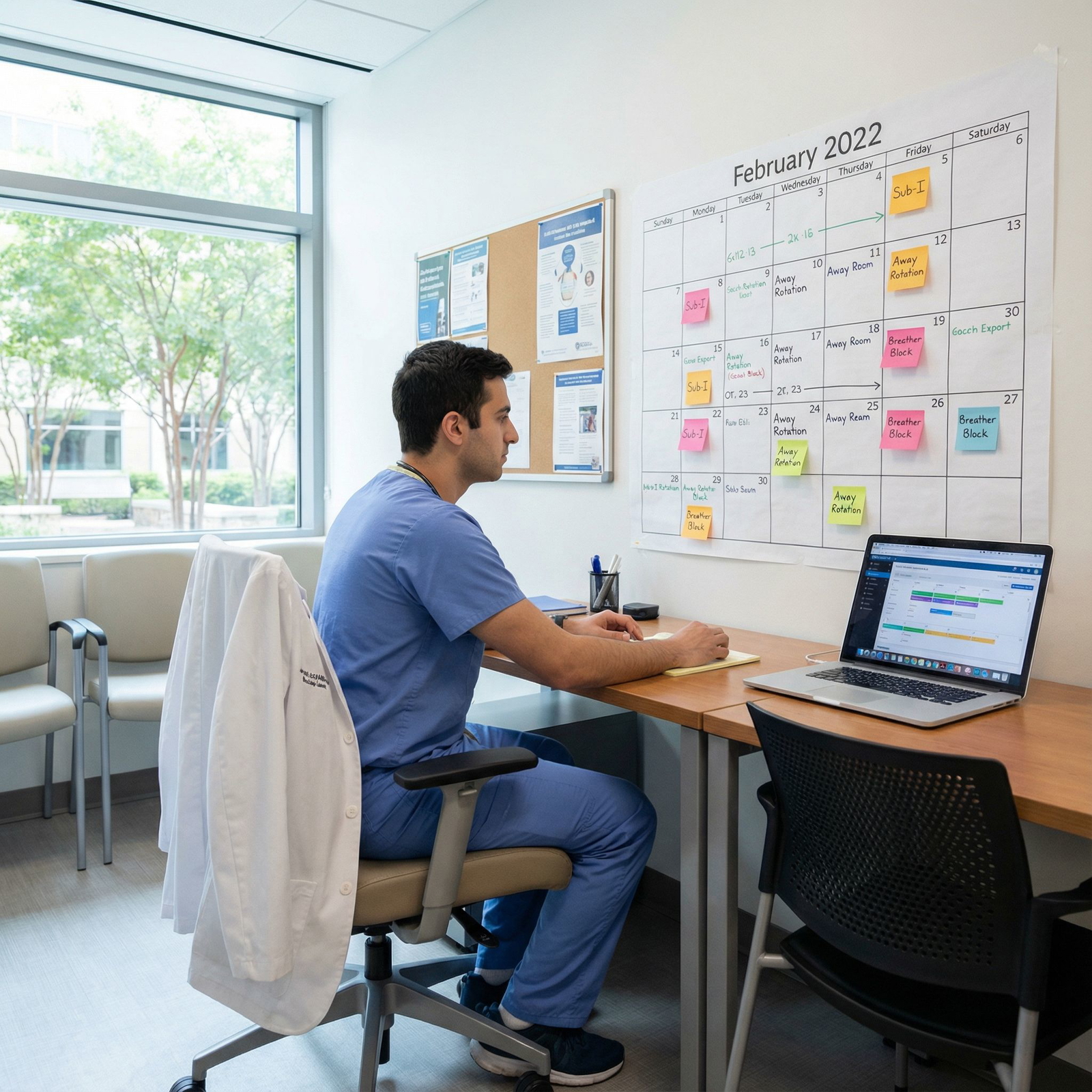
Understanding the Role of Away Rotations for IMGs Targeting Transitional Year
For an international medical graduate, away rotations can be one of the most powerful tools to strengthen a Transitional Year (TY) application—and also one of the most misunderstood. A well‑planned away rotation strategy can turn “just another IMG application” into a candidate that program directors know, trust, and are willing to rank highly.
This IMG residency guide focuses specifically on Transitional Year programs and how visiting student rotations (often called audition or away rotations) can help you:
- Get US clinical experience (USCE) that actually matters to program directors
- Earn strong, specialty‑relevant letters of recommendation
- Demonstrate that you can function as an intern in the U.S. system
- Design a realistic, affordable, and targeted away rotation plan
We will walk through when to do away rotations, how many away rotations to aim for, what types of rotations are most strategic for TY, and how to overcome the challenges unique to international medical graduates.
Why Away Rotations Matter So Much for IMGs in Transitional Year
1. Transitional Year Programs Are Competitive and Relationship‑Driven
A Transitional Year residency is often used by applicants who are ultimately headed into advanced specialties (e.g., Radiology, Anesthesiology, Radiation Oncology, Dermatology, PM&R). Many of these applicants are strong US MD/DO candidates, which naturally makes Transitional Year spots competitive—especially in desirable locations or at university‑affiliated hospitals.
For an international medical graduate, program directors may initially have less information and less trust about:
- The quality of your prior training
- How well you understand the U.S. health system
- How you function within a multidisciplinary team
- How you communicate with patients and staff in English
Away rotations residency experiences—particularly at U.S. hospitals that sponsor residents—give programs direct, first‑hand data on all of the above.
2. Program Directors Strongly Value “Home‑Court” Performance
Many Transitional Year program directors consider performance on a visiting student rotation as one of the most predictive measures of success:
- They can observe your work ethic, reliability, and clinical reasoning.
- Residents can provide feedback about your ability to work within the team.
- Faculty can assess your professionalism and responsiveness to feedback.
For IMGs, this can be more influential than standardized tests alone, because it addresses the concern: “Will this applicant function well as a PGY‑1 in our environment?”
3. Away Rotations Give You Context to Choose the Right TY Programs
Transitional Year curricula vary widely:
- Some TY programs are cushy with fewer ward months and more electives.
- Others are essentially a medicine‑heavy preliminary year in disguise.
- Some are tightly linked to an advanced specialty at the same institution.
Doing a rotation at a potential TY program helps you answer:
- Is this workload realistic for me?
- Will I get the clinical exposure I want (e.g., more ICU, more electives)?
- Is the culture supportive of IMGs?
- How do they treat interns and medical students?
That information helps you build a targeted rank list and application strategy.

When and How Many Away Rotations: Strategic Planning for IMGs
One of the most common questions is: “How many away rotations should I do?” There is no universal number, but there are clear principles that can guide your Transitional Year strategy.
Optimal Timing for TY‑Focused Away Rotations
For most applicants, the most valuable away rotations occur:
- 12–15 months before you hope to start residency
- Practically, this means:
- If applying in ERAS 2026 → do away rotations roughly May–November 2025
- If applying in ERAS 2027 → target May–November 2026, etc.
This timeline allows:
- Time for the rotation evaluation to be completed
- Time to request and receive letters of recommendation
- Enough overlap so that faculty remember you when interview season arrives
For IMGs already graduated and outside the usual U.S. student calendar, this requires careful advance planning, because many visiting student rotations are structured around U.S. academic year blocks (often 4‑week blocks from July to May).
Addressing the IMG Calendar Problem
IMGs often face these timing barriers:
- No active enrollment in a U.S. medical school
- Limited access to VSLO/VSAS (Visiting Student Learning Opportunities)
- Visa and documentation obstacles
- Graduation date policies (e.g., “must be within 12 months of graduation”)
Practical strategies:
If you are still a student (before graduation):
- Aim to be officially enrolled during the time you apply for and complete visiting student rotations.
- Coordinate with your dean’s office to access VSLO if possible.
- Front‑load your clinical obligations at home so you can free up months for U.S. rotations.
If you are already graduated:
- Look for hospitals or universities that accept “visiting scholars” or “observerships” and are willing to involve you in a near‑hands‑on capacity.
- Some community Transitional Year programs may offer unofficial “externships” with more direct involvement under close supervision.
- Plan at least 6–9 months ahead to manage visas and credentialing.
How Many Away Rotations for an IMG Targeting TY?
There is no “one‑size‑fits‑all” answer, but you can use these guidelines:
- Minimum meaningful exposure:
- 1–2 high‑quality away rotations at institutions that (a) sponsor TY programs and (b) actually consider IMGs.
- Ideal range for many IMGs:
- 2–3 visiting student rotations, especially if you lack any prior U.S. clinical experience.
- Upper limit for practicality:
- More than 3–4 away rotations in a single season often leads to diminishing returns, financial strain, and application fatigue.
Remember: quality > quantity. One outstanding four‑week rotation with strong letters and visible impact can be more valuable than multiple average rotations where no one remembers you.
Example scenario
IMG with no USCE and Step 1 and 2 completed:
- Plan 2–3 rotations:
- 1 at a program with a Transitional Year track
- 1 at an Internal Medicine or Emergency Medicine service at a teaching hospital
- Optional 3rd if finances allow, ideally at another TY or prelim‑heavy program
- Plan 2–3 rotations:
IMG with prior strong USCE (e.g., multiple IM sub‑internships):
- 1–2 additional away rotations at desired TY institutions may be sufficient, focused on places you most want to match.
Balancing Transitional Year and Advanced Specialty Rotations
If you are applying to an advanced specialty (e.g., Radiology, Anesthesia) plus a Transitional Year, you must balance your rotation portfolio:
- At least 1–2 rotations in your intended advanced specialty (for specialty‑specific letters)
- At least 1 rotation that showcases general medicine/ward skills relevant to TY (e.g., ICU, inpatient medicine, ED)
- Optionally 1 rotation at a program that offers both the advanced specialty and the TY year (this can be a powerful combination if they like you).
Choosing the Right Type of Rotations for a Strong TY Application
Not all visiting student rotations are equal when it comes to Transitional Year applications. Your away rotation strategy should align with what TY program directors actually want to see.
Priorities for Transitional Year Program Directors
Transitional Year directors usually care about:
- Your ability to function as an intern on day one
- Comfort with inpatient workflows, orders, and documentation
- Professionalism, reliability, and communication
- Ability to manage acutely ill patients with supervision
Therefore, rotations that simulate the PGY‑1 experience are most valuable.
High‑Yield Rotations for TY‑Bound IMGs
Inpatient Internal Medicine Sub‑Internship (Sub‑I / Acting Internship)
- This is often the single most valuable rotation you can do for TY.
- You’ll admit patients, write daily notes, formulate plans, and present on rounds.
- Attendings and residents directly observe your intern‑level functioning.
- Ideal for a TY letter highlighting your readiness to be an intern.
Medical ICU (MICU) or Surgical ICU (SICU) Rotation
- Shows you can handle acutely ill patients, manage cross‑cover issues, and function on a high‑acuity team.
- Especially valuable if you are considering Anesthesiology, Emergency Medicine, or Radiology (where comfort with critical care is respected).
Emergency Medicine Rotation
- Demonstrates rapid assessment skills, ability to manage multiple patients, and communication under pressure.
- EM attendings are often experienced letter writers and good at describing clinical performance.
Night Float or Admitting Team Rotation
- Not always available to students, but if offered, this strongly reflects intern‑like responsibilities.
- Highlights independence, triage, and on‑call capacity.
Rotations at Institutions With TY Programs
- If the rotation is at the same hospital that runs a Transitional Year, that is ideal.
- Even if your rotation is in another department (e.g., Radiology), faculty may have influence over the TY selection process, especially at smaller programs.
Lower‑Yield or Supplementary Rotations
These can still be useful but are less central to your TY narrative:
- Outpatient specialty clinics with limited responsibility
- Highly niche subspecialty consult services where you see few patients per day
- Research or purely observational rotations with minimal clinical contact
You can include one such rotation if it supports your advanced specialty interest, but your core rotations should be ward‑ or ICU‑based if possible.
Prioritizing Rotations with Letter‑Writing Faculty
When choosing visiting student rotations, actively seek:
- Services where attendings routinely work with students (not just residents)
- Programs known for taking many students each year (more structured evaluation systems)
- Rotations that explicitly state in their description that they provide written evaluations and are open to writing letters
When in doubt, email the clerkship coordinator or director and ask:
“Do visiting students typically work closely enough with attendings to obtain meaningful letters of recommendation for residency applications?”

Maximizing Impact During Visiting Student Rotations
Once you’ve secured away rotations, performance becomes everything. IMGs are often scrutinized more closely, but that also means you have an opportunity to stand out positively.
Core Behavioral Goals
Be Reliable and Predictable
- Always arrive early; never be late to rounds or conferences.
- Anticipate needs: know your patients thoroughly, bring data before you’re asked.
- Follow through on every task you commit to.
Communicate Clearly and Professionally
- Speak up on rounds with thoughtful, concise presentations.
- Ask clarifying questions if you’re unsure about expectations.
- Be polite and respectful to all staff, including nurses and unit clerks—residents and attendings notice.
Show Coachability
- When given feedback, thank the provider and demonstrate visible change.
- Program directors value learners who can adapt quickly and positively.
Demonstrate Initiative Without Overstepping
- Offer to write drafts of notes, follow up on lab results, or prepare brief teaching points.
- Yet always confirm with residents or attendings before taking clinical actions.
Practical Tips for IMGs to Blend into the U.S. System
- Study common U.S. order sets and documentation styles before you start (e.g., SOAP notes, typical daily progress note structures, SBAR handoff).
- Familiarize yourself with U.S. abbreviations and medication names—practice ahead of time to avoid miscommunication.
- Observe how residents talk to nurses and consultants in the first few days, then model your approach on well‑respected residents.
Securing Strong Letters of Recommendation from Away Rotations
Your away rotations should not only show your capability but also generate impactful letters. Steps to achieve this:
Identify Potential Letter Writers Mid‑Rotation
- Look for attendings who’ve seen your work repeatedly.
- Engage with them during rounds and teaching sessions; ask clinical and career questions.
Ask Directly and Professionally
- Near the end of the rotation, request a meeting or speak after rounds:
- “I’ve really appreciated working with you this month. Would you feel comfortable writing a strong letter of recommendation for my Transitional Year and advanced specialty applications?”
- Near the end of the rotation, request a meeting or speak after rounds:
Provide a Letter Packet
- Updated CV
- Personal statement draft (TY‑relevant if possible)
- ERAS ID (when available)
- A short bullet‑point list of cases/skills you demonstrated on the rotation
- Clarify timeline and where/how to upload the letter (ERAS)
Stay in Touch
- Send a brief thank‑you email.
- Update them when you apply and later when you match.
Turning a Good Rotation into an Interview
To encourage a rotation to convert into an interview:
- Politely express interest in the program:
- “I’ve really enjoyed my time here and could see myself training at this hospital for my Transitional Year.”
- Ask about their selection process and any advice for your application.
- Ensure your performance is consistently high from day 1 to the final day; people often remember your first and last weeks most vividly.
Overcoming Common IMG Barriers in Visiting Student Rotations
As an international medical graduate, you may face structural barriers and hidden biases. Understanding them—then planning around them—is part of an effective away rotation strategy.
1. Limited Access to Formal Visiting Student Programs
Many institutions restrict visiting student rotations to students enrolled in LCME‑accredited or certain partner schools.
Workarounds:
- Look for community‑based teaching hospitals that advertise international visiting student positions.
- Explore affiliated programs through international academic partnerships; your home university may have existing MOUs.
- If formal rotations are impossible, target robust observerships or externships at institutions known to take IMGs into residency; meaningful letters can still emerge from these, even if hands‑on involvement is limited.
2. Visa and Immigration Challenges
Arranging short‑term clinical rotations often requires:
- B1/B2 visitor visa, J‑1 short‑term scholar, or institution‑specific categories
- Proof of health insurance, vaccination, background checks
Start early:
- Contact international offices and clerkship coordinators 6–9 months in advance.
- Prepare documentation from your home institution proving you are a student (if applicable).
- Budget for these costs as part of your overall away rotation strategy.
3. Financial Constraints
Away rotations can be expensive—travel, housing, visa costs, application fees to visiting student systems.
Cost‑control strategies:
- Cluster rotations geographically (e.g., do 2–3 rotations in the same city or region).
- Look for hospital or university housing, or short‑term discounted housing options for visiting students.
- Prioritize fewer, high‑yield rotations rather than many low‑impact ones.
- Ask if the institution offers stipends, meal cards, or transportation passes.
4. Navigating Implicit Bias as an IMG
Unfortunately, some IMGs encounter skepticism or subtle bias. You cannot control others’ predispositions, but you can control your preparation and professionalism.
Helpful tactics:
- Over‑prepare on core medical knowledge and U.S. guidelines (e.g., UpToDate, AHA/ACC guidelines, IDSA recommendations).
- Keep your documentation clear, structured, and concise.
- Maintain calm professionalism even if others seem dismissive; neutrals on day 1 can turn into strong advocates once you prove yourself.
Putting It All Together: A Sample Away Rotation Strategy for an IMG Targeting Transitional Year
Below is an example of how an IMG might structure a year leading up to TY applications, integrating away rotations and other priorities.
Applicant Profile
- IMG, graduated 1 year ago
- Step 1 and 2 passed with above‑average scores
- Limited USCE (one short observership, no letters)
- Interested in Radiology as advanced specialty plus Transitional Year
Strategic Plan
1. Months 1–3: Preparation and Applications
- Secure visas and documentation.
- Apply to 4–6 potential visiting student or externship programs that:
- Have Transitional Year programs
- Have Radiology departments with reasonable IMG match history
- Study U.S. inpatient workflows and documentation styles.
2. Months 4–5: Inpatient Internal Medicine Sub‑I at Hospital A
- Focus: core TY‑relevant performance (presentations, notes, clinical decisions).
- Goal: strong letter highlighting readiness for intern‑level duties and professionalism.
- Make known your interest in both TY and Radiology at that institution.
3. Months 6–7: ICU or EM Rotation at Hospital B (with TY Program)
- Demonstrate competence in acute care and teamwork.
- Seek letter specifically addressing your work under pressure and adaptability.
4. Month 8: Radiology Rotation (if available) at Hospital A or B
- Illustrate advanced specialty interest and potential.
- Build connections with Radiology faculty who may influence both Radiology and TY selection processes if at the same institution.
5. ERAS Application Season
- Submit ERAS with:
- 1–2 letters from Internal Medicine/ICU/EM attendings emphasizing intern readiness
- 1–2 letters from Radiology or advanced specialty attendings for advanced program applications
- Highlight in your personal statement that your away rotations were designed to prepare you for a high‑functioning Transitional Year.
6. Interview Season
- During TY interviews, emphasize:
- Your proven performance in U.S. inpatient and acute care settings
- Specific positive feedback from away rotations
- Clear understanding of what their particular TY program offers (based on firsthand or similar experiences)
Frequently Asked Questions (FAQ)
1. How many away rotations do I really need as an IMG applying to Transitional Year?
Most IMGs benefit from 2–3 well‑chosen away rotations. One strong inpatient Internal Medicine sub‑internship and one ICU or Emergency Medicine rotation at institutions with TY programs can be enough if you perform exceptionally and secure strong letters. More than 3–4 rotations rarely adds proportional value and may overextend your finances and energy.
2. If I can’t get formal hands‑on rotations, are observerships or externships still useful?
Yes, high‑quality observerships or externships at reputable teaching hospitals can still help, especially if:
- You have regular contact with attendings who can write detailed letters.
- You attend teaching conferences, rounds, and actively participate in discussions.
- The program you’re observing has a track record of accepting IMGs into Transitional Year or preliminary programs.
While less ideal than full hands‑on clerkships, they are still part of a credible IMG residency guide strategy.
3. Should I prioritize rotations at places where I most want to match for TY?
Ideally, yes. If a program offers a TY and accepts visiting students, doing an away rotation there is one of the best ways to increase your chance of matching. However:
- Still keep an eye on programs known to be IMG‑friendly.
- Do not sacrifice rotation quality just to be in a famous name hospital that rarely takes IMGs into TY.
4. Can I use advanced specialty rotations (e.g., Radiology, Anesthesia) to help my TY application?
Absolutely. Visiting student rotations in your advanced specialty can indirectly support your TY application, especially if:
- The TY and advanced specialty share leadership or faculty.
- Specialty faculty mention your overall clinical maturity, teamwork, and work ethic in letters.
However, you should still have at least one rotation that clearly demonstrates general intern‑level skills (e.g., Internal Medicine, ICU, or Emergency Medicine) because that is directly relevant to Transitional Year expectations.
By designing a deliberate away rotation strategy—choosing the right type of rotations, at the right time, in the right places—an international medical graduate can significantly strengthen their Transitional Year application. Focus on rotations that showcase intern‑level readiness, secure strong letters, and give you a realistic view of each TY program’s culture. With careful planning and high‑level performance, visiting student rotations can transform your candidacy from an unknown IMG to a trusted future colleague.