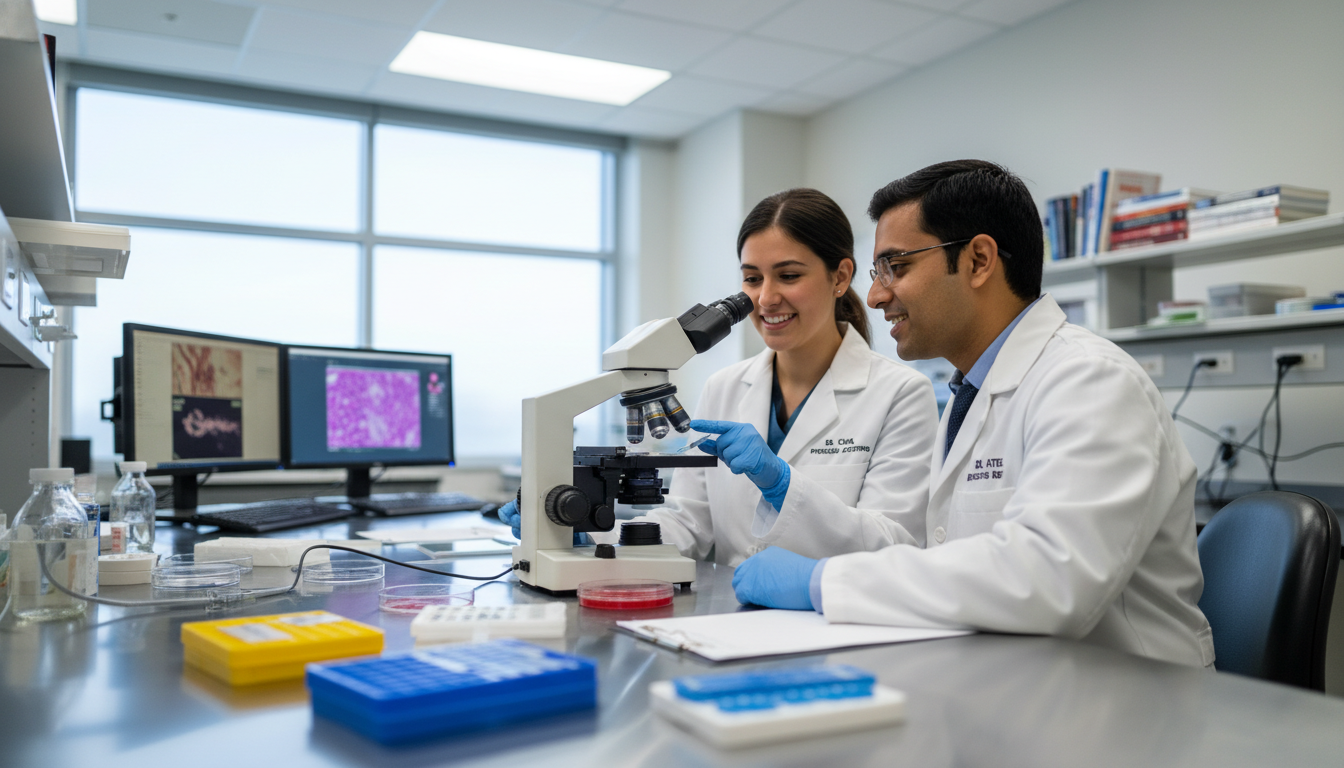
Selecting and planning away rotations is one of the most strategic parts of preparing for the pathology residency match. Because pathology is a smaller specialty and departments are tightly knit, your performance during visiting student rotations can significantly affect your letters of recommendation, your reputation, and ultimately your position on rank lists.
This guide walks through how to think about away rotations in pathology: whether you need them, how many away rotations make sense, where to go, and how to get the most out of each experience.
Understanding the Role of Away Rotations in Pathology
Away rotations (also called visiting student rotations or “audition rotations”) let you spend 2–4 weeks at another institution’s pathology department as a senior medical student. In pathology, they serve several distinct purposes:
1. Clarifying Your Fit for the Specialty
Pathology is less visible during core clerkships, so many students have limited exposure. An away rotation can help you:
- Confirm that you actually enjoy microscopy and diagnostic reasoning.
- Experience day-to-day workflow in both anatomic pathology (AP) and, sometimes, clinical pathology (CP).
- Compare academic vs. community-based departments.
- Understand lifestyle, call expectations, and the culture of the field.
This can be especially important if your home institution has a small pathology department or limited teaching.
2. Signaling Serious Interest
Compared to some other specialties, pathology places heavy weight on evidence of genuine interest:
- Multiple home electives and/or away rotations in pathology demonstrate commitment.
- Programs may be more comfortable ranking applicants higher if they have seen them work in person.
- If you are coming from a school without a strong pathology presence, away rotations can help reassure programs that you know what you’re signing up for.
3. Securing Strong Letters of Recommendation
For the pathology residency match, letters of recommendation from pathologists are highly valued:
- Away rotations provide access to additional academic pathologists who know you as a learner.
- If you perform well, attendings and program leadership may write powerful, program-director-level letters.
- Letters from well-known faculty in niche areas (e.g., hematopathology, GI, molecular pathology) can carry weight across many programs.
4. Expanding Your Network and Reputation
Because pathology is a small specialty:
- Faculty, program directors, and fellows often know each other across institutions.
- A positive impression at one program can reverberate through the pathology community.
- You may gain mentors and collaborators for research, case reports, or career advice that last beyond residency.
Do You Need Away Rotations in Pathology? Strategic Considerations
Not every applicant needs multiple away rotations, and in some situations, a targeted approach—or even no away rotations—can be perfectly reasonable.
When Away Rotations Are Especially Valuable
You should strongly consider away rotations if:
Your home institution has limited pathology exposure
- Few or no formal pathology electives
- Small faculty, limited subspecialties, or minimal resident interaction
Away rotations can give you a clearer view of contemporary academic pathology practice and access to robust teaching.
You lack strong pathology letters
- You need at least one, ideally two, letters from pathologists.
- If your home program can only generate one solid letter, an away rotation is an opportunity for another.
You are a less traditional or potentially “at-risk” applicant
- Lower Step scores, attempts, or academic hiccups
- Non-US medical school, DO student at a school without a strong pathology reputation
- Career change into pathology late in medical school
A well-executed away rotation can demonstrate clinical maturity, work ethic, and clear interest.
You’re aiming for highly competitive programs
- Prestigious academic centers or top-tier research programs
- Programs with a strong track record for fellowships or specific subspecialties you care about
Rotating there can help them “see you in the role,” and you can assess whether the culture and expectations suit you.
You’re geographically constrained
- You must match in a particular city or region for family or personal reasons.
- Away rotations at key programs in that region raise your visibility and provide a chance to make a strong, localized impression.
When You Might Not Need Many Away Rotations
On the other hand, you may not need extensive away rotations if:
- Your home institution is a strong academic pathology center with:
- Robust teaching
- Subspecialty exposure
- Enthusiastic faculty who know you well
- You can secure 2–3 excellent letters from pathologists at your home institution.
- Your academic record is strong and you have some scholarly output (e.g., case reports, QI projects, pathology-related research).
In such cases, you might:
- Do 0–1 away rotations, focusing on a desired region or a dream program.
- Spend freed-up time on research, Step 2 CK, or strengthening other parts of your application.
How Many Away Rotations Make Sense in Pathology?
“How many away rotations?” is one of the most common questions. For pathology residency, a general rule of thumb:
- Typical range: 1–2 away rotations
- Upper end: 3, in very specific circumstances (e.g., late specialty decision, major geographic constraints, or international medical grad needing more US pathology experience)
- Beyond 3: Usually not necessary and may reduce your bandwidth for studying, research, or rest.
Keep in mind:
- Each rotation is 2–4 weeks of intense effort and travel.
- Quality > quantity. Two superb rotations with strong letters and solid performance are more valuable than four mediocre ones.

Choosing Where to Do Visiting Student Rotations in Pathology
Once you’ve decided to pursue away rotations, the next step is strategic program selection.
1. Start with Clear Goals
Before browsing VSLO, define what you want out of each rotation:
Goal: Letter of recommendation
- Choose places with engaged educators and a track record of students.
- Look for electives where you’ll have close contact with attendings and residents (e.g., surgical pathology, subspecialty AP).
Goal: Geographic positioning
- Prioritize programs in your target city/region.
- Consider doing one rotation at a flagship academic center and another at a different program in the same area.
Goal: Subspecialty exposure
- If you’re interested in something like hematopathology, neuropathology, or molecular pathology, look for programs with strong divisions in those fields.
- Subspecialty rotations can also differentiate you when discussing your interests on the trail.
Goal: Reputation-building and networking
- Consider well-connected academic departments with national visibility.
- Look for programs where attendings are active in CAP, USCAP, or other professional societies.
2. Understand the Types of Pathology Rotations Offered
Common options you’ll see in visiting student catalogs:
General Surgical Pathology
- Bread-and-butter material for pathology residency.
- Usually includes grossing exposure, frozen sections (observation), sign-out with attendings, and slide review.
- Excellent for demonstrating work ethic and learning core pathology workflow.
Subspecialty AP Electives (e.g., GI, GU, Gyn, Breast, Derm, Heme, Neuro)
- Useful if you have a focused interest.
- May allow deeper learning, but sometimes narrower scope.
- Be sure you’ll still get enough interaction with faculty and residents.
Autopsy Pathology
- Can be high-yield in some programs; in others, volume may be limited.
- Good for understanding gross pathology, cause of death, and pathophysiologic correlations.
Clinical Pathology (CP) Rotations (e.g., hematology lab, transfusion medicine, microbiology)
- Help you understand lab medicine and test interpretation.
- May be less “visible” for audition purposes compared to AP, depending on the program structure.
Strategy: For audition purposes, at least one of your away rotations should include a strong surgical pathology component, where your diagnostic reasoning and work habits are easy to observe.
3. Balance Prestige, Fit, and Practical Considerations
Prestige and Name Recognition
- Rotations at well-known academic centers can boost your network and brand.
- However, these rotations may be more competitive and structured.
- A mid-sized academic program where faculty can really get to know you may yield a stronger letter than a massive, prestigious center where you’re anonymous.
Program Culture and Size
- Some departments are large with many subspecialties and fellows.
- Pros: Rich exposure, research opportunities.
- Cons: Harder to stand out.
- Others are smaller, more generalist.
- Pros: Closer relationships, broad exposure.
- Cons: Fewer niche specialists.
Practical Factors
- Cost of living and housing options for 2–4 weeks.
- Transportation and commute (especially if you’ll be on call or staying late).
- Rotation dates aligning with your school’s schedule and Step 2 CK timing.
4. Using VSLO and Direct Applications
Most US programs use VSLO (Visiting Student Learning Opportunities):
- Applications typically open in spring for the following academic year.
- Requirements usually include:
- CV
- Transcript
- Step scores
- Immunizations and background check
- Sometimes a short statement of interest
Some institutions also accept direct applications outside VSLO:
- Check each department’s website.
- If unclear, a polite email to the medical student coordinator or education office can clarify options.
How to Structure Your Fourth-Year Schedule Around Pathology Away Rotations
Careful timing of your visiting student rotations is essential for a smooth pathology residency application cycle.
1. Ideal Timing: Late Summer to Early Fall
For most applicants:
Best months for audition rotations: July–October of your application year.
- July–September: Prime audition season; attendings and residents are fresh, and there’s time to request letters before ERAS deadlines.
- October: Still okay, especially if you already have one or two letters and you’re targeting specific programs.
Try to ensure that at least one rotation is completed before ERAS opens (usually September), so you can request a letter early.
2. Pairing Home and Away Rotations
A high-yield pattern:
Early 4th year:
- Do a home pathology elective (General AP or AP/CP mix).
- Build early relationships and secure at least one home-institution letter.
Mid 4th year:
- Do 1–2 away rotations at target programs.
- Request letters shortly after each rotation while impressions are fresh.
Later 4th year:
- Consider advanced subspecialty rotations, research time, or non-pathology electives for personal/professional growth.
3. Integrating Step 2 CK and Other Requirements
- Aim to take Step 2 CK before your most important away rotation if possible.
- Strong Step 2 scores can offset weaker Step 1 performance and reassure programs.
- Avoid scheduling an away rotation immediately before Step 2 if it will limit your study time.
- Incorporate:
- Required sub-Is or other core requirements
- Time for interviews (often late fall to winter)
- Personal time to prevent burnout
Succeeding on Your Pathology Away Rotation: Day-to-Day Strategy
Once you’ve landed the rotation, your goal is to perform in a way that makes attendings and residents think, “We’d be happy to work with this person for the next four years.”
1. Core Professional Behaviors
- Punctuality: Arrive early, be ready to start the day when the team does.
- Reliability: Follow through on tasks—look up unknowns, read about cases, return when you say you will.
- Respect and collegiality: Treat everyone—residents, attendings, PAs, histotechnologists, secretaries—with genuine respect.
First impressions in pathology are especially valuable because you’re often in a relatively small group at the multi-headed scope; any unprofessional behavior is immediately noticeable.
2. Learn the Workflow Quickly
Pathology has specific logistics:
- Understand how cases move:
- Specimen receipt → grossing → processing → slide creation → sign-out.
- Learn your role:
- Observing at the grossing bench.
- Reviewing slides before or after sign-out.
- Preparing differential diagnoses or questions.
Ask early:
- “How can I be most helpful to the team?”
- “Is there a standard way students participate in sign-out here?”
Adapting quickly to each program’s routine signals maturity and teachability.
3. Demonstrate Curiosity and Diagnostic Thinking
You are not expected to be a mini-resident, but programs want to see:
- Genuine interest in the material
- Logical reasoning
- Growth over the rotation
Practical ways to show this:
- Pre-read common path entities for the service you’re on (e.g., for GI, brush up on adenomas, adenocarcinomas, IBD, celiac disease).
- At the microscope, instead of saying “I don’t know,” say:
- “I see glands with nuclear atypia and loss of polarity; I’m thinking about adenocarcinoma. I’m not sure how to grade it.”
- Ask targeted questions:
- “What features make you favor X over Y diagnosis here?”
- “How would the clinical management change based on this pathology finding?”
4. Show Ownership (Appropriate to Your Level)
Without overstepping, you can:
- Follow specific cases through from gross to sign-out and update yourself on the results.
- Look up and summarize key literature or review articles on an interesting case to discuss briefly with the team.
- Offer to present a brief case or topic talk if the culture allows (ask first).
Programs value students who are engaged but not performative—focus on learning, not just “showing off.”
5. Navigating the Social and Cultural Side
Because pathology departments are relatively small and collegial, your interpersonal behavior matters:
- Join residents for lunch or coffee when invited.
- Participate respectfully in sign-out room conversations.
- Ask residents about:
- Program strengths and weaknesses
- Work-life balance
- Call structure and fellowship placement
Aim to project:
- Humility
- Enthusiasm
- Collegiality
People should feel you’d be a positive presence in the resident room and sign-out for four years.
6. Requesting Letters of Recommendation
Towards the end of the rotation:
- Identify 1–2 attendings who have:
- Worked closely with you.
- Seen you consistently at the scope or in the gross room.
- Ask directly and respectfully:
- “I’m applying to pathology this fall. Based on our time working together, would you feel comfortable writing a strong letter of recommendation for my residency application?”
- Provide:
- Updated CV
- Personal statement draft (if available)
- A brief reminder of specific cases or contributions that highlight your strengths
Ask early enough so they can submit before ERAS deadlines; gently follow up with a polite reminder if needed.
Common Pitfalls in Pathology Away Rotations and How to Avoid Them
1. Doing Too Many Away Rotations
Pitfall:
- Over-scheduling 3–4 visiting student rotations, leading to exhaustion, poor Step 2 timing, or mediocre performance.
Solution:
- Be intentional: 1–2 well-chosen rotations are usually enough.
- Protect time for Step 2, research, and rest.
2. Choosing Programs Solely for Name Recognition
Pitfall:
- Rotating at extremely prestigious places where:
- You interact minimally with faculty.
- The environment is not student-focused.
- Getting a meaningful letter is hard.
Solution:
- Balance prestige with:
- Access to attendings
- History of teaching students
- Your likelihood of being noticed
3. Acting Like a Passive Observer
Pitfall:
- Sitting silently at the scope, not asking questions, not revisiting cases, and missing opportunities to learn.
Solution:
- Prepare before sign-out.
- Ask thoughtful, focused questions.
- Follow up on cases and show progressive understanding.
4. Overcompensating by Trying to Impress Constantly
Pitfall:
- Dominating conversations, excessive “pimping” yourself, or interrupting other learners.
Solution:
- Be engaged, but let others speak.
- Contribute when appropriate; read the room.
- Focus on honest curiosity and growth, not theatrics.
5. Not Communicating Your Interest in the Program
Pitfall:
- Leaving the rotation without ever conveying that you would love to train there, so the program isn’t sure how to interpret your interest.
Solution:
- Near the end of your rotation, tell the PD or key faculty:
- “I really enjoyed my time here and could see myself thriving in this program. I plan to apply and would be excited to match here.”
- Follow up with a brief thank-you email after the rotation.
Putting It All Together: A Sample Pathology Away Rotation Strategy
To illustrate, here are three example approaches for different kinds of applicants.
Scenario 1: US MD Student at a Strong Home Pathology Program
- Home school with robust pathology, multiple electives, and engaged faculty.
- Solid Step scores, some pathology-related research.
Strategy
- Early 4th year:
- Home general AP elective.
- Secure 1–2 strong letters from home faculty.
- Mid 4th year:
- 1 away rotation at a top-choice geographic region or dream program.
- Late 4th year:
- Subspecialty pathology elective at home or short research block.
- Total away rotations: 1, focused on geographic or program fit.
Scenario 2: DO Student Without a Strong Home Pathology Presence
- Limited pathology elective options at home.
- Committed to pathology, but faculty letters may be generalized.
Strategy
- Early 4th year:
- Home or affiliated path elective to build baseline experience.
- Mid 4th year:
- 2 away rotations:
- One at a mid-sized academic center known to be DO-friendly.
- One in a preferred geographic area or at a program with strong DO representation.
- 2 away rotations:
- Late 4th year:
- Optional 3rd rotation only if needed to secure another letter or for geographic reasons.
- Total away rotations: 2 (possibly 3), targeted toward letters and visibility.
Scenario 3: International Medical Graduate (IMG) Targeting US Pathology
- Minimal US clinical exposure.
- Needs both experience and US-based letters.
Strategy
- Prior to application year:
- Try to set up observerships or short electives if allowed.
- Application year:
- 2–3 structured visiting student rotations (if visa and institutional policies permit) at:
- Universities with a history of taking IMGs in pathology.
- Programs where education and student teaching are emphasized.
- 2–3 structured visiting student rotations (if visa and institutional policies permit) at:
- Emphasis on:
- Clear communication.
- Strong work ethic.
- Securing detailed letters commenting on comparative performance.
- Total away rotations: 2–3, recognizing immigration and scheduling realities.
FAQs: Pathology Away Rotations and the Residency Match
1. Are away rotations required to match into pathology residency?
No, away rotations are not strictly required for the pathology match, especially if you have:
- A strong home pathology department
- Solid letters from home faculty
- Good academic metrics
However, they are highly beneficial if you lack strong pathology exposure or letters, are an at-risk applicant, or need to match in a specific region.
2. How many away rotations should I do in pathology?
For most applicants, 1–2 away rotations are sufficient and optimal.
You might consider up to 3 in specific circumstances (e.g., IMG, limited home exposure, major geographic constraints), but beyond that, returns diminish and may strain your schedule and finances.
3. Which type of rotation is best for an audition in pathology?
A rotation with a strong surgical pathology component is generally best for audition purposes, because:
- It showcases your diagnostic reasoning and work habits.
- You have frequent, direct interaction with attendings and residents.
- It reflects core AP skills that every pathology resident needs.
Subspecialty AP or CP rotations can be great additions but should usually complement, not replace, a solid general AP experience.
4. Can an away rotation guarantee me an interview or a spot at that program?
No rotation can guarantee an interview or a match, but a strong performance:
- Makes an interview more likely, especially if you express clear interest.
- Allows faculty to advocate for you during selection and ranking.
- Gives you a chance to demonstrate fit and commitment in a way that applications alone cannot.
Programs still consider the full application—scores, letters, personal statement, research—but away rotations can be a powerful positive factor when used strategically.
By approaching away rotations in pathology with a clear plan—deciding how many away rotations you need, where to go, and how to perform day-to-day—you can significantly strengthen your pathology residency application and enter the pathology match with confidence.