5 Game-Changing Strategies to Maximize Your Chances in SOAP
For medical graduates and residency applicants who find themselves unmatched after the main residency match, the Supplemental Offer and Acceptance Program (SOAP) is not just a backup—it is a high-stakes, time-compressed second chance. In a span of just a few days, your decisions, preparation, and communication can determine whether you begin residency this year or face another application cycle.
To make the most of this pivotal opportunity, you need more than hope; you need a clear, efficient, and realistic plan. Below are five game-changing SOAP strategies designed specifically for unmatched applicants who want to maximize their chances of securing a residency position and moving forward in their medical careers.
Understanding SOAP: A Critical Second Chance in the Residency Application Process
Before applying specific SOAP strategies, it is essential to understand how SOAP works and what makes it different from the main residency match.
What Is SOAP?
The Supplemental Offer and Acceptance Program (SOAP), administered by the National Resident Matching Program (NRMP), is a structured process that allows unmatched or partially matched applicants to apply to unfilled residency programs after the main match results are released. It is tightly regulated, fast-moving, and highly competitive.
Key points:
- Eligibility: Only applicants who are unmatched or partially matched and who are SOAP-eligible (as determined by NRMP) can participate.
- Application platform: SOAP occurs through ERAS for most specialties, using your existing residency application as the foundation.
- Communication rules: Direct contact between applications and programs is restricted and strictly regulated during SOAP; you must follow NRMP rules at all times.
How the SOAP Process Is Structured
SOAP is intense because everything happens in a short timeframe during Match Week:
- Unfilled positions released: Early in Match Week, NRMP releases a list of unfilled positions to SOAP-eligible applicants.
- Application rounds: There are multiple application and offer rounds spread over a short period (typically four rounds over two days, but the exact structure may vary slightly by year).
- Application limits: You are limited in how many programs you can apply to during SOAP, so targeting and prioritization are crucial.
- Offers and acceptance: Programs review applications, conduct rapid interviews (often by phone or video), and submit preference lists. NRMP then releases offers in rounds. When you receive an offer, you have a short, strictly defined time window to accept or reject it.
Because of this speed and structure, successful SOAP navigation is less about improvisation and more about preparation. The following five strategies will help you build that preparation in a focused way.
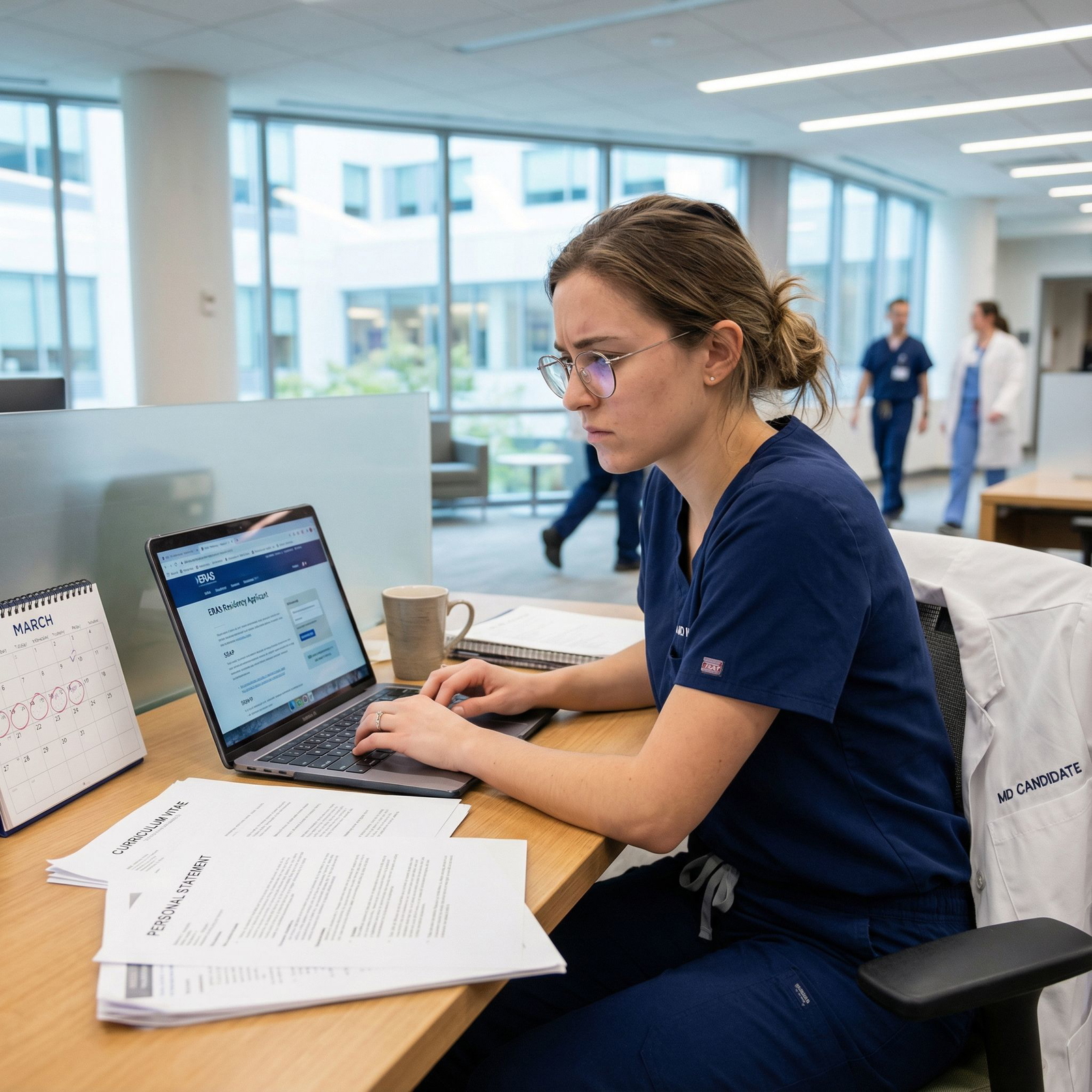
Strategy 1: Fine-Tune and Target Your Application Materials
During SOAP, your existing residency application becomes your primary marketing tool. The goal is to make your ERAS content as strong, clear, and specialty-focused as possible before SOAP begins.
A. Optimize Your CV for SOAP and Unfilled Positions
Your CV (as presented in ERAS) should be strategic, not just comprehensive.
Highlight specialty-relevant experiences:
- Emphasize:
- Core and sub-internship rotations in the target specialty
- Electives that demonstrate breadth (e.g., ICU, ED, geriatrics for Internal Medicine)
- Leadership roles, especially in clinical or quality improvement projects
- Research, QI, or scholarly work related to your SOAP specialties
- Volunteer and community service experiences that align with program missions (e.g., underserved care, rural health)
Show growth and continuity:
- Reframe experiences to highlight:
- Progressive responsibility (e.g., from volunteer to coordinator)
- Teamwork and interprofessional collaboration
- Initiative (creating new projects, improving processes)
- Adaptability and resilience—traits programs look for during SOAP
Make it readable and polished:
- Use concise bullet points with action verbs (led, coordinated, implemented, analyzed).
- Avoid dense paragraphs; programs often skim dozens of files in minutes.
- Ensure there are no typos, date inconsistencies, or formatting errors—these small details can affect perceptions of professionalism.
B. Revise Your Personal Statement With a SOAP-Specific Lens
Your personal statement should not sound generic or recycled. During SOAP, programs often want to understand two things quickly:
- Why you are committed to their specialty.
- How you’ve processed and grown from being unmatched.
Refine your specialty narrative:
- Make clear, concrete connections between your clinical experiences and your specialty choice.
- Use specific patient stories or rotations that confirmed your interest rather than vague statements about “loving medicine” or “wanting to help people.”
- Emphasize what you bring to the specialty—skills, perspectives, or experiences that distinguish you from other applicants.
Address your unmatched status constructively (if appropriate):
You do not need to write a long explanation, but a brief, thoughtful acknowledgment can be powerful:
- Focus on:
- Insights you gained from the process
- Steps you took to strengthen your application (additional electives, research, improved Step/COMLEX performance, enhanced communication skills)
- How this experience reaffirmed your commitment rather than diminished it
- Avoid:
- Blaming others (schools, advisors, exam committees)
- Sounding bitter, defensive, or overly apologetic
Consider specialty flexibility:
During SOAP, many applicants apply to more than one specialty (e.g., Internal Medicine and Family Medicine, or General Surgery prelim positions while still interested in surgery long-term). Consider:
- Creating short, focused variations of your personal statement tailored to each specialty.
- Ensuring each version is clearly aligned with that specialty’s values and training environments.
C. Seek Honest, Fast Feedback Before SOAP Starts
Do not wait until Match Week to ask for input.
- Send your updated CV and personal statement to:
- Faculty mentors in your target specialties
- Your Dean’s Office or career advisor
- Residents who matched into your desired specialties or at your target programs
- Ask specifically:
- “Would you invite this applicant for an interview based on this?”
- “What parts feel weak, confusing, or generic?”
- “Does this explain my path and goals clearly?”
Incorporate their feedback early so that, when SOAP begins, you are updating only small details instead of doing major rewrites under pressure.
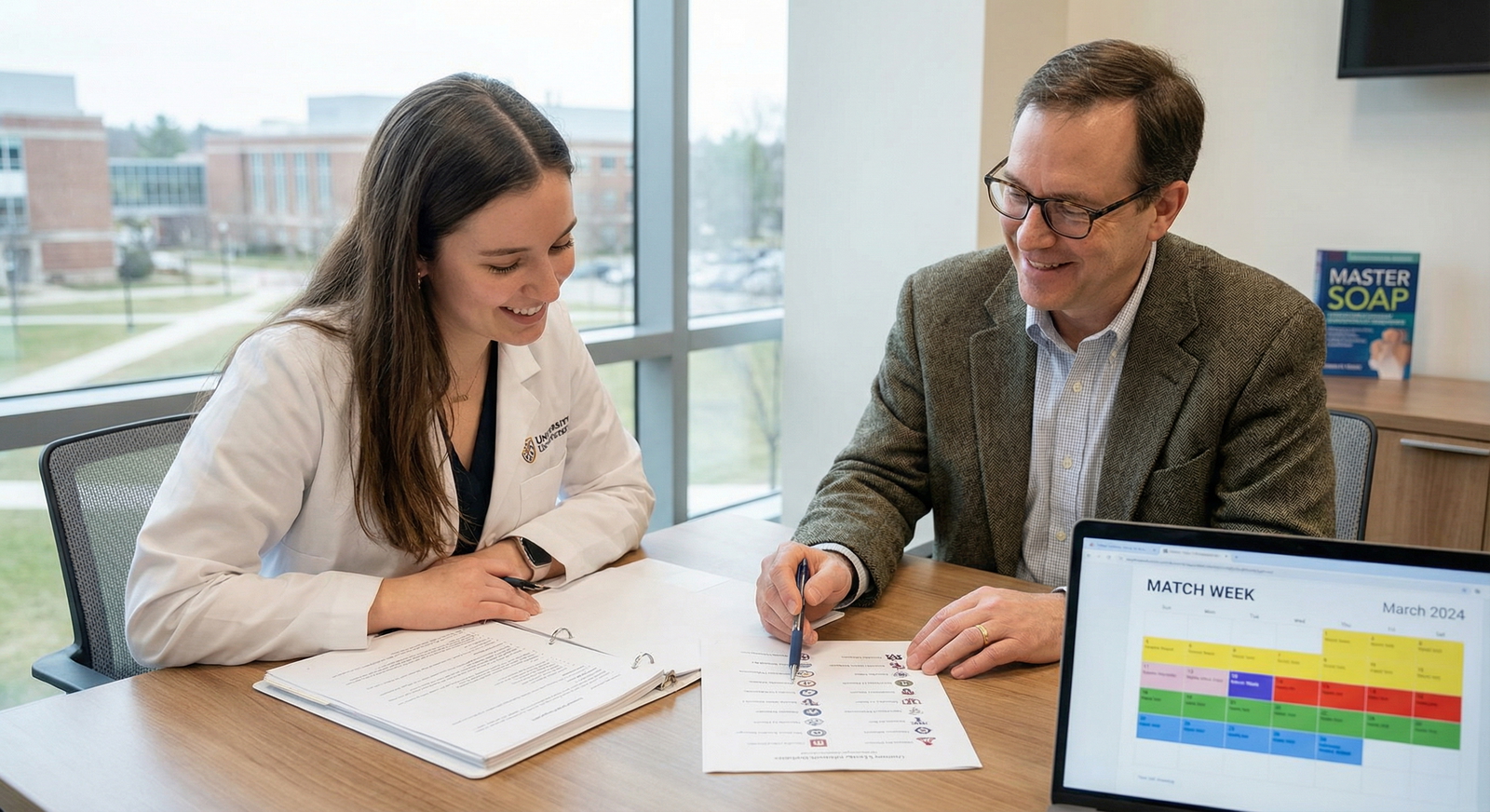
Strategy 2: Research and Strategically Prioritize Programs
SOAP success often comes down to where you apply, not just how strong your application is. Thoughtful targeting is one of the most underused SOAP strategies.
A. Understand the Landscape of Unfilled Positions
While you cannot see the official list of unfilled positions until Match Week, you can still prepare:
Review past years’ SOAP data:
- Look at NRMP and specialty-specific reports to identify fields that historically have more unfilled spots (e.g., preliminary surgery, transitional year, internal medicine, family medicine, psychiatry in some years).
- Note which program types (community vs academic) and regions tend to have more openings.
Clarify your flexibility:
- Are you open to:
- Community-based vs university-based programs?
- Rural, suburban, or urban locations?
- Prelim positions as a bridge year?
- The more flexible you are without compromising your safety or core values, the more options you may have.
- Are you open to:
B. Create a Tiered SOAP Shortlist Before Match Week
When the unfilled list appears, you will need to make decisions quickly. Preparing a tiered framework helps you respond instead of react.
Build a targeted program shortlist template:
Before SOAP:
- Identify programs and regions where you’d be genuinely willing to train.
- For each, note:
- Program type (community, academic, hybrid)
- Size, fellowship options, patient population
- Past match data (if available) or anecdotal insights
- Any existing connections (alumni, faculty, former rotators)
During SOAP:
- When the unfilled list is released, plug the actual unfilled programs into your template.
- Assign tiers:
- Tier 1: Strong fit, realistic chance, aligns well with your background and goals.
- Tier 2: Acceptable fit, good training, some relative compromises (e.g., location).
- Tier 3: Positions you would only consider if no other options remain (e.g., high-risk environments for your situation, very limited support).
This structure ensures you use your limited SOAP applications on realistic, aligned options while minimizing panic-driven decisions.
C. Use Program Fit Criteria That Matter in SOAP
SOAP is not just about “any spot.” You still need to consider your training, wellbeing, and long-term goals.
When evaluating programs:
- Educational environment:
- ACGME accreditation status and any citations
- Board pass rates and graduation rates if available
- Support for residents:
- Wellness resources, mentoring, faculty accessibility
- Infrastructure (night float, ancillary staff, EMR systems)
- Career development and networking in medicine:
- Exposure to subspecialties, research opportunities
- Connections to fellowships or hospital systems that match your goals
- Location and lifestyle factors:
- Cost of living, safety, support systems (friends/family)
- Visa sponsorship policies for international medical graduates (IMGs)
Balancing realism with intentionality is key—you want a position, but you also want a training environment where you can succeed and grow.

Strategy 3: Leverage Networking in Medicine and Professional Relationships
In a process as structured as SOAP, it can be tempting to think that networking doesn’t matter. But within the rules, networking in medicine can still influence which applications get a closer look, who is invited for rapid interviews, and how programs perceive your fit.
A. Activate Your Existing Network Strategically
Rather than sending generic “help me SOAP” messages, be specific and professional.
Who to contact:
- Faculty and attendings from:
- Rotations in your target specialties
- Away rotations or sub-internships
- Research projects and QI initiatives
- Residents, especially:
- Alumni from your medical school now in residency
- Residents at programs you’re targeting
- Your Dean’s office and career advisors:
- They may know program directors or have insight into which programs are open to SOAP candidates like you.
How to approach them:
- Send concise, respectful emails that:
- Briefly explain your situation (unmatched or partially matched, SOAP-eligible).
- Clarify your primary specialty interest(s).
- Ask specific questions such as:
- “Do you know if your program typically participates in SOAP?”
- “Are there unfilled positions in your department this year?”
- “Would you be willing to let your PD know I’ve applied if your program appears on the unfilled list?”
- Offer a short, updated CV or ERAS printout if requested.
B. Use Social Platforms and Online Communities Wisely
Networking in medicine increasingly occurs online, and during SOAP, this can help you identify opportunities and gather real-time insights.
LinkedIn, X (Twitter), and specialty forums:
- Follow residency programs, department accounts, and professional organizations.
- Look for posts about unfilled positions, virtual info sessions, or “last-minute” opportunities.
- Engage professionally—comment thoughtfully, share relevant content, and avoid anything that appears desperate or unprofessional.
Alumni and specialty groups:
- Many medical schools and specialty societies have email lists, WhatsApp groups, or Slack channels where members share SOAP-related information.
- Ask about less obvious programs that may not be widely recognized but offer solid training.
Always respect NRMP communication rules—do not solicit offers directly or attempt to negotiate outside the official SOAP structure.
C. Ask for Targeted Advocacy, Not Favors
When mentors are willing, their advocacy can bring your file to the top of a stack. But the request should be clear and appropriate.
- Examples of reasonable advocacy:
- “If your program ends up with unfilled positions and you feel I would be a good fit, I would be grateful if you could mention my application to your program director.”
- “If you know of any programs with unfilled spots that might be receptive to my profile (FMG, research background, strong IM rotations), would you be willing to forward my CV?”
This is about amplifying your visibility, not bypassing rules.
Strategy 4: Prepare Intensively for SOAP-Style Interviews
SOAP interviews are faster, more targeted, and often more direct than traditional residency interviews. You may have only one short conversation to convince a program that you are worth an offer.
A. Anticipate SOAP-Specific Interview Questions
Programs may focus on themes that help them quickly assess risk, resilience, and fit.
Common SOAP interview topics:
- Why this specialty?
- Programs need reassurance that you are genuinely committed, not just looking for any open spot.
- Why this program or this type of program (community vs academic)?
- Show that you’ve done basic research and understand their setting and patient population.
- Why were you unmatched, and what did you learn?
- Be honest but composed:
- Reflect on factors (e.g., limited specialty choice, geographic constraints, late exams, few interviews).
- Emphasize what you have done to improve (more clinical experience, stronger letters, improved communication).
- Be honest but composed:
- How do you handle setbacks, stress, or high workload?
- Provide structured examples (Situation–Task–Action–Result).
- What are your long-term career goals?
- Indicate realistic plans that align with what the program can offer (e.g., primary care, hospitalist, academic career, potential fellowships).
Practice out loud with mentors, friends, or through mock interviews. Aim for responses that are:
- Concise (60–90 seconds each)
- Structured and clear
- Honest without being negative or self-sabotaging
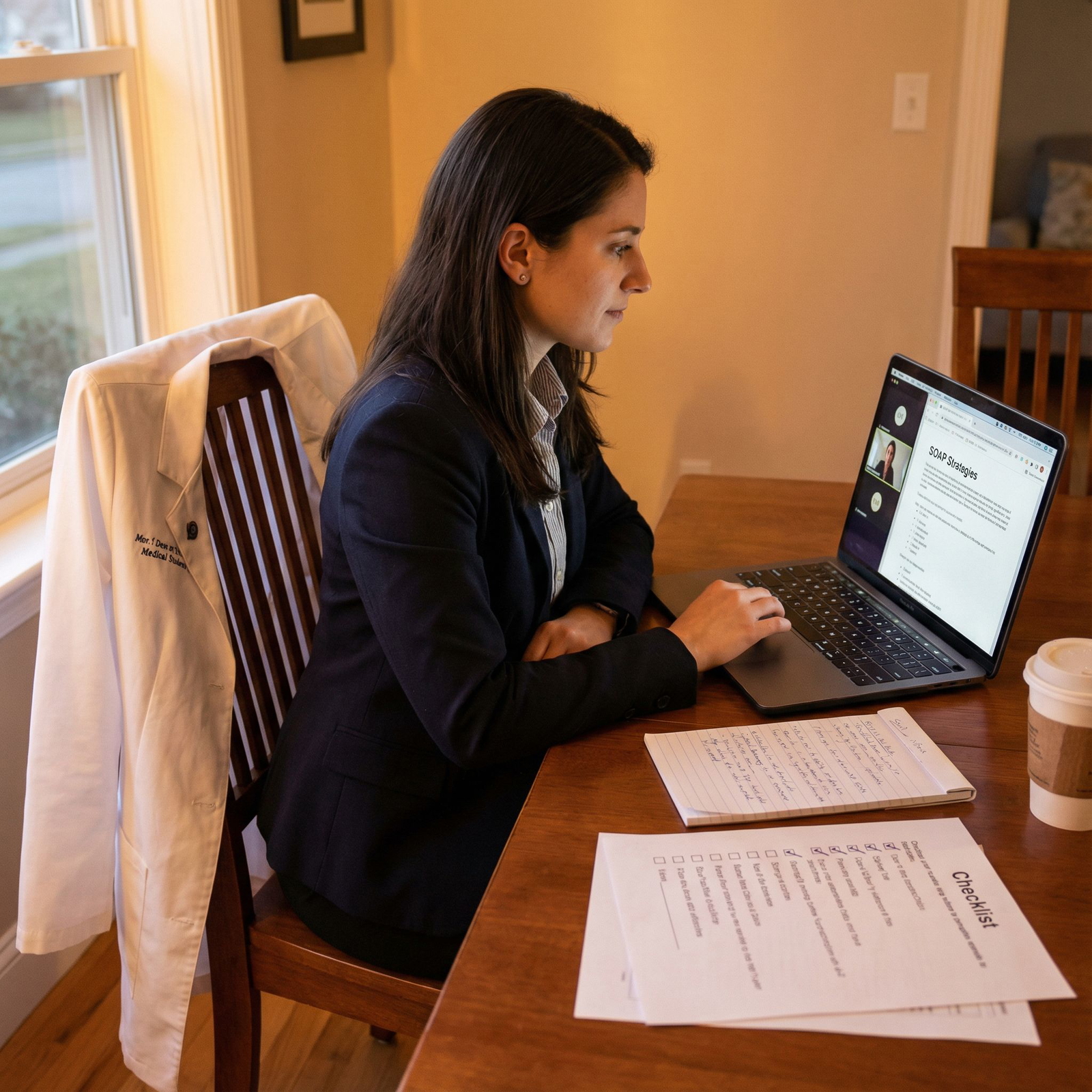
B. Polish Your Virtual Interview Setup and Professional Presence
Most SOAP interviews occur virtually or by phone and often at short notice.
Prepare in advance:
- Technical setup:
- Stable internet connection, updated video platform, working microphone and camera.
- Backup plan: a quiet place and phone ready if tech fails.
- Environment:
- Neutral, uncluttered background with good lighting.
- Minimize noise and interruptions; inform roommates or family in advance.
- Professional appearance:
- Dress in standard interview attire (suit jacket, dress shirt, conservative colors).
- Even for phone interviews, dressing professionally can improve your mindset.
Communication style:
- Speak clearly and at a measured pace.
- Have a notepad with key points about each program and your own highlights.
- Prepare 2–3 thoughtful questions for each program that show genuine interest (e.g., mentorship structure, typical resident career paths).
Strategy 5: Be Ready to Act Quickly, Decisively, and Strategically
SOAP moves extremely fast. Being mentally and logistically prepared to make rapid decisions is one of the most important SOAP strategies you can adopt.
A. Clarify Your Decision-Making Priorities Before Offers Arrive
When offers come, you will not have hours for reflection. You may have minutes. Reduce decision fatigue by defining your priorities in advance.
Questions to answer ahead of time:
- Is any ACGME-accredited categorical position in your field of interest acceptable, regardless of location?
- Would you accept:
- A preliminary position in your preferred specialty as a stepping stone?
- A categorical position in a related specialty (e.g., Family Medicine instead of Internal Medicine)?
- Are there any absolute dealbreakers:
- Locations unsafe for you personally or without any support system?
- Programs with well-documented severe issues (e.g., chronic accreditation problems, extremely poor resident support)?
Write down your hierarchy of choices:
- Top-choice combinations of specialty + program type + region.
- Acceptable alternatives (e.g., FM vs IM, community vs academic).
- Options you would only accept as a last resort.
Having this framework ready prevents emotional decisions under pressure.
B. Understand the Mechanics of SOAP Offers and Acceptance
During each SOAP offer round:
- You may receive zero, one, or multiple offers.
- You have a short, defined time window to accept or reject.
- Once you accept an offer, your SOAP participation ends—you are committed to that program.
Key implications:
- Rejecting an offer is final; you cannot go back to it later.
- Waiting for a “better” offer is risky; there is no guarantee another offer will come in later rounds.
- A realistic, acceptable offer early in SOAP is often worth accepting, especially if it fits your specialty and major priorities.
Consider discussing hypothetical scenarios with a trusted mentor before SOAP begins so you’re not alone in last-minute decision making.
C. Use Available SOAP Tools and Support
Do not try to manage SOAP entirely by yourself.
- Technology:
- Use spreadsheets or simple trackers to:
- Record each program you apply to
- Track interview invitations and completed interviews
- Note key pros/cons and your personal ranking
- Use spreadsheets or simple trackers to:
- Institutional support:
- Many schools have dedicated SOAP support teams during Match Week.
- Keep in close contact with your Dean’s Office—they can:
- Help interpret your options
- Provide last-minute advice on offer decisions
- Sometimes advocate on your behalf when appropriate
Always stay within NRMP rules and deadlines. Missing a deadline during SOAP usually means losing that opportunity entirely.

Conclusion: Turning SOAP Into a Strategic Career Step
SOAP is undoubtedly stressful, but it is also a powerful mechanism that has placed thousands of medical graduates into successful residency positions. By approaching it intentionally—rather than reactively—you can transform a disappointing Match result into a meaningful opportunity for career development.
Summarizing the five game-changing SOAP strategies:
Fine-tune your application materials
Make your CV and personal statement specialty-specific, honest, and polished. Address your unmatched status thoughtfully and highlight growth and resilience.Research and prioritize programs strategically
Understand the SOAP landscape, clarify your geographic and specialty flexibility, and create a tiered program shortlist to guide rapid decisions.Leverage networking in medicine
Activate mentors, alumni, and online professional communities within NRMP rules. Strategic advocacy can increase your visibility among many applicants.Prepare for SOAP-style interviews
Practice concise, structured responses to SOAP-specific questions and optimize your virtual presence to project professionalism and clarity.Be ready to act quickly and decisively
Define your priorities before offers arrive, understand the mechanics and risks of accepting or declining offers, and use tools and support systems to stay organized.
SOAP does not define your worth as a physician. It is one phase in a longer journey. Many excellent doctors and specialists began their training through SOAP or after an unmatched year. With preparation, honesty, and strategic thinking, you can maximize your chances of securing a residency position and continue moving forward in your medical career.
Frequently Asked Questions About SOAP and Residency Applications
1. Should I write a new personal statement specifically for SOAP?
Yes, in most cases it is wise to revise or slightly rework your personal statement for SOAP. You do not need a completely different essay, but you should:
- Make the specialty-specific focus even clearer.
- Remove overly generic content and add concrete examples from recent experiences.
- Briefly, constructively acknowledge your unmatched status if it adds helpful context.
- Consider creating different versions if you will apply to more than one specialty (e.g., IM vs FM).
Using the exact same statement from the main residency application may miss an opportunity to show growth and reflection since your initial submission.
2. How do I know which programs have unfilled positions during SOAP?
During Match Week:
- The NRMP provides an official list of unfilled positions accessible to SOAP-eligible applicants through their NRMP account.
- The list includes:
- Program name and institution
- Specialty and position type (categorical, preliminary, transitional)
- Number of available positions
Outside of the official list, mentors, alumni, and specialty societies may have informal knowledge about programs likely to participate in SOAP, but the NRMP list is the authoritative source you should use for actual applications.
3. Can I reuse my original ERAS application for SOAP, or do I need to change everything?
You will use the same ERAS application for SOAP, but you should refine it:
- Update experiences, publications, or exam results that have changed since your original submission.
- Tighten your descriptions to be clearer and more specialty-focused.
- Replace or adjust your personal statement where needed.
- Review your program signals (if applicable) and letters of recommendation strategy with an advisor to ensure they still fit your SOAP targets.
Think of your existing application as a strong draft, not a finished product. Small, targeted edits can significantly improve how programs perceive your readiness.
4. How important is networking during SOAP if communication is restricted?
Networking in medicine is still important during SOAP, even with NRMP restrictions. While you cannot circumvent the official SOAP process:
- Mentors and alumni can:
- Inform you about programs that often have SOAP positions.
- Offer advice about program culture and fit.
- Notify their program directors that you have applied, if appropriate.
- Residents and colleagues can:
- Share their experiences at specific programs.
- Help you prepare for rapid-fire interviews.
- Provide emotional support and perspective during a stressful week.
As long as you respect NRMP rules and avoid seeking unofficial offers or negotiations, professional networking remains a valuable tool.
5. What are my options if I remain unmatched after SOAP?
If you are still unmatched after SOAP, it is discouraging but not the end of your medical career. Many candidates successfully match in subsequent cycles after strategic adjustments. Options include:
- Strengthening your application for next year:
- Obtain a research position or clinical research fellowship.
- Pursue a post-graduate year (PGY-1)-equivalent opportunity where available.
- Take on structured clinical roles (e.g., preliminary year, observerships, hands-on experiences where permitted).
- Working with your Dean’s Office and mentors:
- Analyze your prior application (specialty choice, exam performance, letters, geographical limits).
- Develop a targeted plan for the next residency application cycle.
- Focusing on career development:
- Engage in scholarly projects, leadership roles, quality improvement, or teaching to enhance your profile.
- Continue networking in medicine, attend conferences, and maintain contact with potential letter writers.
Remaining unmatched after SOAP may slow your progression, but it does not close the door on residency. Many physicians have taken a nontraditional path and still built fulfilling, impactful careers. The key is to respond with a structured, forward-looking plan rather than giving up.