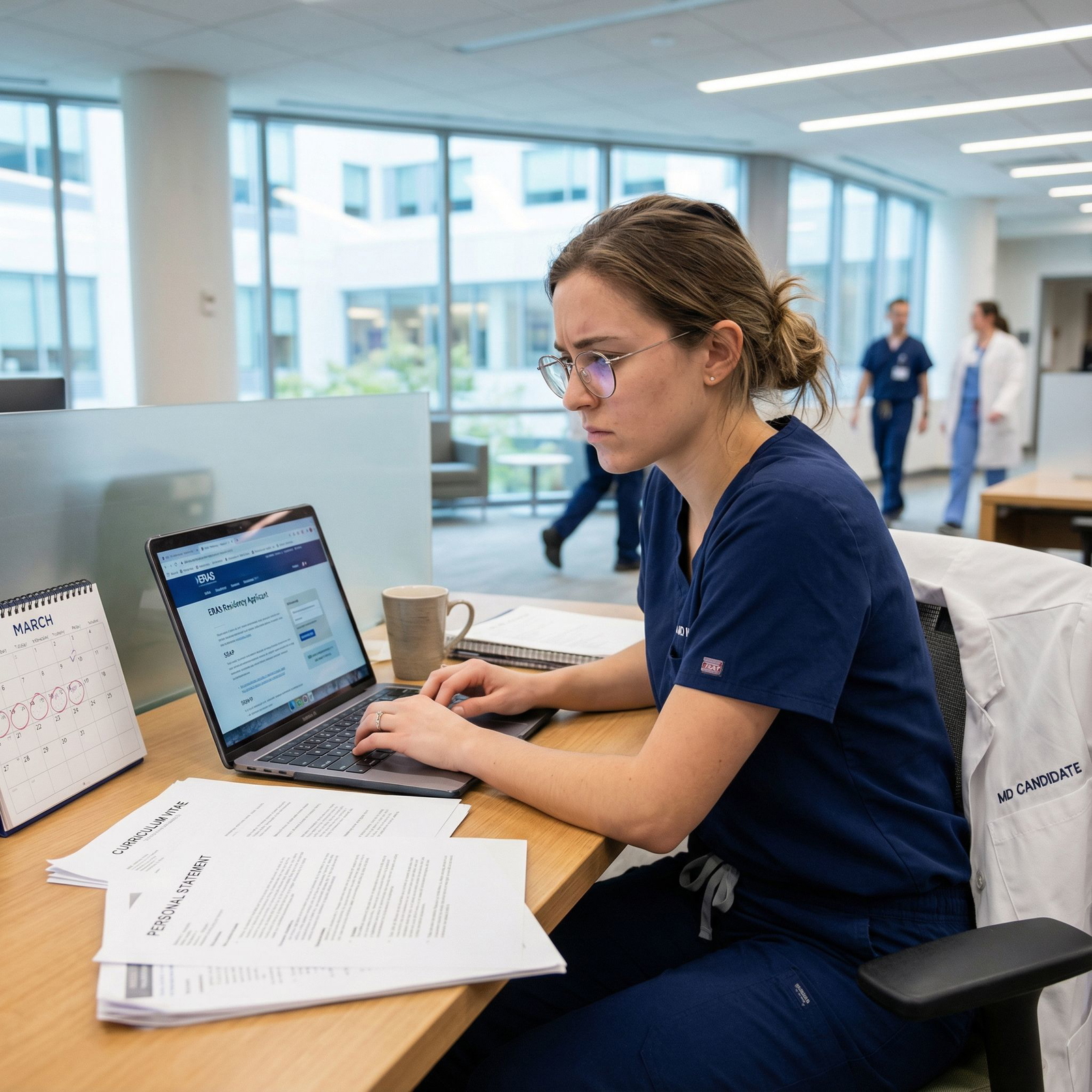
Choosing a path into U.S. residency is challenging in itself; doing it through SOAP as an international medical graduate (IMG) in Preliminary Medicine can feel overwhelming. With planning and discipline, however, the Supplemental Offer and Acceptance Program (SOAP) can become a structured opportunity instead of a last‑minute scramble.
This IMG residency guide focuses specifically on SOAP preparation for Preliminary Medicine (prelim IM) positions and is tailored to international medical graduates who are unmatched or partially matched.
Understanding SOAP and the Prelim IM Pathway
Before you can prepare effectively, you need a precise answer to “What is SOAP?” and how it fits into a Preliminary Medicine strategy.
What is SOAP?
SOAP (Supplemental Offer and Acceptance Program) is the structured process that allows eligible unmatched or partially matched applicants to apply to unfilled residency positions during Match Week. It is not a separate match; it’s an extension of the Main Match under strict NRMP rules.
Key features:
- Runs during Match Week (Monday–Thursday)
- Uses ERAS for applications and NRMP for offers
- Involves multiple rounds of offers
- You cannot apply outside ERAS during SOAP hours
- Communication rules with programs are highly restricted
Understanding SOAP early allows you to start SOAP preparation months in advance rather than reacting in panic in March.
What is a Preliminary Medicine Year?
A Preliminary Medicine (Prelim IM) year is a 1‑year (PGY‑1 only) training position, usually designed to provide a solid foundation in internal medicine before entering an advanced specialty like:
- Neurology
- Anesthesiology
- Radiology
- Physical Medicine & Rehabilitation
- Dermatology
- Ophthalmology
- Radiation Oncology
Key points about a prelim IM year:
- One‑year contract (no automatic progression to PGY‑2 IM)
- Focus on inpatient medicine, night float, and general ward rotations
- Heavy workload, but excellent for building clinical skills and U.S. experience
- Popular among IMGs seeking:
- A stepping stone to an advanced specialty
- A foothold in the U.S. system to reapply for categorical IM later
Why SOAP is Especially Important for IMGs in Prelim Medicine
For an international medical graduate, SOAP can be a critical second chance, especially if:
- You applied mainly to categorical programs and did not match
- You had limited U.S. clinical experience or letters
- Your USMLE/COMLEX scores are average or marginal for categorical IM
- You target advanced specialties that require a separate PGY‑1 year
Advantages of targeting prelim IM in SOAP:
- Historically, prelim medicine has a higher proportion of unfilled positions than many categorical specialties.
- Some university and community programs intentionally leave prelim spots unfilled for SOAP.
- Programs may be more flexible about scores and gaps if you appear reliable, hard‑working, and ready to start immediately.
However, competition remains intense—especially for IMGs—so deliberate SOAP preparation is essential.
Timeline and Strategy: Preparing for SOAP Months in Advance
SOAP success rarely comes from last‑minute action. It comes from a phased plan you start well before Match Week—even if you hope never to use it.

Phase 1 (6–9 Months Before Match Week): Build a SOAP‑Ready Profile
Even as you prepare your main ERAS applications, quietly build a SOAP‑ready profile with prelim IM in mind.
Clarify Your Backup Plan Early
- Decide whether Preliminary Medicine is:
- Plan B (backup if categorical IM or advanced specialty fails), or
- Plan A (you intentionally want a strong medicine internship).
- This decision affects:
- Your personal statement focus
- Program list breadth
- How you present your career goals
- Decide whether Preliminary Medicine is:
Secure Letters Suitable for Preliminary Medicine
- Aim for at least 2–3 strong internal medicine letters, ideally from:
- U.S. clinical experiences (inpatient rotations, sub‑internships, observerships with strong clinical exposure)
- Request letters that:
- Highlight your work ethic, reliability, ability to adapt quickly
- Emphasize teamwork, communication, and patient ownership
- Let your letter writers know prelim medicine may be a realistic outcome; this may adjust how they frame your readiness.
- Aim for at least 2–3 strong internal medicine letters, ideally from:
Optimize Your ERAS Content for Use in SOAP
- Ensure your experiences and descriptions highlight:
- Inpatient exposure
- Night calls, cross‑coverage responsibilities (if any)
- Managing acutely ill patients
- Team collaboration with nurses, residents, and consultants
- Draft a Prelim Medicine–specific personal statement early:
- Keep a version that:
- Emphasizes your interest in broad clinical training
- Acknowledges long‑term plans (e.g., neurology, radiology) without making you sound disinterested in medicine itself
- Have it proofread before application season, so you don’t scramble during Match Week.
- Keep a version that:
- Ensure your experiences and descriptions highlight:
Research Visa Patterns and Institutional Policies
- As an IMG, visa sponsorship is often the main limiting factor.
- Start a spreadsheet with columns:
- Program name
- Prelim IM offered?
- Historically sponsors J‑1? H‑1B?
- IMG‑friendly?
- Past SOAP participation (if known)
- Contact info and notes
- Use this database during SOAP to filter quickly for realistic options.
Phase 2 (2–3 Months Before Match Week): Create Your SOAP Infrastructure
By now your ERAS is submitted. You should:
Refine a SOAP‑Specific Program Strategy
- Analyze past NRMP data (and online forums) for:
- Prelim IM programs that commonly have unfilled spots
- Community vs university distribution
- Group potential targets:
- Tier 1: IMG‑friendly, sponsors your visa, historically unfilled or lower fill rates
- Tier 2: Mixed track record with IMGs
- Tier 3: Less likely to take IMGs but still possible
- This analysis will help when you face the limited number of SOAP applications (max 45).
- Analyze past NRMP data (and online forums) for:
Draft Targeted Personal Statement Variants
- Prepare 2–3 versions of your Prelim IM personal statement:
- Version A: For programs aligned with your intended advanced specialty
- Version B: For programs where you might stay on to reapply for categorical IM
- Version C (generic): For any prelim IM program if time is short
- Avoid sounding like “I’m only here until I get my dream specialty.” Instead:
- Emphasize how a strong prelim medicine year will:
- Make you a better specialist
- Deepen your understanding of systemic disease
- Improve interdisciplinary care
- Emphasize how a strong prelim medicine year will:
- Prepare 2–3 versions of your Prelim IM personal statement:
Prepare a Concise SOAP CV Summary
- Draft a 1‑page summary you can refer to quickly when programs ask about you:
- Key scores and attempts
- Graduation year
- Visa status
- U.S. clinical experience highlights
- Brief explanation of any red flags (gaps, attempts, etc.)
- This helps you communicate clearly and consistently under stress.
- Draft a 1‑page summary you can refer to quickly when programs ask about you:
Phase 3 (4–6 Weeks Before Match Week): Rehearse the SOAP Scenario
At this stage, you still don’t know if you’ll need SOAP, but you act as if you might.
Know the SOAP Rules Thoroughly
- Read the latest NRMP and ERAS SOAP guides:
- Eligibility criteria
- Application limits (up to 45 programs total)
- Contact restrictions (no unsolicited outreach to programs during certain times)
- Understand time windows:
- When you’ll see the List of Unfilled Programs
- When you can start sending applications
- Offer rounds (Rounds 1–3, sometimes 4)
- Read the latest NRMP and ERAS SOAP guides:
Prepare Standard Interview Answers for Prelim IM
- Craft and rehearse responses to:
- “Why are you interested in a preliminary medicine year?”
- “What are your long‑term career goals?”
- “What would your seniors say about your work ethic?”
- “How do you manage stress and long hours?”
- “Why did you go unmatched/partially matched?”
- Practice with:
- Peers
- Mentors
- Video mock interviews (record and review)
- Craft and rehearse responses to:
Plan Your Living & Logistical Flexibility
- SOAP moves fast; prelim IM programs often need residents willing to:
- Move on short notice
- Start orientation in June
- Prepare:
- A realistic geographic flexibility plan (how far from your current home you’re willing to go)
- A budget for urgent relocation
- A visa timeline estimate for J‑1/H‑1B if relevant
- SOAP moves fast; prelim IM programs often need residents willing to:
Match Week: Executing a Focused SOAP Strategy for Prelim IM
Once Match Week begins, the process shifts from preparation to execution. A calm, systematic approach is essential.
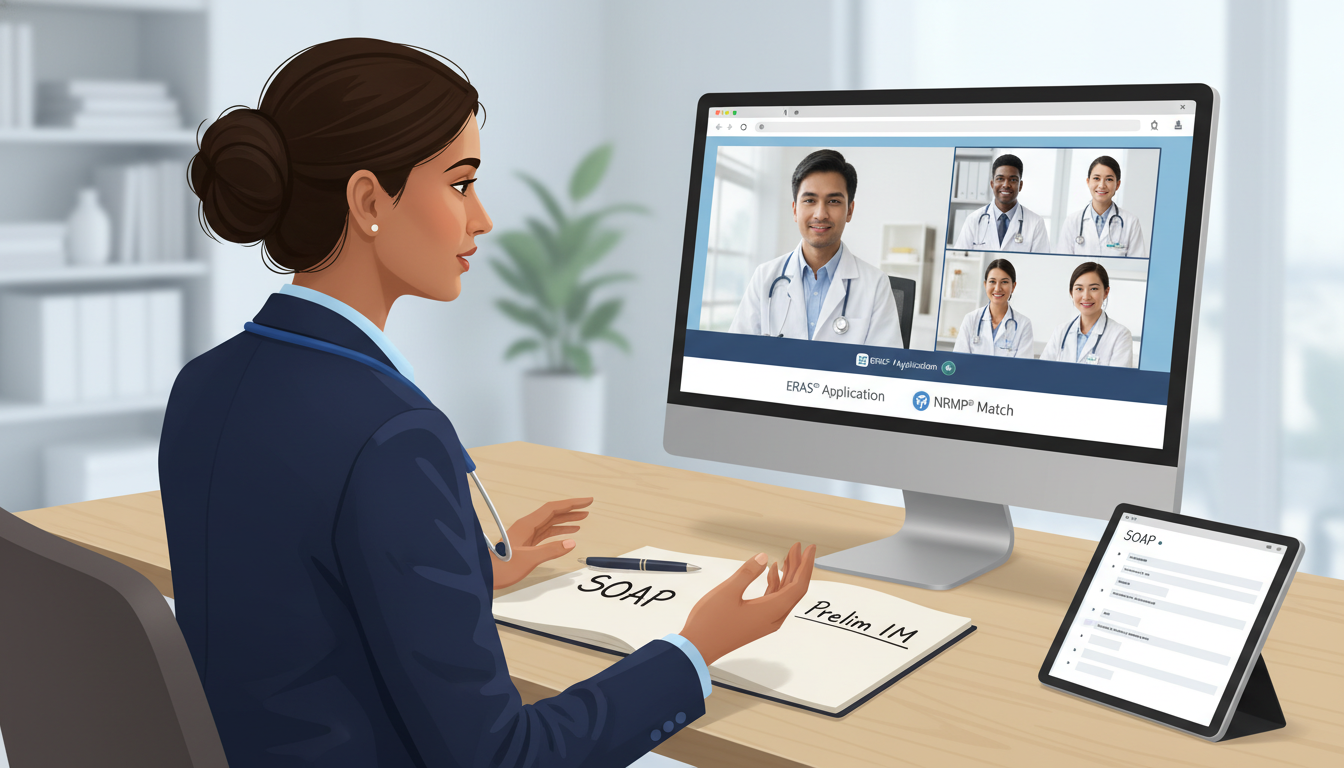
Monday: Unmatched Status and Initial Response
When you receive notice that you’re unmatched or partially matched:
Acknowledge Emotion, Then Re‑Focus
- Take a few hours to process. Then switch to operational mode.
- Remind yourself: many successful attendings matched via SOAP or after reapplication.
Confirm SOAP Eligibility
- Check:
- NRMP participation status
- Graduation year and exam requirements
- Visa status
- If in doubt, contact NRMP/ERAS immediately for clarification.
- Check:
Review the List of Unfilled Programs
- When the List of Unfilled Programs becomes available:
- Filter for Internal Medicine – Preliminary
- Further filter by:
- Visa sponsorship
- Geographic constraints
- Hospital type (community vs academic)
- Mark each as High/Medium/Low priority based on your spreadsheet and current data.
- When the List of Unfilled Programs becomes available:
Selecting Prelim IM Programs Strategically (Within 45 Application Limit)
You may apply to up to 45 programs total during SOAP (across all specialties). Strategy matters.
Prioritize Likely Acceptors
- For an international medical graduate:
- Focus on programs that historically:
- Take IMGs
- Sponsor your visa type
- Have a track record of using SOAP
- Focus on programs that historically:
- Balance your list:
- 60–70% high‑realism programs (community, IMG‑friendly)
- 20–30% moderate reach (academic or competitive locations)
- 0–10% true reach programs (only if slots remain)
- For an international medical graduate:
Beware of Applying Across Too Many Specialties
- Applying to multiple specialties (e.g., Prelim Surgery + Prelim Medicine + Family Medicine) may:
- Dilute your narrative
- Confuse programs about your true goals
- If your main goal is a preliminary medicine year:
- Keep your focus mostly on Prelim IM and maybe categorical IM if available and realistic.
- Applying to multiple specialties (e.g., Prelim Surgery + Prelim Medicine + Family Medicine) may:
Tune Personal Statements Rapidly
- Assign the most targeted statement to:
- Programs affiliated with your desired advanced specialty (e.g., neurology department you like)
- Use the generic Prelim IM PS for:
- Lower‑priority or time‑sensitive submissions
- Assign the most targeted statement to:
During SOAP Offer Rounds: Professionalism and Responsiveness
SOAP moves through several offer rounds over a few days. Your behavior during this time signals your reliability as a future resident.
Be Ready for Rapid Interview Requests
- Many prelim IM programs conduct:
- Very short video or phone interviews
- Sometimes same‑day scheduling
- Keep:
- Your phone charged and available at all times
- A quiet, professional space ready for video calls
- Your 1‑page CV summary and notes in front of you
- Many prelim IM programs conduct:
Communicate a Consistent Story
- When asked:
- Describe clearly why you are genuinely interested in a strong medicine foundation.
- If you have a future specialty in mind, frame it as:
- “I want to be the type of [specialist] who truly understands internal medicine and can manage complex medical patients.”
- If asked why you went unmatched:
- Be honest, concise, and non‑defensive:
- “I applied very narrowly to [specialty] and underestimated the competitiveness for IMG applicants. I’ve taken responsibility for that and I’m fully committed to working hard in a Prelim IM year.”
- Be honest, concise, and non‑defensive:
- When asked:
Handle Offers Carefully
- If you receive an offer:
- You must accept or reject within the specified time window (usually 2 hours).
- Do not hold out too long for a “perfect” program if:
- You have a solid, visa‑sponsoring prelim IM offer that meets your main needs.
- Remember:
- A good preliminary medicine year at a community hospital can open doors later.
- Many opportunities come from strong performance and networking, not only from the program’s brand.
- If you receive an offer:
How to Present Yourself as an Ideal Prelim IM Candidate (Especially as an IMG)
Programs know that many prelim residents plan to move on after one year. They want interns who will work hard, be reliable, and support the team.
Emphasize Traits Programs Value in Prelim Interns
Reliability and Work Ethic
- Give concrete examples:
- Covering extra shifts
- Volunteering for admissions
- Taking ownership of follow‑up tasks
- As an IMG, highlight:
- Adaptability to new systems
- Experience working with limited resources or high patient volumes
- Give concrete examples:
Team Compatibility
- Prelim interns are often the backbone of ward coverage.
- Show:
- You value nurses’ input
- You communicate clearly with residents and attendings
- You have no problem doing “unglamorous” tasks (calling families, following up labs)
Clinical Readiness and Safety
- Programs worry about:
- Patient safety
- Interns who need extensive micromanagement
- Provide evidence that you:
- Can recognize sick vs stable patients
- Ask for help at the right time
- Document carefully
- Understand basic inpatient workflows
- Programs worry about:
Addressing Common IMG‑Specific Concerns
Visa
- Be upfront and precise:
- “I will need a J‑1 visa; I have already passed all USMLE exams including Step 2 CK.”
- If seeking H‑1B: confirm eligibility (Steps completed, timing).
- Programs appreciate candidates who understand their visa situation clearly.
- Be upfront and precise:
Gaps and Delays
- Many IMGs have graduation gaps:
- Emphasize how you stayed clinically active (observerships, research, volunteering).
- Provide a brief, honest explanation without oversharing.
- Many IMGs have graduation gaps:
Language and Communication
- Prelim interns must call consults, present quickly, and update families.
- Demonstrate:
- Clear, fluent English
- Structured presentations
- Ability to summarize complex information succinctly
Life After SOAP: Maximizing Your Prelim Medicine Year
Securing a prelim IM spot through SOAP is not the end; it’s the launch pad for your long‑term career.
How to Turn a Prelim Year into Future Opportunities
Excel Clinically From Day One
- Show up prepared and early
- Learn your EMR system quickly
- Keep a list of:
- Common admitting diagnoses
- Typical orders and workup patterns
- Ask upper‑levels regularly:
- “How can I improve my presentations?”
- “What could I do more efficiently tomorrow?”
Build Strong Relationships
- Identify potential mentors (chief residents, program leadership, supportive attendings).
- Let them know early:
- Your career goals (advanced specialty vs categorical IM).
- Your need for guidance on reapplication.
- Seek letters of recommendation before mid‑year, when your performance is clearly known.
Plan Your Next Application Cycle Early
- If you want to:
- Get into an advanced specialty
- Transition to categorical IM
- Start:
- Researching programs
- Drafting updated personal statements
- Organizing new letters of recommendation
- Use your prelim PD and faculty as advisors—they know how you work under real pressure.
- If you want to:
Maintain a Positive Professional Reputation
- Word travels quickly in the U.S. residency community.
- As an IMG who came through SOAP:
- Your humility, professionalism, and dedication can leave a strong positive impression.
- Avoid:
- Complaining openly about your “backup path”
- Expressing resentment over not matching your first-choice specialty
Frequently Asked Questions (FAQ)
1. As an IMG, should I apply to both categorical IM and prelim IM during SOAP?
Yes, if both are available and realistic options for your profile. However:
- Prioritize visa‑sponsoring, IMG‑friendly programs.
- Be consistent in your personal statement and interview answers:
- For categorical IM: emphasize long‑term interest in internal medicine.
- For prelim IM: emphasize desire for a strong medicine foundation supporting your long‑term goals.
Be careful not to send contradictory signals to programs within the same institution.
2. Do prelim medicine positions filled through SOAP count as “lesser” than those filled in the main Match?
Not inherently. Many programs:
- Intentionally reserve prelim spots for SOAP to maintain flexibility.
- Have SOAP‑filled prelim interns who perform as well as or better than main Match interns.
What matters most for your future is:
- Your performance
- Your relationships
- Your professionalism during the year
3. What is SOAP preparation I can do if Match Week is very close and I haven’t planned ahead?
If Match Week is near:
- Update and polish a Prelim IM–focused personal statement.
- Prepare a clear explanation of your unmatched status.
- Identify at least 20–25 prelim IM programs likely to be IMG‑friendly (from public lists, program websites, and visa information).
- Practice short, focused interview answers about your strengths, work ethic, and goals.
- Ensure you fully understand NRMP/ERAS SOAP rules and time windows.
Even late preparation is better than none, but more months of planning give you a major advantage.
4. If I SOAP into a prelim IM program as an IMG, will it hurt my future chances of getting a categorical IM or advanced specialty position?
No—if anything, a successful prelim year can strengthen your application:
- U.S. faculty will vouch for your performance.
- You gain real U.S. inpatient experience.
- You demonstrate resilience and commitment.
Programs often value applicants who:
- Faced adversity (e.g., unmatched, SOAP)
- Responded with hard work, humility, and excellence
The key is to perform strongly, maintain professionalism, and seek guidance throughout your prelim year.
Preparing for SOAP as an international medical graduate looking for a Preliminary Medicine position is about more than reacting in March. It’s about:
- Designing a backup plan early
- Structuring your ERAS materials with prelim IM in mind
- Understanding SOAP residency rules and restrictions
- Practicing how you present your story confidently and honestly
With thoughtful SOAP preparation, you can turn an uncertain Match Week into an opportunity to launch your U.S. medical career through a rigorous and rewarding prelim IM year.