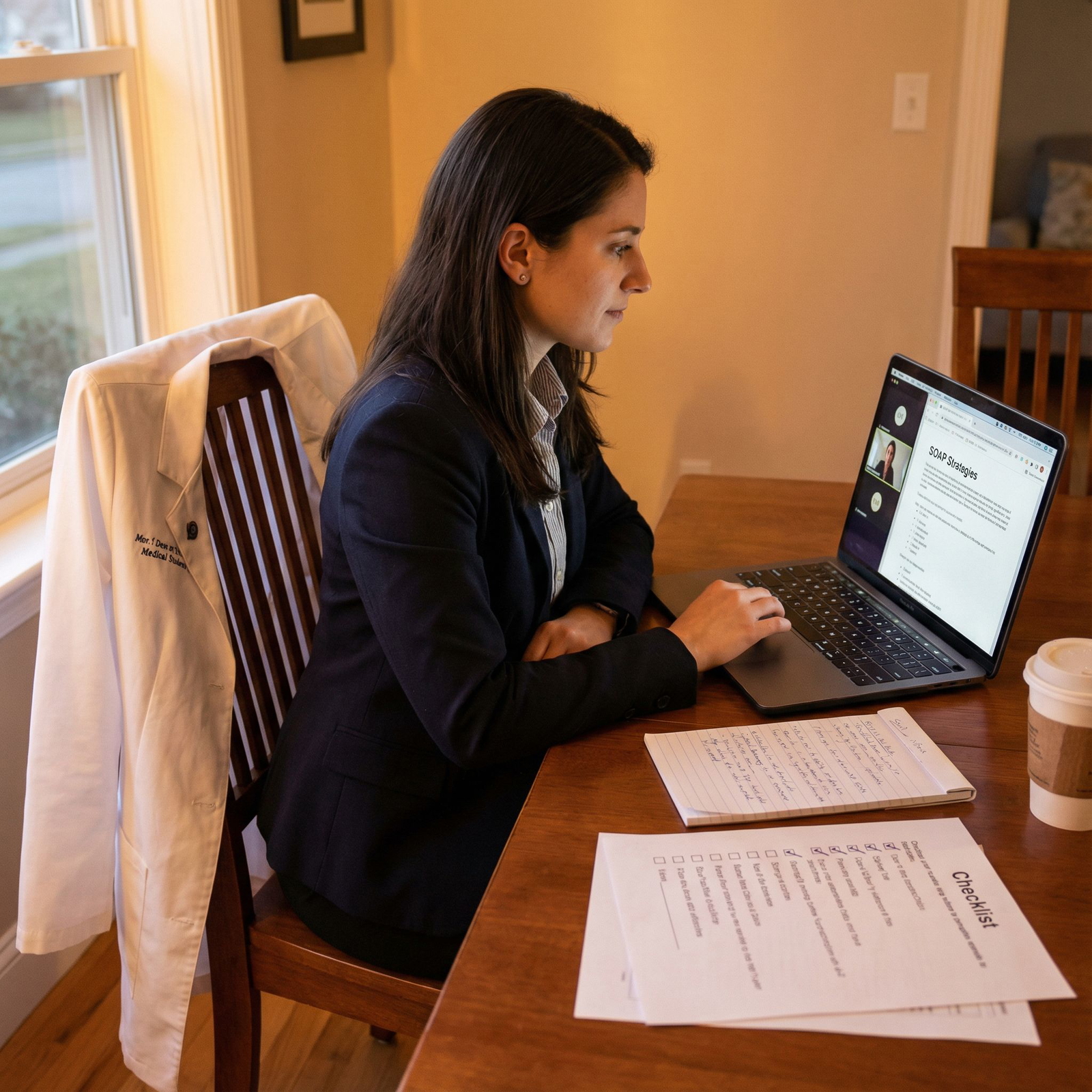
Preparing for the Supplemental Offer and Acceptance Program (SOAP) is essential risk management for every international medical graduate (IMG) applying to internal medicine. Even highly competitive candidates can go unmatched for reasons unrelated to their qualifications—program behavior, interview numbers, geographic restrictions, or pure statistics. Thoughtful SOAP preparation transforms Match Week from a crisis into an organized contingency plan.
This IMG residency guide will walk you step‑by‑step through SOAP preparation specific to internal medicine, so that if you need it, you are ready—and if you don’t, the preparation still strengthens your overall application strategy.
Understanding SOAP: What It Is and Why It Matters for IMGs
Before you can prepare effectively, you must clearly understand what is SOAP, how it works, and why it is especially important for an international medical graduate pursuing internal medicine residency.
What is SOAP?
The Supplemental Offer and Acceptance Program (SOAP) is the NRMP‑run process that allows eligible unmatched or partially matched applicants to apply to and receive offers from residency programs that still have unfilled positions during Match Week.
Key features:
- Occurs during Match Week, after applicants learn they are unmatched or partially matched
- Allows applications to only those programs with unfilled positions
- Uses ERAS as the platform for applications and communication
- Has multiple, timed rounds of offers (you accept, reject, or let offers expire)
- Ends before the main Match results are released publicly
For IMGs, SOAP is often the last structured, centralized chance to secure a PGY‑1 position in that cycle.
Why SOAP Matters Especially for IMGs in Internal Medicine
Internal medicine is historically IM‑friendly, yet also highly competitive due to:
- Large number of IMG applicants
- Increasing US MD/DO interest in IM
- Hospital systems prioritizing candidates who can handle high acuity and workload
As an international medical graduate, you are more vulnerable to:
- Visa limitations
- State licensing restrictions (attempt limits, year of graduation)
- Having fewer home‑institution connections for interviews
- Over‑concentration of applications in a limited set of popular programs
This makes proactive SOAP preparation critical:
- Reduces panic and confusion if you don’t match
- Ensures you can act aggressively and intelligently when time is extremely limited
- Increases your odds of securing any accredited IM position rather than sitting out a year
Even if you are confident about your IM match, preparing for SOAP is a professional safety net—just like insurance.
Pre‑Match Strategic Planning: Building Your Safety Net Months in Advance
Effective SOAP preparation for an IMG in internal medicine begins long before Match Week. Most of the real work is done 3–6 months earlier.
1. Know Your Risk Profile as an IMG
Start by honestly assessing your match risk in internal medicine. This helps you decide how robust your SOAP planning must be.
Consider:
- USMLE/COMLEX scores
- Below or near common IM cutoffs (e.g., Step 2 CK < 220–225) increases risk
- Year of graduation (YOG)
5–7 years since graduation often increases risk
- US clinical experience (USCE)
- Limited or no hands‑on USCE reduces competitiveness
- Gaps and red flags
- Failed attempts, incomplete internships, professionalism concerns
- Visa needs
- J‑1 vs H‑1B availability significantly impacts your options in SOAP
If you have multiple risk factors, you should prep for SOAP as if it’s likely, not just a remote possibility.
2. SOAP‑Ready Application Materials: Don’t Wait Until Match Week
Treat SOAP like a second application cycle compressed into a few days. You won’t have time to write entirely new materials then.
By January/early February, you should have:
A main Internal Medicine‑focused personal statement
Emphasizing:- Commitment to IM
- Clinical maturity
- Long‑term goals (hospitalist, subspecialty, academic, or community)
An adaptable “SOAP‑version” personal statement
- Shorter, more direct
- Focuses on:
- Immediate readiness to work hard
- Ability to adapt quickly
- Reliability and professionalism
- Editable paragraph about why their program or type of setting (community/academic/rural) fits you
Updated CV / ERAS experiences
- Include any new:
- Rotations
- Observerships
- US research or quality improvement projects
- Presentations or publications
- Make sure your experience descriptions are concise and impact‑focused
- Include any new:
Letters of Recommendation (LoRs)
- Aim for at least 3 recent IM‑focused letters, preferably from:
- US internal medicine attendings
- Program directors or core faculty from US rotations
- Confirm letters are uploaded to ERAS well before Match Week
- Aim for at least 3 recent IM‑focused letters, preferably from:
USMLE transcript and ECFMG certification
- Ensure ECFMG certification is complete (or will be by Match Week)
- Verify USMLE transcripts are correctly uploaded and released
This preparation benefits your initial IM match and simultaneously positions you for SOAP without extra panic.
Logistical SOAP Preparation: Systems, Programs, and Technology
Once your documents are ready, you need a logistical plan for handling SOAP’s intense timeline.
1. Understand the SOAP Timeline and Rules
Review NRMP’s annual timeline and policies:
- Know exactly:
- When you find out if you matched (usually Monday of Match Week)
- When the list of unfilled positions is released
- When each SOAP round of offers occurs
- Learn:
- You can apply to a limited number of programs during SOAP (historically 45 total)
- You must only contact programs through ERAS or their specified channels—unsolicited calls/emails may violate SOAP rules
Print or save the official NRMP SOAP schedule and keep it next to your work area during Match Week.
2. Create Your IM SOAP Program List Template in Advance
You can’t know which specific programs will be unfilled, but you can:
Identify types of programs you are willing to join:
- Community hospitals
- Smaller university‑affiliated IM programs
- Rural or geographically remote centers
- Safety‑net hospitals
Build an Excel/Google Sheets template with columns such as:
- Program name
- ACGME details (ID, size)
- State and city
- Visa policy (J‑1/H‑1B/No visa)
- Past history of IMGs
- USMLE score expectations
- Notes (e.g., “strong teaching,” “heavy workload but good procedure exposure”)
During SOAP, you will rapidly fill this sheet using the NRMP list of unfilled positions and program websites.
3. Check State and Licensing Constraints in Advance
Some states have restrictions particularly relevant to IMGs:
- Attempt limits on USMLE Step exams
- Maximum time from first Step to completion
- Year of graduation limits
- Requirements for ECFMG certification timing
Before SOAP:
- Identify states where you definitely qualify
- Identify borderline states where rules are complex
- Mark these in your program list template
This prevents you from wasting SOAP applications on programs in states where you’re ineligible for a license.
4. Prepare Your Technology and Environment
SOAP Week is high‑pressure and time‑sensitive. Technical issues can cost you opportunities.
Make sure you have:
- Reliable high‑speed internet
- A backup device (laptop + tablet or desktop)
- ERAS and NRMP logins tested and written down
- A quiet, private space with:
- Professional background
- Good lighting
- Working webcam and microphone
- Headphones
Expect last‑minute video or phone interviews—sometimes with only a few minutes of notice.

Clinical and Academic Positioning: Making Yourself SOAP‑Attractive in IM
Internal medicine programs participating in SOAP are still looking for safe, reliable, hardworking interns. Your preparation should make you clinic‑ready and risk‑minimal in program directors’ eyes.
1. Strengthen Recent US Clinical Experience (USCE) in IM
Your most valuable SOAP asset as an IMG in internal medicine is recent hands‑on USCE:
- Aim for:
- Inpatient internal medicine rotations
- Hospitalist shadowing
- Sub‑internship‑style experiences where you:
- Pre‑round
- Present on rounds
- Write notes (even if unofficial)
- Seek feedback and ask attendings:
- “Would you feel comfortable writing a letter that supports me for an internal medicine residency?”
If possible, continue some form of ongoing clinical engagement (even volunteer or research with patient contact) up to Match Week, so your CV shows no long idle gaps.
2. Targeted Internal Medicine Personal Branding
Adjust your narrative to emphasize qualities IM programs value during SOAP:
- Reliability and endurance
- Teamwork and communication
- Ability to handle high patient volumes
- Willingness to work in less‑desirable locations if necessary
Examples of how to phrase this in your SOAP personal statement:
“My strongest qualities as a future internist are reliability and calmness under pressure. During my inpatient rotation at [Hospital], I routinely managed high patient loads while collaborating closely with nursing staff and senior residents to ensure safe transitions of care.”
“I am flexible regarding practice setting and location. My priority is to train in a program where I can care for a broad range of patients, develop strong clinical judgment, and contribute meaningfully to the residency team from day one.”
3. Prepare for Rapid‑Fire SOAP Interviews in Internal Medicine
SOAP interviews differ from typical season interviews:
- Shorter (10–20 minutes)
- More focused on:
- “Can you start and function as an intern July 1?”
- “Are you willing to be here and stay here?”
- “Any red flags we should be aware of?”
Common SOAP IM questions:
- “You went unmatched. Why do you think that happened?”
- “Why internal medicine specifically?”
- “What have you done since graduation?”
- “Are you comfortable working in a high‑volume community hospital?”
- “We are in a rural area; how do you feel about living and working here?”
- “How do you handle long hours and stress?”
Prepare brief, honest, and structured answers:
- Use the past–present–future format:
- Past: context and reflection
- Present: actions you’ve taken to improve
- Future: how you’ll perform as a resident
For example, explaining being unmatched:
“I believe I went unmatched primarily because my Step 1 score is below common program cutoffs and I applied to a relatively narrow geographic area. Since then, I have strengthened my application with additional inpatient IM experience at [Hospital], strong letters from US attendings, and focused preparation on communication and efficiency. I am ready and fully committed to being a dependable intern in a program like yours.”
Practice these out loud, ideally with:
- A mentor
- Fellow IM applicants
- An IMG‑focused advising service (if accessible)
Match Week Execution: Step‑by‑Step SOAP Strategy for IMGs
When Match Week arrives, your goal is to move from shock and emotion to action and structure as quickly as possible.
1. Monday: Receiving the Unmatched Notification
If you find out you are unmatched or partially matched:
- Allow yourself a short emotional reaction—15–30 minutes.
- Shift into execution mode:
- Open your pre‑made SOAP program spreadsheet
- Log in to NRMP and ERAS
- Confirm your eligibility for SOAP (NRMP will indicate this)
- Contact:
- Your dean’s office / ECFMG (for IMGs)
- Any mentors or faculty who can help you interpret options quickly
2. Reviewing the List of Unfilled Positions: Internal Medicine Focus
Once NRMP releases the List of Unfilled Positions:
Filter by Specialty: Internal Medicine (categorical and preliminary if you’re flexible)
For each IM program:
- Check state licensing eligibility (using your prepared notes)
- Check visa policy (website, FREIDA, or emails from the main season)
- Review program website for:
- Size
- IMGs acceptance history
- Setting (community vs academic vs rural)
Prioritize programs into:
- Tier 1 (Most realistic & desirable)
- Accept IMGs
- Accept your visa type
- Aligned with your profile and scores
- Tier 2 (Realistic but less ideal)
- More remote locations
- Heavier workload or fewer resources
- Tier 3 (Last resort)
- Marginal match to your profile, but still eligible and ACGME‑accredited
- Tier 1 (Most realistic & desirable)
Remember: the goal in SOAP is to secure an ACGME‑accredited IM position, not to chase prestige.

3. Submitting Your SOAP Applications in ERAS
Within the application limit (historically 45 programs), distribute your choices:
- Heavier weighting to Tier 1 and Tier 2 programs
- Reserve a small number for unexpected opportunities you discover later
- For each program:
- Select your IM‑focused SOAP personal statement (customize a short paragraph if time allows)
- Ensure correct LoRs are attached (US IM letters prioritized)
- Double‑check your CV entries and timeline make sense
You must move fast but thoughtfully—many IMGs submit to all 45 programs early in SOAP.
4. Handling Communication and Interviews
During SOAP:
- Keep your phone on loud, email and ERAS open at all times
- Respond to:
- Interview invitations immediately
- Any clarifying questions from programs promptly and professionally
For video/phone interviews:
- Dress professionally (at least top half, but ideally full attire)
- Use a neutral background, good lighting, and stable camera
- Have a one‑page “program snapshot” next to you:
- Program name
- Location
- Size
- 2–3 key features (e.g., community‑based, high patient volume, underserved population)
Always end by clearly stating:
“If offered a position here, I would be very excited to join and I am ready to work hard for your patients and your team.”
5. Evaluating and Accepting SOAP Offers
SOAP has multiple offer rounds. Each time:
- You may receive multiple offers or none
- You must:
- Accept one (which ends your SOAP participation)
- Or let offers expire / reject them (high‑risk move)
For an IMG in internal medicine, turning down a SOAP IM offer is usually not recommended, unless:
- You have very strong evidence of a better offer in a later round
- The program is truly unsafe or incompatible (e.g., impossible visa situation, known serious issues)
When considering an offer:
Ask yourself:
- Is it ACGME‑accredited internal medicine?
- Can it sponsor my visa or will my visa status be secure?
- Is there any ethical or severe safety concern (rare but possible)?
- Can I realistically see myself working here for three years?
If the answers are mostly yes, strongly consider accepting. Many excellent careers start from non‑prestigious SOAP IM positions.
If SOAP Does Not Work Out: Next Steps for the IMG Internal Medicine Applicant
Even with excellent SOAP preparation, not every applicant will match. Having a Plan C is part of true preparedness.
1. Alternative Pathways for IMGs After an Unsuccessful SOAP
Options include:
- Research positions in internal medicine departments
- Transitional roles:
- Clinical research coordinator
- Hospital quality improvement roles
- Additional USCE/observerships to strengthen future IM applications
- Master’s programs (public health, clinical research) if strategically chosen
- Home‑country clinical work with ongoing US connections
If you remain committed to internal medicine residency:
- Debrief with:
- A program director
- An IMG advisor
- ECFMG counseling services where available
- Identify specific deficits (scores, recency of experience, communication skills, geography flexibility) and create a 12–18 month remediation plan.
2. Safeguarding Your Reputation During and After SOAP
Programs talk to each other; how you behave in SOAP can affect future cycles:
- Always be:
- Polite
- Responsive
- Honest about your history
- Never:
- Misrepresent your plans
- Commit verbally to more than one program
- Ask programs to break SOAP rules
If you did not match:
- Send thank‑you emails to mentors and programs who interviewed you
- Stay in contact with supportive faculty who may help you in the next cycle
FAQs: SOAP Preparation for IMGs in Internal Medicine
1. As an international medical graduate, should I actively plan for SOAP even if I feel confident about my IM match chances?
Yes. As an IMG, you should always have a SOAP plan, regardless of how confident you feel. Match outcomes can be unpredictable due to program preferences, geography, and competition. SOAP preparation:
- Reduces stress if you go unmatched
- Allows you to apply strategically instead of randomly
- Helps you respond quickly, which is critical in such a compressed timeline
Even if you never use it, the planning strengthens your understanding of the IM residency landscape.
2. How is SOAP different from the main IM match for an IMG?
Key differences:
- Timing: SOAP happens in a few days during Match Week, not over months.
- Scope: You can only apply to programs with unfilled positions.
- Application limit: There is a maximum number of programs you can apply to in SOAP.
- Communication: Contact with programs is tightly regulated by NRMP rules.
- Goal: For IMGs, SOAP often focuses more on securing any solid IM position than optimizing prestige or location.
3. What can I do during my final year or gap year to maximize my SOAP chances in internal medicine?
Focus on:
- Recent, strong USCE in internal medicine (especially inpatient rotations)
- Building relationships with US IM attendings who can write robust letters
- Maintaining continuous clinical or research activity—avoid unexplained gaps
- Improving communication skills and clinical English through daily practice
- Learning about visa policies and state licensing rules ahead of time
- Preparing SOAP‑specific versions of your personal statement and CV
These steps help in both the main IM match and a potential SOAP residency scenario.
4. Should I consider non‑categorical or preliminary internal medicine positions during SOAP?
If your ultimate goal is internal medicine and you are struggling to secure a categorical spot, you may consider:
- Preliminary internal medicine positions as a temporary step, especially if:
- The program has categorical slots that sometimes become available later
- You can use the year to gain strong USCE, letters, and institutional support
However:
- Be clear that a preliminary IM year does not guarantee a future categorical IM position.
- Always weigh:
- Visa implications
- Financial and personal costs
- Availability of backup pathways after a preliminary year
Discuss with mentors if possible before accepting a preliminary vs categorical position in SOAP.
Thorough SOAP preparation is a sign of professionalism, not pessimism. As an international medical graduate pursuing internal medicine, treating SOAP as a planned, structured component of your match strategy significantly increases your chance of entering residency on time—and starting the career you have worked so hard to build.