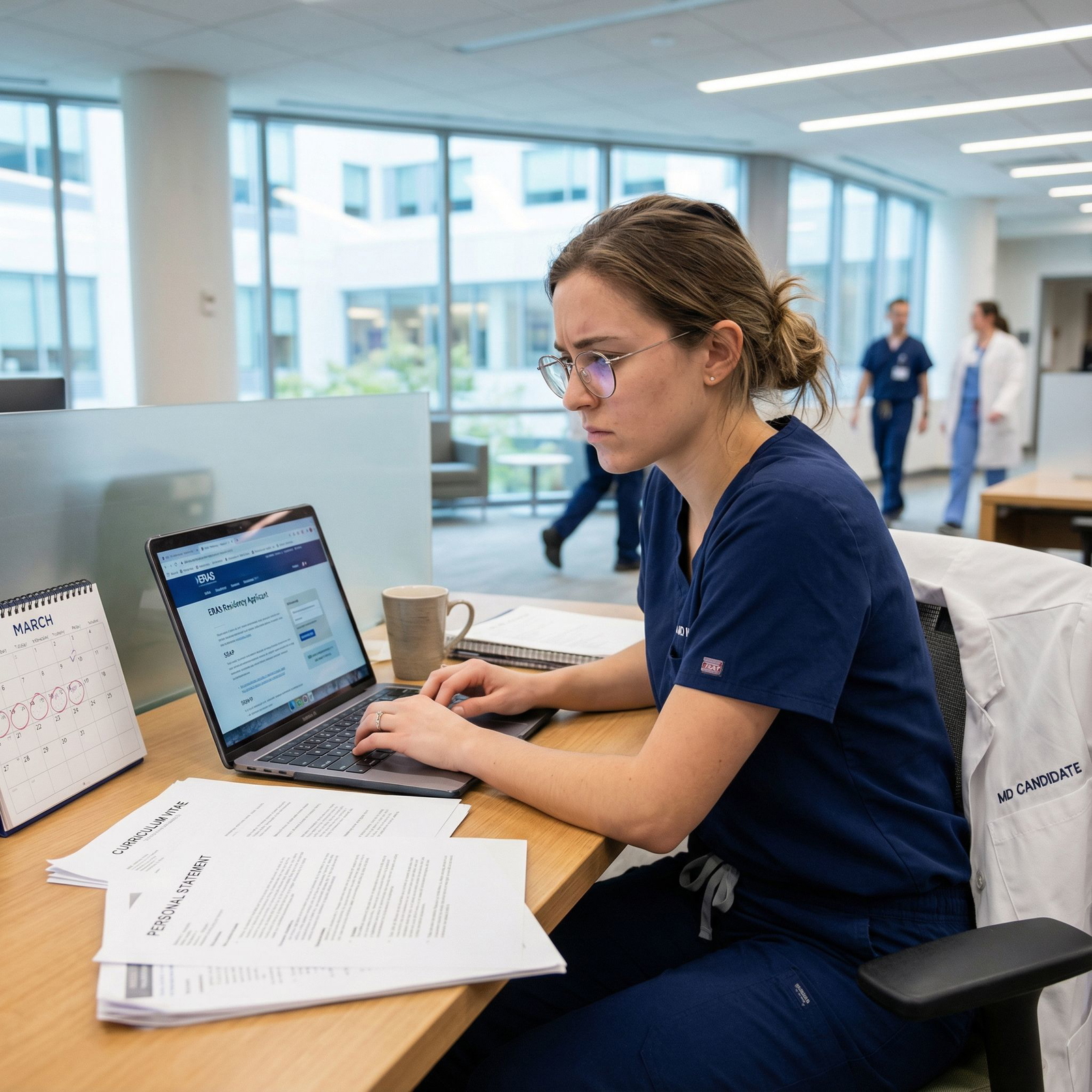
Understanding SOAP for IMGs Targeting PM&R
The Supplemental Offer and Acceptance Program (SOAP) is the structured process that helps unmatched or partially matched applicants obtain unfilled residency positions during Match Week. For an international medical graduate (IMG) interested in Physical Medicine & Rehabilitation (PM&R), also known as physiatry, SOAP can be a second—but very real—path to a successful training position.
This IMG residency guide focuses on SOAP preparation specifically for PM&R. Many IMGs learn about SOAP only after they don’t match, but effective SOAP preparation starts months before Match Week. By planning ahead, you can respond quickly and strategically when unfilled positions are released.
Before going deeper, clarify two core points:
What is SOAP?
SOAP is an NRMP-governed, time-limited, online process during Match Week in which eligible unmatched applicants apply to and receive offers from programs with unfilled positions. It replaces the old “scramble.”How does SOAP relate to PM&R residency?
PM&R is a moderately competitive specialty with a growing number of IMGs. Some programs will have unfilled PGY-1 or PGY-2 positions most years, but the landscape changes annually. You must be ready to apply quickly when the list appears.
This article will walk you through a structured strategy: eligibility and mindset, pre-SOAP preparation, Match Week tactics, PM&R-specific nuances, and common pitfalls, with action steps you can implement immediately.
Step 1: Confirm SOAP Eligibility and Create a Realistic Mindset
1.1 Understand SOAP Eligibility Criteria
You cannot participate in SOAP unless you meet strict NRMP and ERAS criteria. Check the current NRMP rules each year, but in general, as an IMG you must:
- Be registered for the Main Residency Match and be:
- Fully unmatched, or
- Partially matched (e.g., matched to an advanced position without a prelim, or vice versa), and needing another position
- Have a valid ECFMG certification status (or as specified by NRMP rules for that year) by the rank order list certification deadline
- Not have accepted a binding offer outside the Match that conflicts with NRMP participation
If you fail any eligibility step, you cannot use SOAP; your focus would then shift to the post-Match “off cycle” search.
Action item:
2–3 months before Match Week, log into your NRMP and ERAS accounts and confirm:
- Registration complete
- ECFMG status verified
- All documents uploaded/assigned to the specialties you might target in SOAP (PM&R and any backups)
1.2 Shape a Productive Mindset for SOAP
SOAP moves very quickly, and emotionally it can be intense. As an international medical graduate, you may feel extra pressure due to visa concerns and fewer home programs connections. You’ll perform better with a realistic mindset:
- Accept uncertainty: You will not know which PM&R residency positions are unfilled until the list is released.
- Detach identity from the match result: Not matching initially does not diminish your competence or potential as a physiatrist.
- Focus on controllable factors: You can’t control how many PM&R spots are available, but you can control how polished your documents are, how quickly you respond, and how well you interview.
- Keep flexibility: You may need to consider a broader set of programs (geography, community vs university, prelim vs categorical) while still protecting your long-term PM&R goals.
Step 2: Pre-SOAP Preparation (2–3 Months Before Match Week)
This is where many IMGs either set themselves up for success or make SOAP much harder than it needs to be. SOAP is about speed + quality, and both depend on preparation.

2.1 Craft Multiple Targeted Personal Statements
During SOAP, you can apply to up to 45 programs total across all specialties (number subject to NRMP rules for that year). Many candidates mistakenly use a single generic personal statement. You should prepare at least three variants:
PM&R-focused personal statement (Core)
- Emphasize your passion for physiatry, exposure to rehabilitation medicine, understanding of disability, and long-term goals in PM&R (pain, neurorehab, sports, pediatric rehab, etc.).
- Highlight any PM&R electives, observerships, research, or volunteer work related to rehabilitation, disability advocacy, or chronic disease management.
- Clarify why you are a good fit for both inpatient and outpatient rehab practice, interdisciplinary teamwork, and functional outcome focus.
Transitional/Preliminary Internal Medicine or Surgery personal statement (Bridge)
- You may encounter advanced PM&R positions (PGY-2) that require a separate PGY-1.
- Show interest in thorough clinical training, procedural skills (if surgery), and your commitment to building a strong foundation for PM&R.
- Explicitly state that your long-term goal is PM&R, and you value this year as preparation.
General “clinical” personal statement (Backup)
- For other categorical specialties you might consider only if no PM&R or PGY-1 spots are realistically available.
- Keep it honest but flexible: emphasize your desire to work with complex, chronically ill patients and your adaptability.
Action item:
Write and finalize these 3 statements well before Match Week. Label them clearly in ERAS:
- “PM&R SOAP PS”
- “Prelim/Transitional SOAP PS”
- “General SOAP PS”
2.2 Update Your CV and ERAS Experience Entries
SOAP is not the time to revise your life story from scratch. Your ERAS application should already be complete, but tailor it for PM&R residency and SOAP realities:
For PM&R experiences:
- Highlight rotations or observerships in:
- Inpatient rehab units
- Neurorehab, stroke units
- Spinal cord injury, traumatic brain injury care
- Musculoskeletal clinics, sports or pain clinics
- Clarify your role, not just observation: Did you participate in team rounds, functional assessments, or patient education?
- Highlight rotations or observerships in:
For skills relevant to PM&R:
- Communication with interdisciplinary teams
- Chronic disease management
- Motivational interviewing, long-term goal setting
- Procedural interest (ultrasound-guided injections, EMG—if exposure exists)
For IMG strengths:
- Multilingual communication
- Cultural competence working with diverse patients
- Resilience and adaptability (moving countries, exams, observerships)
Action item:
Review each ERAS experience entry:
- Add 1–2 sentences that connect it to PM&R values: function, disability, quality of life, teamwork.
2.3 Identify and Prepare Potential Recommenders
Letters of recommendation (LoRs) are usually locked by SOAP, but a strong PM&R or internal medicine letter can be decisive. If you are still early:
- Aim for at least one PM&R-specific letter if possible.
- If none is available, secure LoRs from:
- Internal medicine or neurology (cognitive and chronic disease focus)
- Orthopedics or sports medicine (MSK and functional issues)
- Any mentor who can speak about your teamwork, communication, and patient-centered care
Action item:
If new letters can still be uploaded before ERAS LoR deadlines, request them explicitly emphasizing your interest in physiatry.
2.4 Build a PM&R Program Intelligence Sheet
You won’t know which programs will have unfilled positions, but you can prepare a PM&R residency quick-reference sheet:
List PM&R programs by:
- Geographic preference
- Visa sponsorship (J-1 vs H-1B)
- IMG friendliness (historical presence of IMGs among residents)
- Program type (university vs community, VA-affiliated, etc.)
- PGY structure (categorical vs advanced vs physician-only tracks)
Capture key notes:
- Does the program usually offer PGY-1 + PGY-2 together or only advanced positions?
- Rotation structure (inpatient vs outpatient emphasis)
- Research or fellowships (e.g., pain, sports, SCI)
Even if the specific programs with unfilled positions differ from prior years, this research helps you rapidly evaluate whether a program that appears on the unfilled list fits your goals.
Step 3: Understanding the SOAP Timeline and Tactics
3.1 High-Level SOAP Timeline (Typical Structure)
While the exact times can change, the SOAP process generally follows this pattern during Match Week:
Monday noon ET:
- NRMP releases whether you are matched, partially matched, or unmatched.
- If eligible for SOAP, you’ll get access to ERAS and the SOAP interface.
Monday 3 pm ET (approx.):
- List of programs with unfilled positions becomes available to eligible applicants only.
- You can start applying through ERAS.
Application period:
- You have a limited window to apply (commonly Monday–Wednesday).
- Max of 45 applications in total.
Offer rounds (Wednesday–Thursday):
- Programs review applications and conduct rapid interviews (often virtual or phone).
- Offers are made in several rounds; you have a few hours to accept or reject each.
- When you accept an offer, your SOAP participation ends.
Post-SOAP (Friday onward):
- Unfilled positions may be pursued outside the NRMP match process (“post-match” or off-cycle).
3.2 Strategic Use of the 45-Program Limit
For an IMG specifically aiming for PM&R residency, think about your 45-program cap as a portfolio:
A reasonable distribution (adjust based on year competitiveness and your profile):
- 20–25 PM&R programs (if that many are available through SOAP)
- 10–15 preliminary medicine or transitional year programs (especially if you’d strongly consider an advanced PM&R position)
- Remaining slots for:
- A small number of categorical alternative specialties (e.g., internal medicine, family medicine) if you consider them acceptable long-term
- Additional prelim surgery if you’re open to a surgical intern year leading to PM&R later
You must balance commitment to physiatry with pragmatism about securing any residency position, especially for visa and career continuity.
Action item:
Before Match Week, write 2–3 possible distribution plans on paper (e.g., best case: many PM&R spots; worst case: few PM&R spots, more prelims), so you’re not paralyzed when the actual unfilled list appears.
Step 4: Executing SOAP During Match Week (Day-by-Day)
4.1 Monday: Rapid Assessment and Application Strategy
Once you see you are SOAP-eligible and unmatched/partially matched, your steps:
Stay calm and organized.
Take 10–15 minutes to breathe, drink water, and focus.Immediately access the unfilled positions list.
- Filter by specialty: Physical Medicine & Rehabilitation.
- Identify:
- Categorical PM&R (PGY-1 to PGY-4)
- Advanced PM&R PGY-2 positions
- Prelim/transitional year positions
Prioritize PM&R programs using your intelligence sheet:
- Visa options compatible with your status
- Programs historically open to IMGs
- Any prior contact or rotation experience you have with those institutions
- Locations you can realistically move to on short notice
Assign appropriate personal statements and LoRs:
- PM&R positions → “PM&R SOAP PS”
- Prelim/transitional → “Prelim/Transitional SOAP PS”
- Other categorical → “General SOAP PS” or a more specific variant
Submit applications early.
Programs begin reviewing almost immediately. Early applications may be noticed sooner for physiatry match considerations.
4.2 Tuesday: Responding to Communication, Preparing for PM&R Interviews
On Tuesday, programs typically start screening and scheduling interviews. For PM&R:
- Check email and ERAS message center constantly.
- Respond within minutes, not hours, when possible.
- Keep your phone ring on, with voicemail set up professionally.
Prepare concise talking points for typical PM&R SOAP interview questions:
“Why PM&R?”
- Emphasize functional outcomes, patient-centered rehab, working in interdisciplinary teams, and your long-term vision (e.g., sports medicine, neurorehab, pain).
“Why now, through SOAP, and what happened in the initial Match?”
- Be honest but diplomatic:
- High competitiveness of PM&R
- Late decision to pursue PM&R
- Limited interviews despite strong interest
- Emphasize what you have learned and how you improved.
- Be honest but diplomatic:
“What makes you a good fit for our program?”
- Reference program specifics: inpatient/outpatient balance, VA involvement, strong neurorehab or MSK focus.
- Connect them to your prior experiences and career goals.
“How do you handle disappointment or setbacks?”
- Reflect on your experience as an IMG moving countries, taking USMLEs, and your resilience after not matching initially.
Action item:
Create a 1-page “PM&R SOAP interview cheat sheet” with:
- Three core reasons you chose PM&R
- Three specific qualities you bring (e.g., strong communication, cross-cultural competence, dedication to functional outcomes)
- Two examples of patient encounters that inspired you toward rehab medicine
4.3 Wednesday–Thursday: Navigating SOAP Offer Rounds
As offer rounds begin:
If a PM&R offer comes:
- Assess feasibility (visa, location, program vibe from interview).
- Remember: once accepted, the offer is binding and ends your SOAP participation.
- For many IMGs, a genuine PM&R position—anywhere, with visa support—is worth accepting unless there is a serious concern.
If a prelim or transitional year offer arrives before a PM&R offer:
- Consider your long-term PM&R plan:
- Do you already hold a PM&R position (PGY-2) that needs a PGY-1?
- Are you banking on reapplying to PM&R after PGY-1 if no PM&R spots arise this year?
- Many IMGs successfully enter PM&R after a preliminary year, but this path is less guaranteed than a direct PM&R position.
- Consider your long-term PM&R plan:
If no offers yet:
- Stay engaged. Programs may make later-round offers if earlier candidates decline.
- Continue practicing your talking points and answering calls.
- Avoid panicking and bombarding programs with emails—respect the structured process.
Step 5: PM&R-Specific Considerations for IMGs
5.1 Show Genuine Understanding of Physiatry
Programs are wary of candidates who view PM&R as a “backup” or “less competitive” option. Demonstrate that you understand the specialty:
- Talk about function and quality of life, not just diagnosis and cure.
- Mention exposure to:
- PT/OT/SLP teams
- Assistive devices, prosthetics/orthotics
- Spasticity management, pain interventions, or neurorehab planning
- Explain how your background (e.g., family medicine in home country, neurology exposure) led naturally to PM&R’s focus on disability and function.
5.2 Highlight IMG Strengths Relevant to PM&R
As an international medical graduate, you bring strengths that can be powerful in PM&R:
- Experience managing chronic conditions with limited resources
- Cultural sensitivity when discussing disability, stigma, and long-term rehab
- Often, strong family involvement and counseling experience
Frame these explicitly as assets during interviews and in your personal statement.
5.3 Visa and Sponsorship Strategy
PM&R programs vary widely in visa sponsorship:
- Some sponsor J-1 only
- Fewer offer H-1B, often requiring all USMLE Steps passed, including Step 3
- Some do not sponsor visas at all
Before SOAP:
- Clarify your visa needs (J-1 vs H-1B vs US permanent resident)
- In your PM&R program intelligence sheet, note which programs sponsor your visa type whenever possible.
During SOAP:
- Avoid applying to programs that clearly do not support your visa category; this wastes your limited slots.
- If uncertain, you may still choose to apply, but be realistic.
Step 6: Post-SOAP Planning and Long-Term PM&R Pathways
Whether you match through SOAP or not, plan for both scenarios:
6.1 If You Match into PM&R through SOAP
- Celebrate, but immediately prepare for:
- Licensing paperwork, onboarding, and visa steps
- Early reading on core PM&R topics (neuroanatomy, MSK exam, functional assessments)
- Reach out to your new program:
- Thank them again for the opportunity
- Ask for suggested reading or pre-arrival learning tasks
6.2 If You Match into a Prelim/Transitional Year
- Work to become a top-performing intern:
- Strong evaluations and letters
- Show interest in rehab-related cases (stroke, SCI, chronic pain, post-op functional issues)
- Network with PM&R faculty at your institution or nearby:
- Seek shadowing or research
- Prepare to reapply to PM&R in the next cycle with a much stronger US-based foundation.
6.3 If You Do Not Match Through SOAP
This is painful but not the end. For an international medical graduate pursuing PM&R:
Explore post-SOAP residency opportunities:
- Some programs remain unfilled and will recruit directly.
- Use email + phone in a targeted, professional way with updated CV and a PM&R-focused message.
Strengthen your candidacy in the coming year:
- U.S. clinical experience (preferably PM&R-related)
- PM&R research or QI projects
- Additional Step exam success (if pending)
- Improve communication skills, including accent clarity if needed
Consider a strategic gap year focused on:
- Rehab research positions
- PM&R observerships
- Involvement with rehabilitation hospitals, NGOs, or veterans’ organizations
Document these activities clearly for the next application cycle to show growth and maintained interest in physiatry.
Frequently Asked Questions (FAQ)
1. What is SOAP, and how is it different from the regular Match?
SOAP (Supplemental Offer and Acceptance Program) is a structured, time-limited process during Match Week that allows unmatched or partially matched applicants to apply to unfilled residency positions through ERAS. Unlike the regular Match, which is driven by rank lists and an algorithm, SOAP relies on direct offers from programs in several rounds, and you must accept or decline each offer in real time. It is not a “backup Match,” but a separate, highly compressed application process.
2. How competitive is PM&R for an IMG through SOAP?
Competitiveness varies by year. PM&R has become more popular overall, and IMGs face additional challenges (visa, fewer home connections). Still, some PM&R programs do have unfilled positions almost every year, often in less popular locations or newer programs. With good SOAP preparation, strong documentation, and genuine interest in physiatry, IMGs do successfully secure PM&R spots via SOAP, but you must also be open to prelim/transitional options as part of your strategy.
3. Should I apply only to PM&R during SOAP, or also to other specialties?
For an IMG focused on a physiatry match, a balanced approach is wise:
- Prioritize PM&R positions first.
- If few PM&R spots exist or your profile is borderline, also apply to prelim/transitional programs that will support your eventual PM&R pathway.
- Consider a limited number of other categorical specialties only if you are genuinely willing to practice them long-term.
Your final distribution depends on your risk tolerance, visa needs, and how committed you are to PM&R as your ultimate career.
4. How can I quickly show genuine PM&R interest during a SOAP interview?
In a 10–15 minute SOAP interview, focus on:
- A brief, clear story of how you discovered PM&R and why it fits you (function, quality of life, teamwork).
- One or two specific clinical experiences where you saw the impact of rehabilitation on a patient’s life.
- Your understanding of PM&R’s scope: inpatient rehab, outpatient MSK and pain, neurorehab, and long-term disability management.
- Your long-term goals (e.g., SCI, sports, pain, global rehab) and how the program’s strengths support them.
By preparing this narrative in advance, you can make a strong impression even within SOAP’s rapid timeline.
By starting SOAP preparation early, tailoring your application materials to PM&R, and maintaining a flexible yet focused mindset, you significantly improve your chances of securing a PM&R residency or a strategically valuable bridge year. As an international medical graduate, your unique experiences with diverse patients and health systems are powerful assets in rehabilitation medicine—use SOAP as a structured opportunity to show programs exactly how you’ll contribute to their teams and, most importantly, to your future patients’ functional recovery and quality of life.