Understanding SOAP for the Non-US Citizen IMG in Medical Genetics
As a non-US citizen IMG (foreign national medical graduate), preparing for SOAP in medical genetics requires both general SOAP readiness and specialty-specific strategy. Medical genetics is a small, niche field with fewer positions and programs, which makes proactive planning essential if you want SOAP to be a real safety net.
What Is SOAP?
The Supplemental Offer and Acceptance Program (SOAP) is the structured process the NRMP uses to fill unfilled residency positions during Match Week. It is not the same as the “old scramble” and is highly regulated.
Key features:
- Only applicants who are:
- Registered for the Main Match and
- Unmatched or partially matched (e.g., matched to an advanced position without a prelim)
are SOAP-eligible.
- You cannot directly call programs or “cold scramble” for ACGME-accredited positions during SOAP.
- All communication and applications go through ERAS during designated SOAP rounds.
- There are several rounds of offers over 3–4 days, with short time windows to accept or reject each offer.
For a non-US citizen IMG interested in medical genetics, SOAP is primarily:
- A back-up path into preliminary or categorical internal medicine, pediatrics, or transitional year programs that can eventually lead to medical genetics training.
- Very occasionally, a direct path if an integrated medical genetics position (e.g., Pediatrics/Medical Genetics, Internal Medicine/Medical Genetics) goes unfilled.
Understanding what SOAP is—and is not—allows you to build a realistic plan.
How SOAP Intersects with Medical Genetics Pathways
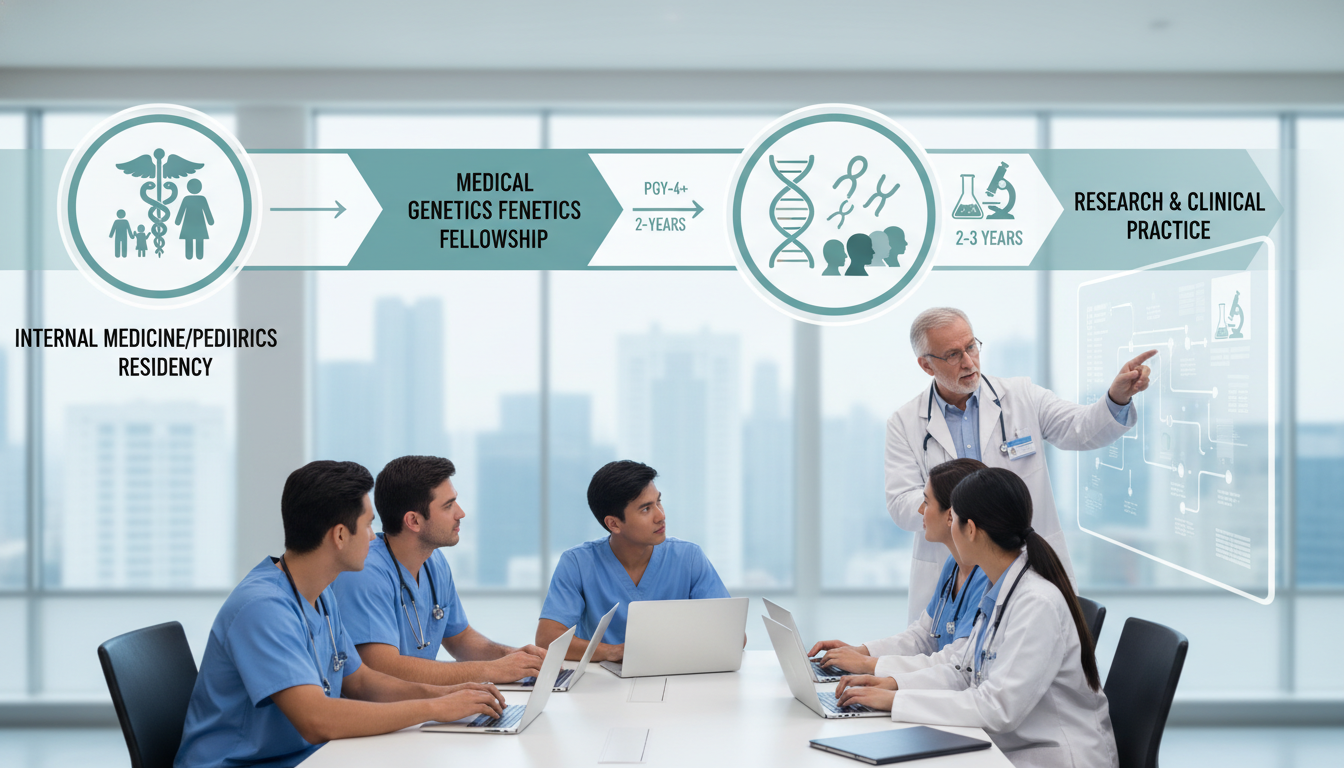
Most medical genetics physicians in the US do not start directly in genetics. They first complete either:
- Internal Medicine
- Pediatrics
- Combined Internal Medicine–Pediatrics
- Obstetrics & Gynecology, or another primary specialty
and then enter a medical genetics residency or fellowship (e.g., Medical Genetics and Genomics, Maternal-Fetal Medicine with genetics focus, etc.).
Pathways for a Future Medical Geneticist
Typical routes:
- Internal Medicine → Medical Genetics and Genomics (Genetics fellowship or combined program)
- Pediatrics → Medical Genetics and Genomics
- Combined Pediatrics/Genetics or Internal Medicine/Genetics (5-year integrated programs)
- Other specialties → later transition into clinical or laboratory genetics (less common).
During SOAP, you’re unlikely to see many (if any) integrated medical genetics positions. Most SOAP-available positions relevant to a future geneticist are:
- Categorical Internal Medicine
- Categorical Pediatrics
- Transitional Year (with later entry into categorical IM/Peds)
- Occasionally Med-Peds
For a non-US citizen IMG, a strong SOAP strategy focuses on securing a high-quality core residency you can later leverage into genetics, rather than fixating solely on finding an unfilled integrated genetics position (which may not exist that cycle).
Why Medical Genetics Is Actually IMG-Friendly Long-Term
Although the core residency (IM or Peds) matchup can be competitive, medical genetics itself can be relatively IMG-friendly in several programs due to:
- Smaller applicant pools
- Growing demand for genetics expertise
- Increasing use of genomic medicine across specialties
By using SOAP smartly to secure a core specialty, you keep open the door for genetics training later. Your SOAP goal is therefore: Get into a training environment that values academic medicine, research, and complex disease management.
Pre-Match SOAP Preparation: What to Do Months Before
Effective SOAP preparation starts well before Match Week. As a non-US citizen IMG, you must also plan around visa, ECFMG, and licensing issues.
1. Confirm Your SOAP Eligibility and Administrative Status
Before rank order list certification:
- Register with NRMP and ensure:
- You are participating in the Main Match.
- You understand NRMP rules regarding SOAP.
- ECFMG Certification:
- Make sure you are ECFMG-certified or will be certified in time for Match Week.
- Monitor exam score release dates if you are awaiting Step results.
- Visa Readiness:
- Clarify whether you are open to J-1 only or J-1/H-1B.
- Obtain key documents: passport, prior visa documentation, US entry/exit history if available.
- Research which programs historically sponsor H-1B vs. J-1 (findable via program websites, FREIDA, and forums).
If any of these are uncertain, your SOAP options narrow quickly. Many unfilled programs during SOAP are community-based and may be J-1 friendly but not H-1B sponsors.
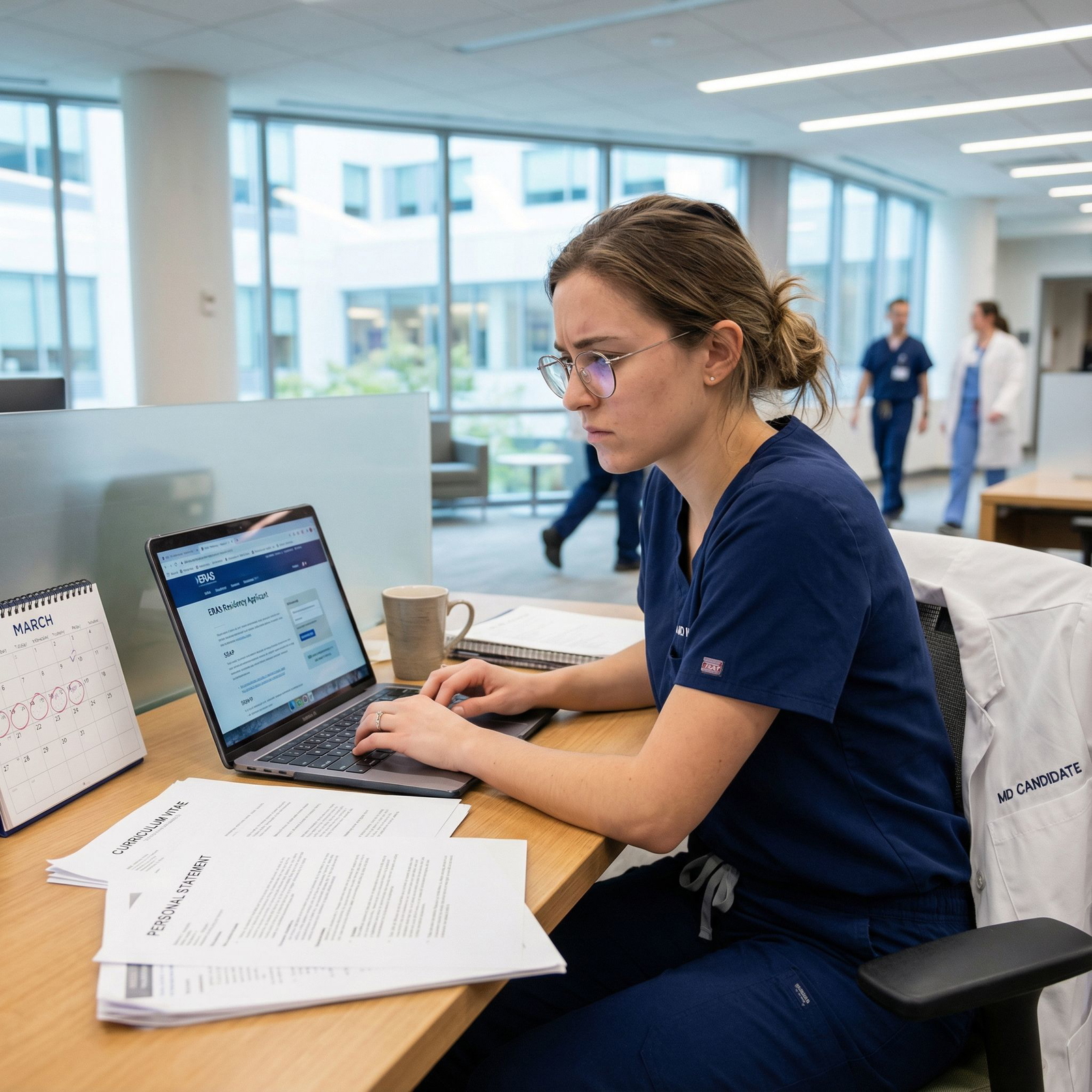
2. Build a SOAP-Focused ERAS Profile in Advance
You will not have time to overhaul your application during SOAP. Prepare early:
Personal Statement Strategy:
- Create a general IM/Peds personal statement emphasizing:
- Long-term goal: clinical genetics/genomics.
- Interest in complex, multi-system disease.
- Comfort with longitudinal care and counseling.
- Consider having two versions:
- Internal Medicine + future genetics focus
- Pediatrics + future genetics focus
- Create a general IM/Peds personal statement emphasizing:
CV and Experiences:
- Highlight:
- Any genetics-related experiences (e.g., research on hereditary disorders, case reports on genetic syndromes, rotations in clinical genetics, molecular biology coursework).
- Research methodology, bioinformatics, or lab skills if relevant.
- Strong communication skills, especially for counseling families—critical in genetics.
- Organize clinical experiences clearly for US-based programs:
- Distinguish US clinical experience (USCE), observerships, and home-country rotations.
- Highlight:
Letters of Recommendation (LoRs):
- Aim for 3–4 strong letters:
- At least one from Internal Medicine or Pediatrics.
- Any letter from a geneticist, molecular pathologist, or research PI in genetics is a big plus.
- Make sure letters speak to:
- Clinical reasoning and reliability.
- Communication and cultural sensitivity (important with genetic counseling).
- Research curiosity and academic potential.
- Aim for 3–4 strong letters:
In SOAP, programs review applications extremely quickly; your documents must already clearly tell a “future medical geneticist with solid clinical foundations” story.
3. Build a Realistic SOAP Target List Before Match Week
You won’t know which programs will be unfilled, but you can still prepare templates:
- Identify:
- Visa-sponsoring IM and Peds programs that usually take IMGs.
- Academic centers with medical genetics departments and genetic clinics.
- Community or hybrid programs affiliated with universities that offer genetics electives.
Practical approach:
- For each program you note:
- Location
- Type (university, community, university-affiliated)
- Visa options
- Genetics resources (departments, translational research, genomic medicine clinics)
Create a spreadsheet to quickly filter and prioritize once the unfilled list is released.
Match Week: Executing a Strong SOAP Strategy
Once the NRMP tells you that you are SOAP-eligible (unmatched or partially matched), you have to move quickly and in a highly organized way.
1. Monday Morning: Reality Check and Mindset
When you receive notice you did not match:
- Acknowledge the disappointment, but rapidly pivot to solution mode.
- Remind yourself: many excellent physicians enter their careers through SOAP.
As a non-US citizen IMG, you may feel extra pressure about visas and timelines. Use this as motivation to:
- Be highly responsive.
- Make decisions quickly.
- Present yourself as adaptable and committed.
2. Reviewing the Unfilled Positions List
The NRMP releases the List of Unfilled Programs to SOAP-eligible applicants on Monday at noon ET.
You cannot see it before that, but once it’s available:
- Filter by:
- Specialty: Internal Medicine, Pediatrics, Med-Peds, Transitional Year, and any rare Genetics or Med-Gen combined slots.
- Visa sponsorship if known.
- State and region preferences (be flexible).
- Academic vs. community (give priority to settings where genetics exposure is possible).
For medical genetics–oriented applicants, ideal SOAP targets are:
- University or university-affiliated IM/Peds programs with:
- Established medical genetics or genomic medicine divisions.
- Strong subspecialty services (e.g., oncology, endocrinology, neurology, maternal-fetal medicine).
- Community programs with academic affiliations:
- Look for those that send residents to rotation sites with genetics or metabolic clinics.
- Any integrated or combined medical genetics programs that surprisingly appear on the list.
3. Choosing Which Programs to Apply to (ERAS SOAP Limit)
During SOAP, you have a strict limit on how many programs you can apply to per SOAP round (historically up to 45 total). Check current NRMP/ERAS rules each year, but plan under the assumption that your application number is finite.
Prioritization framework:
- Tier 1 – High-priority programs:
- Known to sponsor your visa type.
- Have genetics faculty or structured rotations.
- Take IMGs regularly.
- Tier 2 – Reasonable alternatives:
- J-1 only but open to IMGs.
- Decent academic exposure; no explicit genetics department but strong subspecialty training.
- Tier 3 – Safety net:
- Smaller community programs.
- Limited academics but you can still gain a solid IM/Peds foundation and pursue genetics later via electives, research, and fellowship.
As a foreign national medical graduate, it’s usually better to use most of your application slots rather than risk being overly selective. A strong, generic-but-aligned application can fit many IM/Peds programs.

Crafting Your SOAP Narrative and Interview Strategy
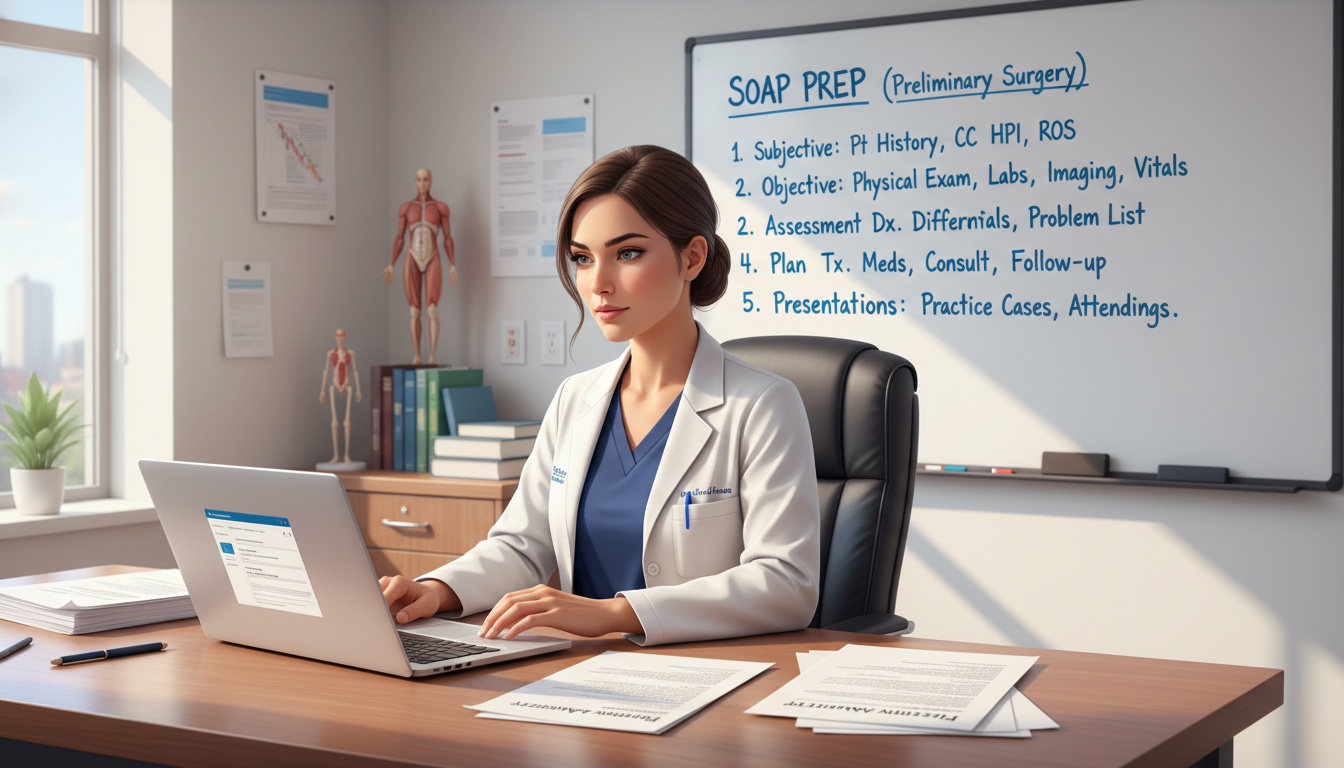
During SOAP, many programs conduct brief, rapid interviews by phone or video. You need a crisp, well-rehearsed narrative tailored to medical genetics aspirations.
1. Your Core Story: “Why IM/Peds and Future Genetics?”
You must convincingly answer:
- Why this core specialty (IM or Peds)?
- Why medical genetics as a long-term goal?
- Why you, as a non-US citizen IMG, are worth investing in?
Sample concise narrative:
“I’m particularly drawn to Internal Medicine because I enjoy managing complex, multi-system diseases and building long-term relationships with adult patients. During my rotations, I became fascinated by hereditary conditions and how genomics can change management for patients and their families. I see a future where internal medicine and genetics are fully integrated, and I want a strong IM foundation so I can later pursue medical genetics training and contribute to that integration. Your program’s subspecialty exposure and academic environment would help me develop the skills and mentorship I need to reach that goal.”
Key elements:
- Emphasize clinical excellence first, genetics second.
- Show awareness that genetics is mostly a post-residency pathway.
- Communicate long-term commitment, not just using the program as a “bridge.”
2. Addressing Red Flags As an IMG
Common issues for non-US citizen IMGs:
- Gaps in training
- Lower or multiple attempts on USMLE
- Limited US clinical experience
- Visa constraints
Prepare honest, concise explanations that:
- Take responsibility where appropriate.
- Emphasize what you’ve done to improve (remediation, clinical exposure, research).
- Reframe challenges as learning experiences.
Example for a Step failure:
“I did not pass Step 1 on my first attempt. At that time, I underestimated the adjustment needed to a new exam format and study style. I restructured my study plan completely, sought guidance from mentors, and focused on active learning and question-based practice. As a result, I passed Step 1 and improved my performance on Step 2. I now use the same disciplined, systematic approach in my clinical work and ongoing learning.”
3. Highlighting Genetics-Relevant Strengths
Even if your application is being used for IM or Peds programs, your genetics interest is an advantage if you position it correctly:
- Emphasize:
- Interest in complex cases.
- Research experience in gene-related topics or molecular biology.
- Comfort with ambiguity and long-term follow-up.
- Communication skills with families, especially around sensitive diagnoses.
Concrete examples you can mention:
- Case of a child with suspected metabolic or chromosomal disorder you helped evaluate.
- Research on genetic polymorphisms in a disease common in your home country.
- Participation in any genetic counseling sessions, even as an observer.
Make it clear you are not planning to “shortcut” residency, but to enrich the program’s academic environment through your genetics interest.
4. Common SOAP Interview Questions and Genetics-Aware Answers
Prepare for common questions:
- “Why did you not match?”
- Avoid blaming system or bias. Focus on competition and areas you’ve improved.
- “What will you do if you don’t get a spot this year?”
- Show determination:
- Improve application (USCE, research).
- Reapply with stronger profile.
- Show determination:
- “What are your long-term goals?”
- Link to medical genetics with clarity:
- Clinical geneticist
- Translational research in inherited diseases
- Genomic medicine in primary care
- Link to medical genetics with clarity:
Practice concise 60–90 second responses; SOAP interviews are often short and time-pressured.
Practical Logistics: Time Management, Documents, and Communication
Because SOAP moves at high speed, organizational details can make or break your outcome.
1. SOAP Week Timeline Awareness
While exact times may change slightly by year, the general pattern is:
- Monday:
- 10:00 AM ET – You learn whether you matched.
- 11:00 AM ET – SOAP-eligible applicants may begin preparing.
- 12:00 PM ET – Unfilled programs list released; you can start submitting applications.
- Tuesday–Thursday:
- Programs review and may schedule interviews.
- Multiple offer rounds occur; you only have a limited time (often 2 hours) to accept or reject.
- Thursday afternoon:
- SOAP ends.
- Friday:
- Match Day for those who matched in main Match or via SOAP.
Verify exact times on NRMP and ERAS each year, but internalize that decisions must be made quickly.
2. Document and Tech Preparation
Before Match Week:
- Ensure reliable internet, backup device, and quiet space for interviews.
- Keep:
- Passport and visa info.
- Updated CV and personal statements (even if programs see them via ERAS, having them handy helps you talk through your story).
- A one-page “program notes” template to log calls, interviews, and impressions.
3. Professional Communication Etiquette During SOAP
- Respond promptly to emails, messages, and interview invites.
- If you miss a call, call back quickly and send a brief, polite email.
- Keep communication professional:
- Use program-appropriate greetings.
- Confirm interview times in US time zones clearly.
- Do not:
- Directly solicit offers.
- Pressure programs.
- Break NRMP communication rules (e.g., asking for commitments outside official offers).
Showing that you are organized and respectful can differentiate you in the rushed SOAP environment.
After SOAP: Planning for Medical Genetics If You Match or Don’t Match
Your SOAP preparation should also include contingency planning for both outcomes.
If You Secure a Position via SOAP
Celebrate, then Strategize Early
- Meet with your program director or mentor within the first months.
- Express your long-term goal in medical genetics.
- Ask about:
- Genetics or metabolic clinics.
- Electives in genomic medicine, oncology, neurology, or maternal-fetal medicine.
- Research opportunities with genetics faculty locally or at affiliated institutions.
Structure Your Residency with Genetics in Mind
- Request rotations with strong genetics exposure (e.g., NICU, oncology, neurology, endocrine).
- Pursue scholarly activities:
- Case reports of genetic diagnoses.
- QI projects around genetic testing workflows.
- Participation in tumor boards or genomic medicine conferences.
Plan Your Path to a Medical Genetics Residency
- By PGY1–2, research:
- Medical genetics residency programs (2–3-year programs, often starting after IM/Peds).
- Requirements (letters, prior rotations, research).
- Use your SOAP-residency as a launching pad for that next match.
- By PGY1–2, research:
If You Do Not Secure a Position Through SOAP
This is painful but not the end:
Immediate Steps After SOAP
- Check if any non-ACGME preliminary or research positions are available (outside SOAP rules once it ends).
- Consider:
- Research positions in genetics or genomics.
- Postdoctoral fellowships in molecular biology or human genetics.
- US clinical observerships in IM/Peds at centers with genetics programs.
12-Month Recovery Plan
- Strengthen your profile:
- Publish or present in genetics-related fields.
- Gain US-based clinical or research experience.
- Improve USMLE scores or add Step 3 if appropriate.
- Network actively:
- Attend genetics or medical specialty conferences (ASHG, ACMG, etc.).
- Seek mentorship from faculty in genetics who can later support your application.
- Strengthen your profile:
Reapply With a Clearer Story
- Emphasize in your next cycle:
- Growth since the previous attempt.
- Continuity in your interest in genetics and complex disease care.
- Stronger US-based evidence of your abilities.
- Emphasize in your next cycle:
Remember that many successful foreign national medical graduates have taken multi-year paths to residency and eventually into medical genetics.
FAQs: SOAP and Medical Genetics for Non-US Citizen IMGs
1. As a non-US citizen IMG, can I directly match into medical genetics during SOAP?
Direct entry into an integrated medical genetics residency (e.g., Pediatrics/Medical Genetics or IM/Medical Genetics) via SOAP is rare because there are very few such positions overall, and they do not often go unfilled. Most non-US citizen IMGs will use SOAP to secure a core IM or Peds position, then apply to a 2–3-year medical genetics residency or fellowship later. You should still check the unfilled list for any integrated positions, but build your SOAP strategy mainly around IM and Pediatrics.
2. Will my visa status significantly limit my SOAP options?
Visa status is a real constraint, especially if you require an H-1B. Many SOAP-available programs are J-1 only. As a foreign national medical graduate, being open to J-1 can widen options. If you must have H-1B, you need to aggressively identify historically H-1B–friendly programs before Match Week and prioritize them if they appear unfilled. However, relying solely on H-1B greatly narrows your SOAP opportunities.
3. How can I highlight my interest in medical genetics without scaring off IM/Peds programs?
Frame your genetics interest as a natural extension of strong generalist training, not as a distraction. Emphasize that:
- You want to be an excellent internist or pediatrician first.
- Genetics expertise will enrich your core specialty practice.
- You are committed to contributing to their program through research, teaching, and complex case management.
Avoid sounding like you view IM/Peds as a temporary “stepping stone” that you can’t wait to abandon.
4. What is SOAP preparation I should focus on if I only have 1–2 months before Match Week?
If time is short, prioritize:
- Ensuring SOAP eligibility (NRMP registration, ECFMG certification status).
- Finalizing a strong, generic but flexible IM/Peds personal statement with a clear long-term interest in genetics.
- Securing at least 2–3 solid LoRs from IM/Peds or US supervisors.
- Creating a target program spreadsheet focusing on visa-friendly programs with good subspecialty exposure.
- Practicing 5–10 common SOAP interview questions with answers that integrate your future goal in medical genetics.
These focused steps will significantly improve your ability to respond quickly and strategically during the actual genetics match and SOAP residency process.
By approaching SOAP as a structured, high-stakes opportunity rather than a last-minute scramble, a non-US citizen IMG interested in medical genetics can maximize the chances of landing a strong core residency—laying the groundwork for a rewarding future career in genomics and hereditary disease.