
Understanding SOAP in the Context of Cardiothoracic Surgery
For most applicants, cardiothoracic surgery is one of the most competitive and niche training paths in medicine. When the initial residency match doesn’t go as planned, the Supplemental Offer and Acceptance Program (SOAP) can feel confusing, rushed, and overwhelming—especially if your dream is a cardiothoracic career.
Before you can prepare well, you need to be absolutely clear on what is SOAP, how it works, and how it interfaces with highly specialized fields like cardiothoracic surgery.
What is SOAP?
The Supplemental Offer and Acceptance Program (SOAP) is the structured process the NRMP uses to fill unfilled residency positions with unmatched or partially matched applicants during Match Week. It is not a “free-for-all scramble” like in the past; it is an organized, time-limited system with:
- Strict eligibility rules
- Defined application and interview windows
- Multiple offer “rounds”
- No direct cold-calling of programs
Key points:
- Eligibility: You must be SOAP-eligible as defined by NRMP—this includes registering for the Match, being unmatched or partially matched, and having an ECFMG-certified status if you’re an IMG by the required deadline.
- Application platform: SOAP uses the ERAS system, but in a limited, time-compressed format.
- Communication rules: Outside of allowed channels (e.g., ERAS and program-initiated contact), you are not allowed to contact programs directly to solicit positions.
In short: SOAP is a high-pressure, highly structured second chance to secure a residency position for the upcoming year.
How SOAP Intersects with Cardiothoracic Surgery
For cardiothoracic surgery, it’s crucial to distinguish between:
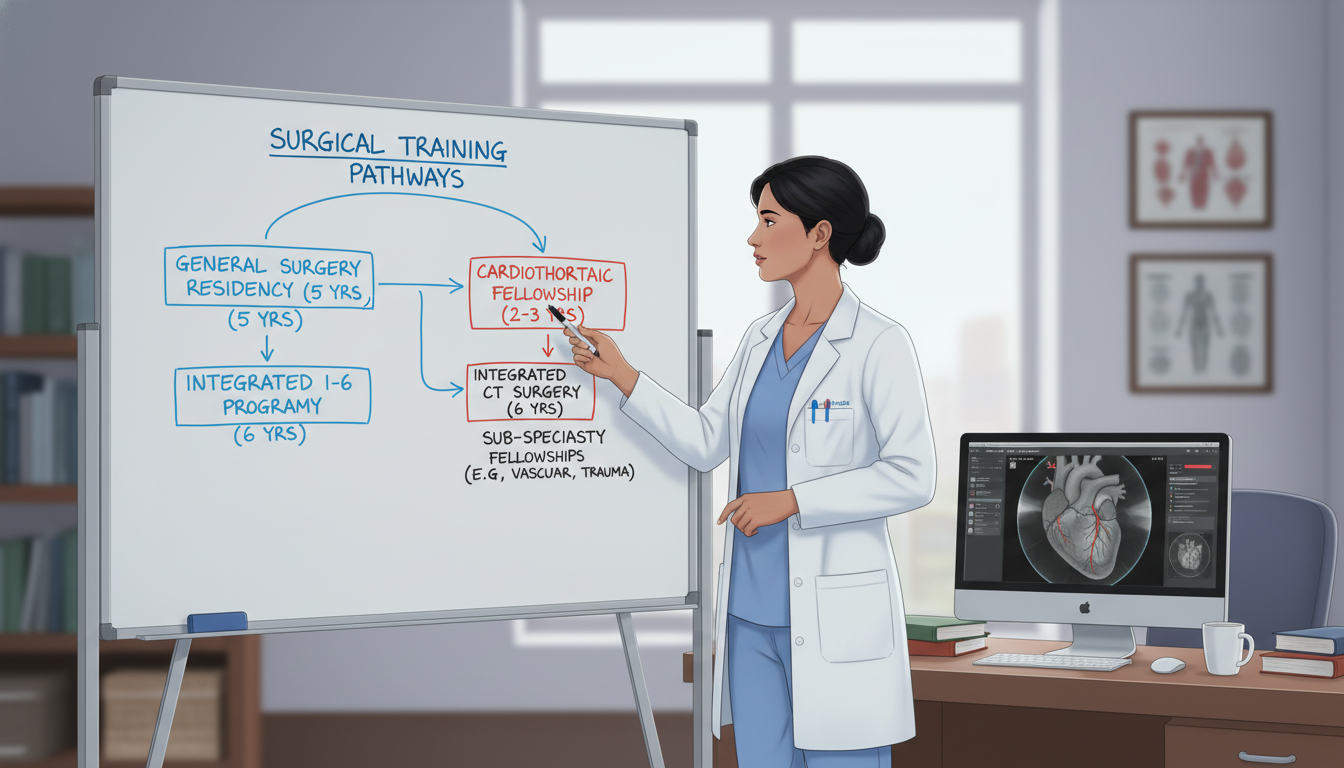
- Traditional integrated cardiothoracic surgery (I-6) residencies (NRMP code 1462, etc.)
- Independent cardiothoracic surgery fellowships (entered after general surgery; not directly relevant to SOAP for graduating medical students)
Integrated cardiothoracic surgery residency positions are:
- Extremely limited in number (often fewer than 40 nationwide in a given cycle)
- Highly competitive with strong emphasis on academic metrics, research, and letters from well-known surgeons
Because of that:
- Very few—if any—I-6 cardiothoracic surgery slots usually end up in SOAP.
- Most unmatched cardiothoracic-surgery–aspiring applicants will use SOAP to secure a categorical or preliminary general surgery, internal medicine, or other related position as a strategic stepping stone toward cardiothoracic surgery.
Understanding this reality early allows you to create a rational, long-term plan:
- Step 1: Use SOAP to secure solid surgical or surgically relevant training now
- Step 2: Build your profile during residency for future cardiothoracic fellowship or potential re-application to I-6 (rare, but possible with careful planning and program guidance)
Pre-Match Strategic Planning for Cardiothoracic Aspirants
The best SOAP preparation starts months before Match Day, especially if your goal is cardiothoracic surgery residency or a long-term heart surgery career.
1. Assess Your True Competitiveness Early
You need a realistic appraisal of your file in the context of cardiothoracic surgery:
- USMLE/COMLEX scores:
- I-6 programs often attract applicants with very high Step scores, strong basic science and clinical performance.
- Research:
- Cardiothoracic surgery is research-heavy. Peer-reviewed publications, conference presentations, and cardiovascular or thoracic-focused projects are major assets.
- Letters of recommendation:
- Letters from cardiothoracic surgeons or well-known academic surgeons carry weight.
- Home institution resources:
- Programs at institutions with strong cardiothoracic divisions may weigh internal students more heavily.
If your metrics are below typical I-6 thresholds, your SOAP preparation should include serious consideration of alternative but aligned training paths, such as:
- Categorical general surgery
- Preliminary general surgery (with path toward categorical spot)
- Strong internal medicine program if you’re considering cardiac critical care or cardiology instead of pure operative CT surgery
2. Build a Tiered Plan: Best Case, Realistic Case, SOAP Contingency
Before rank lists are certified, map out three scenarios:
- Best Case: You match into integrated cardiothoracic surgery
- Realistic Alternative: You match into a categorical general surgery program at a hospital with a strong CT surgery division
- SOAP Contingency: You don’t match and need to use SOAP
For the SOAP contingency, define:
- Your priority pathways:
- Categorical general surgery (first choice, if available)
- Preliminary general surgery at a high-volume CT center
- Categorical or preliminary internal medicine at a cardiothoracic-heavy academic center
- Your geographic flexibility:
- Are you truly willing to move anywhere? Rank your regions in advance.
- Your deal-breakers:
- Visa issues, family obligations, or specific location constraints
By doing this early, you avoid emotion-driven decisions in the chaos of Match Week.
3. Strengthen Your Application Narrative Now
Even if you’re focused on cardiothoracic surgery, SOAP programs will be evaluating you as a potential core residency trainee, usually in general surgery or internal medicine.
Before Match Week:
- Update your CV with:
- New research publications, abstracts, or posters
- Additional sub-internships, acting internships, or away rotations
- Teaching roles and leadership positions
- Refine a flexible personal statement:
- One statement emphasizing a lifelong desire for heart surgery training and operative care, but clearly demonstrating your enthusiasm for general surgery as a foundation.
- Another statement adaptable to internal medicine or other adjacent specialties if you decide to broaden your SOAP strategy.
- Secure updated letters, if possible:
- Letters highlighting your work ethic, operative potential, and teamwork are especially important.
Connecting your cardiothoracic interests to broader surgical or critical care themes makes your application more appealing to programs that don’t consider themselves “pure CT” but offer exposure to these fields.
Mechanics of SOAP Week: A Cardiothoracic-Focused Playbook
Once Match Week begins, emotions run high. Having a structured plan tailored to your cardiothoracic goals will keep you grounded.
1. Monday: Match Status and Unfilled List
On Monday of Match Week, you learn:
- Matched
- If you matched in an integrated cardiothoracic surgery residency: SOAP is irrelevant; your focus shifts to transition-to-residency.
- If you matched into general surgery or internal medicine: Identify how your new program can support cardiothoracic career goals.
- Partially Matched (e.g., matched to preliminary but not advanced position, or vice versa)
- You may still be SOAP-eligible for additional positions.
- Unmatched
- You are SOAP-eligible if you meet NRMP and ERAS criteria.
The NRMP then releases the List of Unfilled Programs and Positions to SOAP-eligible applicants.
For cardiothoracic-focused applicants, your priority when viewing the list is to:
- Identify any rare integrated CT surgery positions (often none, but check carefully).
- Highlight:
- Categorical general surgery at institutions with cardiothoracic surgery fellowships
- Preliminary general surgery at high-volume cardiac centers
- Internal medicine programs at hospitals with strong cardiac surgery, cardiac ICU, and cardiology programs
2. Selecting Programs Strategically
You have a limited number of applications you can submit during SOAP. Maximize impact by:
Tiering programs by relevance to heart surgery training:
- Categorical general surgery at academic centers with CT fellowship
- Preliminary general surgery at those same centers
- Categorical internal medicine with strong cardiac ICU, cardiology, or cardiothoracic exposure
- Other surgical prelims or transitional years that still offer robust operative or critical care experience
Reading program descriptions carefully:
- Look for mention of:
- “Cardiothoracic surgery” or “cardiac surgery” faculty
- “Level I trauma,” “cardiac ICU,” “ECMO program,” or “heart transplant program”
- Programs with these features often provide excellent exposure even if you’re not in a CT residency.
- Look for mention of:
Avoid the trap of applying too narrowly (e.g., only to a few general surgery positions in preferred locations). In SOAP, breadth is survival—as long as programs are consistent with your clinical and visa constraints.
3. Communication and Interviews During SOAP
Programs may reach out rapidly after receiving your SOAP application. Preparation is essential:
- Have a concise, honest narrative ready:
- Why you’re interested in their program
- How your cardiothoracic aspirations align with the training they offer now
- Why you will be a reliable, hardworking resident regardless of future subspecialty goals
Example 30–45 second pitch:
“I’ve always been drawn to cardiothoracic surgery because of the complexity and impact of heart surgery, but I strongly believe that excelling as a general surgery resident is the critical first step. Your program’s high operative volume and strong cardiac service make it an ideal environment for me to develop as a core surgeon while contributing to team-based care from day one. I’m committed to being a dependable resident, regardless of where I ultimately subspecialize.”
Common SOAP interview questions include:
- “Why did you not initially match?”
- “Why are you applying here specifically?”
- “If we take you as a preliminary resident, what are your goals?”
- “How will you handle the emotional and workload challenges of this year?”
Prepare concise, non-defensive answers that:
- Take responsibility (e.g., “I applied too narrowly to highly competitive I-6 programs”)
- Highlight growth (e.g., improved Step scores, new research, stronger letters)
- Emphasize commitment to their program, not just your long-term CT aspirations
4. Offer Rounds and Decision-Making
SOAP has multiple rounds of offers over several days. Key principles:
- Do not hold out for “perfect”. In SOAP, a solid categorical general surgery or strong preliminary position at an academic center is often the optimal route to a future cardiothoracic career.
- Consider the long-term environment:
- Is there an in-house CT surgery division or fellowship?
- Are there mentors in cardiac surgery or cardiac anesthesia?
- Will you get access to the OR and ICU early as a junior resident?
- Accept realistically:
- If you receive an offer from a decent surgery program with CT exposure, strongly consider accepting, even if the location isn’t ideal.
- Passing on reasonable offers in hopes of a rare I-6 SOAP spot is usually high-risk and low-yield.

Crafting SOAP Documents That Support a Cardiothoracic Future
Even under time pressure, your written materials can strongly influence how programs perceive you.
1. Tailoring Your Personal Statement During SOAP
You may need to upload different personal statements to target:
- General surgery programs
- Internal medicine or transitional year programs, if included in your strategy
For general surgery:
- Emphasize your commitment to broad surgical training:
- “While my long-term interest is in cardiothoracic surgery, I recognize that outstanding general surgical skills and team-based care are essential foundations. I am eager to contribute fully as a general surgery resident, regardless of where I ultimately subspecialize.”
- Highlight experiences that show:
- Operative stamina
- Manual dexterity or technical potential
- Collaborative behavior in the OR and ICU
- Comfort with sick, hemodynamically unstable patients
For internal medicine:
- Frame your cardiothoracic interest in terms of:
- Cardiac critical care
- Complex cardiovascular disease management
- Collaborative care with CT surgeons and cardiologists
- Clarify that you’re committed to:
- Completing an internal medicine residency
- Possibly pursuing cardiology, cardiac critical care, or other IM-based paths if CT surgery fellowship becomes less aligned with your trajectory
2. Highlighting Relevant Experiences on Your ERAS Application
Within ERAS, strategically feature experiences that align with both heart surgery training and the needs of general programs:
- Clinical experiences:
- Sub-internships in cardiac surgery or cardiology
- Cardiac ICU rotations
- High-acuity surgery or trauma rotations
- Research:
- Projects on coronary bypass, valve surgery, ECMO, aortic pathology, transplant, or LVADs
- Outcomes or quality-improvement projects in ICU or postoperative care
- Leadership and teamwork:
- Surgical interest groups, quality committees, or morbidity and mortality (M&M) initiatives
- Teaching junior students on anatomy, cardiac physiology, or procedures
In each entry, frame your contributions in a way that shows:
- Ownership of tasks
- Reliability
- Growth over time
- Reflection on patient outcomes and systems-based practice
3. Using Letters of Recommendation Wisely in SOAP
During SOAP, you generally cannot obtain new letters, but you can choose which letters to assign to each program:
- For general surgery programs, prioritize:
- Letters from general surgeons and cardiothoracic surgeons
- Letters that specifically comment on:
- OR performance
- Work ethic
- Ability to handle long hours and stress
- For internal medicine programs, include:
- At least one letter from an internist or intensivist who can speak to:
- Clinical reasoning
- Communication with patients and families
- Care of complex cardiac patients on the wards or ICU
- At least one letter from an internist or intensivist who can speak to:
If a cardiothoracic surgeon wrote you a very specialized letter emphasizing your passion for CT but not your general surgical abilities, pair it with broader letters that reassure programs you’ll function well in any surgical service.
Long-Term Career Strategy if SOAP Redirects Your Path
SOAP is often emotionally charged, especially when your original goal was a cardiothoracic surgery residency. However, it does not close the door on a heart surgery career.
1. Using General Surgery or Prelim Years Strategically
If SOAP places you in categorical general surgery:
- You’re on the classic pathway to cardiothoracic fellowship:
- 5 years of general surgery → 2–3 years of CT fellowship
- At your new program:
- Seek out CT surgery mentors early
- Volunteer for cardiac OR cases and cardiac ICU consults
- Get involved in CT-related research with faculty
- Aim to build:
- Strong evaluations
- Operative logs with meaningful cardiac or thoracic exposure
- Publications or presentations in CT conferences
If SOAP places you in a preliminary general surgery spot:
- Treat the year as a working audition:
- Strive for excellent performance so your chair and PD can advocate for you.
- Look for opportunities to convert to categorical either at your institution or elsewhere.
- Build a professional record that makes you very attractive for:
- Categorical general surgery spots that open mid-year or in subsequent cycles
- Future CT fellowship or integrated programs (if you later re-apply as an advanced trainee)
2. If You End Up in Internal Medicine or Another Specialty
Some applicants, especially those with exam or visa constraints, will land in:
- Categorical internal medicine
- Transitional year or preliminary medicine
From there, realistic CT-related pathways include:
- Internal medicine → Cardiology → cardiac imaging, interventional cardiology, or advanced heart failure
- Internal medicine → Critical Care with a focus on cardiac ICU or ECMO programs
- Highly select cases of IM residents later transitioning to surgery are rare and challenging, but not impossible with exceptional performance and networking
The key is to fully commit to excelling in your SOAP-placed specialty while staying open to CT-adjacent subspecialties that still align with your values and interests.
3. Emotional Resilience and Professionalism
Unmatching—especially when you’ve been aiming for a cardiothoracic surgery residency—is deeply painful. Yet, your response to this challenge is highly visible to faculty, mentors, and future programs.
To navigate this period well:
- Stay professional in all communications with programs and mentors.
- Avoid posting emotional reactions about SOAP residency or the Match on social media.
- Seek support:
- Talk with trusted mentors, mental health professionals, or peers.
- Recognize that many excellent surgeons and CT attendings had non-linear training paths.
Your adaptability and resilience now can become part of a compelling, authentic narrative later, when you apply for cardiothoracic fellowship or advanced positions.
FAQs: SOAP and Cardiothoracic Surgery
1. Are there usually cardiothoracic surgery residency positions available in SOAP?
Very rarely. Integrated cardiothoracic surgery residency positions are few and extremely competitive, so most fill in the main Match. While it’s not impossible for an I-6 spot to appear on the SOAP list, you should plan as if it will not, and instead prioritize programs that offer strong general surgical or cardiac exposure.
2. If I want a career in heart surgery, is taking a preliminary general surgery position through SOAP a bad idea?
Not necessarily. A preliminary general surgery year at a strong academic center with CT surgery can be an excellent stepping stone. Success depends on:
- Your performance during the prelim year
- The program’s history of converting prelims to categoricals
- Your initiative in building CT-related experience
Ask about these factors before and during SOAP, if possible.
3. Should I tell SOAP programs that I still want to end up in cardiothoracic surgery?
Yes, but frame it carefully. Most programs respect clear long-term goals, but they need to be confident that:
- You’re genuinely committed to excelling in their residency now
- You’re not viewing them as a temporary placeholder
Express your CT ambitions in a way that emphasizes how their program is the right foundation, and stress your commitment to being a reliable resident regardless of subspecialty.
4. How can I prepare for SOAP interviews specifically as a cardiothoracic-focused applicant?
Prepare to address:
- Why you didn’t match (e.g., narrow I-6 strategy, over-reliance on reach programs)
- Why you are now prioritizing broad surgical or medical training
- How your CT interest translates into being:
- Highly motivated
- Comfortable with complex, critically ill patients
- A strong team player in the OR, ICU, or wards
Practice concise answers and a 30–45 second personal pitch that ties your cardiothoracic passion to concrete value you bring to their program from Day 1.
By understanding how SOAP works, crafting a realistic cardiothoracic-oriented strategy, and using each step—applications, interviews, and eventual placement—to position yourself for long-term success, you can transform an initially disappointing Match outcome into a viable, purposeful path toward a future in heart surgery training.