Understanding SOAP for Caribbean IMGs Targeting PM&R
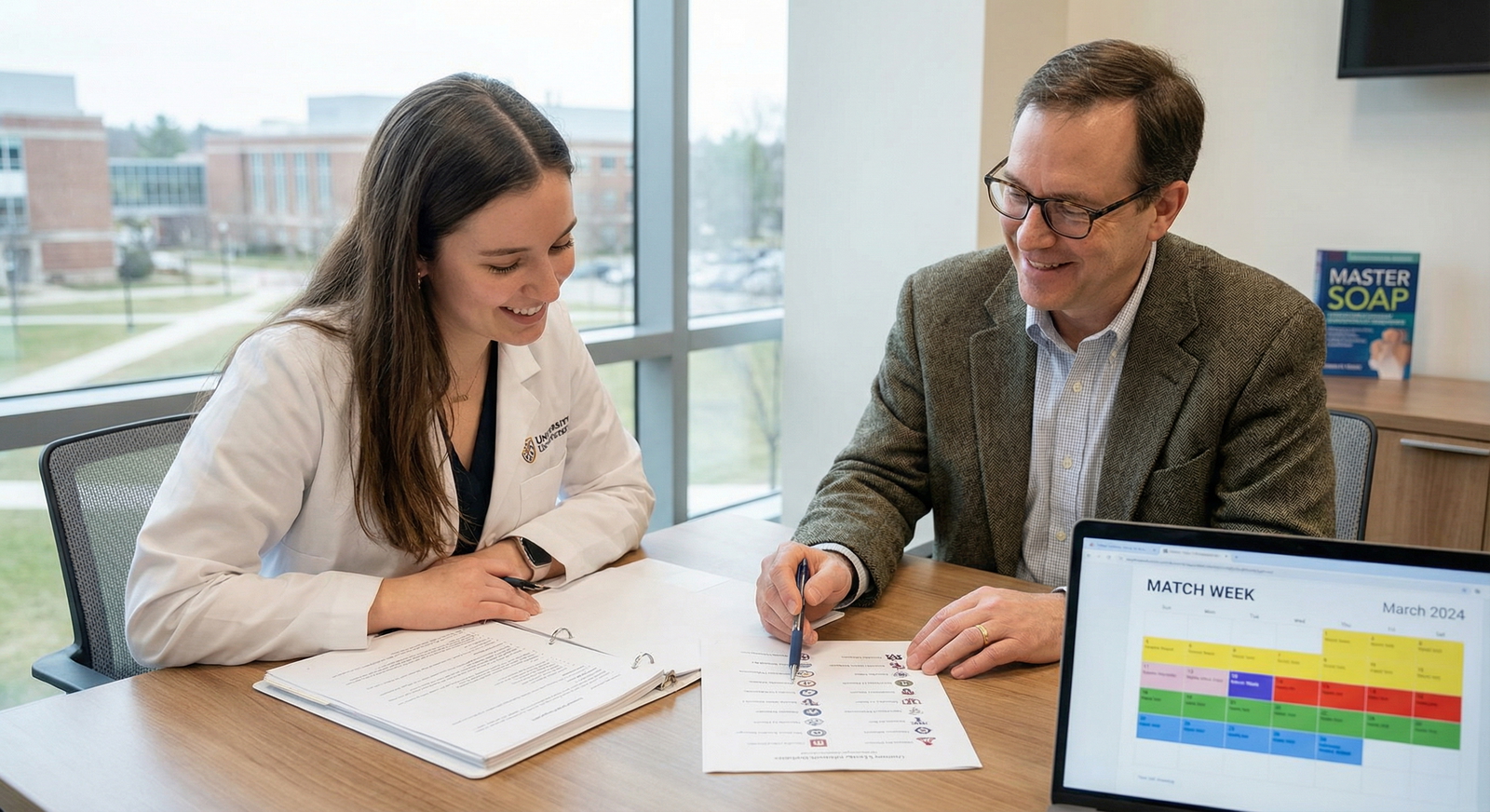
The Supplemental Offer and Acceptance Program (SOAP) is often the most stressful part of Match Week—especially for a Caribbean IMG hoping to match into Physical Medicine & Rehabilitation (PM&R). But with structured SOAP preparation, you can transform that chaos into a focused, strategic opportunity.
As a Caribbean medical school graduate (for example, from SGU or another island-based program) aiming for a physiatry match, you are navigating:
- The competitive nature of PM&R residency
- The challenges and stigma sometimes associated with a Caribbean medical school residency application
- Compressed SOAP timelines
- The emotional impact of not matching on Monday of Match Week
This guide will walk you through:
- What SOAP is (and what SOAP is not)
- How SOAP works specifically for PM&R and transitional/prelim options
- Step‑by‑step SOAP preparation before Match Week
- Strategy for application lists as a Caribbean IMG
- Communication, professionalism, and mental resilience during SOAP
Throughout, the emphasis is on practical, actionable steps tailored to Caribbean IMGs aiming for a physiatry match.
SOAP Basics: What Is SOAP and How Does It Work?
Before diving into strategy, you need a precise answer to “What is SOAP?” and how it fits into the residency match process.
What Is SOAP?
SOAP (Supplemental Offer and Acceptance Program) is a structured, NRMP-managed process during Match Week that allows:
- Eligible unmatched or partially matched applicants to apply to unfilled residency positions
- Programs with unfilled spots to quickly identify and offer positions to applicants
It is not a separate match; it is an extension of Match Week with its own rules and strict timelines.
Eligibility basics:
You are generally SOAP-eligible if:
- You registered for the NRMP Main Residency Match
- You are unmatched or partially matched (e.g., matched to an advanced program but not a prelim year, depending on circumstances)
- You have an active, verified ERAS application
- You meet any program- or specialty-specific requirements (Step scores, ECFMG certification timeline for IMGs, etc.)
As a Caribbean IMG, confirm SOAP eligibility with:
- NRMP (in your NRMP account and handbook)
- ERAS (application status)
- Your Dean’s Office / student affairs (especially at schools like SGU that support a large number of U.S.-bound students)
Key SOAP Timeline and Phases
While exact times change each year, the structure is consistent:
Monday of Match Week (11 a.m. ET)
- You learn: Matched or Unmatched / Partially Matched
- If unmatched/partial and SOAP-eligible, you gain access to the List of Unfilled Programs (via NRMP/ERAS).
- You start selecting programs and tailoring your documents.
Application Window
- You can apply to up to 45 programs total during SOAP.
- Applications are submitted in ERAS, customized per program (if time allows).
- No contacting programs outside NRMP rules (no cold calling/emailing PDs to lobby).
Offer Rounds (Usually 4 Rounds: Wednesday–Thursday)
- Programs review applications, conduct SOAP interviews (often brief, video/phone), and submit preference lists.
- NRMP releases offers in waves; you can accept only one offer at a time.
- Once you accept, you exit SOAP and are bound to that program.
Post‑SOAP (Thursday–Friday)
- Remaining unfilled spots become visible; now programs and applicants can communicate more freely (depending on NRMP guidelines and the year’s rules).
Understanding this framework helps you reverse-engineer your SOAP preparation in the months before Match Week.
PM&R in SOAP: Realistic Expectations and Strategic Positioning
How Often Does PM&R Appear in SOAP?
Physical Medicine & Rehabilitation is moderately competitive. In many years:
- Only a small number of categorical PM&R PGY-1 positions go unfilled.
- More often, you may see a few PGY-2 (advanced) PM&R positions available.
- The majority of unfilled spots in SOAP are typically in:
- Family Medicine
- Internal Medicine (categorical or prelim)
- Pediatrics
- Psychiatry
- Transitional Year (TY) and Preliminary Medicine/Surgery
This means that for a physiatry match, SOAP strategy often focuses on one or more of these paths:
Direct PM&R SOAP Match (Best-case scenario)
Apply to any unfilled PM&R positions that align with your profile.“Bridge Year” Strategy
If few or no PM&R spots exist, focus on:- Preliminary Internal Medicine
- Transitional Year (if available)
- Occasionally Preliminary Surgery or other prelims
with the clear plan to re-apply to PM&R after gaining U.S. clinical experience and letters.
Alternate Specialty Commitment
Some applicants, especially those with broader interests, may use SOAP to commit fully to another specialty (e.g., IM categorical, FM, Psych), accepting that PM&R may no longer be their target.
The Caribbean IMG Reality for PM&R
For a Caribbean medical school residency in PM&R, there are additional hurdles:
- Perception bias: Some PM&R programs prioritize U.S. MD/DO graduates.
- Visa issues: If you require a visa, many small programs cannot sponsor.
- Limited PM&R clerkships accessible from the Caribbean, leading to fewer in-specialty letters.
However, there are strengths you can highlight:
- Strong USMLE scores (especially Step 2 CK)
- U.S.-based clinical rotations with solid letters (even if not in PM&R)
- Documented interest in rehabilitation (research, volunteer, sports medicine, neurology exposure)
- Resilience and adaptability—key attributes for physiatry
Your SOAP preparation should assume:
- Very few PM&R SOAP spots
- High competition for any PM&R openings
- A serious need for a parallel plan (prelim/TY) that still supports your eventual physiatry match goal
Pre‑Match Week SOAP Preparation: Documents, Strategy, and Mindset
SOAP is a 72-hour sprint; success depends on what you do in the 3–6 months before Match Week.
1. Optimize Your ERAS Application Ahead of Time
You cannot build a new application from scratch during SOAP. Focus on:
Personal Statement Strategy
Have at least two polished personal statements ready:
PM&R-focused personal statement
- Describe your path to physiatry: key experiences (rehab rotations, neuro, MSK, sports, pain, disability advocacy).
- Emphasize:
- Teamwork with therapists and multidisciplinary teams
- Longitudinal patient relationships
- Functional outcomes and quality of life
- Address Caribbean background positively: adaptability, diverse patient exposure, resourcefulness.
Prelim/Transitional Year statement (Internal Medicine or TY-focused)
- Emphasize:
- Strong interest in inpatient medicine, acute care, or broad foundational training
- Work ethic, efficiency, reliability, and communication skills
- How a robust clinical base supports your long-term career (whether in PM&R or another field)
- Avoid appearing noncommittal: your letter should make sense even if you end up staying in IM or TY.
- Emphasize:
Optionally, a third statement for another backup specialty you might pursue in SOAP (e.g., Family Medicine, Psychiatry), if appropriate.
Letters of Recommendation (LoRs)
By the time SOAP arrives:
- Aim for:
- At least one PM&R letter, if you completed a rotation.
- The remainder from:
- Internal Medicine
- Neurology
- Orthopedics
- Primary care or other strong clinicians who know you well.
- Ensure all letters are uploaded and assigned correctly in ERAS well before Match Week.
For SOAP, you cannot usually add new letters quickly. The time delay makes last-minute LoRs impractical.
CV and Experiences
Review your ERAS entries:
- Highlight:
- Rehabilitation-related experiences (e.g., neurorehab, sports injuries, disability advocacy, adaptive sports volunteering).
- Leadership, teaching, and teamwork roles.
- Remove obvious typos, vague entries, or duplication.
2. Plan Your SOAP Specialty Tiers
Before Match Week, outline clear tiers of specialties and program types:
Tier 1: PM&R programs
- Identify PM&R residencies known to:
- Accept Caribbean IMGs
- Offer J‑1 or H‑1B visas (if required)
- Have larger classes or community-based settings
- Maintain a list with:
- Program name, location, NRMP code
- Past record (if any) of Caribbean IMG/SGU residency match
- Current residents’ background (review program websites and social media)
Tier 2: Bridge Year Programs
- Transitional Year (TY)
- Preliminary Internal Medicine
- Sometimes Preliminary Surgery, if you have strong interest or experience
Focus on community hospitals and university-affiliated community programs more likely to have:
- Historically unfilled spots
- A track record of IMGs
- Willingness to sponsor visas, if needed
Tier 3: Alternate Long-Term Specialties
Only if you truly would be satisfied with them:
- Internal Medicine categorical
- Family Medicine
- Psychiatry
- Pediatrics (less common for PM&R aspirants, but possible)
Your SOAP application list will be built from these tiers depending on:
- How many PM&R positions are actually unfilled on Monday
- Your specific profile (scores, attempts, visa status, clinical experiences)
3. Prepare a SOAP‑Optimized PM&R Narrative
You will often be asked “Why PM&R?” in SOAP interviews, with very little time to respond thoughtfully.
Prepare a concise, structured answer:
Spark: What first drew you to PM&R?
- Example: Working with stroke patients during an IM rotation and witnessing functional gains with therapy.
Exploration: Evidence that you explored the field.
- PM&R elective, rehab consult exposure, shadowing physiatrists, inpatient rehab unit experience.
Fit: Why your skills align with physiatry.
- You enjoy:
- Longitudinal patient care
- Interdisciplinary teamwork
- Problem-solving around functional limitations
- You are comfortable with:
- Complex neuro/MSK patients
- Communication with therapists, patients, and families.
- You enjoy:
Future Vision: How you see yourself contributing.
- Interest in pain, neurorehab, MSK/sports, or spasticity management.
- Academic vs community goals, research interests, advocacy for patients with disabilities.
Have a second version ready for prelim/TY interviews:
- Emphasize your desire for strong clinical foundation and team-based inpatient care, while not overselling PM&R to a non-PM&R program. They want to see genuine interest in doing excellent work in that role.
4. Emotional and Logistical Preparation
SOAP can be emotionally intense. Prepare in advance:
Schedule flexibility:
- Clear your calendar for Match Week as much as possible.
- Inform family/employers that you may have unpredictable interview times.
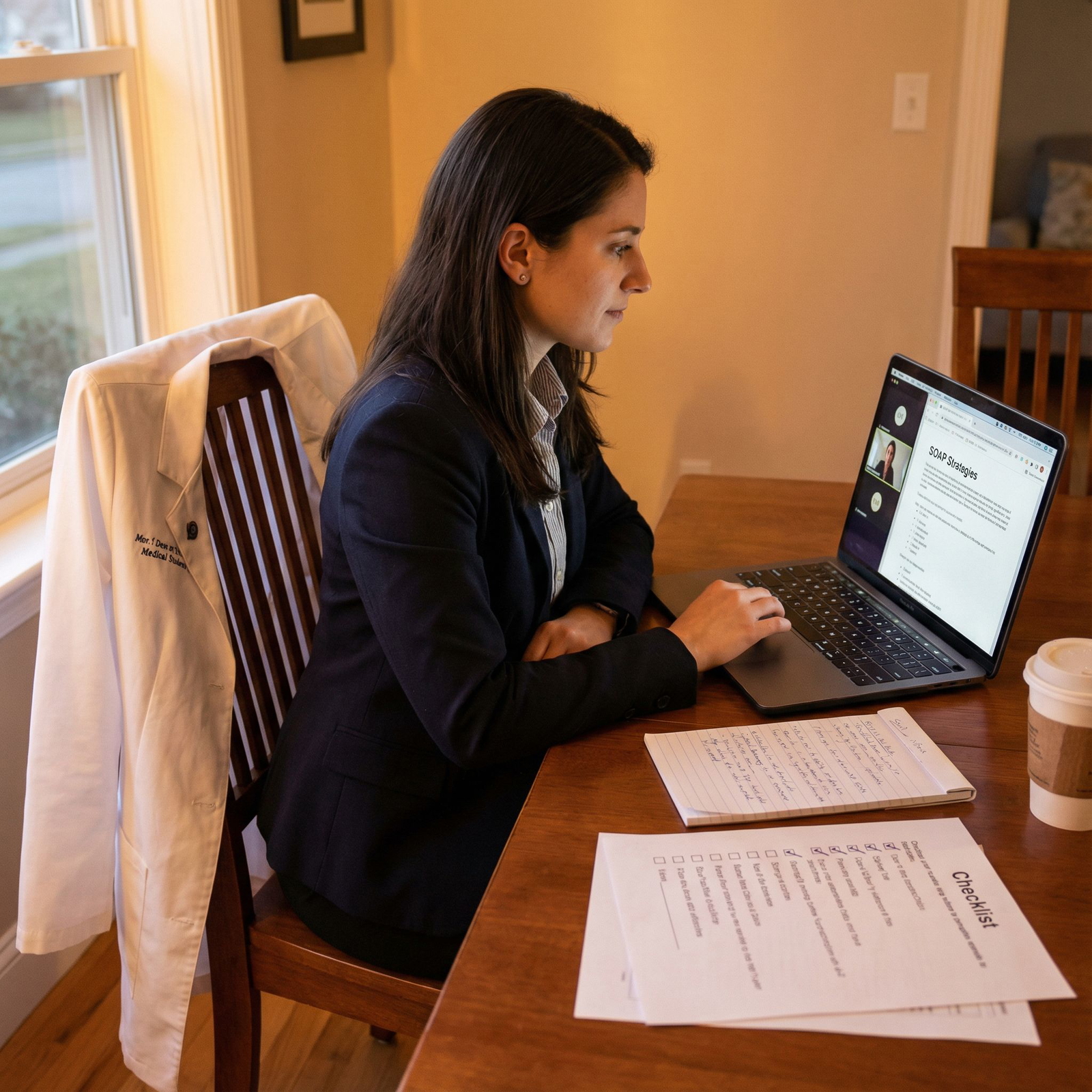
Technology readiness:
- Stable internet, quiet space, good lighting for Zoom/phone calls.
- Professional attire ready (at least from the waist up).
Support system:
- Identify mentors (especially PM&R attendings, advisors, or upper-year residents) who can advise you quickly.
- Stay connected with Caribbean IMG peers; many from SGU and similar schools go through this and share real-time information.
Match Week: Executing Your SOAP Plan as a Caribbean PM&R Applicant
Monday Morning: Assess and Recalibrate
At 11 a.m. ET, you learn your status:
- Unmatched: No position obtained.
- Partially matched: For example, matched to an advanced PM&R program but no prelim year, or other combinations (check NRMP rules for how this interacts with SOAP eligibility).
If you are SOAP-eligible, you receive:
- Access to the List of Unfilled Programs
- A short time window to:
- Review which PM&R, TY, prelim, and categorical programs are available
- Decide where to send your up to 45 applications
Step 1: Scan for PM&R Positions
Immediately:
- Filter programs by specialty: Physical Medicine & Rehabilitation
- Note:
- PGY level (PGY‑1 categorical, PGY‑2 advanced, PGY‑3 rarely)
- Sponsor visa or not (if applicable)
- Geographic preference only after you’ve assessed feasibility
If there are very few PM&R SOAP spots (which is typical):
- Apply to all PM&R programs where you meet basic criteria, even if location is not ideal.
- Use your PM&R personal statement and assign relevant LoRs.
Step 2: Build the Rest of Your 45 Applications
After PM&R, fill remaining spots with:
- Transitional Year programs
- Prelim Internal Medicine (especially those known to consider IMGs or Caribbean graduates)
- Possibly Prelim Surgery, FM, Psych, or other specialties if genuinely acceptable
Apply these priorities:
- Programs with a history of Caribbean medical school residency matches or IMGs.
- Hospitals in regions more open to IMGs: often midwest, south, or community programs (though this varies).
- Programs that can handle your visa situation, if relevant.
Resist the impulse to be overly selective geographically. Having a position (especially a prelim/TY supportive of PM&R goals) is far more important than location perfection.
Customizing Applications Under Time Pressure
Time is limited; prioritize:
PM&R programs:
- Use your PM&R personal statement.
- Double-check LoR assignments (include PM&R-focused letters if available).
Prelim/TY programs:
- Switch to your prelim/TY personal statement.
- Assign internal medicine or broad clinical LoRs.
You usually cannot rewrite major content during SOAP. Use what you prepared earlier and avoid last-minute major edits that could introduce errors.
Handling SOAP Interviews
Programs may schedule brief phone or video interviews. Typical questions include:
- Why are you interested in our program?
- Tell me about yourself.
- Why PM&R? (for PM&R programs)
- Why prelim/TY? What are your long-term goals?
- How do you handle stress or setbacks? (SOAP is already evidence of resilience.)
For PM&R:
- Keep your “Why PM&R?” story concise (2–3 minutes).
- Highlight specific patient encounters and your understanding of the field.
- Demonstrate realistic expectations about PM&R training (inpatient rehab, consults, outpatient clinics, procedures, interdisciplinary rounds).
For Prelim/TY:
- Emphasize:
- Your commitment to providing excellent patient care, regardless of specialty outcome.
- Your reliability as a team member for the full year.
- Your appreciation for the program’s educational structure and mentoring.
For all interviews as a Caribbean IMG:
- Address Caribbean training respectfully and confidently:
- “My education in [Caribbean school] gave me broad exposure to diverse pathologies, often in resource-limited settings. I complemented that with U.S. clinical rotations where I adapted to the U.S. system, EMR, and multidisciplinary care. I’m eager to bring that adaptability and work ethic to your program.”
Offer Rounds: Strategy and Decision-Making
NRMP runs multiple SOAP offer rounds. Key rules:
- If you receive an offer, you may:
- Accept (and you exit SOAP, binding contract).
- Reject (you may still receive other offers later).
- Let it expire (same as reject in practice).
For a Caribbean IMG targeting PM&R, decision factors:
Direct PM&R Offer vs Prelim/TY Offer
- Direct PM&R:
- Usually accept unless there is a serious concern about program quality, accreditation, or fit.
- Prelim/TY:
- Weigh: Is this a strong environment for learning and future PM&R application?
- Does the program support residents re-applying or transitioning to PM&R?
- Direct PM&R:
Program Stability and Accreditation
- Look up:
- ACGME status
- Any red flags or repeated probation
- Speak to mentors quickly if uncertain.
- Look up:
Visa and Long-Term Plans
- Confirm:
- Visa type they can sponsor (J‑1 vs H‑1B)
- Whether this aligns with your long-term immigration plans.
- Confirm:
In general, if you receive a legitimate, accredited prelim/TY offer and you have no other offers in hand, most advisors recommend accepting, especially if you are early in your career and can re-apply to PM&R later with U.S. experience.
After SOAP: Building Toward a Future Physiatry Match
Whether you match into PM&R directly, secure a prelim/TY, or remain unmatched after SOAP, you still control what happens next.
If You SOAP Match into PM&R
- Celebrate, then:
- Confirm onboarding, credentialing, and visa steps.
- Begin reviewing rehab fundamentals:
- Neurorehab, stroke, SCI, TBI
- MSK medicine, pain basics
- Functional assessments and rehabilitation team roles
- Seek mentors early within your PM&R department.
Your path to a physiatry match is complete—you are in.
If You SOAP Match into a Prelim/TY
Use the year as a launchpad for PM&R:
Excel Clinically
- Be the intern everyone wants on their team.
- This builds strong letters of recommendation.
Seek PM&R Exposure
- If your hospital has PM&R services:
- Request electives, consult rotations, or shadowing.
- Attend PM&R conferences or grand rounds if available.
- If your hospital has PM&R services:
Network and Obtain PM&R Letters
- Identify friendly physiatrists who appreciate your interest.
- Ask for letters after demonstrating consistent performance.
Plan for Re-application Early
- Update your CV with new clinical experiences and research.
- Start drafting an updated PM&R personal statement mid-year.
- Consider PM&R away rotations or observerships during vacation time.
If You Do Not Match Through SOAP
This is painful, but not the end of your PM&R journey.
Short-term steps:
- Request detailed feedback from trusted mentors (not all programs can give feedback).
- Analyze:
- Step scores and any failures
- Number and type of interviews you had
- Strength of LoRs and personal statement
- Identify 1–3 major modifiable weaknesses, such as:
- No PM&R exposure or letters
- Low Step 2 CK
- Weak U.S. clinical experience
- Poor interview skills
Then design a 1–2 year plan:
- Improve exam scores (if any retakes are allowed/needed).
- Obtain U.S. clinical experience in IM and ideally PM&R (observerships, externships).
- Engage in PM&R research or quality projects if feasible.
- Strengthen English communication, professionalism, and interview skills.
Many Caribbean IMGs successfully achieve a physiatry match after a cycle (or more) of focused improvement.
Frequently Asked Questions (FAQ)
1. As a Caribbean IMG, what are my realistic chances of a PM&R residency via SOAP?
Direct PM&R SOAP positions are limited and highly competitive. While it’s possible, you should plan as if:
- Direct PM&R via SOAP is a bonus, not a guarantee.
- Your primary SOAP goal is often securing a prelim or TY that positions you well to re-apply successfully to PM&R in the next cycle.
Caribbean IMGs do match into PM&R each year—often by building a strong story of clinical excellence, rehab exposure, and resilience, sometimes through a bridge year first.
2. Should I apply broadly in SOAP (e.g., to any specialty) just to get a spot?
You must balance practicality and long-term satisfaction:
- Applying to prelim/TY and related fields that still support a future physiatry match (e.g., IM categorical if you like IM) is reasonable.
- Applying to a specialty you would strongly dislike or almost certainly leave is usually a poor choice—for you and the program.
Because you are limited to 45 programs, choose those where:
- You meet basic criteria.
- You could genuinely commit to working hard for the full duration of training.
3. How should I present my Caribbean medical school background during SOAP?
Be honest and confident:
- Highlight strengths:
- Exposure to diverse pathology and resource-limited environments.
- Maturity and adaptability from training abroad.
- Show you’ve successfully adapted to U.S. clinical rotations, with strong letters and familiarity with EMR and U.S. healthcare culture.
- Avoid apologizing for your Caribbean background; instead, frame it as a unique asset combined with clear evidence of readiness for U.S. residency.
4. What is the most important part of SOAP preparation for a Caribbean IMG interested in PM&R?
Three key pillars:
Early document preparation
- PM&R and prelim/TY personal statements
- Completed ERAS entries and uploaded LoRs
Strategic specialty planning
- A realistic hierarchy: PM&R → TY/prelim (bridge year) → any acceptable long-term specialties
- A pre-compiled target list of programs known to consider IMGs
Mindset and logistics
- Accepting uncertainty and remaining flexible during Match Week
- Setting up reliable technology and a quiet interview environment
- Having mentors and supporters ready to help you make decisions quickly
If you build this foundation early, SOAP becomes a demanding but manageable process—not an unstructured scramble.
With deliberate SOAP preparation tailored to your goals as a Caribbean IMG pursuing Physical Medicine & Rehabilitation, you give yourself the best chance to secure a position—whether directly in PM&R or via a high-yield bridge year—and to stay firmly on track toward a rewarding career in physiatry.