Understanding SOAP for Caribbean IMGs in Radiation Oncology
For many Caribbean IMGs aiming for a radiation oncology residency, the Supplemental Offer and Acceptance Program (SOAP) can feel like a last‑minute scramble. But for well‑prepared applicants—especially those from Caribbean medical schools targeting competitive specialties like radiation oncology—SOAP can be a strategically valuable second chance rather than a desperate fallback.
This guide focuses on SOAP preparation specifically for Caribbean IMGs interested in radiation oncology and related pathways. It will help you:
- Understand what SOAP is and how it works
- Evaluate realistic options for a rad onc match as an IMG
- Build a SOAP‑ready application portfolio before Match Week
- Execute a day‑by‑day SOAP game plan
- Use SOAP to protect your long‑term goal of a radiation oncology residency, even if your SOAP position is in another specialty
Throughout, we’ll weave in Caribbean‑specific perspectives, including applicants from SGU and similar schools, where the SGU residency match culture and infrastructure can be an asset if you leverage it early and strategically.
1. What Is SOAP—and Why It Matters for Caribbean IMGs
1.1 Defining SOAP in Clear Terms
SOAP—Supplemental Offer and Acceptance Program—is NRMP’s structured process that allows unmatched or partially matched applicants to obtain unfilled residency positions during Match Week.
In simple terms, SOAP is how you can still secure a residency spot after you learn on Monday of Match Week that you did not fully match.
To qualify, you must:
- Be eligible for the Main Residency Match
- Be unmatched or partially matched at 11:00 a.m. ET on Match Monday
- Be registered for NRMP and ERAS‑eligible
- Not have already signed a binding PGY‑1 or PGY‑2 contract elsewhere
If you meet these criteria, you’re SOAP‑eligible. That status is crucial, because only SOAP‑eligible applicants can apply to unfilled positions posted in the NRMP’s List of Unfilled Programs during SOAP hours.
1.2 Why SOAP Is Especially Critical for Caribbean IMGs
For Caribbean IMGs—whether from SGU, AUC, Ross, Saba, or other schools—SOAP is often the make‑or‑break moment that determines whether you will start residency this year or face a gap year.
Key reasons SOAP is uniquely important for Caribbean IMGs:
- Higher unmatched rates compared to US MD graduates
- Many Caribbean grads pursue competitive specialties like radiation oncology, where IMG positions are scarce
- Visa needs (J‑1/H‑1B) can further limit your options outside of formal NRMP processes
Even if your initial target was a radiation oncology residency, you need to be ready for the reality that rad onc positions in SOAP are extremely rare. SOAP preparation for you is about:
- Understanding whether a direct rad onc SOAP path is realistic
- Preparing backup SOAP strategies that keep rad onc as a long‑term goal
- Executing a polished, fast, and professional SOAP campaign
2. Radiation Oncology Reality Check: IMG Pathways & SOAP Limits
2.1 How Competitive Is Radiation Oncology for IMGs?
Radiation oncology has historically been a small specialty with fluctuating competitiveness. Even in periods of relative “softness” in the job market, entry into residency remains challenging, and for IMGs, even more so.
Key realities:
- Total number of rad onc positions nationally is low (typically under 200 PGY‑2 spots annually)
- A significant portion of positions are filled by US MD seniors
- Many programs are IMG‑light or IMG‑naïve, without established international recruitment processes
- Many rad onc positions are categorical or advanced (PGY‑2) requiring a preliminary or transitional year (PGY‑1)
For Caribbean IMGs, a direct rad onc match is possible but rare, and a rad onc match via SOAP is rarer still.
2.2 What Are the Chances of Radiation Oncology Positions Appearing in SOAP?
You should assume:
- Most rad onc positions will be filled in the Main Match
- Any unfilled rad onc positions may:
- Go to applicants with strong US ties, high USMLE scores, and robust research portfolios, or
- Be filled outside SOAP via institutional or off‑cycle recruiting
Historically, very few—sometimes zero—radiation oncology positions are formally listed in SOAP. The rad onc match tends to occur before SOAP even begins.
Implication:
If you are a Caribbean IMG whose only SOAP plan is “I’ll find a rad onc spot”, your plan is not realistic.
Instead, you should:
- Treat SOAP as an opportunity to secure a PGY‑1 position (preliminary medicine/surgery or transitional year) while you continue to build a rad onc profile
- Or secure a position in a field that:
- You can be satisfied practicing if rad onc doesn’t work out, and
- Still allows you to cultivate skills and experiences relevant to radiation oncology (oncology, palliative care, procedural skills, research)

3. Pre‑SOAP Preparation: Building a SOAP‑Ready Portfolio
SOAP moves extremely fast. You won’t have time during Match Week to create polished materials from scratch. Everything must be ready before Match Monday.
3.1 Clarify Your Tiered Strategy Before Match Week
Before Rank Order List (ROL) certification, you should sketch three tiers of outcomes:
Tier 1: Ideal Outcome – Direct rad onc match (Main Match)
- You ranked a mix of rad onc programs and perhaps joint preliminary year programs.
- If this happens, SOAP is irrelevant to you this cycle.
Tier 2: Realistic SOAP Outcome – Secure a PGY‑1 spot
- Transitional year (TY)
- Preliminary internal medicine
- Preliminary surgery
- Possibly categorical internal medicine, family medicine, or another field you can accept long‑term
- This keeps the door open to later applying to radiation oncology as an advanced position.
Tier 3: Contingency – No SOAP position obtained
- Plan for research fellowships, observerships, or additional US clinical experience
- Develop a 12‑month strategy to be a stronger applicant in the next cycle
You must define in advance what you are willing to accept in SOAP. Under match‑week pressure, it’s easy to make emotional, poorly thought‑out choices.
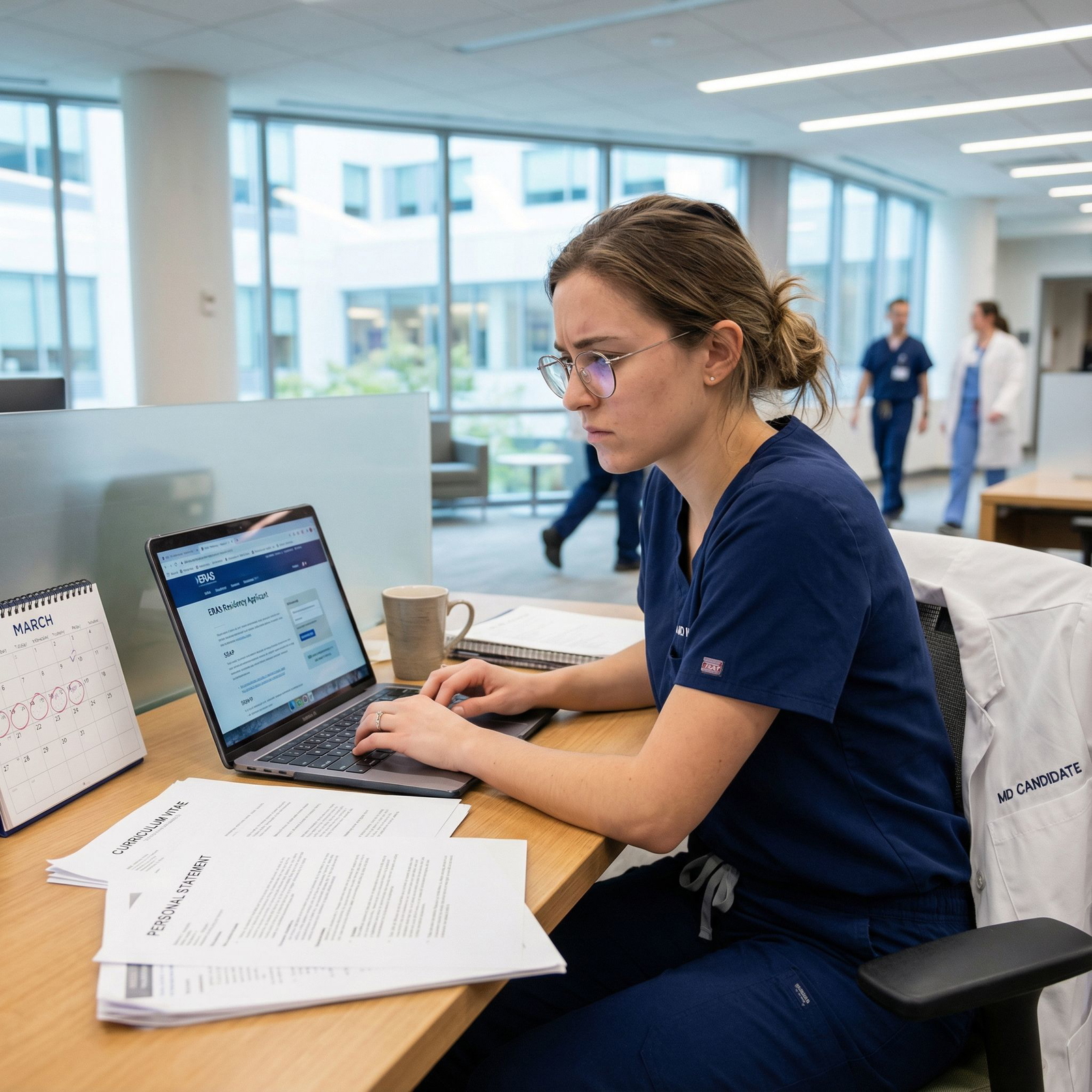
3.2 Align Your Application Documents with Your Strategy
You will use the same ERAS account and core documents in SOAP. However, you can adapt program‑specific materials like personal statements and program signaling (if applicable).
Key documents to have ready before Match Week:
Updated CV (and ERAS entries):
- Emphasize:
- Oncology‑related experiences (radiation, medical, surgical oncology)
- Research: abstracts, posters, publications—especially in cancer or radiation sciences
- QI initiatives and multidisciplinary team experiences
- For SOAP, also highlight:
- Flexibility and adaptability
- Strong clinical performance in core clerkships and sub‑internships
- Emphasize:
Multiple Tailored Personal Statements: At minimum, have:
Radiation Oncology Statement (Primary Target)
- Focus on your oncologic motivation, technical curiosity, interest in longitudinal patient care
- Highlight rad onc electives, SGU residency match radiology/oncology pipeline stories, or Caribbean oncology experiences
Internal Medicine / Transitional Year Statement
- Emphasize broad internal medicine, complex inpatient care, and an interest in oncology or palliative care
- This is often your main SOAP backup route
Surgery / Prelim Surgery Statement (if you’re open to it)
- Highlight manual dexterity, OR experience, and teamwork under pressure
Having 3–4 versions lets you pivot quickly when you see the SOAP unfilled list.
Letters of Recommendation (LoRs): Strong LoRs are critical, especially for Caribbean IMGs.
Aim for:
- 1–2 radiation oncology LoRs from US‑based attendings if possible
- 1–2 internal medicine or surgery LoRs highlighting your reliability and work ethic
- A department chair letter if available
Do not wait until Match Week to chase new letters. Instead, collect and upload them weeks/months in advance.
USMLE / COMLEX Scores and ECFMG Status:
- Ensure all scores are released and visible in ERAS
- Confirm ECFMG certification (or near‑final status) if you are an IMG close to graduation
- Keep documentation of your ECFMG progress easily accessible
3.3 Leverage Your Caribbean Medical School Resources
Top Caribbean schools like SGU, AUC, Ross, and Saba often have robust match advising and SOAP support systems. For example, if you’re aiming for an SGU residency match in a competitive field:
Meet with your school’s residency advising office months before Match:
- Clarify your chances as an IMG in rad onc
- Define realistic backup specialties and PGY‑1 options
- Pre‑identify programs with a history of accepting SGU or Caribbean graduates
Ask if your school offers:
- Mock SOAP interviews (even brief 10–15 minute sessions help)
- Dean’s letters or advocacy calls to programs, which can matter in small specialties
- A SOAP “war room”—a centralized support system during Match Week for rapid guidance
Even if you don’t attend SGU, adopt the same mindset: use whatever institutional and alumni resources exist to map your SOAP strategy.
4. The Mechanics of SOAP: Timeline and Tactics
4.1 Match Week Structure: What Happens, When
The typical NRMP Match Week timeline (may vary slightly year to year):
Monday, 11:00 a.m. ET:
- You learn if you are:
- Matched
- Partially matched (e.g., advanced but no PGY‑1, or vice versa)
- Unmatched
- If unmatched/partially matched and eligible, you gain SOAP eligibility status
- You learn if you are:
Monday Afternoon:
- You can view the List of Unfilled Programs in NRMP (SOAP‑eligible only)
- You CANNOT yet send applications; you can:
- Analyze specialties, program types, visa policies
- Prioritize target programs
Tuesday Morning:
- SOAP applications open through ERAS
- You may submit up to a certain number of applications (commonly 45 total) to SOAP‑participating programs
Tuesday–Thursday:
- Programs review applications and conduct brief interviews (phone or video)
- Offers are extended in several SOAP rounds (e.g., Tuesday afternoon, Wednesday, Thursday), with strict deadlines for response
Thursday:
- Last SOAP offers conclude
- After SOAP ends, any remaining unfilled positions may be pursued in “the scramble” (informal, outside NRMP structure), but many programs avoid this
4.2 Realistic SOAP Targets for a Future Radiation Oncologist
As a Caribbean IMG focused on radiation oncology, your SOAP targets should be strategic, not wishful.
4.2.1 Highest‑Value SOAP Targets
Focus on positions that:
- Start PGY‑1 this July
- Are in:
- Transitional Year (TY)
- Preliminary Internal Medicine
- Preliminary Surgery
- Categorical Internal Medicine with oncology exposure
Programs linked to large cancer centers, NCI‑designated centers, or academic hospitals offer more future rad onc networking.
4.2.2 Lower‑Priority but Reasonable Options
If higher‑value programs are not accessible, consider:
Community internal medicine programs with:
- Strong oncology, palliative care, or ICU rotations
- Opportunities for quality improvement and research
Family medicine in systems with oncology affiliations if:
- You’re open to general practice or primary care if rad onc doesn’t materialize
4.2.3 Positions to Be Cautious About
Avoid reflexively applying to:
- Specialties you are truly unwilling to practice if rad onc doesn’t work out
- Programs with:
- Very poor ABMS board pass rates
- Systemically abusive reputations or unsafe work environments
SOAP should advance your career, not trap you in a specialty or program you know you will regret.

5. Executing Your SOAP Plan Step‑by‑Step
5.1 Monday: Shock Management and Strategic Planning
If you learn on Monday that you are unmatched or partially matched:
Control your mindset early.
- Take one hour to process emotions privately.
- Remind yourself: SOAP is not the end of your rad onc dream; it is the bridge.
Meet with your advisor or school SOAP team.
- Review your SOAP eligibility status
- Rapidly assess your score profile, visa needs, and realistic target specialties
Review the Unfilled List methodically.
- Filter by:
- Specialty (IM, TY, prelim)
- Visa acceptance (J‑1/H‑1B)
- State licensing rules for IMGs
- Identify:
- Tier A: Programs aligned with your long‑term oncology goals
- Tier B: Acceptable but less ideal programs
- Tier C: Only if needed (last‑resort options)
- Filter by:
Assign personal statements to program groups.
- Use your internal medicine/TY statement for most PGY‑1 positions
- If any rad onc‑linked pathways appear, use your rad onc‑flavored statement (e.g., for TY at a major cancer center)
5.2 Tuesday Morning: Submitting SOAP Applications
When SOAP applications open:
Apply early but not blindly.
- You usually have a cap (e.g., 45 programs). Use them strategically.
- Prioritize programs with:
- Reasonable track record of Caribbean IMGs
- Oncology exposure
- Academic reputation
Tailor program‑specific fields.
- If allowed, mention oncology‑related interest in brief fields or supplemental questions
- Keep everything concise and professional
Confirm document assignments.
- Ensure each program gets the correct personal statement and LoR set
- Verify your USMLE transcript and MSPE are attached
5.3 Tuesday–Thursday: SOAP Interviews and Offers
During SOAP, interviews are often short (10–20 minutes) and can feel rushed. Preparation matters.
5.3.1 Core SOAP Interview Themes
Be ready to address:
Why you went unmatched
- Focus on external factors (competitiveness of radiation oncology, small specialty) and what you’ve learned
- Avoid blaming others or sounding bitter
Why this specialty and program now?
- For IM/TY: emphasize love for internal medicine, inpatient care, and desire to contribute immediately
- Tie in your oncologic interest as a strength, not a distraction:
- “My interest in oncology deepened my commitment to internal medicine, because so many cancer patients rely on strong internists to manage complex comorbidities.”
Will you leave if you get a rad onc offer later?
- Programs want stability. A balanced answer:
- “I am fully committed to completing the year and contributing to your program. If future opportunities arise, I would follow the correct NRMP and institutional rules, but my focus is to be an excellent resident here.”
- Programs want stability. A balanced answer:
What did you do to improve your candidacy?
- Mention:
- Ongoing research
- Additional clinical observerships
- Quality improvement work
- Mention:
5.3.2 Practical SOAP Interview Tips for Caribbean IMGs
Technology check (especially crucial for offshore graduates):
- Stable internet, backup device, professional background
- Name clearly displayed, Zoom/Teams familiarization
Short, impactful answers:
- SOAP interviews are timed; avoid rambling
- Use 60–90 second responses, focusing on concrete examples
Highlight IMG strengths:
- Adaptability, resilience, and cross‑cultural communication gained from Caribbean training and diverse clerkship sites
5.4 Evaluating and Accepting SOAP Offers
When offers come:
Know the rules:
- You have a limited window (often 2 hours) to accept or reject an offer
- Accepting an offer is binding; you exit SOAP and cannot accept another position
Decision‑making framework: Ask yourself:
Will this position:
- Let me start PGY‑1 on time?
- Expose me to oncology‑relevant experiences or strong clinical training?
- Be a program where I can realistically succeed and be happy?
What is the program’s reputation for IMGs and board pass rates?
Does it meet my visa and location needs?
Avoid over‑optimizing and losing everything.
Many applicants reject reasonable SOAP offers hoping for a “better” one that never comes. For a Caribbean IMG with rad onc aspirations, your priority should be:A solid PGY‑1 or categorical position now, plus a clear plan to pursue rad onc down the line, is often better than gambling on a perfect match that may never arrive.
6. Using SOAP Outcomes to Preserve Your Radiation Oncology Dream
6.1 If You Secure a SOAP Position
If you match via SOAP into IM, TY, or prelim surgery:
Reframe success.
- You have a residency start date, a US training platform, and ongoing access to oncology‑related experiences.
- This is a win, not a consolation prize.
Early in PGY‑1, do the following:
- Identify rad onc departments or cancer centers affiliated with your hospital
- Seek electives or research with radiation oncologists
- Join tumor boards, palliative care teams, or oncology clinics
Build your rad onc portfolio:
- Case reports, retrospective studies, QI projects focused on radiation or cancer care
- Letters from rad onc attendings impressed by your work ethic and maturity
Plan your timing:
- Most rad onc applications will consider applicants in their PGY‑2 year, but some take PGY‑3s
- Work closely with program leadership to ensure scheduling flexibility if you reapply
6.2 If You Do Not Secure a SOAP Position
If SOAP ends without a match:
Immediately plan your “bridge year”:
- Research fellowships in radiation oncology, medical oncology, or related fields
- US‑based clinical observerships or unpaid hospital roles to maintain clinical currency
- Public health, epidemiology, or cancer outcomes research degrees (if feasible)
Upgrade your candidacy:
- Target peer‑reviewed publications or national conference presentations
- Strengthen your rad onc network by:
- Attending ASTRO and regional oncology meetings
- Seeking mentorship from rad onc faculty, including those who work with Caribbean IMGs
Prepare for next cycle early:
- Update your application materials by late spring
- Reassess specialty choice and backup plans with mentors and advisors
- Decide if your next application cycle will again focus heavily on rad onc, or broaden to additional specialties
FAQs: SOAP and Radiation Oncology for Caribbean IMGs
1. Is it realistic to get a radiation oncology residency through SOAP as a Caribbean IMG?
In most years, it is highly unlikely. Radiation oncology positions rarely appear in SOAP, and when they do, they tend to be filled by applicants with very strong academic and research backgrounds, often US MDs. As a Caribbean IMG, treat SOAP mainly as a chance to secure a solid PGY‑1 (TY or prelim) or categorical IM position, which you can later leverage toward rad onc.
2. How should I explain my interest in radiation oncology during SOAP interviews for internal medicine or transitional year positions?
Frame your rad onc interest as a complement, not a conflict. For example, say that you are passionate about cancer care and recognize that excellent internal medicine skills are essential for oncology patients. Emphasize that you are fully committed to doing outstanding work in their program, regardless of whether you later pursue rad onc.
3. What is SOAP preparation, and when should I start it?
SOAP preparation means having all documents, strategies, and backup plans ready before Match Week. This includes multiple personal statements, a clear list of acceptable backup specialties, practiced interview answers, and advisor input. You should start SOAP preparation at least 2–3 months before the Match, especially if you are applying to a competitive specialty like radiation oncology as a Caribbean IMG.
4. I’m an SGU (or other Caribbean) student aiming for rad onc. How can I best use my school’s resources for SOAP?
Engage early with your school’s residency advising and match support office. Ask about:
- Match data for Caribbean IMGs in radiation oncology
- Alumni in oncology fields willing to mentor
- Structured SOAP support (advising sessions, mock interviews, letter‑writing guidance)
Use these resources to build a tiered plan: primary rad onc pathway + robust SOAP backup options that still keep oncology within reach.
By accepting the realities of Caribbean medical school residency pathways, preparing thoroughly for SOAP, and thinking of SOAP as a strategic bridge rather than an afterthought, you can significantly improve your odds of starting residency on time and preserving your long‑term goal of a radiation oncology residency in the US.