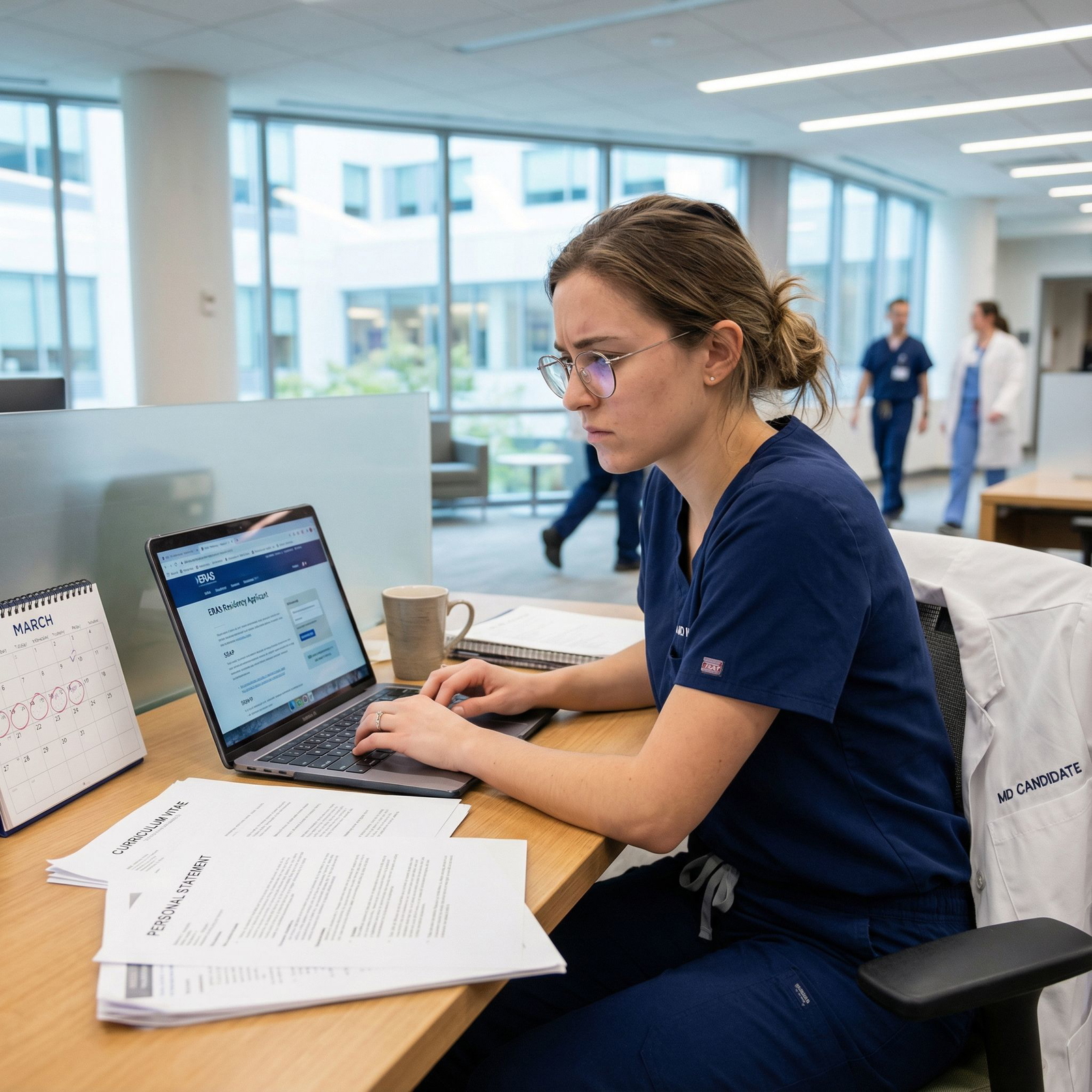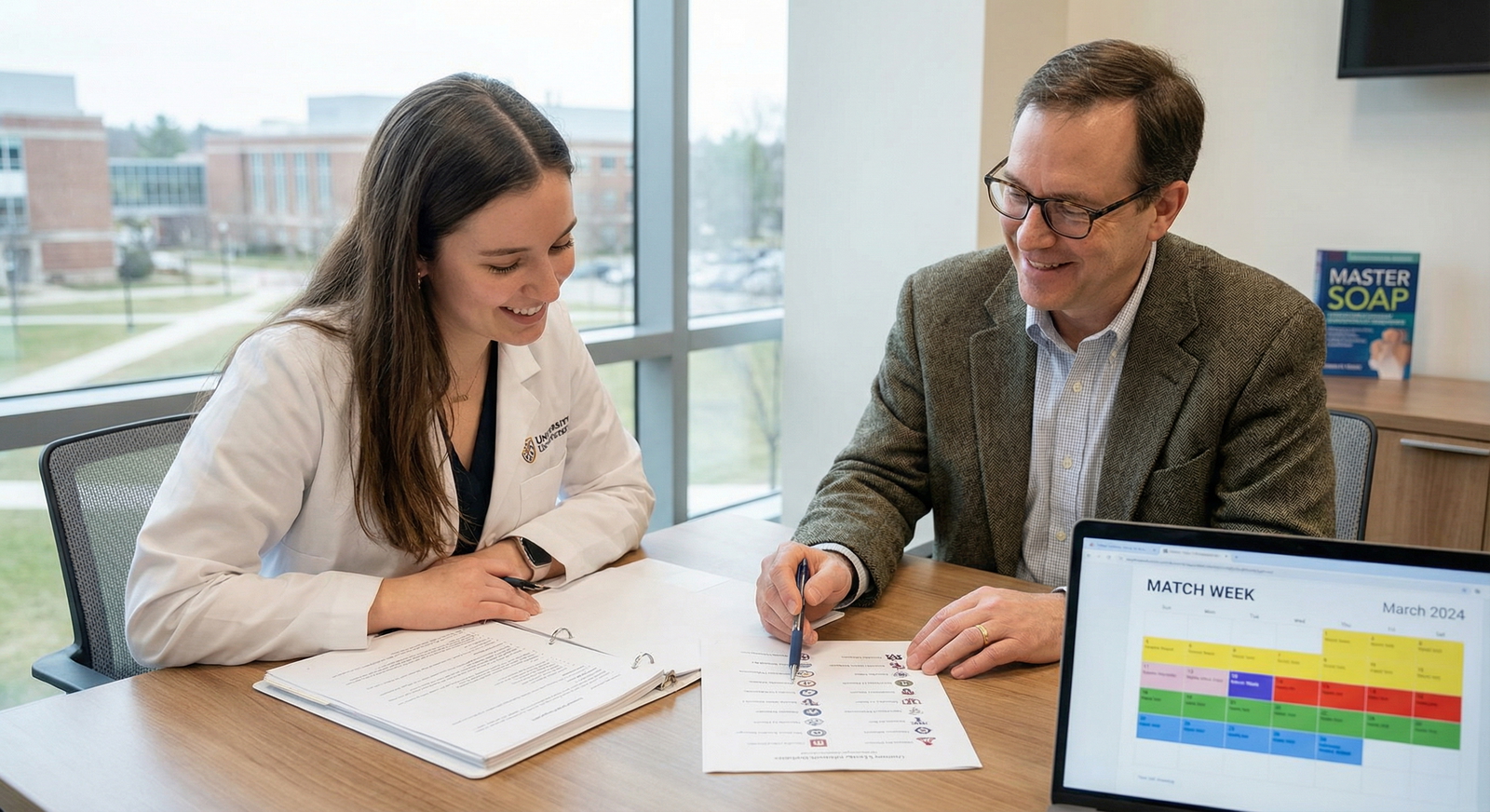
Understanding SOAP and Why It Matters for Caribbean IMGs in Family Medicine
For many Caribbean international medical graduates (IMGs), the Supplemental Offer and Acceptance Program (SOAP) is no longer an abstract acronym you hear in webinars—it can become the critical lifeline between not matching on Monday and securing a family medicine residency by Thursday.
If you’re a Caribbean IMG aiming for family medicine, SOAP preparation must start months before Match Week, not after you see “You did not match” on your NRMP screen. This article will walk you step-by-step through:
- What SOAP actually is (and what it is not)
- How SOAP works specifically for family medicine
- How to prepare before Match Week
- What to do hour-by-hour during SOAP
- Post-SOAP strategies if you still don’t match
Throughout, we’ll keep the focus on family medicine and the realities of a Caribbean medical school residency pathway, including SGU residency match considerations, but the guidance applies broadly to other Caribbean schools as well.
1. SOAP Basics: What Is SOAP and Who Is Eligible?
Before you can do serious SOAP preparation, you need to truly understand: what is SOAP?
1.1 What is SOAP?
SOAP (Supplemental Offer and Acceptance Program) is a structured process run by the NRMP during Match Week to fill unfilled residency positions with unmatched or partially matched applicants.
Key points:
- It runs from Monday to Thursday of Match Week.
- Programs with unfilled positions post them in the NRMP system.
- Eligible unmatched applicants apply only through ERAS to these positions.
- Programs review applications and send out offers in several “rounds”.
- Applicants can accept only one offer; once accepted, it’s binding.
SOAP is not:
- A second ERAS season
- A free-for-all where you can call every program in the country
- A place to radically reinvent your application overnight
It is a compressed, highly structured mini-match—and your preparation determines how effectively you can respond.
1.2 SOAP Eligibility for Caribbean IMGs
To participate in SOAP, you must:
- Be registered for the NRMP Main Residency Match for that year
- Not fully match to a PGY-1 position (unmatched or partially matched)
- Have a verified ERAS application submitted to at least one program before the NRMP registration deadline
- Be ECFMG certified or eligible by the SOAP deadline (check current-year ECFMG/NRMP criteria)
For most Caribbean IMGs:
- You must have USMLE Step 1 and Step 2 CK completed and reported.
- If your ECFMG certification is pending because of paperwork or an OET/Step requirement, fix that months before Match Week.
If you’re at a larger Caribbean school (e.g., SGU, AUC, Ross, Saba), your Dean’s Office and career office will usually verify your eligibility and guide you, but you are ultimately responsible for meeting requirements.
1.3 Why SOAP Matters for Family Medicine
Family medicine (FM) is one of the specialties that frequently has a significant number of unfilled positions each year, often in:
- Community-based or rural programs
- Less urban or less “popular” geographic locations
- Newly accredited or expanding programs
For a Caribbean IMG focused on FM, SOAP can be:
- A realistic and attainable pathway to secure an FM match (FM match)
- A chance to pivot from a more competitive specialty to family medicine
- An opportunity to target programs that may be more open to IMGs under time pressure
However, competition is still intense—especially among IMGs—so early and thorough SOAP preparation is crucial.
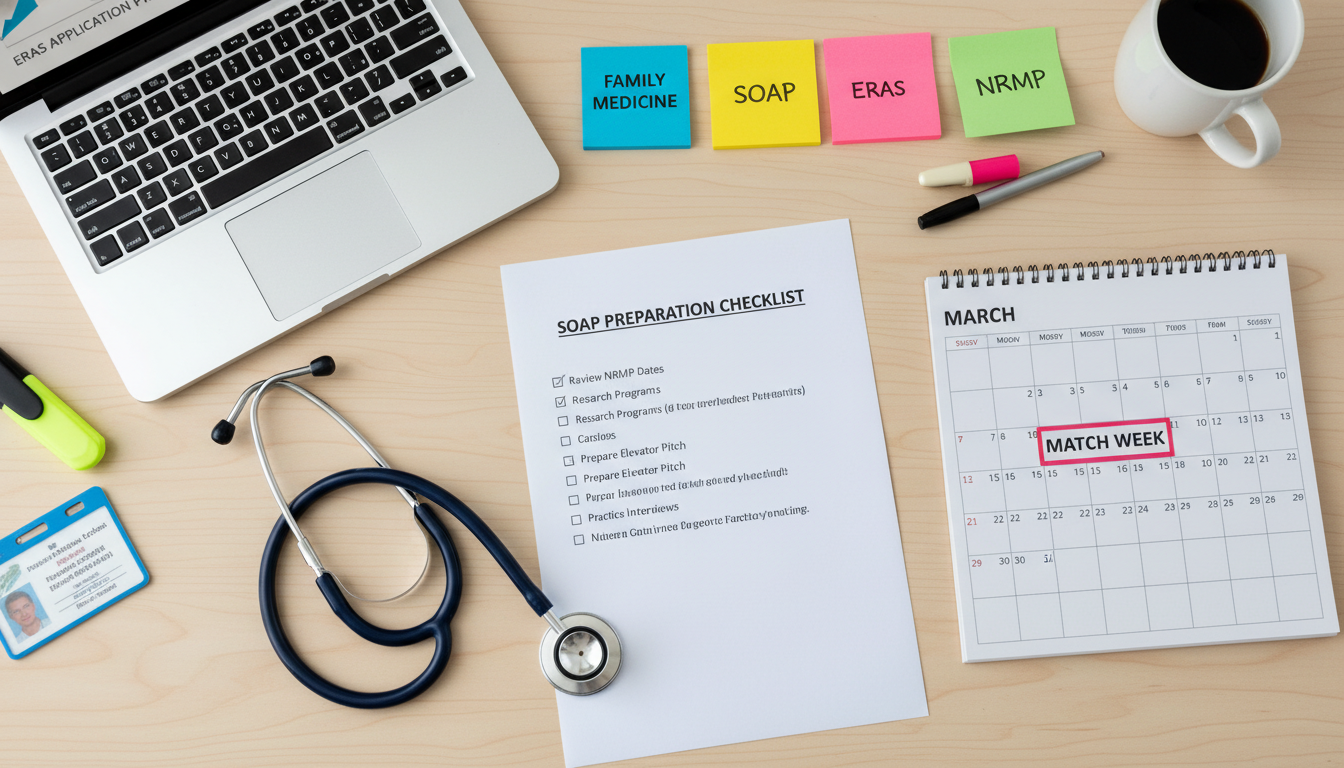
2. Pre–Match Week SOAP Preparation: Laying the Groundwork
Your SOAP success is mostly determined before Monday of Match Week. Think of SOAP like an emergency: it goes much better if you’ve drilled and prepared beforehand.
2.1 Clarify Your Goals and Boundaries
Before SOAP, be brutally honest with yourself about:
- Primary goal: Is your top priority ANY residency in the U.S., or specifically an FM match?
- Specialty flexibility:
- Are you all in on family medicine only?
- Or are you open to internal medicine prelim, transitional year, or even other primary care–oriented specialties if FM is not available?
- Geographic constraints:
- Are you willing to relocate anywhere in the U.S.?
- Would you accept rural or underserved locations?
- Will visa considerations (J-1 vs H-1B) limit certain states or programs?
For many Caribbean IMGs who want to maximize the chance of Caribbean medical school residency success in the U.S.:
- Be broad with geography. Some of the best FM opportunities through SOAP are not in big cities.
- Stay focused but flexible. Prioritize FM, but consider whether a prelim or transitional year may be a stepping stone if no FM is available.
Write out your “hard nos” and “must haves” ahead of time so you don’t make emotional, last-minute decisions in the chaos.
2.2 Fine-Tune Your ERAS Application for Family Medicine
You cannot rewrite your entire application during SOAP, but you can strategically tailor parts of it. Before Match Week:
Personal Statement
Have a family medicine–specific personal statement ready:
- Highlight continuity of care, community engagement, preventive medicine, and patient-centered communication.
- Emphasize any FM sub-internships, community clinic experiences, or longitudinal primary care exposure.
- Connect your background as a Caribbean IMG with your commitment to diverse, underserved populations.
Pro tip:
Create 1–2 variations of your FM personal statement (e.g., one emphasizing rural/underserved, another more urban/community) so you can align them with different program profiles quickly.
CV and Experiences
- Ensure your FM rotations and FM-related volunteer work are clearly labeled and prominent.
- Emphasize U.S. clinical experience, especially FM or outpatient internal medicine.
- Clarify leadership roles, teaching roles, and any quality improvement or population health projects.
Letters of Recommendation (LoRs)
Ideally, your LoR portfolio includes:
- At least one strong FM letter from a U.S. FM attending
- One or two additional primary care–oriented letters (IM, pediatrics, etc.)
During SOAP you usually cannot add brand new LoRs, but if your Dean’s office allows you to assign different existing letters to different programs, pre-plan:
- A “pure FM” letter set
- A “primary care–general” set
- A backup with a strong medicine letter
2.3 Research Potential FM SOAP Programs in Advance
You won’t know exactly which FM programs will be in SOAP until Monday of Match Week, but you can still prepare:
Build a “Template List” of Target Program Types
Look back at previous years’ unfilled lists (frequently available through NRMP or online summary discussions) and identify patterns:
Common FM SOAP program characteristics:
- Community-based, non-university programs
- Programs in:
- Midwest
- South and Southeast
- Some rural or smaller-city Northeastern and Western communities
- Programs affiliated with community hospitals, FQHCs, or health systems serving underserved populations
Create a list of:
- States and cities you are open to
- Program profiles that fit your readiness and interests (IMG-friendly, visa policies, patient population, etc.)
Then, pre-research 20–40 likely program types through their websites:
- Note whether they accept IMGs and what their minimum USMLE scores are.
- Look for explicit mention of Caribbean IMG or foreign medical graduates in their current or past residents.
- Note whether they have filled with IMGs from SGU or other Caribbean schools; this may predict openness to SGU residency match and similar backgrounds.
This doesn’t guarantee those exact programs will show up in SOAP, but it gives you a framework to evaluate similar ones quickly.
2.4 Prepare Your Technical and Logistical Setup
You cannot afford technical failures during SOAP:
- Reliable internet and backup plan (hotspot or alternate location)
- Updated ERAS login, NRMP login, and email access
- A quiet workspace for Monday–Thursday with:
- Notebook or digital document for tracking programs
- Pre-written email templates (if program outreach is allowed—rules vary by year)
- Charged phone with voicemail set up professionally
Also, schedule your support system:
- Know your school’s Dean’s Office SOAP support hours (especially large Caribbean programs like SGU, AUC, Ross often run SOAP hotlines).
- Identify mentors or recent graduates who matched via SOAP in FM and are willing to field quick questions.
3. Match Week: Monday to Thursday – Executing Your SOAP Strategy
SOAP moves fast. Here’s how to manage each key phase.

3.1 Monday Morning: You Learn You Are Unmatched or Partially Matched
At 10:00 a.m. ET on Monday, NRMP releases your match status:
- Unmatched: You’re fully eligible for SOAP (if you meet criteria).
- Partially matched (e.g., advanced spot but no prelim year): You may still be SOAP-eligible for a PGY-1 position.
Immediately:
- Control your emotions. Take 30–60 minutes to step away, breathe, and talk with a trusted friend, mentor, or family member.
- Confirm SOAP eligibility via NRMP/ERAS and your Dean’s Office.
- Access the List of Unfilled Programs in NRMP.
3.2 Monday Midday: Analyzing the Unfilled FM Positions
Once you see the unfilled list:
- Filter for family medicine residency positions.
- Apply your pre-made program type filters:
- Geography you’ll accept
- Known IMG-friendly regions
- Visa policies that fit you (if applicable)
- Rank these in tiers (e.g., Tier 1–3) based on fit and feasibility.
Remember: you’re limited in how many new programs you can apply to during SOAP (often up to 45 programs, but confirm current-year rules), so you must prioritize.
3.3 Monday Afternoon: Submitting ERAS Applications During SOAP
Now you’ll assign your ERAS application to SOAP-eligible FM programs:
- Apply broadly but strategically:
- Start with your “Tier 1” FM programs: IMG-friendly, your scores/ECFMG status align, and mission fits your values.
- Then move to “Tier 2” with slightly less ideal locations or slightly higher score demands but still possible.
- Use FM-tailored personal statements and LoRs consistently.
Avoid:
- Sending many applications to programs where you are clearly below their cutoffs with no IMG history unless you have a very strong compensating factor (e.g., strong regional ties, outstanding US clinical experience there).
If you’re considering a backup beyond FM:
- Reserve a subset of your limited SOAP applications for “safety” categories (e.g., transitional year, prelim internal medicine) only if FM options are very limited.
3.4 Tuesday–Thursday: Communication and Offers
During SOAP, programs may:
- Review applications
- Conduct phone or video interviews
- Request quick additional information (e.g., updated CV, Step 3, etc.)
Programs submit their lists and NRMP coordinates offer rounds (several times on Wednesday and Thursday, specifics vary by year).
Your tasks:
- Keep your phone on and charged at all times.
- Respond to interview requests immediately and professionally.
- Maintain thorough notes:
- Which programs showed interest
- Key points from brief interviews
- Your ranking of those programs
When offers begin:
- You can receive offers in multiple rounds, but only from programs that ranked you.
- If you receive an offer:
- You typically have a short window (e.g., 1–2 hours) to accept or reject.
- Once you accept an offer, you are done—you exit SOAP and are bound to that program.
Decision-making under pressure:
- Revisit your pre-defined goals: FM vs any residency, geography, career trajectory.
- A less prestigious FM program may still be an excellent career launchpad compared to no residency at all.
- If you get an FM offer in a challenging location, weigh:
- Training quality
- Board eligibility
- Visa sponsorship
- Opportunities after residency (fellowships, job markets)
For most Caribbean IMGs whose primary goal is an FM match, accepting a solid FM offer in SOAP is usually the right move, even if it’s not your dream city.
4. Tailoring Your Application for Maximum Family Medicine Appeal
To stand out in the crush of SOAP applications, you must look like a clear, committed future family physician.
4.1 Crafting a Compelling FM Narrative as a Caribbean IMG
Programs may worry that an applicant entering FM through SOAP is:
- Using FM purely as a last resort
- Lacking genuine interest in primary care
Your application should counter that by showing:
- Longstanding interest in FM:
- FM rotations and sub-internships
- FM clinic volunteers or community work
- Primary care–related research or projects
- Understanding of FM’s scope:
- Continuity of care, cradle-to-grave care
- Preventive medicine, chronic disease management, behavioral health
- Fit with underserved and diverse populations, leveraging your Caribbean background and often bilingual/multicultural experiences.
Use concrete examples:
- A case where you managed a complex family unit across several clinic visits.
- Involvement in health education, preventive screening campaigns, or chronic disease management programs.
4.2 Addressing Gaps and Red Flags Strategically
Many SOAP candidates have:
- Lower USMLE scores
- Exam failures or delays
- Gaps in training
During SOAP, you won’t have time to rewrite your life story, but you can:
- Make sure your MSPE (Dean’s letter) and personal statement briefly and honestly address major issues in a solution-focused way.
- Emphasize:
- Upward trajectory (improving scores or clerkship grades)
- Additional study or remediation efforts
- Successful U.S. clinical evaluations and letters
Recruitment committees in FM often value:
- Resilience
- Coachability
- Commitment to underserved care
Frame your red flags as obstacles you’ve overcome, not excuses.
4.3 Leveraging Caribbean Training Positively
The phrase “Caribbean medical school residency” often comes with stereotypes. Counter them by highlighting:
- Strong U.S. clinical rotations with documented performance
- Rich exposure to diverse, resource-limited settings during basic sciences or early clinical experiences
- Ability to adapt quickly to new healthcare systems and cultures
If your school is one of the larger institutions with a track record of SGU residency match or similar, you can subtly reference:
- Their alumni presence in U.S. FM programs
- Structured clinical curriculum
- Career services (especially if you worked closely with advisors)
Programs may feel more comfortable with Caribbean IMGs from schools whose graduates they have seen succeed in FM.
5. After SOAP: Next Steps if You Don’t Secure a Spot
Despite good SOAP preparation, some applicants will emerge on Thursday without a position. That’s painful, but it is not the end of your pathway to an FM match.
5.1 Immediate Post-SOAP Actions
Once SOAP ends:
- Unfilled positions become public; some programs may now accept direct contacts outside the SOAP structure.
- Carefully check the rules for post-SOAP outreach (they differ from SOAP-week restrictions).
- Reach out professionally and concisely:
- Express continued interest
- Attach your CV and ERAS AAMC ID
- Emphasize your commitment to FM and ability to start on time
While most positions will quickly fill, a few late openings or unfilled spots may still be available.
5.2 Strategic Planning for the Next Application Cycle
If the cycle ends without a position:
Debrief with mentors and your Dean’s Office:
- Were your scores non-competitive for many FM programs?
- Did your application fail to show enough FM commitment?
- Were there red flags not adequately explained?
Build a 1-year enhancement plan:
- Gain additional U.S. clinical experience in FM or primary care
- Engage in community health, research, or quality improvement related to FM
- Improve your test portfolio (e.g., Step 3 if eligible)
- Strengthen your professional network, especially with FM attendings who can support your next application
Prepare more thoroughly for the next:
- ERAS cycle, making FM your unapologetic primary focus
- SOAP preparation if needed again—but with a stronger profile
Many Caribbean IMGs secure their FM residency not in the first attempt, but in the second, after a year of targeted improvement.
FAQs: SOAP Preparation for Caribbean IMGs in Family Medicine
1. As a Caribbean IMG, how likely am I to match into family medicine through SOAP?
Likelihood depends on several factors:
- USMLE scores and any failures
- ECFMG certification status
- Strength and specificity of your FM portfolio (rotations, LoRs, personal statement)
- Geographic flexibility (especially willingness to go to rural or underserved areas)
FM tends to be more open to IMGs than many other specialties, and many Caribbean medical school residency matches each year are into FM, including through SOAP. However, SOAP is highly competitive and compressed; preparation and broad geographic flexibility significantly increase your chances.
2. Should I apply only to family medicine in SOAP, or also to prelim/TY positions?
If your primary goal is an FM career:
- Prioritize FM programs during SOAP.
- Consider prelim or transitional year (TY) only if:
- FM positions are very limited for your profile or
- You have a specific plan (e.g., later applying for FM or another specialty that values prelim/TY training).
Remember, a prelim year is not guaranteed to convert into a categorical FM spot later, but it can keep you clinically active and in the U.S. system.
3. Can I change my personal statement or letters of recommendation during SOAP?
You cannot upload new letters during SOAP, but you can:
- Reassign which existing LoRs go to which programs (if your Dean’s Office/ERAS allows and time permits).
- Choose which personal statement to attach to which program, as long as it’s already uploaded to ERAS.
That’s why pre-SOAP SOAP preparation should include uploading at least one FM-specific personal statement and ensuring your LoRs cover your FM experiences.
4. What is the most common mistake Caribbean IMGs make during SOAP for family medicine?
Common pitfalls include:
- Waiting until they see “unmatched” to think about SOAP, instead of preparing documents and strategy months earlier.
- Applying too narrowly (only a few big-city programs) and ignoring strong FM opportunities in less popular locations.
- Failing to show clear, long-term commitment to FM, making them look like “last resort” applicants.
- Not being reachable or responsive during SOAP: missing calls, delayed email replies, or appearing unprepared in short-notice interviews.
Avoid these mistakes by starting your SOAP preparation early, tailoring your application to family medicine, and approaching Match Week with a calm, structured plan.
Thorough, early SOAP preparation can turn a devastating Monday morning into a life-changing Thursday afternoon—especially for a Caribbean IMG committed to a career in family medicine residency. With a clear strategy, FM-focused application, and realistic flexibility, SOAP can be a powerful pathway to your FM match and long-term U.S. primary care career.