Understanding SOAP for Caribbean IMGs in Global Health
The Supplemental Offer and Acceptance Program (SOAP) can be a lifeline for Caribbean IMGs—especially those passionate about global health—who don’t initially match. Knowing what is SOAP, how it works, and how to prepare strategically can turn a stressful week into an opportunity.
SOAP is a structured, time-limited process run by NRMP during Match Week that allows unmatched and partially matched applicants to apply for unfilled residency positions. For a Caribbean medical school residency applicant, SOAP can be the difference between sitting out a year and starting training in a program where you can still pursue your global health residency track goals.
Key facts you must understand:
Who can participate?
- Registered for the Main Residency Match
- Eligible to start training on July 1 (ECFMG certified or will be by program start date)
- Unmatched or partially matched at the start of Match Week
- Not withdrawn or barred from the Match
What SOAP is not:
- It is not a free-for-all scramble calling programs (that system no longer exists)
- You cannot contact programs outside ERAS and NRMP-approved channels during SOAP
- You cannot apply to any program you want—only to those with unfilled positions listed as SOAP-participating
For Caribbean IMGs interested in international medicine and global health, the SOAP pathway demands an extra layer of planning: you must balance your desire for a global health–focused career with the urgent need to secure any solid categorical or prelim position that keeps you in the training pipeline.
Pre–Match Week Planning: Building a SOAP-Ready Profile
The best SOAP preparation starts months before Match Week. As a Caribbean IMG, you have additional hurdles—visa status, possible bias toward U.S. MD/DO graduates, and variable clinical exposure—but you also bring strengths: adaptability, diverse clinical experience, and often a genuine commitment to underserved communities and global health.
1. Strengthen the Core of Your Application
Your global health interests will matter, but during SOAP, programs look first for risk mitigation. They want someone who can work hard, pass boards, and fit their environment quickly.
Focus on:
USMLE performance and narrative
- If you have a Step failure or low score, know your story and own it.
- Frame your trajectory: improvement over time, actionable changes, and how those habits will help in residency.
- Emphasize successful Step 2 CK performance if Step 1 was weaker.
Clinical experience in the U.S.
- Make sure all U.S. clinical rotations are fully documented and clearly described in ERAS.
- Ask preceptors to emphasize: reliability, clinical reasoning, communication, and work ethic.
- If you have global health electives (e.g., in Grenada, another Caribbean site, or abroad), highlight specific skills: working in resource-limited settings, triage, cross-cultural care, and adaptability.
Letters of recommendation (LoRs)
- Aim for at least 3–4 strong U.S. LoRs, ideally in your primary specialty (often Internal Medicine or Family Medicine for global health–oriented applicants).
- Secure at least one letter that speaks directly to your commitment to underserved populations or global health initiatives.
- Ask letter writers to comment on your resilience and ability to adapt—traits programs appreciate in high-need, safety-net, and community settings.
2. Clarify Your Global Health Career Narrative
Being globally minded is a plus, but during SOAP, your messaging must reassure programs that you are committed to their specific training environment first.
Define your narrative:
- Why are you interested in global health or international medicine?
- How does your Caribbean medical school background support this interest?
- How will residency in a U.S. program—possibly without a formal global health residency track—still help you reach your goals?
Example narrative frame:
“Training at a Caribbean medical school and completing rotations in resource-limited settings exposed me daily to health disparities. My long-term goal is to work in an academic global health setting, but my immediate priority is to train in a rigorous Internal Medicine program serving diverse, underserved patients. I am prepared to commit fully to your program, while building the skills that will eventually translate to global work.”
You want programs to see you as:
- Focused on their patient population and service needs
- Stable, committed, and ready to stay and grow in their program
- Someone whose global health interests align with (not distract from) their mission
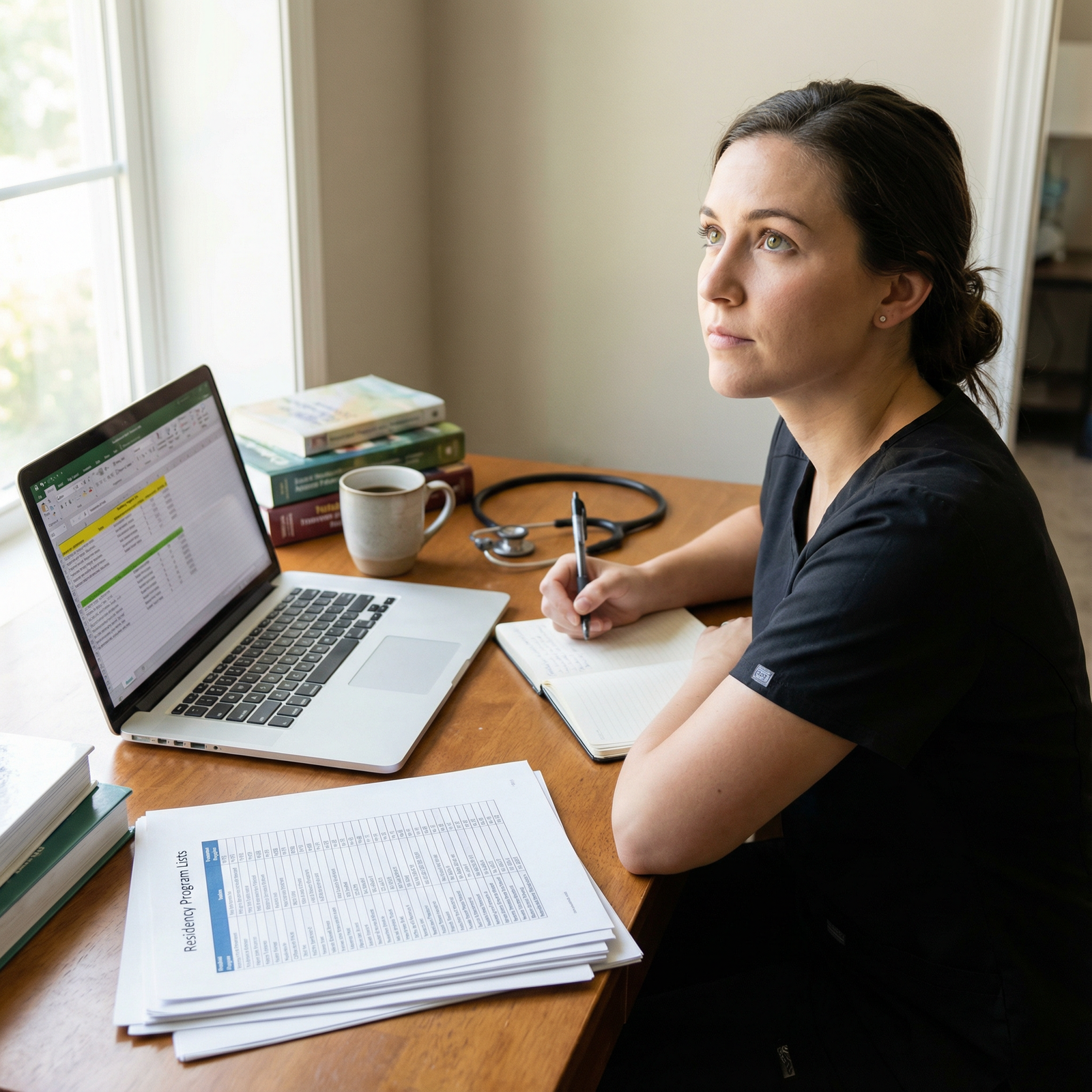
3. Build a SOAP-Focused “Plan B” List Early
Long before rank order list certification:
Identify SOAP-friendly specialties for your profile:
- Internal Medicine (categorical or prelim)
- Family Medicine
- Pediatrics (sometimes)
- Transitional Year (rarely linked to global health but still a foothold)
- Psychiatry in some regions
Note geography that favors Caribbean IMGs:
- Community and safety-net hospitals
- Programs in the Midwest, South, and rural Northeast
- Cities with large immigrant or underserved populations (which aligns with global health–adjacent work)
Track global health–adjacent programs:
- Programs serving large refugee/immigrant populations
- County hospitals and FQHC-affiliated residencies
- Hospitals with telehealth outreach, cross-border clinics, or migrant health programs
Having this pre-identified list will make it faster to prioritize programs during SOAP once you see the unfilled list.

The Week Before Match Week: Operational SOAP Preparation
By early March, you should be in “logistics mode.” The difference between surviving SOAP and using it strategically often comes down to organization and speed.
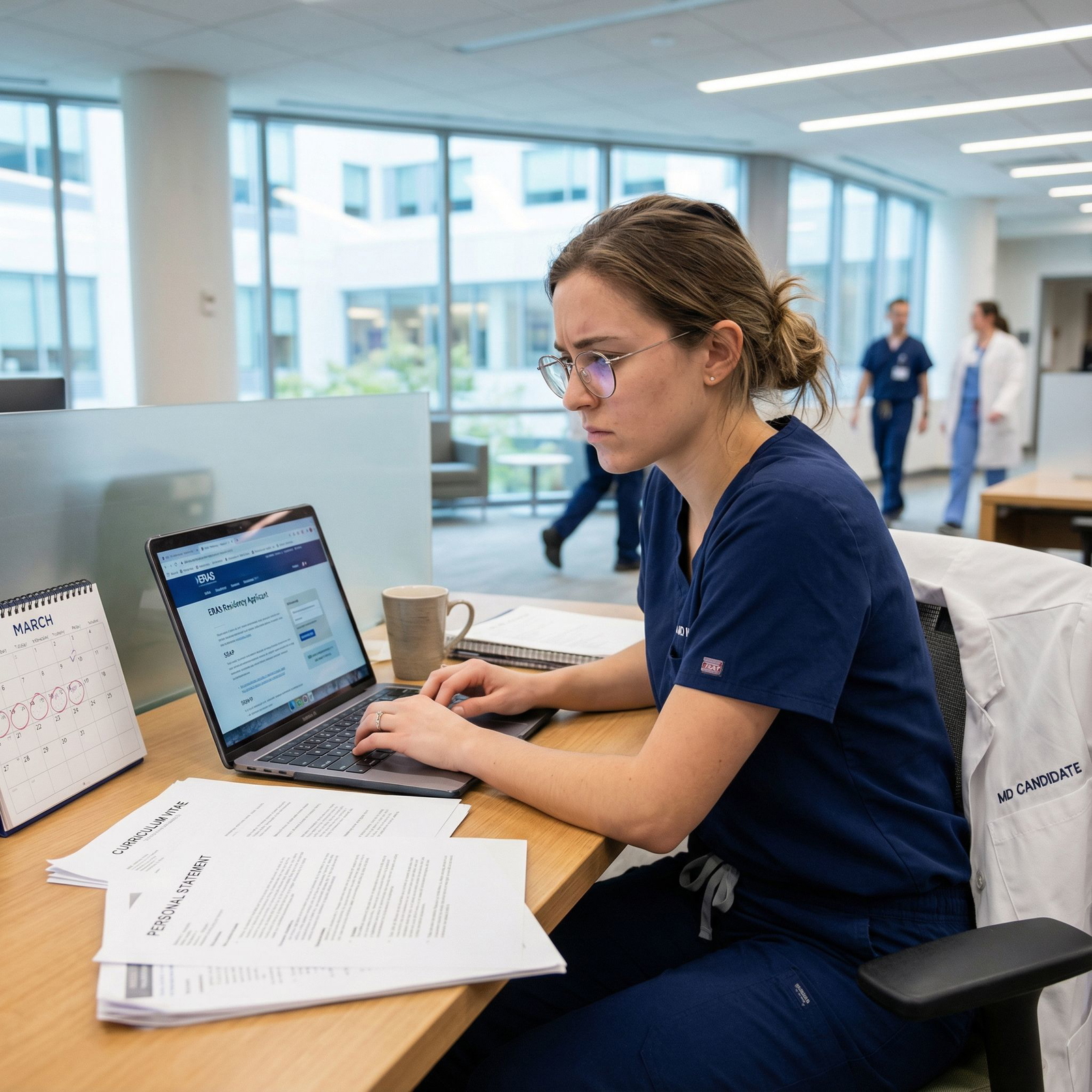
1. Update and Segment Your ERAS Materials
You cannot upload new LoRs during SOAP, but you can:
- Update your personal statement (and you should prepare multiple versions)
- Update the experiences section if necessary
- Update program signaling only according to ERAS rules for that year (varies annually; check current NRMP/ERAS policies)
Prepare at least 3 versions of your personal statement:
- Core specialty + global health–aligned (e.g., Internal Medicine with underserved/global interest)
- Primary care emphasis (for Family Medicine or IM programs focusing on outpatient care)
- Generalist / flexible version that de-emphasizes global health slightly and emphasizes commitment to any training opportunity and long-term clinical practice
For each version:
- Show how your Caribbean training shaped your resilience and cross-cultural skills.
- Emphasize U.S. clinical experience and specific systems familiarity (EPIC, Cerner, etc., if applicable).
- Reassure: “My priority is to grow as a clinician and contribute fully to the needs of your patient population.”
2. Prepare Your SOAP Communication Templates
While you can’t cold-email or call during SOAP itself outside of allowed channels, you should prepare:
- Email templates you can quickly adapt for:
- Program coordinators (when allowed)
- Faculty you know at unfilled programs
- Talking points for potential interviews:
- 60-second “who I am” pitch
- Why your Caribbean background is a strength
- How you handle stress and steep learning curves
- Why you’re committed to that program’s location and patient population
Sample 60-second pitch:
“I’m a Caribbean IMG from [School] with strong clinical experience in both Caribbean and U.S. settings. I’m drawn to Internal Medicine because I enjoy complex, longitudinal care, and I’ve consistently gravitated to underserved and diverse patient populations. I’ve worked in resource-limited environments, which has taught me to be adaptable, efficient, and team-focused. My long-term interest is in global health and international medicine, but my immediate priority is to commit fully to a residency that will challenge me clinically and allow me to serve vulnerable patients. I’m looking for a program where I can work hard, grow quickly, and be a reliable contributor from day one.”
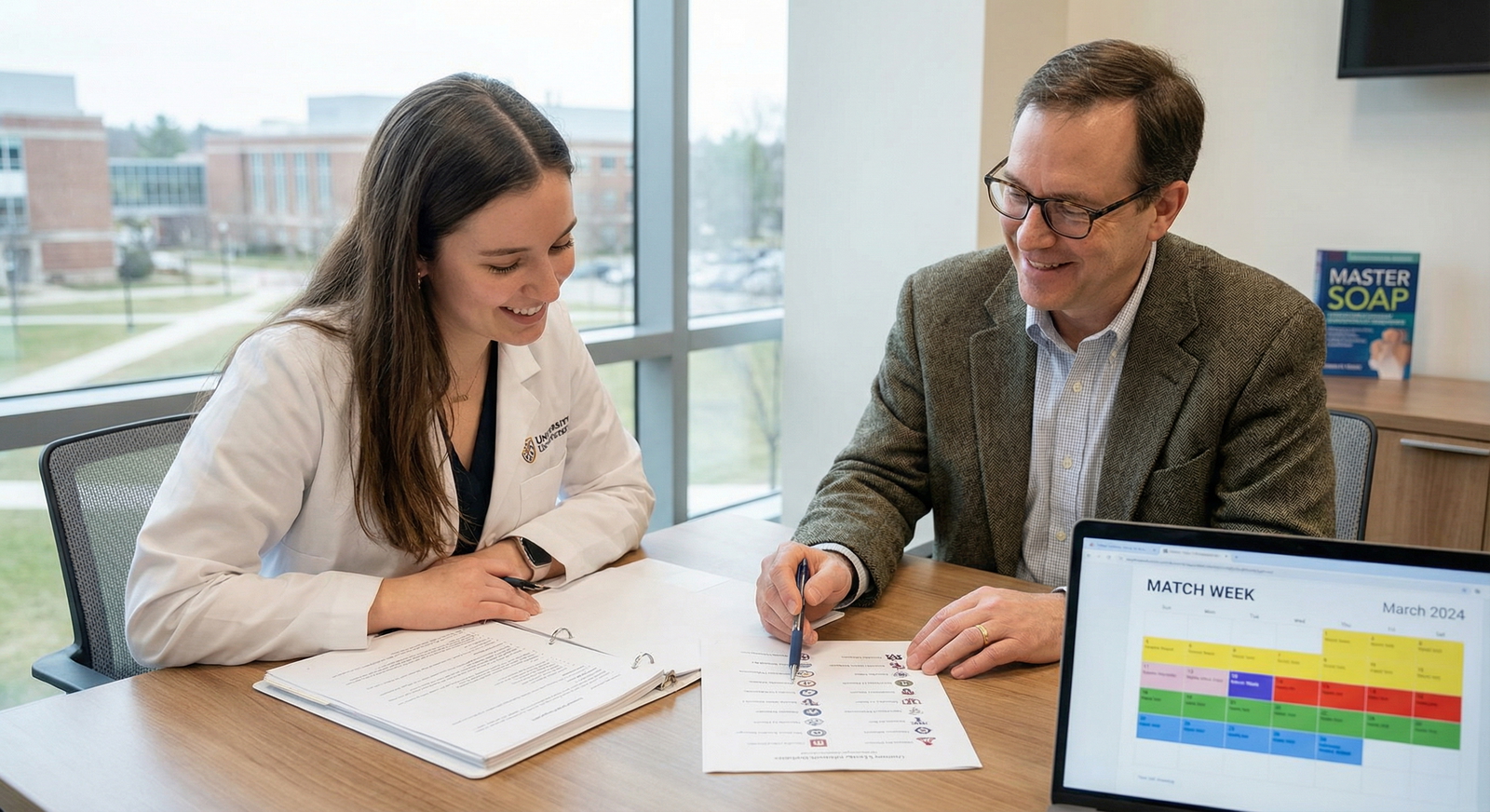
3. Assemble Your SOAP Support Team
For an SGU residency match applicant or from another Caribbean school, your institution may have dedicated SOAP advising:
- Identify one main advisor (faculty or dean) who knows your file.
- Clarify who will help you review SOAP program choices in real time.
- Ask your school if they can:
- Contact programs on your behalf within NRMP rules
- Provide updated MSPE language if needed
- Offer mock SOAP interviews the weekend before Match Week
Have all relevant contact information and time zones clearly documented. SOAP moves quickly; you don’t want to be chasing advisors when decisions are due.
Match Week and SOAP: Step-by-Step Strategy for Caribbean Global Health–Oriented IMGs
1. Monday Morning: Your Status and Mindset
On Monday of Match Week, you learn whether you are:
- Fully matched
- Partially matched (e.g., prelim but not advanced spot, or vice versa)
- Unmatched
If you are unmatched or partially matched, you may be SOAP-eligible.
First steps:
- Confirm your SOAP eligibility in NRMP.
- Manage the emotional response quickly—set a time limit (e.g., 1–2 hours) to process, then pivot into action mode.
- Log into ERAS and NRMP as soon as the List of Unfilled Programs becomes available.
For Caribbean IMGs with global health goals, your mindset must shift from “ideal global health residency track” to “any viable entry point that keeps my long-term path open.”
2. Analyzing the Unfilled Program List
Once you see the unfilled list:
- Filter first by visa sponsorship (if applicable): J-1 vs. H-1B vs. none.
- Filter by specialty:
- Prioritize IM and FM, as they often have pathways into global health or international medicine.
- Consider Prelim IM or Prelim Surgery only if you have a viable plan for PGY-2 and are willing to take that risk.
- Flag global health–adjacent programs:
- Programs with strong underserved populations or major immigrant/refugee hubs
- County and safety-net hospitals
- Any program previously known for an international rotation or global health elective (even if they don’t advertise a formal global health residency track)
Create a tiered list:
- Tier 1: Programs that fit your profile and have strong alignment with underserved or global health–like work, and that historically consider Caribbean IMGs.
- Tier 2: Programs that take IMGs but have less explicit global health focus; still offer strong training and a chance to build your own international medicine opportunities.
- Tier 3: Backup options where you might be less enthusiastic about geography or setting but that provide a categorical IM/FM position and meet your fundamental training needs.
3. Applying During SOAP Rounds
SOAP has strict rules on number of applications per round (commonly 45 total, spread over rounds; verify current-year limits).
Strategy for a Caribbean IMG:
- Use most applications in Round 1; this is when most positions fill.
- Distribute roughly:
- 50–60% Tier 1
- 30–40% Tier 2
- 10–20% Tier 3
Attach:
- The most relevant personal statement version
- LoRs that align with the specialty
- CV and experiences highlighting U.S. clinical work and reliability
Do not overemphasize global health if it might sound like you intend to leave U.S. practice frequently. Phrase it as long-term interest that builds on solid U.S. training and clinical practice.
4. Interviewing in SOAP
SOAP interviews are often:
- Short (10–20 minutes)
- Virtual, with limited notice
- Conducted by PDs, APDs, or chief residents
Common themes for Caribbean IMGs:
- “Why did you not match?”
- “Why our program, and why this location?”
- “Tell me about your Caribbean clinical training and how it prepared you for our patient population.”
- “How does global health fit into your career plan?”
- “How will you handle a high-volume, underserved patient load?”
Frame your answers:
- Be honest but composed about not matching. Focus on:
- Application competitiveness and timing
- Crowded specialty preferences
- Step score issues framed with growth and remediation
- Emphasize stability and commitment:
- Willingness to relocate and stay
- Interest in serving the local community, including immigrant/refugee groups
- Flexibility and readiness for long hours and steep learning curves
On global health:
“My global health interest is part of why I value training in a program like yours, with significant care for underserved and diverse patients. I see global health not just as working abroad, but also as providing high-quality care to marginalized communities locally. My focus during residency would be to become the strongest clinician I can for your patient population; international work would come later, built on the foundation of rigorous training here.”

Aligning SOAP Outcomes with Long-Term Global Health Goals
Matching through SOAP into a program that isn’t explicitly branded as a global health residency track does not end your international medicine ambitions. It just means you must be more intentional during training.
1. If You Match Through SOAP
Once you receive and accept an offer:
- Celebrate—then immediately switch to planning how this program can support your global health goals over time.
- Identify faculty involved in:
- Care of immigrants, refugees, or international visitors
- Outreach clinics or free clinics
- Academic or research projects related to health disparities
- During residency, seek:
- Quality improvement (QI) projects related to social determinants of health
- Research on infectious diseases, chronic disease management in underserved communities, or migrant health
- Electives in community health centers and public health departments
As an SGU residency match or other Caribbean IMG graduate, you can often showcase your unique background:
- Offer to help with projects that need bilingual or cross-cultural skills.
- Share insights from Caribbean and other international rotations when appropriate in academic discussions.
This builds a profile that will later position you for:
- Global health fellowships
- Academic positions with international projects
- NGO or international agency work after residency
2. If You Do Not Match Through SOAP
If SOAP does not result in a position:
Perform a calm, structured debrief:
- Review your application with a trusted advisor or Caribbean school dean.
- Identify key barriers: scores, clinical gaps, timing, specialty choice, or visa.
Strategic gap year planning:
- Strengthen your application with:
- Research assistant positions (especially in global health, infectious disease, or health disparities)
- U.S. clinical experience (observerships, externships where possible)
- Additional publications, especially in global health or international medicine
- Improve any test metrics if appropriate (e.g., Step 3 if available and strategically helpful).
- Strengthen your application with:
Refine global health positioning:
- Continue global health engagement locally (community-based organizations, immigrant health clinics) rather than overseas, so that U.S. residency programs see consistent, U.S.-focused clinical involvement.
- Reframe your narrative for the next cycle: committed to U.S. training as a foundation for global impact.
Practical Tips Specific to Caribbean IMGs Interested in Global Health
Leverage your Caribbean experience as an asset
- Highlight familiarity with vector-borne diseases, infectious disease patterns, and limited-resource management.
- Position this as advanced preparation for serving underserved and immigrant populations in the U.S.
Use your school’s alumni network
- For SGU residency match or similar Caribbean medical school residency alumni, seek out graduates in:
- County or safety-net hospitals
- Programs with known global health electives
- Leadership roles in IM/FM residencies
- Ask for informal advice and, when allowed, for them to flag your application if their program appears on the unfilled list.
- For SGU residency match or similar Caribbean medical school residency alumni, seek out graduates in:
Balance ambition with pragmatism
- Your top aspiration may be a named global health residency track, but during SOAP, it is often wiser to secure any solid categorical program and then create global health opportunities from within.
- Think of SOAP as securing the platform from which your global health career can grow—not the final stage.
Stay rigorously informed on rules
- NRMP’s what is SOAP documentation changes in details from year to year.
- Review the latest guidance on:
- Application caps
- Communication rules
- Schedule of rounds and offer acceptance deadlines
Prepare financially and logistically
- Have updated documents ready: passport, visa paperwork, immunizations, certifications (BLS/ACLS if needed).
- Keep a basic relocation budget in mind; SOAP offers can come from unexpected locations.
FAQs: SOAP Preparation for Caribbean IMGs in Global Health
1. Can I still pursue global health if I match into a community program via SOAP without a formal global health residency track?
Yes. Many global health–oriented physicians come from community or county training programs. Focus on:
- Becoming an excellent clinician first
- Seeking rotations that serve immigrants, refugees, or marginalized communities
- Engaging in research or QI projects on health disparities or infectious diseases
- Building connections with academic global health centers for electives or collaborations
2. As a Caribbean IMG, should I mention global health heavily in my SOAP personal statement?
Use balance. It’s important to be authentic, but during SOAP your primary message must be: “I am fully committed to your residency and your patient population.” Frame global health as a long-term interest that aligns with serving diverse and underserved communities locally, rather than a plan to be away from the program frequently.
3. How does SOAP residency application strategy differ for Caribbean IMGs compared to U.S. grads?
Caribbean IMGs often need to:
- Be more flexible on geography and size/type of program
- Emphasize resilience, adaptability, and extensive clinical exposure in varied settings
- Be more deliberate in targeting programs historically open to IMGs and that sponsor visas
- Use Caribbean school support structures (like SGU’s advising for SGU residency match candidates) more actively for guidance and advocacy within NRMP rules
4. What are common SOAP mistakes Caribbean IMGs make, and how can I avoid them?
Frequent pitfalls include:
- Waiting until Match Week to think about SOAP preparation
- Over-targeting highly competitive specialties during SOAP (e.g., Radiology, Dermatology)
- Not tailoring personal statements and experiences to each specialty
- Speaking about global health in a way that suggests they might not prioritize the program’s needs
Avoid these by planning months ahead, focusing on IM/FM and other realistic specialties, using multiple PS versions, and always framing global health as enhancing your commitment to local, underserved patients.
By treating SOAP as a structured, high-stakes opportunity rather than a desperate last resort, a Caribbean IMG with global health ambitions can still secure a strong training position. Your Caribbean background, resilience, and cross-cultural experience are genuine assets—if you present them with clarity, pragmatism, and a commitment to building your global health career on the solid foundation of rigorous U.S. residency training.