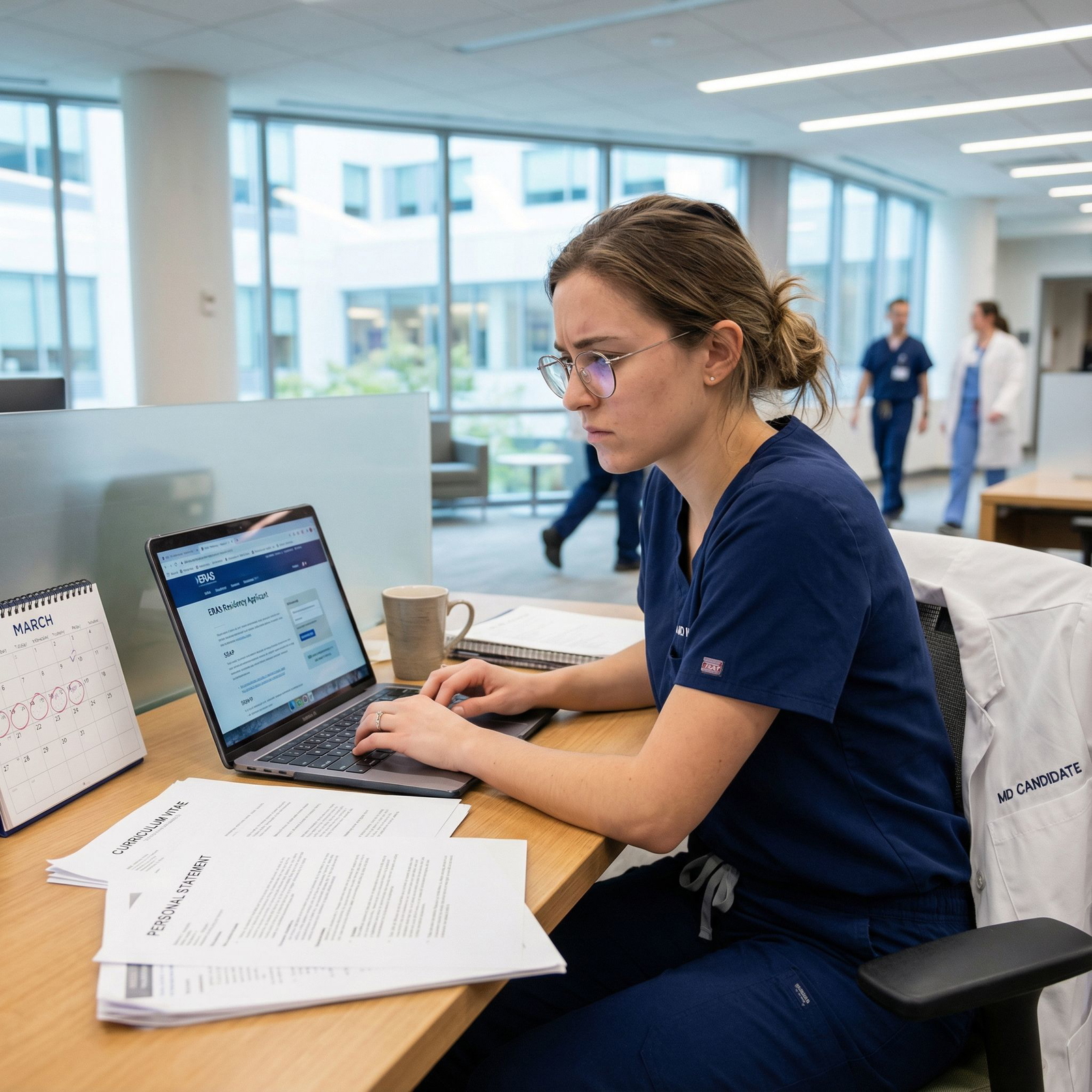
Understanding SOAP as a Caribbean IMG Targeting Interventional Radiology
The Supplemental Offer and Acceptance Program (SOAP) can feel like an emotional roller coaster—especially if you’re a Caribbean IMG who aimed for a competitive specialty like Interventional Radiology (IR) and discovered you went unmatched after the Main Residency Match. But SOAP is also an opportunity window, and your preparation before and during Match Week can significantly influence your outcome.
As a Caribbean medical school graduate, you bring unique strengths—clinical resilience, adaptability, and often extensive hands-on experience—but you also face well-known challenges: bias against Caribbean medical school residency applicants, fewer home residency program connections, and limited IR slots. Strategic SOAP preparation can help you pivot effectively, salvage the match cycle, and position yourself for a future IR match or IR-related pathway.
This article focuses on SOAP preparation for Caribbean IMGs with a strong interest in Interventional Radiology—including those coming from schools like SGU, Ross, AUC, Saba, and others—so that if you end up in SOAP, you’re ready to act decisively.
We’ll cover:
- What is SOAP and how it really works
- How to prepare before Match Week (the most critical phase)
- Strategy for choosing programs and specialties during SOAP if you want IR long-term
- Communication, interviewing, and document-tweaking tactics during the IR match and SOAP
- How to leverage a non-IR SOAP position as a bridge toward an Interventional Radiology residency
What Is SOAP and Why It Matters for Caribbean IMGs Interested in IR
Understanding what is SOAP and how it works is fundamental to your strategy.
What Is SOAP?
SOAP (Supplemental Offer and Acceptance Program) is an organized process run by NRMP during Match Week to fill unfilled residency positions with unmatched or partially matched applicants. It is not a free-for-all scramble; it’s a structured, rules-based process.
Key components:
Eligibility: You must be unmatched or partially matched and certified by NRMP as SOAP-eligible. This generally requires:
- Registration with NRMP
- A valid ERAS application
- Passing required USMLE/COMLEX exams
- For IMGs, ECFMG certification (or very close to it, depending on year’s rules)
Timeline (typical structure):
- Monday of Match Week, 11 AM ET: You learn if you matched.
- If unmatched, you gain access to the List of Unfilled Programs.
- Monday–Thursday: SOAP rounds with programs sending offers at fixed times.
- You can only accept one offer at a time; once accepted, you are done with SOAP.
Applications during SOAP:
- You can submit up to 45 SOAP applications (total, not per round).
- You use ERAS to apply; you may edit documents (PS, LoRs assignments) but not your core application data.
Because IR is extremely competitive and has limited positions, most Caribbean IMGs targeting Interventional Radiology will actually match through:
- Integrated IR residency (categorical IR/DR) – very competitive and usually not accessible via SOAP;
- Diagnostic Radiology residency with later IR fellowship or ESIR (Early Specialization in Interventional Radiology);
- Or, more commonly as an IMG, Internal Medicine or Surgery pathways that later allow entry into IR fellowships or alternate IR-related roles (e.g., interventional pain, vascular medicine, endovascular work in cardiology or vascular surgery).
Hence, SOAP is rarely a path to direct IR residency, but it can be critical in securing:
- A transitional or preliminary year that sets you up better for a future IR or DR application
- A categorical Internal Medicine, Surgery, or Diagnostic Radiology seat that keeps you adjacent to IR
- Or at least US GME training that can later be leveraged when you re-enter the IR match.
Pre-Match SOAP Preparation: Building an IR-Friendly Backup Plan
If you’re serious about Interventional Radiology and you’re a Caribbean IMG, you must assume that SOAP is a real possibility and prepare ahead of time.

1. Realistically Assess Your IR and DR Competitiveness Early
By mid-application season (Oct–Nov), you should have a rough sense of where you stand in the IR match:
- Red flags for an IR/DR match as a Caribbean IMG:
- USMLE Step 1 (if scored) < 230–235, Step 2 CK < 240–245
- Few or no US-based IR research experiences or publications
- Limited US LORs from IR or radiology faculty
- Minimal IR electives or observerships
- Few interview invitations in IR/DR by December
If many of these apply, you should:
- Apply more broadly beyond IR/DR into Internal Medicine, Surgery, Transitional Year, and Preliminary Medicine/Surgery programs.
- Begin structured SOAP preparation in January–February, not in panic mode during Match Week.
2. Define a Tiered Backup Specialty Strategy
For IR-focused Caribbean IMGs, backup planning is about maximizing your proximity to IR while maintaining realistic match prospects.
A practical tiered plan might look like:
Tier 1 (Direct IR/DR)
- Integrated Interventional Radiology residency (IR/DR) – aspirational
- Diagnostic Radiology residency
- These are rarely accessible in SOAP for IMGs.
Tier 2 (IR-adjacent with strong future IR potential)
- Categorical Internal Medicine with strong cardiology, vascular, or interventional subspecialty presence
- Preliminary or transitional year at institutions with active IR departments
- General Surgery prelim or categorical at institutions with notable endovascular/vascular programs
Tier 3 (Broad-based, stable GME entry)
- Community Internal Medicine or Family Medicine programs (with interventional procedures: endoscopy, pain, etc.)
- Less competitive categorical specialties that provide solid clinical grounding, U.S. credentials, and a stable salary/visa support.
Your SOAP preparation should align your documents and mindset with these tiers:
- Primary application: Aim high (IR/DR, strong IM, etc.)
- SOAP contingency: Pre-drafted documents and targeted strategy for Tiers 2 and 3.
3. Prepare Two to Three Versions of Your Personal Statement
You cannot rewrite your entire ERAS application during SOAP, but you can upload different personal statements and assign them selectively.
For a Caribbean IMG wishing to retain an IR focus:
Prepare at least:
IR/DR-Focused Personal Statement
- Emphasize procedural interest, imaging-based decision-making, multidisciplinary tumor boards, and minimally invasive therapies.
- Highlight IR rotations, case discussions, and any IR research.
- Use for any rare IR/DR or DR seats visible in SOAP, or radiology-adjacent positions.
Internal Medicine / Transitional Year Personal Statement
- Focus on comprehensive patient care, diagnostic reasoning, and continuity of care.
- Subtly mention your long-term interest in procedures and imaging-guided interventions, but without sounding like you are using IM as a stepping stone (programs dislike this).
- Example language: “I am particularly drawn to the interface between imaging, procedures, and clinical medicine, and I value internal medicine training as the foundation for this.”
Surgery / Prelim Surgery Personal Statement (optional)
- Emphasize manual dexterity, operative exposure, resilience, and comfort in acute care settings.
- You may briefly express excitement about endovascular care and multidisciplinary collaboration.
Upload all versions before Match Week so that during SOAP you only have to assign them.
4. Curate Your Letters of Recommendation for SOAP Flexibility
In ERAS, you can choose which LoRs go to which programs; this is extremely valuable for SOAP preparation.
For a Caribbean IMG interested in IR:
- Have at least:
- One radiology or IR letter (ideal, but not mandatory if your rotations were limited)
- One or two strong Internal Medicine or Surgery letters from U.S. attendings
- One Dean’s/Chair letter when available
During SOAP, plan to:
- Use IR/radiology letters for any DR or IR-adjacent positions.
- Highlight your strongest clinical letters for IM or Surgery SOAP applications.
5. Confirm Eligibility, Credentials, and Logistics
Before Match Week:
- Ensure your ECFMG certification is officially complete or will be by the start of residency.
- Confirm all USMLE scores are reported to ERAS.
- Have updated CV and a one-page “SOAP pitch” summary to guide your talking points in rapid interviews.
Logistical preparation:
- Clear your calendar for Match Week. Don’t schedule flights, major exams, or personal events.
- Have a quiet environment, stable internet, and a professional background for virtual calls.
- Prepare a professional outfit (even if interviews are last minute).
Strategic SOAP Tactics for Caribbean IMGs with an IR Focus
When Monday of Match Week arrives and you learn you didn’t match, emotions can be intense. You must shift quickly from disappointment to execution.

1. Reviewing the List of Unfilled Programs with an IR Lens
When NRMP releases the list of unfilled positions:
- Filter by:
- Specialty (IM, Surgery, Transitional Year, DR, etc.)
- State, visa sponsorship, and IMG-friendliness (historical info from forums, FREIDA, program websites)
- Presence of Interventional Radiology or strong radiology department at the institution (check quickly on institutional sites).
Priorities for a Caribbean IMG who wants IR long-term:
- Diagnostic Radiology or IR/DR positions (rare in SOAP, but apply to all you qualify for).
- Transitional or Preliminary Medicine/Surgery at centers with robust IR or DR departments.
- Categorical Internal Medicine at institutions with strong cardiology, vascular, or oncology programs, as these often collaborate with IR.
Keep in mind: even a community IM program without IR on site can be a stepping stone, but prioritize institutions where IR exposure, research, or mentorship might be realistic.
2. Efficient ERAS Adjustments for SOAP
Within hours of seeing the list, you must:
Assign appropriate personal statements:
- IR/DR PS → any DR/IR-adjacent program.
- IM/TY PS → Internal Medicine, Transitional Year, or Medicine-prelim programs.
- Surgery PS → Surgery prelim/categorical seats.
Assign appropriate LoRs:
- Radiology/IR letters → DR, IR, and radiology-heavy TY positions.
- Strong IM letters → IM/TY programs.
- Strong Surgery letters → Surgery programs.
Avoid over-complicating; perfection is impossible during SOAP. Focus on:
- Clear interest in the specialty.
- Evidence you will work hard and integrate quickly.
- Signals that you will stay and complete the program, not treat it as a short-term stepping stone.
3. Selecting Where to Use Your 45 SOAP Applications
You only have 45 SOAP applications, so prioritize.
For a Caribbean IMG focused on IR:
High-priority targets:
- Any DR or IR/DR SOAP positions (even if you consider them long shots).
- Transitional or prelim years at academic hospitals with IR/DR, especially those known to be IMG-friendly.
- Categorical IM at institutions with IR/DR or strong subspecialty presence.
Balanced strategy example:
- 5–10 applications to DR / IR/DR / Radiology-adjacent seats
- 15–20 to Internal Medicine (academic + community with some IR exposure potential)
- 10–15 to Transitional/Prelim Medicine or Surgery (especially at IR-active centers)
- Remaining to Family Medicine or other IM-like programs if your competitiveness is lower.
Avoid applying to:
- Programs that clearly do not sponsor your visa if you need one.
- Specialties you would truly hate and are unlikely to complete; program directors sense disinterest quickly.
4. Preparing for Rapid-Fire SOAP Interviews
Programs may contact you by email or phone and offer very short-notice virtual interviews.
Key preparation points:
Have a 30-second introduction ready:
- “I’m a Caribbean IMG graduate from [school], with strong interest in image-guided procedures and complex inpatient care. I completed U.S. rotations in [X, Y, Z], and I’m eager to train in a program where I can develop as a competent, reliable clinician and contribute to the team from day one.”
Be ready for common SOAP interview questions:
- “Why did you go unmatched?”
- “Why are you interested in our program?”
- “How will you handle a heavy clinical workload?”
- “If you’re interested in IR, why are you applying to Internal Medicine/Surgery/Family Medicine?”
For the IR question, as a Caribbean IMG:
- Emphasize flexibility and respect for the specialty you are interviewing for:
- “I do have long-term interest in Interventional Radiology because of its minimally invasive, image-guided procedures. However, I recognize that strong clinical training in Internal Medicine is fundamental to caring for complex patients. My priority now is to become an excellent internist at a program where I can learn, contribute, and grow. If in the future I can integrate procedural or imaging components into my work, that would be ideal—but my immediate goal is to commit fully to this specialty and to your program.”
Programs want to hear that you will:
- Show up, work hard, and complete the program.
- Be teachable and humble.
- Provide good patient care and not constantly angle for something else.
Turning a SOAP Outcome into a Future IR Opportunity
Many Caribbean IMG physicians currently in Interventional Radiology or adjacent fields did not match into IR/DR on their first attempt. Your SOAP residency outcome does not close the door on IR; it just changes the route.
1. If You SOAP into Diagnostic Radiology or Transitional Year
Diagnostic Radiology (DR):
- Maximize exposure to IR:
- Elective months
- Tumor boards, vascular conferences
- Case logs of procedures you’ve scrubbed in on
- Seek ESIR opportunities at your institution (if available).
- Maximize exposure to IR:
Transitional Year / Prelim Year:
- Excel clinically; ACGME reviews and letters from this year matter if you reapply.
- Use free time for:
- IR electives or observerships
- Research with IR/DR faculty
- Networking for future IR or DR match cycles.
2. If You SOAP into Internal Medicine or Surgery
While not a direct IR standard route, these can be powerful stepping stones:
During PGY-1 and PGY-2:
- Build a reputation as a top resident: reliable, hardworking, compassionate.
- Seek rotations where IR is involved:
- Hepatology, oncology, vascular medicine, critical care.
- Participate in or initiate IR-related quality projects or research:
- PICC line protocols, anticoagulation around procedures, complications review.
Consider alternate but related pathways:
- Vascular surgery, interventional cardiology, endovascular procedures, or advanced endoscopy.
- Some physicians ultimately practice a blend of clinical IM or surgery plus interventional work, even if not formally IR board-certified.
3. Re-Entering the IR Match or IR-Adjacent Pathways
If you still want to pursue IR:
Improve your application profile during residency:
- USMLE Step 3 (if not taken), strong performance
- Publications or case reports with IR faculty
- Strong PD and faculty letters vouching for your clinical excellence
Apply for:
- IR fellowships (in systems where DR-to-IR or independent models remain)
- ESIR slots if already in DR
- Or transition to DR after solid performance in IM or Surgery, when possible.
Your Caribbean medical school residency background becomes less of a focus once you have strong U.S. GME performance and faculty advocacy.
SGU Residency Match, Caribbean IMGs, and SOAP: Special Considerations
Many Caribbean IMGs, especially from SGU (St. George’s University), Ross, and others, are keenly aware of their schools’ residency match statistics, including the SGU residency match outcomes. These numbers often look strong overall, but individual experiences vary.
For large Caribbean schools:
- They usually have structured SOAP preparation resources:
- Mock SOAP drills
- Personal statement and LoR assignment workshops
- Specialty and program lists tailored to IMGs
As a student or recent graduate:
- Use your school’s Match and SOAP advising aggressively:
- Ask specifically about IR and radiology-friendly institutions that have taken their graduates.
- Get lists of IMG-friendly internal medicine and surgery programs that have historically matched Caribbean grads through SOAP.
Your school’s track record and alumni network can open doors if:
- You contact alumni currently in IM, DR, or IR who graduated from your exact Caribbean medical school.
- You mention, during SOAP interviews, legitimate institutional familiarity:
- “Several graduates from my school have trained here, and I’ve heard excellent feedback about your program’s teaching and collegial environment.”
This demonstrates that you’re not just mass-applying; you have targeted interest.
Practical SOAP Preparation Checklist for IR-Focused Caribbean IMGs
3–4 Months Before Match Week:
- Confirm NRMP registration and ERAS completeness
- Assess your IR/DR competitiveness honestly
- Finalize 3 personal statements (IR/DR, IM/TY, Surgery/Prelim)
- Upload multiple LoRs and tag them appropriately
- Discuss backup plans with advisors and mentors (including IR faculty if you have them)
1–2 Months Before Match Week:
- Research IMG-friendly programs with strong IR/DR or cardiology/vascular/oncology presence
- Prepare a one-page SOAP summary of your strengths and goals
- Draft answers for “Why didn’t you match?” and “Why this specialty?”
- Confirm ECFMG status and exam updates
Week Before Match Week:
- Clear schedule and secure reliable internet and a quiet workspace
- Test video call software and your camera, mic, and lighting
- Print or save locally your CV, USMLE transcript, and PS versions
- Rehearse your 30-second introduction and a 2-minute career story
During SOAP Week:
- Quickly scan unfilled list for DR/IR/IR-adjacent opportunities
- Prioritize 45 applications with an IR lens but realistic expectations
- Assign appropriate PS and LoRs to each application
- Answer phone/email promptly; be ready for immediate interviews
- Stay calm, professional, and flexible throughout the process
FAQs: SOAP Preparation for Caribbean IMGs in Interventional Radiology
1. Can I realistically match into an Interventional Radiology residency through SOAP as a Caribbean IMG?
Direct interventional radiology residency (integrated IR/DR) positions in SOAP are extremely rare, and competition is intense. While not impossible, it is very unlikely as a Caribbean IMG. Your SOAP strategy should primarily target DR, IM, Surgery, and transitional/prelim positions that keep you close to IR and allow you to build credentials for a future IR path.
2. If I accept a non-IR SOAP residency, does that end my chances for an IR career?
No. Many IR physicians took indirect routes. Completing a strong Diagnostic Radiology residency, or excelling in Internal Medicine or Surgery and later transitioning, can still lead to interventional careers or IR-adjacent fields. Your performance in residency, your research, and your networking with IR or endovascular teams will matter more over time than your original Caribbean medical school status.
3. How should I explain my IR interest when interviewing for Internal Medicine or Surgery positions during SOAP?
Frame IR as part of your long-term interest in procedures and complex patient care, but emphasize that you fully respect and commit to the core specialty you are applying for. Example: “My long-term interests include image-guided procedures, but I know that becoming an excellent internist/surgeon is the essential foundation. Right now, my focus is on contributing as a dedicated resident in [your specialty].”
4. What if I don’t receive any SOAP offers—what should I do to improve for the next IR match?
If SOAP doesn’t result in a position:
- Pursue research, observerships, or clinical jobs (e.g., research assistant, scribe) in IR/DR or IM/Surgery departments.
- Strengthen your USMLE Step 2/3 scores, IR-related experiences, and LoRs.
- Consider broadening your specialty target beyond IR/DR in the next cycle while still staying IR-adjacent where possible.
- Work with advisors at your Caribbean school and IR mentors to rebuild a stronger application for the next match.
Being a Caribbean IMG with aspirations in Interventional Radiology is challenging but far from impossible. Thoughtful SOAP preparation, a realistic understanding of the IR match and IR-adjacent pathways, and disciplined execution during Match Week can convert a painful “unmatched” notification into a meaningful step toward your ultimate goal in image-guided, minimally invasive care.