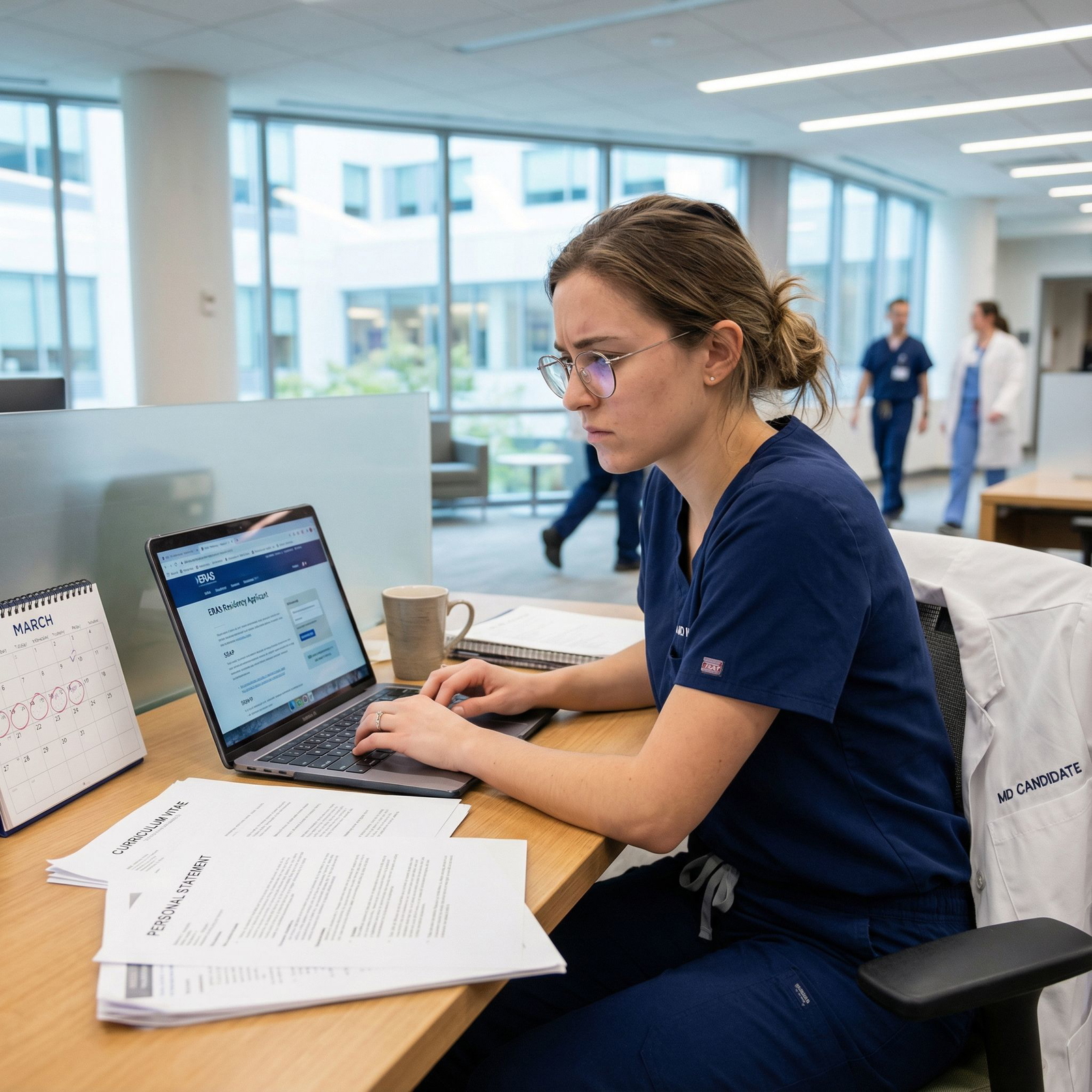
Understanding SOAP for Caribbean IMGs in Neurology
The Supplemental Offer and Acceptance Program (SOAP) can be both a lifeline and a pressure cooker—especially if you are a Caribbean IMG with your heart set on neurology. To use it effectively, you must understand what SOAP is, how it works, and what makes neurology residency and the neuro match uniquely competitive.
What is SOAP?
SOAP (Supplemental Offer and Acceptance Program) is the structured process NRMP uses to fill unfilled residency positions during Match Week. It allows unmatched or partially matched applicants to apply to programs with unfilled spots and receive offers in several rounds.
Key points about SOAP residency:
- Takes place Monday–Thursday of Match Week
- Only for applicants who are:
- Unmatched, or
- Partially matched (e.g., matched to an advanced position but not a prelim year), and
- Certified as SOAP-eligible by NRMP
- Applications are submitted via ERAS to unfilled programs only
- Programs can:
- Review your ERAS file
- Conduct brief interviews (often by phone/Zoom)
- Submit preference lists to NRMP
- NRMP runs multiple offer rounds; you can accept/decline offers through your NRMP account
For Caribbean IMGs, SOAP can be the difference between sitting out a year and moving directly into GME. If you want neurology but don’t match in the initial neuro match, you may still land a neurology residency—though realistically, you must also be prepared for backup pathways (e.g., internal medicine prelim or transitional year).
Why SOAP Matters Especially for Caribbean Medical School Graduates
Caribbean medical school residency outcomes have greatly improved over the last decade, especially from schools like SGU, but IMGs still face:
- Higher competition for ACGME-accredited positions
- More scrutiny of exam performance and clinical experience
- Limited margin for application errors
If you trained at SGU or another Caribbean school, your SGU residency match or Caribbean match results will likely be strong if your USMLE scores, clinical evaluations, and application strategy were solid. But even strong candidates can end up in SOAP due to:
- Applying to too few programs
- Overly narrow geographic or specialty preferences
- Underestimating neurology’s rising competitiveness
- Late exam scores or incomplete ERAS
SOAP is not a failure; it’s a second structured chance. Your goal is to prepare so thoroughly that if you end up SOAP-eligible, you already have a plan, documents, and mindset ready to execute.
The Neurology-Specific SOAP Landscape for Caribbean IMGs
Neurology is no longer a “backup specialty.” The neuro match has become increasingly competitive, with more U.S. graduates choosing it and programs tightening standards.
Neurology Residency Competitiveness: What You’re Up Against
Recent trends (details change year to year, but patterns hold):
- Increasing number of U.S. MD and DO graduates applying to neurology
- Many programs now prefer:
- Passage of Step 1 on first attempt (even as Pass/Fail)
- Strong Step 2 CK scores
- U.S. clinical experience in neurology (preferably sub-I or audition electives)
- Demonstrated interest in neuroscience (research, electives, case reports)
For Caribbean IMGs, this means:
- Fewer open neurology positions in SOAP compared to internal medicine or family medicine
- Stronger competition for any available neuro spots
- Programs using SOAP to “patch” their incoming class strategically
Realistic Expectations: Neurology vs. Backup Options
You should absolutely try for neurology in SOAP if positions are available and your profile is remotely competitive. But you must also be realistic:
- Some years, there may be very few or zero categorical neurology spots in SOAP.
- More commonly, you may see:
- Internal medicine prelim years
- Transitional year spots
- Possibly a few PGY-2 neurology advanced positions (if you already have or can secure a PGY-1)
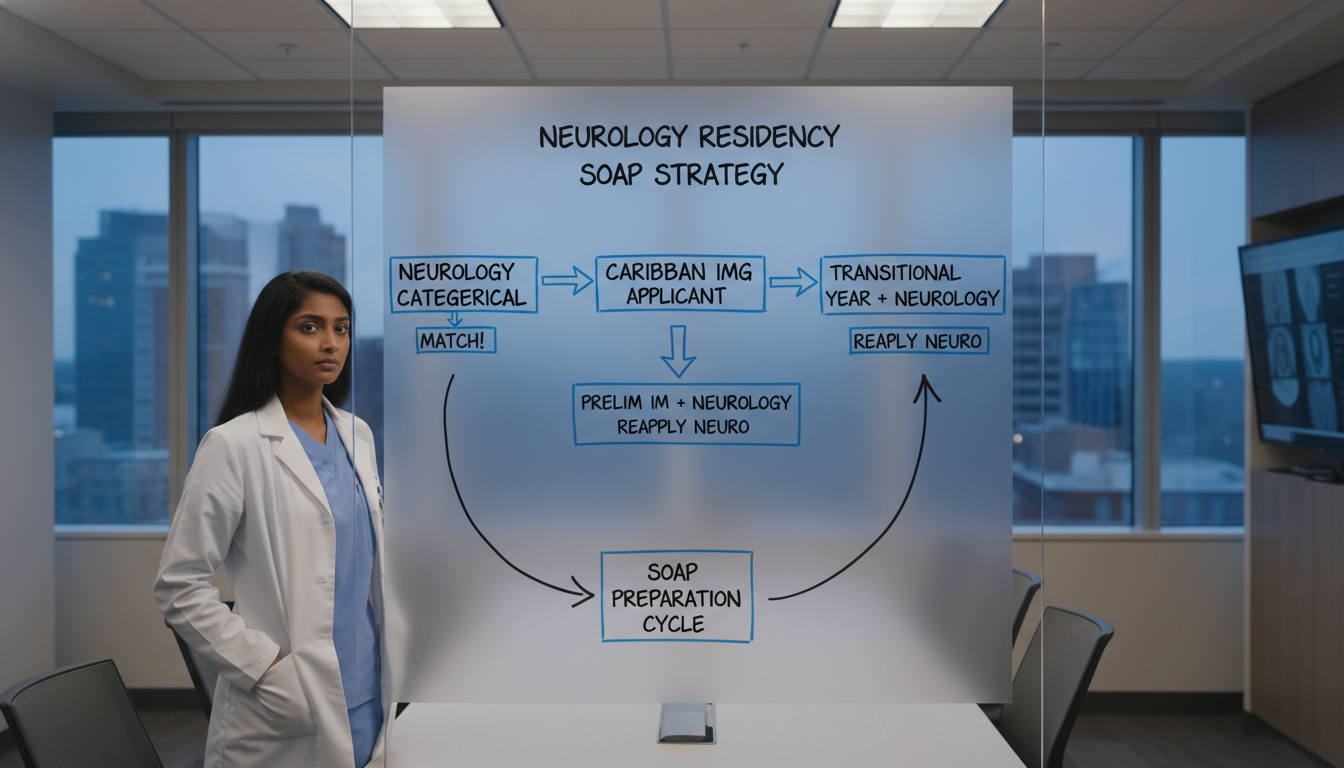
For a Caribbean IMG, one of the most pragmatic SOAP strategies is:
- Primary target (if available)
- Categorical neurology spots
- PGY-2 neurology spots, if you already matched a prelim IM or TY
- Secondary target
- Internal medicine prelim or transitional year positions with strong neurology exposure
- Long-term neuro strategy
- Use a strong prelim/TY year plus neurology-oriented research to reapply neurology the following cycle
If you studied at SGU or a similar school and missed on SGU residency match day for neurology, SOAP is about both salvaging this year and positioning yourself better for a future neuro match if needed.
Pre-Match SOAP Preparation: Building Your Neurology-Focused Toolkit
The most important SOAP preparation happens months before Match Week. Treat it as insurance: you hope not to need it, but you’ll be very glad you have it.
1. Clarify Your Risk Profile Early
As a Caribbean IMG aiming for neurology, you should honestly assess your risk of landing in SOAP:
Higher risk if:
- Step 2 CK < mid-220s (or multiple attempts)
- Gaps in medical education or graduation > 3–4 years
- Limited or no U.S. neurology electives
- No strong neurology letters of recommendation (LORs)
- Few total applications or very narrow list
Moderate risk if:
- Solid but not stellar scores
- Some neurology exposure but not at major academic centers
- Reasonable but not broad application strategy
Lower risk but still not zero:
- Strong scores, honors in neurology electives, solid SGU or other Caribbean pedigree, and targeted but broad applications
If your risk is moderate-to-high, you must build SOAP readiness into your entire residency application strategy.
2. Prepare a SOAP-Ready Document Set
While ERAS automatically transmits your existing application, you can add and adjust specific SOAP documents. Ideally, prepare and store these ahead of time so you’re not drafting from scratch under stress.
Key components:
A. SOAP-Focused Personal Statement Variants
Create at least two versions of your personal statement:
Neurology-focused SOAP statement
- Reemphasize:
- Your authentic interest in neurology (cases, mentors, research)
- Neurology-related experiences (stroke code, EEG, EMG, neuro ICU, outpatient clinic)
- Address any red flags briefly and constructively (e.g., score issues, gap)
- Highlight resilience and adaptability—qualities valued in SOAP and neurology (e.g., managing complex inpatients, learning from challenging cases)
- Reemphasize:
Internal Medicine/Transitional Year SOAP statement (backup)
- Emphasize:
- Breadth of clinical skills
- Teamwork, patient communication, systems-based practice
- Subtly note your interest in neurology without making it sound like IM/TY is a “consolation prize”
- Position yourself as someone who will complete the year fully and professionally, regardless of future specialty plans
- Emphasize:
Tip:
Avoid neurology statements that sound desperate or apologetic. Focus on growth, insight, and clear goals. The best Caribbean IMG neurology applicants use their diverse training background as a strength.
B. Updated CV and Experiences
Ensure your ERAS CV is:
- Up to date with:
- Latest rotations (include neurology and IM details)
- Research, posters, or QI projects
- Leadership or teaching roles
- Edited for clarity and brevity:
- Bullet points starting with action verbs
- Quantifiable impact where possible (“Presented 5 neurology cases at weekly conference”)
You cannot fully rewrite ERAS late, but small edits and reordering entries (where allowed) can highlight neurology-related strengths before SOAP begins.
C. Letters of Recommendation Planning
You typically can’t add new LORs during SOAP, but you can control which letters you assign to which programs:
Neurology SOAP targets:
- Prioritize strong neurology LORs from U.S. faculty
- Include at least one general medicine letter if you have it
IM/TY SOAP targets:
- Use internal medicine or general clinical letters
- It’s acceptable to include 1 neuro letter if it speaks broadly to your clinical abilities
Before applications open, ask your letter writers to:
- Mention specific strengths: clinical reasoning, reliability, communication
- Uncommentedly support you as suitable for any U.S. residency, not neuro only
3. Strengthen Your Neurology Profile Before Match Week
Even if SOAP never becomes relevant, the following steps improve your neuro match prospects:
- Neurology electives/sub-internships in the U.S.:
- Aim for at least one inpatient neuro rotation
- Seek hands-on responsibilities: initial assessments, presenting on rounds, follow-up notes
- Research or scholarly activity:
- Quality > quantity—case reports, QI projects, or retrospective chart reviews
- Involvement in stroke, epilepsy, movement disorders, or neurocritical care is a plus
- Skills you can highlight in SOAP:
- Comfort with acute neurological presentations (stroke, seizure, delirium)
- Experience with neuro exams, NIHSS, and neuroimaging basics
For Caribbean IMGs, program directors often look for proof you can thrive in the U.S. clinical system. Use every month before Rank Order List deadline to build that evidence.

Match Week: Executing an Effective Neurology SOAP Strategy
Once Match Week starts, everything moves quickly. Good SOAP preparation turns chaos into a disciplined playbook.
Step 1: Confirm SOAP Eligibility and Status
On the Monday of Match Week:
- Log into NRMP to see:
- Matched
- Partially matched
- Unmatched
- Ineligible for SOAP (e.g., withdrawn, unregistered, or other issues)
If you are unmatched or partially matched and NRMP confirms you as SOAP-eligible:
- You will eventually see the List of Unfilled Programs (through NRMP/ERAS interface)
- You’ll also see how many ERAS applications you can send (typically up to 45 programs in SOAP)
Step 2: Rapid Situation Assessment for a Caribbean Neurology Applicant
Within hours of seeing the unfilled list, do the following:
- Identify neurology programs first:
- Categorical neurology (PGY-1)
- Advanced neurology (PGY-2), if relevant
- Then identify strong IM prelim and TY programs:
- Particularly those affiliated with neurology departments
- Academic centers or large community hospitals with neurology residencies
Ask:
- Are there any neurology positions that typically consider Caribbean IMGs?
- Do you have any institutional or alumni connections to the unfilled programs (e.g., SGU grads you know, neurology faculty who trained there)?
Step 3: Prioritize and Allocate Your 45 Applications
For a Caribbean IMG focused on neurology, a practical allocation might look like:
- 10–20 applications:
Categorical or advanced neurology programs (all that are even slightly realistic) - 25–35 applications:
Internal medicine prelim + Transitional year programs, prioritizing:- Hospitals with neurology residencies
- Strong academic or teaching reputation
- Reasonable IMG friendliness
Avoid leaving any application slots unused. Even if you prefer neurology, a secured prelim/TY spot is far better than going unmatched and hoping for a scramble-like miracle.
Step 4: Customize Documents Rapidly but Thoughtfully
Before you hit “submit” on SOAP applications:
- Assign your neurology personal statement and best neuro-heavy LORs to neurology programs
- Assign your IM/TY personal statement and appropriate LORs to prelim/TY programs
- Tailor your program signals wherever possible in your personal statement:
- Mention type of program (academic vs. community)
- Emphasize your ability to adapt and contribute quickly
Keep changes global and strategic; you won’t have time for unique customization for every program.
Step 5: Prepare for High-Intensity SOAP Interviews
Many SOAP residency interviews in neurology and IM are:
- Short (10–20 minutes)
- Conducted via phone or video
- Scheduled with very little notice
Anticipate common questions:
Why neurology?
- Use 1–2 concise clinical stories that illustrate:
- Intellectual curiosity about the nervous system
- Patient-centered approach
- Long-term commitment
- Use 1–2 concise clinical stories that illustrate:
Why did you not match the first time?
- Be honest but constructive:
- Overly competitive list
- Late exam scores
- Limited neurology exposure early on
- Emphasize what you’ve done to improve:
- More neurology rotations
- Improved Step 2 CK performance
- Stronger letters, better understanding of U.S. system
- Be honest but constructive:
If we offer you this position, will you stay and complete the program?
- Programs worry that neuro-focused applicants might leave a prelim/TY or non-neurology spot.
- You must reassure them:
- You will commit fully to excellence in their program
- You will not abandon the position even if you later pursue neurology
What strengths do you bring as a Caribbean IMG?
- Exposure to diverse patient populations
- Strong clinical volume and adaptability
- Experience with limited resources and problem-solving
Practice responses to these questions before Match Week. If your school (e.g., SGU) has a residency advising office, use mock SOAP interview sessions.
Step 6: Managing Offers During SOAP Rounds
SOAP runs in multiple rounds (exact number and times vary by year). During each round:
- If you receive an offer, you’ll see it in your NRMP account
- You must:
- Accept (binding)
- Reject (cannot go back to it later)
- Or let it expire (same as rejection)
Decision-making tips:
Categorical neurology in a less-preferred location vs. strong prelim IM with great neurology connections:
- For many, categorical neurology is the dream—but consider your long-term happiness and training quality.
- However, if your primary goal is to secure neurology now, a categorical neuro spot is typically worth accepting.
Non-neurology categorical (e.g., IM) vs. no offer yet:
- Consider whether you would be satisfied as a long-term internist.
- It is acceptable to accept an IM categorical if you can see yourself in that career, even if it wasn’t your original plan.
Prelim/TY vs. waiting:
- As a Caribbean IMG, do not gamble lightly. A solid prelim/TY year is often worth accepting rather than risking complete non-placement.
Consult mentors quickly when offers come—ideally, have your decision thresholds pre-defined before SOAP starts.
Post-SOAP: Long-Term Neurology Strategy for Caribbean IMGs
Whether SOAP yields a neurology spot, a prelim/TY, or something else, you should continue thinking about your neurologic career trajectory.
If You Match into Neurology via SOAP
Congratulations. Now your focus should be:
- Starting strong on day one: prepare by reviewing neuroanatomy, stroke protocols, and common inpatient neurology conditions
- Building relationships with faculty and PDs—first-year impressions matter
- Considering early research or QI projects to strengthen your future fellowship prospects
Also understand: SOAP entry to neurology does not devalue your position. Once you’re in the program, you’re simply a neurology resident like your co-interns.
If You Match into a Prelim or Transitional Year
This is a very workable path for a Caribbean IMG aiming for a future neuro match:
- Maximize neurology exposure in your PGY-1 year:
- Electives in neurology, stroke service, neuro ICU
- Join neurology-related QI or research projects
- Obtain powerful LORs:
- Work closely with neurology attendings
- Ask for letters in late PGY-1 for the following cycle
- Reapply to neurology early and broadly:
- Use your U.S. internship performance as fresh evidence of your capability
- Emphasize how your intern year made you a better, more mature neurologist-in-training
If You Remain Unmatched After SOAP
This is emotionally heavy, but it is not the end of the road.
Steps to regroup wisely:
- Meet with:
- Your school’s residency advisor
- A trusted neurology mentor
- Analyze:
- USMLE performance
- LOR strength
- Neurology exposure
- Application strategy (too few programs? too competitive list?)
Then build a 12–18 month plan that might include:
- U.S. clinical experience (observerships, externships)
- Research assistant roles in neurology
- Additional exams (e.g., Step 3, if appropriate)
- Strengthening English communication and interview skills
Reapply with a much stronger, more mature application. Many Caribbean IMGs eventually match neurology after an initial setback.
FAQs: SOAP Preparation for Caribbean IMGs in Neurology
1. As a Caribbean IMG, how realistic is it to get neurology through SOAP?
It is possible but not common. The number of neurology positions in SOAP is usually limited, and they can be highly competitive. However, some programs specifically use SOAP to fill last-minute gaps and are open to strong IMGs, including Caribbean graduates. Your best strategy is to apply to all reasonable neurology openings and also secure a strong prelim/TY backup that keeps you close to neurology.
2. Should I apply only to neurology in SOAP if that’s my dream specialty?
No. That’s risky, especially as a Caribbean IMG. You should apply to all neurology spots that are even remotely realistic and also use remaining application slots on prelim internal medicine and transitional year programs, particularly at hospitals with neurology residencies. This dual strategy protects you from going unmatched while preserving a future neuro match path.
3. How should I explain why I didn’t match originally when interviewing in SOAP?
Be honest, concise, and focused on growth. Common explanations include an overly competitive rank list, late exam scores, or insufficient early neurology exposure. Avoid blaming others or sounding bitter. Emphasize what you’ve learned and concrete steps you’ve taken to improve—additional neuro rotations, stronger letters, better understanding of U.S. training expectations.
4. What is the most important SOAP preparation step I can take months before Match Week?
For a Caribbean IMG targeting neurology, the single most impactful step is to build a SOAP-ready application package in advance: neurology-focused and IM/TY-focused personal statements, strategically assignable LORs, and a clear Plan A (neurology) and Plan B (prelim/TY) strategy. Combine this with strong U.S. neurology electives and you will be in the best possible position, whether you match initially or need SOAP to secure your training path.