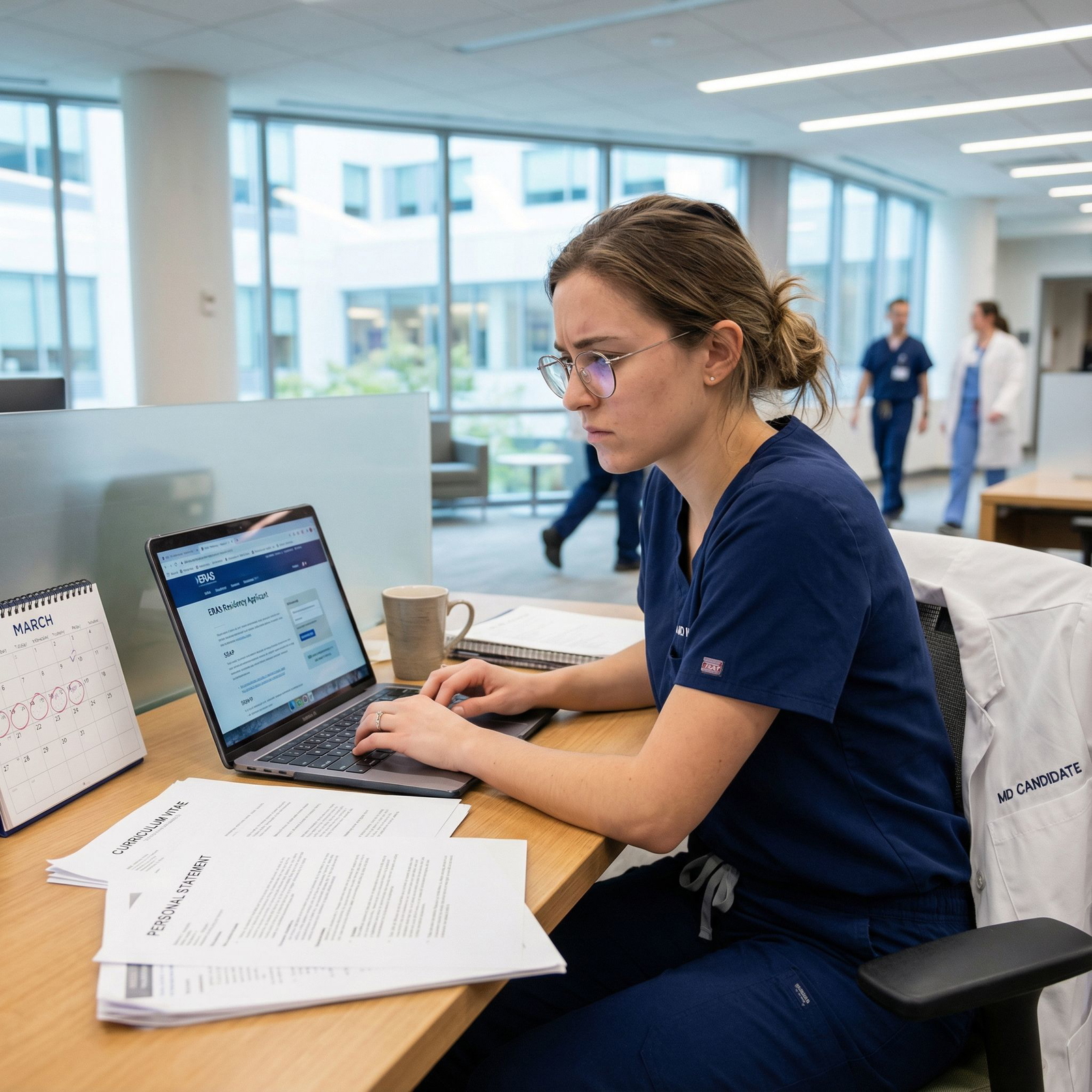
Understanding SOAP for the Caribbean IMG in OB/GYN
For any Caribbean medical school graduate aiming for an Obstetrics & Gynecology residency, the Supplemental Offer and Acceptance Program (SOAP) can be both a critical opportunity and a stressful backup plan. Caribbean IMGs—whether from SGU, AUC, Ross, Saba, or other schools—face a competitive landscape in the obstetrics match, and preparing thoroughly for SOAP can be the difference between matching and sitting out a year.
What is SOAP?
SOAP (Supplemental Offer and Acceptance Program) is a structured process run by NRMP during Match Week that allows unmatched or partially matched applicants to apply to unfilled residency positions. Unlike the regular Match, SOAP is fast, tightly controlled, and heavily time-constrained. You do not “scramble” anymore; instead, you strategically apply to programs through multiple offer rounds.
For a Caribbean IMG seeking an OB GYN residency, SOAP is:
- A second chance to enter training the same year.
- A high-pressure, high-speed application cycle.
- A process where organization, preparation, and realistic targeting are more important than ever.
Why SOAP Preparation Matters Especially for Caribbean IMGs
Many Caribbean schools (including those with a strong SGU residency match track record) produce large cohorts applying to U.S. residencies. Even strong candidates may go unmatched for reasons beyond their control: changing program preferences, exam timing, or a crowded applicant pool. For OB/GYN, a relatively competitive specialty, this risk is higher.
SOAP preparedness is crucial because:
- You won’t have time to “figure it out” in real time.
Decisions made in hours will shape your entire career year. - Documentation must be ready before Monday of Match Week.
You cannot edit personal statements or letters once SOAP opens. - Caribbean IMGs often must pivot between multiple strategies.
You might enter SOAP aiming for OB/GYN but also need a realistic backup (prelim surgery, transitional year, prelim medicine, or certain categorical fields).
The goal of this article is to help you build a SOAP playbook specifically tailored to a Caribbean IMG interested in OB/GYN, including those who initially targeted an obstetrics match but now must navigate limited unfilled positions.
Step 1: Pre-SOAP Planning – Months Before Match Week
The most effective SOAP preparation begins well before you find out whether you matched. Think of this as creating multiple pathways to residency, rather than a single all-or-nothing bet on OB/GYN.
1.1 Analyze Your Competitiveness in OB/GYN
Before the rank list deadline, perform a clear-eyed assessment:
- USMLE/COMLEX scores –
- Are they at or above recent OB/GYN program averages?
- Any attempts or failures?
- Clerkship performance –
- Honors in OB/GYN or women’s health?
- Strong narrative comments highlighting work ethic, procedures, teamwork?
- Letters of recommendation –
- At least one from OB/GYN faculty who knows you well?
- Any U.S. academic OB/GYN letter is especially valuable.
- Research or experiences –
- Women’s health, reproductive health, maternal-fetal medicine, global health?
- IMG-specific factors –
- U.S. clinical experience vs. home-country only.
- Graduation year (recent grads usually fare better).
- Visa needs (J-1 vs H-1B).
Be realistic about how many OB/GYN interview invitations you received, how those interviews went, and whether your rank list was sufficiently long and balanced.
This assessment directly informs your SOAP strategy:
- If very competitive: You may target any OB/GYN positions that appear in SOAP, plus categorical back-ups.
- If borderline: You may still apply to OB/GYN via SOAP, but you should also plan for significant back-up options.
- If minimally competitive in OB/GYN: Focus SOAP plans on more attainable specialties or preliminary/transitional programs while keeping long-term OB/GYN goals alive via later strategies.
1.2 Define Your SOAP Goals and Backup Scenarios
Write out your goals in tiers:
- Primary Goal: OB/GYN categorical position (either via main Match or SOAP).
- Secondary Goal (if OB/GYN not available or unrealistic):
- Prelim surgery, prelim medicine, or transitional year with strong OB/GYN or women’s health exposure.
- Other categorical specialties you can see yourself in long term (FM, IM, etc.).
- Tertiary Goal: Strong, professionally valuable year (e.g., research fellowship, MPH, unpaid research plus observerships) if you do not secure any position through SOAP.
Thinking in tiers keeps you from making frantic, poorly aligned choices under pressure.
1.3 Build a Library of Targeted Personal Statements
You cannot afford to be writing new personal statements on Monday of Match Week. At minimum, prepare the following:
Primary OB/GYN personal statement
- Highlights: your passion for women’s health, OB/GYN rotations, case examples, advocacy, and procedural interests.
- Tailor it for categorical OB/GYN positions.
General “patient-centered internal medicine” or “transitional year” statement
- Focus on broad clinical interest, adaptability, and desire to build a strong foundation for future specialty training.
Preliminary year statement (IM or surgery)
- Emphasize reliability, work ethic, and being a strong team intern.
- Connect prelim training to your long-term OB/GYN or related goals without sounding like you’re “using” the program.
(Optional) Family medicine or other categorical backup statement
- Only if you are realistically open to matching into that field permanently.
Save these as separate documents, clearly labeled, and upload/update them in ERAS well before Match Week. You can assign different statements to different programs quickly, but you won’t have time to write from scratch.
1.4 Prepare an OB/GYN-Focused CV and Talking Points
Your ERAS CV is fixed during SOAP, but your verbal narrative is flexible. Prepare:
A brief 60–90 second professional introduction:
- Medical school and anticipated graduation.
- Why OB/GYN and women’s health.
- Key strengths (work ethic, communication, hands-on procedures).
- Relevant experiences (OB/GYN electives, research, patient advocacy).
Three OB/GYN case stories:
- Example: A complicated labor case and your role as a student or sub-I.
- A high-risk pregnancy encounter that impacted you.
- A gynecologic surgery or outpatient scenario showing continuity of care.
Three transferable skills stories relevant to any program:
- Leading a care team in night float.
- Dealing with a challenging patient/family.
- Responding to an unexpected complication or code.
These will be invaluable during SOAP interviews across specialties.

Step 2: Understanding SOAP Mechanics and Timeline
To use SOAP well, you must know its structure. The NRMP and ERAS rules are strict; violations can disqualify you.
2.1 Who Is Eligible for SOAP?
You are SOAP-eligible if:
- You are registered for the NRMP Main Match, and
- You are partially matched (matched to an advanced position but not a prelim year) or unmatched, and
- You are not withdrawn from the Match, and
- Your school verifies eligibility to begin training on July 1.
As a Caribbean IMG, confirm with your dean’s office that they have completed all NRMP requirements and that your status will be correctly reported on Monday of Match Week.
2.2 Match Week SOAP Timeline (General Pattern)
While exact times can differ year to year, the structure is stable:
Monday 11:00 AM ET
You learn if you are:- Fully matched,
- Partially matched, or
- Unmatched.
If unmatched/partially matched and eligible, you can begin SOAP.
Monday 11:00 AM–3:00 PM ET (approx.)
- NRMP releases the List of Unfilled Programs to SOAP-eligible applicants.
- You review unfilled positions and decide where to apply.
- You prepare/assign personal statements and LoRs to these programs in ERAS.
Monday 3:00 PM–Tuesday morning
- You can submit applications to a maximum of 45 programs total across SOAP.
- Program directors review applications.
- Programs may contact you only through allowed channels (phone or video). No cold-calling or emailing programs yourself.
Offer Rounds (Wednesday–Thursday)
- Programs submit their preference lists to NRMP.
- NRMP runs 3–4 SOAP rounds.
- In each round, you may receive 0, 1, or multiple offers, and you must:
- Accept or reject each offer within a strict time window (usually 2 hours).
Thursday afternoon
SOAP ends. Programs and applicants finalize positions.
2.3 Critical Rules for SOAP Conduct
- You may not initiate contact with programs about unfilled positions before or during SOAP.
- All applications must go through ERAS.
- You may have faculty or advisors advocate for you if it is done appropriately and does not violate NRMP communication rules.
- Once you accept a SOAP offer, you are contractually committed to that program and cannot accept other offers.
Understanding these rules allows you to focus your SOAP preparation on what you can control: your documents, your target list, and your interview readiness.
Step 3: Building a SOAP Strategy Specific to OB/GYN
As a Caribbean IMG, your primary target is the obstetrics match—but SOAP dynamics are different from the main cycle, especially in OB/GYN.
3.1 Realistic Expectations: OB/GYN in SOAP
- OB/GYN rarely has many unfilled categorical positions.
Some years there may be very few or even no OB/GYN categorical spots in SOAP. - Unfilled OB/GYN positions may be:
- In smaller community hospitals.
- In programs that are newer or in less popular geographic locations.
- Possibly with IMGs but often historically favoring U.S. grads.
Because of this, you must be prepared for the likelihood that OB/GYN spots in SOAP will be extremely limited. Your strategy should include:
- Immediate application to any OB/GYN SOAP positions you are even remotely qualified for.
- A robust backup list of non-OB/GYN positions that still keep you close to women’s health or strengthen your application for a future OB/GYN cycle.
3.2 Target Program List: Categories and Priorities
On Monday of Match Week, once the unfilled list is released, you’ll have a short window to sort programs. To use your 45 applications wisely, structure your priorities as follows:
Category A: Categorical OB/GYN
- Apply to every OB/GYN program where:
- You meet minimum USMLE/COMLEX requirements.
- IMG status is not an explicit disqualifier.
- Even if it’s a stretch, you should consider applying—there will be very few such spots.
- Apply to every OB/GYN program where:
Category B: Prelim Internal Medicine / Surgery with Strong OB/GYN Link
Apply to programs where:- The hospital has an OB/GYN residency or strong women’s health services.
- There is a realistic chance to network, do electives, or gain women’s health experience.
- You see potential to reapply into OB/GYN with a stronger profile after a prelim year.
Category C: Transitional Year Programs
Especially those:- Affiliated with OB/GYN or women’s health–focused institutions.
- With a track record of their graduates matching into OB/GYN or other competitive specialties.
Category D: Other Categorical Programs You Truly Would Accept
For some Caribbean IMGs, family medicine or internal medicine may be acceptable long-term careers, with options to emphasize women’s health, obstetrics, or outpatient gynecology where permitted.
Being honest with yourself is critical: only apply to programs you would actually attend if offered. Applying to 45 programs you would never accept is a wasted effort; conversely, limiting yourself too narrowly may leave you unmatched.
3.3 Example SOAP Strategy for a Caribbean IMG Targeting OB/GYN
Imagine a 2025 graduate from SGU with:
- Step 1: Pass
- Step 2 CK: ~235
- 1 OB/GYN sub-I in the U.S. with strong letter
- 4 OB/GYN interviews in the main cycle; unsure about match
Possible SOAP plan:
- Category A:
Apply to all OB/GYN categorical SOAP positions (likely 3–5 or fewer). - Category B:
15–20 prelim internal medicine or surgery programs at hospitals with OB/GYN residencies. - Category C:
10–15 transitional year programs at academic or community hospitals with strong women’s health services. - Category D:
5–10 categorical family medicine programs where OB exposure is robust and long-term practice options include women’s health.
This maintains the OB GYN residency goal but respects the reality of the obstetrics match and SOAP.

Step 4: SOAP Week Execution – From “What Is SOAP” to “I Have an Offer”
Once Monday of Match Week arrives and you learn you are unmatched or partially matched, the question changes from “what is SOAP?” to “how do I execute my SOAP plan hour by hour?”
4.1 Monday: Rapid Triage and Application Submission
11:00 AM ET – Notification
- If matched: this article becomes future-proofing for colleagues.
- If unmatched/partially matched: engage your SOAP plan immediately.
11:00 AM–12:30 PM ET – Program List Review
- Download or access the NRMP unfilled list.
- Filter by:
- Specialty: OB/GYN, prelim IM, prelim surgery, transitional year, FM, IM.
- State preferences (if you have strong constraints, but try to remain flexible).
- Visa sponsorship (J-1, H-1B) if needed.
- Highlight:
- Any OB/GYN categorical spots.
- Programs with prior IMG residents or Caribbean grads.
- Hospitals associated with women’s health or OB departments.
12:30 PM–3:00 PM ET – Assign Documents and Finalize Applications
- Assign your OB/GYN personal statement to all OB/GYN SOAP applications.
- Assign your prelim or transitional personal statement to those applications.
- Double-check:
- Your ERAS profile is accurate (contact info, exam scores reported, experiences).
- LoRs are properly uploaded and assigned.
- Submit applications well before any internal deadlines or slowdowns.
Tip for Caribbean IMGs:
Ask your school’s dean’s office or advising team if they have SOAP support sessions. Many Caribbean schools, especially those with a robust SGU residency match infrastructure, have dedicated advisors and webinars during Match Week.
4.2 Tuesday–Thursday: Interviews and Offer Rounds
During SOAP, programs may quickly screen and then invite applicants for brief interviews by phone or video.
Prepare your environment:
- Quiet space, professional background, good lighting.
- Printed copy or notes of:
- Your ERAS application.
- Key OB/GYN experiences.
- Questions for the program.
Common SOAP Interview Questions for OB/GYN or Related Positions:
- “Tell me about yourself and your interest in OB/GYN.”
- “Why are you currently in SOAP?”
- Answer honestly but professionally: discuss the competitiveness of OB/GYN, timing, or limited interviews, not blame or bitterness.
- “Why this program/hospital?”
- Emphasize your interest in serving their patient population, their training environment, and any women’s health services they offer.
- “If you don’t match into OB/GYN now, what is your long-term goal?”
- Show commitment to being a great intern and team member this year, whether you stay in that specialty or eventually reapply.
Example Answer (Why you’re in SOAP as a Caribbean IMG):
“I applied primarily to OB/GYN, which is a very competitive field. I had a small but meaningful set of interviews and ranked them realistically. Unfortunately, I didn’t secure a position in the main Match. I recognize that as a Caribbean IMG, I need to work even harder to stand out. I’m using SOAP to find a program where I can train as a strong intern, contribute to patient care from day one, and continue building my skills in women’s health and general medicine.”
4.3 Handling SOAP Offers Strategically
When offer rounds begin:
- If you receive an offer from an OB/GYN categorical position:
- If the program is professionally acceptable and you can see yourself training there, strongly consider accepting right away. OB/GYN SOAP offers are rare and often the best alignment with your long-term goal.
- If you receive a prelim or transitional offer but no OB/GYN offers yet:
- Ask yourself:
- Is this a solid program with good training and reasonable working conditions?
- Does it keep me close to OB/GYN or future OB/GYN reapplication?
- If the answer is yes and you have nothing better in hand, you may want to accept, as there is no guarantee of future offers.
- Ask yourself:
- If you receive multiple offers:
- Prioritize:
- Categorical positions in specialties you can accept long term.
- Prelim/transitional in institutions with OB/GYN or strong educational reputation.
- Other positions based on location/support.
- Prioritize:
Remember: Accepting an offer ends your SOAP participation. Do not decline a solid offer due to unrealistic hope if your profile suggests offers may be limited.
Step 5: After SOAP – Building Your OB/GYN Career Path
Whether you match into OB/GYN, another specialty, or a prelim/transitional year, you still control your trajectory.
5.1 If You SOAP into OB/GYN
- Celebrate—but also prepare.
- Before July 1:
- Review core OB/GYN guidelines (ACOG, common obstetric emergencies, postpartum hemorrhage, hypertensive disorders in pregnancy).
- Strengthen procedural basics: pelvic exams, fetal heart monitoring interpretation, suturing.
- As a Caribbean IMG in an OB GYN residency:
- Be proactive about any gaps in your prior training.
- Seek mentorship early.
- Document your progress and build a foundation for future fellowship or leadership roles.
5.2 If You SOAP into a Prelim or Transitional Position
Use your year strategically:
- Excel clinically.
- Seek OB/GYN electives or women’s health rotations whenever possible.
- Cultivate mentors who can:
- Provide strong letters of recommendation.
- Connect you to OB/GYN program directors or opportunities.
- Prepare for reapplying to the obstetrics match:
- Update personal statement with your intern-year experiences.
- Highlight increased responsibility, improved clinical skills, and maturity.
5.3 If You Do Not Secure a Position Through SOAP
This is emotionally difficult, but many future residents have faced it and succeeded later.
Productive next steps:
- Debrief with an advisor (school, mentor, or residency coach).
- Analyze your application: scores, timing, letters, specialty choice.
- Plan a gap year with purpose:
- Research in OB/GYN or women’s health.
- Additional U.S. clinical exposure (observerships, externships).
- Quality improvement projects, publications, or community initiatives.
- Strengthen your profile specifically for the next OB/GYN cycle or a carefully chosen alternative specialty.
FAQs: SOAP Preparation for Caribbean IMGs in OB/GYN
1. How likely is it to get an OB GYN residency through SOAP as a Caribbean IMG?
It is possible but uncommon. OB/GYN is a competitive field, and the number of unfilled categorical OB/GYN positions in SOAP is usually very small. Caribbean IMGs have matched through SOAP, but typically these candidates have strong Step scores, solid U.S. OB/GYN rotations, and excellent letters. You should apply to any OB/GYN spots that appear but also create a robust backup plan (prelim, transitional, or another categorical specialty you truly accept).
2. Should I only apply to OB/GYN positions during SOAP if that is my dream specialty?
No. With a limit of 45 applications, focusing only on OB/GYN in SOAP is usually too risky, especially for a Caribbean IMG. Apply to OB/GYN first, but also include prelim internal medicine or surgery, transitional year, and possibly other categorical programs that align with your interests and long-term goals. The aim is to secure a quality training position this year while keeping your obstetrics match aspirations alive.
3. What can I do during medical school to strengthen my SOAP safety net for OB/GYN?
Several things:
- Take U.S.-based OB/GYN electives and aim for strong clinical evaluations.
- Get at least one strong OB/GYN letter of recommendation from U.S. faculty.
- Build a track record in women’s health research or community outreach.
- Maintain solid Step 2 CK performance and clinical grades.
- Early in 4th year, draft multiple personal statements (OB/GYN, prelim, transitional) so you are SOAP-ready.
These steps improve both your main Match chances and your flexibility if you must enter SOAP.
4. Is there anything unique about SGU residency match or other Caribbean schools that affects SOAP?
Many larger Caribbean schools like SGU, AUC, and Ross have structured advising systems, data on prior SGU residency match outcomes (including OB/GYN), and dedicated SOAP preparation resources. As a student or recent grad, you should:
- Use their advising services for realistic specialty selection.
- Attend school-hosted SOAP preparation webinars before Match Week.
- Ask about historical SOAP outcomes and which backup specialties or programs have proven successful for Caribbean graduates.
Your school’s experience with residency placement is a valuable asset—use it to shape a stronger SOAP strategy.
By planning months ahead, understanding how SOAP works, and tailoring your strategy as a Caribbean IMG focused on OB/GYN, you can transform Match Week from a crisis into a structured, opportunity-driven process. Whether you secure an OB GYN residency, a related prelim year, or a categorical alternative, thoughtful SOAP preparation keeps you moving forward on a viable and rewarding path in medicine.