Understanding SOAP in the Context of Radiology
Before planning your strategy, you need a clear understanding of what is SOAP and how it fits into the diagnostic radiology match landscape.
What is SOAP?
The Supplemental Offer and Acceptance Program (SOAP) is an organized process run by NRMP during Match Week for eligible unmatched or partially matched applicants to apply to and obtain unfilled residency positions. It replaces the old “Scramble,” which was chaotic and unstructured.
Key features of SOAP:
- Occurs during Match Week (Monday–Thursday)
- Only available to applicants who are ERAS-registered and NRMP-participating
- You apply to unfilled positions through ERAS, not by directly contacting programs
- Offers are made in several rounds, and you must accept or reject within a short window
For diagnostic radiology applicants, SOAP can be:
- A pathway into preliminary or transitional year (PGY-1) spots when your advanced radiology spot is secured but your intern year is not
- A detour into another specialty if you do not match into diagnostic radiology and decide to reapply later
- In rare years, a chance to obtain an advanced diagnostic radiology position through SOAP (though high-quality DR programs often fill in the main match)
Understanding this structure early allows focused SOAP preparation, rather than improvising under pressure.
How SOAP Interacts with Diagnostic Radiology Programs
Diagnostic radiology is a competitive specialty with relatively few unfilled positions after the main match. Most radiology applicants encountering SOAP will face one of these scenarios:
Matched to an advanced DR position but not to a PGY-1
- You must secure an intern year (preliminary medicine, surgery, or transitional) through SOAP or outside the match.
- Your SOAP target will likely be prelim/TY rather than additional DR positions.
Unmatched in both advanced DR and PGY-1
- You can apply to:
- Remaining advanced DR spots, if any
- Prelim/TY years with the intention of reapplying to DR
- Other categorical specialties (e.g., Internal Medicine, Family Medicine) if you are considering a career shift or a different radiology route (e.g., IR through different pathways, or DR after categorical IM).
- You can apply to:
Partially matched (e.g., matched to a prelim but not DR)
- More rare for DR because advanced positions typically coordinate; but if it occurs (e.g., you ranked separate prelim programs), you may look for advanced positions in SOAP or decide to continue in prelim and reapply later.
Why SOAP Strategy is Different for Radiology
Diagnostic radiology applicants typically:
- Have strong board scores, solid academics, and high-level letters
- Selectively target competitive programs and may have narrow rank lists
- Sometimes underestimate risk and end up unmatched due to overreaching
This means in SOAP, your profile may still be strong compared to the broader unmatched pool, but you’ll need to:
- Be flexible about specialty and location, especially if you want a prelim year
- Decide whether your long-term goal is radiology at all costs, radiology eventually via another entry point, or pivoting to another specialty
Aligning SOAP choices with your long-term radiology career plan is essential.
Pre-Match SOAP Preparation: What to Do Months in Advance
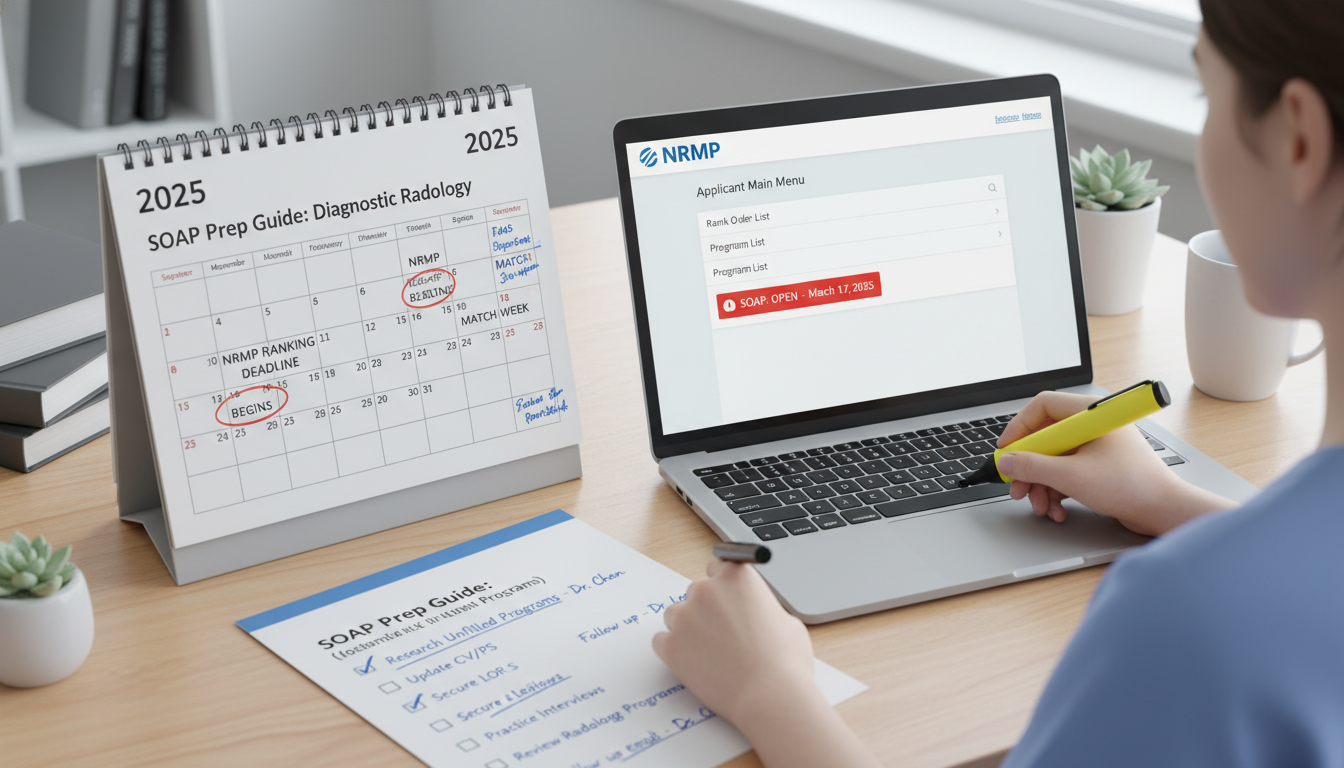
Effective SOAP preparation starts long before Match Week. Think of it as building an insurance policy: you hope not to use it, but if you need it, it can save your year.
1. Know Your Risk of Not Matching Radiology
Realistic self-assessment is the foundation. Consider:
- USMLE/COMLEX scores relative to recent DR match data
- Number and quality of interviews received
- Presence of red flags (exam failures, professionalism concerns, leaves of absence)
- Strength and specificity of letters of recommendation (are they DR-focused? Academic radiologists?)
- Breadth of your rank list (how many programs? how competitive?)
Use your school’s Dean’s office, radiology advisor, and recent graduates in DR to get a realistic read. Applicants with only a few DR interviews and a short rank list should invest heavily in SOAP preparation.
2. Clarify Your Hierarchy of Outcomes
Before Match Week, write down your ranked goals:
- Best-case: Match into diagnostic radiology (advanced + PGY-1) in the main match
- If unmatched:
- Option A: Secure PGY-1 (prelim/TY) and reapply to DR next cycle
- Option B: Accept a categorical spot in another specialty but remain open to reapplying to DR later
- Option C: Fully pivot to another specialty and abandon DR
- Option D: Consider a research year in radiology (if accessible) plus reapplication
Your preferred option dramatically shapes your SOAP strategy. For example:
- If radiology is non-negotiable, your SOAP target is almost certainly prelim/TY with strong academic exposure and time for radiology research.
- If you’re open to broader careers, you may target categorical IM, neurology, or other specialties where you could maintain connections to imaging.
3. Build a SOAP-Ready ERAS Application
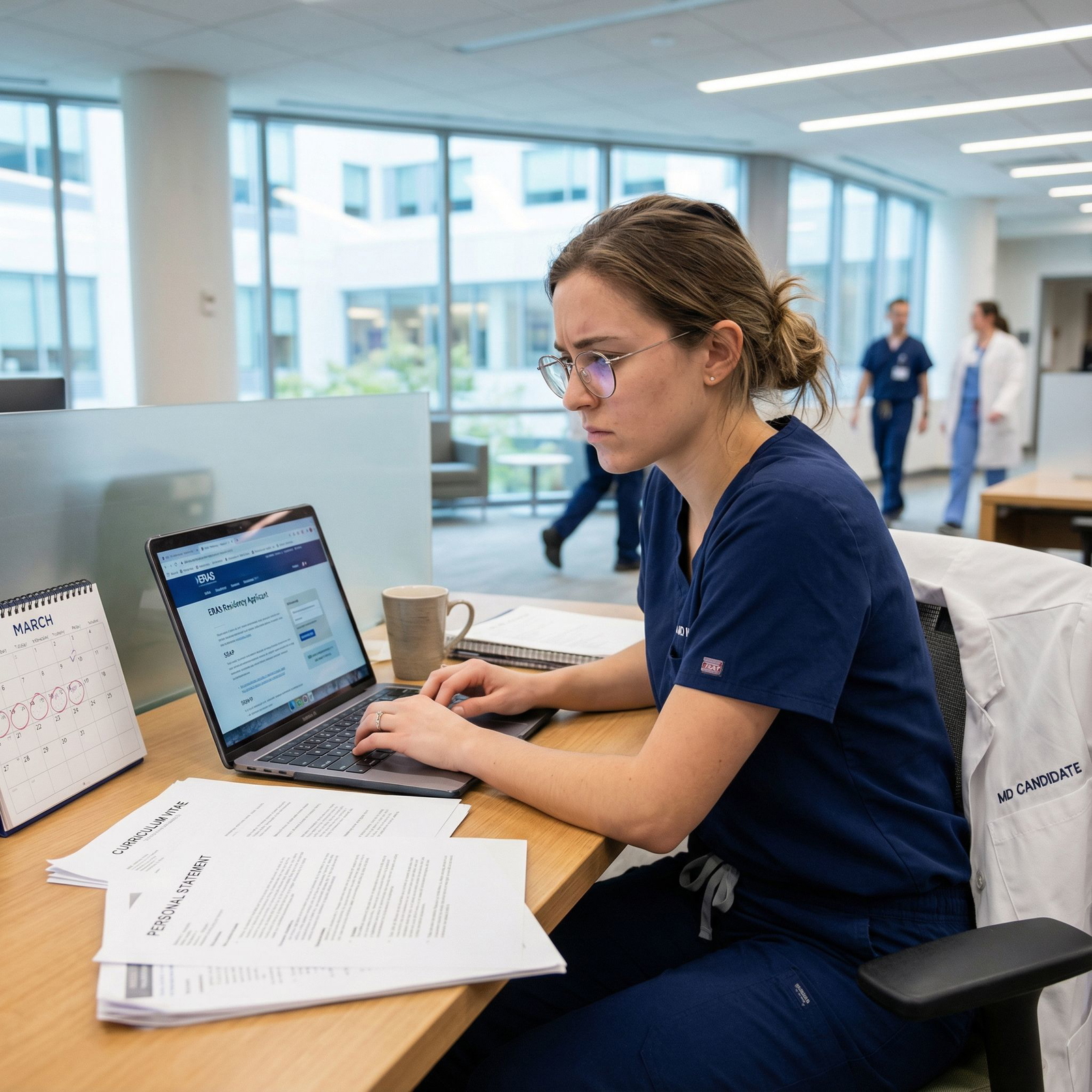
Your ERAS will be used for SOAP. While you cannot rewrite your entire application during Match Week, you can pre-position content and create materials that can be quickly tailored.
Key elements:
Personal Statement Variants
- Original DR personal statement (already submitted)
- A SOAP-appropriate “generic IM/prelim/TY” personal statement that:
- Emphasizes your clinical strengths, teamwork, and adaptability
- Does not over-emphasize DR to the point of sounding disinterested in the specialty you’re applying to
- Optional: A brief alternate statement for an entirely different categorical specialty you might consider (e.g., “Medicine with interest in radiology-related fields”).
Updated CV & Experiences
- Make sure all research, presentations, QI projects, and volunteer work are fully updated before rank list certification.
- If you have radiology research, frame it as evidence of your analytical skills, visual pattern recognition, attention to detail, and interdisciplinary communication—skills that are valuable even outside DR.
Letters of Recommendation
- You usually cannot obtain new letters during SOAP, but you can:
- Ensure you have at least one non-radiology letter (e.g., IM or surgery attending who saw your clinical work) ready and uploaded.
- If you are applying to prelim IM or categorical IM during SOAP, a strong IM letter can be critical.
- You usually cannot obtain new letters during SOAP, but you can:
Program Signaling and Filters
- While signaling is primarily used in the main ERAS cycle, get in the habit of tracking programs you’d be comfortable training in if SOAP became necessary (prelim/TY and potential categorical options).
4. Technical and Logistical Preparation
SOAP is highly time-compressed. Avoid technical problems:
Access & Logins
- Verify that you can log into ERAS, NRMP, and email without issues on all your devices.
- Set up two-factor authentication ahead of time and have backup methods available.
Document Readiness
- Have your alternate personal statement(s) drafted, reviewed, and uploaded to ERAS but not yet assigned—you can assign during SOAP windows.
- Keep a PDF summary of your application handy for rapid reference.
Environment & Support
- Plan a quiet, secure place for Match Week where you can:
- Make phone/video calls
- Coordinate with advisors
- React quickly to offers
- Identify key mentors and administrators who agree in advance to be available to you during Match Week.
- Plan a quiet, secure place for Match Week where you can:
Match Week: Step-by-Step SOAP Strategy for a Radiology Applicant
Match Week is emotionally intense. A structured plan helps you act rationally.
Monday Morning: The “Did I Match?” Email
NRMP tells you whether you:
- Matched (fully)
- Partially matched
- Did not match
If you fully match, your SOAP preparation becomes a backup you didn’t need.
If you do not match or are partially matched, focus immediately on:
- Contacting your Dean’s office and specialty advisors
- Getting clarity on which positions you are eligible for in SOAP (e.g., PGY-1 only, advanced + PGY-1, categorical)
Monday Afternoon: Reviewing the Unfilled List
The list of unfilled programs (by specialty and program) is released to eligible SOAP applicants and their schools.
For a DR-focused applicant, you should:
Scan for any diagnostic radiology positions:
- Are they advanced (PGY-2) or categorical?
- What is the starting year (some may be delayed)?
- Are you a realistic candidate with your profile?
Carefully review:
- Prelim Medicine
- Prelim Surgery
- Transitional Year
- Categorical Internal Medicine, Family Medicine, Neurology, etc., if you are considering a pivot or a broader backup.
Discuss with your advisor:
- Which programs align with your long-term DR goals
- Which geographic areas you can realistically commit to
- How broad your SOAP application scope should be (e.g., 30–45 programs, depending on what’s available)
Tailoring Your SOAP Application
In SOAP, you have a limited number of applications per round (typically 45 total in Round 1, with additional opportunities in later rounds). Strategy is critical.
Prioritization Logic for a DR Applicant
Depending on your previously defined hierarchy:
- If your primary goal is to reapply to DR, emphasize:
- Transitional Year (TY) spots with diverse rotations and time for research
- Prelim IM or Prelim Surgery at institutions with robust radiology departments where you might build connections
- If you are open to another career path, add:
- Categorical IM, Neurology, FM, or others you can see yourself practicing long-term
Be intentional:
- Do not apply blindly to every open position.
- Ask: “Would I be willing to actually accept and complete this residency if it’s the only offer I get?”
Personal Statement and ERAS Assignment
For each group of programs:
For prelim/TY: use your generic clinical/prelim statement, emphasizing:
- Work ethic, reliability, and strong clinical skills
- Ability to work across teams and specialties
- Interest in hospital-based care and longitudinal learning
- You may mention plans to pursue radiology briefly and positively, without appearing disinterested in prelim work.
For any SOAP-available DR positions:
- Use your radiology-focused personal statement, possibly edited to:
- Demonstrate resilience and maturity
- Acknowledge your strong commitment to DR without referencing being unmatched.
- Use your radiology-focused personal statement, possibly edited to:
Communicating With Programs During SOAP
SOAP has strict rules. Violating them can jeopardize your candidacy.
Understand SOAP Communication Rules
NRMP policies typically state:
- Programs can initiate contact with applicants, but applicants are often restricted from proactively contacting programs outside official channels during SOAP.
- You may speak with programs who reach out (phone, Zoom), but you must not solicit positions in a way that violates NRMP rules.
Always confirm the current year’s NRMP SOAP communication guidelines—they can change in detail.
Preparing for SOAP Interviews
SOAP interviews are often brief and focused. Expect:
- Short phone or video calls (10–20 minutes)
- Rapid scheduling—sometimes with little notice
- Program directors or faculty asking:
- “Tell me about yourself.”
- “Why this program and this specialty (IM/prelim/TY)?”
- “How will you handle the intensity of intern year?”
- “What happened in the main match?” (Often indirectly)
For a DR applicant targeting prelim/TY:
Emphasize:
- Your clinical competence and eagerness to take on patient care responsibility
- Your teamwork, communication, and reliability
- Respect for the intern year as a foundation for any specialty, including radiology
- Specific reasons you would value their program (teaching structure, patient population, schedule, culture)
Avoid:
- Over-focusing on radiology to the point of sounding disinterested in their program
- Expressing that you only see this year as a “stepping stone” in a dismissive way
You can say something like:
“My long-term goal remains diagnostic radiology, but I understand that a strong clinical foundation during intern year is essential. I’m very committed to being an excellent intern—your program’s robust teaching on inpatient medicine and diverse patient population are exactly what I’m looking for to build that base.”
Handling Questions About Being Unmatched
Be honest but strategic:
- Focus on competitive nature of radiology and limited spots, not excuses.
- Acknowledge any real weaknesses you’re working on (e.g., late exam, limited early clinical honors).
- Emphasize how you’ve reflected and grown and are moving forward constructively.
Example framing:
“Diagnostic radiology is highly competitive, and my number of interview offers was more limited than I anticipated, partly because I aimed mostly at very competitive academic centers. While I didn’t match this year, my evaluations and faculty feedback have consistently been strong. I’m committed to growing as a clinician, and I see this year as a chance to become a safe, reliable intern while continuing to build the skills that will make me a stronger future radiologist.”
Making and Managing SOAP Offers
SOAP offers come in rounds. Each round, you may receive:
- No offers
- One offer
- Multiple offers
You must accept or reject within a short time window (often a few hours). There is no “maybe”.
Strategizing Acceptance
Before SOAP rounds begin, create a personal ranking framework:
- If I receive one offer only from X program, will I accept or decline and risk no position at all this year?
- If I receive multiple offers, which factors matter most:
- Categorical vs prelim
- Program reputation and training quality
- Location and support system
- Opportunity to network with radiology faculty
For a DR applicant primarily aiming to reapply:
- A strong prelim or TY year in a teaching hospital with an active radiology department often outweighs a somewhat more prestigious location that is disconnected from radiology pathways.
After You Accept a Position
Once you accept an offer in SOAP:
- You are committed to that program and withdrawn from further SOAP rounds.
- Begin planning to excel in that role:
- Contact program coordinator to confirm onboarding steps
- Start thinking about how to maintain radiology ties (electives, mentors, research) during that year if reapplication is planned.
Rebuilding Toward Diagnostic Radiology After SOAP
Even if you don’t enter DR directly through SOAP, many applicants successfully reach radiology after:
- A prelim/TY year
- A categorical year in another specialty plus reapplication
- A dedicated radiology research year (sometimes after a prelim year)
Maximizing Your Intern Year for a Future DR Application
To strengthen your future DR candidacy:
Excel clinically
- Strong intern evaluations show you can function safely and effectively in the hospital
- Avoid professionalism issues, late notes, or repeated absenteeism at all costs.
Stay connected to radiology
- Seek elective months in radiology at your institution
- Join radiology-related QI projects or research
- Attend radiology case conferences when possible
- Ask intern-year faculty to connect you to radiology leadership
Update your application narrative
- Your new personal statement should authentically explain:
- Why you remain committed to DR
- What your intern year has taught you about patient care and communication
- How your clinical experience will make you a better radiologist
- Your new personal statement should authentically explain:
When to Pivot Away From Radiology
It’s also honest to recognize that:
- Multiple unsuccessful DR cycles
- Persistent major score deficits or red flags
- Changing personal preferences or life circumstances
may lead you to choose a different long-term specialty. SOAP outcomes can be a turning point for many applicants to discover fulfilling careers in IM, EM, neurology, pathology, or others.
The key is to make that decision deliberately, with the support of trusted mentors, rather than out of panic alone.
FAQs: SOAP Preparation for Diagnostic Radiology Applicants
1. Are there usually many diagnostic radiology residency positions available in SOAP?
No. In most years, very few diagnostic radiology residency positions remain unfilled after the main match, and the ones that do may be highly specific in location or structure. Most radiology applicants in SOAP are realistically targeting preliminary or transitional year positions rather than DR categorical or advanced spots. Still, you should always check the unfilled list carefully each year and apply to any DR positions for which you are a competitive fit.
2. If I match into an advanced DR position but not a PGY-1, do I have to participate in SOAP?
You don’t have to, but most applicants in this situation should.
Without a PGY-1 year, you can’t start your advanced DR position. SOAP offers an organized way to secure a prelim medicine, prelim surgery, or transitional year spot. Your strategy will focus on:
- Applying broadly to PGY-1-only positions in SOAP
- Highlighting your commitment to being an excellent intern, not just “checking a box” for DR
If SOAP doesn’t yield a PGY-1, you might need to pursue off-cycle PGY-1 positions or discuss deferment options (if any) with your DR program.
3. How should I balance being honest about wanting radiology with showing genuine interest in prelim/TY programs?
For prelim/TY SOAP residency applications, you can and should:
- Be transparent that your long-term goal is diagnostic radiology
- Emphasize your appreciation for the clinical foundation those programs provide
- Affirm your intent to be a fully committed, reliable intern
Programs understand that many prelim/TY residents are headed to other specialties. They want assurance that you will:
- Take patient care seriously
- Contribute positively to the team
- Not disengage simply because your primary passion is in another field
4. Does participating in SOAP hurt my chances of a future diagnostic radiology match?
Participating in SOAP itself does not inherently hurt your future DR chances. Your future success depends more on:
- How well you perform in your intern or categorical year
- Whether you build radiology connections and a stronger application
- How you address prior weaknesses (exam performance, narrow rank list, limited research, etc.)
Program directors often respect applicants who persevere, grow, and return with a stronger application after a challenging match outcome—especially in a competitive field like diagnostic radiology.
Thoughtful, early SOAP preparation simply ensures that, whatever happens on Match Day, you’ll have a structured, rational plan to move forward toward your radiology goals.