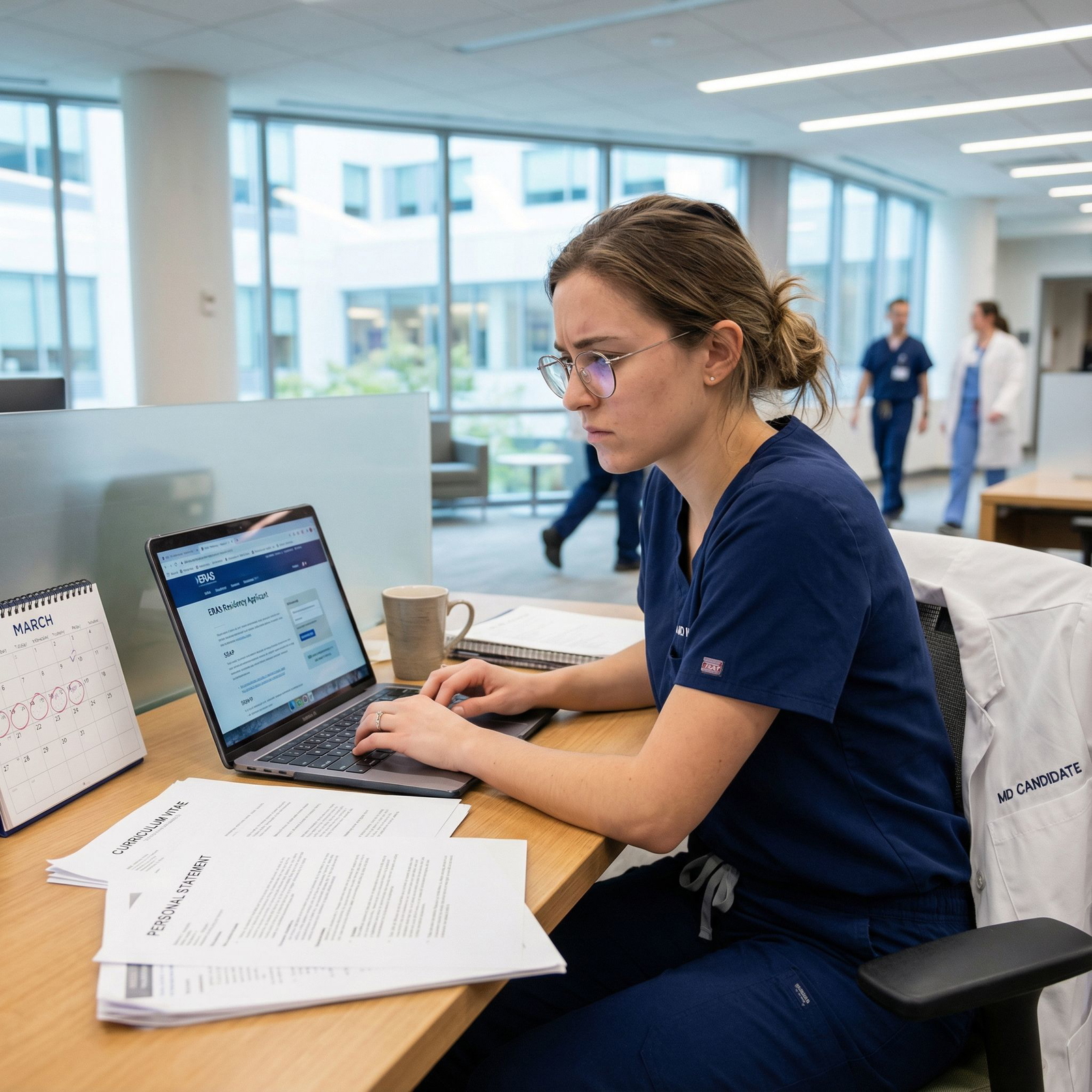
Understanding SOAP for the DO Graduate in Anesthesiology
As a DO graduate aiming for anesthesiology, the Supplemental Offer and Acceptance Program (SOAP) is your structured second chance if you go unmatched or partially matched after the main anesthesia match. Knowing exactly what is SOAP, how it works, and how to prepare is critical—especially in a competitive specialty like anesthesiology and as a DO graduate navigating the dynamics of the osteopathic residency match environment.
What Is SOAP?
SOAP is an organized process run by NRMP during Match Week that allows eligible unmatched or partially matched applicants to apply to unfilled residency positions. Instead of the previous informal “scramble,” SOAP provides:
- A clear schedule and multiple offer rounds
- A centralized list of unfilled programs
- Application and communication rules to keep things fair and orderly
For DO graduates targeting anesthesiology residency, SOAP is particularly important because:
- Anesthesiology is competitive, and even strong applicants can go unmatched.
- Programs may have a few unfilled anesthesia positions and will look at SOAP candidates rapidly.
- There may be preliminary medicine or surgery positions that can help you build a path toward an eventual anesthesiology spot.
Who Is Eligible?
You are eligible for SOAP if:
- You registered for and are eligible to enter the Main NRMP Match.
- You are unmatched or partially matched (for example, matched to a preliminary year but not an advanced anesthesiology residency).
- You have no NRMP violations restricting your participation.
Your status (SOAP-eligible or not) is posted in your NRMP R3 account at noon ET on Monday of Match Week.
Why SOAP Matters for a DO Graduate in Anesthesiology
As a DO, the combined MD/DO match means more opportunities but also more competition. SOAP can be strategically valuable to you because:
- Some programs value DO training and may be especially open during SOAP.
- You may find high-quality community-based or university-affiliated programs that didn’t fill.
- You can secure:
- A categorical anesthesiology position (ideal).
- A preliminary or transitional year that positions you more competitively for a future anesthesia match.
Understanding SOAP preparation specifically through the DO lens will help you act decisively and professionally during a very high-pressure week.
Pre-Match SOAP Preparation: What To Do Before Match Week
Your best SOAP preparation starts months before Match Week—ideally from the moment you submit ERAS. The goal is to have a complete, adaptable toolkit ready to deploy if needed.
1. Build a “Plan B” Early
Even as you aim confidently for anesthesiology, you should think through contingency scenarios:
- Scenario A: Unmatched in anesthesiology but open to any categorical position in another field.
- Scenario B: Unmatched in anesthesiology, willing to take a preliminary or transitional year.
- Scenario C: Completely unmatched and considering a research year, MPH, or another productive gap option.
Write down:
- Which specialties you’d consider in SOAP if anesthesiology positions are scarce:
- Internal medicine
- Preliminary medicine or surgery
- Transitional year
- Family medicine (if you’d be happy there)
- Geographic flexibility:
- Are you willing to move anywhere?
- Are there absolute “no-go” regions?
Having these decisions pre-thought removes emotional paralysis when the SOAP residency process starts.
2. Optimize Your Core Anesthesiology and General Application Materials
Even if you don’t plan to SOAP, preparing these materials thoroughly now is insurance.
Update and polish:
ERAS Application
- Ensure all experiences are accurate, with strong descriptions emphasizing:
- Teamwork
- Procedural comfort
- Acute care exposure (ICU, ED, OR experiences)
- Osteopathic principles applied in perioperative care (for DO graduates)
- Quantify achievements (e.g., “Assisted in care of 50+ postoperative patients…”).
- Ensure all experiences are accurate, with strong descriptions emphasizing:
Personal Statements Prepare multiple tailored versions in advance:
- Primary Anesthesiology Personal Statement
- Why anesthesiology?
- Key clinical stories showing composure under pressure, attention to detail, perioperative thinking.
- Any experiences with OMT or holistic assessment that strengthen your identity as a DO in anesthesia.
- Alternative Specialty Personal Statement(s) (e.g., internal medicine, prelim year)
- Emphasize generalist skills, communication, and adaptability more than procedures.
- Shortened, adaptable version for quick edits during SOAP.
- Primary Anesthesiology Personal Statement
Example structure for your anesthesiology personal statement (SOAP-ready):
- Opening Brief Case: A compelling OR or ICU moment where you saw anesthesia’s impact.
- Why Anesthesia: Tie your interest to physiology, pharmacology, perioperative care, and patient advocacy.
- DO Perspective: How osteopathic training shapes your holistic approach to perioperative risk and recovery.
- Evidence: Clerkship evaluations, research, leadership roles that show reliability under stress.
- Fit & Future: Interest in specific practice environments (community vs academic), teaching, or pain management.
3. Secure Flexible Letters of Recommendation (LoRs)
Letters can make or break your SOAP competitiveness, especially in anesthesiology residency.
- At least 1–2 strong letters from anesthesiologists who know you clinically.
- 1–2 general medicine / surgery letters, ideally from core rotations or ICU.
Ask letter writers early if they would be comfortable with you using:
- The same letter for an anesthesia match and a SOAP anesthesiology application.
- The letter for related SOAP targets (internal medicine, prelim year) if needed.
If possible, request:
“A strong, generally applicable letter focused on my clinical competence, reliability, and teamwork that can be used for anesthesiology and, if necessary, for transitional or internal medicine positions during SOAP.”
4. Understand SOAP Logistics and Rules
Before Match Week, review:
- NRMP SOAP rules (especially about communication):
- You cannot contact programs about unfilled positions before or during SOAP unless they contact you.
- Programs may reach out to you; you must respond professionally and promptly.
- ERAS SOAP functionality:
- How to assign different personal statements and LoRs to different programs.
- How the application limit works (up to 45 programs during SOAP).
Create a SOAP Quick-Reference Sheet with:
- Your NRMP and ERAS logins
- Draft email/phone response templates for program outreach
- A summary of your key strengths as a DO anesthesiology candidate and as a general medicine/surgery candidate

Match Week: Step-by-Step SOAP Survival Guide for DO Anesthesiology Applicants
Match Week is emotionally intense, especially if you don’t match in your desired anesthesiology residency. Having a clear, stepwise plan is essential.
Monday Noon ET: Finding Out You Are Unmatched or Partially Matched
At noon on Monday, NRMP tells you if you are:
- Fully matched
- Partially matched (e.g., prelim without advanced, or advanced without prelim)
- Unmatched
If you are unmatched or partially matched, and SOAP-eligible, you can participate.
Emotional management:
- Give yourself 30–60 minutes to react and regroup.
- Reach out quickly to:
- Your dean’s office / advising office
- Anesthesiology faculty mentor
- A trusted peer or family member for emotional support
This is a professional crisis moment, but also an opportunity. Staying composed will significantly improve your SOAP performance.
Accessing the List of Unfilled Positions
On Monday at 11 a.m. ET (or as scheduled for that year), NRMP releases the List of Unfilled Programs to SOAP-eligible applicants.
For a DO anesthesiology applicant, scan the list in this order:
- Categorical Anesthesiology Positions
- Note location, program type (academic vs community), and DO-friendliness (if known).
- Advanced Anesthesiology Positions
- If you already have a prelim year, these become highly relevant.
- Preliminary and Transitional Year Positions
- If anesthesiology is sparse, these may be your strategic bridge to a re-application in the next anesthesia match cycle.
- Other Acceptable Categorical Specialties (if you are genuinely open to them).
Create a spreadsheet or document with:
- Program name
- Type (categorical anesthesia, advanced, prelim, transitional)
- Location
- First-impression fit (High/Medium/Low)
- Notes (DO-friendly? alumni presence? known reputation?)
Strategically Using Your 45 SOAP Applications
You can submit up to 45 SOAP residency applications total. For a DO graduate targeting anesthesiology:
Suggested allocation example:
- 10–20: Categorical anesthesiology positions
- 5–10: Advanced anesthesiology positions (if you have or can reasonably secure a prelim)
- 10–20: Preliminary medicine/surgery/transitional year positions in solid training environments
- Remaining: Categorical backup specialties (only if you’d genuinely train in them)
Key points:
- Do not waste applications on programs you would never rank or attend.
- Be flexible with geography—SOAP is not the time to be too location-restrictive unless absolutely necessary.
- Consider DO-friendliness:
- Check FREIDA, program websites, or prior match lists from your school to see which programs have historically taken DOs.
- Don’t exclude a program solely because of no known DOs, but give extra weight to those with a DO presence.
Tailoring Your SOAP Application as a DO Anesthesiology Candidate
Your existing ERAS file forms the foundation, but you may need rapid adjustments tailored to SOAP.
Adapting Your Personal Statement
For each type of program:
SOAP Anesthesiology Programs
- Use your anesthesiology-focused personal statement, but add:
- A closing paragraph that subtly acknowledges your resilience:
“Although this Match cycle has not gone as planned, I remain fully committed to a career in anesthesiology and am eager to contribute as a hardworking, reliable resident in your program.”
- A closing paragraph that subtly acknowledges your resilience:
- Emphasize:
- Osteopathic strengths: whole-patient assessment, communication, musculoskeletal understanding impacting perioperative risk.
- Experiences in OR, ICU, ED, or procedural settings.
- Use your anesthesiology-focused personal statement, but add:
SOAP Preliminary / Transitional Year Positions
- Use a generalist personal statement emphasizing:
- Willingness to serve as a strong, dependable intern.
- Breadth of clinical exposure during medical school.
- Teamwork and adaptability, especially on high-acuity rotations.
- You do not need to conceal your long-term anesthesiology interest, but present it in a way that reassures the program:
“I intend to pursue anesthesiology, and I view a rigorous preliminary year as essential preparation. During this year, I will be fully committed to providing excellent care to every patient and being a reliable team member in your program.”
- Use a generalist personal statement emphasizing:
Backup Categorical Specialties
- If applying to other categorical specialties, briefly re-frame your motivations and DO identity toward that field, not anesthesiology.
Highlighting DO-Specific Strengths
As a DO graduate in the osteopathic residency match environment, make your unique training work for you:
- Emphasize:
- Strong foundation in osteopathic principles and holistic care.
- Comfort with manual assessment, which can translate to nuanced physical exam in perioperative settings.
- Exposure to osteopathic manipulative treatment (OMT) as a way of understanding pain, musculoskeletal contributions to respiratory mechanics, and functional capacity.
In your ERAS experiences or personal statement, a brief example:
“My osteopathic training and use of OMT techniques have deepened my appreciation for how musculoskeletal and respiratory dynamics affect perioperative risk, postoperative pain, and functional recovery.”
This differentiates you positively, especially in community and DO-friendly academic settings.
Be Ready for Rapid Program Contact
Programs may contact you by phone, email, or video during SOAP. Prepare:
- A one-minute professional introduction:
- Training background (DO, school, graduation year)
- Key clinical strengths
- Why anesthesiology (or why you’re a strong intern for prelim slots)
- Why you’d be a good fit for their program (geographic ties, size, type)
Example 60-second introduction (for anesthesiology SOAP call):
“My name is Dr. [Name], I’m a DO graduate from [School]. I completed strong rotations in internal medicine, surgery, and ICU, and I found I was most engaged in the OR and critical care settings. I’m drawn to anesthesiology because it combines physiology, acute decision-making, and advocacy for patients at their most vulnerable. My attendings have consistently noted my calm under pressure and strong team communication. I’m particularly interested in your program because of its strong clinical volume, exposure to regional anesthesia, and supportive teaching environment. I would be grateful for the opportunity to demonstrate my commitment and work ethic as a resident in your program.”
For prelim/transitional programs, adjust emphasis to intern reliability and breadth of interest.

Offer Rounds, Decisions, and Long-Term Strategy
SOAP involves multiple offer rounds (timing can slightly vary by year). During each round, programs submit preference lists, and NRMP issues offers. You may:
- Receive no offers in a round.
- Receive one or more offers—you must respond by the stated deadline.
How to Decide on Offers as a DO Anesthesiology Applicant
Your priorities should be clear by Match Week:
If You Receive a Categorical Anesthesiology Offer
- For most DO anesthesiology applicants, this is your top goal.
- If the program is acceptable on professionalism and training grounds, you will almost always accept immediately.
- Consider:
- Training environment (case volume, fellowships, board pass rate)
- Geography (is it livable for you and any dependents?)
- DO-friendliness and support structure
If You Receive an Advanced Anesthesiology Position but No Prelim Year
- This can still be a big win.
- Check:
- Does the program help secure prelim positions?
- Do you have realistic prelim options through SOAP?
- If feasible, accept the advanced anesthesiology position and aggressively seek a prelim/transitional spot.
If You Receive a Prelim / Transitional Offer Only
- Ask yourself:
- Am I committed to reapplying in the next anesthesia match?
- Is this a program with good training, reputation, and mentorship to strengthen my application?
- A strong prelim year can dramatically improve your anesthesia match chances next cycle.
- This is often a very good path for DO graduates determined to pursue anesthesiology long-term.
- Ask yourself:
If You Receive Offers in Another Categorical Specialty
- Only accept if you could genuinely see yourself completing training and practicing in that field.
- Changing specialties later is possible but uncertain; don’t choose impulsively just to “have something.”
If You Don’t Receive Any SOAP Offers
Despite careful SOAP preparation, some applicants will not receive an offer. As difficult as that is, it is not the end of your anesthesiology journey.
Post-SOAP steps:
- Meet with:
- School advisors
- Anesthesiology mentors or faculty, if accessible
- Analyze your application:
- COMLEX/USMLE scores
- Clinical grades
- Anesthesiology-specific exposure and letters
- Geographic or list limitations
- Consider:
- A dedicated research year in anesthesiology or critical care.
- Taking an open non-match position if available later (legal and ethical considerations apply).
- Strengthening your application with:
- Additional clinical experiences
- Re-taking exams if appropriate
- New letters and leadership roles
Many DO graduates successfully match into anesthesiology on a second attempt, particularly if they use the year productively and get strong mentorship.
Practical Tips and Common Pitfalls for DO Graduates in SOAP
Actionable Tips
- Start SOAP preparation early: Don’t wait until Match Week to think about contingency plans.
- Maintain professionalism at all times: Programs may remember your demeanor during SOAP if you apply there again.
- Leverage your DO background: Highlight holistic patient care, manual skills, and osteopathic perspective on perioperative health.
- Use your network:
- Ask your school to connect you with alumni in anesthesiology.
- Seek quick feedback on your SOAP list and strategy from mentors.
- Stay organized:
- Track which programs you applied to, any contact, and your perceived fit.
- Practice speaking about your “unmatched” status:
- Calmly frame it as a function of competitiveness and not a personal failure.
- Focus on what you’ve learned and how you will move forward.
Common Pitfalls to Avoid
- Paralysis or denial on Monday: You have a limited window; use the first 24 hours effectively.
- Overly narrow SOAP list: Only applying to a handful of anesthesiology programs when there are limited spots nationwide.
- Applying to programs you would never attend: This can box you into a difficult spot if that’s your only offer.
- Panicking during program calls: Practice a few times with a friend, advisor, or even by recording yourself.
- Neglecting mental health: The stress is real—sleep, eat, and seek support; it will help you think more clearly.
FAQs: SOAP Preparation for DO Graduates in Anesthesiology
1. As a DO graduate, do I have a realistic chance of getting an anesthesiology residency through SOAP?
Yes, but you must be realistic and flexible. Anesthesiology is competitive, and SOAP anesthesiology positions are limited in most years. Your chances improve if:
- Your scores and clinical performance are solid.
- You already have strong anesthesia letters.
- You are geographically flexible and willing to consider community-based programs.
Even if you don’t secure anesthesia through SOAP, obtaining a strong preliminary or transitional year can set you up well for a later anesthesia match.
2. Should I prioritize a prelim/transitional year over a categorical backup specialty if I am set on anesthesiology?
If your clear long-term goal is anesthesiology and you are emotionally prepared to re-enter the anesthesia match later, a high-quality prelim or transitional year is often the best strategic choice. It:
- Enhances your clinical experience.
- Provides new letters and mentorship.
- Demonstrates your ability to handle intern-level responsibilities.
Only choose a categorical backup specialty if you’re genuinely willing to complete that training and practice in that field.
3. How should I explain being unmatched to programs that contact me during SOAP?
Be honest, concise, and forward-looking. For example:
“Anesthesiology is a very competitive specialty, and while my application has strengths—such as [specific strengths]—I understand there were many strong candidates. I remain committed to becoming the best anesthesiologist I can be, and I’m focused now on finding a program where I can grow, contribute, and prove myself.”
Avoid blaming individual programs or external factors; instead, emphasize resilience and maturity.
4. If I don’t get any SOAP offers, is it realistic to try for anesthesiology again next year?
Yes, many applicants successfully match into anesthesiology on a second attempt, including DO graduates. You’ll need to:
- Honestly assess weaknesses in your prior application.
- Use a year to strengthen your profile (research, clinical work, possibly a prelim year if available outside the Match).
- Seek active mentorship from anesthesiology faculty or advisors.
- Apply broadly and early in the next anesthesia match cycle, with a refined strategy and stronger materials.
SOAP is a critical opportunity, but it is not your only path to an anesthesiology career. With deliberate SOAP preparation and a long-term view, you can navigate setbacks and still reach your goal.