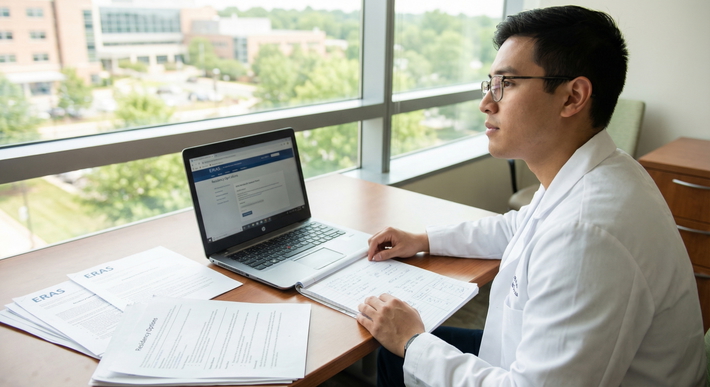
Understanding SOAP for the DO Applicant in Diagnostic Radiology
The Supplemental Offer and Acceptance Program (SOAP) can feel overwhelming—especially for a DO graduate with a strong interest in Diagnostic Radiology who suddenly finds themselves unmatched. Yet, with structured SOAP preparation, you can convert a stressful week into a strategic second chance.
SOAP is not just “leftover spots.” It’s a structured, fast-moving mini–Match process in which preparation matters more than almost anything else. As a DO graduate, understanding how SOAP fits into the osteopathic residency match landscape, and how it can intersect with a radiology career path, is essential.
In this guide, we will cover:
- What SOAP is, when it happens, and how it works
- How DO graduates in Diagnostic Radiology should think about SOAP strategy
- Concrete steps to prepare before Match Week
- How to execute effectively during SOAP
- Tailored advice for DOs who ultimately want radiology residency or a future diagnostic radiology match, even if SOAP leads to a different interim specialty
1. SOAP Basics: What It Is, How It Works, and Why It Matters
Before you can plan SOAP preparation, you need a clear understanding of the process and its constraints.
1.1 What is SOAP?
SOAP (Supplemental Offer and Acceptance Program) is NRMP’s structured process that allows eligible unmatched and partially matched applicants to apply to unfilled residency positions during Match Week. Understanding what is SOAP and its rules is critical so you don’t lose time learning logistics while others are submitting applications.
Key points:
- It occurs during Match Week, after you learn that you are unmatched or partially matched.
- It is fully electronic, managed through ERAS and NRMP.
- You can apply to a limited number of programs (typically up to 45 total during SOAP).
- Programs review applications and extend offers in timed rounds.
- You may accept only one offer at a time, and acceptance is binding.
1.2 Match Week Timeline: Where SOAP Fits
A typical Match Week structure (dates vary each year):
- Monday, 10 AM ET: You learn whether you are matched, partially matched, or unmatched.
- Monday, Noon ET: The list of unfilled programs is released (initially to schools, then to applicants).
- Monday–Thursday: SOAP rounds occur:
- You submit applications (usually by early Monday afternoon).
- Programs review and can conduct interviews (often phone or virtual).
- NRMP runs multiple offer rounds (e.g., Rounds 1–4) on Wednesday–Thursday.
- Friday: Main Match results released for those who matched in the original algorithm. SOAP results are already final by then.
Because the entire SOAP residency process happens in just a few days, SOAP preparation must start weeks to months in advance—not on Monday of Match Week.
1.3 SOAP Eligibility for DO Graduates
To participate in SOAP, you must:
- Be registered for the Match through NRMP.
- Be eligible to start residency on July 1 (e.g., COMLEX/USMLE steps as required for specific programs).
- Be either:
- Unmatched in all positions, or
- Partially matched (e.g., matched to a preliminary year but not an advanced position like radiology).
As a DO graduate, you may be applying to both ACGME-accredited categorical positions and preliminary/transitional years. While there is no separate “osteopathic residency match” under NRMP anymore (post-single accreditation system), some programs retain a DO-friendly culture and may explicitly value osteopathic training.
2. Strategic Mindset: DO Graduate + Radiology Aspirations + SOAP
SOAP is not just “find any job.” The programs you choose and how you present yourself should connect to your long-term goal: a career in Diagnostic Radiology.
2.1 Realities of SOAP for Diagnostic Radiology
Diagnostic Radiology is competitive. Radiology residency positions rarely remain unfilled after the main match, especially at strong academic programs. Consequently:
- Advanced DR positions (PGY-2) in SOAP are uncommon.
- Unfilled radiology spots, when they exist, often fill quickly.
- Many applicants hoping for a diagnostic radiology match through SOAP ultimately pivot to:
- Preliminary/Internal Medicine or Surgery positions (PGY-1), or
- Categorical programs in fields like Internal Medicine, Family Medicine, or Transitional Year that keep doors open for a later radiology application.
For a DO graduate, this means:
- Your SOAP strategy must address Plan A (if any DR positions appear) and Plan B (a bridge year or alternate specialty that maintains competitiveness for future radiology applications).
2.2 Understanding Your Radiology Profile as a DO
Before SOAP begins, you should critically review your original radiology application:
- Board exams:
- COMLEX 1/2 and, if taken, USMLE Step 1/2.
- Were your scores below common radiology cutoffs?
- Clinical performance:
- Clerkship grades, especially in medicine, surgery, and radiology electives.
- Strength and relevance of letters of recommendation.
- Radiology-specific exposure:
- Sub-I in Diagnostic Radiology?
- Research, case reports, quality improvement projects?
- Red flags:
- Exam failures, significant leaves, professionalism concerns.
This honest review informs:
- Whether a SOAP radiology application (if available) is realistic.
- Whether you should primarily target a prelim year plus a re-application strategy.
- How to frame your narrative if you pivot into a related or alternative specialty.
2.3 Setting Hierarchical Goals for SOAP
Create a tiered goal framework before Match Week:
Tier 1 (Ideal, but Rare)
- Unfilled Diagnostic Radiology spots (PGY-2) or early specialization programs.
- Possibly combined DR/IR tracks, if any appear.
Tier 2 (Strategic Bridge)
- Preliminary Internal Medicine or Surgery with strong academic environment.
- Transitional Year programs with good radiology exposure.
Tier 3 (Alternative but Compatible Paths)
- Categorical Internal Medicine, where you might later:
- Transition to DR via PGY-2 transfer, or
- Develop a career in fields overlapping with imaging (e.g., cardiology, pulmonary/critical care with imaging focus).
- Family Medicine or other categorical specialties at institutions with robust radiology departments (where you can do electives, research, and network).
- Categorical Internal Medicine, where you might later:
Your SOAP preparation should account for all three tiers so you can move quickly based on what actually appears on the unfilled list.
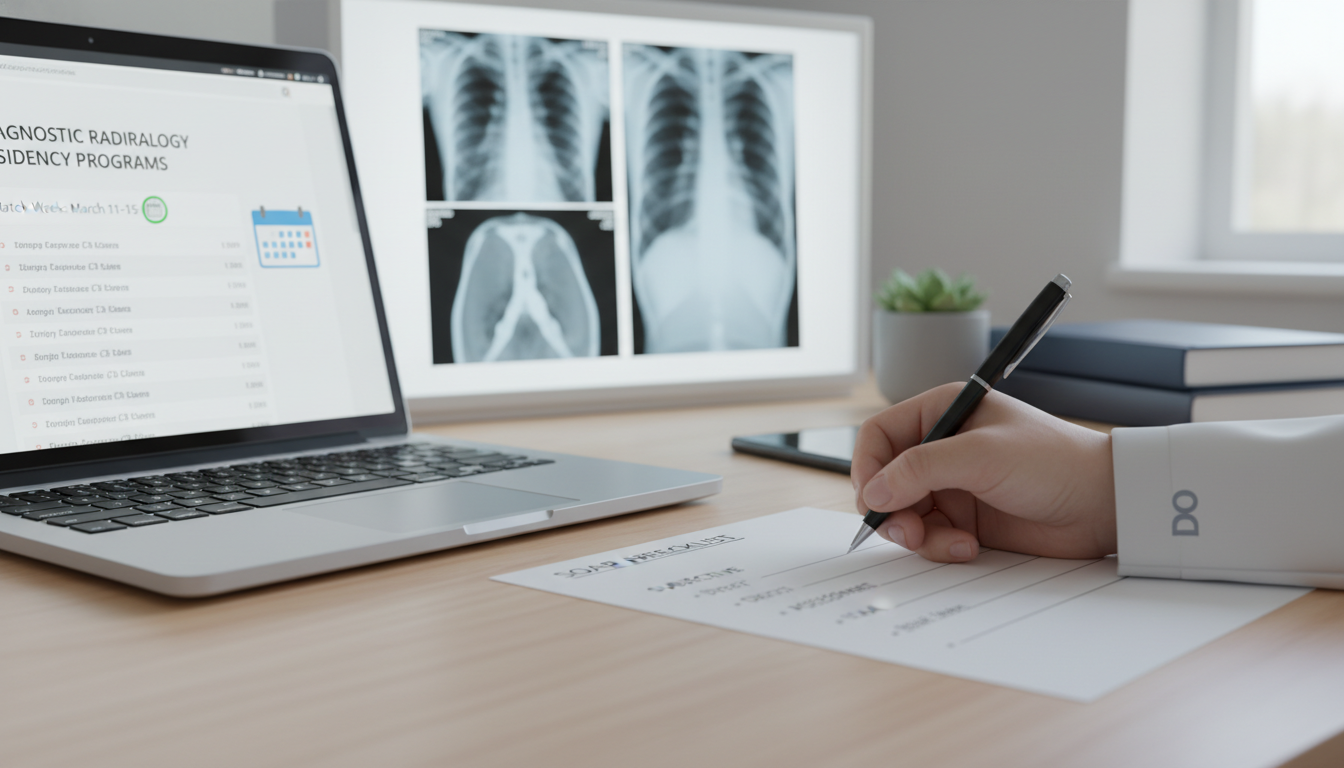
3. Pre–Match Week SOAP Preparation: Building Your Toolkit
Successful SOAP preparation is 80% what you do before Monday of Match Week. Treat this like a separate project with its own timeline.
3.1 Academic and Application Readiness
3.1.1 Ensure Exam and Documentation Are Complete
- Confirm that COMLEX and, if applicable, USMLE scores are all available in ERAS.
- Verify that your medical school transcript and MSPE (Dean’s Letter) are uploaded and accurate.
- Resolve any documentation gaps:
- Updated immunizations.
- Anticipated graduation letter if needed.
- Any addendum explaining unique circumstances (leave of absence, remediation).
SOAP moves quickly; missing pieces can cost you interviews.
3.1.2 Strengthen Your CV Now
Even late in the cycle, you can:
- Participate in short radiology-related projects:
- Case write-ups with attendings.
- Small QI projects in imaging workflow.
- Present at local or institutional conferences.
- Seek additional radiology exposure:
- Shadowing.
- Attending radiology noon conferences, tumor boards.
Update your CV in real time; have a polished, one-page CV ready to send on short notice.
3.2 Optimize Your ERAS Materials for SOAP
You won’t have time to write from scratch during SOAP. Prepare SOAP-ready versions of your core documents.
3.2.1 Personal Statements: Create Multiple Variants
Write 2–3 concise personal statement versions:
Radiology-Focused Statement
- For any Diagnostic Radiology or Preliminary position with explicit radiology connection.
- Emphasize:
- Your interest in image-based diagnosis and patient-centered care.
- Rotations in radiology, pattern recognition skills, attention to detail.
- Research or scholarly activity in imaging.
Internal Medicine/Prelim Year Statement
- Focus on strong clinical foundation as a base for future specialization.
- Highlight:
- Teamwork, ward efficiency, and clinical reasoning.
- Interest in complex diagnostic puzzles.
- Willingness to work hard in high-acuity settings.
Flexible Categorical Statement (Medicine or Family Medicine)
- Emphasize your dedication to patient care, broad clinical interests, and adaptability.
- Subtly acknowledge your interest in imaging without making it sound like you view the program solely as a stepping stone.
Each statement should be shorter and more direct than typical main-match essays (e.g., 500–700 words), since SOAP PDs read quickly.
3.2.2 Letters of Recommendation: Gather Strategically
You likely already have:
- 1–2 radiology letters.
- 1–2 internal medicine or surgery letters.
Before Match Week:
- Ask potential letter writers to:
- Update or re-upload letters if there are major changes in your performance.
- Emphasize your adaptability and work ethic, qualities prized in SOAP.
For SOAP:
- Use radiology letters for any DR or prelim spots where imaging interest is valued.
- Use medicine/surgery letters for categorical IM, FM, or TY programs.
Confirm letter assignment flexibility in ERAS so you can quickly tailor which letters each program sees.
3.3 Understanding SOAP Rules and Limits
Know the NRMP/ERAS rules so you can act fast:
- Application limits:
- Historically, applicants can apply to up to 45 programs total during SOAP.
- You cannot contact unfilled programs directly by phone/email before they signal openness to communication (rules vary by year—review current guidelines).
- Programs see only SOAP applications submitted through ERAS. They do not get your original program list unless you applied previously.
Print or save a one-page summary of official SOAP residency rules from NRMP so you can refer to it quickly.
3.4 Build Your Support Team
SOAP is stressful; you need people ready to help:
- Dean’s Office / Student Affairs:
- Usually receive the unfilled list first.
- Can advise on program reputations, historical DO-friendliness, and realistic targets.
- Advisors with Radiology Insight:
- DR faculty or residents who understand the diagnostic radiology match landscape.
- Can help you prioritize prelim vs categorical programs.
- Peers:
- Classmates who went unmatched previously or are preparing alongside you.
- Can share insights, mock interview practice, emotional support.
Clarify who will be available during Match Week and how to reach them quickly.

4. Executing During SOAP: Day-by-Day Strategy
Once Monday of Match Week arrives, you must transition from preparation to rapid execution.
4.1 Monday Morning: Confirm Status and Regroup
At 10 AM ET Monday, you learn your status:
- Unmatched: no position.
- Partially matched: e.g., matched in prelim but not DR.
Regardless, do the following:
- Take 15–30 minutes to process your emotions privately.
- Contact:
- Your Dean’s Office.
- Your primary advisor and, ideally, a radiologist mentor.
- Clarify your goal hierarchy:
- How aggressively will you target any unfilled radiology positions?
- How much focus on prelim vs categorical backup?
4.2 Monday Midday: Reviewing the Unfilled List
At noon, the unfilled positions list becomes available.
Steps:
- Filter by specialty:
- Look for Diagnostic Radiology (and integrated IR/DR if applicable).
- Note whether positions are advanced (PGY-2) or categorical.
- If DR positions exist:
- Prioritize them immediately.
- Consider program geography, but keep an open mind—this may be your only chance at a DR spot this cycle.
- Prelim/Transitional Opportunities:
- Identify programs with strong reputations and known DO-friendliness.
- Prefer those at institutions with radiology departments known to host residents/fellows, as they may provide:
- Elective time in radiology.
- Research opportunities.
- Mentorship relevant to your future DR re-application.
- Categorical Alternatives:
- Focus on Internal Medicine, Family Medicine, or others aligned with your interests and strengths.
Create a ranked target list of programs, grouping them:
- Group A: DR programs.
- Group B: Prelim/TY at academic centers with robust radiology.
- Group C: Categorical IM/FM at institutions with potential imaging synergies.
- Group D: Safety options (e.g., community programs you’d still be willing to attend).
4.3 Monday Afternoon: Submitting Applications
You will have a short window (usually a few hours) to submit up to 45 applications.
Action plan:
- Assign the right personal statement to each program based on specialty.
- Adjust your letters of recommendation:
- Radiology-focused for DR or prelim programs that value your imaging interest.
- Medicine/surgery letters for categorical or prelim IM/Surgery positions.
- Tailor ERAS program-specific questions (if any) quickly:
- Use brief, focused responses.
- Emphasize reliability, readiness to start July 1, and your alignment with their specialty.
Avoid perfectionism—getting well-tailored but not overpolished applications out to the right programs is better than obsessing over small edits.
4.4 Tuesday–Thursday: Interviews, Communication, and Offers
Programs review applications and conduct interviews throughout Tuesday and Wednesday, often very quickly.
4.4.1 SOAP Interviews: What to Expect
Interviews may be:
- Brief (10–20 minutes).
- Conducted via:
- Phone
- Zoom/Teams
- Occasionally a panel call
Common questions:
- “Why are you interested in our program, specifically?”
- “What happened in your initial match attempt?”
- “Why this specialty now?” (especially if applying to IM/FM rather than DR).
- “How will you handle the steep learning curve in July?”
- “What are your long-term career goals?”
For a DO graduate interested in radiology, frame responses as:
- Honest but positive.
- Emphasizing:
- Resilience and adaptability.
- Commitment to excellent patient care in whatever role you hold.
- Recognition that a strong clinical foundation is essential for a radiologist.
Example response to “Why weren’t you matched in Diagnostic Radiology?”:
“I aimed high and applied primarily to academic radiology programs with a strong research focus. In retrospect, my application list may have been narrow relative to my board scores. While I didn’t match this year, the process reinforced my interest in diagnostic reasoning and working with complex cases. I’m fully committed to training hard in your program, building a strong clinical foundation, and continuing to grow as a future physician—ideally with continued exposure to imaging when appropriate.”
4.4.2 SOAP Offer Rounds: How They Work
During each round:
- Programs submit rank lists of applicants.
- NRMP matches offers to applicants.
- You may receive 0, 1, or multiple offers in a round.
- You must:
- Accept or reject each offer within a very short window (often under 2 hours).
- Once you accept an offer, you are out of SOAP and bound to that program.
Preparation tips:
- Decide in advance how you will compare offers:
- DR vs prelim vs categorical.
- Geographic/family considerations.
- Program reputation and training environment.
- Keep your phone and email monitored constantly during rounds.
- Discuss potential “what-if” scenarios with your advisor before the rounds start.
5. Long-Term Strategy: Aligning SOAP Outcome with a Future in Diagnostic Radiology
SOAP may not deliver a direct diagnostic radiology match this year. However, you can use your SOAP outcome as a platform for re-entering the radiology pipeline.
5.1 If You SOAP into Diagnostic Radiology
If you are fortunate enough to secure a DR position via SOAP:
- Confirm all onboarding requirements immediately.
- Clarify whether:
- Your position is categorical (includes PGY-1).
- Your position is advanced (PGY-2) and what you need to do for PGY-1 (if not already secured).
- Communicate with program leadership:
- Express gratitude and enthusiasm.
- Ask about suggested reading or preparation before starting.
Leverage your DO background:
- Bring strengths in physical exam, holistic care, and osteopathic principles to multidisciplinary work.
- Continue engaging in radiology research and teaching early in residency.
5.2 If You SOAP into a Prelim or Transitional Year
This is a common path for future radiologists who didn’t match DR initially.
Your strategy:
- Treat the year as an “audition” and growth period:
- Excel on inpatient wards.
- Build strong relationships with faculty.
- Seek elective time in radiology or imaging-heavy services.
- Stay engaged with the radiology community:
- Attend DR noon conferences and tumor boards.
- Work on 1–2 manageable radiology projects.
- Prepare to re-apply:
- Update your ERAS application with:
- New LORs from intern-year attendings.
- Radiology experiences and publications.
- Ask your PD for explicit support of your re-application to Diagnostic Radiology.
- Update your ERAS application with:
5.3 If You SOAP into a Categorical Non-Radiology Program
You still have options:
- Some residents transfer into DR after PGY-1 or PGY-2 when openings arise.
- A strong IM or FM residency can still lead to imaging-rich subspecialties (e.g., cardiology, pulmonary), academic careers, or hybrid clinician-imager roles.
In this case:
- Commit fully to your program—don’t treat it just as a “backup.”
- Explore imaging-oriented niches within your field:
- Point-of-care ultrasound.
- Cardiac imaging.
- Chest imaging conferences.
- Continue networking with radiologists to remain aware of transfer opportunities.
5.4 If You Remain Unmatched After SOAP
This is difficult but not the end of your radiology aspirations.
Work on:
- A structured gap year plan:
- Research fellowship in radiology or clinical imaging.
- Preliminary year secured outside the Match, if available.
- Teaching or clinical roles that maintain your patient-care skills.
- Strengthening weaknesses:
- Consider taking USMLE if you only had COMLEX and programs in your target region heavily favor USMLE.
- Address any exam failures with remediation plans.
Re-apply the next cycle with:
- A more realistic and broader program list.
- Evidence of growth, productivity, and professionalism.
6. Practical Tips and Common Pitfalls for DO Graduates in SOAP
6.1 DO-Specific Advantages You Can Highlight
As a DO graduate, you bring unique strengths that can stand out in SOAP:
- Holistic, patient-centered training.
- Strong communication and bedside skills.
- Flexible clinical background—valuable in busy prelim or categorical roles.
In interviews and personal statements:
- Emphasize that your osteopathic training enhances your ability to collaborate with multidisciplinary teams and understand whole-patient care, an asset in imaging-heavy diagnostic work.
6.2 Avoiding Common SOAP Mistakes
Pitfalls to avoid:
- Waiting until Monday to plan: Your application materials and strategy must be ready weeks in advance.
- Applying too narrowly: Limiting yourself only to DR in SOAP often leads to remaining unmatched when no DR positions are available.
- Overemphasizing radiology in all applications: For IM or FM SOAP spots, you must show genuine interest in that specialty, not just radiology.
- Poor communication:
- Missing calls/emails during interview and offer rounds.
- Failing to follow instructions regarding program contact rules.
- Ignoring personal needs:
- Geography, family, financial constraints matter—but in SOAP, strict limits may drastically reduce your chances. Balance realism and flexibility.
6.3 Mental Health and Resilience
Unmatched status can be emotionally painful. Protect your well-being:
- Use counseling services at your institution if available.
- Stay connected with peers and mentors.
- Separate your self-worth from your match outcome—residency placement is not a measure of your value as a person or even your potential as a physician.
Long careers in medicine are built over decades; a SOAP week setback does not define you.
FAQs: SOAP Preparation for DO Graduates in Diagnostic Radiology
1. As a DO graduate, do I still have a chance at Diagnostic Radiology through SOAP?
Yes, but the chance is limited. Radiology residency spots rarely go unfilled, and if they do, they fill quickly. You should certainly apply to any DR positions that appear, but also build a strong backup plan with prelim or categorical programs that keep a radiology pathway open. Think of SOAP as both an opportunity and a bridge toward a future diagnostic radiology match if it doesn’t happen this cycle.
2. Should I mention my interest in radiology when applying to Internal Medicine or Family Medicine programs in SOAP?
You should be honest but strategic. For IM or FM programs, emphasize a real commitment to excelling in that specialty. You can note your interest in diagnostic reasoning and imaging as complementary interests, but avoid framing their program as just a stepping stone to radiology. Program directors want residents who will be engaged and reliable in their field.
3. How many programs should I apply to during SOAP, and how do I prioritize them?
You can typically apply to up to 45 programs. Use a structured approach:
- First, include any Diagnostic Radiology or radiology-related programs.
- Next, add Preliminary/TY programs at hospitals with strong radiology departments.
- Then add categorical IM/FM programs you’d genuinely consider. Rank by:
- Specialty alignment with your goals.
- Program quality and DO-friendliness.
- Your realistic competitiveness.
Consult your advisors to balance ambition with safety.
4. What is SOAP preparation I should absolutely not skip as a DO interested in radiology?
At minimum, you should:
- Prepare multiple personal statements (DR, IM/prelim, categorical).
- Confirm LORs are appropriate and flexibly assignable.
- Build a tiered target list of likely SOAP specialties (DR if available, then prelim/TY, then categorical).
- Practice short, focused interview answers, especially about why you went unmatched and what you learned.
These steps position you to respond quickly and clearly when SOAP begins, significantly improving your chances of securing a solid position aligned with your diagnostic radiology aspirations.