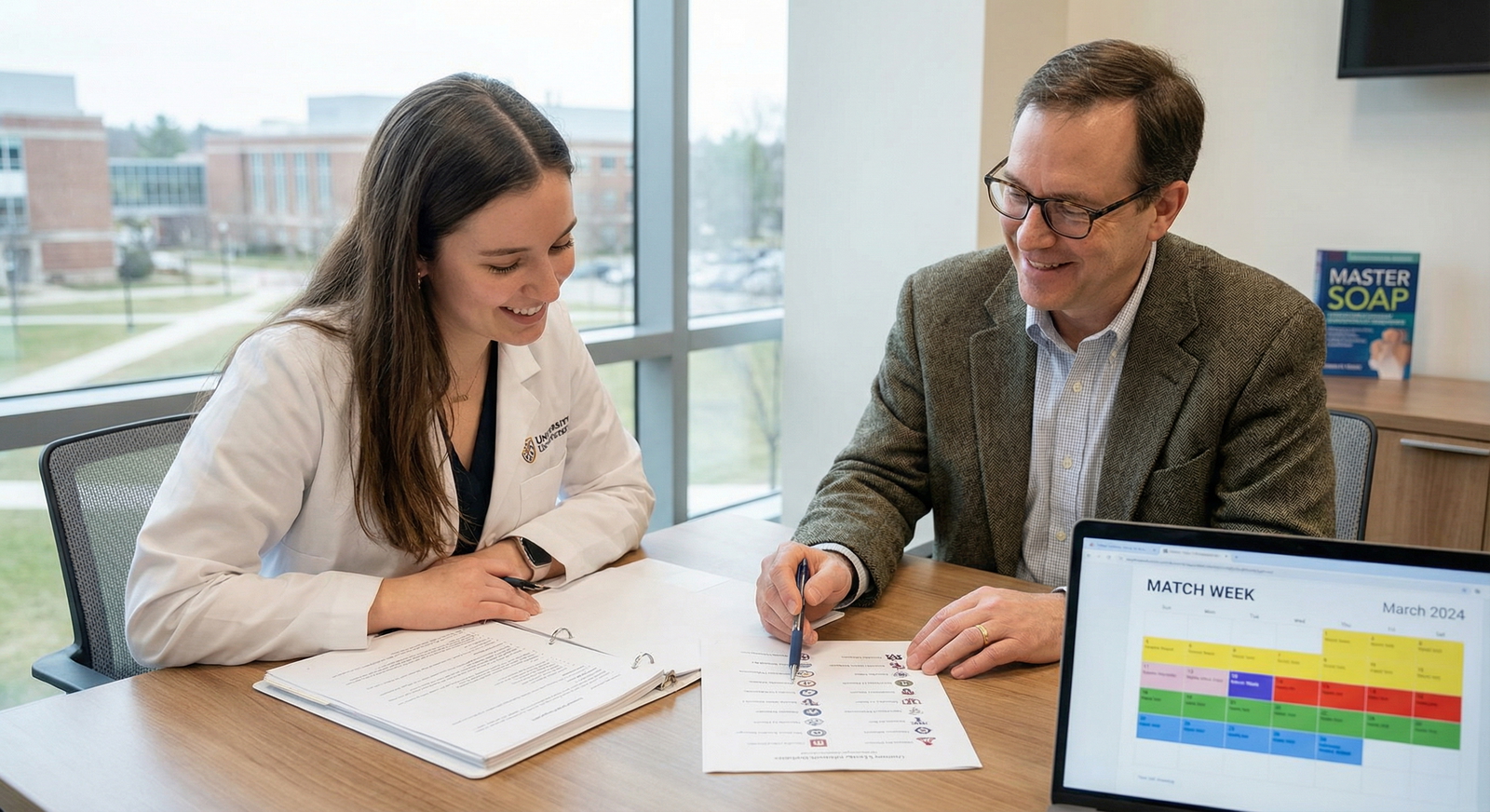
Understanding SOAP for the DO Graduate Focused on Global Health
The Supplemental Offer and Acceptance Program (SOAP) is the structured process that allows unmatched or partially matched applicants to obtain an unfilled residency position during Match Week. For a DO graduate interested in global health, SOAP can be both a safety net and a strategic opportunity.
You need to be absolutely clear on two things:
What is SOAP?
SOAP is a time-sensitive, NRMP-managed process where eligible applicants apply to unfilled programs via ERAS during Match Week, receive interviews (often virtual and brief), and potentially get residency offers in up to four rounds. It is not a free‑for‑all; it is tightly scheduled and rule‑bound.Why SOAP matters for DO graduates interested in international medicine and global health tracks:
- Some programs with a global health residency track or international medicine focus may still have unfilled positions and appear in the SOAP list.
- A strong SOAP performance can secure you a categorical or preliminary position that keeps your global health career path viable, even if it’s not the “perfect” program you initially envisioned.
- For DO graduates, SOAP may also be a second chance to demonstrate your value to programs that initially favored MDs or had concerns about board exams.
You should approach SOAP preparation with the same seriousness and structure that you used for your initial residency applications—often more. This is not just backup planning; it is active strategy.
Pre‑SOAP Preparation: Laying the Groundwork Before Match Week
Preparation for SOAP begins well before Match Week. Think of this as building a “SOAP readiness plan” that you hope you never need—but will be grateful for if you do.
1. Clarify Your Global Health Priorities and Flexibility
As a DO graduate focused on global health or international medicine, your priorities may include:
- Programs with a formal global health residency track or certificate
- Opportunities for international rotations, especially in low- and middle-income countries
- Strong public health, epidemiology, or policy exposure
- Mentors involved in NGOs, global health research, or disaster response
- Support for longitudinal global health projects, such as community health partnerships or refugee health initiatives
Before SOAP:
- Rank your core priorities: Decide what is non‑negotiable (e.g., categorical position vs. preliminary only) versus what is flexible (e.g., exact geographic region, size of the program).
- Identify “pathway programs”: Even if a program doesn’t explicitly offer a global health track, it might still support global health electives, refugee/immigrant health clinics, or have attending physicians involved in international work. These can be good “stepping-stone” residencies.
This flexibility will be crucial during SOAP. You may not find an exact global health residency track among unfilled positions, but you can still aim for programs that keep global and international medicine options open.
2. Know Your Eligibility and Status as a DO Graduate
To participate in SOAP, you must be:
- SOAP-eligible per NRMP rules, which generally includes:
- Registered for the Match
- Unmatched or partially matched (e.g., matched to a preliminary only)
- Having passed required licensing exams (COMLEX; consider USMLE if applicable) per program expectations
- Cleared by your school (if you’re graduating this year) or have documentation if you’re a prior-year graduate
As a DO graduate:
- Review programs’ COMLEX vs. USMLE preferences. Some SOAP programs may still require or favor USMLE scores. If you have taken USMLE, be ready to highlight this.
- Ensure your COMLEX score reports are correctly uploaded in ERAS and visible.
Have a clear, one-page SOAP-eligibility summary for your own reference, including:
- Graduation year and medical school
- COMLEX (and USMLE if applicable) scores
- Visa status (if relevant)
- Any state licensure or certifications (e.g., Basic Life Support, ACLS, ATLS)

3. Build and Organize Your SOAP Toolkit
Beginning 1–2 months before Match Week, assemble a SOAP toolkit:
a. Updated CV (SOAP-Ready)
- Include recent clinical experiences, especially those relevant to global health:
- International electives
- Work with vulnerable populations (refugees, migrants, homeless, rural communities)
- Public health projects, QI projects, or research in international medicine
- Emphasize leadership (student organizations, global health interest groups, free clinics)
b. Multiple Tailored Personal Statement Templates
Have at least 3–4 personal statement variants ready:
Core Global Health-Focused Statement
Emphasizes international medicine, health equity, cross-cultural care.Primary Care with Global Health Angle (e.g., Internal Medicine, Family Medicine, Pediatrics)
Connects primary care training to your global health goals.Hospital-Based or Acute Care Focus (e.g., EM or preliminary year)
Emphasizes emergency systems, disaster response, critical care in low-resource settings.Generalist “SOAP Flex” Statement
Less specific about global health but still shows your commitment to underserved populations and adaptability.
Make sure each is:
- ≤ 1 page
- Focused, with clear narratives about how your DO training aligns with global health
- Ready for quick edits to insert a program’s name or specific global health offerings if needed
c. Letters of Recommendation (LORs)
Try to have:
- At least 3–4 strong LORs, including:
- One from a core clinical faculty or program director in your chosen discipline
- One from a global health or public health mentor (if possible)
- One from a sub‑internship or acting intern experience in your desired specialty
- Request that letter writers address:
- Your clinical competence
- Work with underserved or international populations
- Professionalism and resilience, important during intensive SOAP timelines
Confirm that all LORs are uploaded to ERAS and properly assigned to specialties.
d. Updated ERAS Application Content
Well before SOAP, double-check:
- Experiences are complete and polished
- Global health activities are clearly labeled (e.g., “Global Health Elective – Uganda,” “Refugee Health Clinic Volunteer,” “International Telemedicine Research Project”)
- Descriptions highlight:
- Resource-limited settings
- Cultural competence
- Teamwork and adaptability
The Week Before: Final SOAP Preparation and Strategy
In the week leading up to Match Week, you should enter high-readiness mode. You’re not assuming you’ll SOAP—but you’re ready if you must.
1. Technical Readiness: ERAS, NRMP, and Communication
- Confirm your ERAS login, NRMP login, and email accounts are working.
- Set up:
- Professional voicemail greeting (no music, no jokes).
- Email signatures with your full name, “DO,” and contact information.
- Block out your Match Week schedule so you’re fully available during SOAP interview windows.
Prepare a concise SOAP contact sheet:
- Your phone number(s)
- Time zone
- Backup number (if appropriate)
- A trusted person (mentor, friend) who can help monitor emails or logistics
2. Information Gathering: Programs, Global Health Tracks, and DO-Friendliness
While you don’t know which programs will be unfilled, you can:
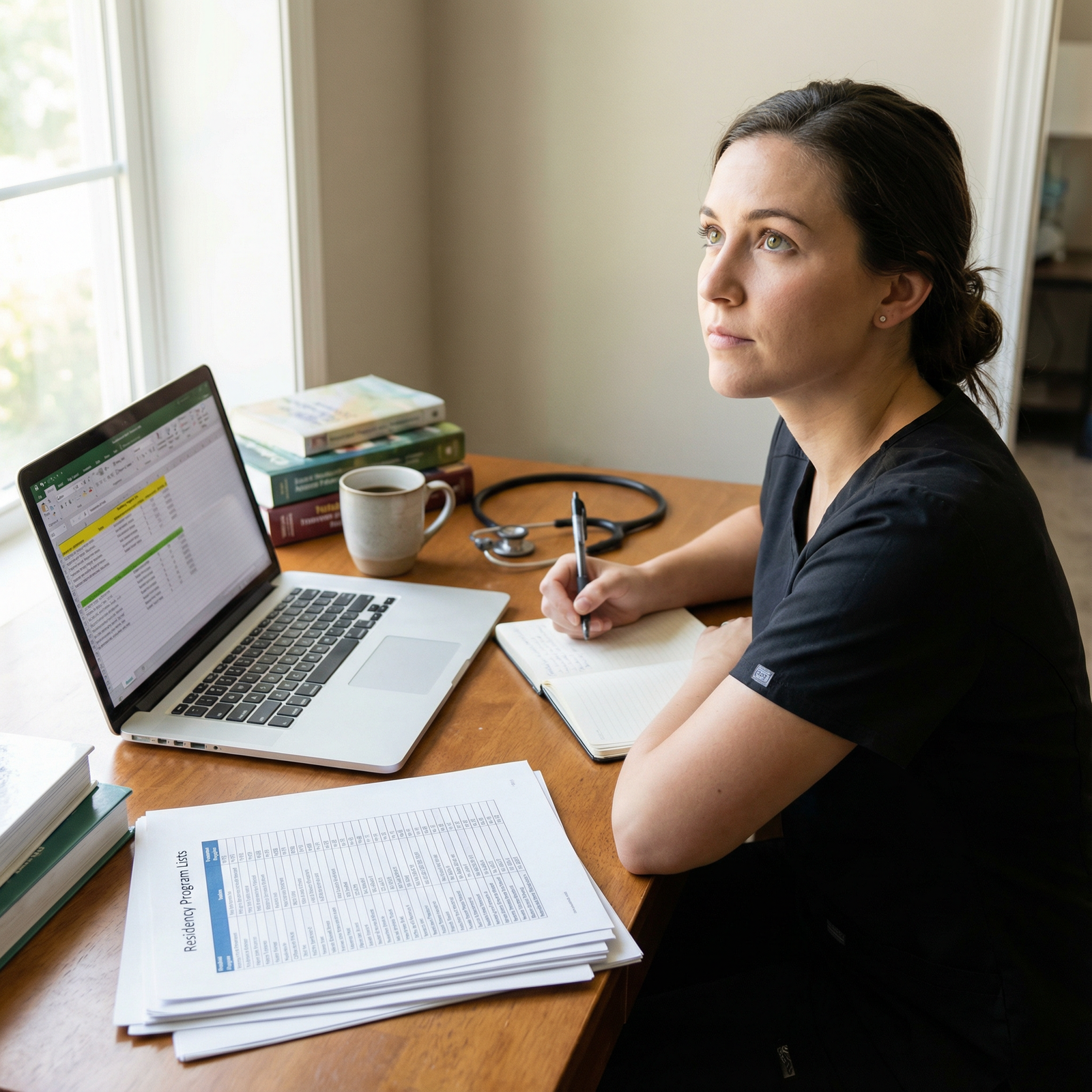
- Create a list of programs with global health residency tracks in your chosen specialties.
- Note programs known to be DO-friendly or historically supportive of DO graduates.
- Identify programs that:
- Serve diverse, international, or refugee populations
- Have affiliations with schools of public health
- Offer global health electives, even if not branded as a “track”
During SOAP, you may discover some of these programs on the List of Unfilled Programs. Being prepared allows quick, targeted applications.
3. Practice SOAP-Style Interviews
SOAP interviews are often:
- Short (10–20 minutes)
- Virtual (phone or video)
- Focused on rapid assessment and fit
Practice responses for likely questions, including:
- “Why did you go unmatched, and what have you learned?”
- “Why our program, given your interest in global health?”
- “How does global health align with your goals as a DO physician?”
- “If we don’t have a formal global health residency track, how will you still pursue your interests here?”
Keep your answers:
- Honest but constructive: Acknowledge gaps (exam scores, limited U.S. experience, timing issues) and emphasize growth.
- Solutions-focused: Show what you’ve done to improve clinical skills or exam readiness.

Match Week: Executing Your SOAP Strategy
Match Week is intense. You must balance urgency with clear judgment, especially as a DO graduate committed to a global health trajectory.
1. Monday: Unmatched Notification and Emotional Control
If you discover you are unmatched or partially matched:
- Take a brief pause (even 30–60 minutes) to process emotions.
- Avoid impulsive decisions or negative self-talk. Many outstanding physicians, including global health leaders, have unmatched stories in their past.
- Quickly connect with:
- Your dean’s office or student affairs
- A trusted faculty advisor (ideally someone who understands global health)
- Any residency advisor or career services your school provides
Ask for immediate feedback on your ERAS profile and your SOAP competitiveness across specialties.
2. Monday: Reviewing the List of Unfilled Programs
When NRMP releases the List of Unfilled Programs to SOAP-eligible applicants:
- Filter by:
- Specialty (e.g., Internal Medicine, Family Medicine, Pediatrics, EM prelim, Surgery prelim if relevant)
- Location preferences (but stay flexible)
- Program type (community vs. academic; presence of public health or global health collaborations)
For each potential program, quickly assess:
- Is it DO-friendly?
- Does it serve international or underserved populations?
- Are there opportunities for international electives or global health experiences?
- What is the track record on resident well-being and education?
Remember, in SOAP you can submit applications to up to 45 programs. This number is generous but finite, so prioritize wisely.
3. Application Strategy: Balancing Global Health Goals and Match Probability
The central tension for many DO graduates passionate about global health is:
Should I be highly selective about global health‑oriented programs or cast a very wide net?
Practical approach:
- Tier 1 (High Alignment): Programs with clear global health or international medicine content:
- Formal global health residency track
- Partnerships with overseas institutions
- Strong refugee/immigrant health clinics
- Tier 2 (Moderate Alignment): Programs without formal tracks but with:
- Large underserved populations
- Opportunities to create your own global health electives
- Supportive leadership interested in residents’ international projects
- Tier 3 (Safety / Position-Preserving): Programs where:
- Global health opportunities are limited
- But the program provides solid core training and board prep
- You could later pursue global health through fellowships, MPH degrees, or post-residency work
You might distribute your 45 applications approximately:
- ~10–15 Tier 1
- ~15–20 Tier 2
- ~10–15 Tier 3
Adjust this based on your competitiveness (scores, LORs, clinical performance).
4. Tailoring Your SOAP Materials Quickly
For programs you prioritize:
- Slightly edit your personal statement:
- Mention the program’s patient population (e.g., large immigrant community, partnership with local public health department).
- Relate your DO philosophy (holistic, patient-centered care) to global and local health equity.
- In ERAS messages (if allowed) or brief emails (only if program websites explicitly allow contact during SOAP), be concise and respectful of rules:
- Express specific interest (e.g., “I’m particularly drawn to your international rotations in Central America and your refugee health clinic.”)
- Never offer to circumvent NRMP rules.
- Avoid mass-generic messages; they are often ignored.
5. SOAP Interviews: Performing Under Pressure
During SOAP, interview offers and schedules can appear suddenly. Be ready to:
- Answer your phone professionally at all times during business hours.
- Join video calls on short notice with:
- Proper attire
- Stable internet connection
- Neutral background (having a world map or global health book visible is fine, but not distracting)
Address three recurring themes clearly:
a. Why You as a DO Graduate?
- Emphasize:
- Training in osteopathic principles, holistic care, and musculoskeletal medicine.
- Clinical adaptability in varied settings (rural rotations, community sites).
- How these skills apply to global health and international medicine (e.g., hands-on physical exam skills where imaging is limited).
b. Why This Program, Even If Global Health Opportunities Are Limited?
- Show that you understand that strong core residency training is the foundation for impactful global health work.
- Explain how you can:
- Engage in underserved or cross-cultural clinics locally.
- Develop QI or research projects relevant to global health topics (e.g., TB screening, vaccination programs, maternal health).
c. Why You Went Unmatched and What Has Changed
Provide a brief, structured explanation:
- Identify key factors (e.g., lower Step/COMLEX score, late specialty decision, limited home program connections).
- Demonstrate reflection and proactive steps:
- Extra clinical electives
- Study strategies
- Improved communication with mentors
- Emphasize readiness to start residency now.
After SOAP: Next Steps for Your Global Health Pathway
Whether you match through SOAP or not, your global health career is not defined by one week. But how you respond can shape your momentum.
1. If You Match Through SOAP
Congratulations—now think about maximizing global health within your new program:
- Identify faculty with:
- Refugee, immigrant, or travel medicine expertise
- Public health interests
- International research collaborations
- Early in PGY‑1:
- Express interest in global health residency track opportunities or electives, if available.
- Join or start a global health or international medicine interest group at your institution.
- Seek projects that build your CV:
- Quality improvement projects related to vaccination, maternal-child health, or non-communicable diseases.
- Research in global burden-of-disease topics.
- Community outreach with migrant or international communities locally.
Even if your program has no formal global health residency track, you can often create a de facto global health curriculum through electives, mentorship, and scholarly activity.
2. If You Do Not Match Through SOAP
Not matching in SOAP is understandably difficult, but it does not end your journey.
Constructive steps:
Debrief with advisors:
- Ask for honest feedback about your competitiveness and application strategy.
- Analyze: specialty choice, exam scores, LOR strength, timing.
Consider a structured “bridge year”:
- Research opportunities in global health (non‑residency roles):
- Global or domestic public health fellowships
- Research assistant roles in international medicine projects
- Clinical work as a preliminary or transitional year if available outside of the Match (rare but possible in some settings)
- Enroll in formal training:
- Online global health certificates
- MPH or other graduate degrees, if financially and logistically appropriate
- Research opportunities in global health (non‑residency roles):
Rebuild and strengthen your next application:
- Improve exam scores if needed (COMLEX Level 2/3, USMLE if applicable).
- Obtain stronger clinical experiences and LORs, especially in your chosen specialty.
- Continue demonstrating commitment to global health through:
- Community outreach
- Telehealth initiatives in low-resource settings (where allowed)
- Publications or presentations on global health topics
Your long-term global health goals (e.g., working with WHO, MSF, or international NGOs) rely more on your sustained commitment and skill-building than on matching perfectly the first time.
Frequently Asked Questions (FAQ)
1. What is SOAP and how is it different from “scrambling”?
SOAP—the Supplemental Offer and Acceptance Program—is the formal, rules-based process managed by NRMP that replaced the old “scramble.”
Key differences:
- Applications are submitted through ERAS, not random faxes or calls.
- Programs must follow strict communication and offer rules.
- Offers are made in four structured rounds, with specific timelines.
- Applicants can apply to up to 45 programs during SOAP.
This structure makes the system more transparent and equitable, but also demands careful SOAP preparation.
2. As a DO graduate interested in global health, should I focus only on programs with a global health residency track during SOAP?
No. While you should certainly prioritize programs with a global health residency track or international medicine opportunities, limiting yourself exclusively to these programs in SOAP can be risky—especially if your application has borderline elements (exam scores, failed attempts, limited U.S. experience).
A better strategy:
- Prioritize global health‑oriented programs (Tier 1).
- Include programs serving diverse, underserved populations where you can build global health skills locally (Tier 2).
- Add a subset of more general programs where you can still build a strong core clinical foundation, then pursue global health through fellowships, MPH, or short-term international work later (Tier 3).
3. How can I highlight my global health experience effectively in my SOAP application?
To strengthen your profile for programs interested in international medicine:
- Clearly label global health experiences in ERAS (e.g., “Global Health Elective – Peru,” “Refugee Health Clinic Volunteer”).
- In your personal statement, connect:
- Specific experiences (e.g., working in rural clinics, interpreting for non-English-speaking patients)
- To skills valued in residency (adaptability, teamwork, resourcefulness, cultural humility).
- Have at least one LOR that speaks to your international or underserved work.
- During interviews, emphasize how your global health exposure has:
- Deepened your understanding of health systems
- Enhanced your communication skills
- Reinforced your commitment to long-term training and excellence as a DO physician
4. Does participating in SOAP hurt my chances of future fellowships or global health careers?
Participating in SOAP does not inherently harm your long-term career prospects. Many successful physicians, including leaders in global health and international medicine, obtained their first residency positions through SOAP or non-traditional paths.
However:
- You should strive to secure a residency that offers strong clinical training, because residency performance and letters are critical for fellowship competitiveness.
- Once matched, build a consistent narrative:
- Ongoing global health involvement
- Academic or research output
- Leadership in global or underserved care initiatives
Your SOAP outcome becomes just one chapter in a broader career story. How you respond, grow, and continue to pursue your global health goals matters much more in the long run.
Thoughtful SOAP preparation allows you, as a DO graduate passionate about global health, to protect your long-term goals even under the pressure of Match Week. By understanding what SOAP is, strategically selecting programs, preparing your materials ahead of time, and remaining flexible without abandoning your core values, you can turn a stressful situation into a meaningful opportunity for your future in international medicine.