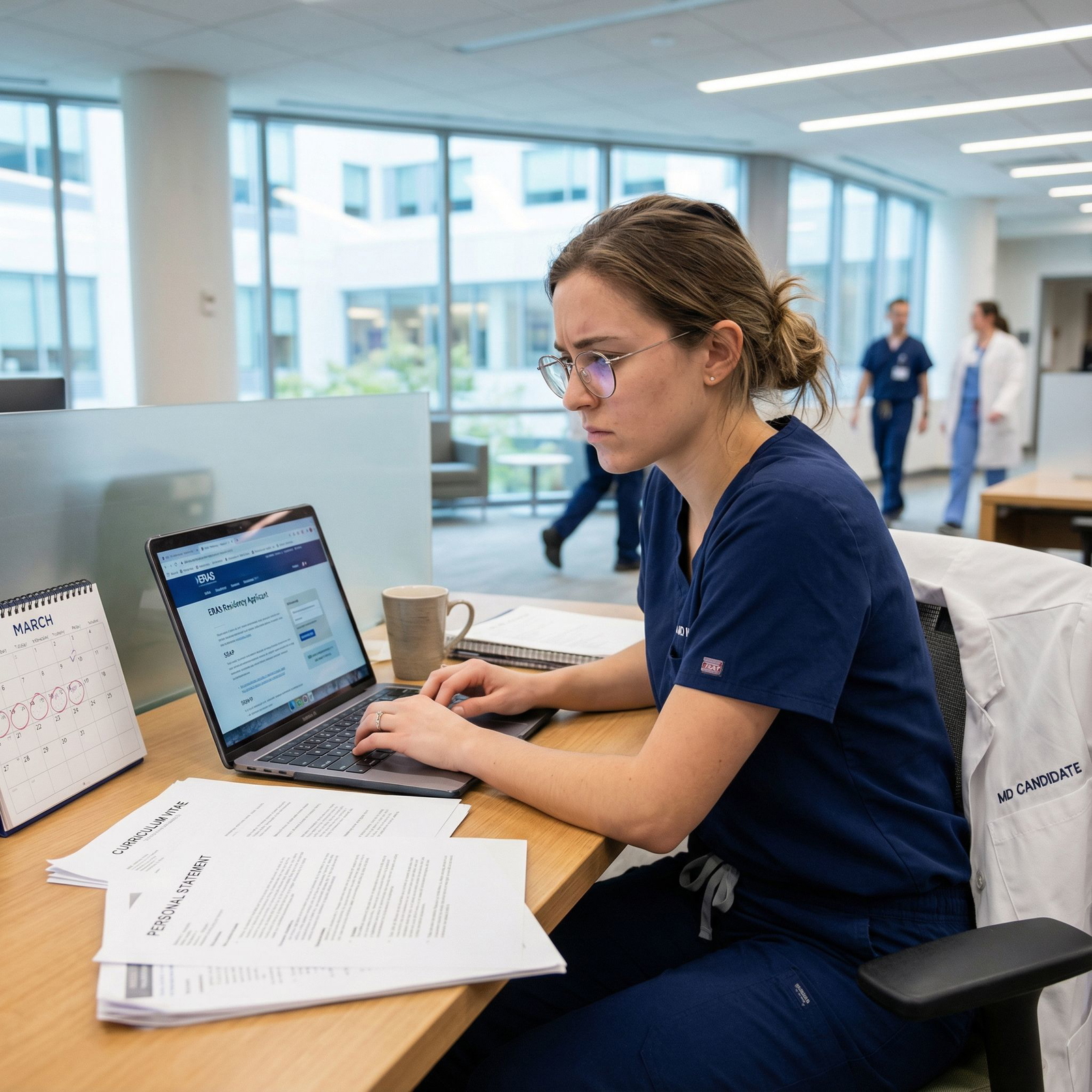
Preparing for the Supplemental Offer and Acceptance Program (SOAP) as a DO graduate targeting orthopedic surgery is both high-stakes and highly strategic. Even if your dream is an orthopedic surgery residency, you must be ready for every possible outcome—including using SOAP intelligently if you don’t initially match. This guide focuses on SOAP preparation specifically for DO graduates in orthopedic surgery, with practical, step-by-step advice tailored to your situation.
Understanding SOAP: What It Is and Why It Matters for DO Orthopedic Applicants
SOAP (Supplemental Offer and Acceptance Program) is the NRMP’s formal, time-limited process that allows eligible unmatched or partially matched applicants to apply to unfilled residency positions during Match Week. For DO graduates who aimed for orthopedic surgery—one of the most competitive specialties—understanding what is SOAP and how to prepare is essential risk management.
Key SOAP Concepts You Must Know
Who is SOAP-eligible?
You are SOAP-eligible if:- You are registered for the Main Residency Match.
- You are unmatched or partially matched at the beginning of Match Week.
- You have passed USMLE/COMLEX exams required by programs you’ll apply to.
- You’re not withdrawing from the Match before the Rank Order List Certification Deadline.
What SOAP is NOT
- Not a “second match” for any specialty you want.
- Not a guarantee of securing a position.
- Not a time to experiment with unrealistic choices—this is about strategy and fit.
Why SOAP is especially relevant for DO orthopedic applicants
- Orthopedic surgery residency is extremely competitive; many strong candidates (MD and DO) go unmatched each year.
- As a DO graduate, even with excellent board scores and clinical performance, you face:
- Limited number of ortho positions.
- Higher emphasis on research and letters for ortho compared to many other fields.
- Being SOAP-ready protects you from panic and poor decision-making if you miss your ortho match.
Bottom line: If you are applying ortho, you should assume you might need SOAP and prepare accordingly—before Match Week.
Pre-Match SOAP Preparation Strategy for DO Orthopedic Applicants
SOAP is won or lost before Match Week begins. Your goal is to enter Match Week with a clear plan, polished documents, and realistic expectations.
1. Clarify Your Priority: Ortho vs. Any Residency vs. Reapply
You must decide in advance what your primary goal is if you don’t match orthopedic surgery:
Priority A: Any residency now (high priority to match this year)
You value starting GME immediately and may be open to:- A non-ortho surgical field (e.g., general surgery, prelim surgery).
- A categorical non-surgical field (e.g., internal medicine, PM&R, family medicine).
- Transitional or preliminary year with plan to reapply.
Priority B: Preserve orthopedic surgery trajectory (willing to risk a non-match year)
You strongly prefer:- SOAPing into a strong stepping-stone specialty (e.g., general surgery, PM&R, transitional year).
- Or not SOAPing at all and instead strengthening your ortho application for next cycle (research year, additional rotations, etc.).
Priority C: Hybrid
You are open to SOAP positions only if:- They align with a realistic path back toward ortho (e.g., PM&R, prelim surgery at a strong academic center).
- Location and program quality are acceptable.
You must discuss this honestly with:
- A trusted faculty advisor or PD who knows ortho.
- Your home ortho faculty, if you have a relationship.
- Your dean’s office or career advising office.
This decision shapes your SOAP program list strategy and mindset.
2. Build a SOAP-Ready Program Strategy Early
Even though the exact SOAP participating programs list appears only during Match Week, you can:
- Identify specialties and program types that:
- Accept DO graduates regularly.
- Have historically had unfilled positions.
- Align with your clinical strengths or ortho-adjacent interests.
Examples of SOAP-friendly (for DO ortho applicants) pathways might include:
Prelim or categorical General Surgery
- Surgical exposure, strong recommendation potential, and opportunity to reapply to ortho.
Physical Medicine & Rehabilitation (PM&R)
- Strong overlap with musculoskeletal medicine, pain, sports, and rehab.
- Particularly attractive for DOs with solid OMM/OMT background.
Internal Medicine, Family Medicine, or Transitional Year
- Keep you in the GME pipeline.
- Allow time to build research, connections, and possibly transition to another field or reapply.
Osteopathic-friendly programs in any specialty
- Prioritize programs with a history of taking DOs.
- Look for alumni or mentors with experience at those institutions.
Create a tiered “if-unmatched” plan in writing:
- Tier 1: Ortho-adjacent specialties you’d be happy to train in.
- Tier 2: Acceptable alternatives if Tier 1 is unavailable.
- Tier 3: Options you would consider only if absolutely necessary to avoid being unmatched.
3. Optimize Your Application Materials for SOAP
Your ERAS application is largely fixed by SOAP, but you can update certain components (especially personal statements and program signaling details in some years). You should prepare SOAP versions of core documents in advance.
Personal Statements: Prepare Multiple Targeted Versions
As an ortho applicant, you probably already have a primary orthopedic surgery residency personal statement. For SOAP, pre-write:
- PM&R-focused personal statement (highly ortho-adjacent).
- General Surgery / Prelim Surgery statement (emphasizing surgical interest, work ethic, and team skills).
- Broad medicine/family/transitional year statement, if you might consider those.
Each should:
- Still mention your interest and previous pursuit of orthopedic surgery briefly, but:
- Explain why this new field genuinely fits your skills, values, and long-term goals.
- Emphasize transferable strengths from your ortho preparation:
- Musculoskeletal knowledge.
- OR comfort and procedural interest.
- Teamwork and resilience on demanding rotations.
- Commitment to patient function and quality of life.
Do not reuse your pure ortho statement without edits. Programs want to feel chosen, not like a fallback.
Letters of Recommendation (LoRs)
You cannot get new letters during SOAP, but you can:
- Ensure you have at least:
- 1–2 orthopedic letters (likely your strongest).
- 1 non-ortho letter (IM, surgery, sub-I) that speaks to your general clinical performance.
For SOAP into other fields:
- Use the most broadly positive and specific letters, not necessarily only ortho letters.
- Consider different letter combinations for different specialty applications if ERAS allows you to assign letters selectively.
4. Psychological and Logistical Preparation
SOAP is fast-paced and emotionally intense. Prepare yourself and your environment.
Time off during Match Week
Ask your rotation supervisors now for flexibility or time off during Match Week in case you need SOAP:- You’ll need uninterrupted time for applications and interviews.
- You may need private space and reliable internet.
Secure a quiet, tech-ready environment
- Stable internet.
- Working webcam and microphone.
- Professional, neutral background.
- Headphones to reduce noise.
Support system
- Identify 1–2 people (mentor, friend, family) to support you emotionally during Match Week.
- Discuss your SOAP plan with them in advance so you’re not explaining from scratch under stress.

Match Week: Step-by-Step SOAP Execution for the Unmatched DO Ortho Applicant
If you discover on Monday of Match Week that you are unmatched or partially matched, you need to pivot immediately into your SOAP residency plan.
Step 1: Process the News—but Set a Time Limit
- Allow yourself a short window (30–60 minutes) to react emotionally.
- Remind yourself:
- Ortho is among the most competitive specialties; many strong applicants don’t match.
- Your goal now is to optimize options, not to judge yourself.
- After that, move decisively into action mode.
Step 2: Confirm SOAP Eligibility and Review Unfilled List
NRMP and ERAS will:
- Indicate if you are SOAP-eligible in your portal.
- Release the List of Unfilled Programs at the designated time.
Actions to take:
Review the unfilled program list quickly but systematically.
- Filter by:
- Specialty.
- State/region preference if you have strong constraints (family, visa, etc.).
- Program type (categorical vs prelim vs transitional).
- DO-friendly programs (previous or known history—your advisors can help here).
- Filter by:
Apply your pre-defined tier strategy.
- Identify your realistic and desirable options first.
- Cross out clearly unacceptable programs (e.g., locations you truly cannot go, fields you know you would be unhappy in long term).
Step 3: Decide Whether to SOAP at All
This is a critical decision for DO ortho applicants.
Ask yourself with your advisor:
- “If I SOAP into [X specialty] at [Y type of program], am I prepared to commit to that career path if reapplying to ortho doesn’t work?”
- “Would a research year or dedicated reapplication strategy give me a better shot at my long-term goals than accepting a non-ortho SOAP position now?”
Scenarios:
You strongly want ortho above all else and have the ability to take a year off
You may decide:- Only to SOAP into positions that clearly help your long-term ortho path (e.g., a high-quality prelim surgery or PM&R program).
- Or not to SOAP at all and plan a structured reapplication.
You prioritize training this year and financial stability
- You likely SOAP more broadly, including into categorical non-ortho fields where you’d be content long-term.
Document this in writing. Under stress, it’s easy to make choices that conflict with your real goals.
Step 4: Apply Strategically Within SOAP Limits
SOAP has application limits (e.g., up to 45 applications across all rounds; check current NRMP/ERAS rules). You must use these wisely.
Application strategy for a DO ortho graduate might look like:
- 10–15 programs in a top alternative specialty (e.g., PM&R or categorical general surgery).
- 10–15 prelim surgery or transitional year programs (ortho-adjacent).
- Remaining slots in:
- DO-friendly internal medicine or family medicine programs.
- Geographically preferred programs in broader fields.
Key principles:
Prioritize quality over sheer number.
Spend time customizing personal statement and program fit reasoning where possible.Check program requirements carefully:
- COMLEX vs USMLE expectations.
- Visa sponsorship if relevant.
- Graduation year limits.
Step 5: Prepare for Rapid-Fire SOAP Interviews
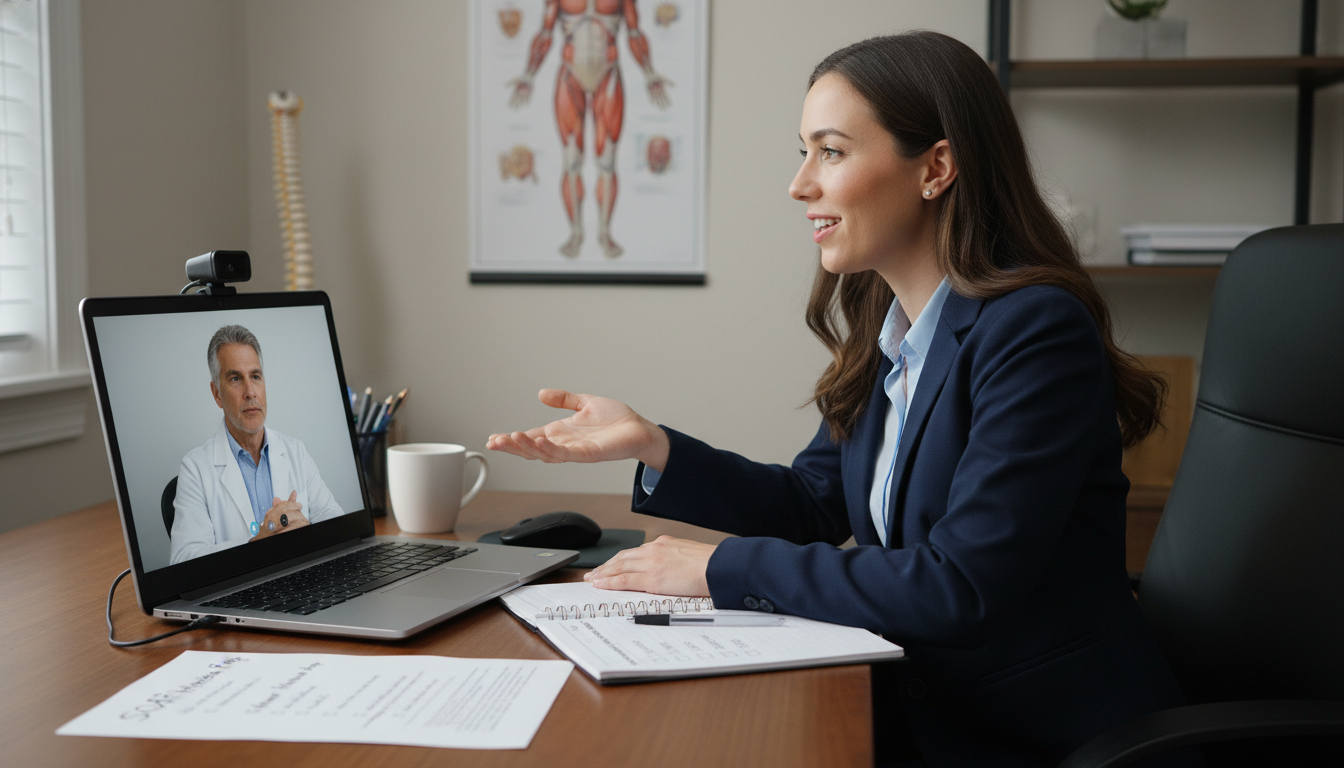
SOAP interviews are often brief, virtual, and scheduled with little notice. Programs may contact you by phone or email.
Be ready to:
Answer calls professionally all week:
- Voicemail greeting should be clear and professional.
- Always answer with: “Hello, this is Dr. [Last Name].”
Have a SOAP interview script outline for common questions:
- “Tell me about yourself.”
- 60–90 seconds, tailored to the specialty you’re interviewing for.
- “You applied to orthopedic surgery. Why are you now interested in [X specialty]?”
- Honest but positive framing:
- Emphasize genuine interest in aspects overlapping with ortho (musculoskeletal care, procedures, continuity of care, rehabilitation, etc.).
- Highlight that your pursuit of ortho exposed you to [X], and you found [Y specialty] a strong fit for your skills and values.
- Honest but positive framing:
- “If you match with us, do you see yourself staying in this specialty?”
- Programs understandably want commitment:
- You can acknowledge your prior ortho interest while clearly expressing commitment to succeed in their field if given the opportunity.
- Programs understandably want commitment:
- “What did you learn from not matching into ortho?”
- Avoid bitterness; show growth, insight, and resilience.
- “Tell me about yourself.”
Have 2–3 specific questions ready for each program, such as:
- “How does your program support residents with interests in musculoskeletal medicine / sports medicine / procedures?”
- “What kind of mentorship structure do residents have, particularly for career planning?”
Specialty-Specific Considerations: Preserving Your Orthopedic Surgery Trajectory
Many DO graduates entering SOAP still hope for an eventual ortho match or an “ortho-adjacent” career (sports medicine, spine, PM&R, etc.). Use SOAP with that long-term lens.
Choosing SOAP Options that Align with Ortho Goals
Preliminary General Surgery (Prelim Surgery)
- Pros:
- OR experience, surgical skills.
- Letters from surgeons can help with future ortho applications.
- You remain close to surgical culture and teams.
- Cons:
- Not guaranteed to convert to a categorical spot.
- Workload can be heavy, leaving limited time for research.
- Pros:
PM&R Residencies
- Pros:
- Direct overlap with spine, sports, pain, and musculoskeletal medicine.
- Ultimately leads to a fulfilling career even if you don’t re-enter ortho.
- Shorter training length than many surgical fields.
- Cons:
- If your heart is set on being an operative surgeon, this is a different pathway.
- Re-entering ortho from PM&R is rare; consider PM&R as a likely final specialty if you choose it.
- Pros:
Transitional Year Programs
- Pros:
- Broad exposure; can strategically choose electives in ortho, sports, radiology, or research.
- Time to make a stronger reapplication in ortho or decide on another field.
- Cons:
- You’ll still need to match into a categorical position subsequently.
- Pros:
Internal Medicine or Family Medicine
- Pros:
- Stable, broad-based careers.
- Opportunities for sports medicine fellowships.
- Cons:
- Less direct connection to operative orthopedics.
- Re-entry into ortho highly unlikely; think of this as a new path, not a detour.
- Pros:
How to Talk About Orthopedics During SOAP Interviews
You must handle your prior orthopedic interest carefully:
- Be honest:
- “My initial interest was in orthopedic surgery due to [reasons], and I pursued it fully.”
- Emphasize insight:
- “Through this journey, I recognized that what matters most to me is [patient continuity/procedures/mobility/pain management], and I see those values strongly reflected in [new specialty].”
- Avoid suggesting:
- That this new specialty is purely a backup.
- That you’ll leave at the first opportunity.
Focus on what you can contribute, not what you didn’t get.
Post-SOAP: If You Match vs. If You Don’t
Your SOAP preparation includes not only how to act during SOAP, but also how to plan after it—whatever the outcome.
If You Secure a Position Through SOAP
Commit fully to your new program.
- Be professional, reliable, and engaged from day one.
- Build strong relationships with faculty and peers.
If you still hope for orthopedic surgery down the line:
- Have a private, honest conversation with a trusted mentor or PD once you’ve proven yourself as a hardworking resident.
- Recognize that:
- Switching into ortho from another field is rare and challenging.
- It requires exceptional performance, strong advocacy, and available positions.
- In parallel, explore fulfilling sub-specialty paths within your new field (e.g., sports medicine in FM/IM, interventional spine in PM&R, trauma or vascular in surgery).
If You Remain Unmatched After SOAP
You are not alone, and you still have options—especially as a motivated DO graduate with strong orthopedic interest.
Consider:
Dedicated Research Year(s) in Orthopedics
- Join an ortho research team at an academic center.
- Goals:
- 1–2 strong ortho letters from research mentors.
- Multiple abstracts/posters/papers.
- Visibility among ortho faculty.
Additional Clinical Exposure
- Postgraduate fellowships (non-ACGME), advanced clinical positions, or extended rotations.
- Strengthen your narrative and technical skills.
Re-Evaluating Specialty Goals
- With mentors, reflect on:
- Your competitiveness for ortho on a second attempt.
- Whether another field may better fit your values, lifestyle, or skills.
- If you pivot, you’ll now be a more mature, thoughtful applicant with deeper experience.
- With mentors, reflect on:
Improve Objective Metrics Where Possible
- If you have pending exam attempts (e.g., Step 3/Level 3), perform well.
- Address any previous academic issues with clear remediation and documentation.
Frequently Asked Questions (FAQ)
1. As a DO graduate, do I have a realistic chance of using SOAP to get into orthopedic surgery directly?
Directly SOAPing into an orthopedic surgery residency is very unlikely. Ortho programs rarely go unfilled, and if they do, they are typically filled quickly by highly competitive applicants. In SOAP, you are more likely to find:
- Prelim surgery spots.
- PM&R, transitional year, or other specialties.
Use SOAP primarily to secure a solid alternative or stepping-stone path rather than expecting a direct ortho match through SOAP.
2. Should I SOAP into a specialty I don’t really want just to avoid being unmatched?
Not automatically. You must balance:
- Financial and emotional cost of being unmatched for a year.
- The difficulty of changing specialties once you begin a categorical residency.
- Your long-term happiness and career satisfaction.
If the offered field is one you could see yourself enjoying long-term, accepting it is reasonable. If you truly cannot envision yourself in that specialty, it may be wiser to pursue a structured plan (research year, reapplication) rather than locking yourself into a career misaligned with your values.
3. How can I explain not matching into ortho during SOAP interviews without sounding negative?
Use a growth-focused, reflective approach:
- Acknowledge the competitiveness of orthopedic surgery.
- Own your part: “In retrospect, I could have strengthened [research, early specialty exploration, etc.].”
- Emphasize what you learned:
- Greater self-awareness.
- Improved resilience.
- Renewed appreciation for [new specialty’s] focus.
- Keep your tone calm, respectful, and forward-looking. Avoid blaming the system, your school, or specific programs.
4. What can I do now, as a current applicant, to be best prepared for SOAP even if I’m optimistic about matching ortho?
- Clarify your SOAP priorities in writing (what you would and would not accept).
- Pre-write multiple personal statements tailored to PM&R, surgery, and broad fields.
- Confirm your letters are uploaded and flexible for multiple specialties.
- Talk with advisors about realistic SOAP specialties and DO-friendly programs.
- Arrange flexibility during Match Week in your schedule.
- Build a short list of potential “backup career” specialties where you could genuinely thrive.
By preparing now, you protect yourself from rushed, emotionally driven decisions later—and you maintain control of your trajectory, no matter what happens with your initial orthopedic surgery match.
For a DO graduate targeting orthopedic surgery, SOAP preparation is not pessimism; it is professional risk management. With thoughtful planning, clear priorities, and targeted strategies, you can use the SOAP residency process to either secure a fulfilling alternative or build a stronger path back toward the musculoskeletal career you envision.