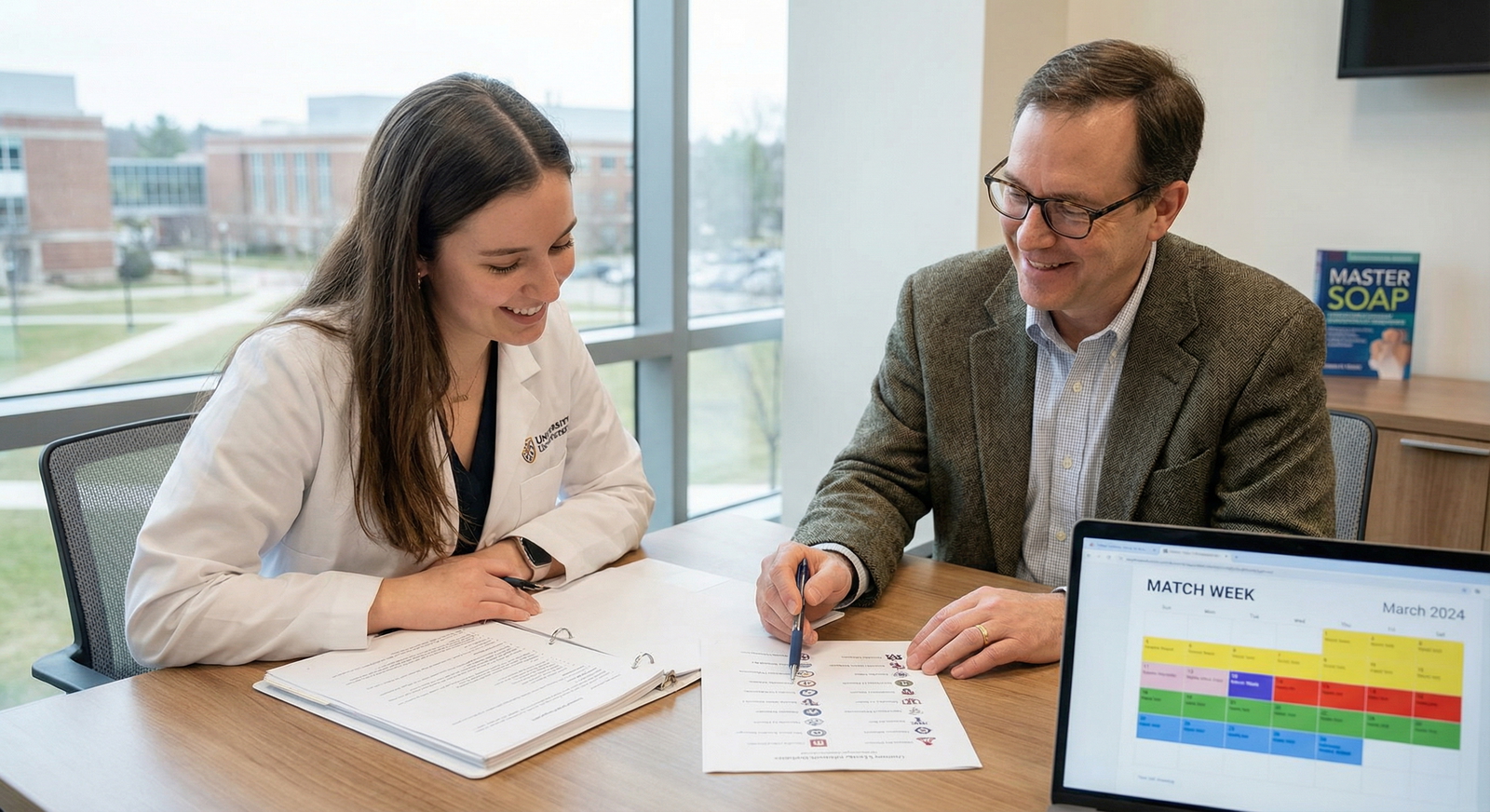
The Supplemental Offer and Acceptance Program (SOAP) can feel intimidating—especially as a DO graduate aiming for a highly competitive field like vascular surgery. But with the right structure, timing, and mindset, SOAP can be a powerful second chance to secure strong training, even if it’s not in your original integrated vascular program target.
This guide walks you, as a DO graduate, step‑by‑step through SOAP preparation tailored to vascular surgery interests: what to do before Match Week, how to navigate each phase of SOAP, and how to position yourself for vascular surgery or vascular‑friendly alternatives if you go unmatched.
Understanding SOAP: What It Is and Why It Matters for DO Graduates
Before you can prepare intelligently, you need to clearly answer: what is SOAP, how does it work, and how does it affect a DO graduate eyeing vascular surgery?
What Is SOAP?
SOAP (Supplemental Offer and Acceptance Program) is the structured, time‑limited process during Match Week that allows eligible unmatched or partially matched applicants to apply to and accept unfilled residency positions through ERAS, under NRMP rules.
Key points:
- Happens during Match Week (Monday–Thursday before Match Day).
- Available only to NRMP‑registered applicants who are unmatched or partially matched.
- Uses ERAS to send applications to unfilled programs released by NRMP on Monday of Match Week.
- Involves multiple offer rounds (typically four) where programs extend offers and applicants must respond quickly.
SOAP is especially critical for DO graduates in competitive areas like vascular surgery because:
- Integrated vascular surgery residency positions are extremely limited and rarely go unfilled.
- However, general surgery categorical and preliminary positions—your core gateway to future vascular surgery fellowships—do appear in SOAP.
- SOAP can rescue a challenging Match year and still place you on a credible path toward vascular surgery.
SOAP vs. “Scramble”: What Changed?
Pre‑SOAP, the “scramble” was chaotic, phone‑based, and favored applicants with inside connections. SOAP standardized this:
- Formal timelines and rules
- Centralized application via ERAS
- No unsolicited calls/emails to programs during key periods
- Clear offer and acceptance windows
For DO graduates, this levels the field somewhat, making strategic SOAP preparation more rewarding than old‑style last‑minute scrambling.
Where Vascular Surgery Fits Into SOAP
Vascular surgery residency exists in two primary forms:
Integrated vascular program (0+5)
- Match directly into vascular surgery for 5–7 years of training.
Traditional vascular surgery fellowship (5+2)
- Complete a general surgery residency first, then match into vascular fellowship.
In SOAP:
- Integrated vascular surgery positions almost never appear because the small number of positions usually fill in the Main Match.
- General surgery categorical and preliminary PGY‑1 spots frequently appear, some at institutions with strong vascular departments.
- Transitional year and preliminary medicine/surgery spots can also help you stay clinically active and relevant while re‑applying.
The implication: your SOAP strategy should focus on securing a strong surgical foothold that keeps the vascular surgery path open—even if it’s not labeled “vascular surgery residency.”
Pre–Match Week: Strategic SOAP Preparation for DO Graduates
You cannot afford to start SOAP preparation on Monday of Match Week. Most effective work happens weeks to months before.
1. Honest Self‑Assessment: Why Might You Go Unmatched?
Before planning, evaluate your application from a program director’s perspective:
Board scores (COMLEX and/or USMLE)
- Are they below typical vascular/general surgery ranges?
- Did you fail any attempts?
Clinical performance
- Honors/High Pass in surgery, medicine, ICU?
- Strong comments on surgical rotations and sub‑internships?
Letters of recommendation (LORs)
- At least one from a vascular surgeon and one from a general surgeon?
- Do they clearly advocate for your surgical potential?
Osteopathic considerations
- Did you apply to ACGME‑only programs that historically take few DOs?
- Did you have limited exposure to allopathic academic centers?
Understanding your potential vulnerabilities helps you:
- Recognize that SOAP is a real possibility.
- Build a Plan B that is still compatible with vascular surgery goals.
2. Clarify Your Hierarchy of Acceptable Outcomes
Before SOAP stress hits, decide what you would actually accept if offers came.
For a DO graduate interested in vascular surgery, consider ranking these pathways:
General Surgery Categorical PGY‑1
- Best alternative if integrated vascular is not available.
- Provides direct route to traditional vascular fellowship.
Preliminary General Surgery PGY‑1
- One year of surgical training; can lead to categorical advancement at the same or another institution.
- Good if categorical spots are limited, but riskier.
Transitional Year (TY) with strong surgical exposure
- Rotations in ICU, vascular, general surgery; helps reapply stronger.
Preliminary Medicine or other clinically active year
- Preferable to being out of clinical training entirely, but furthest from vascular.
Write out, in order, what you’d accept during SOAP. This prevents emotional, last‑minute decisions or hasty refusals of reasonable offers.
3. SOAP‑Optimized ERAS Preparation
Your ERAS application will be used during SOAP, so prepare it with SOAP in mind.
Key elements to SOAP‑optimize:
Personal Statement(s)
Create at least two versions:
Surgery‑Focused Statement
- Emphasis on your passion for operative care, complex vascular pathology, and longitudinal patient relationships.
- Describe vascular experiences (e.g., aneurysm repair, limb salvage, endovascular procedures) and how they led you to surgery.
Flexible Clinical Statement
- Focus on your adaptability, strong fundamentals, and team skills.
- Useful for transitional year or medicine‑heavy preliminary positions.
You can create additional tailored statements if you anticipate applying to:
- General surgery categorical vs. preliminary
- Different geographic regions
CV and Experience Updates
- Add recent vascular or surgery‑related research, QI projects, or presentations.
- Highlight procedural exposure during rotations (e.g., central lines, wound debridement, OR assistance).
- Emphasize DO strengths: holistic care, OMM where appropriate, interprofessional collaboration—but frame them in a way that appeals to surgical educators.
Letters of Recommendation
Before applications close:
- Confirm with letter writers that their LORs are uploaded and assigned.
- If you have a strong vascular surgery letter, be sure it’s visible to surgery programs.
- Consider asking a trusted surgeon to update a letter, highlighting recent growth, especially if you rotated with them later in the year.

4. Create a SOAP Playbook and Communication Plan
During Match Week, time is tight and emotions run high. Prepare:
- Updated CV in PDF format (even though ERAS handles most info).
- A one‑page “SOAP grid”:
- Columns: Program name, type (categorical/prelim/TY), location, your priority level, notes, contact info (if allowed later).
- Email templates (when communication is permitted):
- Short “interest email” for programs.
- Brief “thank you” email post‑SOAP interview.
Ensure you understand NRMP rules about when and how you can contact programs. Violations can harm your chances.
Match Week: Step‑by‑Step SOAP Execution
On Monday of Match Week, you’ll find out if you are matched, partially matched, or unmatched. If you’re eligible, you can enter SOAP.
Monday Morning: Results and Initial Response
If you learn that you are unmatched or partially matched:
- Allow yourself a brief emotional reaction—it’s normal.
- Quickly pivot: this is when your SOAP preparation matters.
You’ll receive access to the list of unfilled programs through NRMP:
- Filter immediately for:
- General surgery categorical
- General surgery preliminary
- Transitional year with strong surgical exposure
- Relevant alternatives you’ve pre‑decided
Prioritizing Programs for a Vascular Surgery Trajectory
Ask yourself for each program:
Does it have a vascular surgery division/fellowship?
- Training at a hospital with a vascular fellowship increases your exposure and networking.
Does it have a reputation for strong operative training?
- Look for case logs, alumni outcomes, and fellowship placement.
Does it have a history of training DOs?
- Programs that already welcome DO graduates are more likely to value your background.
Geography and lifestyle factors
- Important, but during SOAP, training quality and opportunity should carry more weight than location alone.
Use your pre‑made “SOAP grid” and mark:
- A‑tier: High‑priority programs (good surgery, vascular exposure, DO‑friendly).
- B‑tier: Acceptable but not ideal.
- C‑tier: Last‑resort options you’d still realistically consider.
ERAS Applications During SOAP
You have a limit on the number of programs you can apply to via SOAP (historically 45, but confirm for your year). Apply strategically:
- Focus initially on:
- General surgery categorical at vascular‑strong institutions.
- High‑quality prelim surgery where categorical conversion is realistic.
- Use remaining slots on:
- Transitional year programs with solid surgical rotations.
- Other clinically active programs as backups.
Customize your personal statement assignment for each program type:
- Categorical surgery → surgery‑focused statement with vascular emphasis.
- Preliminary surgery → highlight dedication, work ethic, and willingness to prove yourself.
- Transitional year → flexible statement emphasizing growth and future surgical aspirations.
Aiming for Surgery in SOAP: Strategies for DO Graduates
Making Your DO Background an Asset
Program directors may ask themselves: “Is this applicant prepared for rigorous surgical training?” Demonstrate that being a DO graduate is a strength:
- Highlight:
- Broad clinical foundation.
- Strong communication and bedside manner.
- Familiarity with musculoskeletal and vascular anatomy through OMM.
- Emphasize:
- Your ability to connect with complex patients (PVD, diabetic limb salvage, dialysis access).
- Interdisciplinary collaboration with cardiology, nephrology, podiatry—common in vascular surgery.
Showcasing Vascular‑Relevant Experience
Even in SOAP, you can stand out as “the future vascular person”:
If you did a vascular surgery elective or sub‑internship:
- Mention key cases: carotid endarterectomy, EVAR, fem‑pop bypass, wound care clinic, CLI management.
- Share what you learned about longitudinal care and decision‑making.
If you have research:
- Limb salvage outcomes, aneurysm screening, DVT/PE management, dialysis access, or PAD QI projects.
- Be able to discuss your role and what the data meant clinically.
If you lack vascular‑specific rotations:
- Highlight related experiences: ICU, cardiology, interventional radiology, wound care, trauma surgery.
During SOAP interviews (often virtual and brief), frame your trajectory:
“My long‑term goal is vascular surgery. I understand the standard pathway is high‑quality general surgery training followed by fellowship. I’m committed to excelling in general surgery, becoming an outstanding resident, and contributing to your vascular service from day one.”

Handling SOAP Interviews Confidently
SOAP interviews are often:
- Short (10–20 minutes).
- Focused on fit, reliability, and communication rather than detailed academic grilling.
Prepare talking points:
Why surgery, and why this program?
- Mention operative volume, faculty strengths, and vascular exposure.
- Show that you’ve read their website even under time pressure.
Why did you go unmatched, and what have you learned?
- Be honest but non‑defensive:
- “I applied heavily to integrated vascular programs with limited backup. In hindsight, my strategy was too narrow for such a competitive field. I’ve reflected on that and am now fully committed to a strong general surgery pathway and contributing as a reliable intern.”
- Be honest but non‑defensive:
Strengths you bring as a DO graduate:
- Work ethic, patient rapport, adaptability, strong basic procedural skills.
Your commitment if matched there:
- Programs want reassurance that you won’t see them as a “consolation prize.”
- Emphasize loyalty: “If I’m fortunate enough to match here through SOAP, I plan to fully commit to completing my training here and representing your program well.”
After SOAP: Next Steps Whether You Match or Not
If You Match Through SOAP
If you secure a general surgery categorical or high‑value preliminary position:
Celebrate and regroup.
- SOAP is emotionally draining; give yourself time to reset.
Clarify expectations with your program:
- Understand clinical duties, call schedule, rotation structure.
- Ask about opportunities to work with vascular surgery during PGY‑1.
Strategically align with vascular surgery early:
- Introduce yourself to vascular faculty.
- Express interest in research, QI, or case reports.
- Request vascular or ICU rotations when scheduling allows.
Your vascular surgery residency goal now proceeds primarily through:
- Excelling as a surgical resident.
- Building strong relationships in vascular.
- Applying later for vascular fellowship—or potentially transferring to an integrated program if rare opportunities arise.
If You Do Not Match Through SOAP
This is undeniably difficult, but it is not the end of your vascular aspirations.
Key steps:
Meet with trusted mentors within 1–2 weeks.
- Vascular surgeons, general surgery faculty, or your school’s advising office.
- Perform a deep review of your application and SOAP performance.
Consider alternative clinically active options:
- Non‑match PGY‑1 positions that occasionally open later (requires vigilance and networking).
- Research fellowships or surgical research years in vascular or related fields.
Plan a structured 12‑month gap year:
- Goals: publish, improve standardized test profile if possible, gain more vascular exposure, and build stronger letters.
- Be intentional; avoid a vague “time off” narrative.
Strategize your next cycle:
- Apply more broadly.
- Include a high number of general surgery categorical programs, especially DO‑friendly ones.
- Consider community and mid‑tier academic centers with strong operative experience and vascular presence.
Practical Tips Specific to DO Graduates Targeting Vascular Surgery
Understand DO graduate residency dynamics:
- Some university programs remain hesitant to consider DOs; prioritize those with a demonstrated track record of DO residents.
- Use alumni networks to identify DO‑friendly general surgery and “hidden gem” programs.
Balance ambition and realism:
- It’s admirable to aim high with integrated vascular programs, but ensure your initial rank list and SOAP plan protect your overall ability to become a surgeon.
Leverage dual exam experience if applicable:
- If you have both COMLEX and USMLE, highlight familiarity with multiple testing frameworks.
- If not, emphasize your performance on COMLEX and any shelf/NBME exams you can reference.
Stay professionally composed during SOAP:
- Programs notice how you handle stress. Calm, organized communication can leave a strong impression quickly.
Document everything:
- Keep a log of programs applied to, interviews received, and conversations (within NRMP rules).
- This is invaluable if you need to debrief and re‑plan after SOAP.
FAQs About SOAP Preparation for DO Graduates in Vascular Surgery
1. As a DO graduate, can I realistically end up in vascular surgery if I use SOAP to get a general surgery spot?
Yes. Most vascular surgeons—including many in highly regarded academic centers—arrive via the traditional pathway: general surgery residency followed by vascular fellowship. If you match through SOAP into a strong general surgery residency, especially at a center with a vascular service, you remain highly viable for vascular surgery later. Your future will depend more on your performance as a resident than on whether your PGY‑1 entry was via the Main Match or SOAP.
2. Should I still rank integrated vascular programs highly if I’m worried about going unmatched?
If your application is competitive (solid board scores, strong surgery performance, meaningful vascular exposure, and strong LORs), you should absolutely rank integrated vascular programs where you’re a reasonable fit. However, you must balance your rank list with a sufficient number of general surgery categorical programs. Over‑concentration on integrated positions with few categorical backups is a common reason applicants end up in SOAP.
3. What is SOAP preparation I can start right now, several months before Match Week?
Months before Match Week, you can:
- Create multiple personal statements tailored to surgery and other options.
- Confirm all LORs are strong, uploaded, and assigned correctly.
- Build a list of DO‑friendly general surgery programs with vascular exposure.
- Update your ERAS experiences with any new vascular or surgical research.
- Draft a SOAP playbook (priority tiers of program types you’d accept).
- Talk with mentors about realistic expectations and backup plans.
This groundwork will save you critical time and mental bandwidth during Match Week.
4. If I only get preliminary general surgery offers in SOAP, should I accept one?
In most cases, yes—if the program has a decent track record of helping prelims advance, and if it offers meaningful operative and clinical exposure. A preliminary year:
- Keeps you clinically active in surgery.
- Allows you to prove yourself and possibly convert to categorical.
- Strengthens your application for future cycles.
Ask during SOAP interviews about historical outcomes for prelims: how many have converted to categorical at that program or successfully matched elsewhere. Use that information to decide among offers, but understand that a good prelim year is far better than no surgical training at all when your long‑term goal is vascular surgery.
By preparing thoughtfully for SOAP as a DO graduate with vascular surgery aspirations, you’re not admitting defeat—you’re building a robust, multi‑pathway strategy toward becoming the vascular surgeon you aim to be, regardless of how your first Match attempt unfolds.