Understanding SOAP in the Context of Global Health
If you are committed to a career in global health and approaching Match Week, you need a clear, realistic plan for what happens if you don’t match on Monday. That plan is SOAP: the Supplemental Offer and Acceptance Program.
Global health–oriented applicants often balance two goals:
- Securing any residency position that leads to board certification, and
- Maximizing alignment with global health, international medicine, and underserved care.
To do both, you need to understand what SOAP is, how it works, and how to prepare before Match Week.
What is SOAP?
SOAP (Supplemental Offer and Acceptance Program) is the NRMP-managed process that helps unmatched or partially matched applicants obtain unfilled residency positions in the week of the Match.
SOAP:
- Occurs during Match Week (usually Monday–Thursday)
- Is only for NRMP-eligible applicants who are:
- Unmatched, or
- Partially matched (e.g., advanced but no prelim, or vice versa)
- Uses ERAS to apply to unfilled programs
- Has multiple offer rounds where programs send offers and you must accept or reject within a strict time window
If you’re wondering “what is SOAP in day‑to‑day terms?”:
Think of it as a fast, structured mini-Match for unfilled positions, with intense time pressure and very limited communication.
Why SOAP Matters for Global Health–Focused Applicants
For those targeting a global health residency track or a career in international medicine, SOAP can be:
- A lifeline to still enter residency and keep your long-term global health goals alive.
- A pivot point, where you might:
- Enter a solid categorical program with strong underserved or global health opportunities, or
- Accept a transitional year / prelim position and reapply later with a stronger profile.
Key global health implications:
- Many formal “global health residency track” positions do not appear in SOAP; they’re often filled in the main Match.
- BUT: Many programs with robust global health electives, faculty, and partnerships will still have a few unexpected unfilled positions.
- Even a program without “global health” in its title may support your international medicine interests through electives, mentorship, and research.
Your SOAP preparation must balance urgency (getting into residency) with intentionality (keeping global health in your trajectory).
Pre‑Match SOAP Preparation: Build Your Contingency Plan Early
The most effective SOAP preparation begins months before Match Week. Treat SOAP as a planned backup pathway, not an emergency-only concept.
Step 1: Assess Your Match Risk Realistically
Before you can plan, you need an honest risk assessment.
Consider:
- Board scores and attempts
- Below-average USMLE/COMLEX scores
- Multiple exam attempts or failures
- School background
- International medical graduate (IMG) status
- Older graduation year
- Application pattern
- Very few interviews (<6–8 for competitive specialties, <10–12 even for less competitive ones)
- Late or incomplete applications
- Red flags
- Failed rotations, professionalism concerns, leaves of absence
- Overly narrow strategy
- Only applied to very competitive specialties
- Limited geographic flexibility
If multiple factors apply to you, you should assume there is meaningful chance you may be in SOAP and prepare accordingly.
Step 2: Map Out Global Health–Friendly Backups
If your primary list is full of formal global health residency tracks (e.g., IM or FM programs with dedicated global health pathways), you need tiers of backup options:
Tier 1: Global health track programs (ideal)
- Internal Medicine, Family Medicine, Pediatrics, EM, OB/Gyn programs with:
- “Global health residency track” or “global health pathway”
- International rotations and established partnerships
- Faculty with active global health or international medicine projects
Tier 2: Programs with strong global/underserved exposure (realistic SOAP strategy)
- Even if not branded as global health, look for:
- High volume of immigrant, refugee, and underserved patients
- Safety-net or county hospitals
- Advocacy, public health, or community engagement focus
- Affiliation with schools of public health or NGOs
Tier 3: Transitional year / preliminary programs (long-game approach)
- Transitional year + reapply to global health–oriented categorical programs
- Prelim IM or surgery followed by reapplication with stronger US experience, research, or MPH
During SOAP, Tier 2 and Tier 3 will matter most.
Step 3: Create a Preliminary List of SOAP-Eligible Specialties and Settings
Certain specialties and program types are more likely to have unfilled positions in SOAP. For global health–minded applicants, consider:
- Family Medicine
- High probability of unfilled positions
- Strong alignment with community health, refugee health, and continuity of care
- Internal Medicine (categorical and preliminary)
- Good IM programs can lead to global health fellowships, ID, or public health careers
- Pediatrics
- Central to global child health and vaccine initiatives
- Psychiatry & combined programs (less frequently in SOAP but important)
- Mental health is an emerging global health priority
- Transitional Year / Prelim Year
- One-year positions with the chance to reapply strategically
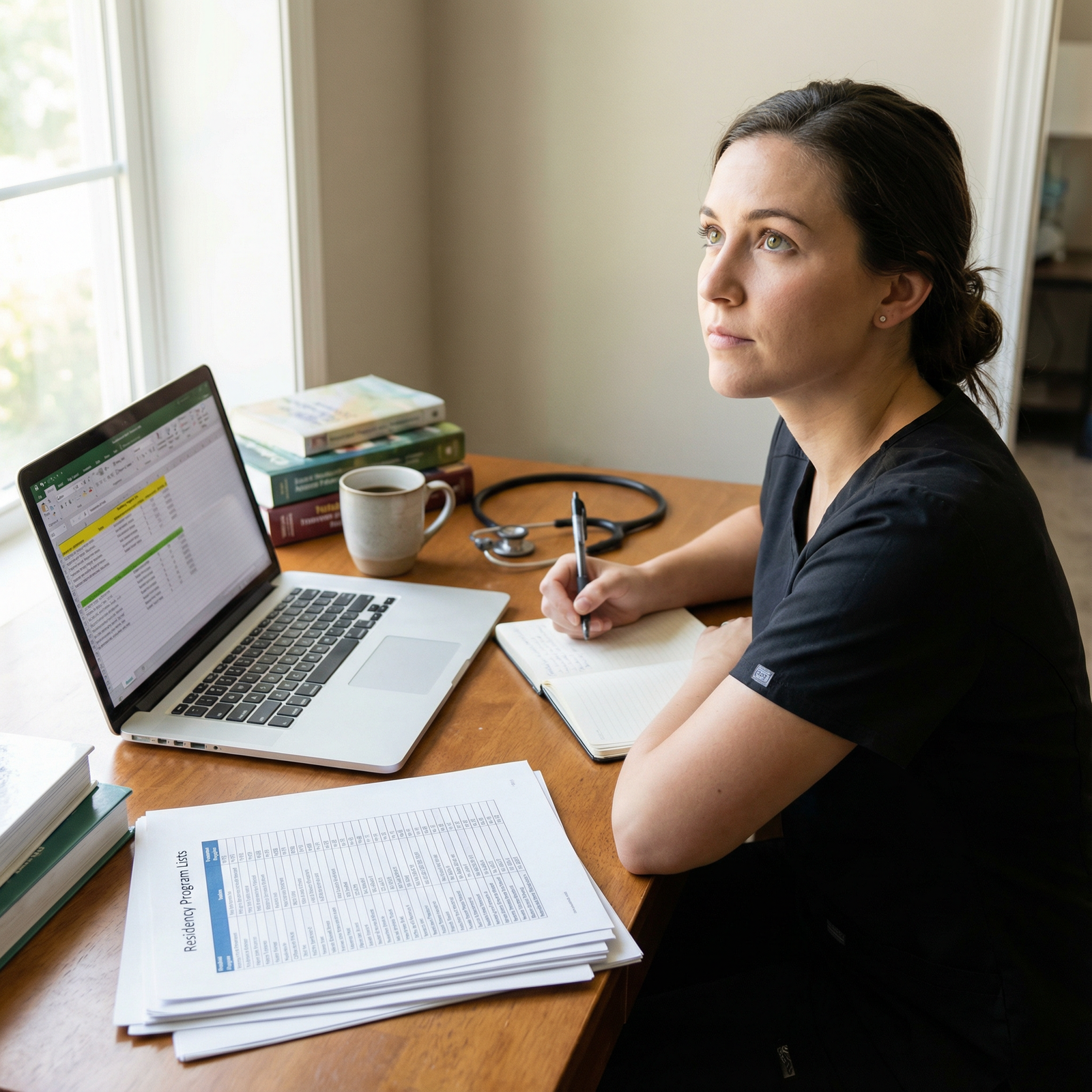
Before Match Week, build a spreadsheet with:
- Specialty
- Desired regions (or “open to anywhere”)
- Notes on global/underserved patient populations
- Willingness to accept prelim vs categorical positions
This spreadsheet is your SOAP targeting map.

Crafting SOAP‑Ready Documents with a Global Health Lens
When SOAP begins, you will have very limited time to customize documents. The key to SOAP preparation is having ready-to-go materials you can adapt quickly.
SOAP Preparation: Personal Statement Strategy
You should enter Match Week with:
- One or two strong, general personal statements (e.g., for IM/FM/Peds).
- Optional: One brief addendum paragraph you can paste into a new version if needed to emphasize specific interests (rural health, refugee health, HIV/TB, etc.).
Your global health personal statement should:
- Connect your global health experiences to core residency skills, not just travel:
- Leadership in limited-resource settings
- Systems thinking, quality improvement in low-resource clinics
- Cross-cultural communication and humility
- Longitudinal commitment vs one-time voluntourism
- Avoid sounding like:
- Short-term “medical mission tourism” without reflection
- A desire to escape U.S. practice entirely
- Emphasize:
- How global health has prepared you to work with diverse, underserved populations in the U.S.
- Alignment with program missions (health equity, social determinants of health, primary care)
Example framing for SOAP-ready global health PS (adaptable to multiple specialties):
“My interest in global health has always been tied to health equity rather than geography. Working in a public hospital in [country/setting] taught me to manage complex pathology with limited resources, communicate across language and cultural barriers, and collaborate with local teams to create sustainable change. Those same skills are essential for caring for immigrants, refugees, and underserved patients in [U.S. city/underserved setting]. I hope to train in a program where I can deepen these skills through caring for vulnerable populations, whether locally or abroad.”
This paragraph works for Internal Medicine, Family Medicine, or Pediatrics and can be lightly adapted for each.
CV and ERAS Application: Highlighting Global Health Thoughtfully
During SOAP, programs will first skim your ERAS application. Make sure key global health–relevant strengths are easy to spot:
- Clinical experience
- Include: length of time, level of responsibility, supervision, type of patients
- Clarify if experiences were observerships vs hands-on care
- Research / QI / Public Health projects
- Especially those on:
- Infectious diseases (HIV, TB, malaria)
- Maternal-child health
- Non-communicable diseases in low-resource settings
- Health systems strengthening
- Especially those on:
- Language skills
- Even intermediate proficiency in Spanish, French, Arabic, Swahili, etc., is valuable
- Indicate: Proficiency level and how you used it clinically
- Leadership and advocacy
- Global health student groups
- Community health projects
- NGO involvement, advocacy campaigns, refugee support work
Avoid overloading your CV with short, one-week trips; emphasize depth, reflection, and continuity instead.
Letters of Recommendation: What You Can and Can’t Control Pre‑SOAP
By Match Week, your letters are usually fixed. However, in your SOAP preparation:
- Ensure you have:
- At least 2–3 strong clinical letters from U.S. or comparable settings
- Ideally one from a primary care or inpatient IM/FM/Peds rotation
- If a letter writer knows your global health work:
- Ask them (before applications go out) to highlight:
- Adaptability
- Work ethic
- Ability to function in diverse clinical environments
- Ask them (before applications go out) to highlight:
You can’t add new letters mid‑SOAP in most cases, so front‑load this step.
Tactical SOAP Preparation: Systems, Logistics, and Teamwork
SOAP week moves at high speed. Effective SOAP preparation is not just about documents—it’s about systems and people.
Build Your “SOAP Team”
You should not navigate SOAP alone. Identify:
- A primary advisor
- Dean of students, global health faculty mentor, program director, or trusted attending
- A backup advisor (in case the primary is unavailable)
- A peer support circle
- Classmates or fellow IMGs going through Match who agree to share information and encouragement
- Family / partner briefing
- Explain the intense timing and the possibility of rapid, life-changing decisions
Before Match Week:
- Share your global health goals with your advisors:
- “My priority is to match into any solid IM/FM/Peds program, ideally one with underserved/global health opportunities. Here are programs I like; here are my geographic constraints.”
- Ask advisors where they have personal connections:
- Especially at safety-net, county, or academic programs with international medicine interests
Technical SOAP Preparation: Accounts and Tools
Make sure you are fully ready from a technical standpoint:
- ERAS
- Verify login credentials
- Confirm that your documents are uploaded and correctly assigned
- Have at least one global health–aligned PS uploaded, plus a more generic version if needed
- NRMP
- Confirm SOAP eligibility and that your status is “eligible for SOAP” if unmatched
- Communication
- Stable phone and internet access for the entire week
- A quiet, professional space for last-minute virtual interviews or phone calls
- Professional voicemail greeting and email signature
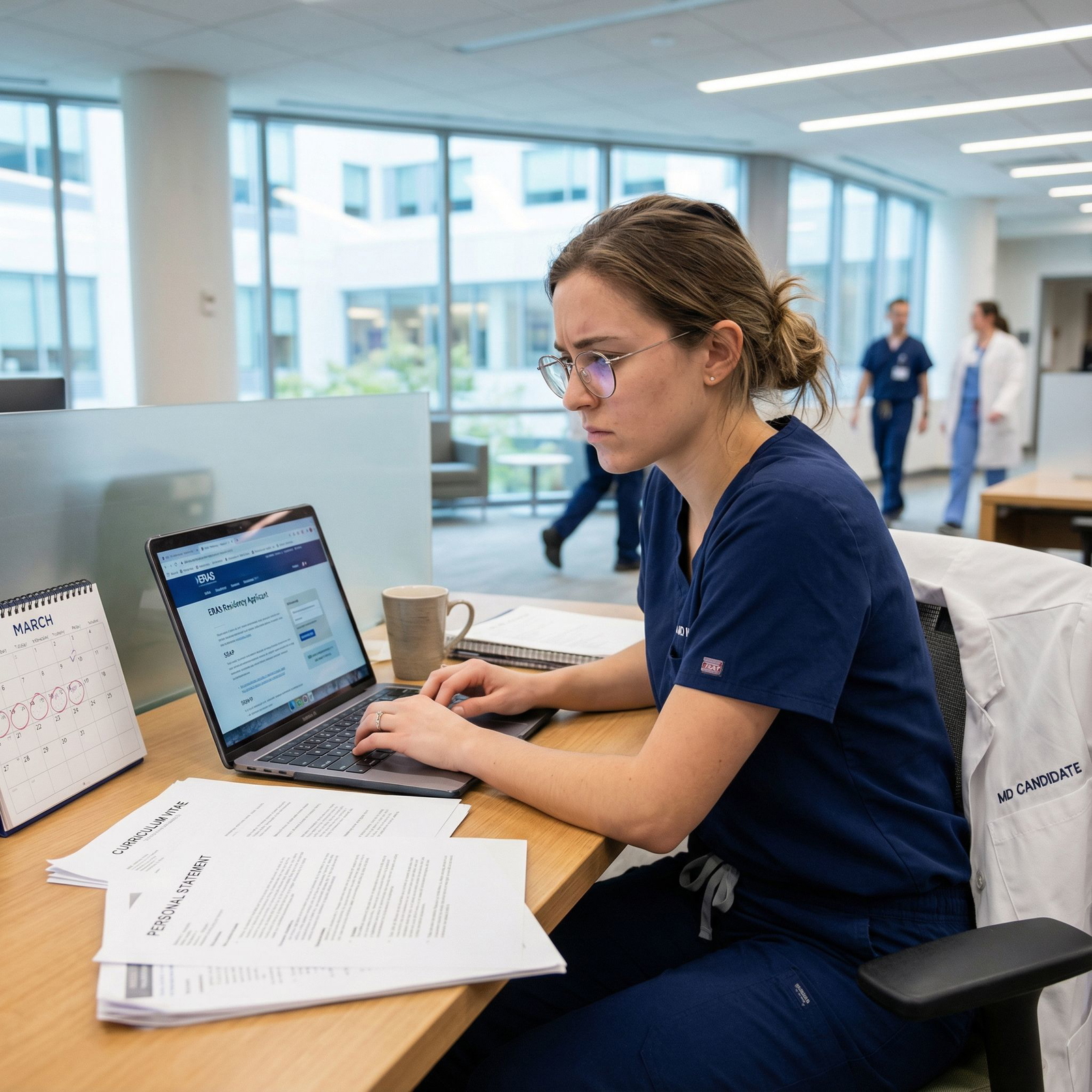
Have a SOAP week workspace ready:
- Laptop plus charger
- Headset or headphones with mic
- Spreadsheet of potential programs and notes
- Calendar with SOAP timelines and offer rounds marked

Executing During SOAP: Strategy for Global Health–Minded Applicants
Once the unfilled programs list is released on Monday of Match Week, your SOAP preparation turns into execution.
Step 1: Rapidly Analyze the Unfilled List for Global Health Potential
Within hours, you’ll need to triage the list. Look for:
- Specialties: FM, IM, Peds, Psych, TY/Prelim
- Program type:
- County / safety-net hospitals
- University-affiliated community programs
- Programs in cities with large immigrant or refugee populations
- Keywords in program titles or locations:
- “Urban,” “underserved,” “community health,” “public health”
- Cities known for diverse populations (e.g., New York, Houston, Los Angeles, Miami, Minneapolis, etc.)
Then, quickly:
- Visit program websites (have multiple tabs open).
- Scan for:
- Any mention of global health residency track, “international health,” or “global rotations.”
- Clinics serving refugees, migrants, or homeless populations.
- Partnerships with schools of public health or NGOs.
Mark programs as:
- Priority A: Strong global/underserved alignment AND acceptable location
- Priority B: Solid training, some underserved exposure, less ideal location OR limited explicit global focus
- Priority C: Minimal global focus but acceptable if options are limited (safety net)
Step 2: Decide on Breadth vs Depth of Applications
SOAP limits the number of programs you can apply to in each round (commonly up to 45 programs total, but always confirm current NRMP rules).
For global health–focused applicants:
- Avoid applying to only “dream” programs; balance approximately:
- 1/3 Priority A
- 1/2 Priority B
- 1/6 Priority C (if needed)
Remember: Securing a residency spot at all is prerequisite for a global health career. You can still shape your path from a non-branded program.
Step 3: Tailor Your Message Without Over-Customizing
You won’t have time to write 30 unique personal statements, but you can:
- Maintain one primary statement highlighting:
- Commitment to health equity and underserved patients
- Relevant clinical, research, language, and leadership experiences
- Lightly customize 1–2 short sentences at the end to reference:
- “I am particularly drawn to programs like yours that serve diverse, underserved populations”
- “I hope to contribute to your work with [refugee clinic / community health center / underserved communities].”
This is efficient and still meaningful. Your SOAP preparation should include a few pre-written closing variations for:
- Urban underserved
- Rural underserved
- Academic global health focus
Step 4: Interviewing During SOAP with a Global Health Lens
Some programs may:
- Call you informally
- Schedule brief virtual interviews
- Ask via ERAS messaging to clarify your interest
In your answers, balance enthusiasm for their program with explicit but flexible global health goals:
Example responses:
“Tell me about your interest in global health.”
“My interest in global health grew out of working with vulnerable populations in [setting]. What excites me about your program is the chance to care for diverse, underserved patients here, and, if available, to participate in any global or community health initiatives. My primary goal is to become an excellent clinician serving high-need communities, whether abroad or locally.”
“Why are you interested in our program during SOAP?”
“I’m looking for a rigorous training environment where I can care for a diverse patient population and build skills that translate to global and public health settings. Your [county hospital / community clinics / refugee program] aligns closely with that. I am committed to this specialty and would be grateful for the opportunity to train here.”
Avoid sounding like:
- Their program is just a stepping stone back to working exclusively overseas.
- You are uninterested in domestic patient care.
Step 5: Making Acceptance Decisions During Offer Rounds
In SOAP, when you receive an offer, you have very limited time to decide. Your SOAP preparation should include clear decision rules in advance.
For example:
- “I will accept the first categorical IM/FM/Peds offer that is from my Priority A or B list.”
- “I am willing to accept a transitional year in [locations X, Y, Z], but only if I have not received a categorical offer by Round 3.”
For global health–minded applicants, strongly weigh:
- Securing a categorical position > waiting and reapplying, unless:
- You have serious red flags to remediate
- You are willing to take another year to improve your application (research, MPH, more U.S. clinical experience)
After SOAP: Rebuilding and Reorienting Your Global Health Path
Whatever the outcome of SOAP, you can still design a global health–oriented career.
If You Match Through SOAP
Learn your program’s true global/underserved potential
- Ask at orientation or early meetings:
- “Are there faculty involved in global health or international medicine?”
- “Are there community health, refugee, or migrant clinics we work with?”
- Look for:
- Elective time that can be used for global health rotations (domestic or international)
- Opportunities to pursue an MPH or certificate during residency
- Ask at orientation or early meetings:
Build a global health mentorship network
- Even if your program has no formal track:
- Identify local public health agencies, NGOs, or community organizations.
- Join national groups:
- American Academy of Family Physicians (AAFP) Global Health member interest groups
- American College of Physicians (ACP) global health sections
- Specialty-specific global health societies
- Even if your program has no formal track:
Shape your scholarly work
- QI or research projects on:
- Access to care for immigrants/refugees
- Chronic disease management in underserved populations
- Telehealth for low-resource settings
- These can later support applications to:
- Global health fellowships
- Academic positions in international medicine
- QI or research projects on:
If You Do Not Match After SOAP
This can be devastating emotionally but may be a time to strategically realign.
Conduct a structured post-SOAP debrief
- With advisors, analyze:
- Board scores and attempts
- Specialty choice
- Number and type of interviews
- Possible red flags
- Decide whether to:
- Reapply in the same specialty with a stronger profile
- Pivot to a more attainable specialty that still supports global health (FM, IM, Peds)
- With advisors, analyze:
Plan a strengthening year with a global health angle
- Options:
- Research position in global health, infectious disease, refugee health, or public health
- MPH or MSc in Global Health (if financially and logistically feasible)
- Clinical observer or non-resident clinical roles (where permissible) in underserved settings
- Focus on:
- Demonstrating clinical excellence and reliability
- Publishing or presenting work that highlights your global/underserved focus
- Earning new, strong letters of recommendation
- Options:
Refine next year’s SOAP preparation
- Start even earlier:
- Broaden specialties and geographic locations
- Increase program list, especially in community and safety-net settings
- Rework your narrative:
- Emphasize persistence, reflection, and growth
- Clarify how your global health interests align with U.S. training, not against it
- Start even earlier:
FAQs: SOAP Preparation for Global Health–Focused Applicants
1. How can I keep my global health goals alive if I match into a program without a formal global health residency track?
Focus on function rather than label. Even without a named “global health residency track,” you can:
- Seek electives serving immigrants, refugees, and low-income populations
- Work with public health departments or community organizations
- Develop QI or research projects with global or cross-cultural relevance
- Attend global health conferences and join specialty global health sections
Later, you can apply for global health fellowships or academic positions using this foundation.
2. During SOAP, should I still prioritize programs with global health or international medicine opportunities, or just take any offer?
First priority is to secure a solid accredited residency position. However, you can still prioritize within your options:
- Rank programs with underserved/community health missions higher
- Consider locations with diverse, multicultural populations
- Use your pre-defined Priority A/B/C list to guide quick decisions
If faced with only one offer that is not global health–oriented, it is usually better to accept and plan to incorporate global health through electives, research, and post-residency training.
3. Does global health experience help or hurt me in SOAP?
Handled correctly, global health experience can help:
- Demonstrates adaptability, resilience, and commitment to underserved care
- Signals interest in cross-cultural communication and systems thinking
It can hurt only if:
- It appears superficial (short “voluntourism” without reflection)
- You sound uninterested in long-term practice in the U.S.
- You imply that residency is just a stepping stone to working exclusively abroad
Frame your narrative so that global health experience makes you a stronger U.S. resident for diverse populations.
4. As an IMG interested in international medicine, how should I approach SOAP preparation?
For IMGs, SOAP preparation is crucial:
- Broaden your target specialties to those more open to IMGs and more likely to have unfilled positions (FM, IM, Peds, sometimes Psych, TY).
- Highlight:
- Clinical experience in your home country
- Any U.S.-based clinical rotations
- Language skills and cultural competency
- Be maximally flexible with geography and program type, while still maintaining realistic expectations.
- Use advisors, alumni networks, and IMG-focused organizations to identify IMG-friendly, globally minded programs early.
Thoughtful SOAP preparation allows you to protect your long-term global health goals while navigating the intense, time-limited reality of unfilled positions. By building a contingency plan early, crafting global health–aligned yet flexible application materials, and making clear-headed decisions during Match Week, you can keep your path toward a meaningful career in global and international medicine firmly on track.