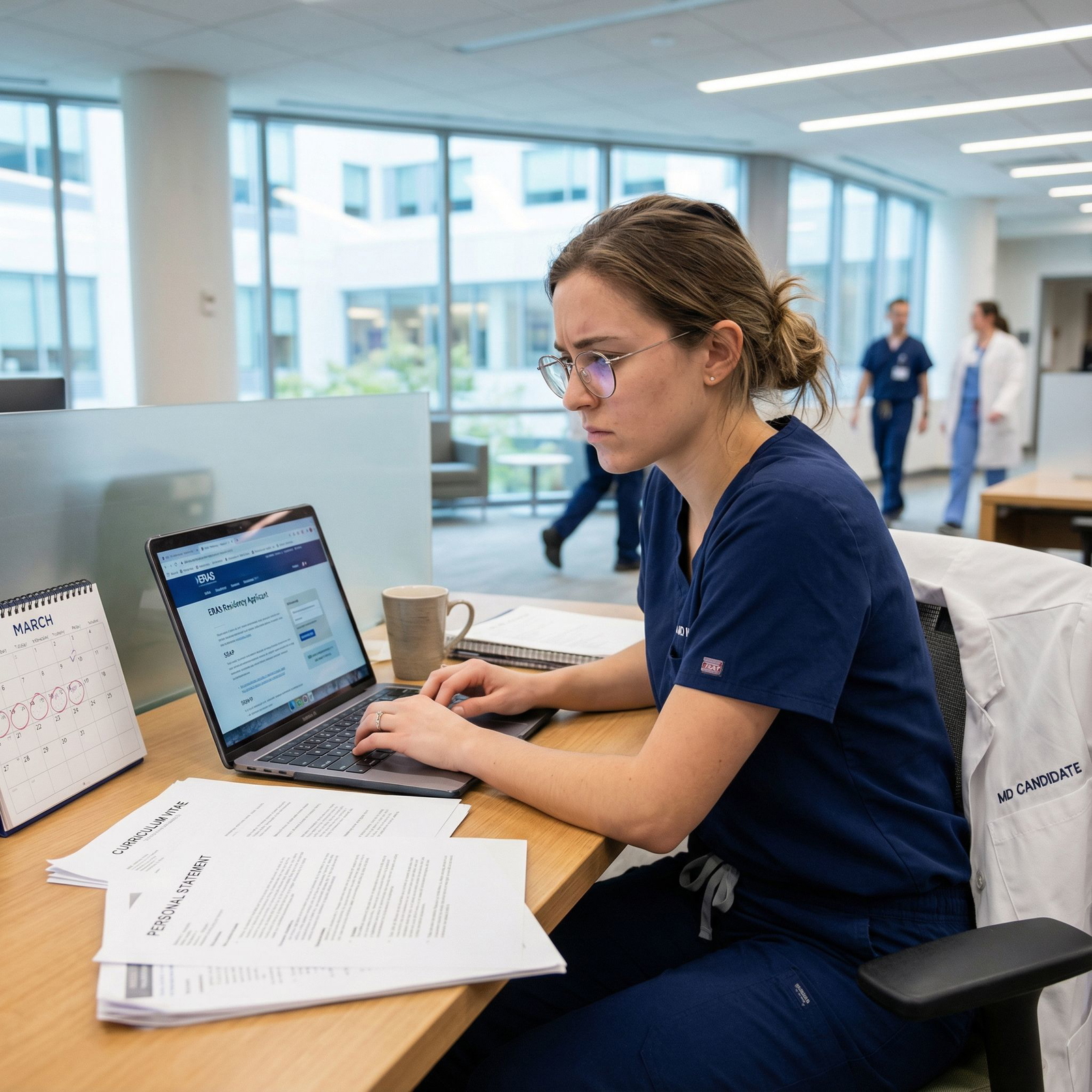
As a Caribbean IMG targeting a general surgery residency, the Supplemental Offer and Acceptance Program (SOAP) can be both a second chance and a high-pressure sprint. With the right SOAP preparation, you can turn a week of uncertainty into a realistic pathway toward a categorical or preliminary general surgery position—or, strategically, into a strong transitional or prelim year that keeps your surgical goals alive.
This guide is written specifically for Caribbean medical students and graduates (including SGU, AUC, Ross, Saba, etc.) with a focus on general surgery, explaining what SOAP is, how it works, and how to prepare step‑by‑step.
Understanding SOAP: What It Is and Why It Matters for Caribbean IMGs
Before you prepare, you need to clearly understand: what is SOAP?
SOAP (Supplemental Offer and Acceptance Program) is the structured process NRMP uses during Match Week to fill unfilled residency positions with unmatched or partially matched applicants. It takes place after you learn you did not match (or only partially matched) on Monday of Match Week and before the main Match Day on Friday.
For a Caribbean medical school residency candidate aiming at general surgery, SOAP can:
- Provide access to unfilled general surgery categorical or preliminary positions
- Offer transitional year or prelim medicine/surgery roles that keep you “in the system” and near surgery
- Rescue your application year so you don’t lose clinical momentum
How SOAP Works in Practice
For NRMP-participating programs:
- Monday (11 AM ET): You learn whether you matched, partially matched, or did not match.
- Monday (later): Unfilled positions list opens (for SOAP-eligible applicants).
- Monday–Thursday:
- You can apply via ERAS to a limited number of programs (generally up to 45 total programs during SOAP).
- Programs review applications, may conduct short interviews (often same-day).
- Offer Rounds:
Programs submit preference lists; NRMP sends out offers in up to four rounds (usually Wednesday–Thursday). You can accept or reject offers in each round.
Once you accept a SOAP offer, it is binding—no further SOAP participation in that year.
Who Is SOAP-Eligible?
You are generally SOAP-eligible if:
- You registered for the NRMP Main Residency Match
- You are unmatched or partially matched after the initial algorithm
- You are ERAS-registered and have certified your rank list
- You have valid ECFMG certification status by the NRMP deadline (for IMGs)
As a Caribbean IMG, double-check ECFMG and NRMP timelines well in advance—many Caribbean graduates lose SOAP eligibility due to late documentation.
Pre-Match Week SOAP Preparation: What to Do Before You Need It
The biggest SOAP mistake Caribbean IMGs make is thinking of SOAP as a last-minute rescue and not a planned component of their residency strategy. Effective SOAP preparation begins months before Match Week.

1. Build a SOAP-Minded Overall Strategy
If your primary goal is a general surgery residency, you need parallel plans:
- Plan A (Pre-SOAP): Match into categorical general surgery.
- Plan B (SOAP – Primary): Target unfilled preliminary general surgery and possibly some categorical positions at community programs with IMG-friendly histories.
- Plan C (SOAP – Bridge): Prioritize transitional year or prelim internal medicine or prelim surgery positions that keep you clinically active and competitive for a future general surgery residency match.
Have an honest conversation with:
- Your Caribbean school’s dean’s office or career services
- Recent alumni who matched via SOAP (especially those in surgery residency match pathways)
- Mentors in general surgery who understand Caribbean IMG realities
2. Optimize Your ERAS for General Surgery and SOAP
Your ERAS application during the initial match and during SOAP is the same core file, but you can swap personal statements and letters of recommendation (LoRs) and update experiences before SOAP.
Key steps for a Caribbean IMG targeting surgery:
Refine your surgery-oriented personal statement
Emphasize:- Hands-on surgical exposure during core and elective rotations
- Reliability, work ethic, and resilience (very important for prelim surgery roles)
- Comfort with high workload, long hours, and team-based care
Prepare at least two additional personal statements:
- One tailored for preliminary general surgery / categorical surgery at community programs
- One tailored for transitional year / prelim internal medicine as a bridge
Letters of Recommendation:
- At least 2 strong LoRs from US surgeons (ideally from ACGME-affiliated hospitals)
- 1–2 additional LoRs from medicine or ICU if you anticipate applying to prelim medicine or transitional year roles during SOAP
- Ask potential letter writers early (months before Match Week) and ensure letters are uploaded to ERAS.
Update your CV and experiences:
- Include recent sub-internships, acting internships, or ICU rotations
- Highlight procedural skills: suturing, wound care, lines you observed or assisted with
- Showcase leadership, QI projects, or research related to surgical outcomes, perioperative care, or trauma.
3. Know Your Numbers and Realistic Targets
General surgery is competitive, and for a Caribbean IMG, the bar is higher. For SOAP, program directors will look hard at:
- USMLE Step 1 (Pass/Fail now) and Step 2 CK scores
- Number of attempts on Step exams
- Gap years and recency of clinical experience
- Visa needs (if applicable)
Realistically assess:
- If you have strong Step 2 CK (e.g., >240), significant US surgical exposure, and strong LoRs—you may still have a shot at preliminary or rarely categorical general surgery via SOAP.
- If your scores are more modest or you have attempts, a better SOAP strategy usually targets:
- Transitional years with strong surgical exposure
- Prelim internal medicine in hospitals with surgery programs
- A handful of realistic prelim surgery programs
Your strategy must balance ambition and safety so you don’t end SOAP completely unmatched.
4. Create a SOAP Playbook Before Match Week
Have a written, shareable SOAP Playbook ready before you know your match result. This document should include:
Tiered program lists:
- Tier 1: Community general surgery programs that historically take Caribbean graduates (for prelim roles especially)
- Tier 2: Transitional year programs with strong ICU/surgical exposure
- Tier 3: Prelim internal medicine programs in hospitals with surgery residencies
Customized email/interview intro scripts:
- 30–60 second elevator pitch focused on:
- Who you are (Caribbean IMG, year of grad)
- Why general surgery / high acuity care
- Your strengths: work ethic, clinical performance, communication
- 30–60 second elevator pitch focused on:
Contact information:
- Your phone, email, and a backup number
- A quiet place you can use for short-notice phone or video interviews
Technical prep:
- Updated Zoom/Teams/Skype accounts
- Headphones, camera, and stable internet tested in advance
Match Week Timeline: Executing a Focused SOAP Strategy
Once Match Week begins, timing and clarity matter. Here’s how to navigate the SOAP residency process with a general surgery focus.

Monday Morning: Unmatched—Now What?
If you learn at 11 AM ET that you are unmatched or partially matched, immediately:
Control the emotional reaction
Feel the disappointment, but move quickly—SOAP windows are short. Take 15–30 minutes to regroup, then switch to execution mode.Confirm SOAP eligibility
Log into NRMP and ERAS to check your SOAP status.Meet with your school’s advising team
Caribbean schools like SGU, Ross, AUC, and Saba frequently have dedicated SOAP teams. Use them. Many SGU residency match successes, including in general surgery, have been salvaged or strengthened by aggressive SOAP advising.
Monday Afternoon: Reviewing the Unfilled List and Prioritizing
When the List of Unfilled Programs opens (for SOAP-eligible applicants):
Filter by specialty:
- Start with General Surgery (categorical and preliminary).
- Then check:
- Transitional Year
- Prelim Internal Medicine
- Prelim Surgery (if separate)
Identify programs known to take Caribbean IMGs:
- Use your school’s historical match data (e.g., SGU residency match lists often show which programs are IMG-friendly).
- Ask seniors or alumni quickly via school forums, WhatsApp, or alumni networks.
Categorize into A, B, C targets:
- Category A: Realistic prelim general surgery programs (community hospitals, IMG-friendly)
- Category B: Transitional year programs with strong ICU/surgical exposure
- Category C: Prelim internal medicine or other bridge specialties in teaching hospitals
You get a limited number of total SOAP applications (commonly 45)—use them wisely:
- Allocate:
- ~10–15 to high-priority surgery prelim and rare categorical surgery options
- ~15–20 to transitional year programs
- Remaining to prelim medicine or related bridge opportunities
This ratio can shift depending on how competitive your profile is and how many surgery positions are unfilled that year.
Customizing Your ERAS for SOAP Targets
For each group of programs, you can assign specific personal statements and LoRs:
- For general surgery prelim/categorical:
- Use your strongest surgery-focused PS
- Attach 2–3 surgeon LoRs + 1 additional clinical letter
- For transitional year:
- Use a broad, team-and-education-focused PS
- Include at least one strong LoR from internal medicine or ICU plus a surgery letter
- For prelim internal medicine:
- Emphasize your interest in acute care, ICU, or hospital medicine and how this aligns with your goal of being a strong future surgical applicant.
Submit your SOAP applications as early as possible on Monday or Tuesday so programs can start reviewing.
Interviewing and Communicating Effectively During SOAP
SOAP interviews are different from traditional general surgery residency interviews: they are often shorter, more direct, and more practical.
Typical SOAP Interview Formats
You may encounter:
- 5–15 minute phone calls with program directors or chief residents
- Short virtual interviews (Zoom/Teams)
- Occasionally, panel-style group calls
Programs aim to assess quickly:
- Are you safe and competent?
- Will you work hard, show up, and be reliable?
- Do you understand what a prelim year entails?
- Are you a flight risk (i.e., likely to leave mid-year)?
High-Yield Talking Points for General Surgery SOAP
Prepare concise answers to:
“Tell me about yourself.”
Example structure:- Caribbean IMG, school & grad year
- Highlight clinical performance and rotations in surgery/ICU
- One key strength (work ethic, composure under pressure)
“Why general surgery?” / “Why prelim surgery?”
Emphasize:- Passion for acute care and procedural work
- Team-based, high-intensity environment
- Desire to learn from every case and be on the front lines of patient care
“Why are you unmatched?” (often asked bluntly)
Answer honestly but strategically:- Market competitiveness
- Later decision about specialty
- Overly ambitious rank list
Avoid blaming others or appearing bitter.
“What will you bring to our program?”
Highlight:- Your willingness to take ownership of patient care
- Step exam strengths or improvement trend
- Positive feedback from attendings and nurses
“How will you handle a heavy workload?”
Reference:- Your experience on busy inpatient rotations
- Specific examples where you managed multiple patients and tasks calmly
Addressing Caribbean IMG-Specific Concerns
Programs may have questions or assumptions about:
- Quality of your Caribbean medical school training
- Clinical exposure in the US
- Communication skills and professionalism
Counter this by:
- Highlighting US clinical rotations in ACGME-affiliated hospitals
- Mentioning positive feedback / honors evaluations
- Clearly and confidently articulating cases you managed, including pre-op, intra-op observation, and post-op care
Making Smart SOAP Choices: Offers, Acceptance, and Long-Term Planning
SOAP rounds move quickly, and you must often decide within hours.
Understanding Offer Rounds
Across multiple rounds (usually Wednesday and Thursday):
- Programs submit preference lists to NRMP.
- NRMP offers you one or more positions at a time (depending on how many programs ranked you).
- You typically have a short window (e.g., 2 hours) to accept or reject each offer.
Once you accept an offer, you exit SOAP and must join that program.
Prioritizing Offers as a Future Surgeon
Your long-term goal: ultimately match into general surgery (categorical), even if not this year.
Order of desirability for most Caribbean IMGs interested in surgery:
- Categorical General Surgery (any location, IMG-friendly community program)
- Prelim General Surgery at a hospital with:
- A categorical general surgery program
- Good operative and ICU exposure
- Transitional Year in:
- A teaching hospital with multiple specialties, including surgery
- Strong inpatient, ICU, and procedural experience
- Prelim Internal Medicine in:
- A hospital with a surgery program
- Good ICU and consult exposure
When evaluating a specific SOAP offer, consider:
- Does the program have a track record of promoting prelims to categorical spots?
- Are there categorical general surgery residents there?
- Is the clinical volume high, with real responsibility (not purely service work, though service is part of surgery)?
- Visa sponsorship (if needed)—very important for IMGs.
You may end up choosing a transitional year or prelim medicine over a weak prelim surgery position if:
- The prelim surgery role is at a hospital with no categorical surgery program and minimal educational support.
- The transitional year provides better supervision, letters, and broader options for a future surgery residency match.
Example Decision Scenarios
Scenario 1:
You receive:
- Offer A: Prelim General Surgery at community hospital with established categorical program
- Offer B: Transitional Year at community hospital without a surgery program
→ Take Offer A—best proximity to surgery for future categorical conversion.
Scenario 2:
You receive:
- Offer A: Prelim General Surgery at small non-teaching hospital with poor reputation and no categorical residents
- Offer B: Transitional Year at large academic center with multiple surgical specialties
→ Often better to take Offer B—strong letters, exposure, and institutional reputation can help your next surgery residency match.
Post-SOAP: If You Don’t Secure a Surgery Position This Year
Not every Caribbean IMG will obtain a general surgery or even a transitional/prelim spot through SOAP. That does not end your surgical career, but it changes your timeline.
If You Matched into a Non-Surgery SOAP Position
Use your year strategically:
- Be outstanding clinically—arrive early, stay late, volunteer for tasks.
- Seek rotations and electives in:
- Surgical ICU
- Trauma
- Emergency general surgery services
- Get letters from surgeons and ICU attendings.
- Start preparing early for the next ERAS cycle:
- Update CV with solid US clinical performance
- Engage in quality improvement projects, case reports, or retrospective research in surgery or ICU.
If You Did Not Match at All (Post-SOAP Unmatched)
You must avoid going “cold” clinically:
- Seek:
- Research positions in surgery or surgical subspecialties
- Clinical observer positions or non-resident clinical roles (e.g., surgical assistant positions where permissible)
- Continue Step preparation or consider Step improvements if your score is low and if retaking (where allowed) or taking Step 3 might help your profile.
- Strengthen your candidacy for the next cycle:
- More US-based surgical exposure
- Improved letters from US faculty
- Demonstrable commitment to surgery through projects and career moves
FAQs: SOAP Preparation for Caribbean IMG in General Surgery
1. Is it realistic for a Caribbean IMG to get a general surgery residency through SOAP?
Yes, but it is more common to obtain a preliminary general surgery spot than a categorical one. Some Caribbean graduates do secure categorical positions via SOAP, but they are rare and usually limited to community programs with a strong history of working with IMGs. Many successful surgery residency match stories from SGU or other Caribbean medical schools involve:
- Starting in a prelim surgery or transitional year
- Performing exceptionally
- Then matching into categorical general surgery (sometimes at the same institution).
2. For SOAP, should I focus only on general surgery, or also apply to other specialties?
For most Caribbean IMGs, it is too risky to apply only to general surgery during SOAP. A strategic approach is:
- Use a portion of your limited SOAP applications on realistic prelim general surgery programs.
- Allocate many applications to transitional year and prelim internal medicine programs that preserve your future competitiveness for surgery.
- Prioritize being clinically active in a strong program over being unmatched and inactive.
3. How does a transitional year help me eventually match into general surgery?
A transitional year provides:
- Broad inpatient and ICU experience valued by surgical programs
- Opportunities to rotate on surgical, trauma, or ICU services
- Chances to earn strong letters from US attendings
- A way to demonstrate reliability, professionalism, and adaptability in a US environment
If you target transitional year programs in hospitals with general surgery residencies, you may gain visibility with surgeons and PDs who can advocate for you in the next surgery residency match cycle.
4. What can I do during medical school (MS3/MS4) as a Caribbean IMG to be better prepared for SOAP?
Focus on front-loading your competitiveness:
- Aim for a strong Step 2 CK score and first-attempt passes.
- Arrange as many US-based core and elective rotations in surgery and ICU as possible, especially at ACGME-affiliated hospitals.
- Cultivate relationships with US surgeons early so they can write detailed, supportive LoRs.
- Attend your school’s SOAP and residency prep workshops; many Caribbean schools, especially larger ones like SGU, have robust support specifically for Caribbean medical school residency pathways.
- Draft multiple versions of your personal statement (surgery, transitional year, prelim medicine) before Match Week so you can pivot quickly if needed.
By approaching SOAP with a realistic understanding of the process, a clear general surgery-focused strategy, and thorough preparation well before Match Week, you dramatically improve your chances of salvaging your application year and keeping your surgical career trajectory alive—even as a Caribbean IMG facing a competitive US surgery residency match landscape.