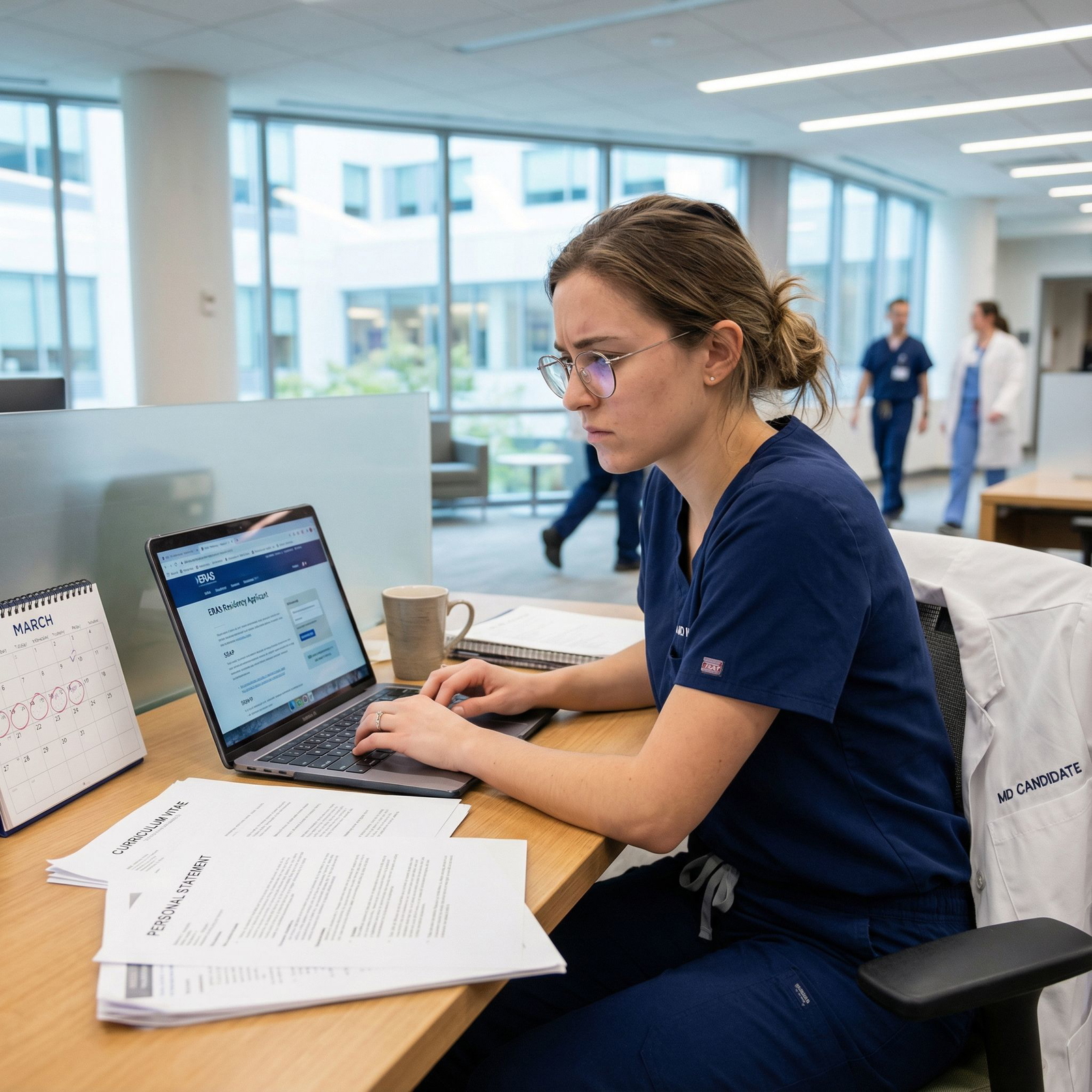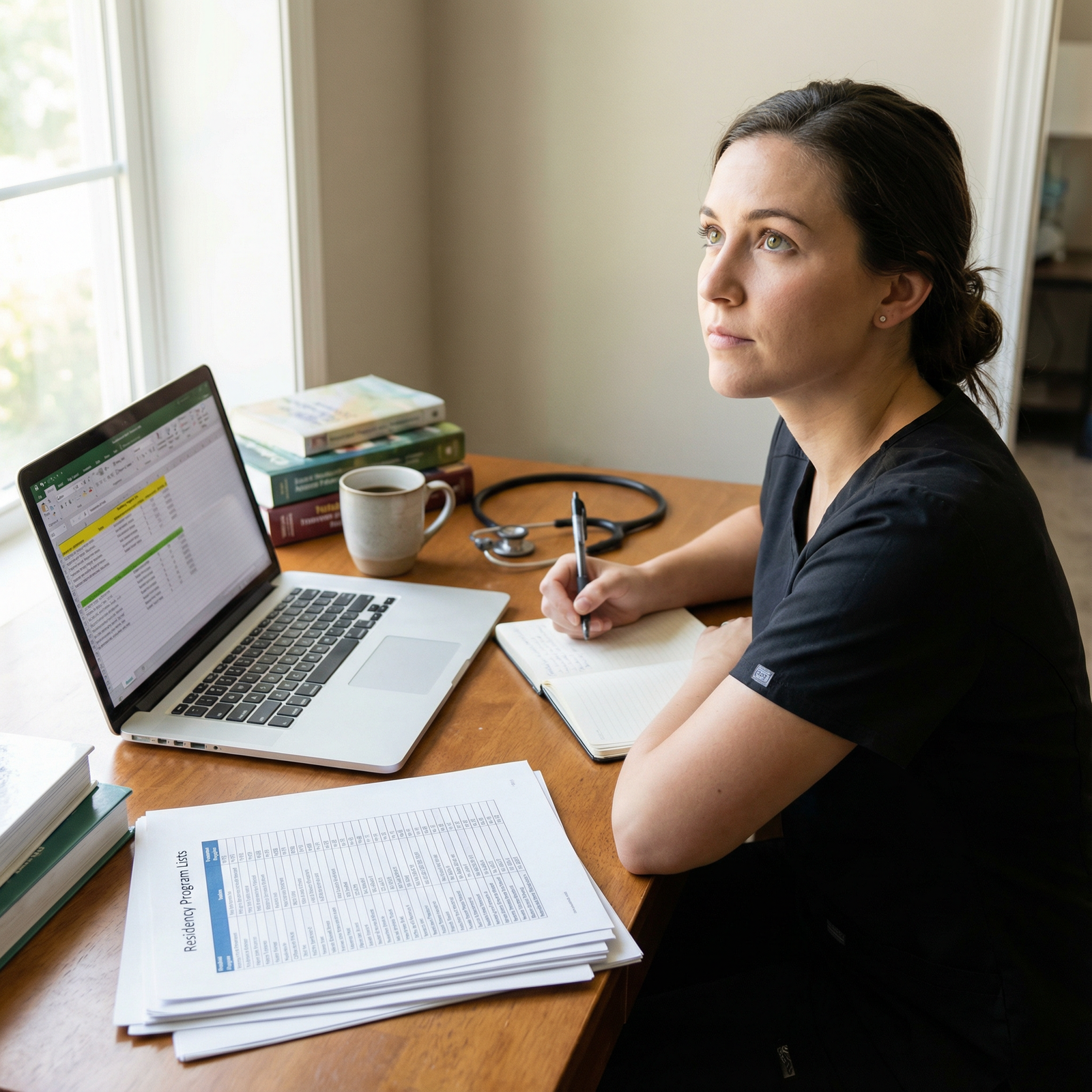
Understanding SOAP for the DO Graduate in OB GYN
The Supplemental Offer and Acceptance Program (SOAP) can feel like an emotional roller coaster—especially for a DO graduate aiming for a competitive field like Obstetrics & Gynecology. Yet many strong physicians reach residency through SOAP and go on to have excellent careers.
To prepare effectively, you need to understand:
- What SOAP is and how it works
- How your status as a DO graduate affects your osteopathic residency match and ACGME options
- How to rapidly adapt your application strategy for OB GYN and related fields
- Exactly what to do in the days before and during SOAP week
This article walks through a step‑by‑step, practical approach tailored to a DO graduate targeting OB GYN residency, with a focus on SOAP preparation and realistic backup options.
SOAP Basics for the DO OB GYN Applicant
What is SOAP?
SOAP (Supplemental Offer and Acceptance Program) is the structured process NRMP uses to fill unfilled residency positions in the week of Match. It is not a second “mini Match”; it’s a fast-paced, time‑limited application and offer process.
Key points:
- You must be eligible (registered for NRMP, unmatched or partially matched, and not holding a binding position).
- You apply only through ERAS during SOAP.
- Programs cannot contact you before you apply to them in the SOAP window.
- You will rank and accept offers through NRMP’s R3 system in a series of SOAP rounds.
For a DO graduate, SOAP can be critically important if:
- Your primary OB GYN rank list doesn’t yield a match.
- You limited your original list to a small number of programs.
- You aimed high (e.g., many academic OB GYN programs) without including safer options.
Understanding SOAP ahead of time allows you to act quickly and strategically when the Match Week notification arrives.
Why DO Graduates End Up in SOAP
Common reasons DO applicants (including strong ones) land in SOAP:
- Step/COMLEX scores below the average for OB GYN programs they applied to
- Limited geographic flexibility, focusing on only one region
- Insufficient number of total applications or interviews
- Weak letters or lack of OB GYN-specific advocacy
- Poor interview performance relative to peers
- Overly competitive rank list with no true “safety” OB GYN programs
None of these automatically mean you won’t be an excellent OB GYN resident. SOAP preparation is about contingency planning: protecting your long‑term goal (OB GYN or women’s health–focused career) even if your initial obstetrics match doesn’t go as planned.
Pre‑SOAP Preparation: What to Do Before Match Week
The strongest SOAP strategies are built before you know your match result. Think of this as “insurance prep” that you hope you never need.

1. Get Clear on Your Priority: OB GYN vs. Broader Women’s Health
Ask yourself, honestly:
- Is your non‑negotiable goal to practice full-scope OB GYN (surgery + obstetrics + gyn)?
- Or is your top priority to work in women’s health more broadly (primary care with prenatal care, contraception, gynecologic issues, etc.)?
If you absolutely must be an OB GYN surgeon, your SOAP strategy will prioritize:
- Any available OB GYN residency positions
- Categorical prelim or transitional year positions that set you up to reapply in OB GYN
If you’re open to broader women’s health, you may also consider:
- Family Medicine with strong women’s health and obstetrics training
- Internal Medicine programs with women’s health tracks
- Transitional year programs that keep your options open
Clarifying this now will help you resist last‑minute, panic‑driven decisions.
2. Review Your Application Strengths and Gaps
Objectively analyze your file as if you’re a PD:
- COMLEX/USMLE: Are your scores above, at, or below the median for OB GYN?
- Clinical performance: Honors in OB GYN rotations? Strong OB GYN sub‑I?
- Letters of Recommendation: Do you have at least one strong OB GYN letter from a program director or department chair?
- Research and activities: Any OB GYN or women’s health–related projects, QI, advocacy, or leadership?
Knowing your profile helps identify:
- Where you can quickly strengthen your narrative (e.g., better personal statement, more targeted CV language)
- Whether you might be more competitive in related fields during SOAP (e.g., FM with OB focus)
3. Build a Backup Program List Template
Before Match Week:
Identify target regions where you’d realistically relocate.
Make a list of:
- OB GYN residency programs that historically have DO-friendly track records
- Family Medicine programs with OB tracks or strong maternity care
- Transitional Year (TY) or prelim medicine/surgery programs in those regions
Create a simple spreadsheet with columns for:
- Program name
- Specialty (OB GYN, FM, TY, etc.)
- City/state
- DO friendliness (if known)
- Notes (connections, rotations there, alum presence)
You won’t know which programs will have SOAP positions, but this list lets you pivot quickly and selectively once the List of Unfilled Programs goes live.
4. Draft SOAP‑Specific Application Materials
You will not have time during SOAP week to write completely new materials from scratch. Instead, prepare a set of modular documents you can quickly adapt:
a. Multiple Personal Statement Variants
Prepare short, tight personal statements (1 page max) for:
OB GYN SOAP:
- Emphasize your commitment to obstetrics and gynecology, DO philosophy, and what you bring to a program.
- Address any red flags (e.g., gap year, low score) briefly but proactively.
Family Medicine with Women’s Health Focus:
- Explain your strong interest in women’s health, maternity care, and continuity.
- Highlight OB GYN exposure and how it enriches your primary care goals.
Transitional Year/Preliminary Year:
- Focus on broad clinical development, your work ethic, and intention to become an OB GYN or women’s health physician.
- Emphasize adaptability and teamwork.
You can then quickly fine‑tune the opening paragraph to fit specific programs.
b. Updated CV and Experiences
Make sure your ERAS activities:
- Clearly highlight women’s health, OB GYN electives, and any leadership.
- Emphasize osteopathic principles, holistic care, and patient‑centered communication—attributes OB GYN PDs value.
Have a concise 1–2 sentence “elevator pitch” ready for each major experience; these will help during rapid‑fire SOAP interviews.
5. Clarify Your Support Network
SOAP week is emotionally and logistically intense.
Beforehand:
- Identify one faculty mentor (ideally OB GYN or your home PD) who is willing to advise you quickly during SOAP.
- Know who in your Student Affairs/Dean’s Office coordinates SOAP support.
- Decide whom you’ll lean on for emotional support (friends, partner, family).
Share your goals and backup plans with them now so they can give grounded advice during the stress of Match Week.
Execution During SOAP Week: Step‑by‑Step Guide

Timeline Overview (NRMP SOAP Structure)
While specific times can vary slightly year to year, the general flow is:
- Monday morning:
- You receive your Match Status (Matched / Partially Matched / Unmatched).
- Unmatched and partially matched eligible applicants enter SOAP.
- Monday:
- The List of Unfilled Programs becomes available (first to schools, then to applicants).
- You begin submitting applications via ERAS (limited number allowed—commonly 45).
- Tuesday–Thursday:
- Programs review applications, conduct interviews (often virtual, brief, and same‑day).
- SOAP offer rounds run through NRMP’s system.
- Thursday:
- Final SOAP round ends.
- Friday:
- Public Match Day; any remaining unfilled positions move outside of SOAP rules.
Step 1: Process the Monday Morning Status
If you receive notification that you are unmatched or partially matched:
- Take 15–30 minutes to process emotions.
- Contact your Dean’s Office or Student Affairs immediately—they usually have a SOAP plan.
- Notify your mentor or OB GYN faculty advocate.
Avoid reflexive, all‑or‑nothing thinking like “My career is over.” Many excellent DO physicians have reached their field through SOAP or reapplication.
Step 2: Review the Unfilled Programs List Strategically
When you get access to the List of Unfilled Programs:
Filter for OB GYN first
- Note every OB GYN program with categorical openings.
- Also note any OB GYN preliminary year options (rare, but occasionally appear).
Next filter for related pathways:
- Family Medicine programs with OB tracks, maternity care, or women’s health focus.
- Transitional Year programs in hospitals with OB GYN departments where you might network and strengthen a reapplication file.
Cross‑check against your pre‑built spreadsheet:
- Mark DO‑friendly programs.
- Prioritize geographic areas you can accept.
Your goal is to quickly create a ranked target list of programs to which you will send your limited SOAP applications.
Step 3: Allocate Your ERAS SOAP Applications
Because SOAP typically restricts you to a set number of programs, you must be deliberate.
A sample allocation strategy for a DO graduate with strong OB GYN commitment:
- 25–30 applications to OB GYN (if that many unfilled spots exist)
- 10–15 applications to Family Medicine with strong OB/women’s health
- 0–10 applications to Transitional Year or prelim positions (depending on your flexibility and risk tolerance)
If OB GYN positions are very few or none:
- Prioritize Family Medicine programs that clearly state:
- OB fellows or tracks
- Continuity prenatal care
- High delivery volumes
This keeps you as close as possible to obstetrics and women’s health.
Step 4: Rapidly Tailor Documents and Submit
For each program type:
- Swap in the appropriate personal statement variant.
- Customize the first paragraph (2–3 sentences) with:
- Program name
- Brief reason you’re interested (women’s health volume, DO‑friendly, mission fit, region).
Do not spend 30–40 minutes per program. During SOAP, speed and correctness beat perfect tailoring.
Aim to have all applications submitted Monday so programs can start reviewing early.
Step 5: Prepare for Short‑Notice Interviews
SOAP interviews are often:
- Short (10–20 minutes)
- Scheduled with very little notice
- Conducted via phone or video
Set yourself up:
- Keep your phone close and volume on.
- Have a quiet, professional background ready for video calls.
- Keep printed or digital notes visible:
- 2–3 key talking points for your story
- Bullet list of strengths (communication, work ethic, OB interest, surgical skills, etc.)
- Short list of questions to ask programs
Common SOAP OB GYN / FM interview themes:
- “Tell me about yourself and why OB GYN / women’s health.”
- “What did you learn from not matching initially?”
- “How do you handle stress and heavy workloads?”
- “Why our program?” (even during SOAP, they want genuine interest)
Frame your unmatched status maturely:
“I applied primarily to highly competitive OB GYN programs and, in retrospect, my list was more top‑heavy than ideal. I’ve reflected with my mentors, and I’m focusing now on programs where I can grow into an excellent OB GYN and serve diverse women’s health needs. I’m ready to work hard and contribute from day one.”
Step 6: Handling SOAP Offers
During each SOAP round:
- Programs submit ranked lists of applicants.
- NRMP offers you one position at a time based on program rankings and your preferences.
- You have a short window (often 2 hours) to accept or reject an offer.
Important principles:
- You cannot hold multiple offers.
- If you accept an offer, it is binding.
- If you reject an offer, you may or may not receive another in that or subsequent rounds.
For a DO graduate with an OB GYN goal:
Accept any categorical OB GYN offer that you can live with geographically and personally.
- This is your direct pathway to being an OB GYN.
If you receive offers from Family Medicine with strong OB vs. a Transitional Year:
- Choose FM with clear maternity care training if your main priority is to stay immersed in women’s health.
- Consider TY if the institution is a major OB GYN center and you are committed to reapplying to OB GYN after a strong intern year.
If you receive an offer outside OB GYN / women’s health:
- Take a quiet 5–10 minutes to weigh the reality:
- Your comfort with potentially changing specialty
- Your willingness to reapply (with the associated stress and costs)
- Take a quiet 5–10 minutes to weigh the reality:
When in doubt and under time pressure, call your mentor or Dean’s office immediately—they expect these calls during SOAP.
Strategic Considerations for DO Graduates in OB GYN
DO Graduate Residency Realities in OB GYN
OB GYN remains moderately competitive with variability among programs in their openness to DO graduates.
Factors that can help you as a DO applicant:
- Strong COMLEX (and USMLE if taken)
- Rotations or sub‑I’s at ACGME OB GYN programs
- Clear demonstration of surgical interest and technical skill
- Letters of recommendation from known OB GYN faculty or PDs
During SOAP, you may be competing with:
- DO and MD graduates who went unmatched
- International medical graduates (IMGs)
- Applicants from prior cycles reapplying
Your edge as a DO: training in holistic, patient‑centered care and often robust clinical exposure. Make this explicit in interviews.
Using SOAP Outcomes to Plan Long‑Term
If you:
Match into OB GYN via SOAP
- Celebrate—your path is functionally equivalent to main match entry.
- Quickly pivot to preparing for intern year.
Match into FM with OB focus or TY
- Work closely with mentors to:
- Maximize OB exposure (deliveries, gyn procedures).
- Build a strong reapplication package if you still want OB GYN.
- Work closely with mentors to:
Do not match in SOAP
Ask your Dean’s office and OB GYN mentors for a post‑SOAP debrief:
- Was your original application competitive?
- Were there red flags that can be addressed (scores, professionalism, limited experiences)?
Consider:
- A structured research year in OB GYN or women’s health
- A year of clinical work (e.g., as a prelim resident, if possible, or another supervised clinical role)
- Master’s degree or additional training that clearly strengthens your application
Reapplying successfully to OB GYN is possible but requires a clear plan, strong mentorship, and tangible growth in your application.
Practical Tips to Optimize Your SOAP Experience
Communication and Professionalism
- Answer calls and emails promptly and professionally.
- Keep voicemail greeting clear and appropriate.
- Use a professional email address and check it frequently.
- Be courteous even if a program is not your first choice; word travels in small specialties like OB GYN.
Self‑Care During an Emotionally Intense Week
- Eat regular meals; hydrate.
- Schedule brief breaks (5–10 minutes) between calls to recalibrate.
- Use short grounding techniques (deep breathing, walking) to manage anxiety.
Burnout and panic lead to poor decision‑making; your composure is part of your professional presentation.
Mindset: From “Failure” to “Next Step”
Not matching in the main obstetrics match is often interpreted as failure, but for many physicians it becomes a turning point:
- You clarify what you truly value: OB surgery, long‑term relationships, women’s health.
- You learn to advocate for yourself under pressure.
- You develop resilience and flexibility—qualities OB GYN residency demands daily.
SOAP is not the path you wished for, but it is a real, structured opportunity. Enter it prepared, honest, and focused on your ultimate career vision.
FAQs: SOAP Preparation for DO Graduates Targeting OB GYN
1. As a DO graduate, should I try to take USMLE before SOAP to improve my OB GYN chances?
No. By the time SOAP arrives, there is no realistic opportunity to add USMLE scores that programs will see. For future cycles, having both COMLEX and USMLE can help in some ACGME programs, but during SOAP your focus should be on optimizing the existing application and interview performance.
2. If I accept a Family Medicine position in SOAP, can I still become an OB GYN later?
Direct transition from FM to OB GYN is uncommon but not impossible. More realistically:
- You may practice broad women’s health and maternity care as a family doctor, especially in rural/underserved areas.
- If you are determined to reapply to OB GYN, you would need:
- Strong OB exposure during FM training
- Endorsement from FM and OB faculty
- A carefully timed reapplication plan
Discuss this in detail with mentors before accepting an FM position if your heart is set on OB GYN surgery.
3. What is SOAP’s limit on how many programs I can apply to, and how should I prioritize OB GYN?
The NRMP sets a cap (commonly 45 applications) during SOAP, though you should check the current year’s rules. As an OB GYN‑focused DO graduate:
- Apply to every reasonable OB GYN unfilled position you can genuinely attend.
- Use remaining slots for related women’s health pathways (FM with OB tracks, TY at OB centers).
- Avoid “scattershot” applications to specialties you have no interest in; programs sense lack of genuine commitment.
4. How do I explain not matching OB GYN in my SOAP and future interviews?
Use a concise, reflective explanation:
- Acknowledge: “I didn’t match initially into OB GYN.”
- Provide context (but not excuses): “My application was weighted toward more competitive academic programs and I limited my geographic spread.”
- Emphasize growth: “I’ve reflected with mentors, improved my strategy, and I remain dedicated to caring for women across the reproductive lifespan.”
Programs respect applicants who own their story and show maturity and insight—not those who blame or minimize.
By understanding what SOAP is, preparing specific materials and backup strategies, and making thoughtful decisions during Match Week, you can navigate the osteopathic residency match landscape more confidently. Whether you enter OB GYN directly through SOAP, via a related women’s health path, or through eventual reapplication, your preparation now will shape the opportunities you have tomorrow.