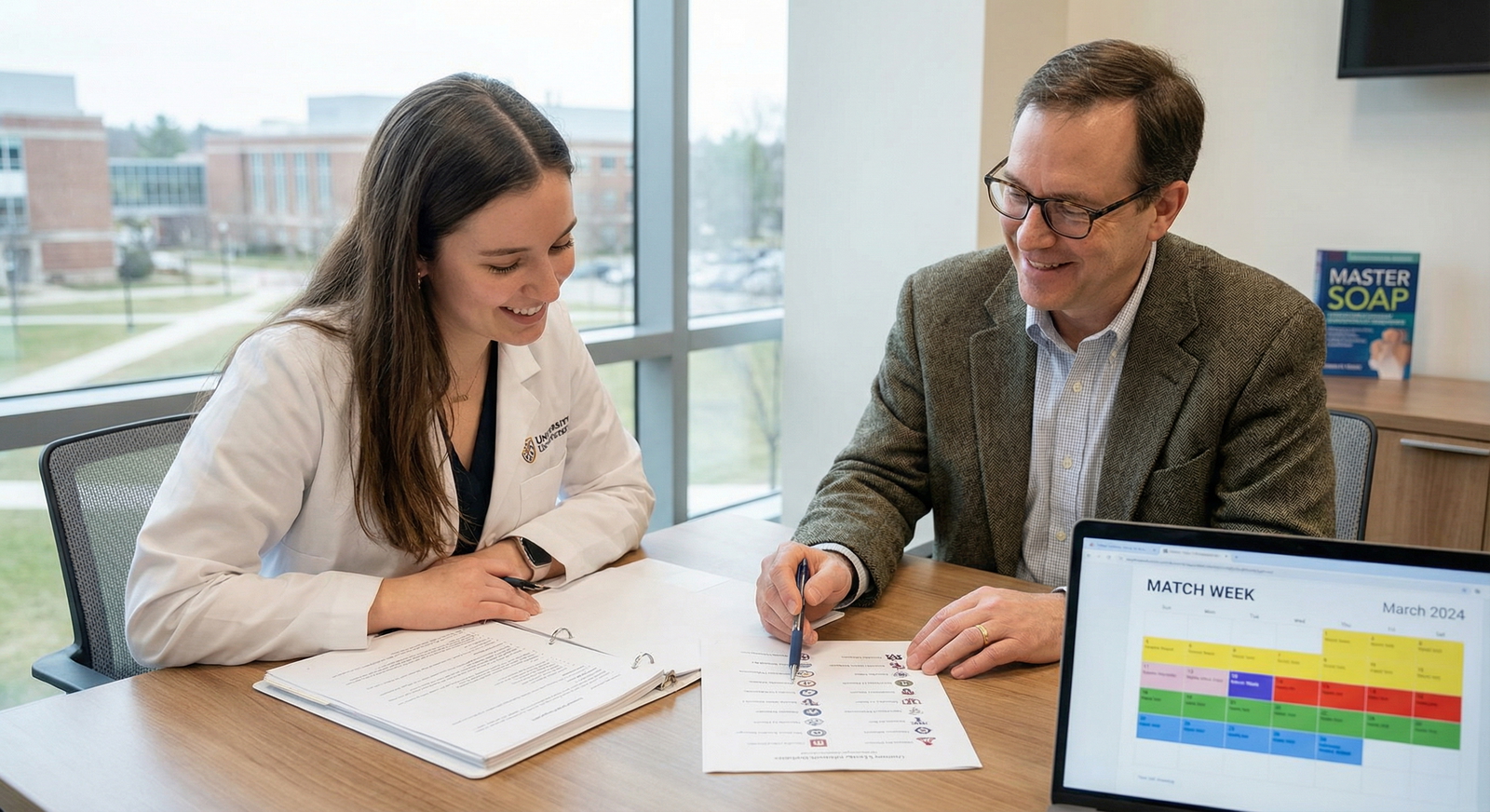
Preparing for the Supplemental Offer and Acceptance Program (SOAP) is one of the most high‑stakes, emotionally intense experiences in the residency journey—especially for a DO graduate targeting family medicine. With the right strategy, though, SOAP can transform from a last‑minute scramble into a structured, manageable process that can still land you a strong family medicine residency position.
This guide walks you step‑by‑step through SOAP preparation specifically tailored to a DO graduate interested in family medicine, covering logistics, strategy, mindset, and practical action items.
Understanding SOAP as a DO Graduate in Family Medicine
Before you can prepare effectively, you need to clearly understand what is SOAP, how it works, and how it uniquely affects a DO graduate interested in the FM match.
What Is SOAP?
The Supplemental Offer and Acceptance Program (SOAP) is NRMP’s organized process that allows unmatched or partially matched applicants to apply to unfilled residency positions during Match Week. It replaces the old “Scramble.”
In brief:
- Who participates:
- Unmatched applicants
- Partially matched applicants (e.g., matched to an advanced position but no preliminary year, depending on the year’s rules)
- What happens:
- Applicants apply through ERAS to programs with unfilled positions identified on the NRMP list.
- Programs review, interview (often virtually), and submit preference lists.
- NRMP releases offer rounds where applicants receive and can accept one offer at a time.
- Timeline:
- Runs from Monday of Match Week (when results are released) through Thursday of Match Week (offer rounds).
For many applicants—including DO graduates—SOAP is a critical second chance to secure a residency spot in the same year, particularly in fields like family medicine, which traditionally have a relatively larger number of unfilled positions compared with some other specialties.
Why SOAP Matters for the DO Graduate Residency Path
For DO graduates, the osteopathic residency match is now unified with the allopathic (MD) match under a single accreditation system. This has helped standardize training pathways, but competition remains intense, and DOs can still face:
- Limited interview offers at some historically MD-heavy institutions
- Misconceptions about osteopathic training among certain programs (though decreasing)
- The need to strategically highlight osteopathic strengths (holistic care, OMT, continuity)
SOAP can be particularly valuable for DO graduates because:
- Family medicine residency programs frequently participate in SOAP. Many unfilled positions are in primary care specialties, especially FM.
- Your DO background aligns strongly with FM’s values: continuity of care, holistic treatment, and community orientation.
- Some programs may specifically appreciate DO graduates for their training in manual medicine and primary care.
Approaching SOAP not as a backup, but as an alternate pathway to a satisfying FM match, will make your preparation more focused and proactive.
Pre-SOAP Preparation: What to Do Before Match Week
Effective SOAP preparation starts well before Match Week. The more you prepare early, the less chaotic and emotional the process will feel if you end up needing to participate.
1. Know Your Status and Eligibility
SOAP eligibility is defined early by NRMP and ERAS. You’ll be eligible if you:
- Registered for the Match
- Submitted a certified rank order list (or met the specific NRMP criteria for SOAP participation)
- Are unmatched or partially matched on Monday of Match Week
- Have passed the necessary licensing exams by the deadlines set by programs (COMLEX and/or USMLE, depending on the program)
Action items:
- Confirm through NRMP and ERAS that you are SOAP-eligible (check your NRMP and ERAS accounts).
- Ensure your COMLEX-USA (and USMLE, if taken) scores are in ERAS and visible.
- Confirm your medical school will certify you as “expected to graduate” by the correct date and that your MSPE is uploaded.
2. Update Your ERAS Application for SOAP
Even if you never enter SOAP, keep your application SOAP-ready. Programs in SOAP will rely heavily on your existing ERAS file, often with minimal time to review.
Focus on:
Personal Statement(s)
For a DO graduate in family medicine, draft:
- A SOAP-specific family medicine personal statement:
- Emphasize your commitment to FM regardless of the match outcome.
- Highlight continuity of care, preventive medicine, and your osteopathic approach.
- Address any red flags (e.g., exam failures, gaps) briefly and professionally.
You may have used a more tailored or site-specific PS during regular application; SOAP requires a broad yet specific statement suitable for many FM programs.
Experiences and Activities
- Ensure all family medicine–relevant experiences are clearly described:
- FM rotations and sub-internships
- Community clinic or FQHC work
- OMT in primary care settings
- Longitudinal patient experiences
- Update any recent research, presentations, or volunteer work since you first submitted.
Letters of Recommendation (LoRs)
The number and type of LoRs can strongly influence SOAP success:
- At least two strong family medicine letters (ideally from FM program directors, chairs, or core faculty).
- One osteopathic physician letter (DO) if possible, especially highlighting your holistic approach and OMT skills.
You cannot add brand-new LoRs during the short SOAP window (practically speaking), so have these uploaded and ready in ERAS before Match Week.
3. Have a SOAP-Specific CV and Talking Points
While programs will rely on ERAS, they may request a CV or ask in detail about your background during same-day or next-day interviews.
Prepare a concise 1–2 page SOAP-ready CV emphasizing:
- Education, including DO degree and COMLEX scores
- Clinical experiences with a focus on family medicine
- Leadership and community service, particularly in underserved settings
- Publications, QI projects, and FM-related research if applicable
- Advanced skills: OMT, motivational interviewing, chronic disease management
Then, prepare 3–4 key talking points that communicate who you are as a potential FM resident:
- “My commitment to family medicine started when…”
- “What sets me apart as a DO entering family medicine is…”
- “The type of family medicine program where I will thrive is…”
These become the backbone of your answers during rapid-fire SOAP interviews.

Strategic Targeting: Building a Realistic SOAP Program List
In SOAP, speed, realism, and breadth are crucial. You will have limited application slots and very little time to create and refine your list once the unfilled positions are published.
1. Understand the SOAP Application Limits and Rounds
While exact numbers can change slightly year-to-year, the general framework is:
- You are given a fixed number of applications you can send through ERAS during SOAP (historically 45).
- Applications are sent in waves/rounds during Monday–Wednesday.
- You cannot retract an application once sent.
Plan in advance how you’ll use these limited applications if you are targeting family medicine residency positions specifically.
2. Use Data to Inform Your Targeting
Look at historical data:
- NRMP’s “Results and Data” reports for:
- Number of unfilled family medicine positions historically
- DO vs MD match rates in FM
- Past SOAP and FM match outcomes (often summarized by advisors or on school match reports)
As a DO graduate:
- Family medicine is generally DO-friendly, especially community-based and community hospital programs.
- University-based programs may still be more competitive but are not out of reach if your scores and experiences are strong.
3. Categorize Potential Programs
Before Match Week, build a tiered potential list of program types you’re willing to consider in SOAP:
- Top fit FM programs (realistic but somewhat competitive):
- Community-university hybrids
- Suburban programs with strong academic affiliations
- Moderately competitive programs:
- Community hospital FM programs
- Programs serving diverse urban or semi-rural communities
- Safety net programs:
- Smaller community-based FM programs
- Rural or frontier family medicine programs
- Programs in less popular geographic regions
When the official SOAP unfilled list is released, you’ll map these categories onto the real, available programs.
4. Geographic and Visa Considerations
During SOAP, you need to be honest:
- Are you truly willing to move anywhere for a family medicine residency?
- Are there geographic restrictions due to family, finances, or other obligations?
- If you’re an international DO graduate or need visa sponsorship, which programs historically sponsor visas?
Be clear with yourself and your advisors about your non-negotiables vs preferences. SOAP is compressed; you may not have the luxury of prolonged deliberation.
Execution During Match Week: Step-by-Step SOAP Preparation and Action
Once Monday of Match Week arrives and you open NRMP to find “You Did Not Match” (or partially matched), emotions can spike. That is normal. To function well, you’ll need a pre-written, stepwise plan.
1. Emotional Triage and Immediate Support
Give yourself permission to feel disappointed—but set a strict time limit (e.g., 30–60 minutes) before shifting into action mode.
Then:
- Contact your dean’s office, student affairs, or residency advisor immediately. Many schools have dedicated SOAP support teams.
- Let a few trusted people (mentor, significant other, close friend) know your status so you have emotional backup.
- Avoid mass texting or posting on social media about being unmatched. Focus your energy on the process.
2. Reviewing the Unfilled List Strategically
When the unfilled positions list is released:
- Filter for Family Medicine only first.
- Note:
- Program type: university vs community vs rural track
- Location and setting (urban, suburban, rural)
- Any notes on osteopathic recognition (if still listed) or DO friendliness
- Visa sponsorship, if relevant
Compare the list to your pre-made tiers, then rapidly categorize:
- Tier A (highest priority): Excellent fit AND realistic match chance
- Tier B: Good fit OR lower competitiveness
- Tier C: Safety net—programs you would accept if no other options materialize
3. Allocating Your SOAP Applications Wisely
Use your limited ERAS SOAP applications like a finite resource:
- Start with 20–25 applications to your Tier A and B FM programs.
- Then distribute the remaining to additional FM programs, prioritizing breadth over perfection.
Remember:
- Family medicine positions can fill quickly during SOAP; don’t be overly selective if your application has red flags.
- As a DO graduate, you may have strong alignment with community and rural programs—don’t underestimate them. Many produce excellent physicians and offer robust training.
4. Rapid-Fire Communication and Interviews
Programs may contact you via:
- Phone call
- ERAS messaging
- Video platforms (Zoom, Teams, etc.)
Prepare a SOAP interview “go-bag”:
- Quiet, professional space
- Reliable internet connection
- Headset/microphone
- Neutral background or virtual background suitable for professional calls
- Printed or digital notes:
- Your key talking points
- A brief list of questions to ask each program
- Bullet points about your strengths as a family medicine candidate and a DO graduate
Common SOAP interview questions for FM:
- “Why did you not match the first time?”
- “Why family medicine, and why now?”
- “Why are you interested in our specific program?”
- “Tell us about a challenging patient encounter in primary care.”
- “How will you handle the demands of continuity clinic and inpatient rotations?”
Frame your answers to:
- Take responsibility without self-sabotage (e.g., “I applied very broadly, but I believe a combination of late exam completion and fewer early home FM rotations limited my interview opportunities”).
- Reinforce your longstanding commitment to FM.
- Highlight your osteopathic training and OMT skills as an asset in primary care.

Leveraging Your DO Background and FM Fit During SOAP
Your identity as a DO graduate is an asset—especially in family medicine. During SOAP, you must articulate that clearly and efficiently.
1. Emphasize Osteopathic Principles in Primary Care
Family medicine thrives on:
- Holistic care
- Longitudinal patient relationships
- Prevention and chronic disease management
- Behavioral and social determinants of health
As a DO graduate, reinforce:
- Your training to “treat the whole person” and consider mind, body, and spirit.
- How you’ve used OMT in outpatient settings to help manage musculoskeletal complaints, headaches, and pain while reducing medication burden.
- Your comfort with integrating lifestyle counseling and patient education in everyday visits.
Example talking point:
“My osteopathic training has made me particularly attuned to the interplay between musculoskeletal function, mental health, and chronic disease. In family medicine, I see OMT as one more tool to help patients stay functional and avoid unnecessary imaging or opioid use.”
2. Address Common Concerns or Red Flags
If your DO background intersects with other issues (exam delays, COMLEX vs USMLE scores, gaps), address them:
- Be concise and proactive.
- Explain what you’ve learned and what has changed.
- Highlight consistent improvement (e.g., COMLEX Level 1 vs Level 2, or recent strong clinical evaluations).
Example:
“Although my COMLEX Level 1 score was lower than I hoped, I worked with a learning specialist, adjusted my study strategies, and made significant gains on Level 2. My stronger clinical evaluations and increasing responsibility on FM rotations reflect that I’ve translated that growth into my patient care.”
3. Show Your Commitment to FM Regardless of Pathway
Programs want residents who will stay in the specialty and are entering FM for the right reasons—not simply because spots were available in SOAP.
Demonstrate this by:
- Highlighting FM-related electives, sub-internships, or continuity clinics.
- Mentioning FM mentors and how they’ve shaped your vision of practice.
- Describing your career goals in family medicine:
- Outpatient practice, rural FP, academic FM, community health, addiction medicine, sports medicine, etc.
Anchor your story so that SOAP is simply the mechanism, not the reason, you are pursuing FM.
After SOAP: Outcomes, Next Steps, and Long-Term Strategy
Whether you match in SOAP or not, you need a plan for what comes next.
1. If You Match in SOAP to a Family Medicine Residency
Celebrate—and then quickly shift to preparation for intern year:
- Notify your school and advisors.
- Complete any onboarding paperwork immediately.
- Reach out to your program coordinator and, if possible, your future chief residents.
- Close the loop with mentors who supported you through the SOAP residency process.
Mentally reframe the experience:
- You are not a “SOAP resident”; you are a PGY-1 family medicine resident.
- Your success in residency will depend far more on your work ethic, professionalism, and growth than on how you entered the program.
2. If You Do Not Match After SOAP
This is painful, but your career is not over. Many excellent physicians were unmatched once and went on to have fulfilling careers.
Constructive next steps:
- Schedule a post-SOAP debrief with:
- Your dean of students or career advisor
- An FM faculty mentor
- Possibly a resident or PD willing to give honest feedback
- Perform a gap analysis:
- Were your COMLEX/USMLE scores significantly below typical FM ranges?
- Were there professionalism or academic concerns?
- Was your application late or incomplete?
- Did you have limited FM exposure on your CV?
Based on this, build a 1-year or 2-year plan that may include:
- Prelim/TY or non-categorical positions (if available outside the Match, depending on timing and policy that year)
- Additional clinical experience:
- FM externships
- Community clinic work
- Hospitalist or primary care scribe roles
- Research or quality improvement projects related to family medicine
- Exam improvement and retakes if necessary
- Revising your strategy for the next FM match and potential SOAP residency cycle
DO graduates often rebound strongly when they use the interval year to clarify their narrative, strengthen their metrics, and deepen their FM experience.
Practical SOAP Preparation Checklist for DO Graduates in Family Medicine
Use this consolidated checklist as you prepare:
3–6 Months Before Match Week
- Confirm all COMLEX (and USMLE if applicable) scores are in ERAS.
- Secure at least 2–3 strong family medicine LoRs, including a DO letter if possible.
- Draft a SOAP-ready family medicine personal statement.
- Update ERAS experiences, emphasizing FM and primary care exposure.
- Create a concise 1–2 page CV.
- Meet with your advisor to discuss a contingency plan for SOAP.
1–2 Months Before Match Week
- Review NRMP and ERAS SOAP policies and timelines.
- Build a preliminary list of FM program types and regions you’re open to.
- Gather information on DO-friendly and FM‑focused programs historically.
- Prepare standard answers to common SOAP interview questions.
1–2 Weeks Before Match Week
- Ensure you have a stable internet connection and a quiet space for possible SOAP interviews.
- Test video platforms (Zoom/Teams) and your webcam/audio.
- Final review of ERAS application for typos or inconsistencies.
- Mentally rehearse your FM story and DO advantages.
During Match Week (if Unmatched/Partially Matched)
- Quickly process emotions; then alert your dean’s office and advisor.
- Review the unfilled list and categorize FM programs into priority tiers.
- Submit your SOAP applications strategically within ERAS limits.
- Keep your phone and email constantly accessible.
- Be ready for same‑day interviews; keep notes on each program.
- Respond to offers promptly and thoughtfully in each SOAP round.
FAQs: SOAP Preparation for DO Graduates in Family Medicine
1. As a DO graduate, do I need USMLE scores to be competitive in FM SOAP?
Not necessarily. Many family medicine programs are comfortable with COMLEX alone, and some are especially DO-friendly. However:
- USMLE scores may widen your pool of potential programs, particularly university-based ones.
- During SOAP, you often won’t have time to differentiate heavily by exam type, so having both can be helpful, but it is not mandatory for many FM programs.
If you only have COMLEX, focus on:
- Clearly presenting your scores and any upward trends.
- Highlighting strong FM rotation evaluations and LoRs.
2. How many family medicine programs should I apply to during SOAP?
Within the ERAS SOAP application limit (historically around 45), most unmatched DO graduates in FM should aim to use the majority or all of their applications on FM programs if FM is truly their primary goal.
- Start with 20–25 programs you view as realistic and desirable.
- Add additional programs across different regions and settings, including rural and smaller community hospitals.
- Avoid overconcentrating on one ultra-competitive region unless you have strong personal reasons and a very competitive profile.
Breadth matters in SOAP, particularly in family medicine.
3. Should I change my personal statement specifically for SOAP?
Yes, if your original PS is very program-specific or targeted to a narrower type of FM program, you should create a SOAP-appropriate FM statement:
- More generalizable but still clearly FM-focused.
- Briefly, if appropriate, acknowledge that your commitment to FM is unchanged by using SOAP.
- Emphasize resilience, adaptability, and readiness to start residency this July.
Upload this statement ahead of Match Week so it’s ready if you need it.
4. What if I’m undecided between family medicine and another primary care specialty during SOAP?
SOAP is not the right time to be undecided. Because of the compressed timeline, you must pick a primary target specialty—in your case, likely family medicine—and commit your application resources there.
If you genuinely have equal interest in another primary care field (like internal medicine), you could:
- Allocate a minority of applications to the second specialty.
- But ensure your story and personal statement align strongly with whichever programs you apply to; do not send an FM PS to an IM program or vice versa.
For most DO graduates with substantial FM exposure, focusing on family medicine residency as the primary target yields the clearest, most coherent application during SOAP.
Preparing thoroughly for SOAP does not mean you expect to go unmatched; it means you understand the realities of the modern residency landscape and are positioning yourself to succeed under any outcome. As a DO graduate committed to family medicine, your training, values, and experiences already align with what FM programs seek. With intentional SOAP preparation—logistical, strategic, and emotional—you can leverage that alignment to secure a strong position in the FM match pathway, even if it comes through SOAP rather than the main Match.