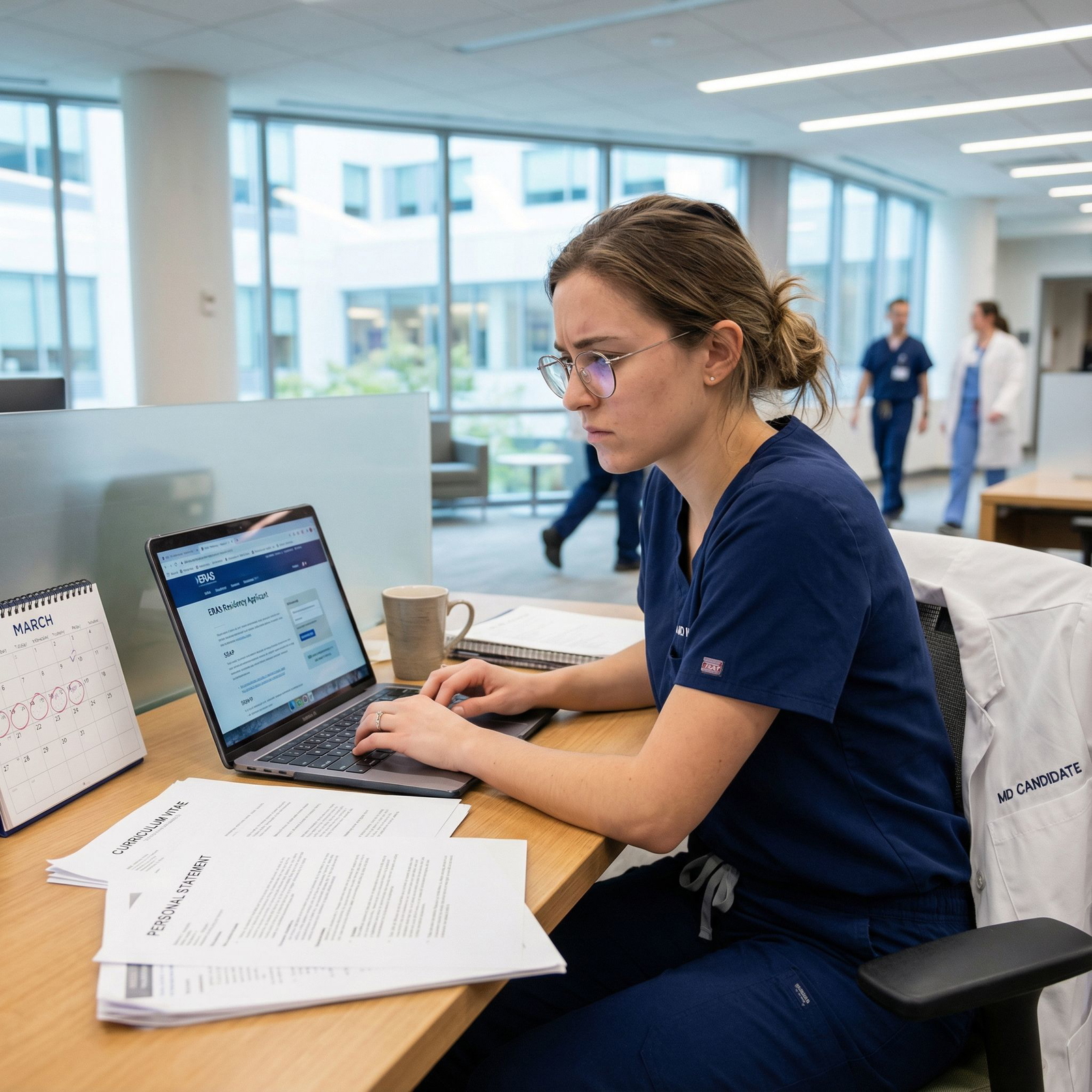
As a DO graduate with a strong interest in medical genetics, navigating the Supplemental Offer and Acceptance Program (SOAP) can feel especially stressful. The genetics match is small, competitive, and highly specialized—and as a DO you may be wondering how to position yourself effectively if you find yourself unmatched or partially matched on Monday of Match Week.
This guide walks you through SOAP preparation specifically tailored for a DO graduate targeting a medical genetics residency. It covers what SOAP is, how to prepare before Match Week, strategies during SOAP, and how to leverage SOAP even if you don’t land directly into a medical genetics residency this cycle.
Understanding SOAP and How It Fits the Genetics Match
Before you prepare, you need a firm grasp of what SOAP is and how it works in the context of a small, niche field like medical genetics.
What is SOAP?
SOAP (Supplemental Offer and Acceptance Program) is an NRMP-regulated process that allows eligible unmatched or partially matched applicants to apply to and accept positions that remain unfilled after the main residency rank order list process. It occurs during Match Week, from Monday to Thursday.
Key features:
- Eligibility-based: You must be either:
- Unmatched, or
- Partially matched (e.g., matched to an advanced position but no prelim, or vice versa), and
- Registered for the main NRMP Match and have certified a rank order list.
- Centralized and time-limited: All communication and offers go through ERAS/NRMP for several rounds of offers.
- Offer-only: Programs choose; you cannot “hold” multiple offers—if you accept, you are done with SOAP.
SOAP is not a second full match; it is a rapid, structured process to fill unfilled positions in a few days.
SOAP and the Osteopathic Residency Match Landscape
As a DO graduate, you now participate in a single accreditation system under ACGME, with most DO-friendly pathways integrated into the main Match. However, a few points matter for SOAP:
- COMLEX vs USMLE:
- Some programs—especially university-based, research-heavy institutions—prefer or require USMLE scores.
- Many primary care and community programs are more accepting of COMLEX alone.
- For medical genetics–related trajectories, larger academic centers (where genetics is often based) may prioritize USMLE scores, but strong COMLEX + evidence of excellence can still be competitive.
- Osteopathic recognition: Programs with osteopathic recognition or historically DO-friendly departments may be more open to DO graduates during SOAP.
SOAP and Medical Genetics Residency Structure
Medical genetics is unique because many residents enter via combined or sequential programs, such as:
- Pediatrics–Medical Genetics (Peds/Genetics)
- Internal Medicine–Medical Genetics (IM/Genetics)
- Obstetrics & Gynecology–Medical Genetics (less common)
- Categorical Medical Genetics and Genomics (often following completion of a prior residency in another specialty)
- Transitional genetics-related tracks or fellowship-like “pre-genetics” research positions (not formal residency spots, but career-enhancing)
In practice:
- Many candidates first match into pediatrics or internal medicine, then apply into medical genetics during or after their initial training.
- Direct, categorical medical genetics positions are limited and may or may not have unfilled slots in SOAP in any given year.
Implication for DO graduates:
Your SOAP preparation should consider two levels of strategy:
- Direct opportunities: Any medical genetics or combined medical genetics positions that might appear in SOAP (rare but possible).
- Feeder specialties: Pediatrics, internal medicine, or OB/GYN programs that would set you up for a future medical genetics residency.
Pre-Match SOAP Preparation: What a DO Applicant in Genetics Should Do Now
The most effective SOAP preparation starts months before Match Week. The goal is to create a ready-to-deploy “SOAP toolkit” tailored to genetics and DO-specific strengths.

1. Clarify Your Realistic SOAP Targets
Because the genetics match is small, plan beyond just “medical genetics or bust.”
Tier your options:
Tier 1 – Ideal fits
- Any medical genetics and genomics programs that accept DO graduates.
- Combined Peds/Genetics or IM/Genetics programs compatible with your long-term goals.
Tier 2 – Feeder specialties
- Pediatrics (most common pathway to genetics)
- Internal Medicine
- Occasionally OB/GYN if you have strong women’s health/genomics interests.
Tier 3 – Transitional/Preliminary paths
- Transitional year (TY) or preliminary medicine programs at institutions with strong genetics departments where you might:
- Build connections,
- Engage in genetics research,
- Reapply to medical genetics later with a stronger profile.
- Transitional year (TY) or preliminary medicine programs at institutions with strong genetics departments where you might:
Research now:
- Identify programs with:
- Existing medical genetics departments or divisions.
- Faculty involved in genomics, rare disease, biochemical genetics, or dysmorphology.
- Histories of taking DOs into their core residencies or fellowships.
Create a list and keep it updated. This list becomes critical during SOAP, when time is extremely limited.
2. Align Your Application Materials with a Genetics Narrative
Even if you end up applying to a pediatrics or internal medicine program through SOAP, your long-term narrative should still emphasize your trajectory toward medical genetics.
Personal statement strategy
Prepare two versions of your personal statement in advance:
Genetics-focused statement
Emphasize:- Your interest in rare diseases, genomics, inherited conditions, or dysmorphology.
- Any rotations in medical genetics, pediatric subspecialties, or oncology where genetics was prominent.
- Long-term goal: becoming a physician in medical genetics and genomics, contributing to multidisciplinary care and perhaps research or education.
Feeder specialty–oriented statement (Peds or IM)
For pediatrics, for example:- Lead with your passion for children and families, continuity of care, and advocacy.
- Integrate genetics: “I am particularly drawn to pediatric training that will prepare me for a future career in medical genetics, caring for children with complex and rare conditions.”
Keep both statements ready to upload quickly during SOAP.
CV and ERAS activity updates
Before rank list certification:
- Highlight:
- Any genetics clinic exposure (even half-day elective).
- Genetics-related research, case reports, or QI projects.
- Experiences with family counseling, chronic disease management, or developmental disorders.
- Emphasize DO strengths:
- Whole-person care.
- Longitudinal relationships with patients.
- Holistic biopsychosocial model—these fit well with the complex, multidisciplinary nature of genetics.
3. Strengthen Letters of Recommendation (LoRs) with Genetics-Relevant Voices
Ideally, you have at least one LoR that supports your interest in genetics or a closely related field.
Your SOAP-ready LoR set should include:
- A letter from a related specialty:
- Pediatrician, internist, neurologist, or oncologist who can attest to your clinical reasoning with complex cases.
- If available, a genetics mentor:
- Even if the interaction was brief, a letter noting your curiosity, analytic approach to pedigrees, and commitment to detailed patient evaluation is powerful.
- A DO supporter:
- A DO faculty member emphasizing your osteopathic training, empathy, communication, and teamwork.
Check that:
- Letters are uploaded to ERAS and correctly assigned.
- At least 3 strong letters are ready so you can pivot quickly to different specialties if needed.
4. Academic and Exam Considerations for DO Graduates
If you are pre-Match and anticipating the possibility of SOAP:
- If you only have COMLEX, be aware:
- Many pediatrics and internal medicine programs accept COMLEX alone.
- Some academic genetics pathways may still prefer USMLE, but this is not universal.
- If you have USMLE + COMLEX:
- Ensure both are uploaded and visible.
- Be prepared to explain any score discrepancies.
For SOAP, you cannot change your scores, but you can:
- Frame your step/level performance in your application and interviews:
- Emphasize upward trends.
- Highlight strengths in clinical evaluations and sub-internship performance, especially where you handled complex or rare-disease cases.
5. Build a SOAP Logistics Plan
SOAP moves quickly. Going in with a plan can prevent panic.
Prepare:
- A checklist of tasks for Monday of Match Week:
- Confirm SOAP eligibility status.
- Download list of unfilled programs (as soon as it’s released).
- Filter by target specialties (Genetics, Peds, IM, TY).
- Prioritize based on your pre-researched list.
- A communication script for:
- Brief emails (only if allowed post-SOAP), or
- 1–2 minute “elevator pitch” for phone or virtual interviews during SOAP.
Example elevator pitch (adapt to your story):
“I am a DO graduate committed to a career in medical genetics. My clinical strengths lie in managing complex, chronic conditions and communicating clearly with families. I have prior exposure to genetics through [rotation/research], and I’m particularly drawn to [Peds/IM] as a foundation for future training in medical genetics. I would be thrilled to bring my osteopathic, whole-patient approach to your program.”
Executing During SOAP Week: Strategy for a DO Focused on Genetics
When Monday of Match Week arrives and you find yourself SOAP-eligible, your preparation pays off.

1. Reading the Unfilled List Through a Genetics Lens
When NRMP releases the List of Unfilled Programs:
Filter by:
- Medical Genetics and Genomics
- Pediatrics
- Internal Medicine
- Preliminary/TY at major academic centers with genetics departments
Cross-reference with your pre-made target list:
- Mark programs with:
- Genetics divisions.
- Combined genetics tracks.
- Known research in genomics/rare disease.
- Mark programs with:
Be realistic:
- Very few, if any, pure medical genetics slots may appear on the SOAP list.
- Anticipate that pediatrics will likely be your most direct route toward a genetics career through SOAP.
2. Application Strategy: Broad but Targeted
You are limited in how many programs you can apply to during SOAP (historically up to 45). Use them wisely:
Priority order for a DO genetics-focused applicant:
- Any unfilled medical genetics or combined genetics programs that accept DOs.
- Pediatrics programs at institutions with robust genetics or children’s hospitals.
- Internal Medicine programs at academic centers with adult genetics or genomic medicine programs.
- Transitional/Prelim year programs at top genetics institutions, if you have zero categorical options and need a bridge year.
When reviewing individual programs, look for:
- Mentions of:
- “Multidisciplinary genetics clinic”
- “Genomics,” “precision medicine,” “rare disease”
- Affiliated children’s hospitals or cancer centers.
- DO-friendly language:
- Past DO residents.
- Explicit acceptance of COMLEX.
3. Tailoring Application Materials Rapidly
Within SOAP, you cannot rewrite everything from scratch, but you can tailor:
- Personal statement:
- Use your genetics-focused statement for direct genetics positions.
- Use your pediatrics- or IM-oriented statement emphasizing future genetics plans for those specialties.
- Program signaling in ERAS (if applicable to your cycle):
- Use any remaining signaling capacity for programs that meaningfully support genetics interests.
- Program-specific notes:
- Have a short bullet list for each high-interest program:
- Name of any genetics faculty you hope to learn from.
- Specific clinics (e.g., metabolic, prenatal, cancer genetics) at that institution you find compelling.
- Have a short bullet list for each high-interest program:
4. Interviewing During SOAP: Communicating Your Genetics Trajectory
SOAP interviews may be brief, virtual, and high-pressure. As a DO candidate with a niche interest, you can stand out by being clear and consistent.
Key talking points:
- Why this specialty now?
- For pediatrics: love of working with children and families, long-term care, developmental and rare diseases.
- For IM: interest in complex adult medicine, chronic disease, and hereditary conditions.
- How genetics fits:
- “I see pediatrics/internal medicine as the essential foundation for my goal of becoming a medical geneticist.”
- Highlight your comfort with:
- Complex diagnostic puzzles.
- Pedigree analysis, even if basic.
- Communicating complicated information in accessible terms.
- Why you as a DO:
- Integration of mind–body–social factors.
- Strong communication and physical exam skills.
- Team-based mindset, vital for multidisciplinary genetics clinics.
Example SOAP interview answer:
“While my ultimate goal is to pursue a medical genetics residency, I recognize that mastering pediatrics is essential for taking excellent care of children with genetic and metabolic conditions. As a DO, I’m drawn to the holistic, family-centered aspects of pediatric care. I’ve sought out genetics-related experiences—such as [specific elective or project]—and I’m looking for a pediatrics program like yours, with access to genetics services, where I can grow clinically and prepare to be a strong applicant for medical genetics in the future.”
5. Decision-Making When Offers Arrive
During SOAP, you might face choices such as:
- A categorical pediatrics position at a mid-tier program with a genetics clinic vs
- A preliminary medicine position at a highly ranked research institution vs
- No offer yet, more SOAP rounds pending
Think in terms of pathway value toward medical genetics:
- Categorical Peds or IM with genetics exposure > TY or prelim with no clear bridge to genetics.
- Prelim at a top genetics center can still be valuable if:
- You can involve yourself in genetics research.
- There is a realistic route to re-apply for a categorical position or a future medical genetics slot.
Ask yourself:
- Will this program allow strong letters from faculty who can speak to my readiness for a medical genetics residency or fellowship later?
- Will I have clinical exposure to patients with genetic diseases or access to genetics clinics?
After SOAP: Long-Term Positioning for the Medical Genetics Match
Whether or not you secure your ideal program through SOAP, you can still build toward a successful future genetics match.
If You Matched via SOAP into Peds or IM
You are in a strong position.
Action steps during residency:
- Seek genetics exposure early:
- Electives in medical genetics or metabolic clinics.
- Rotations in NICU, PICU, oncology, neurology, and dysmorphology clinics—these are rich in genetic pathology.
- Connect with genetics faculty:
- Request mentorship regarding your goal of applying for medical genetics.
- Ask to participate in case conferences, journal clubs, or research projects.
- Research and scholarly activity:
- Case reports on patients with rare syndromes.
- QI projects related to genetic testing, newborn screening, or family history documentation.
- Plan your timing:
- Many apply for medical genetics training during PGY-2 or PGY-3 of pediatrics or IM.
- Maintain communication with prospective medical genetics programs as your CV grows.
If You Did Not Match Through SOAP
This is difficult, but you still have options.
Consider:
- Research positions in genetics or genomics:
- At academic centers with medical genetics departments.
- These can significantly strengthen a future application by giving:
- Publications or presentations.
- Strong letters from geneticists.
- Reapplication strategy:
- Work with your school’s advising office and, if possible, a genetics mentor.
- Reflect honestly: Was your application limited by scores, clinical grades, late interest, or lack of focused exposure?
- Address deficits over the next year with:
- Additional clinical experiences.
- Improved exam performance, if you still have steps/levels remaining.
- Enhanced genetics-related portfolio.
For DO graduates, especially:
- Highlight over time how your osteopathic perspective aligns with complex, chronic, multi-system genetic diseases.
- When you next apply to the genetics match, emphasize any growth since the SOAP cycle—more maturity, more clarity, more documented commitment.
Practical SOAP Preparation Checklist for a DO Aspiring to Medical Genetics
Use this as a quick-reference guide:
3–6 Months Before Rank List:
- Identify medical genetics, Peds, and IM programs with genetics exposure where DOs have matched.
- Draft two personal statements (Genetics-focused; Peds/IM with genetics trajectory).
- Secure 3–4 strong LoRs, including one related to complex care or genetics if possible.
- Update ERAS with all genetics-related experiences and research.
- Meet with an advisor to discuss realistic SOAP scenarios.
1–2 Months Before Match Week:
- Finalize a tiered target list of programs for SOAP (Genetics > Peds/IM > TY/Prelim with genetics).
- Create a SOAP action plan and checklist.
- Prepare a 1–2 minute “elevator pitch” emphasizing your DO background and genetics interest.
- Confirm all exam scores and transcripts are uploaded to ERAS.
Match Week (If SOAP-Eligible):
- Download the unfilled list immediately when released.
- Filter by Genetics, Peds, IM, TY/Prelim.
- Cross-match unfilled list with your pre-researched programs.
- Apply strategically within SOAP limits, using tailored personal statements.
- Prepare for rapid interviews; rehearse key answers.
- Weigh offers based on their ability to support a future medical genetics residency.
FAQs: SOAP Preparation for DO Graduates Interested in Medical Genetics
1. As a DO graduate, can I realistically get into a medical genetics residency?
Yes. Medical genetics and genomics programs can and do accept DO graduates, especially those with:
- Solid performance in a core residency (often pediatrics or IM).
- Clear, sustained interest in genetics.
- Strong letters from academic mentors.
A direct categorical medical genetics residency right after medical school is possible but relatively rare; most DOs will take a path of Peds/IM → Medical Genetics. SOAP is more likely to secure that first step (Peds/IM) than direct genetics.
2. How should I prioritize programs during SOAP if no medical genetics slots are unfilled?
Prioritize programs that position you best for a future genetics match:
- Categorical Pediatrics or Internal Medicine at institutions with:
- Medical genetics services.
- Genetics faculty and clinics.
- Categorical programs in strong teaching hospitals with multidisciplinary rare disease care.
- Transitional or preliminary programs at leading genetics centers if categorical options are unavailable.
Your question in SOAP is: “Where can I train now that best sets me up to apply for a medical genetics residency later?”
3. Is it a disadvantage to have only COMLEX scores during SOAP?
It may limit options at some highly academic programs that prefer or require USMLE. However:
- Many pediatrics and internal medicine programs are comfortable with COMLEX-only applicants, particularly community and DO-friendly programs.
- As a DO, you can highlight:
- Strong COMLEX performance.
- Robust clinical evaluations and sub-internship performance.
- A coherent narrative linking your osteopathic training to your future in genetics.
If you are still pre-Match and early enough in training, discuss with advisors whether taking USMLE could help broaden your options; but for this SOAP cycle, focus on programs that accept COMLEX.
4. What if my interest in medical genetics developed late in medical school?
Late discovery of genetics is not uncommon. You can still be competitive by:
- Being explicit and honest in your personal statement about your evolving interests.
- Highlighting experiences—even if recent—that show your engagement with genetic or rare-disease cases.
- Pursuing early genetics electives, shadowing, or research in your PGY-1 year if you match into Peds/IM.
- Building your portfolio over time for a future medical genetics application with:
- Case reports,
- Quality improvement projects involving genetic testing or newborn screening,
- Mentorship from practicing geneticists.
Late interest is less problematic if your actions now are consistent and clearly oriented toward a genetics trajectory.
Preparing for SOAP as a DO graduate with an eye on medical genetics means thinking both strategically and longitudinally. You are not just trying to fill an empty slot; you are designing a pathway toward a specialized, deeply impactful career. With advance planning, targeted applications, and a clear narrative of your genetics interest, SOAP can become an effective stepping stone toward your ultimate goal: a successful medical genetics residency and a career caring for patients and families affected by genetic conditions.